
Category: Thailand Notebook

Practical tips and travel stories from Thailand: Bangkok, Pattaya, Isan, the islands.

  • What to Eat in Bangkok: Must-Try Dishes and Street Food Tips

    What to Eat in Bangkok: Must-Try Dishes and Street Food Tips

    People come to Bangkok for its temples. Many come back for its street food. Here you eat just as well, if not better, on a plastic stool for 60 baht as you do in a Michelin-starred restaurant. Proof: the question “Kin khao rue yang?”, “Have you eaten?”, is how people say “How are you?”

    The dishes you absolutely have to try

    • Pad kra pao: minced pork or chicken stir-fried with holy basil and chili, served over rice with a fried egg. The real everyday dish of Thai people.
    • Pad thai: rice noodles stir-fried with tamarind, egg, tofu and peanuts. The one foreigners know best.
    • Khao man gai: poached chicken on rice cooked in the broth, with a ginger sauce. Pure comfort food.
    • Tom yum goong: a hot and sour shrimp soup with lemongrass and galangal.
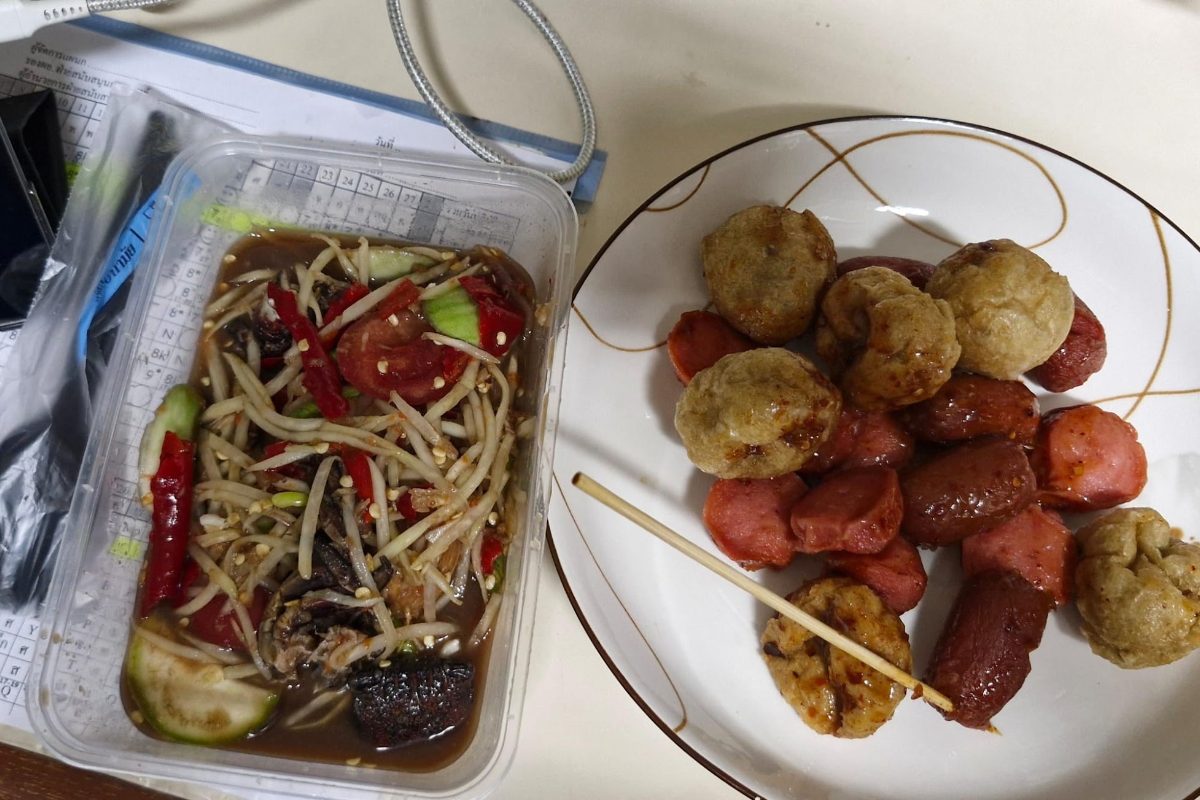
    • Som tam: green papaya salad pounded in a mortar, the emblem of Isan, the Northeast.
    • Gai yang and moo ping: grilled chicken and pork skewers, with sticky rice you roll into a little ball between your fingers.
    • Massaman: a mild curry with potatoes and peanuts, perfect for easing in.
    • Khao niao mamuang: mango sticky rice with coconut cream, the king of desserts, especially from March to June.

    Not too spicy, please

    To order something less spicy, say “mai phet” (not spicy) or “phet nit noi” (just a tiny bit). Be warned: Thai “a little spicy” is often still pretty fierce for a European palate. If it burns, water won’t help: eat some plain rice or drink something sweet or milky.

    How to pick a street food stall

    • Follow the crowd: a stall where Thais are lining up is a stall where the food is good and the ingredients turn over fast.
    • Go for dishes cooked in front of you and served piping hot.
    • The morning stalls and the evening stalls aren’t the same: a street changes face over the course of the day.
    • Many stalls close one day a week, often on Monday.

    Should you worry about hygiene?

    On the whole, no. Bangkok street food is safe, and travelers’ tummy troubles come more often from the change of diet, the chili and the heat than from contamination. Wash your hands, avoid seafood that’s been sitting in the sun and go easy on the chili for the first few days. Vendors’ ice is generally made industrially with purified water: it’s the cylinders with a hole in the middle.

    #Thailand #Bangkok #ThailandTravel #TravelTips #Asia #MrSchaka

    Food courts: street food with air conditioning

    On the top floor or in the basement of shopping malls, food courts bring street food stalls together in an air-conditioned setting, for barely more than on the street. You buy a prepaid card at the entrance, and whatever you don’t spend is refunded. The best: Pier 21 at Terminal 21, the Siam Paragon food hall and SookSiam at Iconsiam.

    A few legendary spots

    • Jay Fai (old town): the cook in the ski goggles, awarded a Michelin star for her crab omelet. Pricey for a stall, and the wait is very long.
    • Thip Samai (near the Golden Mount): pad thai wrapped in a thin omelet, since 1966.
    • Wattana Panich (Ekkamai): a beef soup simmered in a cauldron that, so they say, hasn’t been emptied in decades.

    Opening hours change: check before you make the trip.

    A roving dinner in Chinatown

    In the evening, Yaowarat is best devoured stall by stall, in small portions: rolled noodles in a peppery broth, grilled seafood, giant prawns (priced by weight), roast duck on rice, dumplings, and to finish, black sesame sticky rice balls in a hot ginger broth.

    How much does it cost?

    • Street food dish (pad thai, fried rice, soup): 50 to 100 THB
    • Meal in a regular Thai restaurant: 150 to 400 THB
    • Thai iced coffee: 40 to 70 THB
    • Local beer at 7-Eleven: 50 to 70 THB

    Good to know: since December 2025, alcohol can be sold without a break from 11 a.m. to midnight in shops and restaurants. It’s still banned on Buddhist holidays and election days, except in some hotels.
    Cover of Bangkok – The Practical Guide, Mr Schaka’s practical guide to Bangkok

    Want to dig deeper?

    The “Eating in Bangkok” chapter of Mr Schaka’s guide, Bangkok – The Practical Guide (“Bangkok: The Practical Guide”), covers every dish, table manners, the best addresses by neighborhood and a phrase list for ordering. Enough to eat like a local from your very first night. The English edition is out now as a PDF ebook: buy it here →
  • Bangkok Scams: Know Them So You Can Avoid Them

    Bangkok Scams: Know Them So You Can Avoid Them

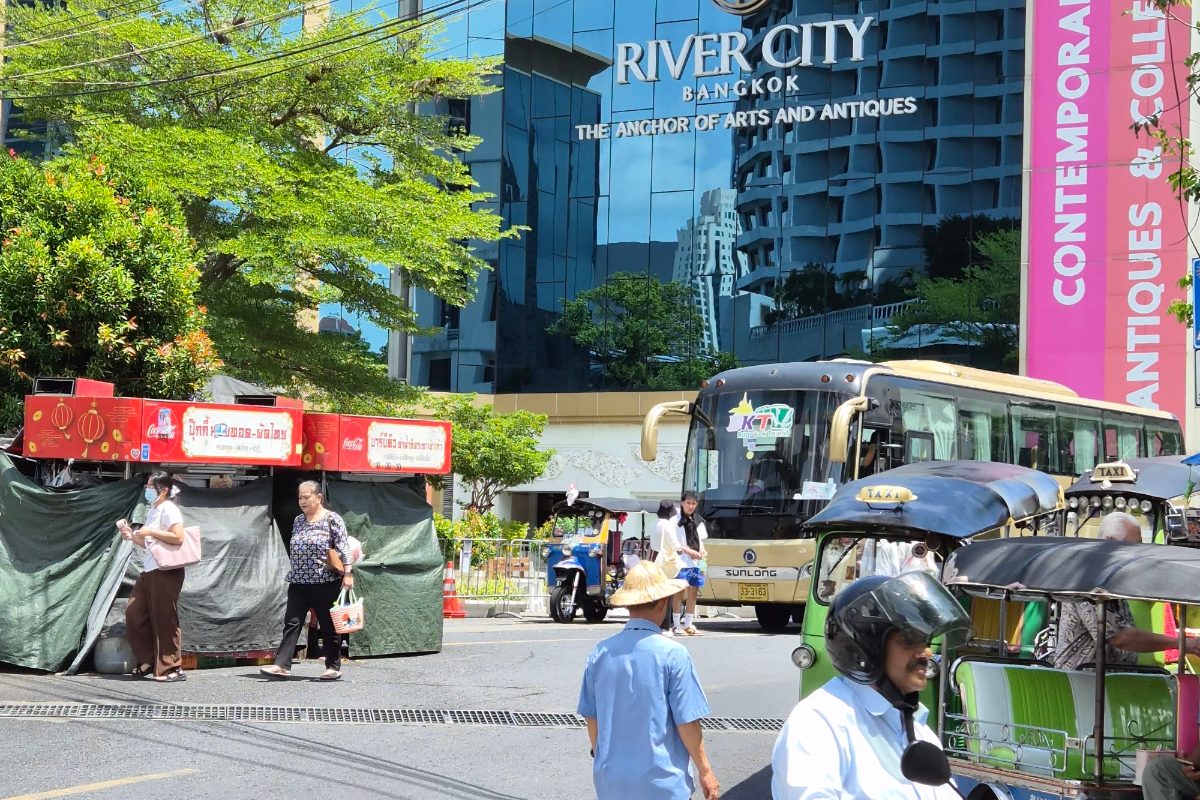
    Bangkok is a safe city: violent crime against tourists is rare, and you can wander around late at night in most neighborhoods. The real risks lie elsewhere, in the small-time scams. They’ve been around for decades, and they still work. Every one of them starts with the apparent kindness of a stranger who strikes up a conversation out of nowhere, in good English, near a tourist site.

    1. “The palace is closed today”

    Near the Grand Palace, a well-dressed man, sometimes introducing himself as a student, a teacher or a police officer, tells you the palace is closed: a ceremony, a public holiday, monks’ prayers… He suggests you go and see another temple, “the Lucky Buddha,” in a tuk-tuk he flags down for you at a ridiculously low price. The tour ends at a jewelry shop or a tailor’s.

    How to dodge it: don’t believe anyone. Go and check for yourself at the official entrance on Na Phra Lan Road. The Grand Palace is open every day from 8:30 a.m. to 3:30 p.m. (last entry), except during announced royal ceremonies.

    2. The 20-baht tuk-tuk and the gemstones

    A driver offers you a city tour for 20 or 50 THB. He drops you off at a gem shop where, with the help of a “tourist” accomplice you just happen to bump into, they explain that you can buy tax-free stones and sell them back in Europe at a handsome profit. The stones are worthless or wildly overpriced. Travelers have lost thousands of euros this way.

    How to dodge it: never buy gems or jewelry as an “investment.” No tuk-tuk works for 20 baht.

    3. The taxi that won’t use the meter

    The driver quotes a flat fare, two to five times what the meter would show. It happens a lot near tourist sites, luxury hotels and nightlife areas.

    How to dodge it: politely say no and take the next taxi, or book a Grab or a Bolt, with the price shown up front.

    #Thailand #Bangkok #ThailandTravel #TravelTips #Asia #MrSchaka

    4. The airport touts

    In the arrivals hall at Suvarnabhumi, touts offer a “taxi” or a “limousine” at a fixed price. A flat rate of 1,000 or 1,500 THB to the city center is a rip-off: on the meter, the ride costs 350 to 550 THB, plus the 50 THB airport surcharge and the tolls.

    How to dodge it: head straight to the official kiosks on Level 1, which assign you a taxi, or book a Grab.

    5. Fake TDAC websites

    The mandatory digital arrival card is free, but plenty of websites copy the official form and charge €20 to €90. How to dodge it: use tdac.immigration.go.th and nothing else. Be just as careful with hotel bookings and ticket sales: stick to the well-known platforms.

    Other traps worth knowing about

    • The fake tourist information office: real TAT (Tourism Authority of Thailand) offices don’t sell anything and don’t take you anywhere.
    • The “gift” tied around your wrist by a vendor who then demands money.
    • Hostess bars in certain neighborhoods, where the bill skyrockets: check the prices and your tab.
    • Changing money on the street: only use official exchange offices.
    • Fake monks asking for money: real monks don’t beg for cash; they receive offerings of food in the morning.

    The real danger isn’t a scam

    Two pitfalls will cost you far more than an overly curious tuk-tuk. The first is the e-cigarette, which is completely banned in Thailand: importing, selling and possessing one can land you a heavy fine, a stint in police custody, even prison. The second is traffic: Thailand drives on the left, crosswalks are rarely respected and motorbikes often ride the wrong way. Look both ways, always.

    Useful numbers

    • Tourist Police (English-speaking, 24/7): 1155
    • Police: 191
    • Medical emergencies: 1669

    Good to know: before you leave, scan your passport, your insurance policy and your prescriptions, and email them to yourself. If anything gets stolen, it’ll all be accessible from any computer.

    Cover of Bangkok – The Practical Guide, Mr Schaka’s practical guide to Bangkok

    Want to dig deeper?

    The “Safety, Health and the Law” chapter of Mr Schaka’s guide, Bangkok – The Practical Guide (“Bangkok: The Practical Guide”), covers every rule you need to know in 2026: cannabis, alcohol, ID documents, hospitals, embassies. So you can travel with peace of mind. The English edition is out now as a PDF ebook: buy it here →
  • Getting Around Bangkok: BTS, MRT, Boats, Taxis and Grab

    Getting Around Bangkok: BTS, MRT, Boats, Taxis and Grab

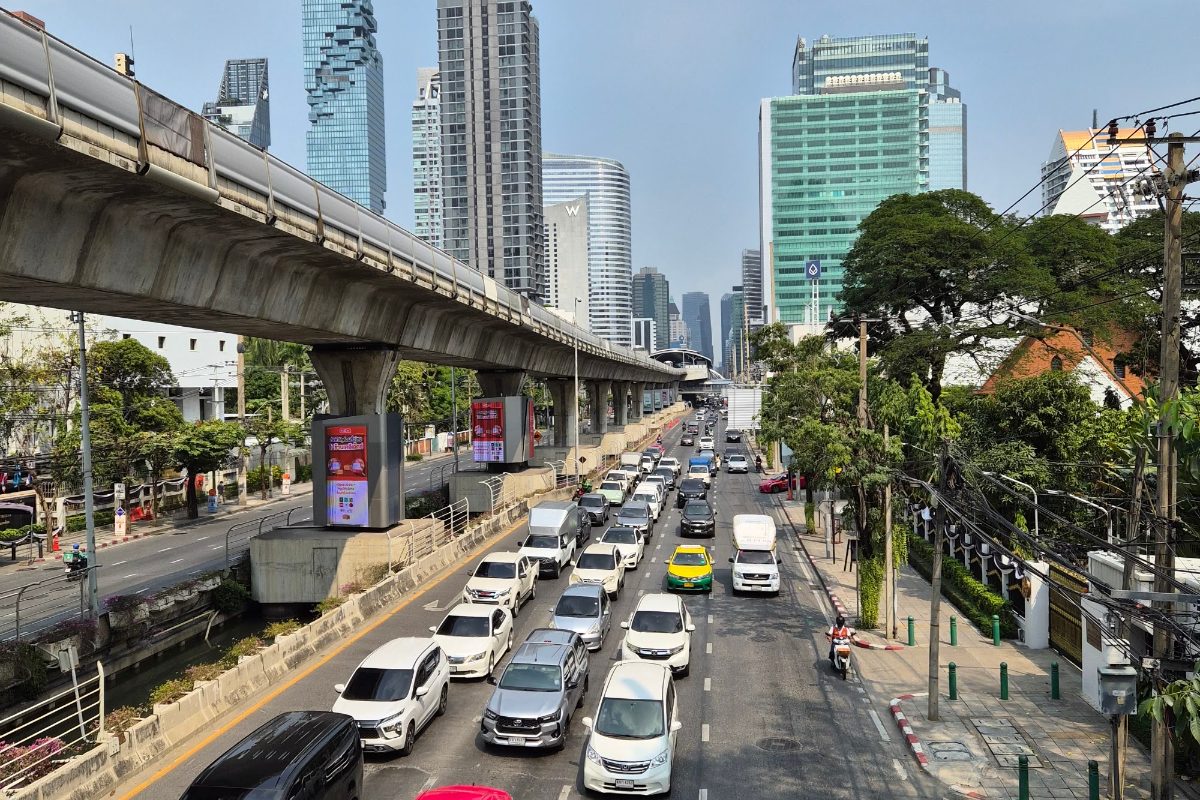
    For a long time, Bangkok was a byword for monster traffic jams. That’s still true at rush hour, but today the city has a clean, air-conditioned and cheap rail network. The golden rule for getting around Bangkok: to cross the city, take the train; for the last few kilometers, a taxi, a Grab or your own two legs; for the old town, the boat.

    The BTS, the elevated railway

    Opened in 1999, the Skytrain is still the backbone of the city center. Its two main lines cross at Siam, the central station:

    • Sukhumvit Line (light green): from the north (Mo Chit, Chatuchak) to the east, via Siam, Chit Lom, Asok, Phrom Phong, Thong Lo and Ekkamai.
    • Silom Line (dark green): from National Stadium to the west bank of the river, via Siam, Sala Daeng and Saphan Taksin, the station for the main pier.

    Expect 17 to 65 THB per ride depending on distance. The one-day pass (150 THB) pays off from four or five rides. For a longer stay, the rechargeable Rabbit card is sold at ticket counters on presentation of your passport.

    Watch out: the BTS doesn’t accept contactless bank cards at the gates. Buy a ticket from the machine or use a Rabbit card.

    The MRT, the underground metro

    Along with the BTS, the Blue Line is the most useful for visitors: it serves Chatuchak, Sukhumvit (interchange at Asok), Lumpini, Silom (interchange at Sala Daeng), Chinatown (Wat Mangkon) and Sanam Chai, a stone’s throw from Wat Pho and the Grand Palace.

    Good news: the MRT accepts contactless Visa and Mastercard. Just tap your card or phone on the reader at the entrance and the exit. It’s the easiest option for a tourist.

    Good to know: you’ll hear about a flat 20-baht fare. It has existed since October 2025, but it’s reserved for Thai citizens registered with their national ID number. Visitors pay the regular fare.

    #Thailand #Bangkok #ThailandTravel #TravelTips #Asia #MrSchaka

    The boat, the city’s most beautiful highway

    The Chao Phraya river dodges the traffic and offers a superb view of the temples. The color of the flag at the back of the boat tells you the service:

    • Orange flag: the regular line, about 20 THB, serving most of the tourist piers.
    • Blue flag: the tourist boat with commentary, about 60 THB per ride or 300 THB for a day pass.

    The piers to remember: Sathorn (connection to BTS Saphan Taksin), Ratchawong (Chinatown), Tha Tien (Wat Pho, plus the ferry across to Wat Arun), Tha Chang (Grand Palace) and Phra Arthit (Khao San).

    Good to know: for a first taste, take an orange-flag boat from Sathorn to Phra Arthit in the late afternoon. For 20 baht, you’ll glide past the Mandarin Oriental, Wat Arun and the Grand Palace in the golden light. Note that most boats stop running around 6:30–7 p.m.

    Taxis, Grab and Bolt

    Metered taxis are everywhere: a red light means they’re free. The flag fall is 35 THB and a ride in town usually costs 60 to 200 THB, plus tolls. Insist on the meter (“meter”): if the driver quotes a fixed price, get out and take the next one.

    The Grab and Bolt apps work very well. The price is shown before you book and the address is sent to the driver: no more language problems. Bolt is often a little cheaper, Grab more reliable at busy times.

    Tuk-tuks and motorbike taxis

    The tuk-tuk is a fun experience for a short evening ride, but it’s neither the cheapest nor the fastest option. Negotiate the price before you get in: expect at least 100 to 200 THB in the city center.

    Watch out: a tuk-tuk offering a “city tour” for 20 or 50 baht will mostly take you to jewelers and tailors who pay the driver a commission. It’s one of the oldest scams in Bangkok.

    Motorbike taxis, with their numbered orange vests, wait at the mouth of the side streets (10 to 50 THB). Perfect for escaping the traffic over a short distance. Insist on a helmet.

    In short: which transport to choose?

    • Crossing the city during the day: BTS or MRT.
    • Going to the old town: BTS to Saphan Taksin then the boat, or MRT to Sanam Chai.
    • Heading home after midnight: Grab or Bolt (the metro closes around midnight).
    • With big suitcases: taxi or Grab.
    • Just for fun: a boat on the river, a tuk-tuk in the evening.
    Cover of Bangkok – The Practical Guide

    To go further

    Mr Schaka’s guidebook, Bangkok – The Practical Guide, details every line, every pier and the routes from both airports, with a network map. Everything you need to get around Bangkok stress-free without getting ripped off. The English edition is out now as a PDF ebook: buy it here →

  • Thailand Visa in 2026: Entry Requirements, TDAC and Pitfalls to Avoid

    Thailand Visa in 2026: Entry Requirements, TDAC and Pitfalls to Avoid

    Visa, digital arrival card, passport, money: what you need to know before leaving for Thailand, with the rules in force in 2026. The formalities have changed several times in recent years, and a lot of the articles online are out of date.

    Do you need a visa for Thailand?

    No, not for a short tourist stay. Since September 15, 2026, travelers from Belgium, France, Switzerland, Canada and Luxembourg (among some sixty nationalities) have been eligible for a 30-day visa exemption. It replaces the 60-day visa-free scheme that had applied since July 2024.

    • This stay can be extended once, by up to 30 days, at an immigration office, before your permission to stay expires. Expect to pay around 1,900 THB; approval is at the officer’s discretion.
    • Land border entries under the visa exemption are in principle limited to two per calendar year.
    • For a longer stay (retirement, work, study), you need a visa applied for in advance on the Thai government’s official e-Visa portal.

    Watch out: don’t rely on a forum or an old article. Before booking, check the current rules on the website of the Royal Thai Embassy in your country or on the official e-Visa portal.

    What the immigration officer may ask you for

    • a passport valid for at least six months after your date of entry;
    • a return or onward ticket before the end of your authorized stay;
    • the address of your accommodation;
    • more rarely, proof of sufficient funds.

    The digital arrival card (TDAC)

    Since May 2025, the paper form you used to fill in on the plane is gone. Every foreign visitor must complete the Thailand Digital Arrival Card (TDAC) online, within the three days before arrival. It’s free.

    1. Go to the only official website, run by Thai immigration: tdac.immigration.go.th.
    2. Enter your passport details, your flight and your address in Thailand, and answer the short health questionnaire.
    3. You’ll receive a confirmation email with a QR code. Keep it on your phone, and take a screenshot just in case.

    Watch out: many websites imitate the official form and charge €20, €50 or €90 for this service. The TDAC is free: if you’re asked to pay, you’re not on the right site.

    #Thailand #Bangkok #ThailandTravel #TravelTips #Asia #MrSchaka

    A tourist tax? Not yet

    You may read that you have to pay a “tourist tax” on arrival. As of September 2026, no such tax is being collected yet. In August 2026 the government approved, in principle, an entry fee of 450 THB per foreign visitor, but it will only apply about six months after its official publication. If you’re traveling in 2027, check before you go.

    What you absolutely must not pack

    Trap number one for European travelers: the e-cigarette. In Thailand, vapes, e-liquids (with or without nicotine) and heated tobacco are completely banned: import, sale and possession alike. Penalties range from confiscation and a heavy fine all the way to prison. Leave them at home, even if you see them being sold on the street.

    Duty-free, each traveler may bring in only 200 cigarettes and 1 liter of alcohol. Customs checks are frequent.

    Money: smart habits

    • Every withdrawal with a foreign card costs about 220 THB in fees charged by the Thai bank: make fewer, larger withdrawals.
    • When the ATM offers to charge you “in euros” at a guaranteed rate, decline and choose baht: that conversion is almost always a bad deal.
    • Exchange offices in town give better rates than the airport. The SuperRich branches have a good reputation; there’s one in the basement of Suvarnabhumi Airport, near the train station.

    Health and insurance

    No vaccinations are mandatory for travelers coming from Europe; make sure your routine vaccinations are up to date and ask your doctor for advice. Travel insurance is a must: Bangkok’s private hospitals are excellent but expensive, and a hospital stay can cost several thousand euros.

    The pre-departure checklist

    • Passport valid for at least six more months after arrival
    • Return or onward ticket
    • TDAC completed within the three days before arrival, on the official site
    • Travel insurance covering medical costs and repatriation
    • No e-cigarette in your luggage
    • Copies of your passport and insurance emailed to yourself
    Cover of Bangkok – The Practical Guide

    To go further

    The formalities are only the beginning. Mr Schaka’s guidebook, Bangkok – The Practical Guide, takes you from the airport to the back alleys of Chinatown: transport, neighborhoods, addresses, food, etiquette and safety, updated for 2026–2027. The English edition is out now as a PDF ebook: buy it here →