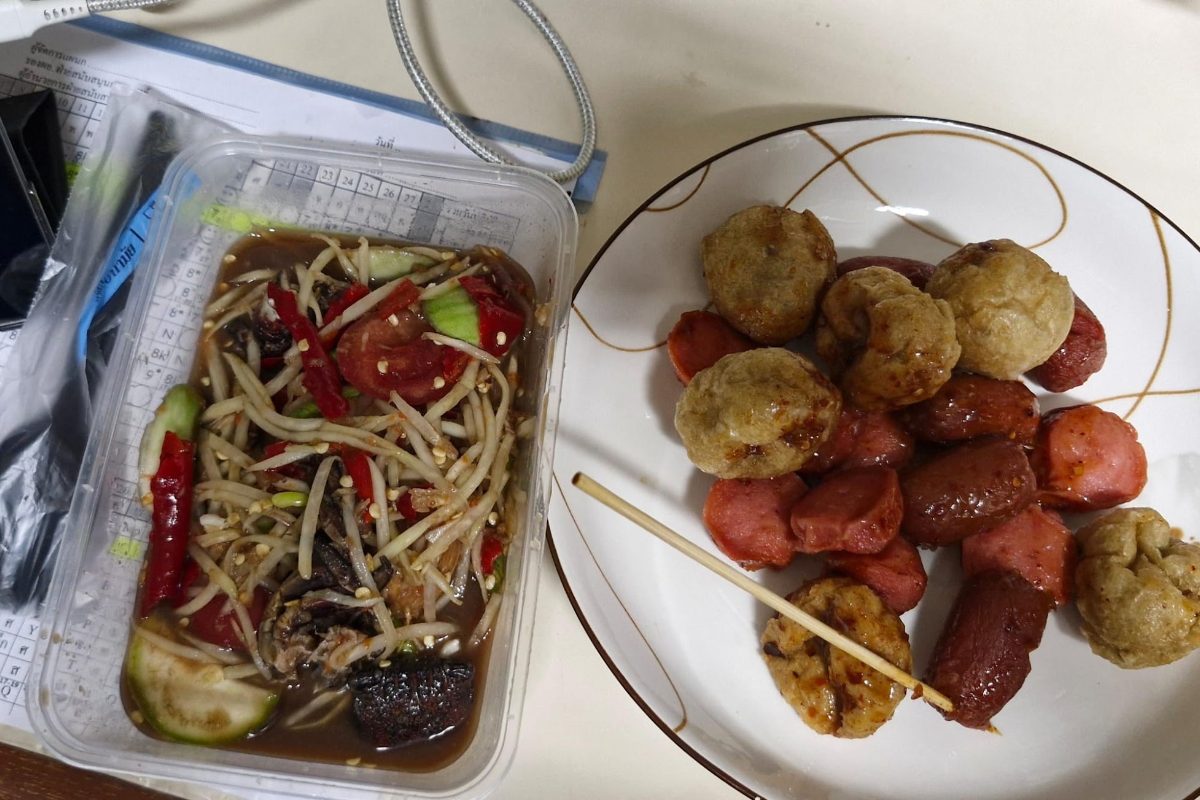
People come to Bangkok for its temples. Many come back for its street food. Here you eat just as well, if not better, on a plastic stool for 60 baht as you do in a Michelin-starred restaurant. Proof: the question “Kin khao rue yang?”, “Have you eaten?”, is how people say “How are you?”
The dishes you absolutely have to try
- Pad kra pao: minced pork or chicken stir-fried with holy basil and chili, served over rice with a fried egg. The real everyday dish of Thai people.
- Pad thai: rice noodles stir-fried with tamarind, egg, tofu and peanuts. The one foreigners know best.
- Khao man gai: poached chicken on rice cooked in the broth, with a ginger sauce. Pure comfort food.
- Tom yum goong: a hot and sour shrimp soup with lemongrass and galangal.
- Som tam: green papaya salad pounded in a mortar, the emblem of Isan, the Northeast.
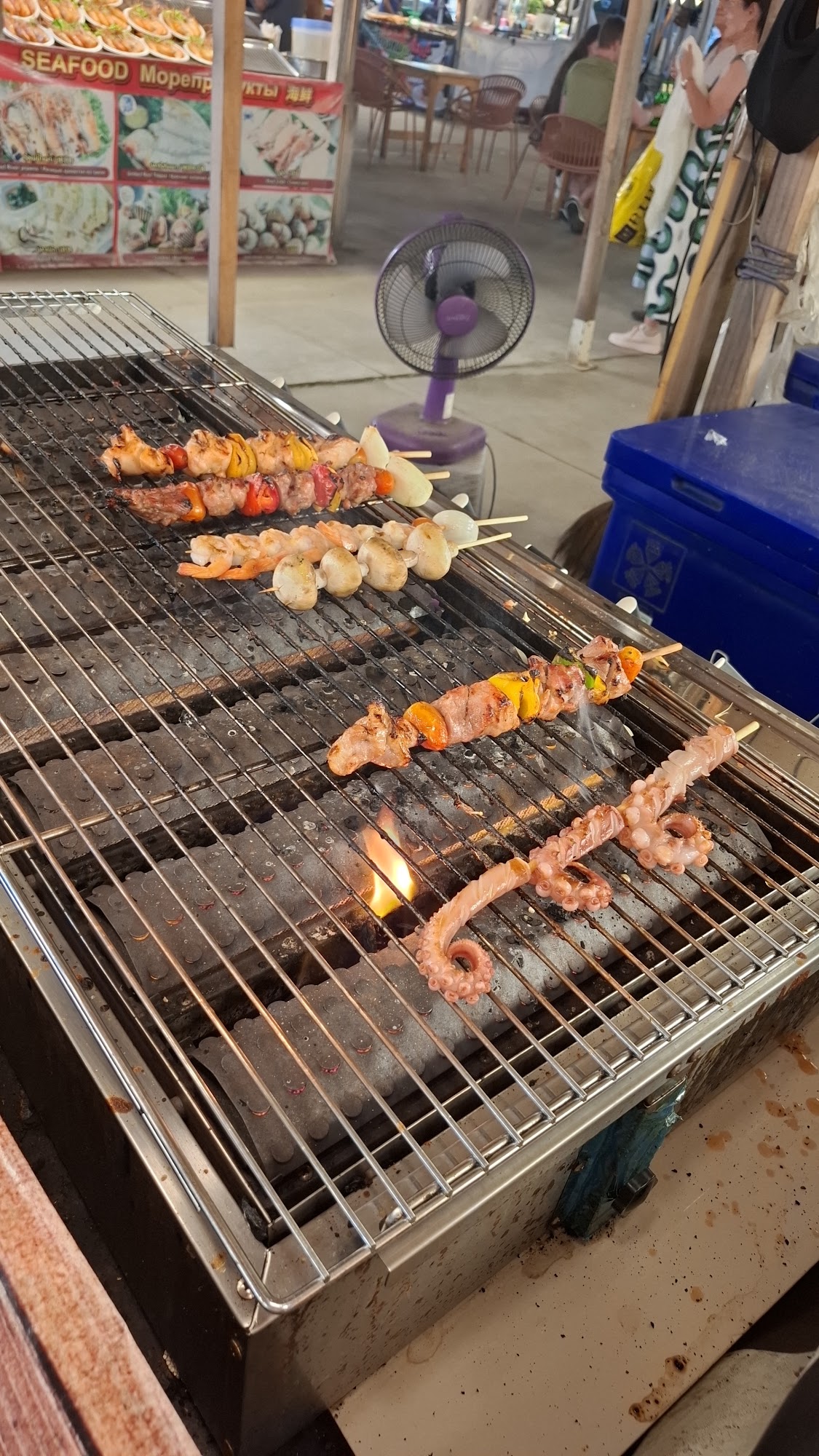
- Gai yang and moo ping: grilled chicken and pork skewers, with sticky rice you roll into a little ball between your fingers.
- Massaman: a mild curry with potatoes and peanuts, perfect for easing in.
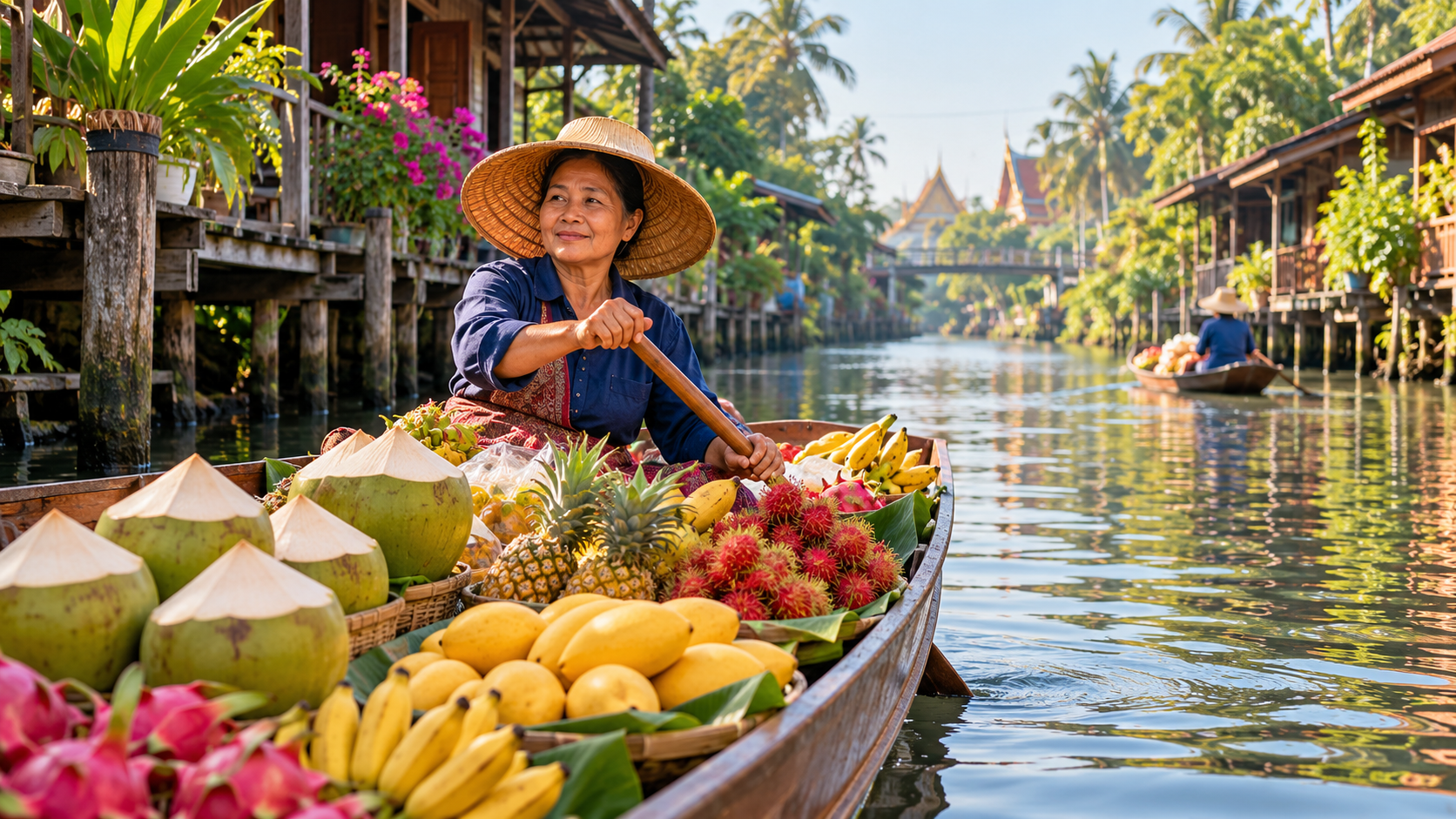
- Khao niao mamuang: mango sticky rice with coconut cream, the king of desserts, especially from March to June.
Not too spicy, please
To order something less spicy, say “mai phet” (not spicy) or “phet nit noi” (just a tiny bit). Be warned: Thai “a little spicy” is often still pretty fierce for a European palate. If it burns, water won’t help: eat some plain rice or drink something sweet or milky.
How to pick a street food stall
- Follow the crowd: a stall where Thais are lining up is a stall where the food is good and the ingredients turn over fast.
- Go for dishes cooked in front of you and served piping hot.
- The morning stalls and the evening stalls aren’t the same: a street changes face over the course of the day.
- Many stalls close one day a week, often on Monday.
Should you worry about hygiene?
On the whole, no. Bangkok street food is safe, and travelers’ tummy troubles come more often from the change of diet, the chili and the heat than from contamination. Wash your hands, avoid seafood that’s been sitting in the sun and go easy on the chili for the first few days. Vendors’ ice is generally made industrially with purified water: it’s the cylinders with a hole in the middle.
Food courts: street food with air conditioning
On the top floor or in the basement of shopping malls, food courts bring street food stalls together in an air-conditioned setting, for barely more than on the street. You buy a prepaid card at the entrance, and whatever you don’t spend is refunded. The best: Pier 21 at Terminal 21, the Siam Paragon food hall and SookSiam at Iconsiam.
A few legendary spots
- Jay Fai (old town): the cook in the ski goggles, awarded a Michelin star for her crab omelet. Pricey for a stall, and the wait is very long.
- Thip Samai (near the Golden Mount): pad thai wrapped in a thin omelet, since 1966.
- Wattana Panich (Ekkamai): a beef soup simmered in a cauldron that, so they say, hasn’t been emptied in decades.
Opening hours change: check before you make the trip.
A roving dinner in Chinatown
In the evening, Yaowarat is best devoured stall by stall, in small portions: rolled noodles in a peppery broth, grilled seafood, giant prawns (priced by weight), roast duck on rice, dumplings, and to finish, black sesame sticky rice balls in a hot ginger broth.
How much does it cost?
- Street food dish (pad thai, fried rice, soup): 50 to 100 THB
- Meal in a regular Thai restaurant: 150 to 400 THB
- Thai iced coffee: 40 to 70 THB
- Local beer at 7-Eleven: 50 to 70 THB
Good to know: since December 2025, alcohol can be sold without a break from 11 a.m. to midnight in shops and restaurants. It’s still banned on Buddhist holidays and election days, except in some hotels.

Want to dig deeper?
The “Eating in Bangkok” chapter of Mr Schaka’s guide, Bangkok – The Practical Guide (“Bangkok: The Practical Guide”), covers every dish, table manners, the best addresses by neighborhood and a phrase list for ordering. Enough to eat like a local from your very first night. The English edition is out now as a PDF ebook: buy it here →