
Category: Oscar’s Notebook: articles

Liège, its characters and the history behind the detective series.

  • Visiting the Citadel of Namur: Views, History and a Walking Route

    Visiting the Citadel of Namur: Views, History and a Walking Route

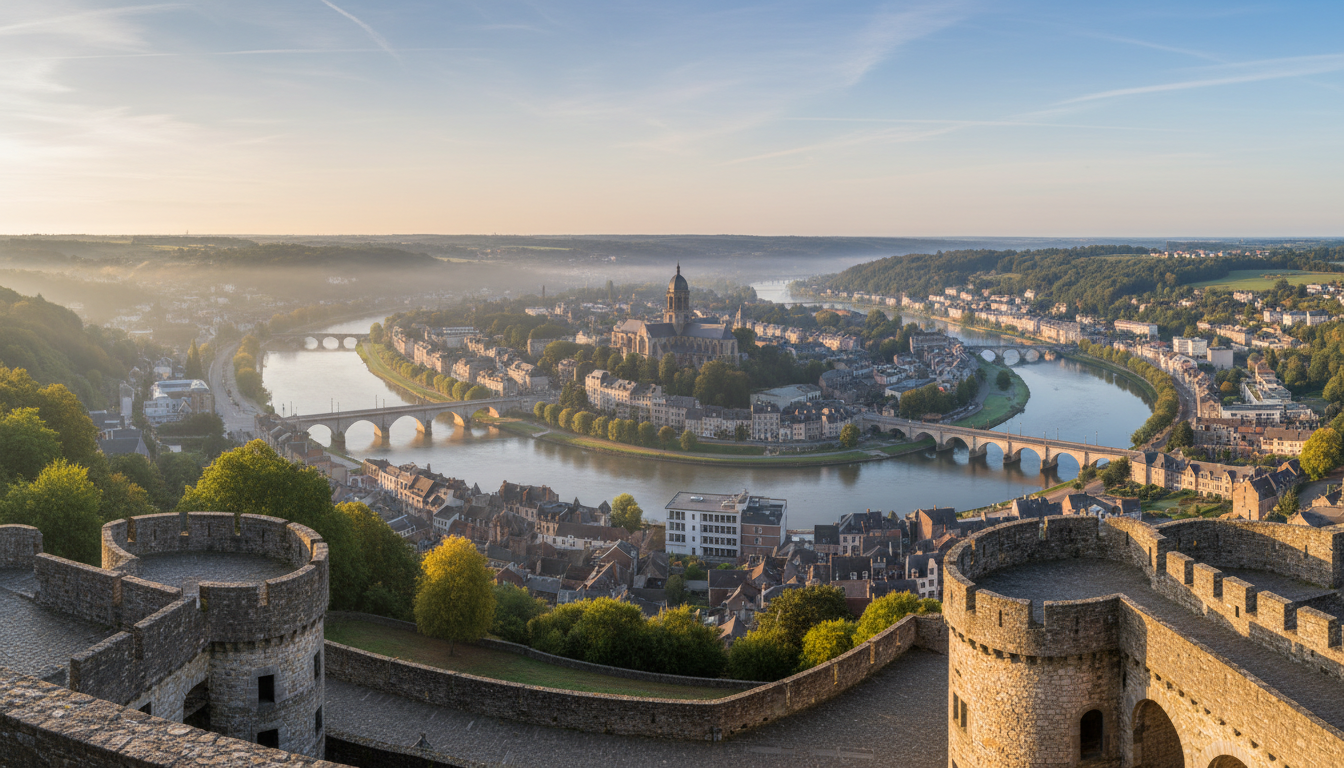
    The Citadel of Namur overlooks the confluence of the Meuse and Sambre rivers. The city spreads below the hill while the valleys guide the eye. Yet the citadel is more than a viewpoint: fortifications, paths, galleries and green spaces tell a story of centuries of military and urban change. A good visit combines history, a walk at your own pace and time to observe the area.

    Understanding the site

    The hill has long been fortified because of its strategic position. Different rulers and engineers changed the installations over time. It is not a fortress built all at once: walls, gates, bastions and galleries belong to several periods. Exhibitions and guided tours place them in context. Check the official site before leaving for opening times, activities and closures.

    The grounds are extensive; you do not need to cover every corner. A short walk can focus on a viewpoint and nearby paths, while a longer visit can include public underground galleries. Slopes and surfaces vary. Wear comfortable shoes, bring a layer for wind and allow time for breaks.
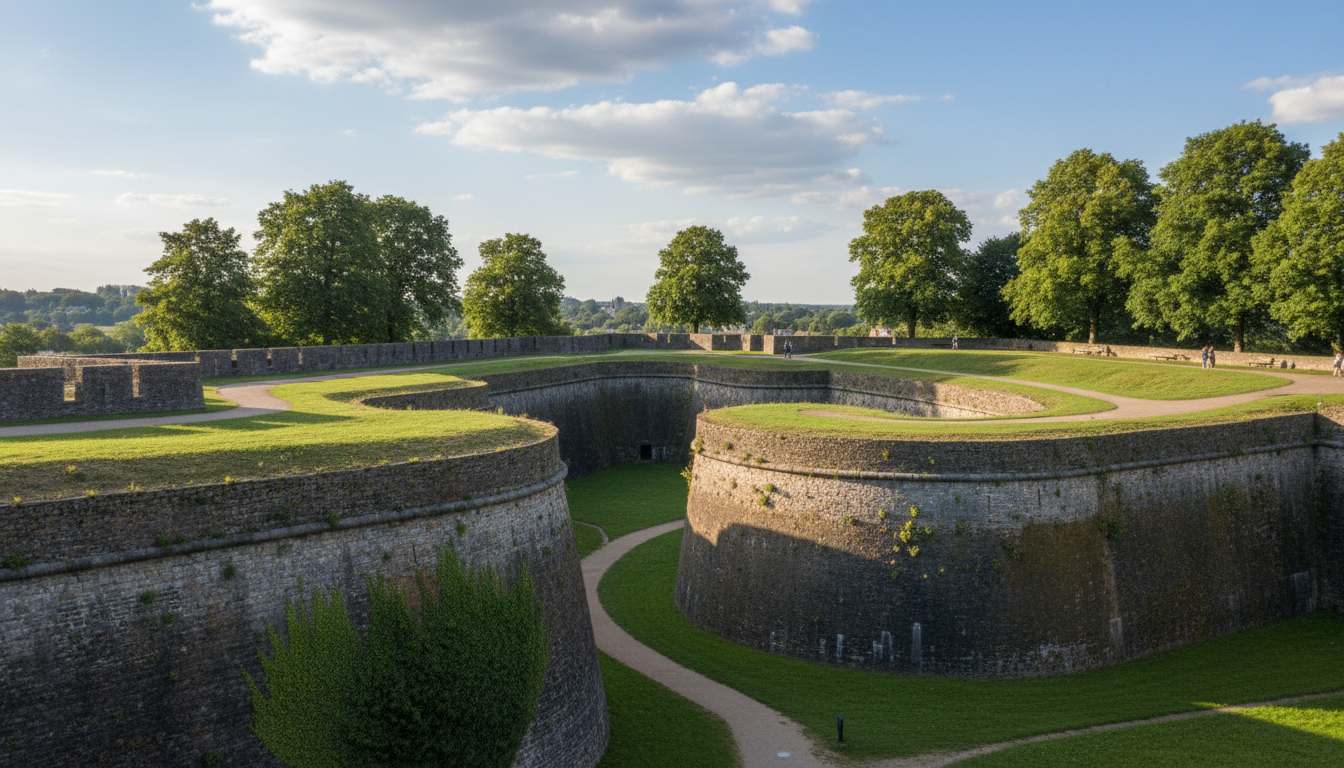
    Remparts de la citadelle de Namur.
    Ramparts and paths make it easy to explore the citadel on foot.

    Choosing how to get there

    Several options connect central Namur with the citadel: marked walking routes, driving where rules allow, or seasonal tourist transport. When operating, the cable car offers a scenic link; check its schedule on the day and do not assume it runs all year. The official site and tourist office are useful references.

    Walking up is rewarding if you have time and the weather is suitable. Some sections are steep. If you have a stroller, mobility needs or young children, check access at the entrance and along your exact route. An open site does not mean every path is step-free. By car, follow signs and park only in authorised areas. Events may restrict access; parking in town and walking up also lets you explore Namur’s streets.

    Views of the rivers

    The viewpoints show both rivers, bridges, rooftops and hills. Light changes with the season and clouds; clear days offer long views, while overcast skies can highlight landforms. Find the confluence and notice the neighbourhoods to understand the site’s strategic value and how the city grew around the rivers.

    Stay behind barriers and watch children near slopes and walls. Wind can be strong and some paths uneven. Keep routes clear when taking photographs and do not climb fragile structures. The citadel is protected heritage: follow signs and remain on permitted paths.
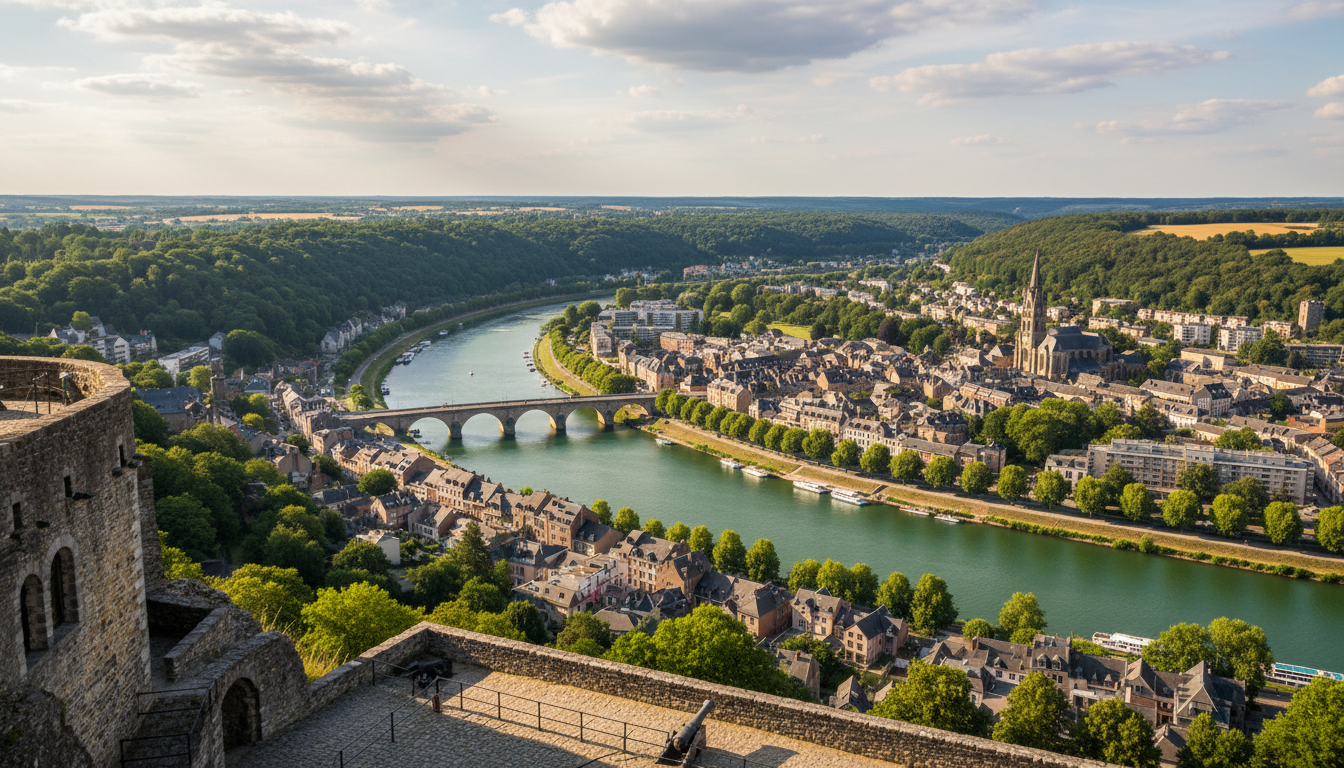
    Vue sur la Meuse depuis Namur.
    From above, the Meuse and Namur rooftops form the panorama.

    Visiting the galleries

    Underground galleries are a distinctive part of the site. Guided visits cover selected restored sections and explain construction, defence and working conditions. The open section is limited compared with the historic network. Check time slots or book ahead, especially during holidays. Tours may include stairs, dark passages and cool temperatures; ask if enclosed spaces are difficult for you.

    A guide explains how the galleries were dug, what areas were used for and how military changes reshaped the site. Follow instructions, do not touch surfaces and avoid flash if discouraged. Groups need room to move through fragile heritage without crowding.

    A half-day at the citadel

    For a first visit, choose your access point, head to one or two viewpoints and follow a path through the green spaces. If you booked the galleries, allow time before and after. A break makes the walk more comfortable. In two or three hours you can combine several views and one activity, depending on weather and pace.

    With a full day, add the historic centre. Walk down to the old town, follow the Meuse or Sambre and explore the squares. A museum or cruise can extend the outing if schedules work. Water activities depend on season; confirm departures and leave time for food and rest.

    A living green space

    The paths are used by visitors, walkers and residents. Keep a suitable pace, give way to joggers and cyclists where permitted, and keep dogs under control. Lawns and wooded areas deserve the same respect as historic buildings. Do not pick plants, feed animals or leave rubbish. Events may change access; check ahead if you want a quiet visit.

    In autumn and winter, paths can be damp or slippery. In summer, bring water and sun protection. Walloon weather changes quickly; a light waterproof layer may save your visit. Check local alerts when strong wind or storms are forecast.

    Continue into town

    The centre has independent shops, cafés and heritage buildings. Check restaurant opening days. A break by the water lets you see the citadel from below and understand the relationship between town and fortress.

    Namur is reachable by train from several Belgian cities, but schedules and works vary. Check official departure and return times. The centre is a short walk from the station; reaching the citadel takes longer. If driving, check traffic zones and parking before entering town.

    Reading traces from several periods

    The fortifications visible today result from successive expansions and redesigns. The confluence drew military attention long before the modern era, and each period adapted the defences to available technology. Bastions, walls and passages therefore tell more than one story. A guided visit can explain how gunpowder, artillery and changing borders transformed the defence of the city. If exploring independently, compare dates on several information panels; a chronological reading helps reveal the layers that make up the site.

    The citadel also had uses beyond the military. Areas were reassigned, restored and made into walking routes, and the views became a cultural and tourist asset. Heritage does not freeze when fortifications stop serving their original purpose. Conservation choices determine which areas are open, how visitors move and what explanations are offered. Seeing the walls as structures maintained by teams and institutions makes the visit more tangible and helps explain why some sections remain closed.

    Choosing between a free walk and a guided visit

    A self-guided walk is flexible: stop at a viewpoint, avoid a busy area and adapt the length. A guided tour adds dates, documented stories and sometimes access to spaces not always open. If booking a guide, check language, duration, meeting point and inclusions. Arrive early and mention mobility or enclosed-space needs. For an independent visit, download the official map and locate toilets, water points and exits.

    Weather strongly affects the experience. On hot days, start early and cover exposed sections before midday. In wet weather, paving and sloped paths can be slippery; shorten the loop and avoid unmarked shortcuts. In strong winds, viewpoints may be uncomfortable and areas may close. Check official notices and signs at the entrance. Keep a route that lets you return without rushing along a difficult path.

    The galleries: a different experience

    An underground visit differs from a walk above ground. Lighting, temperature, echoes and narrow passages create another atmosphere. Ask whether the route includes stairs, low ceilings, a stretch without an exit or sound effects. People who experience claustrophobia or breathing difficulties can decide with this information. Wear shoes with grip and keep your hands free for handrails.

    Inside, stay with the group and follow the marked route. Flash photography can bother others; follow the site’s policy. Do not touch the walls: old materials and damp conditions are sensitive. When the guide describes the builders’ work, consider the scale and conditions of excavation, not only the dramatic tunnel effect. This turns an attraction into a heritage experience.

    Reading the landscape beyond the ramparts

    From the citadel, identify roads, bridges and neighbourhoods linking Namur with nearby towns. The Meuse and Sambre have long served as transport routes and still shape the city. Notice where they meet, then walk down to the quays to compare the view from above with the river level. This shift helps explain why the defensive position mattered and how the landscape guided urban development.

    If you stay in Namur, check riverside walks and cruise schedules. Water levels, weather and season can change availability. A river trip is not automatically included in a citadel ticket; ask before booking. Cyclists may find regional routes, but check slopes and traffic before combining a ride with the hill climb. A good day depends on coherent travel between activities, not on how many stops you can add.

    Planning an accessible visit

    General accessibility descriptions do not always show whether a particular route suits an individual. Contact the site or tourist office to ask about slope, steps, surfaces, benches and toilets in the area you plan to visit. Explain whether you use a wheelchair, cane or stroller. You may be able to enjoy the views without covering every path. A detailed answer is more useful than a broad promise.

    For a family outing, set clear boundaries near walls and slopes. Children may love the fortifications, but elevated areas need close supervision. Alternate historic stops with breaks, carry a snack and agree on a return point. Groups with different ages can share a short loop, then let those who wish continue farther.

    Taking a break in town

    The citadel can be the start or centre of the day, but Namur completes the visit. On the way down, walk through shopping streets, notice façades and stop at a café. Market days and events can change access and atmosphere; check the local calendar. Reserve a meal if travelling in a group or on a busy day. A break is also useful for shelter if the weather changes.

    If travelling by train, allow enough time for the return: railway works and weekend timetables can change the journey. By car, note the parking location and traffic restrictions in advance. Checking these details avoids leaving in a rush when another viewpoint remains to be explored.

    Protecting heritage

    Old walls, slopes, trees and lawns receive many visitors. Stay on paths, respect barriers and do not take stones or plants. Litter on the hill can reach green areas and waterways below. If an area is closed, do not look for another way in: the closure may relate to works, safety or habitat protection. The citadel also hosts cultural and sports events that can change routes and bring larger crowds. If you want a quiet visit, choose another time.

    Using the visit as a starting point

    The citadel can prompt questions that continue beyond the hill: how did river transport influence the city, why did military engineers choose particular ridges, and how does conservation balance public access with fragile structures? You do not need specialist knowledge to explore these questions. Look at the terrain from a viewpoint, then compare it with a town map or an exhibition diagram. A guided explanation can connect a wall or tunnel to a wider European history, while a quiet walk lets you form your own reading of the landscape. Both approaches are valuable.

    Families can turn the visit into an observation activity: find the meeting of the rivers, identify a bridge, or notice how the city changes from the hilltop to the waterfront. Keep the questions open rather than presenting the fortress only as a place of battles. The site also reflects engineering, labour, changing technology and later decisions to conserve and reuse historic spaces. This broader frame gives children and adults more ways to engage with the citadel and its surroundings.

    Making a comfortable day

    Plan the uphill and downhill sections with your energy in mind. If you arrive by cable car or vehicle, you can reserve strength for walking across the grounds; if you climb on foot, leave more time for the return. Carry water, check the forecast and identify a place to rest. When visiting the galleries, allow a pause afterwards before continuing through town. A simple sequence of viewpoint, guided visit, meal and riverside stroll can make a full day feel balanced without adding unnecessary stops.

    Frequently asked questions

    How much time should I plan?

    Allow at least two hours for a walk and viewpoints. Galleries and guided visits add time.

    Can I walk up?

    Yes, several paths start in the centre. Some are steep; choose for your fitness and the weather.

    Does the cable car run all year?

    Schedules and operating periods change. Check the official service before visiting.

    Are the galleries suitable for everyone?

    They may include stairs, dark passages and enclosed spaces. Ask before booking.

    Can I visit with children?

    Yes, with close supervision near ramparts and stairs and a route suited to their age.

    See Namur from above

    The citadel brings geography, history and walking together. Check what is open and choose a realistic loop to enjoy the site without rushing. Which viewpoint stayed with you? Share advice to help others discover Namur at their own pace.

    Sources

    #Namur #Wallonia #Belgium #MrSchaka

    Book cover

    The book

    The Empty Wall is the second book of Oscar’s Notebook, a series of crime novels set in Liège.
  • A Literary Walk in Liège: Independent Bookshops, Comics and Simenon

    A Literary Walk in Liège: Independent Bookshops, Comics and Simenon

    Central Liège is well suited to a walk linking squares, cafés, shopping streets and bookshops. A literary itinerary is more than a sequence of shop visits: it shows how a city tells stories about travel, residents and imagined worlds. Independent bookshops often reflect the interests of their teams and neighbourhoods. Take time to browse, ask for advice and open a book. The most memorable find may be unexpected.

    Begin with travel writing

    Toutes Directions on Rue de la Violette is known for travel books and accounts of journeys. Maps, guides and literature can inspire very different trips. Stock and opening times change, so check the official listing or contact the shop before going. Ask for a recommendation about Liège or Wallonia; a bookseller may suggest a route you had not considered. Treat the shop as a place for conversation as well as shelves to browse.

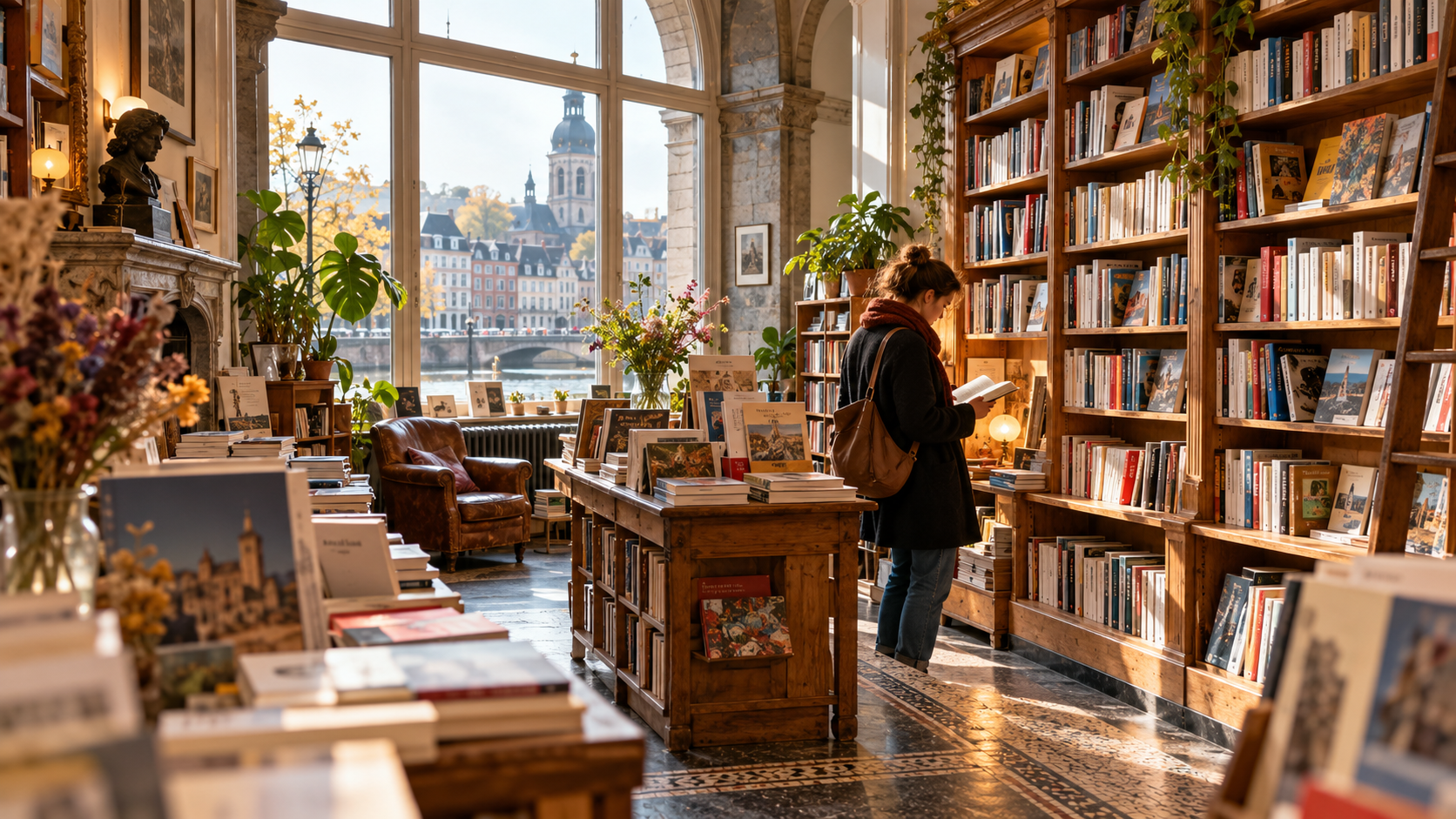
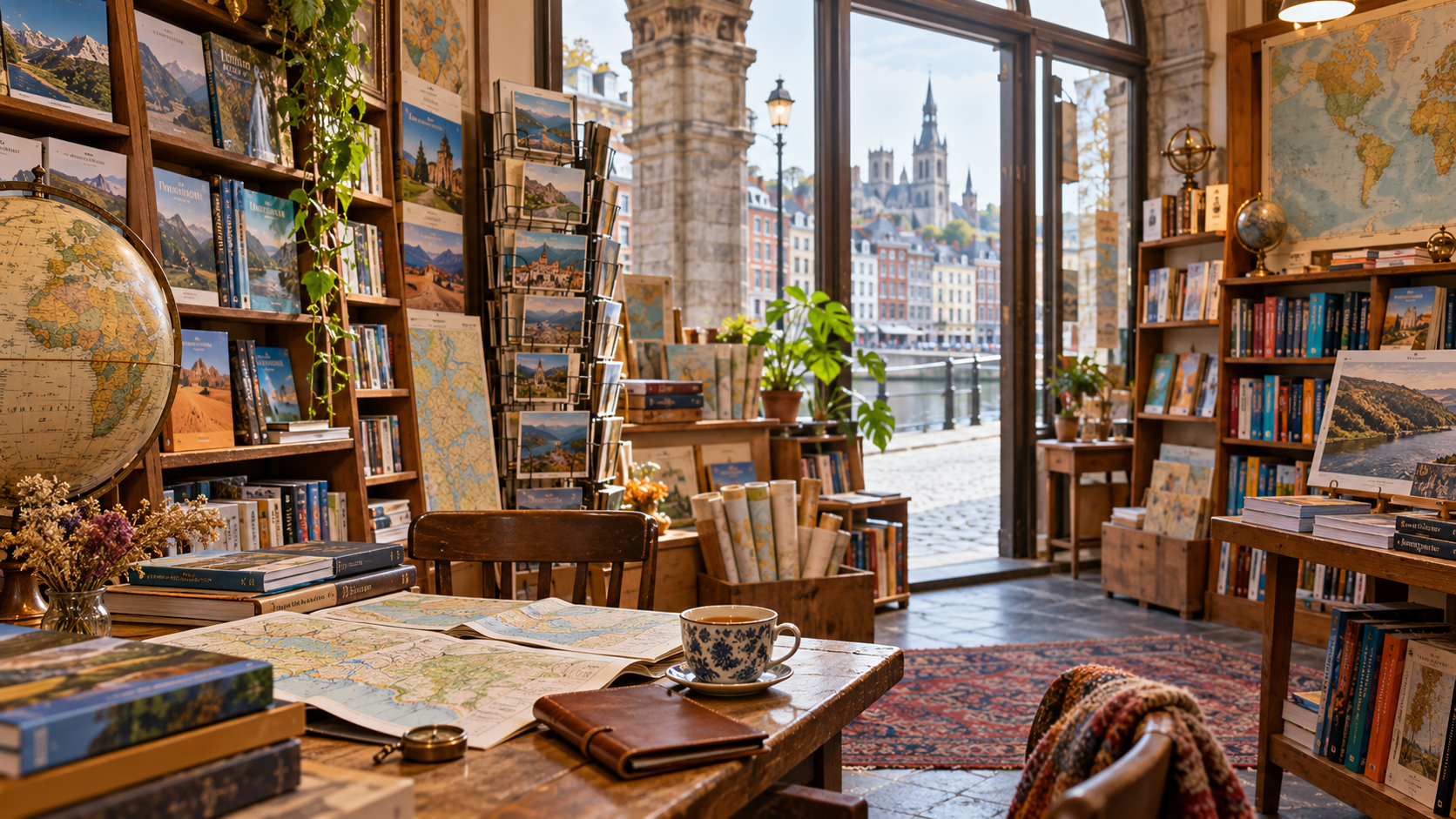
    Welcoming interior of a travel bookshop in Liège
    Independent bookshops invite unhurried discovery.

    Continue to general books

    Pax, on Place Cockerill, offers another perspective. General bookshops let you move from fiction to essays, children’s books or titles about the region. A specific edition may not be available. Call ahead if you need a particular title; otherwise ask staff what they recommend. A café or square provides time to read a few pages and plan the next stop.

    Comics as cultural heritage

    Slumberland BD World on Rue des Dominicains focuses on comics and graphic storytelling. Liège has a strong connection with Belgian and Francophone comics. If you do not know the series, ask for an accessible first album, a local work or a recommendation for a young reader. Comics can be adventure, satire, history or visual literature. Follow the shop’s browsing rules and ask before taking photographs inside.

    Following Simenon

    Georges Simenon was born in Liège. The city’s “In Simenon’s Footsteps” route explores the city through biography and fiction. Check the official tourism page before setting out for the route and practical details. Rather than expecting every place to look exactly as it does in a novel, notice how streets and atmosphere can shape a writer’s imagination. Bring a Simenon book for a break, remembering that the city has changed over time.

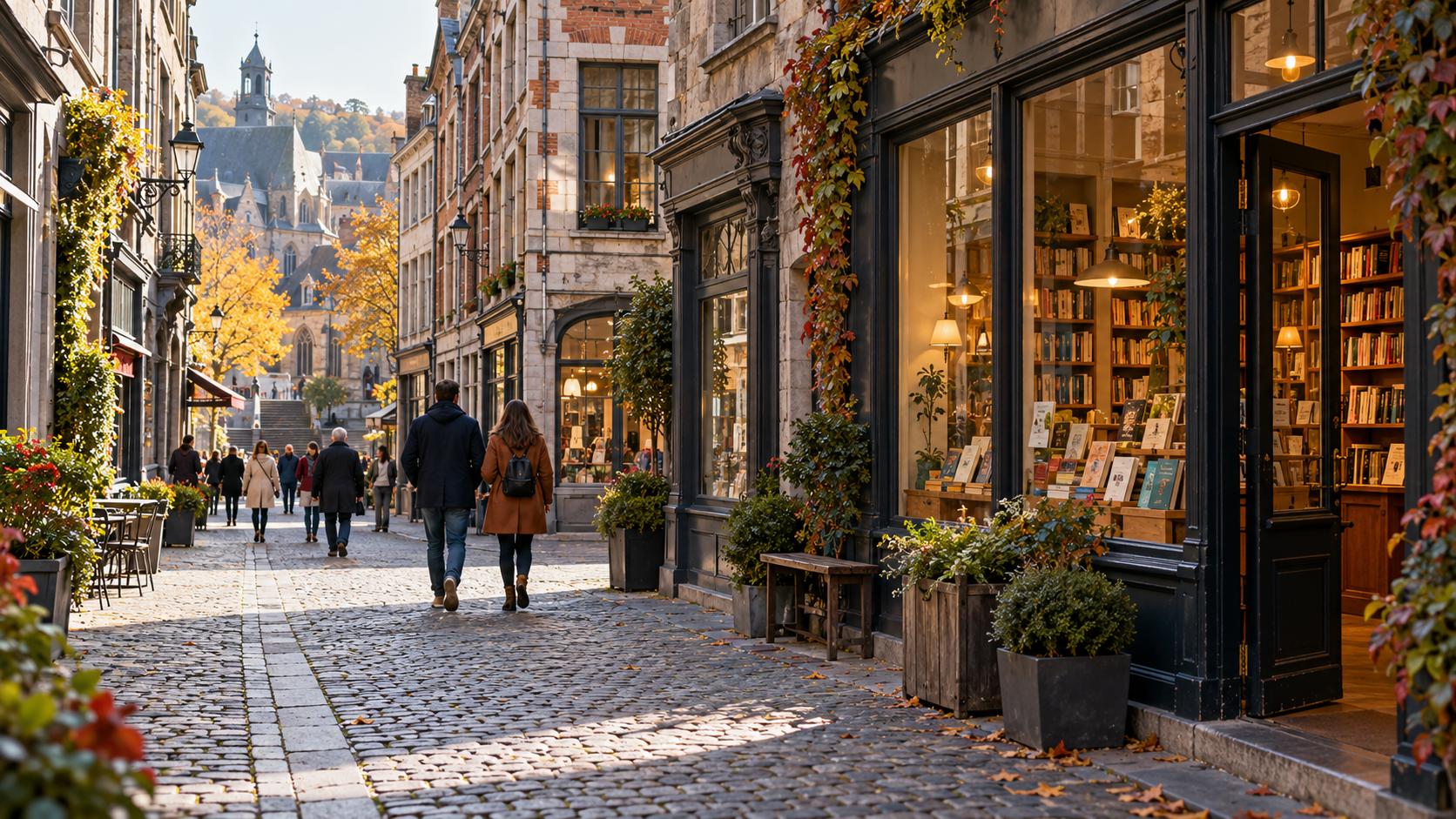
    Liège street with bookshops and local businesses
    A walk connects bookshops with the historic centre.

    Build a comfortable route

    Start in late morning at the travel bookshop, pause for lunch, then visit a general bookshop and the comic shop. Add the Simenon route if time and distance allow. Change the order to match opening hours, which differ by day. Check official pages and plan transport if walking becomes tiring. For a half-day visit, two bookshops and one heritage stop are enough; the walk need not be exhaustive.

    Support independent booksellers

    Buying a book locally helps sustain cultural life. If a title is unavailable, ask whether it can be ordered. You can also request suggestions based on your interests and budget. Attending a listed event, recommending a shop or sharing your visit thoughtfully helps too. Photograph windows without blocking pedestrians and ask permission before taking pictures inside or of people.

    Let each bookshop be a stop, not a race

    A literary walk needs space between visits. In an independent bookshop, a themed table, a handwritten recommendation or a conversation may change the rest of your route. Arrive with a clear curiosity—an author, region or genre—but leave room for surprise. With one hour, choose one shop and browse properly. With a full day, alternate reading, walking and a meal. Spending ten minutes in each place rarely gives you time to understand what makes it distinct.

    Before setting out, note addresses and confirm opening times directly with booksellers. Holiday hours, weekly closing days and events can change the route. A shop may open later than a café or close at lunchtime; use current information instead of an old listing. If one place is closed, the day is not lost: change the order, continue the city walk or save the address for another visit. Flexibility is part of exploring a city.

    Prepare a few questions for booksellers

    Booksellers can help with very different interests. Ask for a novel set in Liège, an accessible introduction to regional history, a first graphic novel or a travel account by a woman writer. Say whether you prefer a short format, illustrations, a translation or a second-hand edition if available. A recommendation is more useful when you describe what you enjoy than when you ask for “the best book.” You can mention your budget and how much time you have to read.

    You do not have to buy a recommendation immediately. Browse it, read the cover and ask whether the shop can hold or order it. If a title is missing, share the exact title and publisher; editions and translations can differ. Staff may check availability, though delivery time depends on suppliers. Ordering locally can support the shop even when a book is not in stock. If you are visiting from elsewhere, ask whether remote payment or shipping is possible without assuming the service is available.

    Read the city between pages

    The walk links neighbourhoods, not only shelves. Between addresses, notice façades, street names, squares and changes in atmosphere. Liège bears traces of different periods; walking helps you feel distances and slopes that a map cannot convey. Some routes include hills, cobbles or busy roads. Wear comfortable shoes and carry books in a secure bag. In rain, shorten the route and plan indoor breaks. Reading a few pages somewhere warm is better than rushing across town to keep an overpacked schedule.

    A café stop can become time for reading or notes. Write down a title, a shop address and an idea you want to remember. A small notebook turns a simple outing into a personal route you can revisit or share. If travelling with friends, let each person choose a stop: a travel bookshop, a comics store or a place linked with a writer. The visit becomes a conversation about everyone’s reading tastes instead of a checklist of addresses.

    From comics discovery to collecting

    A specialist shop makes it easy to compare a classic album, graphic novel, manga, comics and archival editions. If you are buying a gift, share the reader’s age and a few works they enjoy; staff can suggest a better match. A self-contained story is a good first choice if you want to avoid a long series. Collectors should check format, edition, condition and language. Reprints and special editions can look similar without being identical. The shop may order a missing volume or suggest another title by the same artist.

    Comics are also a way into the history of images and Belgian cultural identity. Browse a few pages and notice panel rhythm, colour and the relationship between text and drawing. Visual storytelling rewards a different pace from prose. If a reference is unfamiliar, ask the bookseller: some series rely on a particular context, while others need no background. With children, allow time and let them choose part of the reading, while setting a clear limit on how many books you can carry.

    Approach Simenon without turning residents into scenery

    The Simenon route links biographical places with literary atmosphere. Read the official introduction before starting and choose the stops that interest you most. You might read an excerpt first, then compare the fiction with the present-day city. Neighbourhoods change, shops close or move, and some places are private. A literary walk does not grant access to interiors or permission to photograph residents. Stay in public space and treat the story as a way to listen to the city rather than as a stage set involving people who live there.

    Reading Simenon can also raise questions about urban memory. What does a city preserve about a well-known author? Which places are marked, and which stories are less visible? A respectful visit can recognise the writer’s importance without reducing Liège to a single biography. Bookshops and cultural organisations offer other perspectives: contemporary writing, social history, poetry and regional accounts. Ask for recommendations that broaden your view. You may leave with several books that speak to one another and a fuller picture of the city.

    Accessibility and route planning

    The centre can be explored on foot, but distance, cobbles, slopes and weather affect comfort. Visitors using mobility aids should check shop entrances and any construction before leaving. Not every shop has the same space or step-free access. Contact the places you particularly want to visit for specific details. Public transport or a taxi can reduce a long walk between stops. On busy days, choose places where entering and leaving is manageable.

    To avoid fatigue, take a break every one or two stops and carry a light bag. If you buy several books, return them to your accommodation before continuing. In winter, daylight fades earlier; prioritise indoor visits during opening hours and outdoor walking in daylight. In summer, check special hours and bring water. An accessible route is not always the shortest: it is one you can complete comfortably while enjoying each stop.

    Create a personal theme

    Give the walk a thread by choosing a theme: “Liège through its writers,” “travel and elsewhere,” “Belgian comics,” “children’s books” or “neighbourhood history.” A theme guides your questions without limiting discovery. Note books that connect and ask whether the booksellers know of upcoming readings or events. Calendars change; check official announcements and confirm whether registration is needed.

    A themed route might also include a library, museum or commemorative plaque if it is open and accessible. Check entry conditions and hours. Avoid packing in far-apart stops: a coherent story matters more than a high number of points. If you publish the route, state when you checked opening times and link readers to the shops for current details. Make clear that practical information can change.

    More FAQ

    How do I choose a shop if I do not know the area?

    Start with a specialist that matches your interests, then ask the staff where to go next. Check distances and hours before crossing town.

    Do bookshops sell English-language books?

    Selection varies. Contact a shop directly if you need a specific English title or a broader selection.

    Can I find second-hand books?

    Some shops carry them, but stock varies. Ask staff and check the condition and edition before buying.

    How do I attend a literary event?

    Check the shop or organiser’s calendar. Some events are open; others require registration or a reservation.

    What budget should I plan?

    The walk itself may be free apart from transport and meals. Book spending depends on what you buy; set a limit if you want to keep your bag light.

    What if a shop is closed?

    Keep an alternative stop, continue through the neighbourhood or save it for another day. Check the opening time before returning.

    Leave a little space in the day

    A bookshop walk works best when there is time to browse without watching the clock. Keep one optional stop rather than filling every hour, and check the final opening time before leaving. If you find a book that changes your plan, let the route change too. Note the title and the shop where you found it; that small detail can make the walk easier to remember and recommend.

    Before heading back, check that your books are secure and that you have left room for the journey. If a title is unavailable, ask whether it can be ordered or whether another nearby shop may carry it. A polite conversation can be useful even when you leave without a purchase. The aim is to make the local book trade part of the visit, not to rush through it.

    FAQ

    Can I do the walk in half a day?

    Yes, by choosing two or three stops and shortening the heritage route.

    Are shops open every day?

    No. Check current opening times before leaving.

    Do I need to book?

    Not for browsing; some literary events may require registration.

    Is it suitable for children?

    Yes, especially with a comics stop and breaks; adjust the distance.

    Can I follow the Simenon route without a guide?

    Official tourism resources can help you prepare; check current directions.

    How can I support the shops?

    Buy locally, order a title or recommend the bookshop.

    A bookish day out

    This walk connects travel at Toutes Directions, general shelves at Pax, comics on Rue des Dominicains and Simenon’s memory. Check opening hours, leave time to browse and keep room in your bag. Which book would you bring: a Liège story, a graphic novel or a travel journal? Share your recommendation and favourite bookshop.

    Official sources and listings

    #Liege #Bookshops #Wallonia #MrSchaka

    Book cover

    The book

    The Empty Wall is the second book of Oscar’s Notebook, a series of crime novels set in Liège.
  • What to do in Liège in autumn?

    What to do in Liège in autumn?

    Autumn is often crossed without thinking, between summer and the holidays. In Liège it is a good moment: terraces empty, museums fill, and light on the slopes becomes magnificent.

    One thing must be accepted: it rains. But the city is made for that, with cafés, covered passages and museums.

    La Batte market

    The big Sunday morning market along the Meuse is a Liège institution: fruit, cheese, clothes, bric-a-brac, and food on the spot. In autumn it is quieter than in summer.

    Museums

    The ideal season for indoor visits: Grand Curtius, La Boverie, Aquarium-Museum, university collections. Shorter queues than in July.

    Colours on the slopes

    The heights offer views over roofs and river, and trees turn. The citadel climb and stairways let you enjoy it. Choose a clear day.

    Along the Meuse

    The quays stay usable and walks are pleasant with a coat. Evening light on the river is one of the best moments. On windy days, bring a scarf.

    Cafés

    It is café season: settle in, read, talk. Bars offer seasonal beers and stews. Covered, heated terraces extend the season.

    The fair

    A large funfair traditionally sets up in Liège in October, with rides, stalls and specialities. Popular, family-friendly, very busy at weekends.

    Specialities

    Autumn calls for hearty dishes: boulets à la liégeoise, potée, cheeses, waffles. Brasseries offer seasonal menus.

    #Liege #Autumn #MrSchaka

    Culture

    The cultural season restarts: theatre, concerts, opera, shows. A dense programme from September.

    Nature outings

    Woodland walks with seasonal colours. Urban parks and the Meuse banks are accessible without a car. Wear suitable shoes: paths get muddy.

    What to wear

    Weather changes fast: layers, umbrella, waterproof shoes. Mild but humid.

    FAQ

    Best month?

    September and October offer the best light; November is greyer.

    Does it rain much?

    Often, but showers are usually short.

    Rainy day?

    Museums, cafés and covered passages.

    Terraces open?

    Some, covered and heated.

    Should I book?

    For shows and some restaurants, yes.

    Also read

    Book cover

    The book

    The Empty Wall is the second book of Oscar’s Notebook, a series of crime novels set in Liège.
  • How to visit the Aquarium-Museum in Liège?

    How to visit the Aquarium-Museum in Liège?

    The Aquarium-Museum is one of those places Liège locals have known since childhood. Set by the Meuse, it combines an aquarium and a zoology museum, with university collections and tanks children love.

    It is an indoor outing, useful when it rains, and a chance to understand aquatic life without leaving the city.

    What it is

    A university institution combining a visitable aquarium and a zoology museum. The collections serve both the public and teaching.

    It is not a theme park: it is a scientific and cultural facility, which changes the tone of the visit.

    The aquarium

    Tanks show freshwater and saltwater fish, plus aquatic animals from various regions. Classic staging, with lighting and explanatory panels.

    Children spend time in front of the tanks, and the route is short enough not to tire them.

    The museum

    Zoology collections include mounted specimens, skeletons and scientific displays. A more studious part, of more interest to adults and curious children. It gives context to what you have just seen.

    With children

    Suitable: short route, visible animals, accessible explanations. Allow one to one and a half hours.

    How long

    One to two hours for a full visit. A half-day outing, easy to combine.

    Prices and hours

    They change: check the official site before travelling, especially in school holidays. Reductions usually exist for children and students.

    #Liege #Aquarium #MrSchaka

    Access

    By the Meuse, close to the centre and public transport. On foot from the centre along the quays. By car, plan a central car park.

    The surroundings

    Quays, Boverie park, cafés and museums: a pleasant area for a family afternoon.

    Rainy days

    Exactly the kind of place to keep for a grey day: covered, heated, suited to children.

    FAQ

    Should I book?

    No, but check hours and crowds in holidays.

    How long?

    One to two hours.

    Good for young children?

    Yes, short route and attractive tanks.

    When it rains?

    One of the best choices.

    Café or shop?

    Limited on site; the district has cafés.

    Also read

    Book cover

    The book

    The Empty Wall is the second book of Oscar’s Notebook, a series of crime novels set in Liège.
  • The Liège Revolution of 1789: end of a principality

    The Liège Revolution of 1789: end of a principality

    When people talk about 1789, everyone thinks of Paris and the Bastille. Yet in the same year Liège lived through its own revolution: the Liège Revolution, which within a few years brought more than eight centuries of rule by prince-bishops to an end. Here I tell you about its causes, its key figures, how it unfolded up to the French annexation, and the traces you can still see today as you stroll around the “Cité ardente”.

    A principality apart within the Holy Roman Empire

    For more than eight centuries, Liège was neither French, nor Dutch, nor Austrian: it was the capital of an independent principality ruled by a prince-bishop. He was both the religious head of the diocese and the temporal sovereign of a territory that stretched far beyond the city, from the Hesbaye to the Ardennes, including part of today’s Belgian Limburg. The principality belonged to the Holy Roman Empire.

    The people of Liège were deeply attached to their liberties. The Peace of Fexhe, agreed in 1316, already laid down the principle that the prince could not govern alone and had to respect the customs of the land. The perron, a column topped with a pine cone and a cross, had become the symbol of those liberties. But in 1684, Prince-Bishop Maximilian Henry of Bavaria imposed a regulation that stripped the craft guilds of most of their weight in electing the city’s magistrates. A century later, this “1684 Regulation” was still an open wound.

    The causes: from the gaming houses of Spa to public anger

    In the 18th century, Enlightenment ideas circulated widely in Liège, a city of printers and newspapers. Prince-Bishop François-Charles de Velbrück, who ruled from 1772 to 1784, was fairly open to these ideas and supported education and the arts. His successor, Constantin-François de Hoensbroeck, elected in 1784, took the opposite path. Authoritarian and unpopular, he sought to roll back his predecessor’s reforms.

    The spark came from an unexpected place: Spa. The little spa town, which was part of the principality, attracted aristocrats from all over Europe at the time, and its gaming houses made a great deal of money. The prince protected the privilege of certain establishments. When an entrepreneur, Noël-Joseph Levoz, opened a rival gaming room, conflict broke out: in June 1787, Hoensbroeck sent soldiers to close it down. The case went before the Tribunal of the XXII, then before the Imperial Chamber Court at Wetzlar. What had been a quarrel about money became a debate about the prince’s power and the rights of his subjects.

    18 August 1789, the “happy revolution”

    On 18 August 1789, patriots gathered at the town hall on the Place du Marché and demanded the removal of the sitting magistrates. The crowd acclaimed two new burgomasters: Jacques-Joseph Fabry and Jean-Rémy de Chestret. The same day, the Sainte-Walburge citadel overlooking the city fell into the hands of the insurgents. The prince-bishop, who was staying at Seraing castle, was brought back to Liège and accepted the new burgomasters as well as the abolition of the 1684 Regulation.

    The change happened almost without violence, which is why it is often called the “happy revolution”. But Hoensbroeck had only given in on the surface: on the night of 26 to 27 August he slipped out of the principality and took refuge in Trier, in Germany. From exile he refused any compromise.

    The key figures of the revolution

    • Constantin-François de Hoensbroeck: the contested prince-bishop, who chose exile and then returned thanks to imperial troops.
    • Jean-Nicolas Bassenge: writer and poet, one of the leading pens of the patriot camp.
    • Jacques-Joseph Fabry and Jean-Rémy de Chestret: the two burgomasters brought to power on 18 August.

    From republic to restoration (1789-1791)

    A Liège republic was proclaimed and the Estates began drafting a constitution. But the principality was still legally part of the Empire, and imperial justice demanded the prince’s return. Prussia, tasked with mediating, sent troops who occupied Liège from November 1789 to April 1790. The negotiations failed, largely because the exiled prince refused any concession, and the Prussians withdrew.

    The people of Liège then prepared to defend themselves alone. It was in this atmosphere that the song Valeureux Liégeois (“Valiant People of Liège”) was written in 1790 by Abbé Ramoux; it has since become a kind of local anthem. Resistance was not enough: on 12 January 1791 the Austrian army entered Liège and restored Hoensbroeck. Many patriots fled into exile in France and their property was confiscated.

    #CrimeFiction #Liege #Mystery #MrSchaka

    The French, the annexation and the end of the principality (1792-1795)

    Hoensbroeck died on 3 June 1792. His successor, François-Antoine de Méan, would be the last prince-bishop of Liège. On 6 November 1792 the French armies defeated the Austrians at Jemappes, near Mons, and entered Liège on 28 November. The prince fled. A new assembly was elected by universal male suffrage and, in early 1793, the city voted overwhelmingly for union with France.

    Nothing was settled yet. In March 1793 the French were beaten at Neerwinden and the Austrians brought the prince-bishop back. It took the French victory at Fleurus, on 26 June 1794, for everything to change: the Austrians left Liège at the end of July 1794 and were then defeated at Sprimont in September.

    On 1 October 1795 the French Republic officially annexed the Austrian Netherlands and the former Principality of Liège. Its territory was divided between several departments: Ourthe, with Liège as its capital, Meuse-Inférieure and Sambre-et-Meuse. The Principality of Liège vanished from the map and was never restored: after Napoleon’s fall, Liège was attached to the United Kingdom of the Netherlands and then became Belgian in 1830.

    The most spectacular episode, and the most debated today, concerns Saint Lambert’s Cathedral. A symbol of the prince-bishops’ power, this huge Gothic church stood at the heart of the city. Its demolition was decided in 1793 and began in 1794. The work dragged on for years: the western towers fell in 1803 and the site was only fully levelled in 1827. In its place today is the Place Saint-Lambert, which thousands of people cross every day without always knowing what once stood there.

    What you can still see in Liège today

    • The Archéoforum, beneath the Place Saint-Lambert: you go down to see the remains of the cathedral and of much older occupations of the site, going back to prehistory. For me it is the most telling place to understand what was lost.
    • The Palace of the Prince-Bishops, right next door: the sovereign’s former residence now houses the law courts and the provincial authorities. I describe it in detail in my article on visiting the Palace of the Prince-Bishops.
    • The perron and the town hall, on the Place du Marché, where it all began on 18 August 1789.
    • The Treasury of Saint Paul’s Cathedral: many works rescued from Saint Lambert’s, including reliquaries, manuscripts and sculptures, were moved there. Saint Paul’s in fact became Liège’s cathedral after Saint Lambert’s disappeared.
    • The Grand Curtius, on the banks of the Meuse, to immerse yourself in the history and arts of the Liège region (see my article on visiting the Grand Curtius).

    My practical tips

    • Start with the Archéoforum, then come back up to see the Place Saint-Lambert, the palace and the perron: everything is a few minutes’ walk apart.
    • The Archéoforum is normally open Tuesday to Saturday, 10am to 5pm, with adult admission of around 8 euros and free entry on the first Sunday afternoon of the month. Check opening hours and closing days before you go.
    • The Palace of the Prince-Bishops is an official building: find out about guided tours in advance, as you cannot wander freely everywhere.
    • If you climb up to the citadel, wear good shoes and take your time: the climb is steep.

    Frequently asked questions

    When did the Principality of Liège disappear?

    Officially on 1 October 1795, with its annexation by the French Republic. Its territory was divided between the departments of Ourthe, Meuse-Inférieure and Sambre-et-Meuse.

    Who was the last prince-bishop of Liège?

    François-Antoine de Méan, who succeeded Hoensbroeck in 1792. He had to flee before the French armies and never regained his throne.

    Can you still see Saint Lambert’s Cathedral?

    Not standing, but its foundations can be visited at the Archéoforum beneath the Place Saint-Lambert, and part of its treasury is kept at Saint Paul’s Cathedral.

    Book cover

    The book

    The Empty Wall is the second book of Oscar’s Notebook, a series of crime novels set in Liège.
  • Where to walk along the Meuse in Liège?

    Where to walk along the Meuse in Liège?

    The Meuse is the axis around which Liège was built: a working river, then a strolling one. Its quays now offer kilometres of walk, between industrial heritage, parks and views of the slopes.

    Understanding the banks

    The Meuse crosses the city from south to north. The left bank holds the historic centre and landscaped quays; the right bank has residential districts and Boverie park to the south. Many bridges connect them, some remarkable early-20th-century structures.

    The central quays

    A continuous walk with trees, benches and views of the bridges. The simplest route, doable in little time. In the evening the lights give the whole a special atmosphere.

    Boverie park

    South, on the right bank, the park stretches by the water with lawns, a pond and the museum in the former fine arts palace. The ideal start for a family walk.

    The bridges

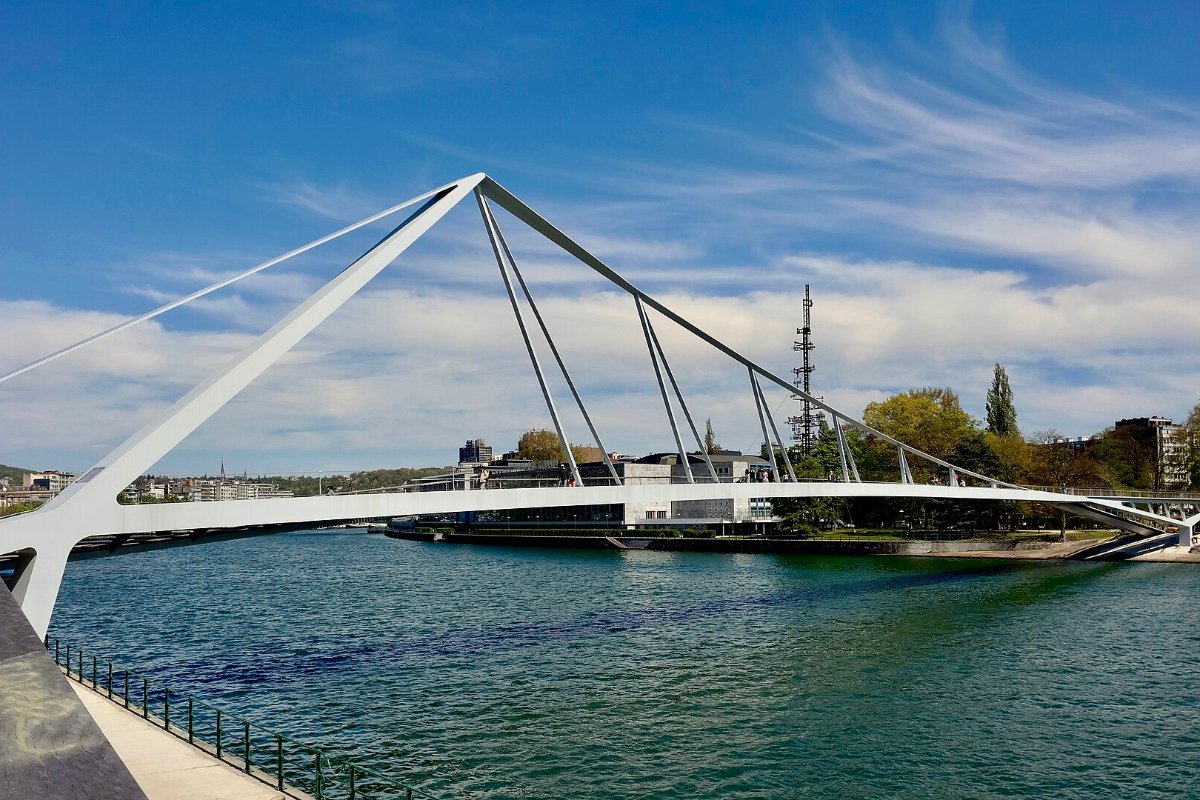
    Several are worth the detour, especially those built for the 1905 world fair, with their arches and decoration. Crossing on foot while watching the river is part of the pleasure.

    To the north

    The quays become more industrial, wider, with views of port installations. Another reading of the city, less heritage, just as interesting.

    By bike

    The banks are partly cyclable, with paths along the river. Check which sections are usable: some are interrupted or shared with pedestrians.

    By boat

    River cruises show Liège from the water, with commentary. Departures in season from central jetties: check times.

    With children

    Boverie is best: room to run, games, reasonable distance. The central quays work too, with care near the water.

    #Liege #Meuse #MrSchaka

    Industrial heritage

    The Liège Meuse was a major industrial axis: mines, steel, port. The quays keep traces of it, between warehouses and installations, explaining the city’s shape.

    When to go

    Spring and autumn are best: mild temperatures, beautiful light. Summer is pleasant late in the day; in winter the quays are windy but deserted.

    Mistakes to avoid

    Staying on one section. Neglecting the right bank. And forgetting the quays are not continuous: plan detours via bridges.

    FAQ

    How far can you walk?

    Several kilometres, with interruptions.

    Pushchair-friendly?

    Yes on landscaped quays, less on towpaths.

    Cafés?

    Yes, around Boverie and the centre.

    Dogs?

    Generally allowed on a lead.

    Fishing?

    Regulated: ask the authorities.

    Also read

    Book cover

    The book

    The Empty Wall is the second book of Oscar’s Notebook, a series of crime novels set in Liège.
  • Where to eat the best fries in Liège?

    Where to eat the best fries in Liège?

    Fries are a national dish with no official recipe but strict rules: fresh potatoes, two cooking stages, the right fat and an even cut. In Liège as elsewhere, the result varies enormously.

    What a good fry is

    Fresh potato, not frozen, with the right starch content; a first cooking at moderate temperature, a second at high temperature for crunch; and fat — beef fat traditionally, vegetable oil in many places. Both work, the result differs.

    Friteries

    The chip shops are the most authentic: you eat on the spot, standing or on a bench, a tray in hand. In Liège they are scattered in neighbourhoods, often away from tourist areas.

    Restaurants

    Many brasseries serve homemade fries with regional dishes. Quality is often good but not always: some serve frozen fries without saying so. Ask: are they fresh?

    Recognising a good one

    Golden, even, not greasy; it crunches; the potato can be tasted, not just fat and salt. A soft, pale or soggy fry signals a cooking or quality problem.

    Sauces

    Mayonnaise, ketchup, andalouse, lapin, tartare, or simply salt and vinegar. Each place has house sauces, and you can order several. Sauce is often charged separately, modestly.

    Portions

    A standard tray is already generous; larger sizes exist with extras. A small tray is enough for two as a side.

    With mussels

    The Belgian classic: mussels and fries, traditionally from September to February.

    With meatballs

    Boulets à la liégeoise with fries are the other classic. The sweet-and-sour sauce needs fries that absorb without going soggy.

    Prices

    A tray costs a few euros, sauce a little more, a full dish a reasonable range. Prices rise in tourist areas without quality following.

    #Liege #Fries #MrSchaka

    Where to look

    Residential districts, around markets, near stations. Neighbourhood friteries often offer the best value; central addresses are more uneven.

    What makes the difference

    Freshness, double cooking, regular fat changes, cleanliness. A friterie that never changes its oil gives rancid fries.

    Mistakes to avoid

    Buying in a purely tourist spot. Neglecting the sauce. Waiting for the fries to cool. And thinking fries are just a side: they are a dish.

    FAQ

    Are fries always fresh?

    Not everywhere. Ask, and look for a cutting machine.

    How much is a tray?

    A few euros, more with sauce and extras.

    Should you eat on site?

    Better: they lose crunch within minutes in a closed tray.

    Are sauces included?

    Rarely. They are charged separately, modestly.

    Vegetarian?

    The fry itself is, but beef fat may be used: ask.

    Also read

    Book cover

    The book

    The Empty Wall is the second book of Oscar’s Notebook, a series of crime novels set in Liège.

  • How to visit the Grand Curtius?

    How to visit the Grand Curtius?

    The Grand Curtius brings several Liège collections under one name: archaeology, decorative arts, glass, weapons and religious art. It occupies a group of buildings whose heart is the mansion of a seventeenth-century arms merchant, by the Meuse.

    What it is

    The museum merges the collections of several Liège institutions, including the arms museum, the glass museum and the city’s archaeological collections. Hence the richness and the variety: from a Roman vase to a sixteenth-century sword in a few metres.

    The name comes from Jean Curtius, a Liège arms merchant who made his fortune and built the mansion.

    The building

    The Curtius mansion is brick and stone, with an inner courtyard and characteristic facades. Modern extensions hold the most recent collections and temporary exhibitions. The architecture is part of the visit.

    Weapons

    The best-known collection, and it has a historical logic: Liège was a great arms manufacturing centre. The rooms show edged weapons, artillery pieces and early firearms. The most spectacular part, and the one that holds children’s attention.

    Glass

    Liège also produced glass, and the collection shows early and modern pieces, techniques and uses. A more delicate section that requires light and time.

    Archaeology

    Collections covering the region from prehistory to the medieval period: everyday objects, burials, architectural elements. Often the least visited part, and a shame: it gives the historical frame for everything else.

    Mosan art

    A tradition of the Meuse valley, famous for goldsmithing and manuscripts. The museum presents examples linked to the region’s churches and treasures.

    The route

    Several sections across linked buildings. Take the plan at reception and choose two or three priorities: weapons, glass and archaeology make a good first visit.

    How long

    Two hours for a full visit, ninety minutes for the essentials. With children, an hour, focusing on weapons and visual objects.

    With children

    Weapons and armour are the obvious entry point. Small archaeological objects can tire: approach them through a story or a game. Ask about children’s booklets during holidays.

    #Liege #Museum #MrSchaka

    Temporary exhibitions

    Often devoted to local history or an artistic theme, they renew the visit. Check the programme and whether they are included in the ticket.

    Practical information

    Hours and prices change with periods and exhibitions. Check on the museum’s site or by phone rather than trusting a paper guide. Expect one weekly closing day.

    Access

    Near the Meuse in the Outremeuse district, walkable from the centre, with buses nearby. Ask about accessibility of the different sections.

    Around the museum

    Outremeuse is a lively popular district with cafés and shops. Combine the visit with a walk on the quays.

    Mistakes to avoid

    Trying to see everything in an hour. Ignoring the labels, which explain a lot. Coming without checking hours. And expecting a fine arts museum.

    FAQ

    How long should I plan?

    One to two hours.

    Good for children?

    Yes, especially the weapons rooms.

    Should I book?

    For groups yes; for individuals no.

    Can I take photos?

    Ask at reception; rules vary.

    Is there a café?

    Ask on site; services vary.

    Also read

    Book cover

    The book

    The Empty Wall is the second book of Oscar’s Notebook, a series of crime novels set in Liège.

  • Where to buy waffles in Liège?

    Where to buy waffles in Liège?

    The waffle looks ordinary and is not. In Liège it has a precise identity: denser than the Brussels one, sweeter, made with pearl sugar that caramelises as it cooks. And like everything good and cheap, it has an industrial version that has little in common with it.

    Two waffles, two cities

    The Liège waffle is a yeast dough, brioche-like, scented with cinnamon and studded with chunks of pearl sugar. As it cooks, the sugar melts and caramelises on the surface, giving those golden patches and that crunch.

    The Brussels waffle is different: lighter batter, rectangular, deep pockets, served with icing sugar, cream or fruit.

    The real Liège waffle

    A good one is irregular: thicker edges, speckled surface, still warm when handed over. You eat it with your hand, walking. Pearl sugar is the signature: small grains that resist slightly and leave a caramel taste.

    Bakeries

    The best starting point: neighbourhood bakeries make them, often in the morning, and sell them individually. Generally better than tourist stalls and cheaper. Ask whether it was baked the same day.

    The market

    The Batte market on Sunday morning has waffle stalls cooking on the spot: you queue, watch the batter, and leave with a hot waffle in a napkin. Arrive early; the best stalls empty by mid-morning.

    Stalls and shops

    In the centre, shops sell waffles to take away, including on tourist streets. Quality varies: some are excellent, others reheat industrial ones. The reliable sign is the smell of cooking and a machine in use.

    Cafés and tearooms

    Many cafés serve the Liège waffle with a hot drink. More expensive, but you sit down, and it often comes warm with cream or ice cream.

    How to recognise it

    Three criteria: irregular shape, thick with higher edges; caramel-speckled surface, not uniformly golden; a slight weight for its size, sign of dense dough. In the mouth, the pearl sugar should be felt.

    #Liege #Waffles #MrSchaka

    The price

    A modest product: individually, it costs about the price of a coffee. In a café, more. In a tourist shop, it can cost twice as much for lower quality. Buy in a bakery or at the market.

    Eating it

    Warm, by hand, without waiting. Reheated in the oven, it recovers some character. In the microwave, it goes soft and loses the point.

    Taking it home

    Waffles travel well: individual bags, boxes, or vacuum-packed versions. Some keep for days, others freeze. Mind the heat: in a car or a suitcase in summer, the sugar melts and they stick.

    Mistakes to avoid

    Buying the first one seen on the most touristy street. Confusing Liège and Brussels waffles. Waiting for it to cool. And taking one ‘just to taste’ knowing you will want a second.

    FAQ

    Where to buy on Sunday?

    At the Batte market, or in bakeries open on Sunday morning.

    How much is a waffle?

    A few euros individually in a bakery or at the market, more in a café.

    Available all year?

    Yes, it is a daily product, not seasonal.

    Freezable?

    Yes, if well wrapped.

    Also read

    Book cover

    The book

    The Empty Wall is the second book of Oscar’s Notebook, a series of crime novels set in Liège.

  • Sack of Liège 1468: Charles the Bold and 600 Franchimontois

    Sack of Liège 1468: Charles the Bold and 600 Franchimontois

    The sack of Liège 1468 is one of the darkest episodes in the history of my region, and yet many people in Liège know it only as a street name or a staircase. In a few days in October, Charles the Bold crushed the city, despite the desperate attack of those who would be called the 600 Franchimontois. I will tell you about the background, the facts as historians establish them today, and the places where you can still feel this history.

    Liège against Burgundy: the background

    In the 15th century, the Prince-Bishopric of Liège was an ecclesiastical state, governed by a prince-bishop, but with rich towns proud of their liberties. Its neighbours, the dukes of Burgundy, controlled a large part of the Low Countries and wanted to turn the principality into a protectorate.

    In 1456, Duke Philip the Good had his nephew, Louis de Bourbon, a young man with no religious vocation, placed on the episcopal throne. The people of Liège resented him. In 1465, the Estates of Liège deposed him. The King of France, Louis XI, an enemy of the Burgundians, promised the people of Liège his support. But on 20 October 1465, their army, made up largely of civilians, was beaten at Montenaken by Charles, son of Philip the Good. The Peace of Sint-Truiden that followed stripped Liège of most of its rights.

    From Brustem to Péronne: the spiral

    The revolt did not die out. In 1466, Dinant, a town of the principality, was punished terribly: the town was burned and hundreds of its inhabitants were drowned in the Meuse. In 1467, after the death of Philip the Good, Charles, now duke, faced the people of Liège again. On 28 October 1467 they were beaten at Brustem, near Sint-Truiden. The city surrendered in November, its walls had to be dismantled and a Burgundian governor, Guy de Humbercourt, moved in.

    In October 1468, Liège exiles returned to the city led by Jean de Wilde, Vincent de Bueren and Gossuin de Streel. Humbercourt and the Burgundian garrison fled. At the same time, on 14 October 1468, Charles met Louis XI at Péronne. When he learned that the people of Liège had risen up, at the king’s instigation in his view, he flew into a rage. Louis XI had to sign a very unfavourable treaty and agree to accompany the duke against Liège, to witness the punishment of those he had encouraged. The chronicler Philippe de Commynes, then in the duke’s service, was present and left an account of those days.

    The night of the 600 Franchimontois

    The Burgundian army marched on Liège. On 22 October, some 500 Liège militiamen who had taken refuge in the church at Lantin were burned alive there. Jean de Wilde, wounded during a sortie on 26 October, died two days later. The city, without ramparts, had hardly any means left to defend itself.

    On the night of 29 to 30 October 1468, a group of men led by Vincent de Bueren and Gossuin de Streel attempted a daring stroke: to leave the city, surprise the sleeping enemy camp and kill the duke and the king, so that the leaderless army would withdraw. The attack failed. The attackers were massacred, their two leaders with them.

    Tradition speaks of 600 men from the marquisate of Franchimont, the area around Theux and Spa. Today’s historians are more cautious: the number is no doubt greatly exaggerated, and probably not all of them came from Franchimont. They also believe the attack went through the Sainte-Marguerite gate, and not up the steps on Sainte-Walburge hill that now bear the name of Bueren.

    The sack: a city given to the fire

    On 30 October, Liège fell. On the duke’s orders, hundreds of inhabitants were tied together and thrown into the Meuse. Then the city was methodically plundered and burned. Sources report that the fire is said to have lasted several weeks, seven according to some. A large part of the medieval city disappeared. The perron, symbol of Liège’s liberties, was dismantled and taken to Bruges. The principality lost its institutions and came under Burgundian control.

    The consequences of the sack of Liège

    Burgundian domination did not last. Charles the Bold was killed outside Nancy in January 1477. His daughter, Mary of Burgundy, renounced Burgundian claims to the principality on 19 March 1477. The perron in fact returned to Liège about ten years after it had left, reinstalled by Louis de Bourbon. He was murdered in 1482 by William de La Marck, who had the backing of Louis XI: the principality long remained a battleground between great powers.

    Rebuilding took decades. The Palace of the Prince-Bishops that you visit today dates mainly from the 16th century, under Prince-Bishop Érard de La Marck. As for the 600 Franchimontois, their memory was transformed in the 19th century: after 1831, the young Belgian state made them an example of sacrifice and resistance, taught in schools. In 1914, King Albert I invoked their memory to encourage Walloon soldiers.

    What you can see today

    #CrimeFiction #Liege #Mystery #MrSchaka

    The Montagne de Bueren

    This staircase of 374 steps, built in the 19th century to link the centre with the citadel barracks, bears the name of Vincent de Bueren. We now know the Franchimontois did not come this way, but it is the best place to think of them, as you climb slowly. I talk about it in my article on the Montagne de Bueren.

    The perron, Place du Marché

    The perron, taken to Bruges and then returned, still stands on the Place du Marché, above the fountain. During the 2018-2019 renovation, the Three Graces group that crowns it was replaced by a copy; the original is on display at the Grand Curtius.

    The Palace of the Prince-Bishops

    Right next door, its inner courtyard is a reminder of the rebuilding after the destruction. See my article on visiting the Palace of the Prince-Bishops.

    Franchimont Castle, in Theux

    The ruins of the castle that gave the Franchimontois their name can be visited. They open on a seasonal calendar (roughly every day in summer, at weekends in April and October), to be checked before you go. A medieval fair is held there every year in August.

    My practical tips

    • Start with the Place du Marché and the palace, then climb the Montagne de Bueren: it can all be done on foot in half a day.
    • The Montagne de Bueren is steep: take your time, there are landings where you can catch your breath.
    • At the Grand Curtius, allow at least two hours.
    • For Theux, check the castle’s opening hours before you go, as they change with the season.
    • Read the information panels, but bear in mind that the legend of the 600 was heavily embellished in the 19th century.
    • At the end of October, the anniversary of the attack, commemorations are sometimes organised: ask locally.

    As a writer of crime novels set in Liège, I find this story fascinating: it partly explains the rebellious character of the Cité ardente, and why the perron matters so much to the people of Liège.

    Frequently asked questions

    When did the sack of Liège take place?

    The city was taken on 30 October 1468, the day after the Franchimontois attack, then plundered and burned for several weeks.

    Were the 600 Franchimontois really 600?

    Probably not. The number is traditional, and historians consider it greatly exaggerated.

    Did the Franchimontois go up the Montagne de Bueren?

    No. The staircase dates from the 19th century and bears their name in tribute. The attack is thought to have passed through the Sainte-Marguerite gate.

    Where can you see traces of the sack of Liège today?

    At the perron on the Place du Marché, the Palace of the Prince-Bishops, the Grand Curtius and Franchimont Castle in Theux.

    Book cover

    The book

    The Empty Wall is the second book of Oscar’s Notebook, a series of crime novels set in Liège.