Category: Oscar’s Notebook: articles

Liège, its characters and the history behind the detective series.

  • Liège-Guillemins station: Calatrava’s masterpiece to visit

    Liège-Guillemins station: Calatrava’s masterpiece to visit

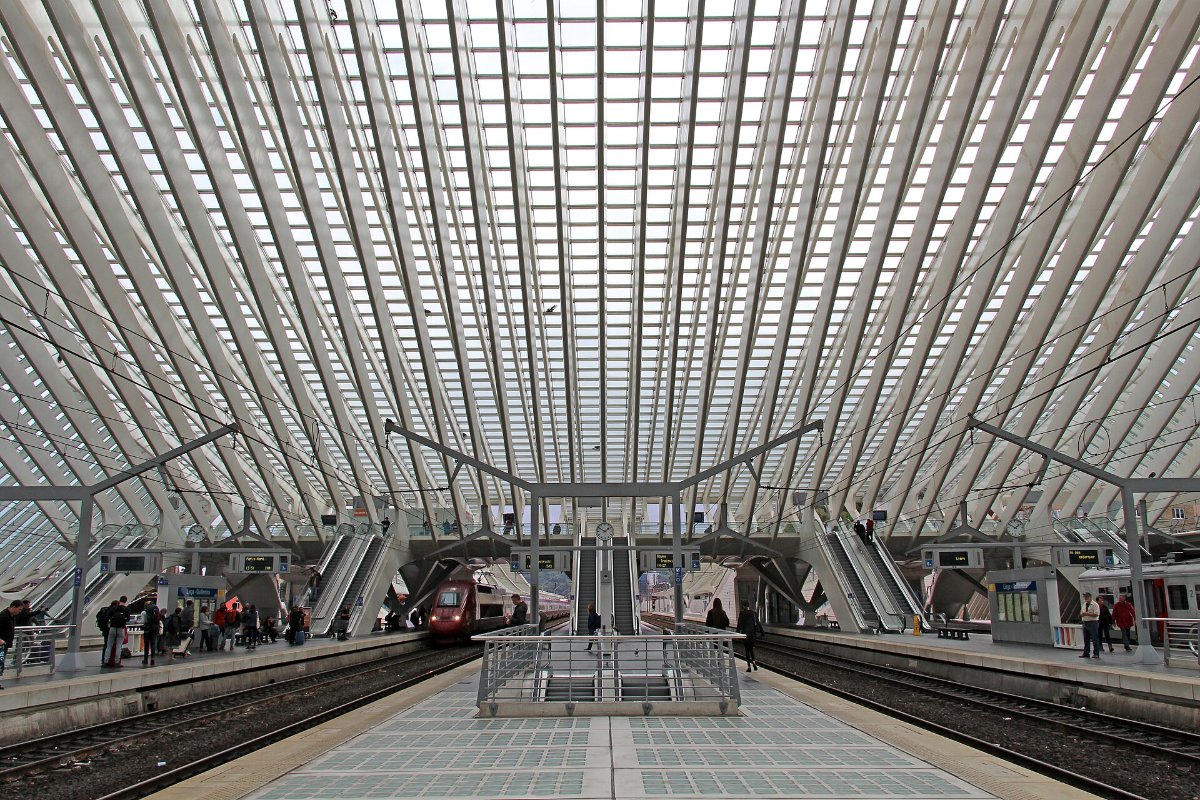
    Liège-Guillemins station is not just where you arrive in Liège. It is a work of art in its own right, designed by Santiago Calatrava, and you walk through it looking up. Here is what you need to know to see it, photograph it and enjoy it, whether or not you have a train to catch.

    A glass cathedral by Calatrava

    The Spanish architect and engineer Santiago Calatrava designed the new Liège-Guillemins station, which opened on 18 September 2009. Building work lasted more than ten years, because the station had to stay open throughout. The site itself is not new: the first station here opened in 1842.

    The result is a huge white vault of steel, glass and concrete, with no closed façade. Light pours in from everywhere and you can see the city through the structure. It is often called “the cathedral of modern times”, and you soon see why.

    Key figures

    • Opening: 18 September 2009.
    • Main vault: about 160 metres long and more than 30 metres high (up to 40 metres according to the tourist office).
    • Glass roof: about 33,000 m² of glass.
    • Platforms: 5 platforms and 9 tracks.
    • Cost: about 312 million euros, the figure most often quoted.

    Which trains stop at Guillemins in 2026?

    The station is a hub of the European high-speed network. In 2026, high-speed travel from Liège means two operators:

    • Eurostar (formerly Thalys, the red trains): direct to Paris-Nord in just over 2 hours, and to Germany: Aachen, Cologne (about 1 hour), Düsseldorf, Essen and Dortmund.
    • ICE by Deutsche Bahn: Brussels, Liège, Aachen, Cologne and Frankfurt.

    Brussels is around 40 minutes away by fast train. SNCB InterCity trains also link Namur, Maastricht (about 30 minutes) and the rest of Belgium. For London or Amsterdam you need to change, usually in Brussels. Timetables change often: check the SNCB or operator website just before you travel.

    From the esplanade to Boverie

    The esplanade and the Finance Tower

    In front of the station, a wide pedestrian esplanade runs down towards the Meuse. It was designed to open the station up to the river. At the far end stands the Tour Paradis, known to everyone as the Finance Tower: 136 metres including its spire, completed at the end of 2014 and used by the federal Finance department.

    The contrast works well: Calatrava’s white curve on one side, the glass tower with its straight lines on the other. Walk across the esplanade slowly. It is the best way to understand how the whole district was redesigned around the station.

    La Belle Liégeoise and Boverie Park

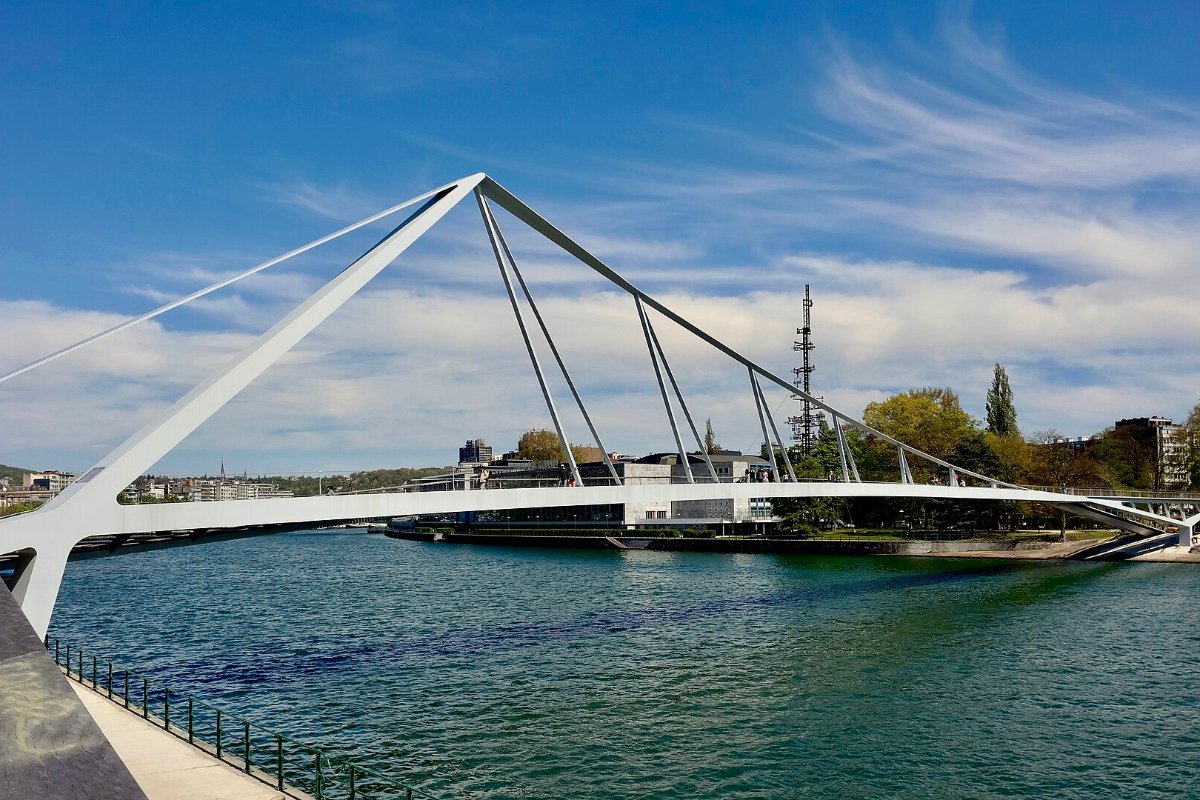
    At the end of the esplanade, the La Belle Liégeoise footbridge crosses the Meuse. Opened on 2 May 2016, it is 294 metres long in total, with a main span of 163 metres. It is reserved for pedestrians and cyclists.

    On the other side you reach Boverie Park, at the tip of the island between the Meuse and the Dérivation. You will find the La Boverie museum, lawns and benches by the water. It is a short walk from the station and perfect for a break between two trains.

    A small aside: it is under this vault that Victor and Oscar first meet in “Oscar’s Notebook”, the Liège crime series by Mr Schaka (see also the crime locations in Liège).

    #CrimeFiction #Liege #Mystery #MrSchaka

    Photo tips

    • From the esplanade, step back towards the Finance Tower to fit the whole vault in the frame. A wide-angle lens helps a lot.
    • Inside, go up to the walkways above the platforms: the white ribs make strong leading lines.
    • Early morning or late afternoon, low light draws the shadows of the roof ribs.
    • In the evening, the lit-up station looks completely different. Night shots are worth it.
    • From La Belle Liégeoise, you get the Meuse, the tower and the district in one picture.
    • Respect travellers: no tripod in the middle of the walkway, and stay behind the safety line on the platforms.

    How to get there

    By train, of course: you arrive right inside it. From the city centre and Place Saint-Lambert, allow about 15 to 20 minutes on foot. The address: Place des Guillemins, 4000 Liège.

    The Liège tram, running since 28 April 2025, stops at the station. The line links Sclessin and Coronmeuse via Place Saint-Lambert, with a tram every 5 minutes at peak times and every 7 to 15 minutes the rest of the day. Many TEC buses also serve the station.

    Mr Schaka’s practical tips

    • Come even if you have no train to catch: the station is free to enter and is often the highlight of a visit to Liège.
    • Allow about 1 hour for the station and the esplanade, and 1 hour 30 with a detour to Boverie Park.
    • If you arrive by Eurostar or ICE, keep half an hour before heading into town: the view from the esplanade is worth the stop.
    • The station is very open: in cold or windy weather, a jacket is welcome on the platforms.
    • Strikes and engineering works can affect international trains: check your train on the day.

    Frequently asked questions

    Who designed Liège-Guillemins station?

    The Spanish architect and engineer Santiago Calatrava. The station opened on 18 September 2009.

    Can you travel from Liège to Paris without changing?

    Yes. Eurostar runs direct from Liège-Guillemins to Paris-Nord in just over 2 hours.

    How long does it take to reach the city centre?

    About 15 to 20 minutes on foot, or a few minutes by tram to Place Saint-Lambert.
    Book cover

    The book

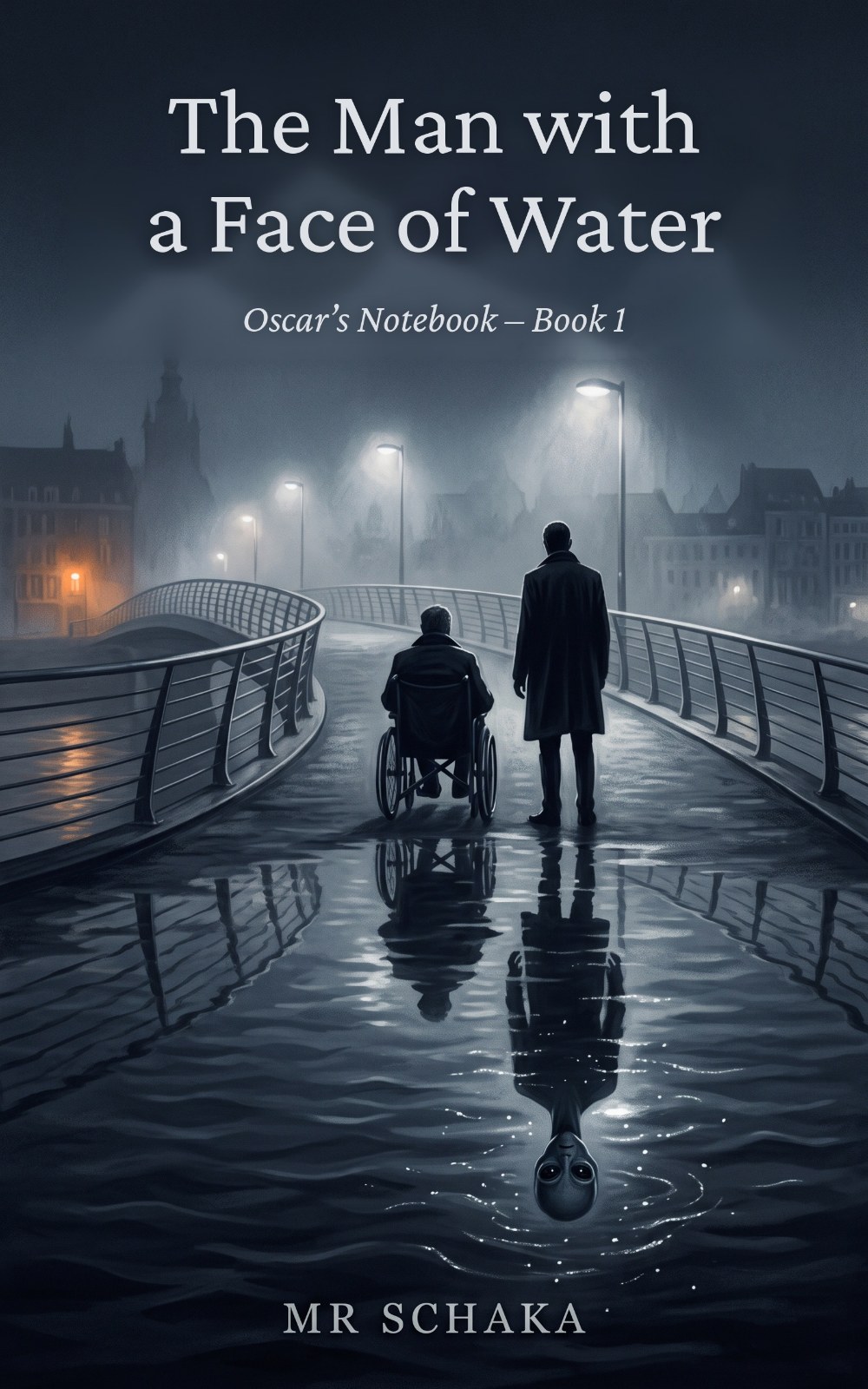
    It is on a platform at Guillemins that Victor Lenoir unmasks Oscar, in The Man with a Face of Water, the first book of Oscar’s Notebook: a Liège mystery full of fog and humour.
  • Montagne de Bueren: the 374 steps of Liège, Belgium

    Montagne de Bueren: the 374 steps of Liège, Belgium

    Liège is a city of stairways. But only one of them has a real reputation: the Montagne de Bueren, 374 steps in a dead-straight line, from the Hors-Château district up to the edge of the Citadel. Here is its history, the legend that surrounds it, the view waiting at the top, the Coteaux to explore afterwards, the candlelit festival and Mr Schaka’s advice for climbing it without rushing.

    Montagne de Bueren: a 19th-century military staircase

    Despite its name (“montagne” means mountain), the Montagne de Bueren is not a mountain. It is a stepped street of brick and stone that climbs straight up the Citadel hill. Sources date it to between 1875 and 1881; 1881 is the year most often given.

    Its purpose was very practical. The Citadel and its garrison stood at the top, the city centre at the bottom. Until then, soldiers used Rue Pierreuse, a narrow street with a rowdy reputation. The staircase gave them a direct, faster route into town. It partly follows the line of old 15th-century ramparts.

    The gradient reaches about 30%. Landings, some with benches, break up the climb. The bottom of the stairs opens onto Rue Hors-Château, a few minutes’ walk from Rue Féronstrée and Place Saint-Lambert.

    Vincent de Bueren and the 600 Franchimontois: history and legend

    The name honours Vincent de Bueren, a 15th-century defender of Liège. In October 1468, the city was besieged by Charles the Bold, Duke of Burgundy, together with King Louis XI of France. On the night of 29 to 30 October, a band of men led by Vincent de Bueren and Gossuin de Streel attempted a desperate sortie: to surprise the enemy camp and capture, or kill, the duke and the king.

    The attack failed. Tradition remembers 600 Franchimontois (men from the Franchimont area), almost all killed along with their leaders. Liège fell shortly afterwards and the city was sacked and burned. The episode remains one of the great stories of Liège’s collective memory.

    Good to know: many people say the 600 climbed these very stairs. That is impossible: the staircase did not exist in 1468, as Liège’s own tourist office points out. Historians also debate the exact figure of 600 and where the men came from. The staircase is a tribute, not the site of the battle.

    “The world’s most extreme staircase”: where does the title come from?

    You will often read that the Montagne de Bueren is “the most extreme staircase in the world”. The phrase comes from a list published in 2013 by The Huffington Post: a countdown of seven spectacular staircases, presented as the editors’ “favorites”, with Liège in first place.

    So it is a media ranking, not an official measurement. The article itself said its picks were not necessarily the highest or steepest, and it repeated the legend of patriots marching up the steps. The title went around the world and still draws curious visitors, camera in hand.

    Some have turned it into a challenge. In July 2020, Belgian explorer Louis-Philippe Loncke climbed up and down the staircase 135 times with a 15 kg backpack to simulate an ascent of Everest. Nobody expects you to copy him.

    The view from the top and the Coteaux de la Citadelle

    As you climb, the houses fall away and your eyes pass over the rooftops. At the top, Liège spreads out below you: church towers, the Meuse valley, the hills opposite. It is one of the finest viewpoints in the city. Up there you will find a memorial and the start of several walking trails.

    The Montagne de Bueren is also a gateway to the Coteaux de la Citadelle: about 90 hectares of green hillside right in the centre, partly protected as a Natura 2000 site. A path links Rue Pierreuse to the staircase, past grassy terraces, the ruins of the former Minims convent, a medieval tower and tall walls of coal-measure sandstone. You walk at rooftop level, in peace, a stone’s throw from busy streets.

    A marked loop of about 5.5 km takes roughly two and a half hours. Some paths are steep, so wear good shoes. If you like places with stories, Mr Schaka has also gathered the Liège locations of the Oscar’s Notebook mysteries.

    #CrimeFiction #Liege #Mystery #MrSchaka

    The Nocturne des Coteaux: 374 steps by candlelight

    For years, the Nocturne des Coteaux de la Citadelle took place on the first Saturday of October. That evening, the steps are lined with candles and the neighbourhood’s lanes fill with musicians and street performers. In 2024, for the 26th edition, 1,596 candles lit the 374 steps, and police estimated the crowd at around 30,000 people.

    The format has changed. After a year off for financial reasons, the event became the Week-end des Coteaux and moved to spring, on 4 and 5 April 2026. The stairs were lit again from 8 pm, with light installations across the Coteaux. Check future dates with the Liège tourist office.

    Tips for climbing the 374 steps

    • Start at the bottom. Going up, the view opens little by little; going down is harder on the knees.
    • Take your time. Use the landings and benches. Nobody is timing you.
    • Pick your moment. Access is free and open at all hours. Morning and late afternoon give the softest light on the rooftops.
    • Keep it quiet. People live along the staircase, and the city asks visitors to respect the calm.
    • Watch out in the rain. The steps get slippery. Good shoes are enough.
    • If steps are a problem: Rue Pierreuse, a sloping cobbled street, also climbs towards the Coteaux, more gradually. The staircase and the trails are not suitable for people with reduced mobility.

    Good to know: Mr Schaka lives with interstitial pulmonary fibrosis. For him, these steps are counted one by one, landing after landing, and the view is all the sweeter for it. If you have a heart or lung condition, talk to your doctor before this kind of effort. He writes about it in connection with his novel The Season of Breath.

    In Mr Schaka’s crime series, Oscar’s Notebook, one chapter is even called “Les 374 marches” (“The 374 Steps”). The staircase is part of the Liège backdrop of the investigations, along with the lanes, squares and hills around it. And if you are staying in the area, consider a visit to Waroux Castle too.

    Frequently asked questions

    How many steps does the Montagne de Bueren have?

    374 steps in a straight line, with a gradient of about 30% and landings to catch your breath.

    How long does the climb take?

    Allow about ten minutes with a few pauses. Take longer if you need to: there is no reason to hurry.

    Is there a fee, or is it closed at night?

    No. It is a public street, free and open at all hours.

    Did the 600 Franchimontois really climb these stairs?

    No. The staircase dates from the 19th century; it honours Vincent de Bueren and the 1468 sortie, but it was not where it happened.

    Book cover

    The book

    The Montagne de Bueren has its own chapter in Oscar’s Notebook: “Les 374 marches”. After your climb, follow Victor and Oscar through the Liège of their investigations. Available in English.

  • Things to do in Liège in a weekend: a 2-day itinerary

    Things to do in Liège in a weekend: a 2-day itinerary

    Liège is not a postcard city; it is a city you discover on foot: stairways, narrow lanes, a big square, a river and a market that dates back to the 16th century. Mr Schaka is from Liège. If you are wondering about the best things to do in Liège in a weekend, here is what he suggests: a simple two-day itinerary, the local food to try and the easiest way to arrive by train.

    Liège is also the setting of his crime series Oscar’s Notebook. If you want to extend your visit through reading, we have gathered the Liège locations of Victor and Oscar’s investigations.

    Things to do in Liège on Saturday morning: Place du Marché, the Perron and the Palace

    Start in the historic heart. The Place du Marché is lined with narrow houses, most of them rebuilt in the 17th and 18th centuries after the bombardment of 1691. Here you will also find the town hall, nicknamed “La Violette” by locals.

    In the middle stands the Perron, a column set on a fountain. It is the symbol of the city’s freedoms. Charles the Bold carried it off to Bruges in 1467; it was returned ten years later. Today’s version dates from the late 17th century and is the work of the sculptor Jean Del Cour.

    A short walk away, the Palace of the Prince-Bishops is a reminder that Liège was for centuries the capital of a principality. It now houses the law courts and the provincial government. The first inner courtyard is free to enter: look up at its sixty or so columns, each with a different capital.

    To wander afterwards, head to the Carré, the small pedestrian district of the centre, with shops, snack shops and restaurants. It is the liveliest part of town, especially in the late afternoon.

    Montagne de Bueren and the Coteaux: Liège from above

    From Rue Hors-Château, the Montagne de Bueren climbs straight up towards the Citadel hill: 374 steps, completed in 1881. It is named after Vincent de Bueren, who led a raid against Charles the Bold’s troops in 1468. Allow about ten minutes to climb, at your own pace. If you would rather avoid the steps, Rue Pierreuse is a gentler slope.

    At the top, don’t rush back down. The Coteaux de la Citadelle are a surprising green space in the middle of the city: footpaths, orchards and hidden stairways between Hors-Château and Pierreuse. The view over the rooftops, the church towers and the Meuse valley is worth the effort. Wear good shoes: cobbles and steps are slippery in the rain.

    Saturday afternoon: La Boverie and Liège-Guillemins station

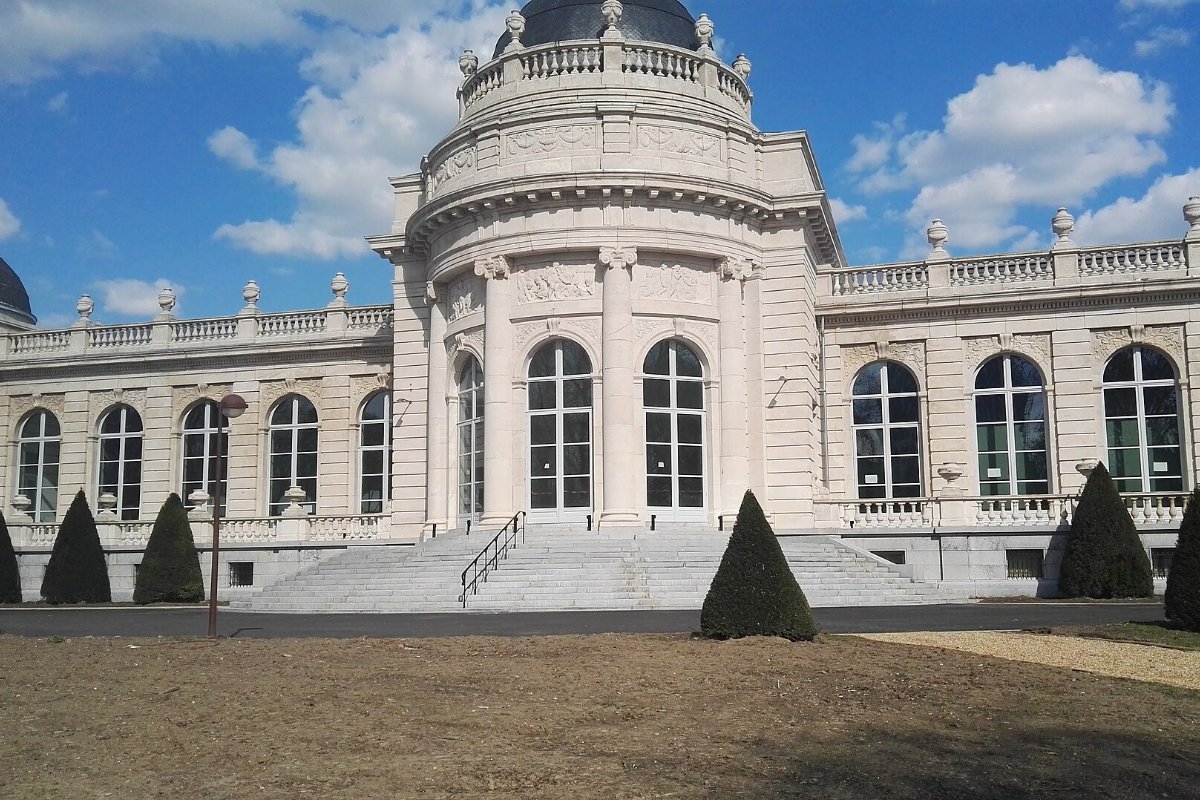
    Cross the Meuse to the Boverie park. The La Boverie museum occupies the former Fine Arts palace built for the 1905 World’s Fair; it reopened in 2016 with a glass extension. Its collection mixes Walloon art with famous names, including Picasso’s The Soler Family and Chagall’s The Blue House. Allow about an hour and a half.

    • Opening hours: Tuesday to Sunday, 10 am to 6 pm (closed on Mondays).
    • Permanent collection: €5 for adults, free for under-26s.
    • Free for everyone on the first Sunday of the month (permanent collection). Temporary exhibitions have their own prices.

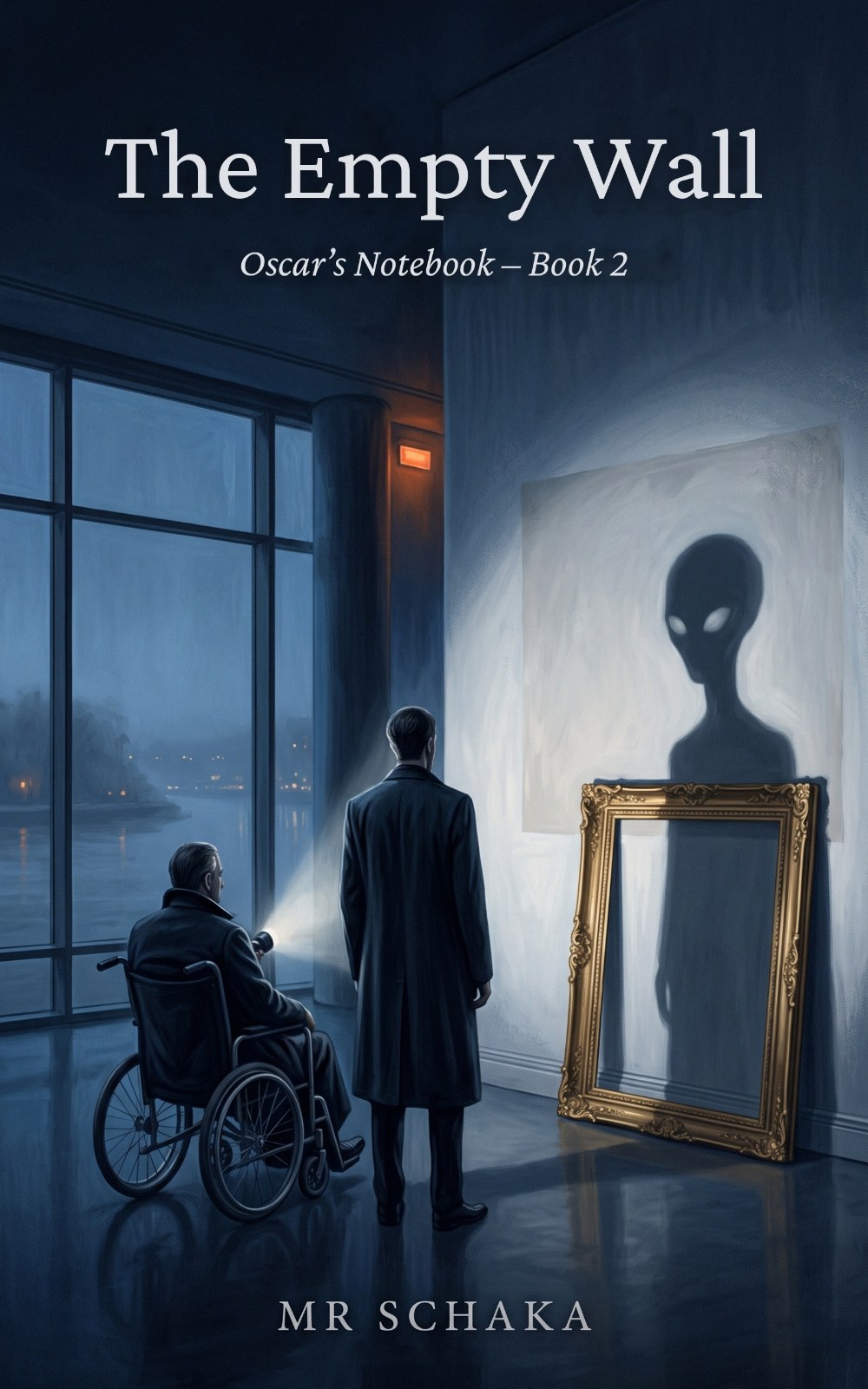
    A small detail for readers: volume 2 of Oscar’s Notebook, The Empty Wall, begins with the theft of a Picasso from La Boverie. One more reason to look closely at the walls.

    From the park, a footbridge leads to Liège-Guillemins station. Even if you are not arriving by train, go and see it: designed by the architect Santiago Calatrava and opened in 2009, it is a huge vault of glass and steel with no closed façade. The light changes with every hour.

    Good to know: museum hours and prices sometimes change, and several city museums are free on the first Sunday of the month. Check before you go on the City of Liège website.

    #CrimeFiction #Liege #Mystery #MrSchaka

    Sunday: La Batte market and Outremeuse

    On Sunday morning, the whole city seems to meet at the Batte market, along the quays of the Meuse. It has been held since 1561 and is said to be the oldest market in Belgium. Over several kilometres you will find everything: fruit and vegetables, cheese, flowers, clothes, second-hand goods, animals and warm waffles. It starts around 8 am and winds down in the early afternoon. Come before 10 am to avoid the crowds, and keep some cash: many small stallholders prefer it.

    Then cross the bridge to Outremeuse, the working-class district on the other bank. It is the home of Tchantchès, the puppet who embodies the spirit of Liège, and of the “Free Republic of Outremeuse”. The writer Georges Simenon grew up here. On 15 August, the district holds its big popular festival. The rest of the year, it is a quiet place for a stroll along Rue Puits-en-Sock and the quays.

    If you have time left, Waroux Castle in Alleur makes a pleasant outing a few kilometres from the city.

    Liège specialities to try

    • Boulets à la liégeoise: large meatballs in a sweet-and-sour sauce, known as “sauce lapin”, made with sirop de Liège. They are served with fries.
    • Liège waffle: a brioche-like dough with pearl sugar that caramelises as it cooks. Eat it plain, warm, straight from the paper.
    • Sirop de Liège: a thick pear and apple spread, eaten on bread, often with cheese. Every grocery sells it: an easy souvenir to take home.
    • Fries, bought in a paper cone from a friterie, remain a Belgian classic.

    How to get to Liège and get around

    The easiest way is by train: Liège-Guillemins is on the high-speed lines between Brussels and Germany.

    • From Paris: Eurostar trains (formerly Thalys) run directly from Paris-Nord to Liège in about 2 hours 15 minutes.
    • From Brussels: about 40 minutes by Eurostar or ICE, around an hour by Belgian intercity train.
    • From Germany: Eurostar and ICE link Cologne and Aachen to Liège; the ICE continues to Frankfurt.
    • From London: Eurostar to Brussels-Midi, then change for Liège.
    • By air: the most convenient airport is Brussels Airport (Zaventem), linked to Liège by train. Since September 2026, a direct Antwerp–Cologne ICE stops there twice a day and serves Liège.

    Once there, the centre is easy to explore on foot. Since 2025, the tram has linked Guillemins station with the centre (Opéra, Place Saint-Lambert) and Coronmeuse: handy if you want to skip the 30-minute walk. Train times and fares: check before you travel.

    Frequently asked questions

    Is a weekend enough to visit Liège?

    Yes, for the essentials: the historic centre, the Coteaux, La Boverie, Guillemins and La Batte fit into two days. Add a day for the surrounding area.

    When is the Batte market held?

    Every Sunday, from the morning until the early afternoon, along the quays of the Meuse. Entry is free.

    Is the Montagne de Bueren hard to climb?

    It is a steep stairway of 374 steps. Most people climb it in about ten minutes with a few pauses. If steps are a problem for you, Rue Pierreuse is a gentler alternative.

    What can I bring back from Liège?

    A jar of sirop de Liège, waffles and chocolates from a local chocolatier all travel well.

    Book cover

    The book

    Liège is the setting of Mr Schaka’s crime series, Oscar’s Notebook: the Place du Marché, the stairways, La Boverie… After your weekend, find these places again in Victor and Oscar’s investigations. Available in English.

  • The Liège of Oscar’s Notebook: The Real Places Behind the Mysteries

    The Liège of Oscar’s Notebook: The Real Places Behind the Mysteries

    In Oscar’s Notebook, Liège isn’t just a backdrop: it’s a character. Its fog over the Meuse, its train stations, its nightlife districts, its forts and its beet fields. Here are the very real places where Victor Lenoir and Oscar Blanc carry out their investigations, to explore with the book in hand… or without.

    The woods of Sart-Tilman

    This is where it all begins: one stormy night, Oscar falls from the sky into the woods of Sart-Tilman, south of the city. The wooded estate, now home to a large part of the University of Liège, is still a green lung where getting lost is half the fun. Perfect for a walk… as long as you don’t look at the sky too much.

    Guillemins station

    The platforms and glass canopy of Liège-Guillemins station
    The platforms and glass canopy of Liège-Guillemins station — photo Fred Romero from Paris, France, CC BY 2.0

    It’s on one of its platforms that Victor sees through Oscar, in five minutes flat. Guillemins station, designed by architect Santiago Calatrava and opened in 2009, has become one of the city’s symbols with its immense vault of glass and steel. The perfect place for a meeting that changes a life.

    The Meuse and its footbridges in the fog

    The cover of book 1 shows two silhouettes on a pedestrian bridge over the Meuse, at night, in the fog. The river runs through the whole series: a drowned man who smells of linden blossom opens the first investigation. To soak up the atmosphere, nothing beats a stroll along the riverbanks on an autumn evening, when the mist rises off the water.

    The Carré, the nightlife district

    With its narrow streets, bars and terraces, the Carré is the beating heart of Liège nightlife. In The Man with a Face of Water (“The Man with the Water Face”), a neon night there takes a bad turn. Oscar, who is discovering human parties with an anthropologist’s curiosity, learns a great deal there, including a few things he would rather not have known.

    #CrimeFiction #Liege #Mystery #MrSchaka

    La Boverie, the museum of book 2

    La Boverie museum in Liège
    La Boverie museum in Liège — photo Éric Dodémont (Dodeeric), CC BY-SA 4.0

    In The Empty Wall, Liège’s Picasso vanishes from the Boverie museum, which sits in a park by the water. All that’s left is a gilded frame, propped against the baseboard. The real museum, for its part, is still welcoming visitors: a good excuse to go and see with your own eyes what a wall that isn’t empty looks like.

    Ans, Alleur and Fort de Loncin

    Book 2 leaves the city center for the outskirts: Ans station, the beet fields of Alleur, and above all Fort de Loncin, one of the forts that defended Liège in 1914. Destroyed in August 1914 when its powder magazine exploded, it became the tomb of several hundred soldiers, who still rest there today. A deeply moving memorial site that is open to visitors, and where Victor and Oscar follow the trail of a gang that thought of everything.

    The taste of Liège

    Oscar learned to live among humans through their food: péket, the local juniper spirit, and boulets sauce lapin, meatballs smothered in a sauce made with Liège syrup. If you’re following in his footsteps, that’s where to start.

    Good to know: the investigations are fiction, but the places are very real. Check the opening hours of the museums and the fort before you go.

    Read also: Liège-Guillemins station: Calatrava’s masterpiece to visit · Fort de Loncin: visiting the heroic 1914 fort near Liège

    Book cover

    The book

    The Man with a Face of Water, The Empty Wall, The Waters of the Vesdre and The Silence of the Fagnes, the four books of Oscar’s Notebook, are out now in English as ebooks: €3.00 each, or €3.00 for all four.

    Photo credits — “La Belle Liégeoise footbridge over the Meuse in Liège”: Choinowski, Wikimedia Commons, license CC BY-SA 4.0; “The platforms and glass canopy of Liège-Guillemins station”: Fred Romero from Paris, France, Wikimedia Commons, license CC BY 2.0; “La Boverie museum in Liège”: Éric Dodémont (Dodeeric), Wikimedia Commons, license CC BY-SA 4.0. Images cropped.

  • Who Are Victor Lenoir and Oscar Blanc, the Heroes of Oscar’s Notebook?

    Who Are Victor Lenoir and Oscar Blanc, the Heroes of Oscar’s Notebook?

    A detective in a wheelchair. An extraterrestrial who blends right in. A city drowning in fog. Meet the characters of Oscar’s Notebook, Mr Schaka’s detective series set in Liège, with no spoilers about the plots.

    Oscar Blanc, the one who keeps the notebook

    Oscar Blanc is not his real name. He fell from the sky one stormy night into the woods of Sart-Tilman, with no way of getting home, and he has learned to live among humans: their péket, their boulets sauce lapin, and all those rules they never write down anywhere. He can change his face and go unnoticed, almost always.

    He’s the one telling the story. And that’s the whole charm of the series: a gentle, loyal narrator with impeccable manners, who watches the people of Liège with the curiosity of an anthropologist from very, very far away. He takes notes on everything, from haggling over a cauliflower at the market to the strange habits humans have around their dead. And his planet still isn’t answering.

    Victor Lenoir, the detective

    A former police inspector, Victor gets around in a wheelchair, which has never stopped him from going anywhere. His eye is merciless: he saw through Oscar in five minutes, on a platform at Guillemins station. And instead of turning him in, he decided to keep him.

    Victor solves the cases the Liège police can’t make sense of. He thinks fast, talks little and never lets go of a lead. Oscar handles the rest: he climbs the stairs, puts on disguises, and goes where a detective in a wheelchair would hardly go unnoticed. “I take care of the stairs and the awkward questions,” as he puts it.

    #CrimeFiction #Liege #Mystery #MrSchaka

    Inspector Delvaux and the others

    Orbiting around them is Inspector Delvaux of the Liège police, who grumbles a lot but always comes back knocking on Victor’s door when a case is beyond him. Then there are the people you meet again from one book to the next, and someone, in the shadows, who is taking a very close interest in Oscar. We won’t say any more.

    A duo in the tradition of the great detectives

    The genius who deduces and the sidekick who tells the tale: it’s a classic formula. Except that here, the sidekick comes from another planet, and he’s the one who sees humans as puzzles. The result: old-school mysteries, somewhere between fog, mystery and humor, where you can be right on both sides at once… and still have to choose.

    In what order should you read the series?

    • Book 1: The Man with a Face of Water (“The Man with the Water Face”). The first meeting, a drowned man who smells of linden blossom, saints stolen in the fog and a neon night in the Carré.
    • Book 2: The Empty Wall (“The Empty Wall”). Liège’s Picasso vanishes from the Boverie museum.
    • Book 3: The Waters of the Vesdre (“The Waters of the Vesdre”). A radio ham found dead below Franchimont Castle, in the Vesdre valley.
    • Book 4: The Silence of the Fagnes. A little girl lost in the snow of the High Fens, from Spa to the Signal de Botrange.
    • Book 5: currently being written.

    Each book is a complete investigation that can be read on its own. But a common thread runs from one notebook to the next, so it’s best to start with the first.

    Book cover

    The book

    The Man with a Face of Water, The Empty Wall, The Waters of the Vesdre and The Silence of the Fagnes are out now in English as ebooks. Explore the series and the summaries of all four books.

  • Visiting Waroux Castle: Rooms, Park and a Walk in Oscar’s Footsteps

    Visiting Waroux Castle: Rooms, Park and a Walk in Oscar’s Footsteps

    An avenue of century-old lime trees, a moat, a keep topped with a spire, a round curtain wall of a kind you rarely see in Belgium: Waroux Castle is one of the most surprising monuments around Liège. Here is everything you need to know to discover it: its architecture, its rooms, its park, its farm, and a short walk through Hesbaye in Oscar’s footsteps.

    Practical information

    • Address: Rue de Waroux, 4432 Alleur (municipality of Ans), province of Liège.
    • Owner: the municipality of Ans, since 2005.
    • Visits: the castle opens to the public during the major exhibitions held there. Outside those periods, groups can visit by reservation through the municipality of Ans.
    • The park: a listed site, best discovered on a stroll along the avenue and around the moat.

    Good to know: the castle also hosts the weddings of Ans residents. Before making the trip, check opening and exhibition dates with the municipality or the Maison du Tourisme du Pays de Liège (the Liège tourist office).

    A one-of-a-kind architecture

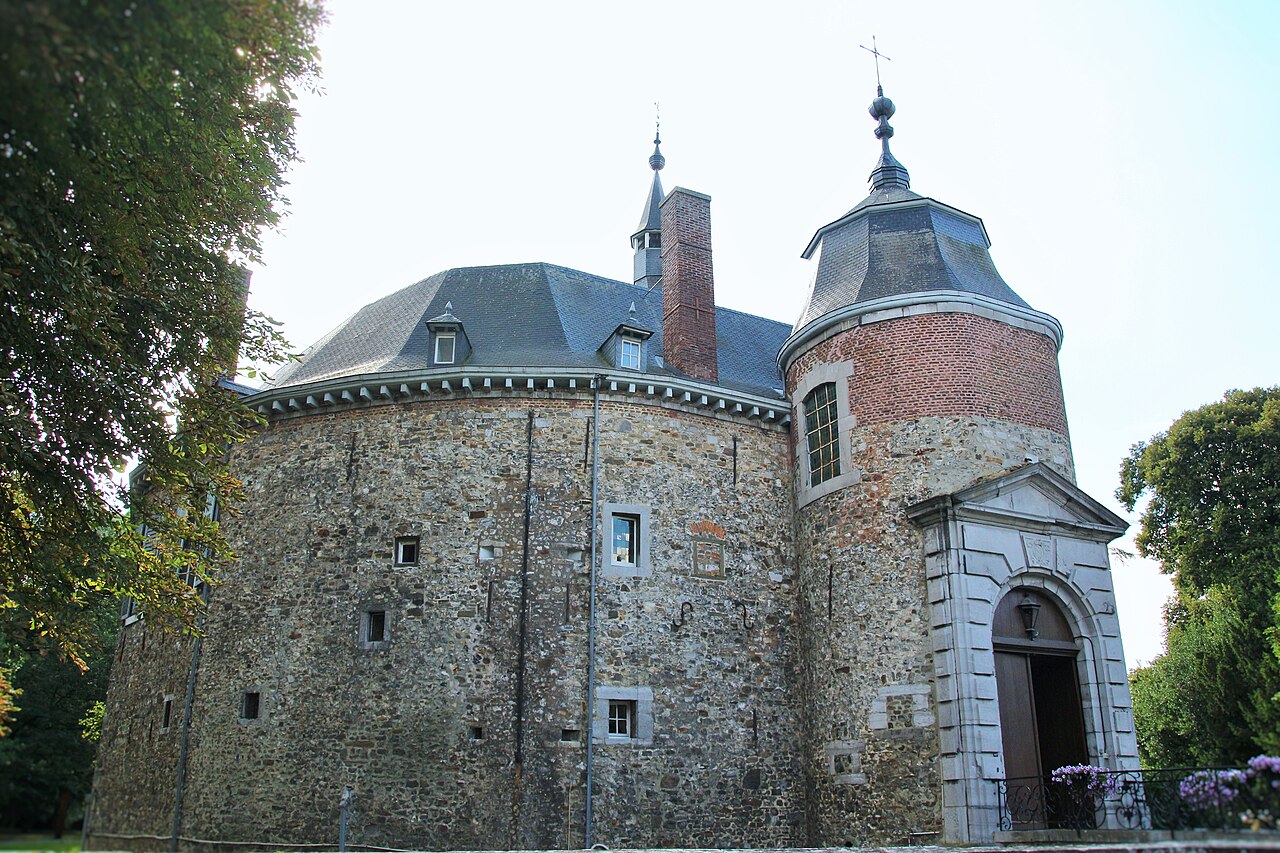
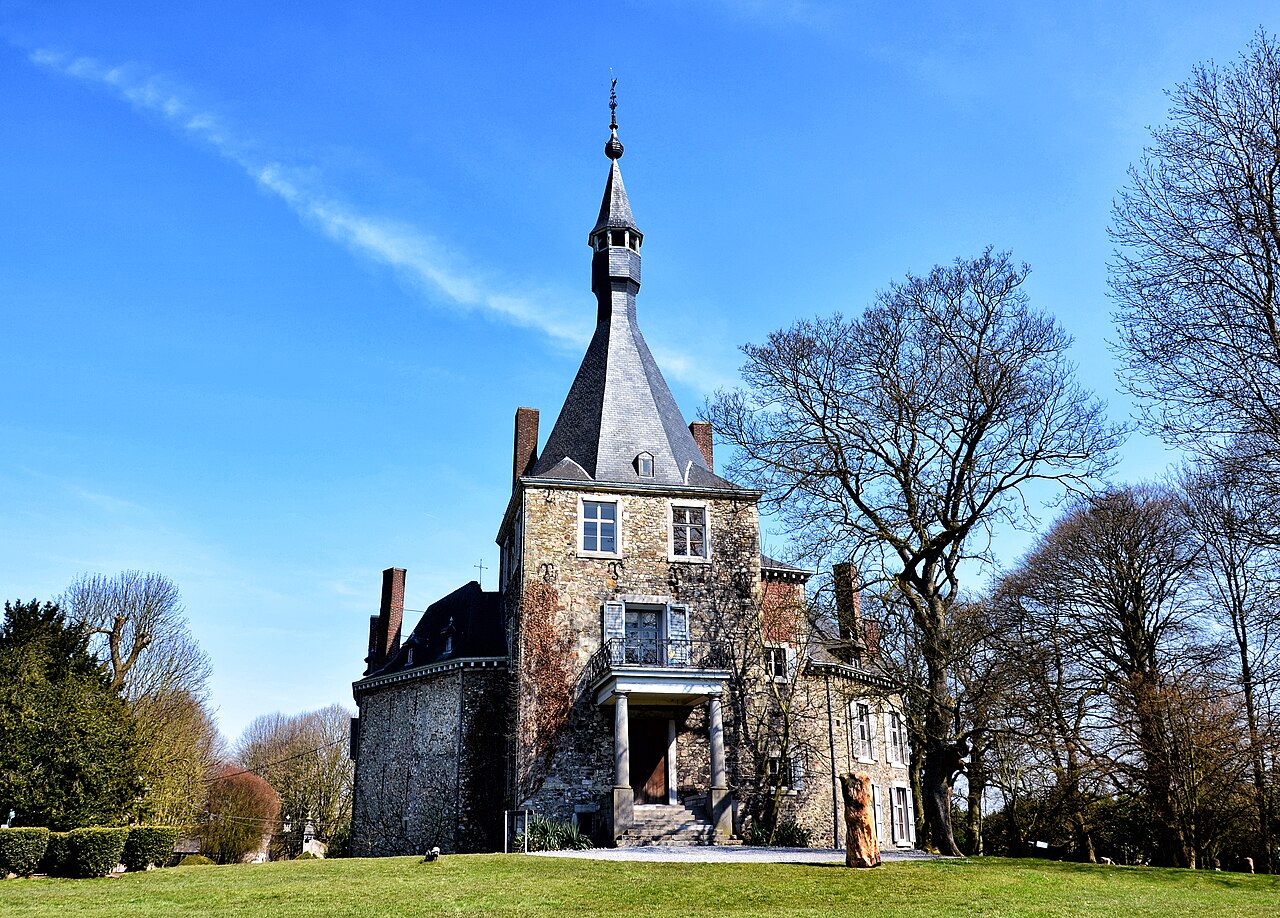
    The circular flint and sandstone curtain wall of Waroux Castle
    The castle’s circular curtain wall. Photo: Milucide, CC BY-SA 3.0, via Wikimedia Commons

    Waroux is one of the few circular castles in Belgium. Its layout was inherited from the Middle Ages:

    • a square keep, crowned by the slender spire you can see from far away;
    • a circular curtain wall of flint and sandstone, with tall walls once pierced only by arrow slits;
    • the entrance, set opposite the keep;
    • a polygonal inner courtyard mixing brick and dressed stone, the result of 17th- and 18th-century alterations;
    • a moat that still surrounds the castle.

    The castle stands at an altitude of about 182 meters, on one of the high points of Hesbaye. It has been a listed monument since 1977 and is part of Wallonia’s exceptional heritage.

    The castle’s rooms

    The Lovinfosse room. On the ground floor, this room is named after the Liège painter Pierre-Michel de Lovinfosse, who decorated it at the end of the 18th century. His canvases in shades of gray and pink, framed by gilded moldings, show pairs of cupids with bows, fishing gear and wine, and even a sleeping cupid. You can feel the influence of Watteau and French art.

    The detail not to miss: the canvas to the right of the fireplace swings open. Behind it hides a folding altar, used to say Mass in secret during the French Revolution, with enough room to hide a priest.

    The wedding hall. Set in the keep, above the armory, it was probably a bedroom in the 18th century, as its alcove opening onto the park suggests. It has kept fine late-18th-century stuccowork: a fireplace framed by fluted pilasters with acanthus-leaf capitals, and garlands of flowers and fruit. A mirror still bears bullet marks from the Second World War.

    And also: the chapel, the armory and the Saint-Hubert room, which you can discover during tours and exhibitions.

    #CrimeFiction #Liege #Mystery #MrSchaka

    The park, the avenue and the icehouse

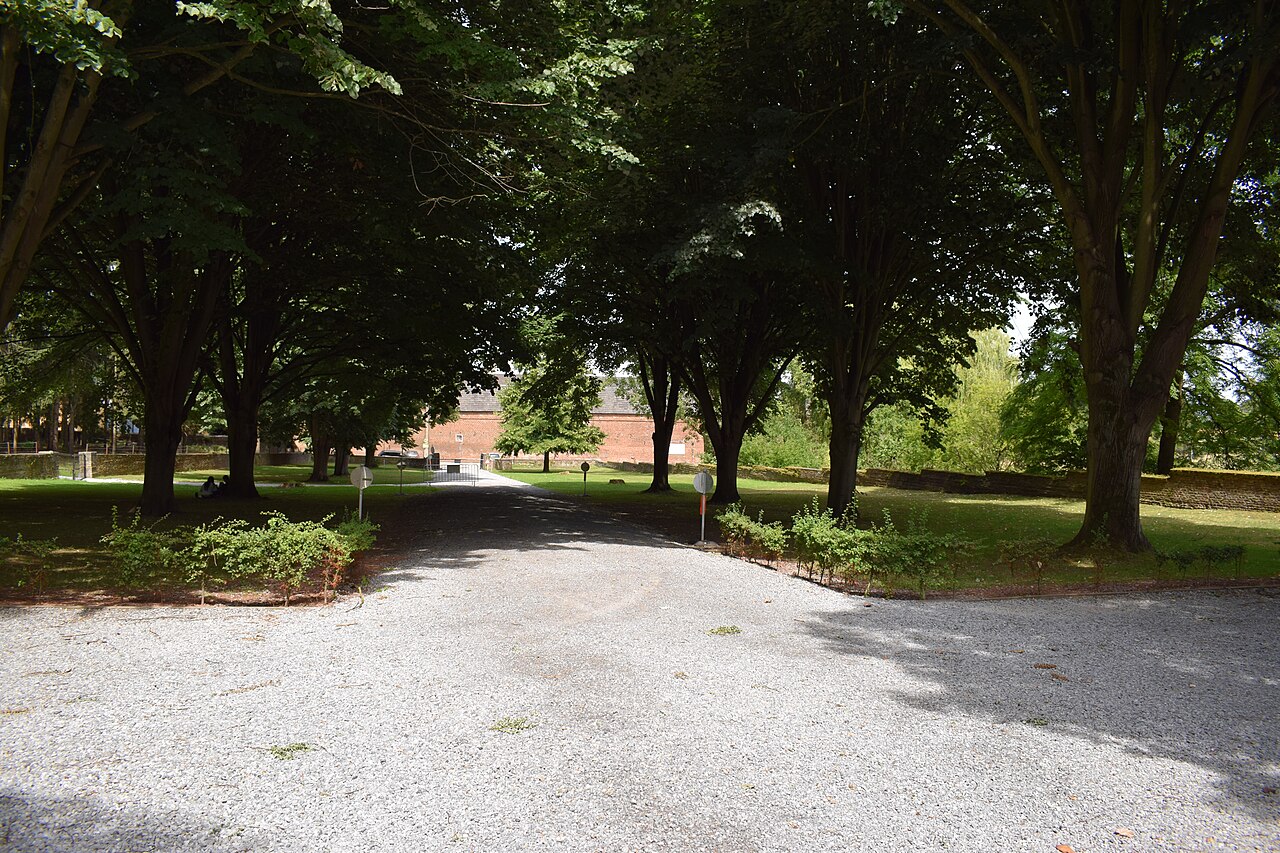
    The avenue of lime trees leading to Waroux Castle
    The avenue leading to the castle. Photo: Jean Housen, CC BY-SA 4.0, via Wikimedia Commons

    You reach the castle along an avenue of century-old lime trees, gorgeous in autumn and just as lovely under frost. The park is listed. East of the castle you’ll still find an old icehouse, where winter ice was stored, and the remains of a charmille, a walk lined with clipped hornbeams.

    Waroux Farm

    Opposite the castle, the large square farmstead is well worth a look:

    • a residential wing dated 1645 and three wings from 1724;
    • a barn with two cart doors and a niche sheltering a statue of Saint Michael slaying the dragon, beneath a pediment bearing the Clercx eagle;
    • a gatehouse with dovecote dated 1724, also bearing the arms of the Clercx de Waroux.

    Exhibitions and events

    Since the municipality of Ans took ownership, the castle has hosted major exhibitions: Folon in 2006, Rodin in 2007 for the 90th anniversary of his death, Félicien Rops and an exhibition on Freemasonry in 2008. In 2007, the park even hosted a Napoleonic bivouac during the military heritage days.

    A walk through Hesbaye in Oscar’s footsteps

    Waroux is a stone’s throw from the settings of The Empty Wall, the second volume of Oscar’s Notebook. For a half-day steeped in the novel’s atmosphere:

    • Ans station, on the trail that Victor and Oscar follow.
    • The beet fields of Alleur, around the castle, ideally on a foggy morning.
    • Waroux Castle, its avenue and its moat.
    • Fort Loncin, close by, one of the forts in Liège’s defensive ring in 1914, whose tunnels play a part in the novel.

    To learn all about the castle’s past, read also Waroux Castle: seven centuries of history and The War of the Awans and the Waroux.

    Cover of The Man with a Face of Water

    Oscar’s Notebook

    From Ans station to the fields of Alleur, all the way to the tunnels of Fort Loncin: The Empty Wall, Victor and Oscar’s second investigation, unfolds in these Hesbaye landscapes. Now available as an English ebook.

  • The War of the Awans and the Waroux: the Vendetta That Bloodied Hesbaye

    The War of the Awans and the Waroux: the Vendetta That Bloodied Hesbaye

    A secret marriage, a much-coveted young woman, a burned-down mill… and forty years of vendetta. Between 1298 and 1335, the Hesbaye region around Liège tore itself apart in a private war between two great lineages: the Awans and the Waroux. A true story that wiped out a good part of the nobility of the Liège region, and to which Waroux Castle, in Alleur, still bears witness.

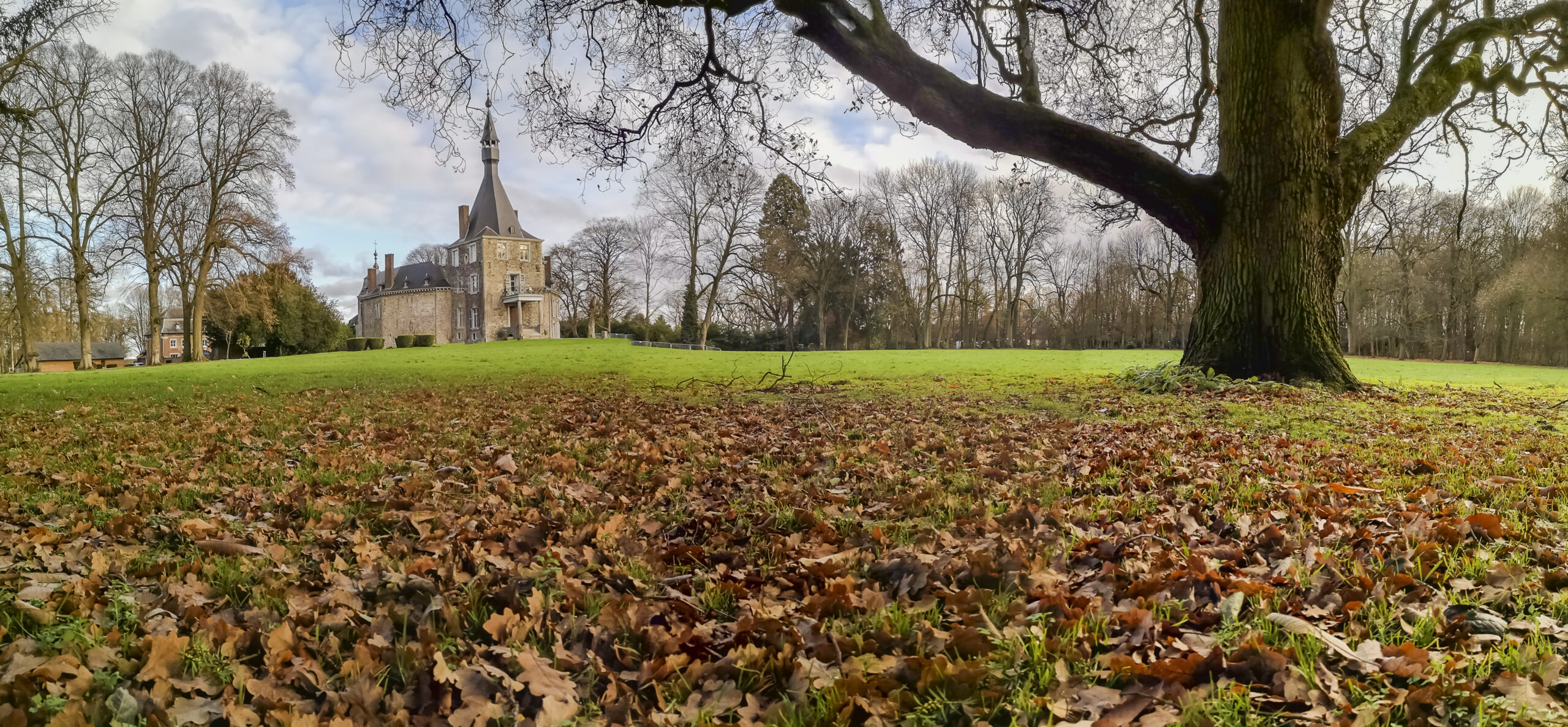
    The park of Waroux Castle in autumn, carpeted with fallen leaves

    Hesbaye at the end of the 13th century

    We are in the Prince-Bishopric of Liège, ruled by a prince-bishop. On the fertile Hesbaye plateau, northwest of the city, live many families of knights, bound to one another by blood, marriage and friendship. These are known as lineages. Awans and Waroux are two neighboring villages, today in the municipalities of Awans and Ans, just a few kilometers apart.

    At the time, private vengeance between nobles is not a crime like any other. Custom, traced back to a so-called “law of Charlemagne,” grants them wide impunity, and a simple oath of innocence can be enough to clear one’s name. The stage is set for escalation.

    It all starts with a secret marriage

    At the root of the war is a young woman: Adèle Poret, an orphan from the village of Awans. According to a chronicler of the time, she is of servile status, but rich in property and inheritances. Quite a catch.

    Humbert Corbeau, Lord of Awans, has promised her to one of his friends. But Adèle secretly marries another man: Hanneceau de Waroux. Furious, Humbert Corbeau claims her by virtue of his feudal rights from the head of the Waroux lineage, William the Younger. The answer comes back: Adèle is free, and she may marry whomever she pleases.

    #CrimeFiction #Liege #Mystery #MrSchaka

    Mills in flames, Hesbaye put to fire and sword

    The Awans then try to abduct the young woman. Hanneceau and Adèle take refuge behind the walls of Waroux Castle. Unable to reach them, the Awans turn on the estate: they set fire to the mills and breweries of Waroux and lay waste to its lands. The Waroux windmill, mentioned in 1323, would also be destroyed during the conflict.

    Every blow calls for retaliation. Allied families join the fray, and ambushes and battles follow one after another. Among the victims, Raes de Warfusée, of the Waroux line, is killed in 1327. The war lasts thirty-seven years and wipes out a large part of the Hesbaye nobility.

    The castle in the storm: it was probably around 1300, in the thick of the war, that Waroux Castle received its circular curtain wall of flint and sandstone, tall and pierced only by arrow slits. A fortress designed to withstand a siege.

    1335: peace at last

    It was not until 1335 that the weapons fell silent. Exhausted, robbed of many heads of family, the lineages finally made peace. The war left a deep mark on Liège’s memory: at the end of the 14th century, the chronicler Jacques de Hemricourt wrote an account of it, and it is largely thanks to him that we know this story today.

    What remains of the war today?

    • Waroux Castle, in Alleur, with its square keep and its round curtain wall of medieval origin.
    • The memory of the war in place names and in the local history of Ans and Awans.
    • A story that still fascinates historians and lovers of medieval tales.

    For the rest of the castle’s story, from the Counts of Merode to the municipality of Ans, read Waroux Castle: seven centuries of history. And to get there, see our guide Visiting Waroux Castle.

    A story worthy of a crime novel

    A neighborly rivalry that gets out of hand, a woman everyone wants, fires, a chain of revenge: the War of the Awans and the Waroux has all the ingredients of a noir novel. Seven centuries later, it is in these same Hesbaye landscapes, between Ans, Alleur and Fort Loncin, that the investigation of The Empty Wall unfolds, the second volume of Oscar’s Notebook.

    Cover of The Man with a Face of Water

    Oscar’s Notebook

    In Oscar’s Notebook, Victor Lenoir, a former Liège police inspector, and Oscar Blanc, an extraterrestrial who has learned to live among us, solve the cases the Liège police can’t make sense of. The series is published in English.

  • Waroux Castle: Seven Centuries of History in Alleur, near Liège

    Waroux Castle: Seven Centuries of History in Alleur, near Liège

    On the Hesbaye plateau, a few kilometers from Liège, a slate spire rises above the trees of Alleur. This is Waroux Castle: a square keep, a round flint curtain wall, a moat, and seven centuries of history. Private wars, counts, canons, Resistance fighters and American officers: its walls have seen them all come and go. Here is its story, from its medieval origins to the present day.

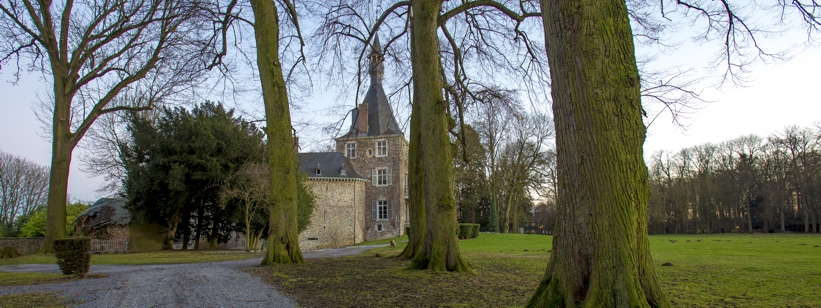
    Waroux Castle in Alleur (Ans), with its keep and spire
    Waroux Castle, in Alleur. Photo: Debahi, CC BY-SA 3.0, via Wikimedia Commons

    Where is Waroux Castle?

    The castle stands on Rue de Waroux in Alleur, a village that belongs to the municipality of Ans, in the province of Liège. It sits at an altitude of about 182 meters, one of the highest points in Hesbaye, which explains why its slender spire can be seen from so far away. All around: fields, a farm, a listed park and a long avenue of century-old lime trees.

    A medieval lordship

    In the 13th century, Waroux was a lordship under the County of Loon (today’s Belgian Limburg). It belonged to a family that bore the name of the place: the de Waroux. A certain Breton the Younger is already mentioned in 1234.

    The present castle still bears traces of those origins: its square keep and its circular curtain wall of flint and sandstone, tall and pierced only by arrow slits, are medieval. It is said to have been built around 1300, in the thick of the war against the Awans. It is one of the few circular castles in Belgium.

    1298–1335: the War of the Awans and the Waroux

    The name Waroux remains tied to one of the bloodiest episodes in the history of the Prince-Bishopric of Liège: the War of the Awans and the Waroux. For nearly forty years, from 1298 to 1335, two great Hesbaye lineages and their allies fought each other. It all supposedly began with a secret marriage… We tell this story, worthy of a novel, in a separate article: The War of the Awans and the Waroux.

    The estate still carries the scars. A windmill stood at Waroux in 1323: it was destroyed during the war, then probably rebuilt on the same spot, since a document from 1609 mentions a “neuf moullin” (a new mill).

    Among the lords of the line, history remembers William II, known as the Younger, leader of the Waroux at the start of the conflict, Raes de Warfusée, killed in 1327, and another Raes de Warfusée, burgomaster of Huy, who died without a direct heir in 1407.

    The Merodes, Counts of Waroux

    In 1525, after centuries, the estate left the Waroux family through marriage. It passed to Richard de Merode (died 1539), husband of Agnès de Warfusée. The Merodes, one of the greatest noble families of the old Low Countries, kept it for more than a century and a half: William, then John, made Count of Waroux in 1623, another John, Eitel-Frederick, and finally his son Alexander, who had only three daughters.

    #CrimeFiction #Liege #Mystery #MrSchaka

    The Clercx de Waroux and the 18th-century castle

    At the end of the 17th century, the Merode sisters sold the estate to Michel Clercx: bricks dated 1696 still bear his coat of arms. The Clercx de Waroux family would live there until 1925.

    It was this family that gave the castle its present face. The polygonal inner courtyard mixes brick and dressed stone, and at the end of the 18th century the rooms received refined decoration: stuccowork, fireplaces with fluted pilasters, and canvases by the Liège painter Pierre-Michel de Lovinfosse. Opposite, the farm was enlarged: a residential wing dated 1645, three wings from 1724, and a gatehouse with dovecote from 1724 bearing the Clercx coat of arms.

    The secret of the Lovinfosse room: one of the canvases, to the right of the fireplace, swings open to reveal a folding altar. During the French Revolution, Mass was celebrated there in secret, and a priest could be hidden there if the alarm was raised.

    The Everard de Harzirs and the Second World War

    After 1925, the castle was bought by Francis Everard de Harzir. For his family, the war would be terrible. Francis died of a heart attack in Brussels on May 10, 1940, the day of the German invasion. His son Alain fell on May 28, 1940 at Passendale, during the Battle of the Lys. Philippe, an officer in the Secret Army, was shot dead on September 4, 1944 during the fighting at Alleur, while going to the aid of a wounded man. Jacques fell gravely ill on a military mission in Germany in May 1945 and remained severely disabled.

    The Germans occupied the castle from 1940. Yet it occasionally sheltered hidden Allied airmen and Jews. In 1944–1945, the Americans set up a military field hospital in Alleur, and its officers were billeted at Waroux. In what is now the wedding hall, a mirror still bears bullet marks.

    Adèle de Harenne, Francis’s widow, lived at the castle until her death in 1982.

    From the family to the municipality of Ans

    • October 25, 1977: the castle and the farm are listed as protected monuments.
    • 1986: the castle is bought by Dr. Léon Janssis.
    • January 2005: it becomes the property of the municipality of Ans.
    • Today, it is part of Wallonia’s exceptional heritage. It houses offices and meetings, hosts the weddings of Ans residents, and has staged major exhibitions (Folon in 2006, Rodin in 2007, Félicien Rops in 2008).

    To explore the rooms, the park and the farm, read our guide Visiting Waroux Castle.

    Waroux, a setting for Oscar’s Notebook

    A spire piercing the Hesbaye fog, an old vendetta, an altar hidden behind a painting, bullet marks in a mirror… Waroux Castle has everything a crime novel could want. It stands in Alleur, a stone’s throw from Ans station and the beet fields that Victor Lenoir and Oscar Blanc cross in The Empty Wall, the second volume of Oscar’s Notebook.

    Cover of The Man with a Face of Water

    Oscar’s Notebook

    The investigations of Oscar Blanc and Victor Lenoir take place in and around Liège, from Guillemins station to Fort Loncin, amid fog, mystery and humor. The series is published in English.