Liège is not a postcard city; it is a city you discover on foot: stairways, narrow lanes, a big square, a river and a market that dates back to the 16th century. Mr Schaka is from Liège. If you are wondering about the best things to do in Liège in a weekend, here is what he suggests: a simple two-day itinerary, the local food to try and the easiest way to arrive by train.
Liège is also the setting of his crime series Oscar’s Notebook. If you want to extend your visit through reading, we have gathered the Liège locations of Victor and Oscar’s investigations.
Things to do in Liège on Saturday morning: Place du Marché, the Perron and the Palace
Start in the historic heart. The Place du Marché is lined with narrow houses, most of them rebuilt in the 17th and 18th centuries after the bombardment of 1691. Here you will also find the town hall, nicknamed “La Violette” by locals.
In the middle stands the Perron, a column set on a fountain. It is the symbol of the city’s freedoms. Charles the Bold carried it off to Bruges in 1467; it was returned ten years later. Today’s version dates from the late 17th century and is the work of the sculptor Jean Del Cour.
A short walk away, the Palace of the Prince-Bishops is a reminder that Liège was for centuries the capital of a principality. It now houses the law courts and the provincial government. The first inner courtyard is free to enter: look up at its sixty or so columns, each with a different capital.
To wander afterwards, head to the Carré, the small pedestrian district of the centre, with shops, snack shops and restaurants. It is the liveliest part of town, especially in the late afternoon.
Montagne de Bueren and the Coteaux: Liège from above
From Rue Hors-Château, the Montagne de Bueren climbs straight up towards the Citadel hill: 374 steps, completed in 1881. It is named after Vincent de Bueren, who led a raid against Charles the Bold’s troops in 1468. Allow about ten minutes to climb, at your own pace. If you would rather avoid the steps, Rue Pierreuse is a gentler slope.
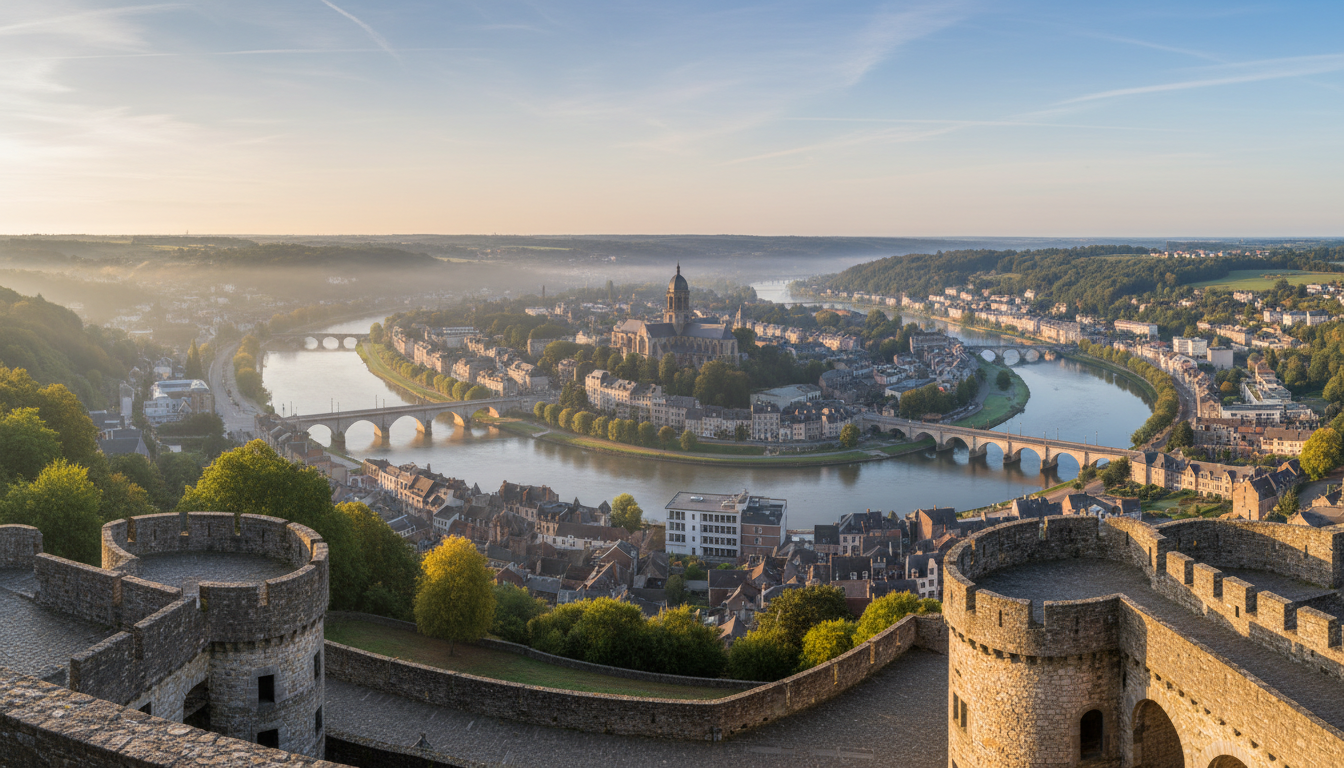
At the top, don’t rush back down. The Coteaux de la Citadelle are a surprising green space in the middle of the city: footpaths, orchards and hidden stairways between Hors-Château and Pierreuse. The view over the rooftops, the church towers and the Meuse valley is worth the effort. Wear good shoes: cobbles and steps are slippery in the rain.
Saturday afternoon: La Boverie and Liège-Guillemins station
Cross the Meuse to the Boverie park. The La Boverie museum occupies the former Fine Arts palace built for the 1905 World’s Fair; it reopened in 2016 with a glass extension. Its collection mixes Walloon art with famous names, including Picasso’s The Soler Family and Chagall’s The Blue House. Allow about an hour and a half.
- Opening hours: Tuesday to Sunday, 10 am to 6 pm (closed on Mondays).
- Permanent collection: €5 for adults, free for under-26s.
- Free for everyone on the first Sunday of the month (permanent collection). Temporary exhibitions have their own prices.
A small detail for readers: volume 2 of Oscar’s Notebook, The Empty Wall, begins with the theft of a Picasso from La Boverie. One more reason to look closely at the walls.
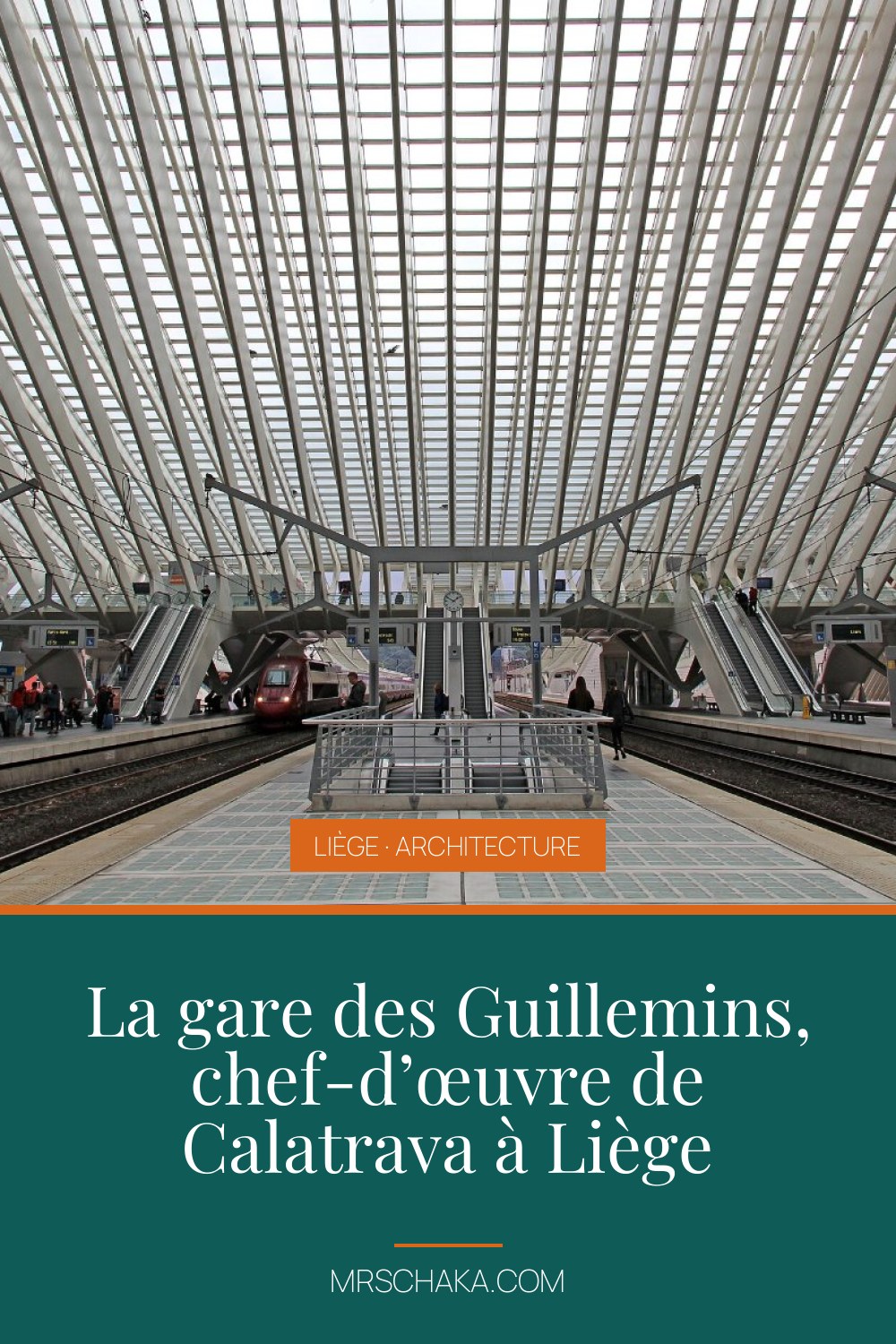
From the park, a footbridge leads to Liège-Guillemins station. Even if you are not arriving by train, go and see it: designed by the architect Santiago Calatrava and opened in 2009, it is a huge vault of glass and steel with no closed façade. The light changes with every hour.
Good to know: museum hours and prices sometimes change, and several city museums are free on the first Sunday of the month. Check before you go on the City of Liège website.
Sunday: La Batte market and Outremeuse
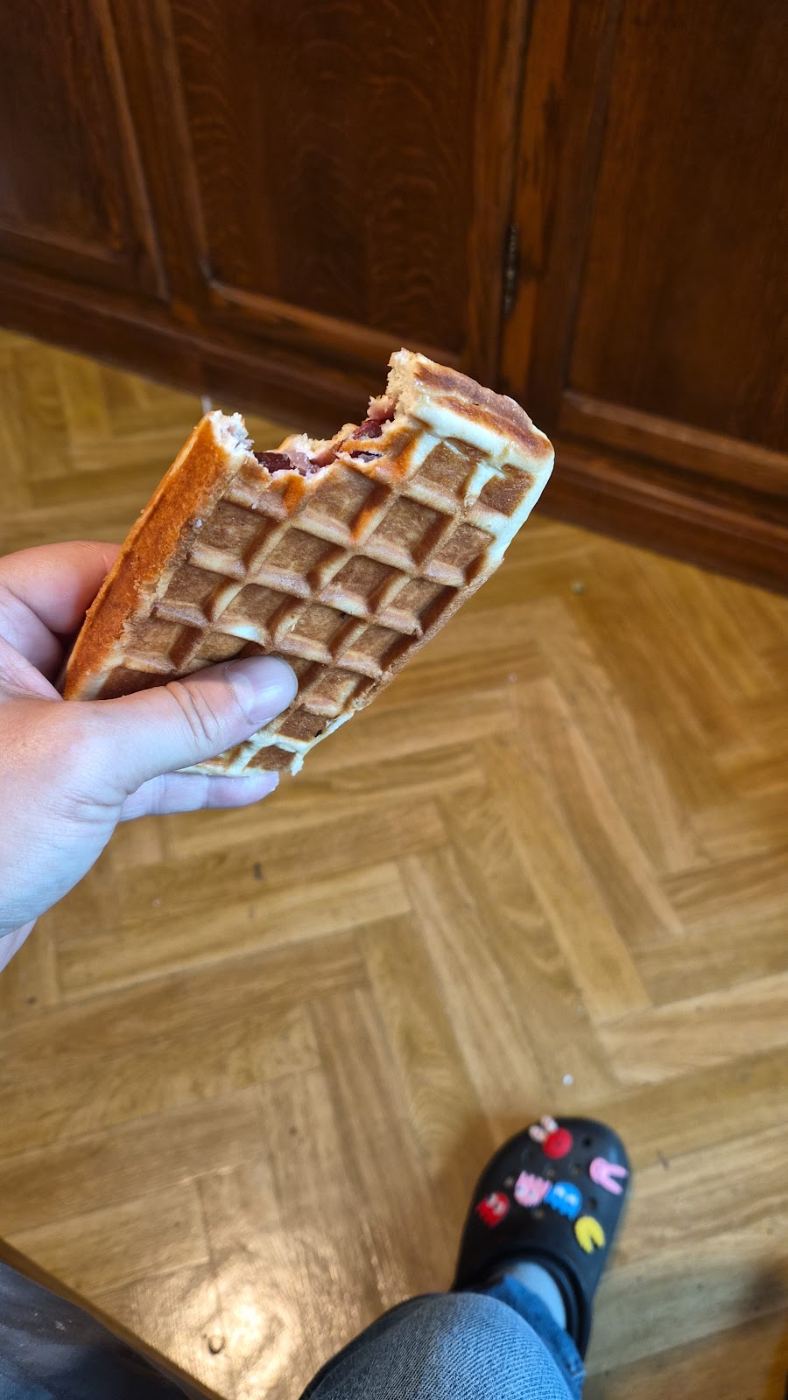
On Sunday morning, the whole city seems to meet at the Batte market, along the quays of the Meuse. It has been held since 1561 and is said to be the oldest market in Belgium. Over several kilometres you will find everything: fruit and vegetables, cheese, flowers, clothes, second-hand goods, animals and warm waffles. It starts around 8 am and winds down in the early afternoon. Come before 10 am to avoid the crowds, and keep some cash: many small stallholders prefer it.
Then cross the bridge to Outremeuse, the working-class district on the other bank. It is the home of Tchantchès, the puppet who embodies the spirit of Liège, and of the “Free Republic of Outremeuse”. The writer Georges Simenon grew up here. On 15 August, the district holds its big popular festival. The rest of the year, it is a quiet place for a stroll along Rue Puits-en-Sock and the quays.
If you have time left, Waroux Castle in Alleur makes a pleasant outing a few kilometres from the city.
Liège specialities to try
- Boulets à la liégeoise: large meatballs in a sweet-and-sour sauce, known as “sauce lapin”, made with sirop de Liège. They are served with fries.
- Liège waffle: a brioche-like dough with pearl sugar that caramelises as it cooks. Eat it plain, warm, straight from the paper.
- Sirop de Liège: a thick pear and apple spread, eaten on bread, often with cheese. Every grocery sells it: an easy souvenir to take home.
- Fries, bought in a paper cone from a friterie, remain a Belgian classic.
How to get to Liège and get around
The easiest way is by train: Liège-Guillemins is on the high-speed lines between Brussels and Germany.
- From Paris: Eurostar trains (formerly Thalys) run directly from Paris-Nord to Liège in about 2 hours 15 minutes.
- From Brussels: about 40 minutes by Eurostar or ICE, around an hour by Belgian intercity train.
- From Germany: Eurostar and ICE link Cologne and Aachen to Liège; the ICE continues to Frankfurt.
- From London: Eurostar to Brussels-Midi, then change for Liège.
- By air: the most convenient airport is Brussels Airport (Zaventem), linked to Liège by train. Since September 2026, a direct Antwerp–Cologne ICE stops there twice a day and serves Liège.
Once there, the centre is easy to explore on foot. Since 2025, the tram has linked Guillemins station with the centre (Opéra, Place Saint-Lambert) and Coronmeuse: handy if you want to skip the 30-minute walk. Train times and fares: check before you travel.
Frequently asked questions
Is a weekend enough to visit Liège?
Yes, for the essentials: the historic centre, the Coteaux, La Boverie, Guillemins and La Batte fit into two days. Add a day for the surrounding area.
When is the Batte market held?
Every Sunday, from the morning until the early afternoon, along the quays of the Meuse. Entry is free.
Is the Montagne de Bueren hard to climb?
It is a steep stairway of 374 steps. Most people climb it in about ten minutes with a few pauses. If steps are a problem for you, Rue Pierreuse is a gentler alternative.
What can I bring back from Liège?
A jar of sirop de Liège, waffles and chocolates from a local chocolatier all travel well.
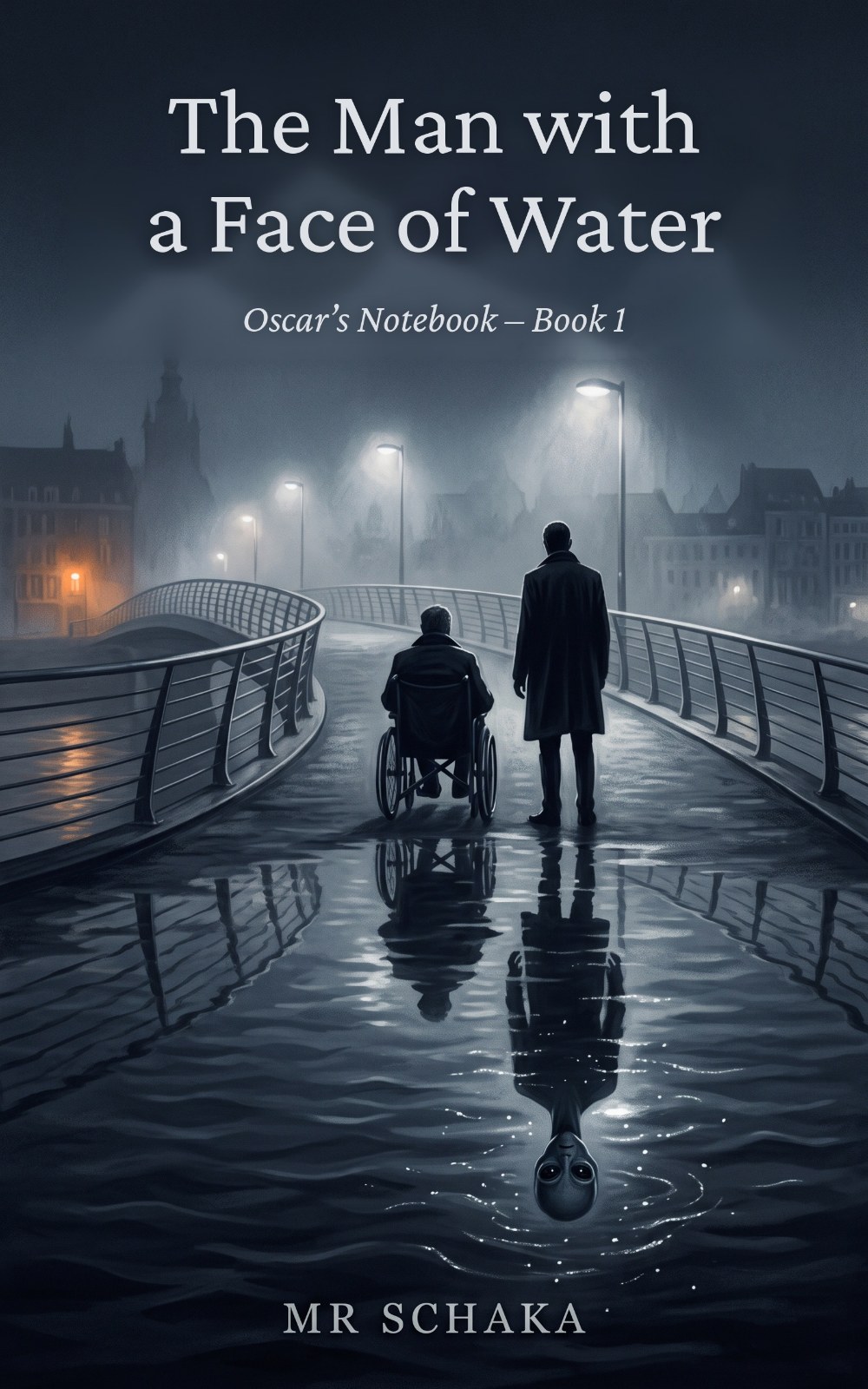
The book
Liège is the setting of Mr Schaka’s crime series, Oscar’s Notebook: the Place du Marché, the stairways, La Boverie… After your weekend, find these places again in Victor and Oscar’s investigations. Available in English.