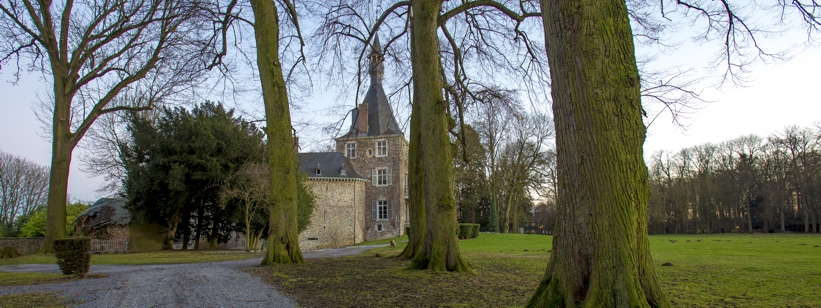
An avenue of century-old lime trees, a moat, a keep topped with a spire, a round curtain wall of a kind you rarely see in Belgium: Waroux Castle is one of the most surprising monuments around Liège. Here is everything you need to know to discover it: its architecture, its rooms, its park, its farm, and a short walk through Hesbaye in Oscar’s footsteps.
Practical information
- Address: Rue de Waroux, 4432 Alleur (municipality of Ans), province of Liège.
- Owner: the municipality of Ans, since 2005.
- Visits: the castle opens to the public during the major exhibitions held there. Outside those periods, groups can visit by reservation through the municipality of Ans.
- The park: a listed site, best discovered on a stroll along the avenue and around the moat.
Good to know: the castle also hosts the weddings of Ans residents. Before making the trip, check opening and exhibition dates with the municipality or the Maison du Tourisme du Pays de Liège (the Liège tourist office).
A one-of-a-kind architecture
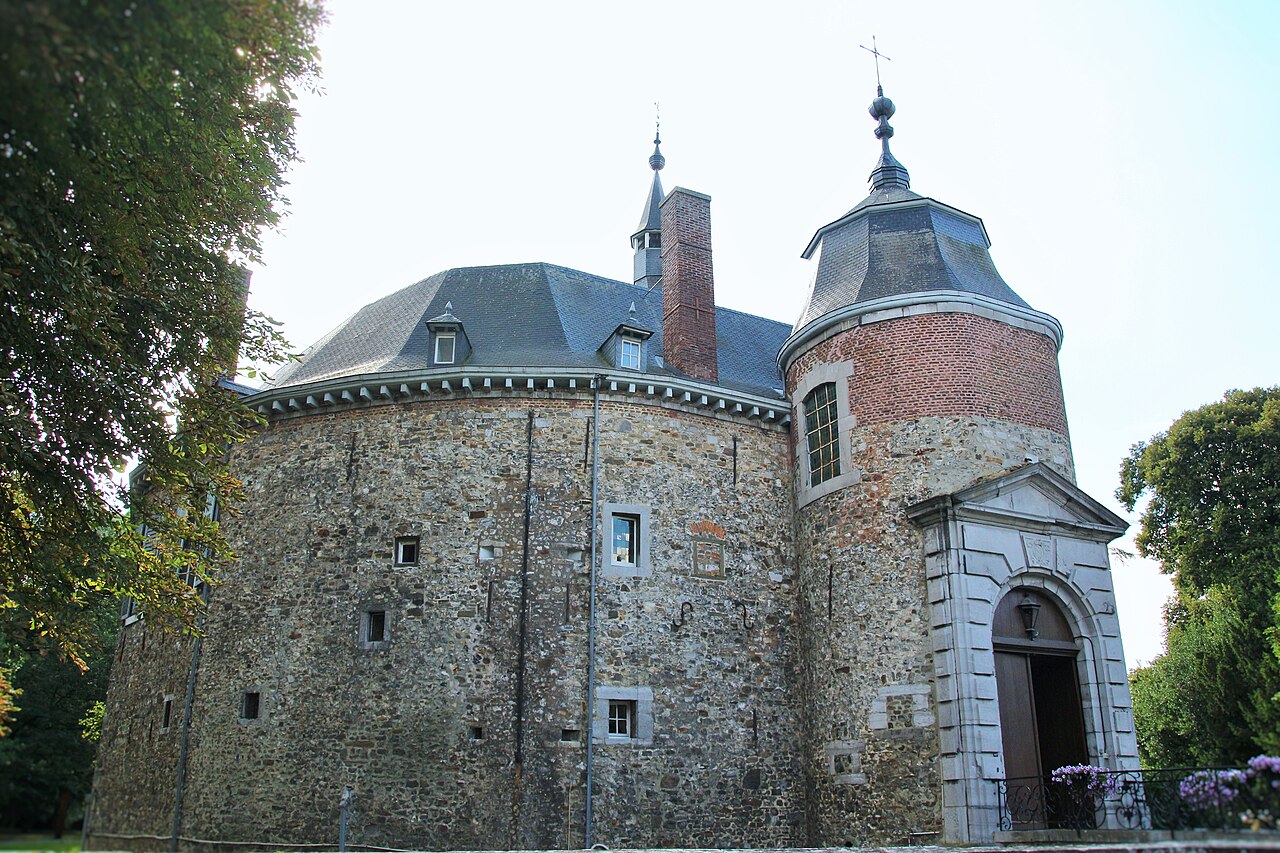
Waroux is one of the few circular castles in Belgium. Its layout was inherited from the Middle Ages:
- a square keep, crowned by the slender spire you can see from far away;
- a circular curtain wall of flint and sandstone, with tall walls once pierced only by arrow slits;
- the entrance, set opposite the keep;
- a polygonal inner courtyard mixing brick and dressed stone, the result of 17th- and 18th-century alterations;
- a moat that still surrounds the castle.
The castle stands at an altitude of about 182 meters, on one of the high points of Hesbaye. It has been a listed monument since 1977 and is part of Wallonia’s exceptional heritage.
The castle’s rooms
The Lovinfosse room. On the ground floor, this room is named after the Liège painter Pierre-Michel de Lovinfosse, who decorated it at the end of the 18th century. His canvases in shades of gray and pink, framed by gilded moldings, show pairs of cupids with bows, fishing gear and wine, and even a sleeping cupid. You can feel the influence of Watteau and French art.
The detail not to miss: the canvas to the right of the fireplace swings open. Behind it hides a folding altar, used to say Mass in secret during the French Revolution, with enough room to hide a priest.
The wedding hall. Set in the keep, above the armory, it was probably a bedroom in the 18th century, as its alcove opening onto the park suggests. It has kept fine late-18th-century stuccowork: a fireplace framed by fluted pilasters with acanthus-leaf capitals, and garlands of flowers and fruit. A mirror still bears bullet marks from the Second World War.
And also: the chapel, the armory and the Saint-Hubert room, which you can discover during tours and exhibitions.
The park, the avenue and the icehouse
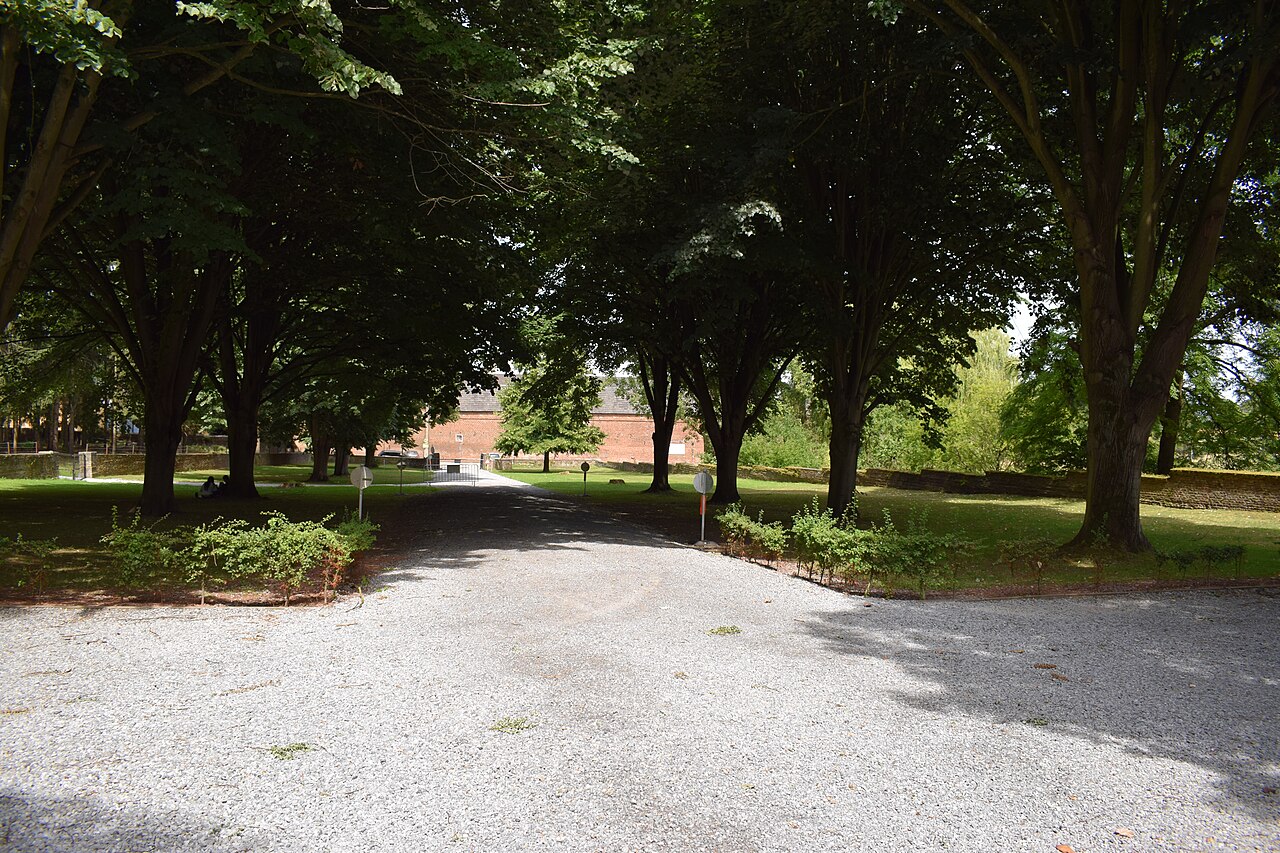
You reach the castle along an avenue of century-old lime trees, gorgeous in autumn and just as lovely under frost. The park is listed. East of the castle you’ll still find an old icehouse, where winter ice was stored, and the remains of a charmille, a walk lined with clipped hornbeams.
Waroux Farm
Opposite the castle, the large square farmstead is well worth a look:
- a residential wing dated 1645 and three wings from 1724;
- a barn with two cart doors and a niche sheltering a statue of Saint Michael slaying the dragon, beneath a pediment bearing the Clercx eagle;
- a gatehouse with dovecote dated 1724, also bearing the arms of the Clercx de Waroux.
Exhibitions and events
Since the municipality of Ans took ownership, the castle has hosted major exhibitions: Folon in 2006, Rodin in 2007 for the 90th anniversary of his death, Félicien Rops and an exhibition on Freemasonry in 2008. In 2007, the park even hosted a Napoleonic bivouac during the military heritage days.
A walk through Hesbaye in Oscar’s footsteps
Waroux is a stone’s throw from the settings of The Empty Wall, the second volume of Oscar’s Notebook. For a half-day steeped in the novel’s atmosphere:
- Ans station, on the trail that Victor and Oscar follow.
- The beet fields of Alleur, around the castle, ideally on a foggy morning.
- Waroux Castle, its avenue and its moat.
- Fort Loncin, close by, one of the forts in Liège’s defensive ring in 1914, whose tunnels play a part in the novel.
To learn all about the castle’s past, read also Waroux Castle: seven centuries of history and The War of the Awans and the Waroux.
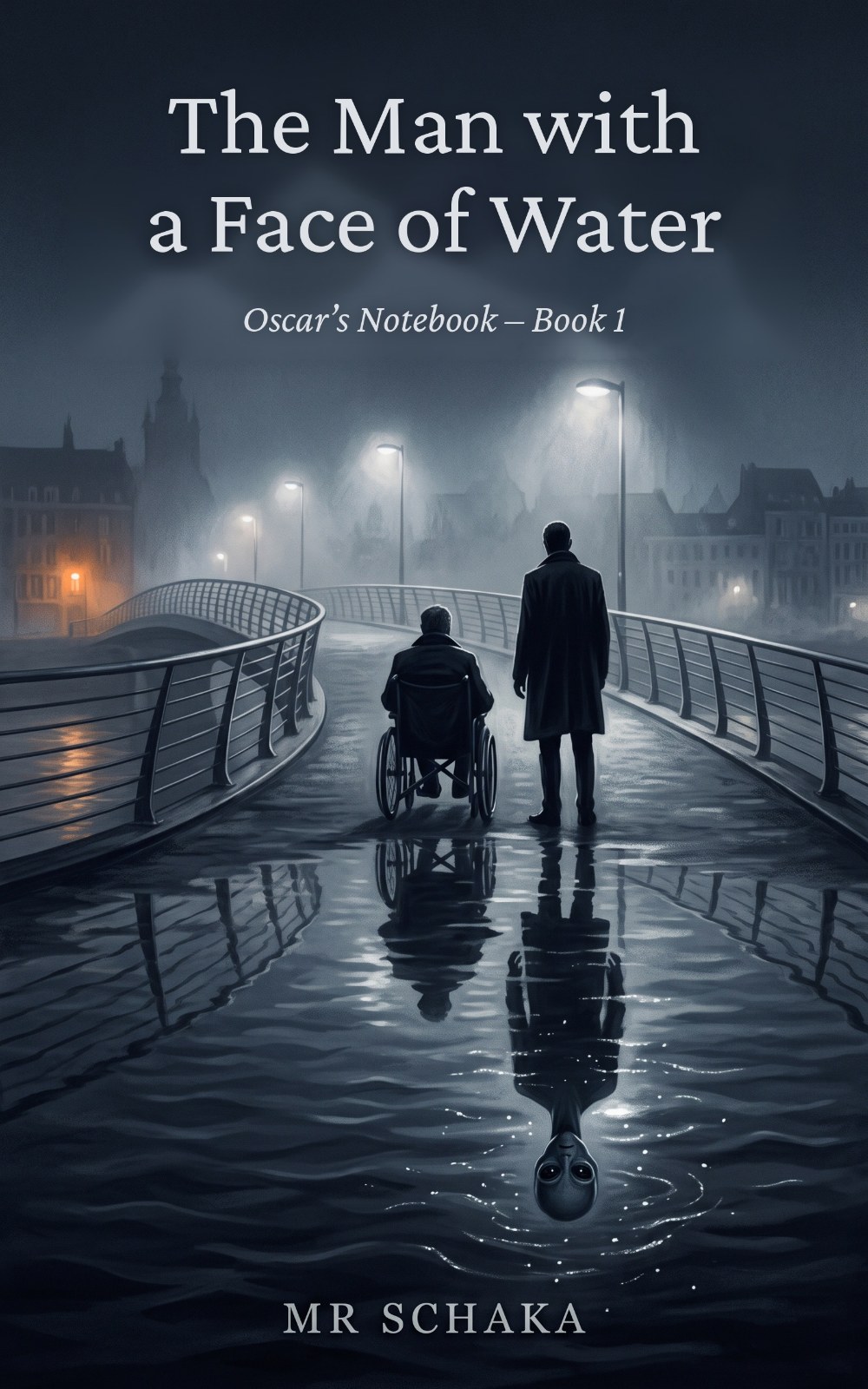
Oscar’s Notebook
From Ans station to the fields of Alleur, all the way to the tunnels of Fort Loncin: The Empty Wall, Victor and Oscar’s second investigation, unfolds in these Hesbaye landscapes. Now available as an English ebook.