When people talk about 1789, everyone thinks of Paris and the Bastille. Yet in the same year Liège lived through its own revolution: the Liège Revolution, which within a few years brought more than eight centuries of rule by prince-bishops to an end. Here I tell you about its causes, its key figures, how it unfolded up to the French annexation, and the traces you can still see today as you stroll around the “Cité ardente”.
A principality apart within the Holy Roman Empire
For more than eight centuries, Liège was neither French, nor Dutch, nor Austrian: it was the capital of an independent principality ruled by a prince-bishop. He was both the religious head of the diocese and the temporal sovereign of a territory that stretched far beyond the city, from the Hesbaye to the Ardennes, including part of today’s Belgian Limburg. The principality belonged to the Holy Roman Empire.
The people of Liège were deeply attached to their liberties. The Peace of Fexhe, agreed in 1316, already laid down the principle that the prince could not govern alone and had to respect the customs of the land. The perron, a column topped with a pine cone and a cross, had become the symbol of those liberties. But in 1684, Prince-Bishop Maximilian Henry of Bavaria imposed a regulation that stripped the craft guilds of most of their weight in electing the city’s magistrates. A century later, this “1684 Regulation” was still an open wound.
The causes: from the gaming houses of Spa to public anger
In the 18th century, Enlightenment ideas circulated widely in Liège, a city of printers and newspapers. Prince-Bishop François-Charles de Velbrück, who ruled from 1772 to 1784, was fairly open to these ideas and supported education and the arts. His successor, Constantin-François de Hoensbroeck, elected in 1784, took the opposite path. Authoritarian and unpopular, he sought to roll back his predecessor’s reforms.
The spark came from an unexpected place: Spa. The little spa town, which was part of the principality, attracted aristocrats from all over Europe at the time, and its gaming houses made a great deal of money. The prince protected the privilege of certain establishments. When an entrepreneur, Noël-Joseph Levoz, opened a rival gaming room, conflict broke out: in June 1787, Hoensbroeck sent soldiers to close it down. The case went before the Tribunal of the XXII, then before the Imperial Chamber Court at Wetzlar. What had been a quarrel about money became a debate about the prince’s power and the rights of his subjects.
18 August 1789, the “happy revolution”
On 18 August 1789, patriots gathered at the town hall on the Place du Marché and demanded the removal of the sitting magistrates. The crowd acclaimed two new burgomasters: Jacques-Joseph Fabry and Jean-Rémy de Chestret. The same day, the Sainte-Walburge citadel overlooking the city fell into the hands of the insurgents. The prince-bishop, who was staying at Seraing castle, was brought back to Liège and accepted the new burgomasters as well as the abolition of the 1684 Regulation.
The change happened almost without violence, which is why it is often called the “happy revolution”. But Hoensbroeck had only given in on the surface: on the night of 26 to 27 August he slipped out of the principality and took refuge in Trier, in Germany. From exile he refused any compromise.
The key figures of the revolution
- Constantin-François de Hoensbroeck: the contested prince-bishop, who chose exile and then returned thanks to imperial troops.
- Jean-Nicolas Bassenge: writer and poet, one of the leading pens of the patriot camp.
- Jacques-Joseph Fabry and Jean-Rémy de Chestret: the two burgomasters brought to power on 18 August.
From republic to restoration (1789-1791)
A Liège republic was proclaimed and the Estates began drafting a constitution. But the principality was still legally part of the Empire, and imperial justice demanded the prince’s return. Prussia, tasked with mediating, sent troops who occupied Liège from November 1789 to April 1790. The negotiations failed, largely because the exiled prince refused any concession, and the Prussians withdrew.
The people of Liège then prepared to defend themselves alone. It was in this atmosphere that the song Valeureux Liégeois (“Valiant People of Liège”) was written in 1790 by Abbé Ramoux; it has since become a kind of local anthem. Resistance was not enough: on 12 January 1791 the Austrian army entered Liège and restored Hoensbroeck. Many patriots fled into exile in France and their property was confiscated.
The French, the annexation and the end of the principality (1792-1795)
Hoensbroeck died on 3 June 1792. His successor, François-Antoine de Méan, would be the last prince-bishop of Liège. On 6 November 1792 the French armies defeated the Austrians at Jemappes, near Mons, and entered Liège on 28 November. The prince fled. A new assembly was elected by universal male suffrage and, in early 1793, the city voted overwhelmingly for union with France.
Nothing was settled yet. In March 1793 the French were beaten at Neerwinden and the Austrians brought the prince-bishop back. It took the French victory at Fleurus, on 26 June 1794, for everything to change: the Austrians left Liège at the end of July 1794 and were then defeated at Sprimont in September.
On 1 October 1795 the French Republic officially annexed the Austrian Netherlands and the former Principality of Liège. Its territory was divided between several departments: Ourthe, with Liège as its capital, Meuse-Inférieure and Sambre-et-Meuse. The Principality of Liège vanished from the map and was never restored: after Napoleon’s fall, Liège was attached to the United Kingdom of the Netherlands and then became Belgian in 1830.
The most spectacular episode, and the most debated today, concerns Saint Lambert’s Cathedral. A symbol of the prince-bishops’ power, this huge Gothic church stood at the heart of the city. Its demolition was decided in 1793 and began in 1794. The work dragged on for years: the western towers fell in 1803 and the site was only fully levelled in 1827. In its place today is the Place Saint-Lambert, which thousands of people cross every day without always knowing what once stood there.
What you can still see in Liège today
- The Archéoforum, beneath the Place Saint-Lambert: you go down to see the remains of the cathedral and of much older occupations of the site, going back to prehistory. For me it is the most telling place to understand what was lost.
- The Palace of the Prince-Bishops, right next door: the sovereign’s former residence now houses the law courts and the provincial authorities. I describe it in detail in my article on visiting the Palace of the Prince-Bishops.
- The perron and the town hall, on the Place du Marché, where it all began on 18 August 1789.
- The Treasury of Saint Paul’s Cathedral: many works rescued from Saint Lambert’s, including reliquaries, manuscripts and sculptures, were moved there. Saint Paul’s in fact became Liège’s cathedral after Saint Lambert’s disappeared.
- The Grand Curtius, on the banks of the Meuse, to immerse yourself in the history and arts of the Liège region (see my article on visiting the Grand Curtius).
My practical tips
- Start with the Archéoforum, then come back up to see the Place Saint-Lambert, the palace and the perron: everything is a few minutes’ walk apart.
- The Archéoforum is normally open Tuesday to Saturday, 10am to 5pm, with adult admission of around 8 euros and free entry on the first Sunday afternoon of the month. Check opening hours and closing days before you go.
- The Palace of the Prince-Bishops is an official building: find out about guided tours in advance, as you cannot wander freely everywhere.
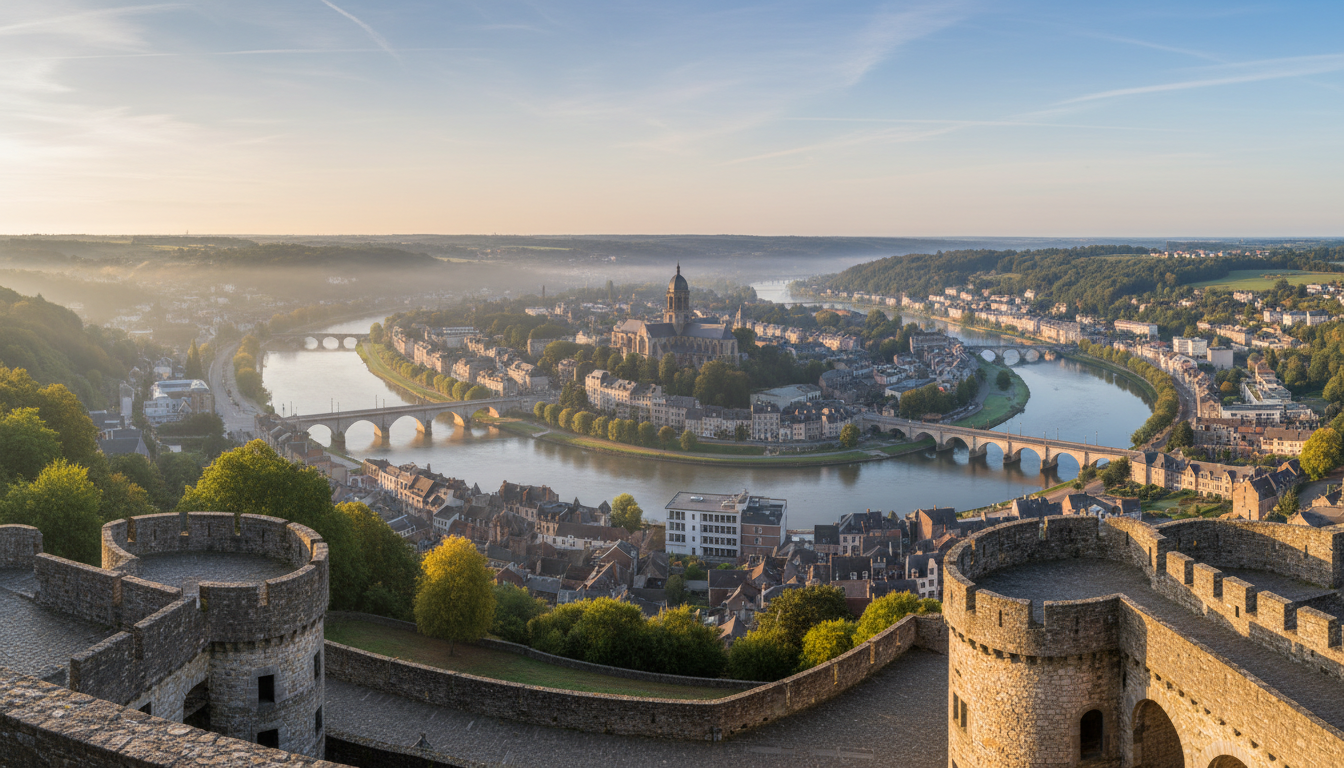
- If you climb up to the citadel, wear good shoes and take your time: the climb is steep.
Frequently asked questions
When did the Principality of Liège disappear?
Officially on 1 October 1795, with its annexation by the French Republic. Its territory was divided between the departments of Ourthe, Meuse-Inférieure and Sambre-et-Meuse.
Who was the last prince-bishop of Liège?
François-Antoine de Méan, who succeeded Hoensbroeck in 1792. He had to flee before the French armies and never regained his throne.
Can you still see Saint Lambert’s Cathedral?
Not standing, but its foundations can be visited at the Archéoforum beneath the Place Saint-Lambert, and part of its treasury is kept at Saint Paul’s Cathedral.
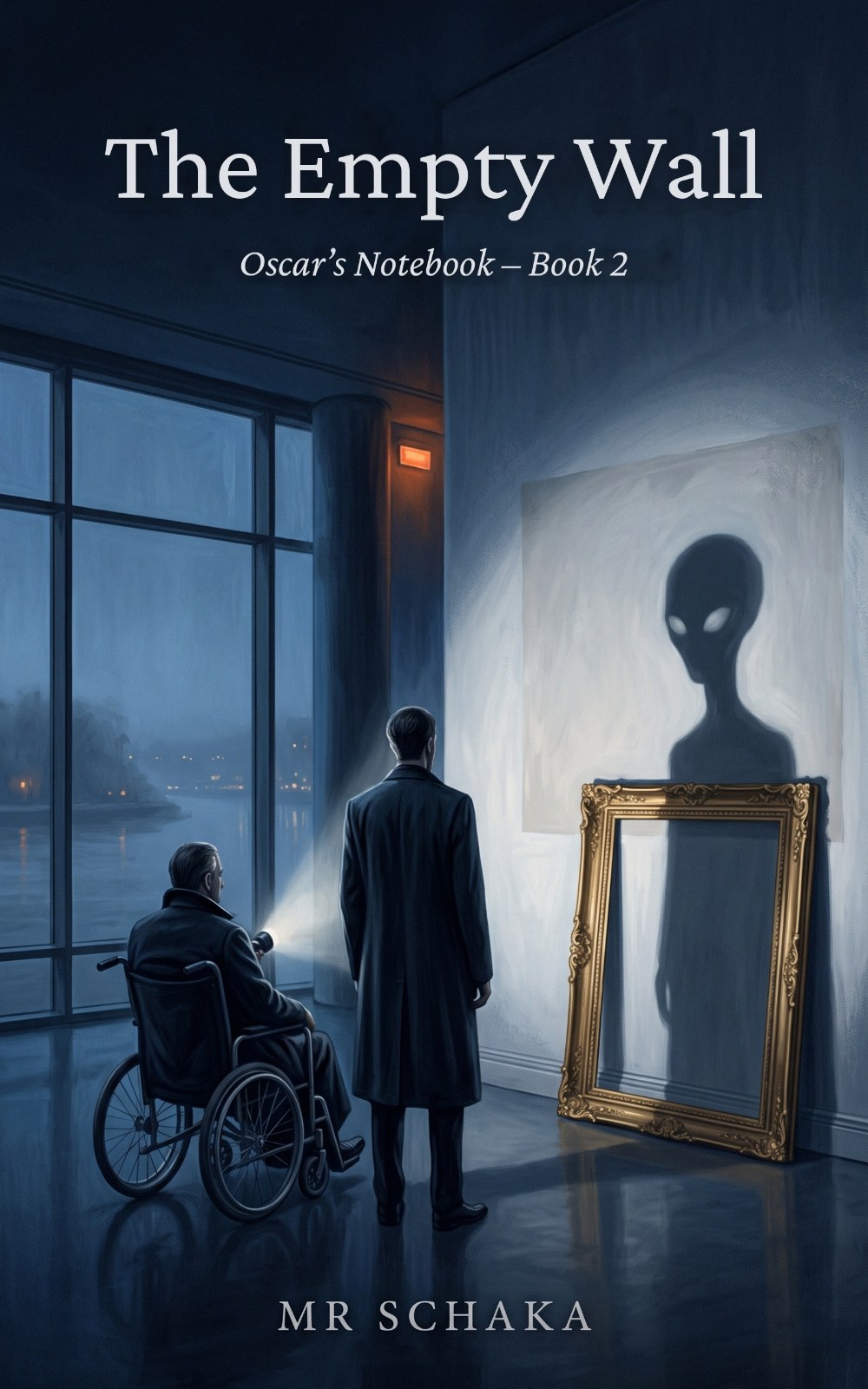
The book
The Empty Wall is the second book of Oscar’s Notebook, a series of crime novels set in Liège.