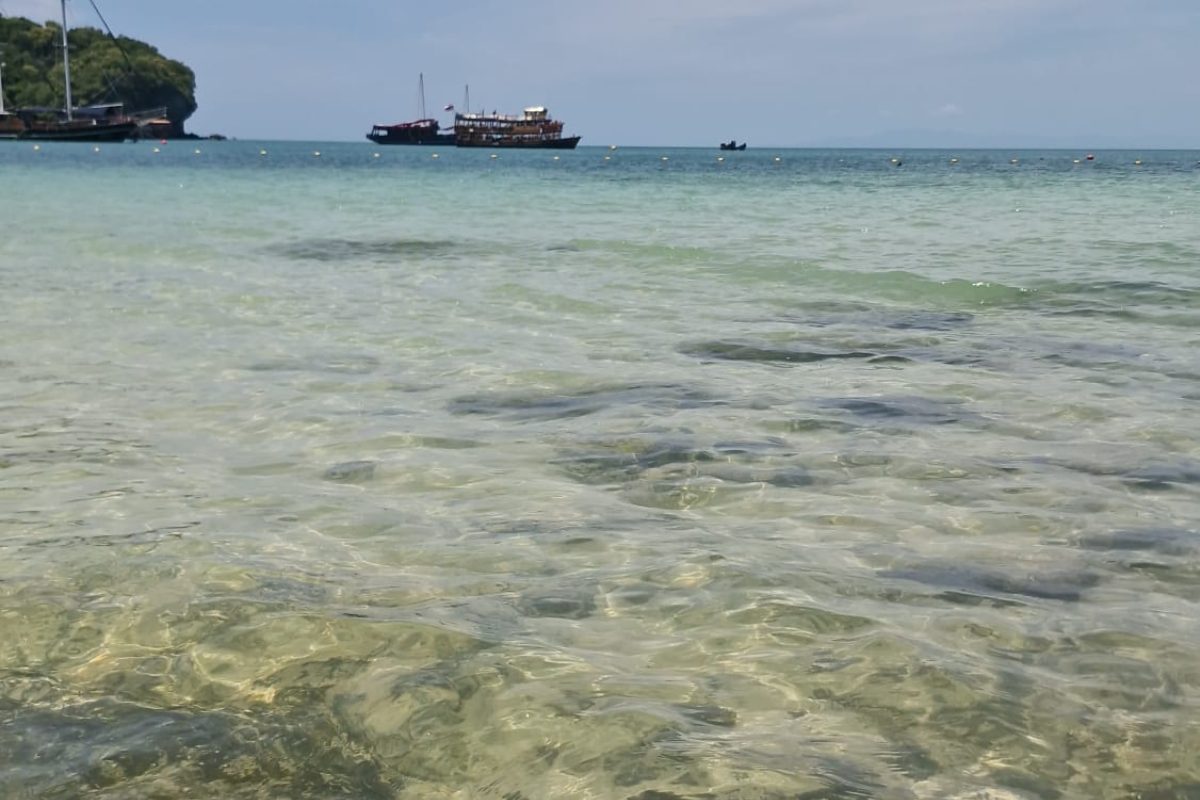
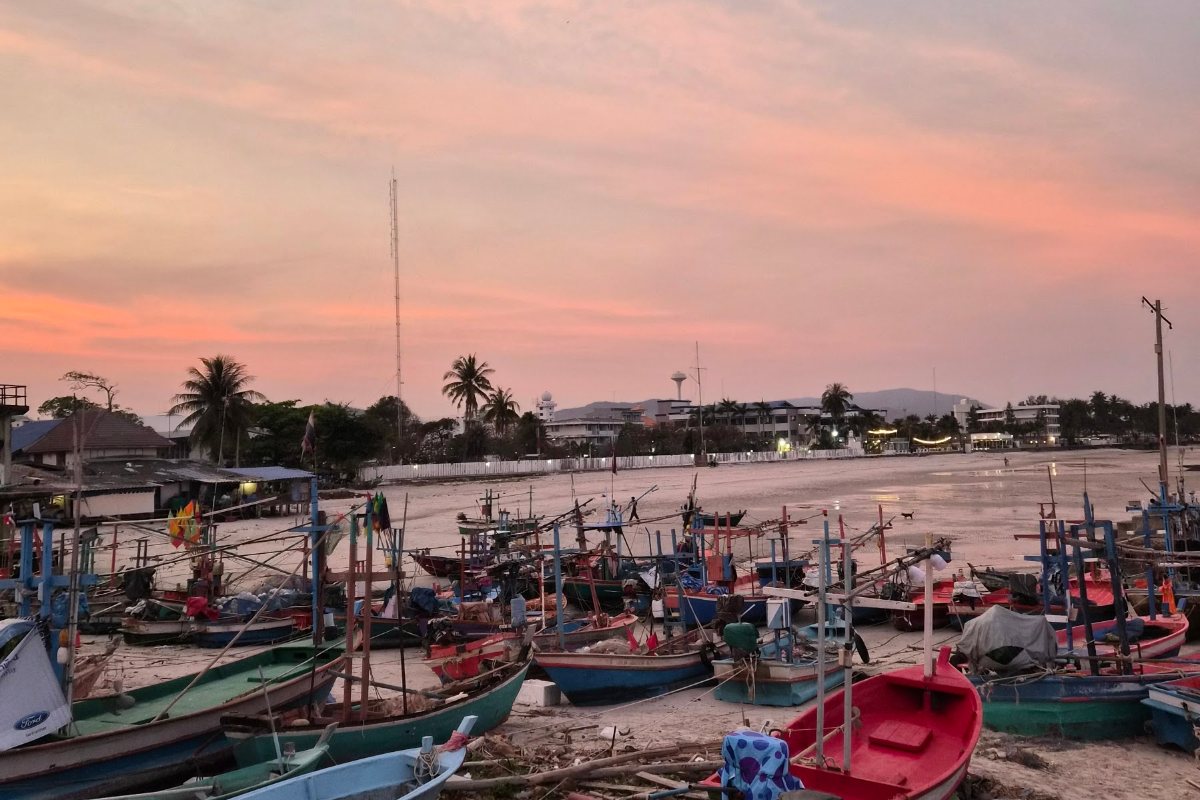
Bophut’s Fisherman’s Village doesn’t have many fishermen left. “It has kept the name, the way you keep a grandfather’s name on a mailbox.” In chapter 13 of The Season of Breath, Mr Schaka takes his readers to the coast of Koh Samui, to this wooden village that changes its face between evening and dawn.
Bophut’s Fisherman’s Village, then and now
It’s a narrow street running along the beach, lined with old wooden houses one or two stories high. The shutters are weary, the balconies lean a little toward the street, like old folks listening in on conversations.
A hundred years ago, the book tells us, these were the houses of Chinese merchants who came to buy the island’s copra and dried fish. Today you’ll find cafés, shops selling linen dresses and silver jewelry, restaurants with red lanterns. But the walls have stayed. The wood has kept the smell of salt. Run your hand over a façade and you feel the years, the way you feel wrinkles under your fingers.
The Friday night Walking Street
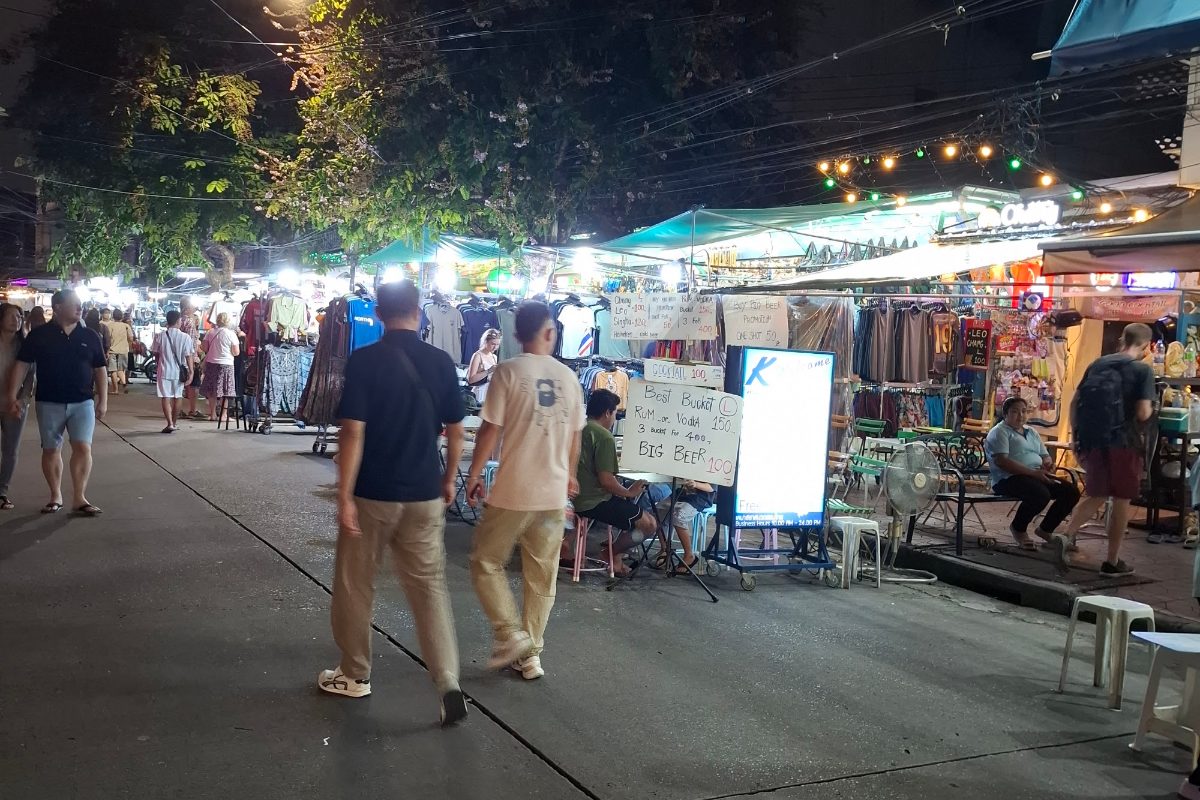
On Friday evenings, the street closes to cars and becomes the Walking Street. The narrator and Chu walk there from their hotel by the water, stopping often. To look around. And partly to catch his breath, too.
As night falls, the street fills up:
- stalls everywhere and lamps coming on one by one;
- pad thai sizzling in woks, skewers on the coals, banana and condensed-milk pancakes;
- grilled fish, lemongrass, and incense from a little shrine wedged between two shops;
- musicians with guitars, and children running between the tourists’ legs.
A vendor is selling fried insects: crickets, grasshoppers, silkworms, scorpions. Chu buys a bag the way you’d buy chips and hands him a grasshopper. “Isan, like at home.” After a long exchange of looks with the creature, he eats it. Crunchy, salty, a little peppery, and not bad at all. Chu applauds.
They end the evening on the balcony of an old creaking wooden café, above the crowd, with the black sea beyond the rooftops and the lights of another island. The narrator realizes that maybe this is what he came looking for: an evening of no importance, a perfect evening.
Dawn, when the village becomes a village again
At night he sleeps badly; the sea weighs on his chest. So he gets up before daybreak, without waking Chu, and walks back to the village along the beach. At that hour, Fisherman’s Village becomes a fishermen’s village again. The lanterns are out, the dogs sleep in the middle of the street, a man sweeps in front of a café, an old lady places an offering of flowers and rice on a little shrine.
On the beach, a few longtail boats are pulled up on the sand, with ribbons of colored cloth tied to the bow. They are for Mae Ya Nang, the spirit who lives in every boat and protects it. Fishermen make offerings to her before heading out to sea and never step over the bow, because that’s where she lives.
The old fisherman who breathed like him
On one of the boats, a thin old man, gnarled as a root, is mending a net with a big wooden needle. Every so often he stops and breathes. The narrator instantly recognizes that way of breathing: in small gulps, mouth half open, shoulders a little too high.
They don’t speak the same language. The fisherman taps his chest twice and points to the bottom of the sea. Chu will later explain that many old fishermen used to dive without tanks, very deep, for shellfish, and that their lungs still remember it. The narrator in turn taps his chest twice and makes a vague gesture toward the sky, toward Belgium. The old man nods. “Between two men who can’t breathe properly, there’s no need for a dictionary.”
For an hour, he holds the net taut while the fisherman repairs the mesh, one loop at a time. They breathe in the same rhythm, slow, short, patient, facing a sea that breathes a little better than they do. The sun rises behind the island across the water.
When he gets back, Chu is drinking her coffee on the balcony. She looks at his hands, still sandy and smelling of wet net. All she says is that he’s found someone. He answers: someone who breathes like me.
If you go to Koh Samui, make both visits: Friday night for the party, and the following dawn for the village.
The book
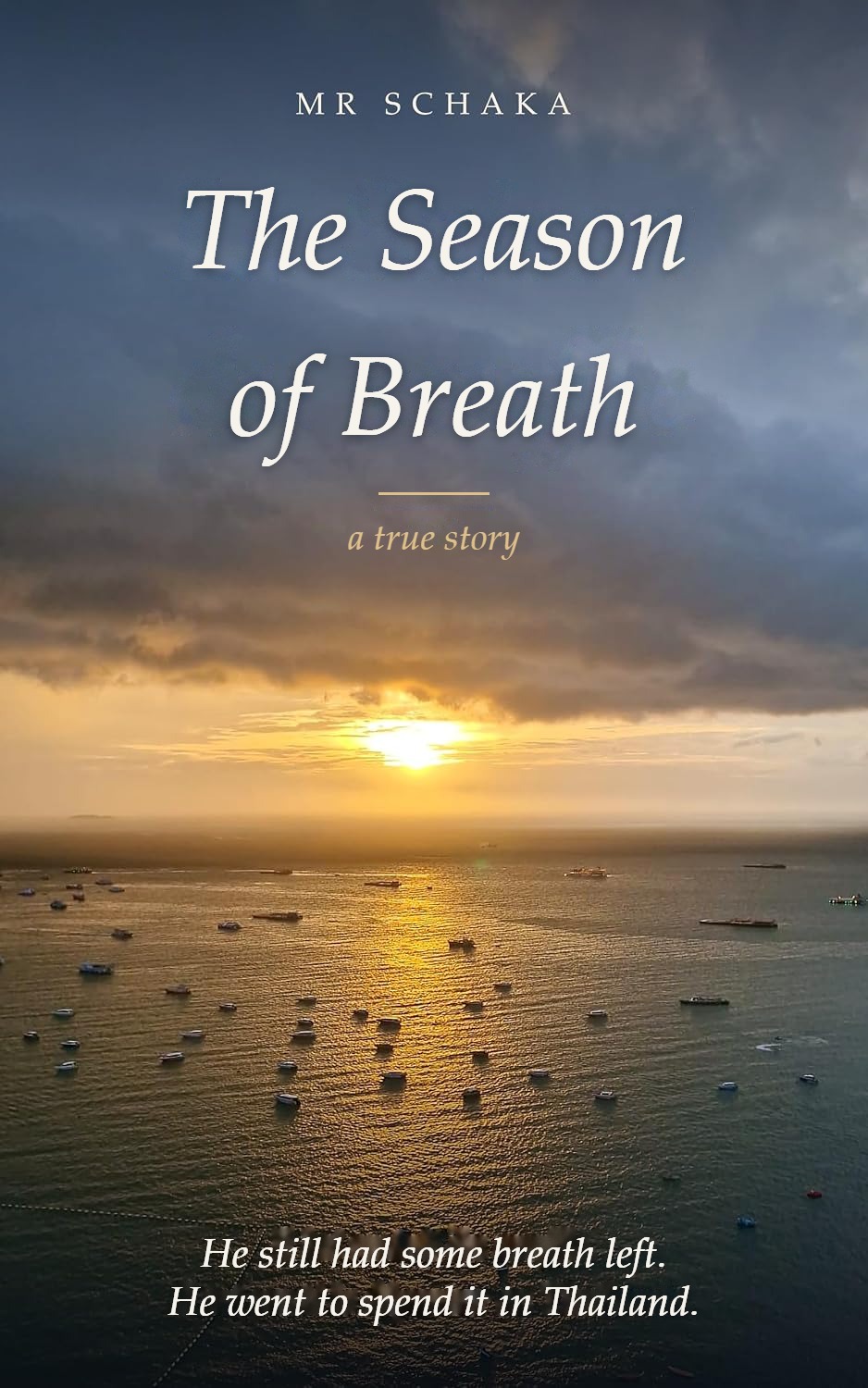
The Season of Breath: the true story of a season in Thailand, all the way to Fisherman’s Village in Bophut, Koh Samui. Available in English as a PDF ebook.