Category: Thailand Notebook

Practical tips and travel stories from Thailand: Bangkok, Pattaya, Isan, the islands.

  • Koh Phangan or Koh Tao: which island should you choose?

    Koh Phangan or Koh Tao: which island should you choose?

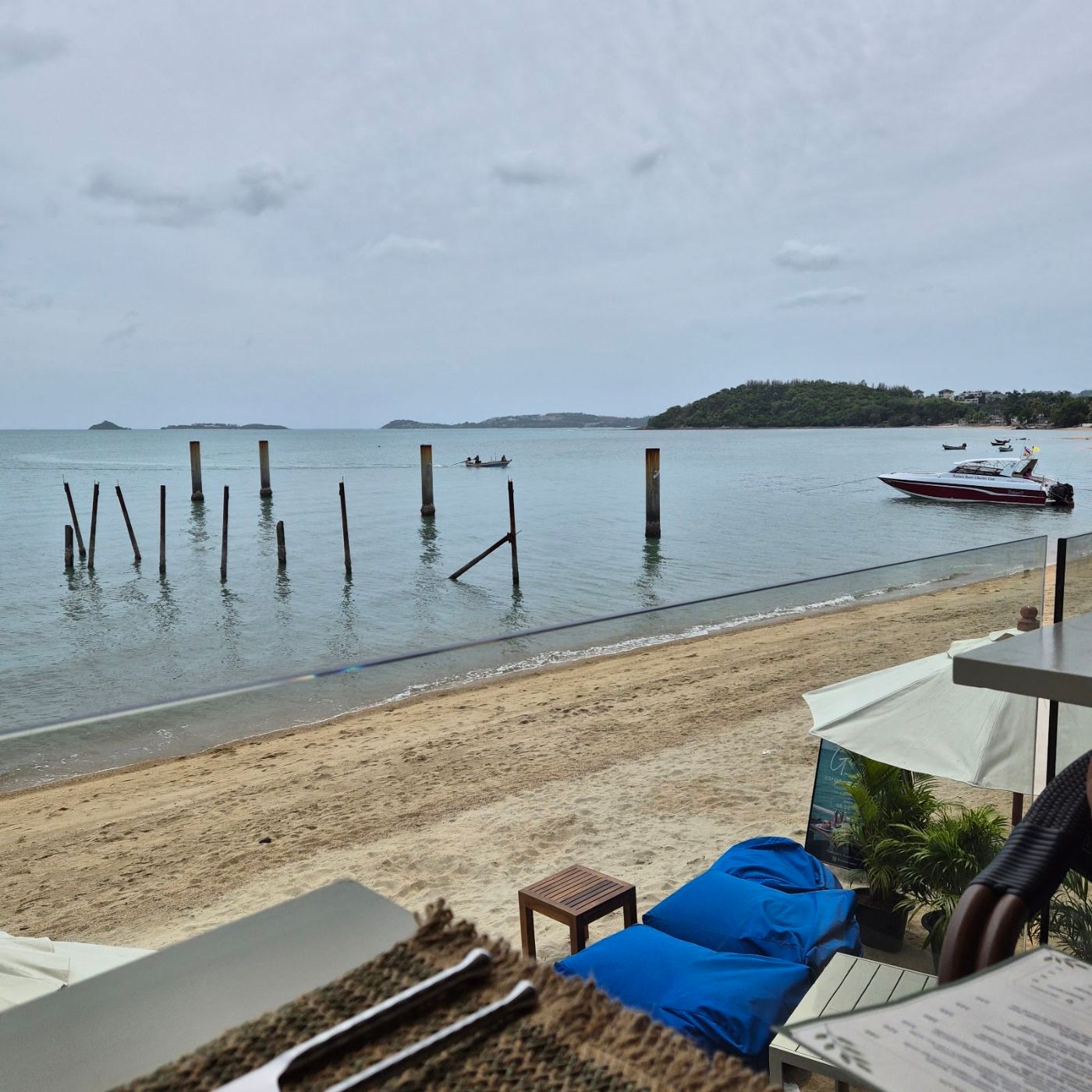
    Koh Phangan or Koh Tao? Two neighbouring islands in the Gulf of Thailand, less than two hours by boat from Koh Samui, with very different characters. The first is large and jungle-covered, with quiet beaches in the north and a real yoga culture. The second is small and rocky, and a well-known place to learn to dive. Here is how to choose, with prices checked in 2026, ferry routes and the right season.

    In short: Koh Phangan for nature, Koh Tao for diving

    Koh Phangan suits you if you want a variety of beaches, jungle hikes, waterfalls and yoga classes. The island has more than thirty beaches.

    Koh Tao suits you if your goal is underwater: a try dive, a first certification or fun dives. The island is smaller and hillier, and life centres on Mae Haad (the pier), Sairee and Chalok Baan Kao. To compare with the country’s other islands, see which Thai island to choose.

    Koh Phangan or Koh Tao for calm? Phangan beyond the Full Moon

    Koh Phangan is known for the Full Moon at Haad Rin, in the south-east. But the rest of the island moves at a different pace, especially in the north and west. Mr Schaka suggests staying away from Haad Rin if you want peace and quiet.

    • Haad Salad and Haad Yao (north-west): two sheltered bays. Haad Salad, small and quiet, is popular with families.
    • Mae Haad: a sandbank links the beach to the islet of Koh Ma, which you can walk to depending on the tide.
    • Chaloklum: a fishing village on the north coast and the departure point for boats to Bottle Beach.
    • Thong Nai Pan Yai and Noi (north-east): two neighbouring bays, Noi more upmarket, Yai simpler and more relaxed.

    For jungle, part of the island is protected as Than Sadet National Park. Phaeng Waterfall, a few kilometres north of Thong Sala, and the Domesila viewpoint just above make an easy half day. The sportier can climb Khao Ra, the island’s highest point (627 m), on a 2 to 3 hour forest hike: start early, carry water and ideally go with a guide.

    Yoga is centred on Srithanu, on the west coast, with many studios and meditation centres; classes cost around 300 to 500 THB.

    Bottle Beach, the beach at the end of the island

    Bottle Beach (Haad Khuad) is a sandy bay on the north coast, backed by jungle, with a few bungalows and simple restaurants. There is no proper road. You get there by longtail boat from Chaloklum or Haad Khom: 15 to 30 minutes, roughly 150 to 400 THB per person each way depending on the number of passengers. Another option is a trail of about 1.5 hours from Haad Khom, hot and steep in places.

    Good to know: there is no ATM at Bottle Beach, so bring cash. Agree on a return time with the boatman: the last boats leave in the late afternoon, around 5 pm.

    Koh Tao and diving: try dive, Open Water and dive sites

    Koh Tao has a great many dive centres. Ranges checked in 2026, to confirm with your chosen centre:

    • Try dive (Discover Scuba Diving or Try Dive): about 2,500 to 3,500 THB, no certification needed, with an instructor.
    • Open Water (entry level, PADI or SSI): about 11,000 to 12,500 THB over 3 to 4 days: theory, shallow-water skills, then open-water dives. Open to children from 10 as a junior certification.
    • Fun dives (certified divers): about 800 to 1,200 THB per dive including gear, cheaper in packages.

    Beginners often dive at Japanese Gardens, a sheltered bay off Koh Nang Yuan (2 to 18 m) or at Twins, two rocks covered in anemones. With more experience, divers head to Chumphon Pinnacle and Sail Rock, granite pinnacles visited by barracuda and sometimes whale sharks, or to the wreck of HTMS Sattakut, a Thai navy ship sunk in 2011 as an artificial reef.

    Good to know: before any course you fill in a medical questionnaire. Asthma, a heart or lung condition, recent surgery: talk to your doctor before you travel, as medical clearance may be required. Mr Schaka lives with interstitial pulmonary fibrosis linked to rheumatoid arthritis; his tips are gathered in travelling in Thailand when you are short of breath.

    #Thailand #Bangkok #ThailandTravel #TravelTips #Asia #MrSchaka

    Koh Nang Yuan, three islets joined by sand

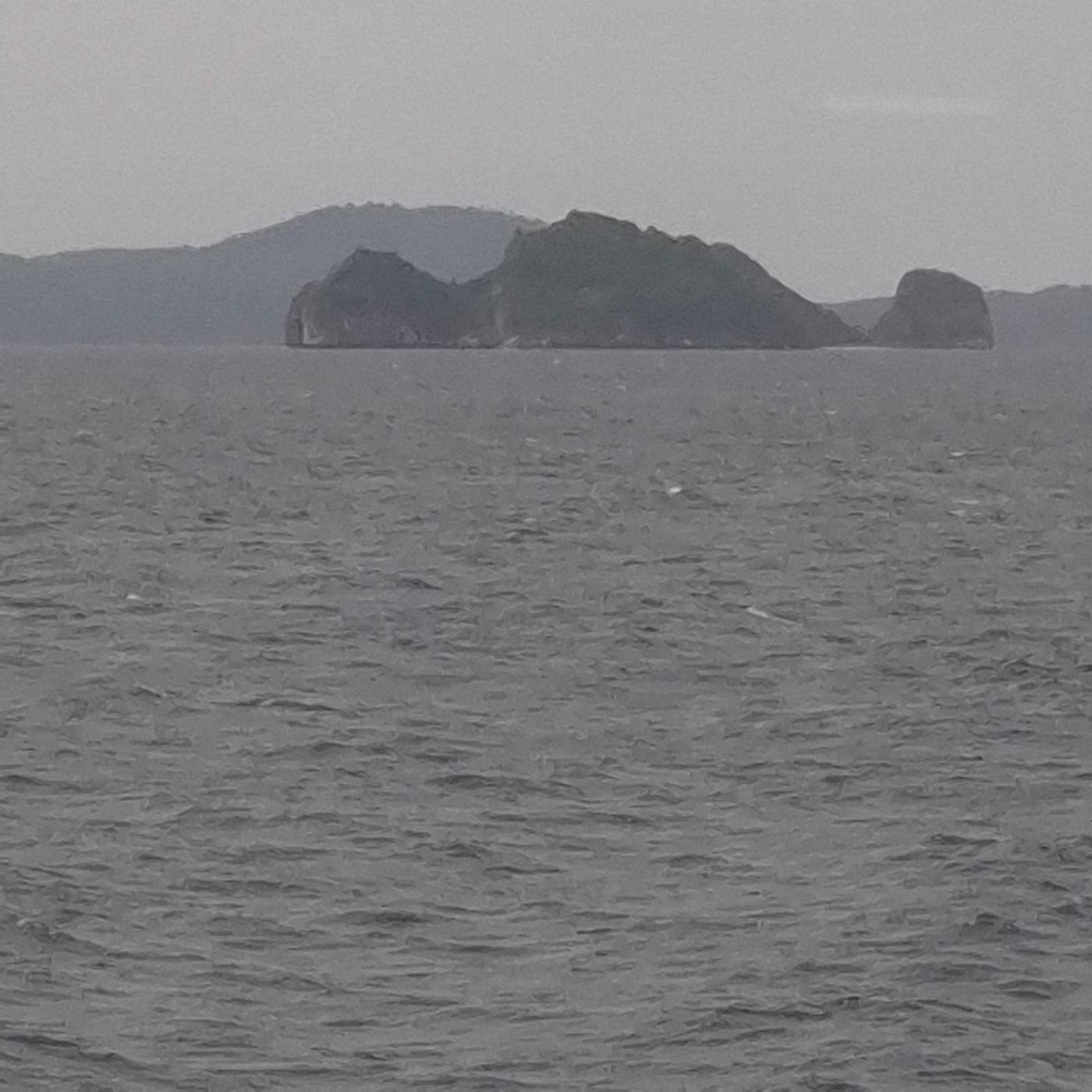
    Just north-west of Koh Tao, Koh Nang Yuan is made up of three islets linked by a white sandbar. About ten minutes of steps lead to the viewpoint over the islets and the strip of sand. The island belongs to a private resort and charges an entrance fee in cash: between 100 and 250 THB according to recent sources, to check on the spot. A longtail from Sairee takes about 15 minutes.

    • Plastic bottles are banned and bags are checked on arrival: bring a refillable bottle.
    • Fins and water shoes are not allowed; a mask and snorkel are enough for Japanese Gardens.
    • Come early in the morning or late in the afternoon to avoid the crowds.

    Getting to Koh Phangan and Koh Tao from Koh Samui or Chumphon

    Neither island has an airport, so you arrive by boat. The easiest way is via Koh Samui, which has its own airport (see our complete Koh Samui guide), or via Chumphon on the mainland.

    • Koh Samui → Koh Phangan: 20 to 60 minutes depending on the boat, about 200 to 500 THB. Most boats dock at Thong Sala; the Haad Rin Queen runs from Big Buddha pier to Haad Rin.
    • Koh Samui → Koh Tao: about 1 h 30 to 2 h 45, often stopping at Koh Phangan (Lomprayah, Seatran, Songserm and others).
    • Chumphon → Koh Tao: Lomprayah catamaran, about 1 h 45 to 2 h 30, a few departures a day. Chumphon is reached from Bangkok by train, bus or plane (about a 1-hour flight).

    In high season, book the day before. Leave a margin before a flight: in rough seas, crossings can be delayed or cancelled. Timetables and fares change often, so check before you go.

    When to go to Koh Phangan and Koh Tao

    Both islands follow the Gulf of Thailand climate, which differs from Phuket and the Andaman Sea. The driest period usually runs from February to September. Heavy rain arrives in late October and can last into December, peaking in November: rough seas, reduced underwater visibility and occasional boat cancellations.

    For diving, February to May often brings the best visibility and the calmest seas; it is also when whale sharks are most often seen, with no guarantee. September and October, before the monsoon, are often calm too.

    Frequently asked questions

    Can you visit Koh Phangan and Koh Tao on the same trip?

    Yes. Boats between Koh Samui and Koh Tao often stop at Koh Phangan. Allow at least three days on each island, more if you take the Open Water course.

    Do you need to swim to dive on Koh Tao?

    For a try dive, you need to be comfortable in the water. For the Open Water course, centres ask for a short swimming and floating test at the start.

    Is Koh Phangan quiet outside the full moon?

    Yes, most beaches in the north and west stay quiet all year. Haad Rin gets busy around the full moon: stay elsewhere on those nights if you want calm.

    Book cover

    The book

    Koh Phangan and Koh Tao are neighbours of Koh Samui and Ang Thong Marine Park, where The Season of Breath takes place. Mr Schaka’s novel follows a journey through Thailand with pulmonary fibrosis, from Bangkok to the Gulf. Available in English.
  • Travelling with Rheumatoid Arthritis: How to Prepare Your Trip

    Travelling with Rheumatoid Arthritis: How to Prepare Your Trip

    Travelling with rheumatoid arthritis is possible. It just takes a little more preparation. Mr Schaka lives with rheumatoid arthritis and a related pulmonary fibrosis himself, and splits his life between Liège and Thailand. Here are practical tips, drawn from patient organisations and recognised bodies, for travelling with rheumatoid arthritis while keeping enough energy to enjoy the trip. This is general information only: for anything about your health or your treatment, talk to your doctor.

    Travelling with rheumatoid arthritis starts with your rheumatologist

    The first appointment of the trip is with your rheumatologist or GP, several weeks before you leave. Bring your itinerary, your dates and the activities you have in mind.

    A few useful questions to ask:

    • Is this a good time to travel, given how the disease is right now?
    • How should I organise my treatment during the trip, including across time zones?
    • Are my vaccinations up to date, and which ones are recommended for my destination?
    • What should I do if I have a flare or a fever while away? Who should I contact?
    • Can you give me a prescription and a letter (ideally in English) describing my condition and my medicines?

    Vaccinations deserve special attention. The EULAR recommendations (the European Alliance of Associations for Rheumatology) advise checking the vaccination status of people with inflammatory rheumatic diseases every year. Depending on your treatment, some live vaccines may not be recommended. Only your doctor can decide: bring it up early, before you book.

    Carrying your medicines without nasty surprises

    The golden rule, repeated by every patient organisation: your medicines travel with you, in the cabin, never in the hold. A lost suitcase or a delayed flight should not interrupt a treatment. The Arthritis Foundation also suggests packing a little more than the length of the trip, in case your return is delayed.

    • Original packaging, with readable labels.
    • Prescription and doctor’s letter close at hand, with a copy on your phone or in your email.
    • A written list of your medicines, using the generic names (brand names change from country to country), plus your doctor’s contact details.
    • Medicines that must stay cold: ask your pharmacist or the manufacturer about transport conditions, use a suitable cool bag and let the airline know. On arrival, ask for a room with a fridge.

    Good to know: for Thailand, the Thai Food and Drug Administration (Thai FDA) generally allows travellers to bring in up to 30 days of personal medication, in its original packaging, with a prescription or a doctor’s letter. Some medicines classed as narcotics or psychotropics need a permit, to be requested online at least two weeks before departure. Rules change: check before you travel on the Thai FDA website or with the Thai embassy.

    Light luggage and airport assistance

    Long corridors, queues, heavy suitcases: these are often the most tiring part. A few simple choices help:

    • A light suitcase with four spinner wheels, which you can push beside you rather than pull.
    • Fewer clothes that are easy to mix and match. In Thailand, laundry services are everywhere.
    • An aisle seat, so you can get up often. Versus Arthritis suggests moving or changing position roughly every 20 to 30 minutes on long journeys.

    Above all, do not hesitate to request assistance for passengers with reduced mobility. It is not only for wheelchair users: it is also for anyone who finds walking long distances or carrying bags difficult. On flights departing from the European Union, this help is free; request it from the airline, travel agent or tour operator at least 48 hours before departure. Elsewhere, ask your airline about its own procedure.

    At Bangkok’s Suvarnabhumi airport, wheelchairs are lent free of charge before check-in, on Level 4 (Gate 2), with an ID document. After check-in, your airline takes over. Airline wheelchair passengers and one companion can use the Fast Track lane.

    Accommodation that is kind to your joints

    A ground-floor room or one near a lift, few steps at the entrance, a practical bathroom: these details matter every day. Versus Arthritis recommends thinking through every stage, right down to the small step in front of the room door.

    Feel free to write to the hotel before booking. Ask whether there is a fridge in the room, a lift, a pool (many people enjoy moving in water) and whether it is close to public transport. Staying near what you want to see saves energy every day. If you are also short of breath, Mr Schaka has gathered more ideas in his article travelling in Thailand when you are short of breath.

    #TheSeasonOfBreath #Thailand #TravelStory #TrueStory #MrSchaka

    Heat, humidity and fatigue: finding your pace

    In the tropics, heat and humidity tire everyone out. With rheumatoid arthritis, fatigue is often already a travel companion. Versus Arthritis notes that heat can make hands and ankles swell slightly, and that some treatments make the skin more sensitive to the sun. Ask your doctor or pharmacist whether this applies to you.

    • Drink regularly, even when you are not thirsty.
    • Keep the hottest hours for shade, a nap or an air-conditioned place.
    • Wear loose clothes in natural fabrics, a wide-brimmed hat and a high-protection sunscreen.
    • Alternate a busy day with a quiet one. Pick what really matters to you and plan rest right after.

    Choosing the right season helps a lot. In Thailand, the coolest and driest period usually runs from November to February: the details are in the guide the best time to visit Thailand, month by month.

    Good to know: plan a recovery day when you get home, too. The Arthritis Foundation advises against going straight from an overnight flight to a working day.

    Insurance that really covers your condition

    This is the point most often overlooked. Many travel insurance policies exclude pre-existing conditions that were not declared. Before you leave, declare your rheumatoid arthritis and any related conditions. Check in writing that the policy covers care linked to the condition, hospital stays and repatriation. Save the assistance phone number in your phone and keep a paper copy. Terms change often: check before you travel.

    Frequently asked questions

    Can you fly with rheumatoid arthritis?

    Yes, many people do. The key is to plan the trip with your doctor, keep your medicines in the cabin and request airport assistance if walking or carrying is difficult.

    How much medication can you bring into Thailand?

    As a rule, up to 30 days of personal treatment, in its original packaging, with a prescription or doctor’s letter. Some controlled medicines need a permit in advance. Check with the Thai FDA before you travel.

    Do I need special vaccinations?

    It depends on your destination and your treatment. Some live vaccines may not be recommended: talk to your doctor several weeks before departure.

    Is airport assistance free?

    On flights departing from the European Union, yes, if requested at least 48 hours in advance. Elsewhere, check with your airline.

    Travelling with a body that sometimes protests mostly calls for a gentler pace. That is also the thread of The Season of Breath, the story Mr Schaka drew from his time in Thailand.

    Book cover

    The book

    Mr Schaka lives with rheumatoid arthritis and a related pulmonary fibrosis. In The Season of Breath (available in English), he tells of Thailand lived with every breath counted, at the slow pace that makes travel possible.

  • Thailand Rainy Season: Good or Bad Time to Travel?

    Thailand Rainy Season: Good or Bad Time to Travel?

    Should you avoid the Thailand rainy season? Many travellers think so, and many change their minds once they are there. The Thai monsoon is not a week of drizzle: it mostly means short, heavy showers, often in the afternoon, between long sunny spells. But it does not hit every region at the same time, and it has real drawbacks. Here is the region-by-region calendar, what a monsoon day looks like, the advantages, the precautions, and where to go month by month.

    Thailand rainy season calendar, region by region

    Thailand does not have one rainy season but two main patterns. The southwest monsoon soaks most of the country from May to October. The Gulf of Thailand gets its heaviest rain later, from October to December. That is the key to planning your trip.

    • Bangkok and central Thailand: mid-May to October, sometimes into early November. September is the wettest month (around 330 mm on average).
    • The north (Chiang Mai, Chiang Rai): mid-May to October, peaking in August. The dry season often returns a little earlier than in Bangkok.
    • The Andaman Sea (Phuket, Krabi, Khao Lak, Koh Lanta): May to October. September and October are usually the wettest months, with frequently rough seas.
    • The Gulf islands (Koh Samui, Koh Phangan, Koh Tao): fairly dry in summer. The rains arrive from October to December, peaking in November.
    • Hua Hin and Pattaya: among the drier areas in summer; the wettest month is usually October.
    • The east (Koh Chang, Koh Kood): the wettest region of the country from June to September. Many businesses scale back.

    These dates are averages: some years the monsoon starts earlier or lingers longer. For the full year at a glance, see the best time to visit Thailand, month by month.

    What a monsoon day looks like

    In most regions, a typical day follows the same rhythm. Mornings are often bright and hot. Around midday, the clouds build up. In the afternoon or early evening, a downpour arrives, heavy and sometimes with thunder, for an hour or two. Then the sky clears and the streets dry quickly. Full days of rain do happen, especially when a tropical storm passes in August or September, but they remain the exception.

    It stays hot, around 30 to 33 °C, and the air is very humid. Mr Schaka suggests planning outdoor visits for the morning and keeping museums, shopping malls, a massage or a long lunch break for the afternoon.

    The advantages of travelling in the rainy season

    • Prices: it is low season. Hotels often lower their rates, sometimes sharply in the Andaman beach resorts, and deals are common. September is often the cheapest month.
    • Fewer crowds: temples, markets and famous sights are quieter. Last-minute bookings are easier.
    • Nature: rice fields turn bright green, waterfalls in the north and west are full, forests come alive. It is the best season for landscapes.
    • More bearable heat: the rain cools the air a little after the very hot months of March to May.

    Precautions to take

    Boats and islands. On the Andaman side, the sea is often rough from June to September. Boat trips and some ferries are cancelled or delayed for safety reasons. Some sites close every year: the Similan Islands National Park closes from mid-May to mid-October, as do the Surin Islands, and Maya Bay (Koh Phi Phi) is closed in August and September. In the Gulf, crossings get rougher from October to December. Leave a day of margin before a flight home.

    Flooding in Bangkok. After a heavy downpour, some Bangkok streets end up under water. The water usually drains within an hour or two. Traffic jams, however, get painful and taxis are hard to find. The Skytrain and the metro remain the most reliable way to get around: see getting around Bangkok by BTS, MRT and boat. More serious floods can occur in some years, mainly in September and October: follow local weather alerts.

    Mosquitoes and dengue. Rain means more mosquitoes, and dengue spreads more during this season. Thai and international health authorities mainly recommend avoiding bites: covering clothing, repellent, a mosquito net if your room is not air-conditioned. For vaccines, suitable products or any health question, talk to your doctor before you leave. If you get a high fever while there, see a doctor quickly.

    Good to know: a light poncho, sandals that can get wet and a waterproof pouch for your phone are often all you need. Umbrellas are sold in every convenience store. Check the marine forecast the day before a boat trip, and take travel insurance that covers cancellations.

    #Thailand #Bangkok #ThailandTravel #TravelTips #Asia #MrSchaka

    Where to go month by month during the monsoon

    • May and June: the rains begin, often moderately. A good time for Bangkok, the north, Hua Hin and the Gulf islands.
    • July and August: the Gulf islands (Koh Samui, Koh Phangan, Koh Tao) are the best beach choice. Bangkok and the north remain pleasant, with showers. Avoid Koh Chang.
    • September: the wettest month for Bangkok and the Andaman coast. The Gulf is still the best beach option. If your dates are flexible, this is the month to skip.
    • October: the north clears up, Bangkok improves in the second half of the month, and the Andaman calms down towards the end. The Gulf enters its wet season.
    • November and December: the dry season sets in for Bangkok, the north and the Andaman coast (Phuket, Krabi). The Gulf, on the other hand, gets its heaviest rain in November.

    To choose between the two coasts depending on when you travel, see also which Thai island to choose.

    Thaïlande en poche: for a stay in Bangkok during the monsoon, Mr Schaka’s free app brings together the guide’s maps and addresses, handy for finding a museum, a covered market or a BTS station when the downpour starts. It installs straight from the website: discover the Thaïlande en poche app.

    Frequently asked questions

    Which months are the rainy season in Thailand?

    For Bangkok, the north and the Andaman Sea, roughly May to October. For the Gulf islands (Samui, Phangan, Tao), October to December.

    Does it rain all day?

    Rarely. Most often there is a heavy shower of one or two hours in the afternoon or evening, after a sunny morning. Full days of rain mostly come with tropical storms.

    Where to go to the beach in July or August?

    The Gulf of Thailand: Koh Samui, Koh Phangan or Koh Tao, which are in their relatively dry season. Hua Hin is another option.

    Do you need to book ahead in low season?

    Less than in high season: rooms are easy to find, often at reduced prices. But stay flexible with boats, which can be cancelled in bad weather.

    Cover of Bangkok – The Practical Guide, Mr Schaka’s practical guide to Bangkok

    Want to dig deeper?

    Rain over Bangkok? Mr Schaka’s Bangkok – The Practical Guide (available in English) helps you turn a wet afternoon into a good day: transport, neighbourhoods, museums and indoor addresses.

  • Things to do in Pattaya: the guide beyond the clichés

    Things to do in Pattaya: the guide beyond the clichés

    Pattaya has a reputation that sticks. Yet, two hours by road from Bangkok, the city hides quiet beaches, a temple carved entirely from wood, an island with clear water and a huge botanical garden. Here are the best things to do in Pattaya when you are looking for something other than nightlife: the right beaches, the visits worth your time, prices checked in 2026, how to get there from Bangkok and where to stay for your travel style.

    Things to do in Pattaya: start by choosing the right beach

    The central beach, Pattaya Beach, is long and convenient, but the water is often murky and the Beach Road traffic runs right behind it. Mr Schaka suggests looking a little further:

    • Jomtien. To the south, a long beach with a calmer promenade and less traffic than the centre. The water gets clearer as you head south. The right choice for families.
    • Wong Amat. To the north, in the Naklua area. A very quiet sandy beach lined with hotels, with no promenade. At low tide the sea pulls back a long way. The Sanctuary of Truth is close by.
    • Pratumnak. Between the centre and Jomtien, the hill hides small coves such as Cosy Beach, reached by a staircase. Little room at high tide, rocks at low tide: you come here for the view and the calm more than for swimming.

    Good to know: for the clearest water, take the boat to Koh Larn (see below). On the coast, the best period runs from November to February, during the dry and slightly cooler season. All the details in our guide the best time to visit Thailand, month by month.

    Pratumnak and the Big Buddha: the Pattaya of The Season of Breath

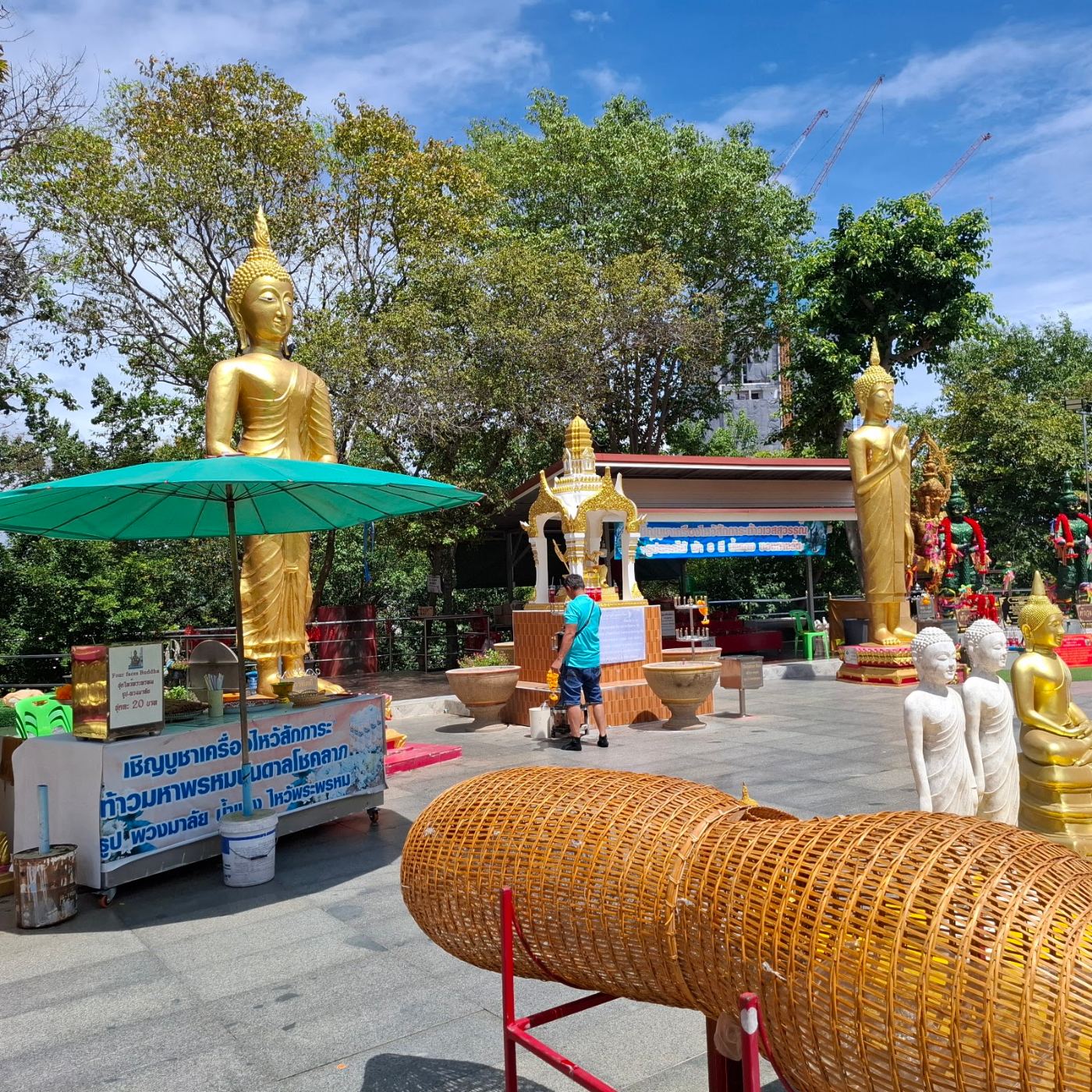
    On Pratumnak Hill, the noise of the centre fades away. At the top, Wat Phra Yai, the Big Buddha temple, overlooks the bay. You climb a staircase lined with nagas, the serpents that guard Thai temples. Entry is free. Cover your shoulders and knees: wraps are lent at the entrance if needed. Nearby, the Khao Phra Tamnak viewpoint offers the classic view over Pattaya Bay, at its best late in the day.

    Mr Schaka knows this area well: several chapters of The Season of Breath, his novel, take place here, in Pratumnak, and as far as Tiger Park. For the feel of the hill and its addresses, read our article Pratumnak, the other side of Pattaya.

    The Sanctuary of Truth, the visit not to miss

    At the far end of Naklua, facing the sea, the Sanctuary of Truth is a huge building made entirely of carved wood, covered with figures from Buddhist and Hindu traditions. Started in 1981, the work is still going on: you often see sculptors at work.

    • Price: about 500 THB per adult during the day, 700 THB for the evening visit with a show. Reduced price or free entry for children depending on height.
    • Time: allow two hours, guided tour included.
    • Dress: shoulders and knees covered, no tight clothing or short shorts. A scarf in your bag solves the problem.

    Koh Larn, the island facing Pattaya

    A few kilometres offshore, Koh Larn, also called Coral Island, has the clear water that the city beaches lack. The public ferry leaves from Bali Hai Pier, at the southern end of Beach Road.

    • Ferry: 30 THB one way, for a 35 to 45 minute crossing. Buy it at the ticket office, not from touts.
    • Timetable: to Na Ban village, roughly from 7 am to 6:30 pm; back from Na Ban until about 6 pm. A few ferries go straight to Tawaen Beach in the morning, with returns until 5 pm.
    • Beaches: Tawaen, the busiest; Tien, quieter; Samae, wide and lovely at sunset; Nual, nicknamed Monkey Beach.

    On the island, songthaews (shared pick-ups) and motorbike taxis link the pier to the beaches. Leave early and keep an eye on the time of the last ferry.

    #Thailand #Bangkok #ThailandTravel #TravelTips #Asia #MrSchaka

    Floating market and Nong Nooch garden: two family outings

    Both are south of the city, along Sukhumvit Road. There is no direct public transport: take a taxi, a Grab or an organised tour.

    • Pattaya Floating Market. Opened in 2008, this floating market recreates the four main regions of Thailand, with their architecture, food and crafts. Not an old market, but a pleasant walk, with boat rides. About 200 THB for foreign visitors.
    • Nong Nooch Tropical Garden. About twenty kilometres south, a huge botanical park: French-style garden, cacti, palms, a dinosaur valley. A garden-only ticket costs around 500 to 600 THB at the counter, more with the shows. Open from 8 am to 6 pm. Come early, before the worst of the heat.

    Good to know: tickets bought online in advance are often cheaper than at the counter, for Nong Nooch as for the Sanctuary of Truth. Prices and opening hours change often: check before you go.

    How to get from Bangkok to Pattaya

    Pattaya is about 150 km south-east of Bangkok, two hours by road without traffic jams. Four options:

    • Bus from Ekkamai. At the Eastern Bus Terminal (BTS Ekkamai), Roong Reuang buses leave throughout the day: around 140 to 150 THB, two hours. Buses also leave from Mo Chit 2.
    • Bus from Suvarnabhumi Airport. The counter is on level 1, near gate 8. Buses run to Pattaya and Jomtien for around 135 to 160 THB. Handy if you are flying in.
    • Train. A daily ordinary train leaves Hua Lamphong at 6:55 am: 31 THB, about 3 hours 40 minutes. Slow, but scenic.
    • Taxi or Grab. Around 1,200 to 1,500 THB per car, plus tolls. The most comfortable option for a group or with children.

    Once there, songthaews loop along Beach Road and Second Road: wave one down, press the buzzer to get off, pay the driver. Outside the loop, agree on the price before getting in, or use Grab or Bolt. For more getaway ideas, see our day trips from Bangkok.

    Free app: Mr Schaka’s app, Thaïlande en poche (Pocket Thailand), now covers Pattaya: places, songthaews, getting there from Bangkok and the traps to avoid. It is free, installs from the website and works offline.

    Where to stay in Pattaya for your travel style

    • With family: Jomtien. A long beach, a calm promenade, seafront hotels and evening markets for a simple dinner.
    • For calm and views: Pratumnak. Residential and green, between the centre and Jomtien. Ideal for a long stay, less so if you want the beach at your hotel’s doorstep.
    • Feet in the sand: Wong Amat and Naklua. Large beachfront hotels, pricier and a little out of the way, but very quiet.
    • To do everything on foot: the centre. Choose a hotel between Second Road and Third Road, calmer than the seafront, away from the southern end of Beach Road if you value your sleep.

    Frequently asked questions

    How many days should I spend in Pattaya?

    Three days cover the essentials: one day for Pratumnak and the Sanctuary of Truth, one day on Koh Larn, one day for the floating market and Nong Nooch.

    Is Pattaya good for families?

    Yes, as long as you stay in Jomtien, Pratumnak or Wong Amat. Koh Larn, Nong Nooch and the floating market are big hits with children.

    Can you swim in Pattaya?

    Yes, but the water in the centre is often murky. Jomtien and Wong Amat are more pleasant, and Koh Larn has the clearest water.

    Book cover

    The book

    Several chapters of The Season of Breath take place in Pattaya, on Pratumnak Hill. The true story of a season in Thailand with shortness of breath, full of humour and tenderness. Available in English.

  • Thailand eSIM or SIM card: which one to choose in 2026?

    Thailand eSIM or SIM card: which one to choose in 2026?

    To stay connected in Thailand, two options stand out: a tourist SIM card bought on arrival, or an eSIM installed on your phone before you even take off. A Thailand eSIM wins on convenience; a physical SIM wins with a Thai number and unlimited data at local prices. Mr Schaka compares the two: operators, prices, passport registration, phone compatibility, coverage on the islands, calls and the apps worth installing.

    Thai mobile operators in 2026: AIS and True-dtac

    Thailand’s mobile market now has two main players. AIS is the country’s largest operator and is often praised for its coverage outside the cities. True and dtac merged in 2023 under True Corporation, and their two networks were fully combined at the end of 2025. The TrueMove H (or simply True) and dtac names still appear on SIM cards and in “True dtac Shop” stores, but they now run on the same network.

    In practice, both AIS and True-dtac cover Bangkok, Chiang Mai, Phuket and the main tourist areas very well. The difference shows mostly in remote places, more on that below.

    The tourist SIM at the airport: prices, passport, registration

    AIS and True-dtac counters are in the arrivals hall at Suvarnabhumi and Don Mueang, after baggage claim. You will also find them at the airports in Phuket, Chiang Mai and Koh Samui. Staff insert the card, register it and activate it on the spot.

    Prices checked in 2026 (check again before you travel, offers change often):

    • AIS: about 299 THB (around €8 / $9) for 8 days with 15 GB of data;
    • True (Tourist Infinite): 449 THB (around €12 / $14) for 8 days of unlimited 5G/4G data, with free local calls capped at 15 minutes per call;
    • 30-day unlimited plans: around 1,199 THB (about €32 / $37) at the airport counter.

    “Unlimited” data comes with a fair-use policy: past a certain volume, speeds may drop. In town, at operator stores or shopping malls, plans are sometimes a little cheaper than at the airport.

    Your passport is mandatory: every number must be registered to its user. Since August 2025, operators must also check identity with a live facial scan when registering a new SIM. A foreigner can register a maximum of three SIMs per operator. Allow a few minutes at the counter, longer when several big flights land at once.

    Good to know: tourist plans last no more than 60 days. For a long stay, ask a store for a regular prepaid plan, again with your passport. Registration rules change: check before you travel.

    Thailand eSIM: international or Thai operator?

    An eSIM is a virtual SIM card. You buy it online, receive a QR code by email and scan it in your phone’s settings. There are two kinds.

    • International eSIM (Airalo, Ubigi, Holafly, Saily…): bought before you leave, it roams on a Thai network. No counter, no queue, online as soon as you land. It usually gives data only, without a Thai number. Small plans start at a few dollars for 1 GB; unlimited costs much more.
    • Thai operator eSIM: AIS and True-dtac also sell their tourist plans as eSIMs, through their online stores, resellers or at the counter. You keep local prices and, depending on the offer, a Thai number. Passport registration still applies.

    The choice is then simple. For a short trip, if you don’t want to queue on arrival, an international eSIM is the most comfortable. For two weeks or more, with lots of data and a need for a local number, a Thai operator SIM or eSIM usually works out cheaper.

    Is your phone compatible?

    For an eSIM, you need a compatible, unlocked phone, meaning one not locked to your home carrier. Apple supports eSIM from the iPhone XS and XR onwards. On Android, most recent Samsung Galaxy and Google Pixel phones support it, but not every entry-level model. Check your settings (the “Add eSIM” menu) or the manufacturer before buying. For a physical SIM, the phone simply needs to be unlocked and have a SIM tray.

    A big plus of the eSIM: your usual SIM stays in the phone. You keep receiving text messages from your bank, often needed to confirm a payment. Remember to turn off data roaming on your home line to avoid a nasty bill.

    Good to know: install the eSIM at home on a good Wi-Fi connection, and check when your plan starts counting days. Keep the QR code safe: with many offers, it can only be installed once.

    #Thailand #Bangkok #ThailandTravel #TravelTips #Asia #MrSchaka

    Coverage on the islands and in remote areas

    Bangkok, Phuket, Krabi, Koh Samui and the main tourist beaches have good 4G coverage, often 5G. On smaller islands the signal becomes patchy. On Koh Tao it is fine at Sairee and Mae Haad, weaker on the east coast. Koh Lipe remains poorly served, and some small islands around Koh Chang have almost no signal. In the northern mountains and national parks, AIS is often considered more reliable. Before heading to these places, download your maps and tickets.

    Calls, WhatsApp and Wi-Fi

    Once you are connected, WhatsApp, LINE and other messaging apps work normally, video calls included. LINE is the most widely used messaging app in Thailand: hotels, guides and shops often offer it. A Thai number is still handy when a driver, a delivery rider or a restaurant needs to reach you, and full tourist plans include local calls. “Data-only” plans do not allow outgoing calls, except to emergency numbers.

    Free Wi-Fi is everywhere in hotels, cafés, shopping malls and airports. It helps, but it does not replace mobile data for getting around. On a public network, avoid banking.

    Apps to install before you go

    • Grab: private cars, taxis, motorbike taxis and food delivery, with the price shown upfront;
    • Bolt: an often cheaper alternative in Bangkok and the big cities;
    • Google Maps: routes on foot, by BTS, MRT and boat; download the offline map;
    • Google Translate: download Thai for offline use and use the camera for menus and signs;
    • LINE: to chat with Thai people and many hotels.

    For your first ride, everything is explained in our guide to arriving in Bangkok from the airport. After that, see how to get around Bangkok by BTS, MRT and boat, and keep our Thai phrasebook handy when translation isn’t enough.

    Mr Schaka’s free app: to find your way around Bangkok, install Thaïlande en poche. It is free, installs directly from the website and brings together the maps and addresses from the guide.

    Frequently asked questions

    Can I buy a Thai SIM card without a passport?

    No. A passport is required to register any new SIM, along with a face check. Only an international eSIM, which works on roaming, can be bought online without visiting a counter.

    Does an eSIM work as soon as I land?

    Yes, if you installed it before leaving: just switch on the eSIM line and data roaming when you get off the plane. Handy for booking a Grab without hunting for Wi-Fi.

    Which option is best for two weeks?

    If you use a lot of data or want a local number, an AIS or True-dtac tourist SIM or eSIM is usually the cheapest. For light use, an international eSIM with a few GB is enough.

    Can I keep my usual number?

    Yes, with a dual-SIM or eSIM-compatible phone. Keep your home line active for text messages, but turn off its data roaming.

    Cover of Bangkok – The Practical Guide, Mr Schaka’s practical guide to Bangkok

    Want to dig deeper?

    Airport, transport, neighbourhoods, addresses: Mr Schaka’s Bangkok – The Practical Guide gathers everything you need to plan your stay and find your way around the Thai capital with ease. The English edition is out now as a PDF ebook: buy it here →

  • Money in Thailand: cards, ATMs and exchange without the extra fees

    Money in Thailand: cards, ATMs and exchange without the extra fees

    Handling money in Thailand is not complicated, but a few habits can save you a fair amount over a trip: flat ATM fees, terminals offering to charge you “in your own currency”, airport exchange counters with poor rates… Mr Schaka covers cards, cash withdrawals, currency exchange, QR payments and tipping, so your budget goes on the trip rather than on commissions.

    Money in Thailand: the basics

    The currency is the Thai baht (THB, symbol ฿). Notes range from 20 to 1,000 baht, coins from 1 to 10 baht. In Bangkok and tourist areas, cards are accepted in shopping malls, hotels, convenience stores and many restaurants. But markets, street food stalls, motorbike taxis, tuk-tuks and many small shops only take cash or the Thai QR code.

    The right approach fits in one sentence: a card suited to spending abroad, a few well-grouped withdrawals, some foreign cash to exchange in the right place, and always small notes in your pocket.

    ATMs: the flat 220 THB fee

    This surprises many travellers. Almost every Thai ATM charges foreign cards a flat fee, on top of whatever your own bank takes. The most common amount is 220 THB per withdrawal (around US$6–7), whatever sum you take out. Some machines, especially at airports, in convenience stores or hotel lobbies, may charge more. A known exception: AEON ATMs, found mainly in hypermarkets (Big C, Lotus’s, Makro), usually charge 150 THB.

    The exact fee is always shown on screen before you confirm: read it, and cancel if the figure looks wrong. Since the fee is fixed, it is better to withdraw less often and in larger amounts. The limit per transaction is often around 20,000 to 30,000 THB depending on the Thai bank, and your own bank sets a daily limit too: check it before you leave.

    • Use ATMs located at or inside a bank branch, during opening hours, where possible.
    • Cover the keypad when entering your PIN.
    • Make sure you take your card back before walking away: it is a common slip.
    • Avoid withdrawing with a credit card: cash advance fees are often high.

    Always decline dynamic currency conversion (DCC)

    At ATMs and card terminals, you will sometimes be offered to pay “in your home currency” rather than in baht. This is dynamic currency conversion, or DCC. You see the amount in your own currency straight away, but the rate applied is almost always worse than your bank’s.

    The rule is simple: always choose baht (THB). In restaurants or hotels, ask to be charged in baht. If the receipt shows an amount in your home currency with an “exchange rate”, the conversion has been applied.

    Good to know: declining DCC does not remove the Thai ATM’s flat fee. It only spares you a second loss, hidden in the exchange rate.

    Which card should you bring?

    Before you go, check what your bank charges abroad: a percentage on each payment, a fee per withdrawal, or both. Several types of card keep these costs down:

    • Neobanks and online banks, some of which charge no commission on foreign-currency payments, sometimes with a monthly allowance of free withdrawals.
    • Multi-currency cards, which you top up in advance and which apply a rate close to the market rate.
    • Some “travel” credit cards from traditional banks, with no foreign transaction fees.

    No card removes the Thai ATM’s 220 THB fee: it is charged locally. Bring at least two cards from different networks (Visa and Mastercard), kept in separate places, and turn on notifications in your banking app. Terms and fees change often: check before you travel.

    Currency exchange: SuperRich rather than the airport

    Exchanging cash remains a good option in Thailand, as long as you choose the right place. Bank counters in the arrivals hall generally offer clearly worse rates than those in the city. In Bangkok, private exchange offices such as SuperRich (the orange brand) are known for tight rates with no commission. SuperRich also has a counter at Suvarnabhumi Airport, on level B near the Airport Rail Link station: handy for changing a small amount on arrival.

    • Your original passport is required for any exchange.
    • Large notes (100 USD, 100 EUR) often get a slightly better rate.
    • Bring clean notes in good condition: damaged notes may be refused.
    • Count your money at the counter before leaving.

    To find out how to get into the city once you land, see our guide arriving in Bangkok: from the airport to the city.

    #Thailand #Bangkok #ThailandTravel #TravelTips #Asia #MrSchaka

    Cash, card or QR code?

    In practice, you combine all three. Use your card for hotels, malls and larger purchases. Cash remains essential for street food, markets, tuk-tuks and small errands. Keep 20 and 100 baht notes on you: many vendors cannot break a 1,000 baht note.

    QR code payment, called PromptPay, is everywhere, even at small stalls. Normally you need a Thai bank account to use it. There are bridges, though: travellers from several Asian countries (including China, Singapore, Malaysia and Indonesia) can scan these codes with certain apps from home, and a few Thai e-wallets and multi-currency cards are gradually opening up to tourists. The options change quickly: check before you travel.

    Tipping and how much cash to bring

    Tipping is not compulsory in Thailand, but it is appreciated. A few common benchmarks:

    • Restaurants: check the bill. If a 10% service charge is already included, nothing more is expected. Otherwise, leaving the change or around 5–10% is appreciated.
    • Street food and taxis: rounding up to the next ten baht is enough.
    • Massage: around 50 to 100 THB for an hour in a simple parlour.
    • Hotel porter: 20 to 50 THB.

    As for cash, there is no need to travel with a thick wad. A small reserve in US dollars or euros, to exchange in town, covers the first days and serves as a backup if a card is blocked. Any foreign currency above the equivalent of US$20,000 must be declared to customs, both on arrival and departure. To estimate your spending, see our one-week Bangkok budget.

    For safety, split your money between several pockets, leave a backup card at the hotel, and be wary of “great deals” on exchange offered in the street. The most common traps are covered in our article on Bangkok scams.

    Mr Schaka’s free app: to find your way around Bangkok, install Thaïlande en poche. It is free, installs directly from the website and brings together the maps and addresses from the guide.

    Frequently asked questions

    How much does an ATM withdrawal cost in Thailand?

    Most Thai ATMs charge foreign cards 220 THB per withdrawal, on top of your bank’s fees. AEON ATMs usually charge 150 THB. The fee is shown on screen before you confirm.

    Should I pay in my own currency or in baht?

    Always in baht. Paying “in your currency” triggers dynamic currency conversion (DCC), whose rate is almost always unfavourable.

    Where should I exchange money in Bangkok?

    At private exchange offices in the city, such as SuperRich, rather than at airport bank counters. Remember your passport.

    Can tourists pay with PromptPay QR codes?

    Not directly without a Thai account, except with certain compatible foreign apps or some e-wallets open to tourists. Cash remains the simplest option for small purchases.

    Cover of Bangkok – The Practical Guide, Mr Schaka’s practical guide to Bangkok

    Want to dig deeper?

    Exchange, transport, neighbourhoods, addresses: Mr Schaka’s Bangkok – The Practical Guide gathers everything you need to plan your stay and spend wisely in the Thai capital. The English edition is out now as a PDF ebook: buy it here →

  • Short of Breath in Thailand: Heat, Smog and Stairs

    Short of Breath in Thailand: Heat, Smog and Stairs

    Sticky heat, fine-particle smog in the dry season, temple stairs as far as the eye can see: Thailand was not designed for tired lungs. Yet travelling when you are short of breath in Thailand is entirely possible, as long as you pick your season and use a few tricks. Asthma, COPD, lung disease, age or recovery from an illness: this practical guide is for you. Mr Schaka lives with pulmonary fibrosis and has been travelling in Thailand for years. He even wrote a book about it.

    Short of breath in Thailand? Start with your doctor

    Let’s be clear from the start: this article gives no medical advice. Before you book anything, talk to your lung specialist or your doctor about your plans. Only they can tell you whether the flight, the heat and the pollution are reasonable for you, at what time of year, and what you need to bring. Everything that follows is pure logistics.

    Mr Schaka tells the story of his own trip with pulmonary fibrosis in The Season of Breath, a true story. Among other things, you learn that a spiral staircase can become a character in its own right.

    Pick the right season: no furnace, no smog

    In Thailand, the best season for your lungs is not necessarily the one in the brochures. Two periods call for caution:

    • The hot season, March to May. April is usually the hottest month: in Bangkok, daytime highs hover around 35 to 36°C, and nights stay warm. Walking at noon becomes a combat sport.
    • The fine-particle (PM2.5) season. In Bangkok, pollution rises mainly during the “cool” season, roughly December to February, sometimes into March. In the north (Chiang Mai, Chiang Rai), crop burning and forest fires push PM2.5 up mostly from January to March, often into April.

    The paradox is that the most pleasant months temperature-wise are also the most polluted. The rainy season (roughly June to October) and November often bring cleaner air, at the cost of humidity and showers. For the weather month by month, see the best time to visit Thailand, and decide on your dates with your doctor.

    Once there, install an air-quality app: IQAir AirVisual, or Air4Thai, the free app of Thailand’s Pollution Control Department, which shows the air quality index and PM2.5 readings by station. A quick look in the morning, and red days become days for museums, massages or shopping malls.

    Bangkok without wearing yourself out

    Bangkok is perfectly enjoyable at an ant’s pace. A few simple rules:

    • The train rather than the pavement. The BTS (elevated) and the MRT (underground) are air-conditioned. Every MRT station has lifts. On the BTS, not every station has one, and not every exit: the platforms sit high above the street and the stairs can be long. Find the exit with a lift before you get off.
    • Grab rather than walking. Eight hundred metres at 34°C on uneven pavements are well worth a car booked through the app.
    • The boat, with care. On the Chao Phraya river, the air moves and you stay seated. But the floating piers sway and boarding is quick: avoid rush hour and accept the crew’s helping hand.
    • Breaks in shopping malls. Air conditioning, benches, clean toilets, restaurants: the big malls are the city’s unofficial oases. A break is not an admission of weakness, it’s a strategy.

    Your choice of neighbourhood matters too. In The Season of Breath, Mr Schaka recounts choosing old Bangkok, in Banglamphu, for one stay: a low-rise district, “almost without stairs”, and a hotel whose lift he had checked before booking. All the practical details on trains and boats are in getting around Bangkok.

    Good to know: to plan short trips and avoid detours, install Mr Schaka’s free app Thaïlande en poche. It installs straight from the website and brings together the guide’s maps and addresses: handy for knowing in advance whether a place is two steps or two kilometres away.

    Temples: count the steps before you climb

    Thai temples love heights. Before you set off, know what to expect:

    • Wat Arun (Bangkok). The steps of the great central prang are narrow, very steep, and get steeper as you climb, with few handrails. Visitors can only go up to an intermediate terrace. The temple is just as beautiful from below, or from the opposite bank at sunset.
    • The Golden Mount (Wat Saket, Bangkok). 344 steps, but they spiral gently around the hill. Go early in the morning, at your own pace, and stop as often as you need.
    • Doi Suthep (Chiang Mai). The famous naga staircase has 306 steps. Good news: a small funicular-style cabin goes up to the temple, for around 50 baht for foreigners (check the fare on site).
    • Wat Pho and the Grand Palace. Almost flat, but vast, and the paving reflects the heat. Come at opening time.

    #TheSeasonOfBreath #Thailand #TravelStory #TrueStory #MrSchaka

    Islands, beaches and hotels: aim for flat

    Many islands are mountainous inland. The seafront, though, is often flat. Choose a hotel at beach level rather than a hillside bungalow that looks lovely in photos but sits at the top of dozens of steps. Famous viewpoints have to be earned: on Koh Phi Phi, you climb around 320 concrete steps, then a steep trail, to reach the lookout.

    For your hotel, in the city or on the islands, assume nothing: many small hotels and shophouses have no lift. Write before booking and ask for a ground-floor room or one near the lift.

    Flights and insurance: what to arrange in advance

    As Mr Schaka describes in his book, the air in a plane cabin is like mountain air, thinner in oxygen: healthy lungs don’t notice, others do. If your doctor thinks you need oxygen during the flight, you have to arrange it with the airline well before departure. Every airline has its own rules: a medical form completed by your doctor, whether a portable oxygen concentrator is allowed, how many batteries, how much notice (often at least 48 to 72 hours). Ask as soon as you book. Remember airport assistance too: the corridors are long.

    As for insurance, a condition you had before buying the policy generally has to be declared to be covered. Chronic lung conditions often mean an extra premium, and an undeclared condition may not be covered. Read the policy, compare several insurers and check the conditions before you leave.

    Good to know: carry your medicines in your hand luggage with the prescription, and ask your doctor for a letter in English summarising your situation. Import rules for some medicines change: check before you travel.

    Frequently asked questions

    What is the best time to go if I get breathless easily?

    There is no universal answer. People often avoid April (heat) and the PM2.5 peaks (December to March in Bangkok, January to April in the north). November is often a good compromise. Make the decision with your doctor.

    Does the Bangkok metro have lifts?

    Yes, at every MRT station. On the BTS, not everywhere and not at every exit: check before you get off.

    Can I avoid the stairs at Doi Suthep?

    Yes. A cabin goes up to the temple for around 50 baht (check on site).

    Can I get oxygen on the plane?

    Sometimes, depending on the airline, only on prior request and with a medical certificate. Talk to your doctor, then to the airline, well before departure.

    Read also: Thailand travel over 50: pace, comfort and pleasant surprises

    Book cover

    The book

    Mr Schaka lives with pulmonary fibrosis and has been travelling in Thailand for years. In The Season of Breath, available in English, he tells the story of that journey, one step at a time, with humour and no self-pity.

  • Saint Louis Hospital Bangkok History: Over a Century in Sathorn

    Saint Louis Hospital Bangkok History: Over a Century in Sathorn

    On Sathorn Road, one name keeps coming up: Saint Louis. A BTS station, a church, a nursing college and, at the heart of it all, a hospital born at the end of the 19th century. Whether you are staying nearby or just passing through, here is the Saint Louis Hospital Bangkok history: a place of care founded by a French mission that became one of the best-known hospitals in the Thai capital. Mr Schaka cross-checked the sources (Paris Foreign Missions archives, Vatican press, encyclopaedias) and kept only what is established.

    Saint Louis Hospital Bangkok history: founded in 1898

    Saint Louis Hospital opened in 1898, during the reign of King Chulalongkorn (Rama V). The archives of IRFA, the institute that preserves the records of the Paris Foreign Missions Society (MEP), sum it up in one sentence: in 1898 Bishop Vey had Saint Louis Hospital built in Bangkok and placed it under the Sisters of St Paul de Chartres.

    The land along Sathorn had been bought in 1895, which is why that date sometimes appears: it marks the purchase of the site, not the opening of the hospital. According to Vatican News, the hospital was first meant to care for foreign missionaries and the poorest, and the vicar apostolic received the support of Rama V, the great moderniser of the kingdom.

    Saint Louis is generally described as the first Catholic hospital in Thailand. More than a century later, it still stands on the same spot, at 27 South Sathorn Road.

    Bishop Louis Vey and the origin of the name

    Jean-Louis Vey, often called Bishop Louis Vey, was born in France in 1840. A priest of the Paris Foreign Missions, he arrived in Siam in 1865. Appointed bishop and vicar apostolic in 1875, he led the Catholic mission in Bangkok until his death in the city in 1909. He is buried in the crypt of Assumption Cathedral.

    He also brought the Brothers of St Gabriel to Bangkok in 1901, who took over the school that would become Assumption College, another well-known Bangkok institution.

    The hospital is named after Saint Louis, that is Louis IX, the 13th-century King of France remembered for his charity towards the poor and the sick. Its motto says the same: “Ubi caritas, ibi Deus est”, “Where there is charity, God is there”. A nice detail: the founding bishop’s own name was Louis.

    The Sisters of St Paul de Chartres and the nursing college

    From the very beginning, the hospital was entrusted to the Sisters of St Paul de Chartres, a religious congregation founded in France. They have never left. Today the hospital comes under the Archdiocese of Bangkok, but the Sisters remain closely involved, as they are in training its carers.

    Saint Louis has always trained staff, starting with nursing assistants. After Pope John Paul II’s visit in 1984, the archdiocese, led by Cardinal Michael Michai Kitbunchu, set up a proper nursing school. Approved in 1985 by Thailand’s Ministry of University Affairs, it became Saint Louis College, the country’s first Catholic nursing institution.

    The college celebrated its 40th anniversary in January 2025. It now offers programmes from certificate to master’s level and stands at 19 South Sathorn Road, right next to the hospital.

    A chapel, a church and two papal visits

    The Saint Louis complex is more than wards and clinics. Inside the hospital, the Holy Spirit Chapel was founded in 1982. Next door, the red-brick Saint Louis Church blends Gothic and contemporary styles. Bishop Vey had already planned a church on the site, but the project did not go ahead in his time: the current building was consecrated on 25 August 1957.

    Two popes have come here. John Paul II in May 1984, a visit that led to the creation of the John Paul II Charity Clinic. Then Francis, on 21 November 2019, who met medical staff and patients.

    Today Saint Louis is a private, not-for-profit hospital with just over 400 beds (412 according to the Catholic press in 2019). It has modern departments (intensive care, cardiac catheterisation, operating theatres), a palliative care centre and a foundation that helps patients who cannot pay. In 1997 it became the first hospital in Thailand certified to ISO 9002.

    Good to know: the hospital, chapel and church are all in daily use. You can visit the church if you dress modestly and keep quiet, but the hospital is not a tourist site: respect patients and avoid taking photos. For any health question, see a doctor. Address, access and services are covered in our Saint Louis Hospital practical guide.

    #Thailand #Bangkok #ThailandTravel #TravelTips #Asia #MrSchaka

    BTS Saint Louis station, opened in 2021

    For years, a station was missing on the BTS Silom Line between Chong Nonsi and Surasak: planned on paper but never built. Local media nicknamed it the “ghost station”. Construction began in 2019 and Saint Louis station (code S4) finally opened on 8 February 2021. It was previously known as Suksa Witthaya.

    It is about 300 metres from the hospital, above Sathorn Road. To combine Skytrain, metro and boats, see our guide to getting around Bangkok.

    Sathorn around the hospital: landmarks

    Sathorn takes its name from a canal dug at the end of the 19th century, under Rama V, by a wealthy merchant titled Luang Sathorn Rajayut. The excavated earth was used to build the road alongside it, and the neighbouring plots were sold to nobles and foreigners. The canal still runs between the two carriageways: Sathorn Nuea to the north and Sathorn Tai to the south, on the hospital side.

    • BTS Saint Louis: about 300 m, the nearest station.
    • BTS Chong Nonsi and King Power Mahanakhon: about 700 m as the crow flies, one stop away. Mahanakhon tower (314 m, completed in 2016) towers over the junction and has an observation deck at the top.
    • Lumphini Park: about 2 km east. Sathorn Road ends at Rama IV Road, at the park’s south-east corner.
    • Taksin Bridge and the Chao Phraya: about 1.2 km west, at the other end of Sathorn.

    The area mixes office towers, embassies, residences and side streets (soi) lined with simple eateries. It is a good base if you want to be central without living in the thick of the crowds: compare it with other districts in our article on where to stay in Bangkok.

    Thaïlande en poche: Mr Schaka’s free app brings together the maps and addresses from his guide, Sathorn included. It installs straight from the website. Discover the Thaïlande en poche app.

    Frequently asked questions

    When was Saint Louis Hospital in Bangkok founded?

    In 1898, by Bishop Jean-Louis Vey of the Paris Foreign Missions. The land had been bought in 1895.

    Why is it called Saint Louis?

    In honour of Saint Louis (Louis IX), King of France, known for his charity towards the poor and the sick.

    Who runs the hospital today?

    It comes under the Archdiocese of Bangkok. The Sisters of St Paul de Chartres, present since 1898, remain closely involved, as they are at the neighbouring Saint Louis College.

    When did BTS Saint Louis station open?

    On 8 February 2021. It is on the Silom Line, between Chong Nonsi and Surasak.

    Cover of Bangkok – The Practical Guide, Mr Schaka’s practical guide to Bangkok

    Want to dig deeper?

    Sathorn, its stations, landmarks and good addresses: Mr Schaka’s Bangkok – The Practical Guide helps you understand and explore the Saint Louis area and the rest of the capital. The English edition is out now as a PDF ebook: buy it here →

  • Which Thai Island to Choose? A Comparison by Traveller Type

    Which Thai Island to Choose? A Comparison by Traveller Type

    Phuket, Krabi, Koh Samui, Koh Phangan, Koh Tao, Koh Lanta… Which Thai island should you choose when you have one or two weeks? The answer depends on two things: how you like to travel and, above all, the month you go. Thailand has two seas with two different weather seasons. Here is a simple comparison, by traveller type, to help you decide which Thai island to choose.

    Which Thai island to choose? Start with the calendar

    Thailand’s islands sit on two coasts. To the west is the Andaman Sea: Phuket, Krabi and its islands (Phi Phi, Railay), Koh Lanta. To the east is the Gulf of Thailand: Koh Samui, Koh Phangan and Koh Tao. The monsoon does not reach them at the same time. That is the key to your choice.

    • Andaman Sea: the best period runs roughly from November to April. From May to October, the southwest monsoon brings showers, wind and often rough seas. September and October are usually the wettest months.
    • Gulf of Thailand: the weather is usually pleasant from January to August, sometimes into September, including the middle of summer when the Andaman side gets the rain. The heaviest rain falls from October to December.

    In short: from December to March, the Andaman side is at its best. In July and August, the Gulf is often the safer bet. February usually works for both coasts. For details, read our guide to the best time to visit Thailand, month by month.

    Good to know: the rainy season is not non-stop rain: there are often short showers with sunshine in between. But in low season some boat services are reduced or suspended, and a few small hotels close, especially on Koh Lanta. The Similan Islands National Park, a top diving spot on the Andaman side, closes every year from 16 May to 14 October. Check boat schedules before you book.

    Andaman Sea: Phuket, Krabi and Koh Lanta

    Phuket is the country’s largest island, linked to the mainland by a bridge. It has an international airport, a wide choice of hotels and very different beaches. Patong is lively and crowded; Kata and Karon are easier with children. It is the practical choice, not the wildest one.

    Krabi is not an island but a coastal province. Most visitors stay in Ao Nang, where boats leave for Railay (reachable only by sea), the Phi Phi Islands and nearby islets. Limestone cliffs, kayaking, rock climbing: this is the place for scenery.

    Koh Lanta is quieter: long beaches, a relaxed feel, few big resorts. A good option for families and for anyone who wants to slow down. But low season is noticeable here: wind, waves, and some beach restaurants closed from May to October.

    Gulf of Thailand: Koh Samui, Koh Phangan and Koh Tao

    Koh Samui is the best equipped of the three: an airport, good roads, private hospitals, hotels at every level. Chaweng is the liveliest beach; the north of the island, around Bophut or Choeng Mon, is calmer. Flights and accommodation are often more expensive than elsewhere.

    Koh Phangan, its neighbour, has two faces. The southeast, around Haad Rin, is known for the Full Moon Party, a huge beach party on full-moon nights. The rest of the island is much quieter, with coves, forest and many yoga and wellness retreats.

    Koh Tao is the small island of divers. There are many dive schools, and the first certification (Open Water, two to four days) usually costs between 10,000 and 12,500 THB, roughly €260–330 or $300–380, depending on the school and what is included (check before you go). Neither Koh Tao nor Koh Phangan has a working airport: you arrive by boat.

    Which island for which traveller?

    • Families: Koh Lanta for peace and quiet; Phuket (Kata, Karon) or northern Koh Samui for comfort and easy access. With young children, keep long boat transfers to a minimum.
    • Couples: Krabi and Railay for the scenery, Koh Samui for beautiful hotels, northern Koh Phangan for privacy.
    • Diving: Koh Tao to learn at a fair price; on the Andaman side, the Similan Islands (from Khao Lak or Phuket) for experienced divers, from mid-October to mid-May.
    • Tight budget: Koh Tao, Koh Phangan and Koh Lanta have simple bungalows. Phuket and Koh Samui cost more, especially in high season.
    • Peace and quiet: Koh Lanta, or the north and west of Koh Phangan.
    • Nightlife and parties: Koh Phangan for the Full Moon Party in Haad Rin, Patong (Phuket) or Chaweng (Samui) for lively evenings. Keep the usual reflexes: stay in a group, watch your belongings, go home with reliable transport.

    #Thailand #Bangkok #ThailandTravel #TravelTips #Asia #MrSchaka

    Getting to the islands from Bangkok

    • Phuket and Krabi: about 1 h 20 to 1 h 35 of flying time, with many daily departures from both Bangkok airports, Suvarnabhumi and Don Mueang. By overnight bus, allow 12 to 13 hours to Phuket.
    • Koh Lanta: fly to Krabi, then 2 to 3 hours by minivan, including a short car-ferry crossing. Shared minivans leave early, so pick a morning flight.
    • Koh Samui: direct flights of about one hour, mostly with Bangkok Airways (Thai Airways also flies there). The airport is privately owned and tickets are often much more expensive than to Phuket.
    • Koh Phangan, Koh Tao (and Samui on a budget): flight, night train or bus to Surat Thani, then a boat from Donsak pier. The night train from Krung Thep Aphiwat station takes about 9 to 10 hours. By catamaran, allow about 45 minutes to Samui, 1 h 30 to Phangan and just over 3 hours to Koh Tao. For Koh Tao, there is also the route via Chumphon (bus, then boat).

    Schedules and fares change with the season: check before you go. To start your trip smoothly, see also how to get from the airport to central Bangkok.

    Good to know: most island trips start or end with a few days in Bangkok. Mr Schaka’s free app Thaïlande en poche installs straight from the website and brings together the guide’s maps and addresses. Handy for a smooth stopover.

    Summary: which island, when, for whom?

    • Phuket (Andaman): November to April. Families, comfort, easy access.
    • Krabi, Railay, Phi Phi (Andaman): November to April. Couples, scenery, climbing.
    • Koh Lanta (Andaman): November to April. Families, quiet; marked low season.
    • Koh Samui (Gulf): January to August. Couples, families, comfort; higher budget.
    • Koh Phangan (Gulf): January to August. Parties in Haad Rin, quiet elsewhere, small budgets.
    • Koh Tao (Gulf): January to August. Diving, tight budget.

    With two weeks, Mr Schaka suggests combining two or three islands on the same coast: Phuket and Krabi, or Samui, Phangan and Tao, linked by boat. Mixing both coasts is possible, but depending on the month, one of them will be less favourable.

    Frequently asked questions

    Which island is best for a first trip to Thailand?

    Phuket or Koh Samui: easy to reach by plane, plenty of hotels and services. Choose by month: Phuket from November to April, Samui from January to August.

    Which island should I choose in July or August?

    The Gulf: Koh Samui, Koh Phangan or Koh Tao. The Andaman Sea is then in full monsoon, often with rough seas.

    And in November or December?

    The Andaman Sea: Phuket, Krabi, Koh Lanta. The Gulf gets its heaviest rain at that time of year.

    Can I reach the islands without flying?

    Yes: night train or bus to Surat Thani or Chumphon, then a boat. It is cheaper, but expect a long day or a night of travel.

    Cover of Koh Samui and the Islands – The Practical Guide

    Want to dig deeper?

    Mr Schaka’s guidebook, Koh Samui and the Islands – The Practical Guide, covers the essentials: transport, neighbourhoods, addresses, food, etiquette and safety, updated for 2026–2027.

  • Isan Thailand: the authentic Northeast, away from the crowds

    Isan Thailand: the authentic Northeast, away from the crowds

    Isan is the vast northeast of Thailand. Few beaches, few crowds, but endless rice fields, Khmer temples, the Mekong and a cuisine that has won over the whole country. If you want to see everyday life in Isan Thailand, away from the usual circuits, here are the essentials: what to see, eat and know, and how to get there.

    What is Isan?

    Isan is Thailand’s largest region. It has 20 provinces, covers about 168,000 km² and is home to nearly a third of the country’s population (just over 22 million people according to 2019 figures). It is a wide plateau, bordered to the north and east by the Mekong, with Laos on the other side.

    The culture is Lao-Thai. Most people speak Isan, a variety of Lao written in the Thai script; Central Thai is the language of school and administration. In the south of the region, a minority also speaks Northern Khmer. Molam music, sticky rice at every meal: Isan has an identity of its own.

    Mr Schaka’s story The Season of Breath takes the reader to Isan, into his partner’s family.

    Isan food: som tam, larb, gai yang and khao niao

    Even if you never go to the northeast, you will eat Isan food in Thailand: its dishes are everywhere in Bangkok. In the region itself they simply taste bolder, and often hotter. The essentials:

    • Som tam: green papaya salad pounded in a mortar with chilli, lime, tomato and sometimes pla ra, a pungent fermented fish sauce.
    • Larb: minced meat (pork, chicken or duck) seasoned with lime, fresh herbs and toasted rice powder.
    • Gai yang: marinated chicken grilled over charcoal, often served with a spicy dipping sauce.
    • Khao niao: sticky rice, served in a small bamboo basket. You roll a little ball with the fingers of your right hand and use it to pick up the other dishes.

    The first three are shared in the middle of the table, with the sticky rice. For a milder dish, ask for “phet nit noi” (a little spicy). A few basic words go a long way in a village: our Thai phrasebook has the essentials.

    Places to see in Isan Thailand

    The region is huge: better to choose two or three stops than to try to do everything.

    • Khao Yai, the gateway to Isan: about three hours’ drive from Bangkok, this UNESCO-listed national park marks the edge of the plateau. Forests, waterfalls, birds, sometimes wild elephants. Entry is 400 THB per foreign adult at the main gates.
    • Phimai: about 60 km from Nakhon Ratchasima (Korat), a large sandstone Khmer temple in the heart of a quiet small town. Regular buses from Korat’s Bus Terminal 2.
    • Phanom Rung: in Buriram province, this Khmer temple stands on top of an extinct volcano. On a few days each year, at sunrise or sunset, the light shines through its fifteen aligned doorways. The nearby Muang Tam temple makes a good addition.
    • The Mekong at Nong Khai: a riverside promenade, an evening market and the Sala Kaew Ku sculpture park. The Friendship Bridge, opened in 1994, leads to Laos; Vientiane is about 20 km from the far bank.
    • The Mekong at Nakhon Phanom: a calm town facing the mountains of Laos and the town of Thakhek. The great stupa of Wat Phra That Phanom is about 50 km south, along the river.
    • Udon Thani and Talay Bua Daeng: Udon is a practical, well-connected city. About 45 km away, Nong Han Kumphawapi lake is covered in red lotuses in season: the “Red Lotus Sea”.

    Good to know: at Talay Bua Daeng, the flowers open early and close as the heat rises. Go between 6 am and 11 am. The season usually runs from December to February (sometimes from November). Boats are hired at Ban Diam pier: around 300 THB for a small boat and 500 THB for a large one, according to recent sources. There is no regular public transport: plan on a taxi, a ride-hailing app or a car. Check dates and prices before you go.

    As for tickets, historical parks such as Phanom Rung and Phimai charge foreign visitors about 200 THB since the 2025 fee increase. They are usually open from 6 or 7 am to 6 pm. Check before you go.

    #Thailand #Bangkok #ThailandTravel #TravelTips #Asia #MrSchaka

    Getting to Isan and getting around

    From Bangkok, there are three simple options:

    • By air: direct flights link Don Mueang airport with Udon Thani (about 1 hour), Khon Kaen, Ubon Ratchathani, Buriram and Nakhon Phanom (about 1 hour 30).
    • By train: from Krung Thep Aphiwat station, the Special Express No. 25 night train reaches Udon Thani in just over 9 hours, then continues to Nong Khai. A 2nd-class sleeper costs around 900 THB.
    • By bus: from Mo Chit terminal, air-conditioned buses leave for every major city. Allow about 8 hours to Udon Thani.

    Once there, distances are long and local transport is limited. In the bigger cities (Udon Thani, Khon Kaen, Korat), ride-hailing apps work. For remote sites such as Phanom Rung or the lotus lake, hire a car with a driver or agree a price for a taxi by the day.

    Good to know: you will probably pass through Bangkok before heading northeast. Mr Schaka’s free app Thaïlande en poche installs straight from the website and brings together the guide’s maps and addresses, handy for reaching Don Mueang, the train station or Mo Chit terminal.

    Village etiquette

    In Isan you are often welcomed into people’s homes, and hospitality is generous. A few simple gestures are enough:

    • Take off your shoes before entering a house or a temple.
    • When sitting on the floor, tuck your legs to the side: never point your feet at someone or at an image of the Buddha.
    • Greet elders with a wai (palms together) and let them serve themselves first.
    • Dress modestly, shoulders and knees covered, especially at temples.
    • Bring a small gift, fruit for example, and taste what you are offered, even just a little.
    • Ask before photographing people, especially older people and monks.

    To go further, read our Thailand etiquette rules.

    When to go to Isan

    The best period is November to February: the cool, dry season, with clear skies and sometimes chilly mornings and evenings. Pack a light jacket. It is also red lotus season. From March to May the heat becomes intense, with April the hottest month. The rainy season then lasts until October, peaking in August and September: the rice fields are a deep green, but some roads become difficult. The month-by-month details are in our guide to the best time to visit Thailand.

    Frequently asked questions

    Is Isan worth it on a first trip to Thailand?

    Yes, if you like the countryside, temples and food, and accept long distances and fewer tourist comforts. Two or three stops are enough for a first taste.

    Do I need to speak Thai to travel in Isan?

    No, but English is less widely spoken than in Bangkok. A few words of Thai, a translation app and plenty of smiles do the rest.

    How many days should I plan?

    Allow at least 4 to 5 days for a route such as Khao Yai, Phimai and Phanom Rung, or Udon Thani, the lotus lake and Nong Khai. A week or more lets you follow the Mekong.

    Book cover

    The book

    The Season of Breath, Mr Schaka’s story, takes the reader to Isan, into his partner’s family. A way to discover the region from the inside. Available in English.