Thai is a tonal language: the same sound, pronounced with a rising, falling, high, low or mid tone, means something completely different. Don’t let that put you off. With context, and a smile, people will understand you. This little Thai phrasebook, taken from Mr Schaka’s practical guide, gathers the words you’ll actually use. And the slightest effort is met with touching enthusiasm.
The secret: the politeness particle
Polite sentences end with a particle that depends on who is speaking:
- a man says khrap (often pronounced “khap”);
- a woman says kha (“kha” or “khâ”).
So “hello” is sawatdii khrap for a man and sawatdii kha for a woman. In the lists below, (k) means “add khrap or kha.”
A word on pronunciation: say “kh,” “th” and “ph” like a slightly breathy “k,” “t” and “p” — never “f” for “ph,” and never the English “th.” And say “ng” as in “singer,” even at the start of a word.
Thai phrasebook essentials
- Hello / goodbye: sawatdii (k)
- Thank you: khop khun (k)
- Yes, that’s right: chai / khrap (k)
- No, that’s not it: mai chai
- Sorry, excuse me: kho thot (k)
- No problem, never mind: mai pen rai
- How are you? sabai dii mai? I’m fine: sabai dii
- I don’t understand: mai khao jai
- Do you speak English? phuut phasa angkrit dai mai?
- I’m from Belgium / France: ma jak Belyiam / Farangset
- Beautiful! suay maak!
Mai pen rai deserves a closer look. According to the guide, it’s the national philosophy in the face of setbacks: you don’t get worked up, you move on. Slow service, a forgotten booking? Mai pen rai. Patience and good humor are your best assets.
At the market and in shops
- How much? thao rai?
- That’s expensive! phaeng maak!
- Can you lower the price? lot noi dai mai?
- I’ll take this one: ao an nii
- I don’t want it, thank you: mai ao, khop khun (k)
- Just looking: du chuey chuey
- Where’s the restroom? hong nam yu thii nai?
A reminder from the etiquette chapter: if something’s wrong, explain it calmly and with a smile. Raising your voice means losing face, and that’s the worst blunder of all. You’ll get much further by keeping your smile.
At the restaurant
- The menu, please: kho menu noi (k)
- Not spicy: mai phet. A little spicy: phet nit noi. Very spicy: phet maak
- I’m vegetarian: kin jay / kin mangsawirat
- I’m allergic to… peanuts / seafood: phae… thua / ahan thale
- Delicious! aroi! / aroi maak!
- The check, please: chek bin (k) / kep tang duay (k)
- Water: nam plao. Ice: nam khaeng
- Rice: khao
- Chicken / pork / beef / shrimp / fish: gai / moo / nuea / goong / pla
- No sugar / a little sugar: mai wan / wan noi
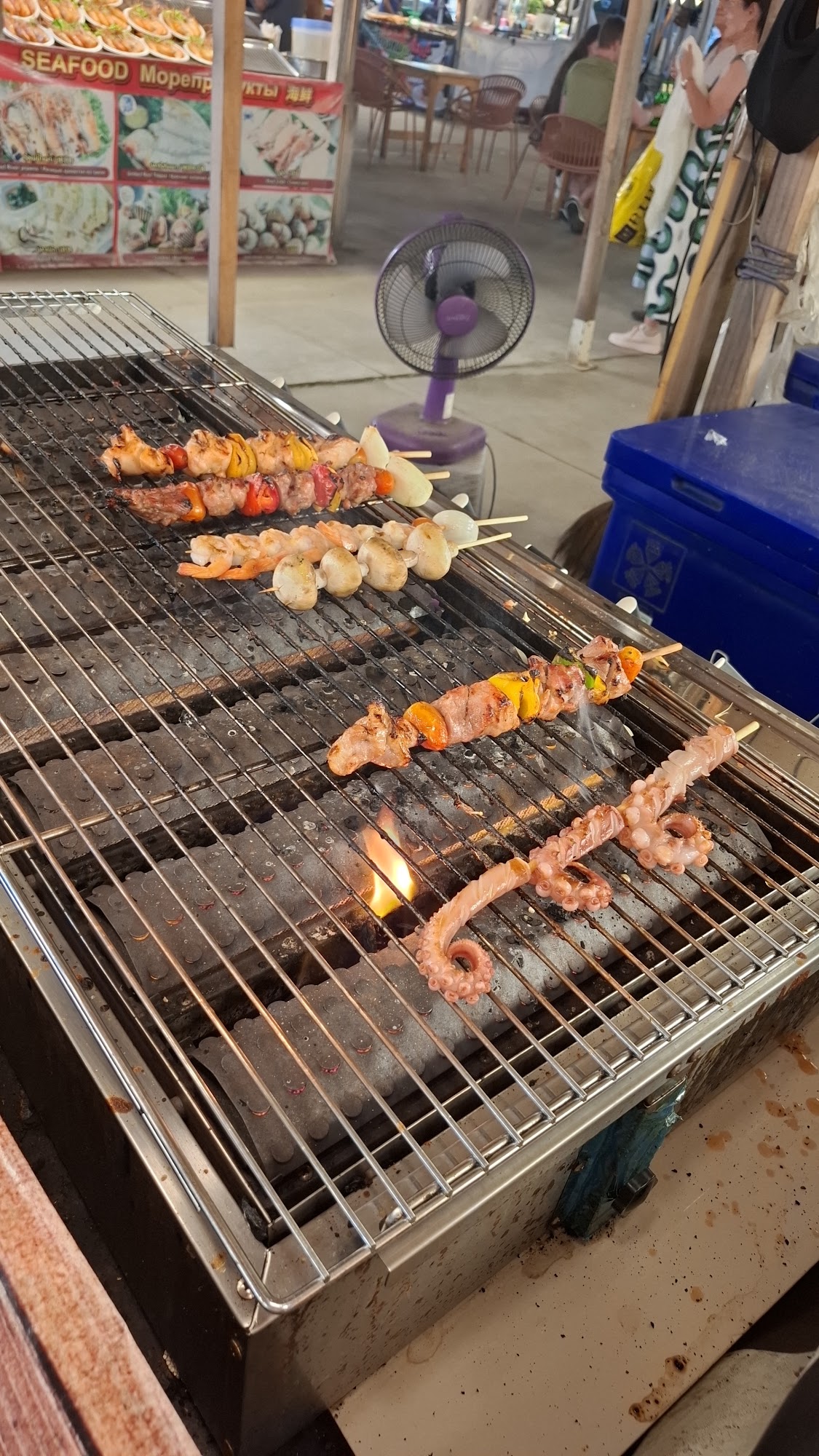
Mai phet will probably be your best friend for the first few days. And an aroi maak called out to the cook at a food stall always goes down well.
In taxis and on public transport
- Go to…, please: pai… (k)
- Please turn on the meter: poet meter duay (k)
- Straight ahead: trong pai
- Left / right: liao sai / liao khwa
- Stop here: jot thii nii
- Slowly, please: cha cha noi (k)
- Is it far? klai mai?
- Hotel / airport: rong raem / sanam bin
- Skytrain station: sathanii rot fai fa. Pier: tha ruea
For counting, learn at least the first few numbers: nueng (1), song (2), sam (3), sii (4), ha (5), hok (6), jet (7), paet (8), kao (9), sip (10), yii sip (20), nueng roi (100).
The gesture that goes with it: the wai
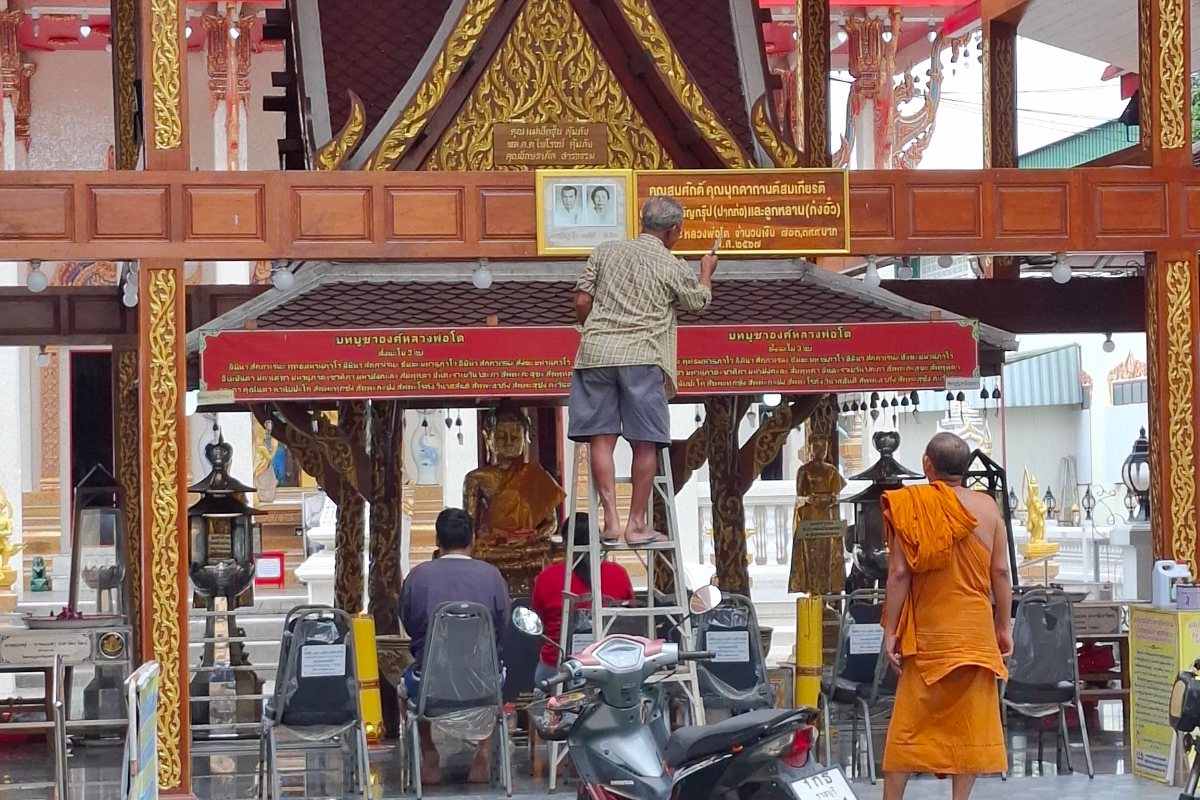
Words often come with a gesture. The wai means pressing your palms together at chest or face height while slightly bowing your head. It’s used to greet, to thank and to apologize.
You return a wai to someone who gives you one, especially older people. You don’t wai children, waiters or vendors: a smile and a nod are enough. As a foreigner, a smile, a slight nod and a khop khun khrap or khop khun kha always go down well.
Want to go further?
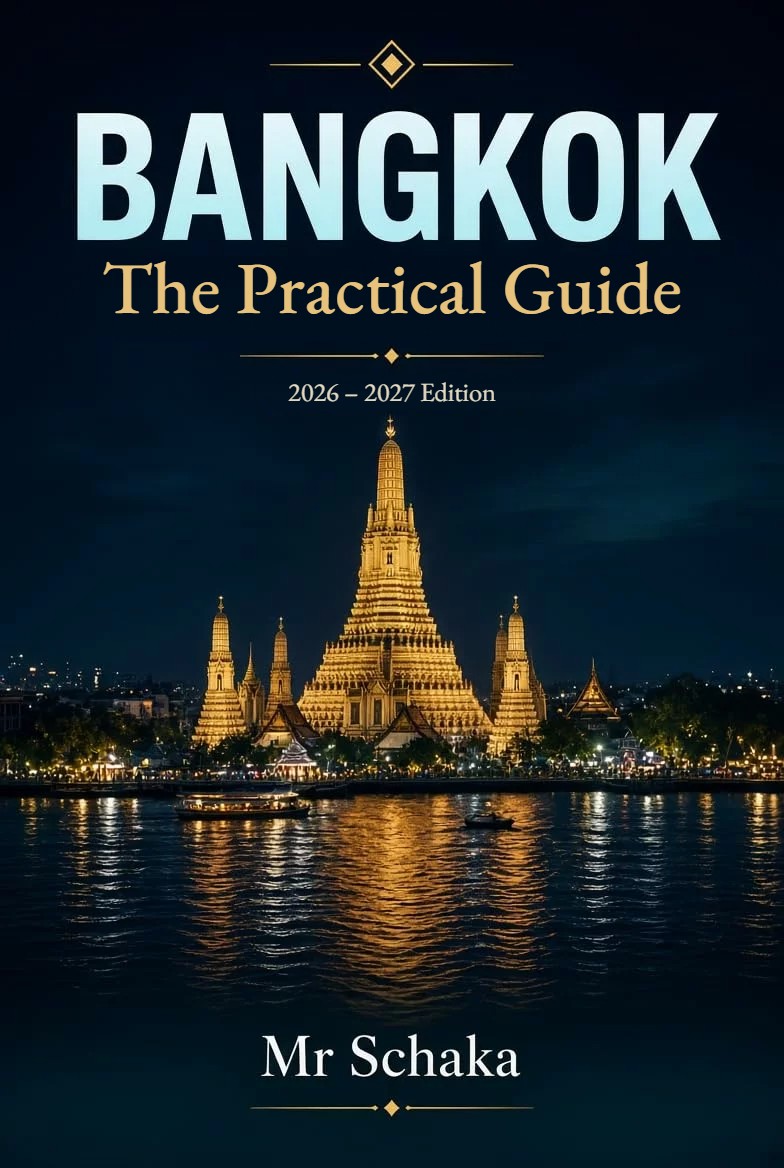
Mr Schaka’s practical guide, Bangkok – The Practical Guide (“Bangkok – The Practical Guide,” in English), contains the full phrasebook, with emergency words and numbers, plus a whole chapter on etiquette in Thailand. The English edition is out now as a PDF ebook: buy it here →