Every season comes to an end. In chapter 14 of The Season of Breath, Mr Schaka tells of going back to Belgium: the last mornings in Thailand, the goodbyes, the Liège rain. But the book’s last words aren’t “The End.” They’re To be continued. Here, without giving everything away, is what awaits the reader in those final pages.
A seashell in his pocket
On his last morning in Bophut, the narrator goes back to Fisherman’s Village before daybreak. The old fisherman is there, on his boat, with his net, as he has been every morning for sixty years, no doubt. With his hands, the narrator explains that he’s leaving: the plane, the sky, far away. The old man taps his chest twice and gives a thumbs-up. He does the same. “Two old engines wishing each other a safe journey.” The fisherman gives him a small white seashell. It’s still in his pocket.
The bench beneath the Virgin
Chu’s vacation is coming to an end, and Chu is not a woman who adds days to a prescription. Back to Bangkok. The next day she puts her white coat back on, and he goes back to his own job: waiting on the same bench in the lobby of Saint Louis Hospital. The lady at the stand pours him a coffee without his ordering, and the security guards greet him as if he’d never left.
Nobody sees anything, same as before. But he knows what this tanned traveler now carries inside: a temple on a hill in Isan, a lake and a boat at the end of a cable, a night of pool and Connect 4, a dragon, an old fisherman who breathes like him. Maybe that’s why, he writes, people like him look so healthy: they’re full of things you can’t see.
Mai pen rai, let’s eat
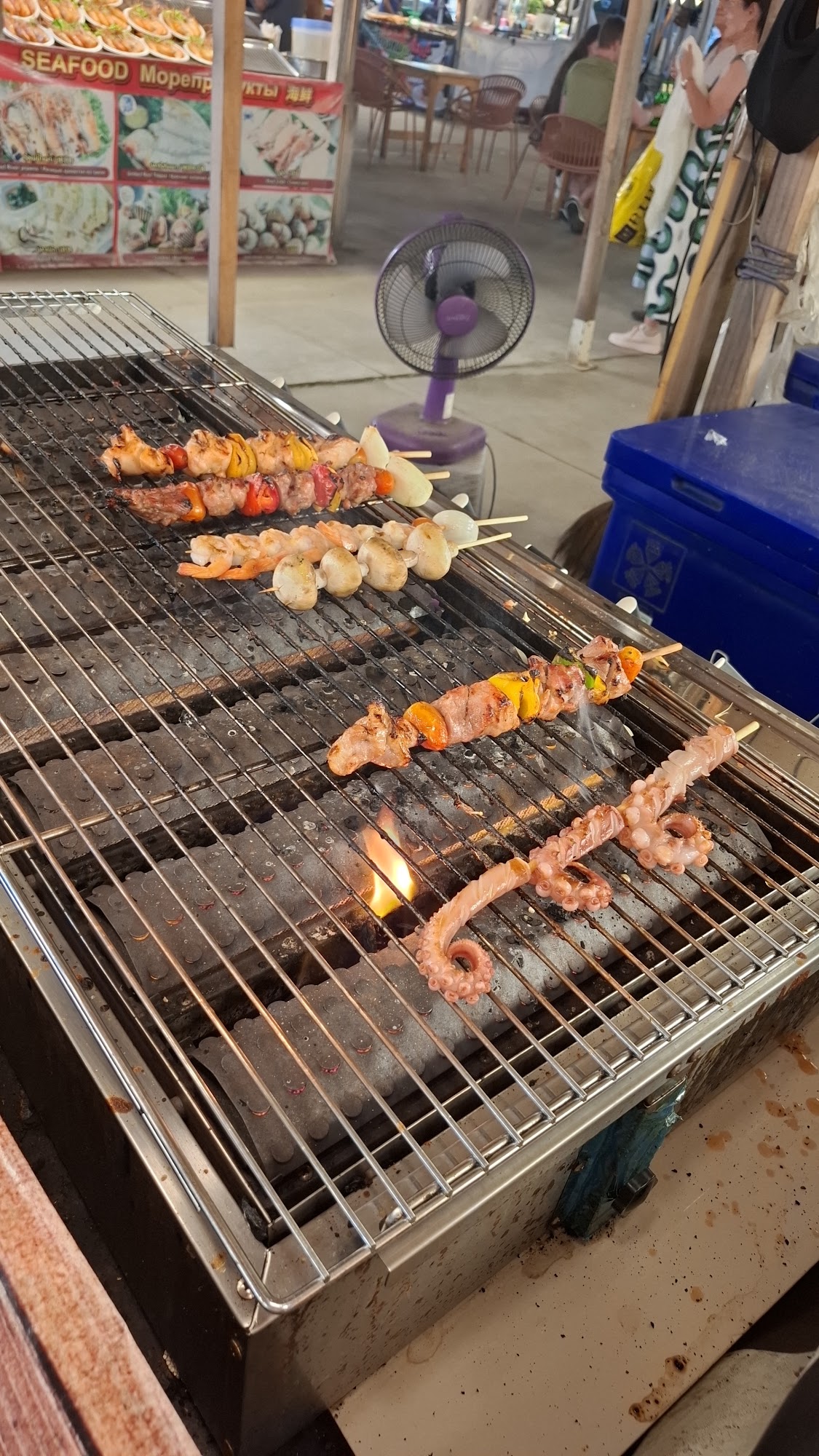
A few days before he leaves, a rainy-season downpour refuses to move on. It falls for two days and two nights. The khlongs overflow, the city is declared a disaster zone, and messages from Belgium pour in by the dozen. From his balcony in Sathorn, spared by the water, he sees only a white curtain and a puddle on the tiles. Down below, life goes on: delivery riders pass on scooters, water up to their ankles, and a skewer vendor keeps grilling, feet in the water, smiling.
Thais have an expression for this: mai pen rai, it’s nothing. Not indifference, the book explains, but a way of not giving misfortune more room than it already takes. Chu turns off the TV and asks the eternal question: shall we eat? The narrator thinks that might be this country’s secret, and a little bit his own, too.
Two words in Isan
At the airport, Chu checks his passport and ticket twice, like a prescription. She gives him masks for the plane, dried mangoes for his parents, a jar of her sister’s balm for his back. She’d made a list, of course. Then she lays her hand flat on his chest and says a sentence in Isan, the one she had said to him one evening on a lake. This time he answers in her language: he had learned it in secret, at night, on his phone. What those words mean, the book leaves you to guess.
Before passport control, she gives him a gentle push: “Go. Three months. I’m counting.”
Back to Belgium, in the rain
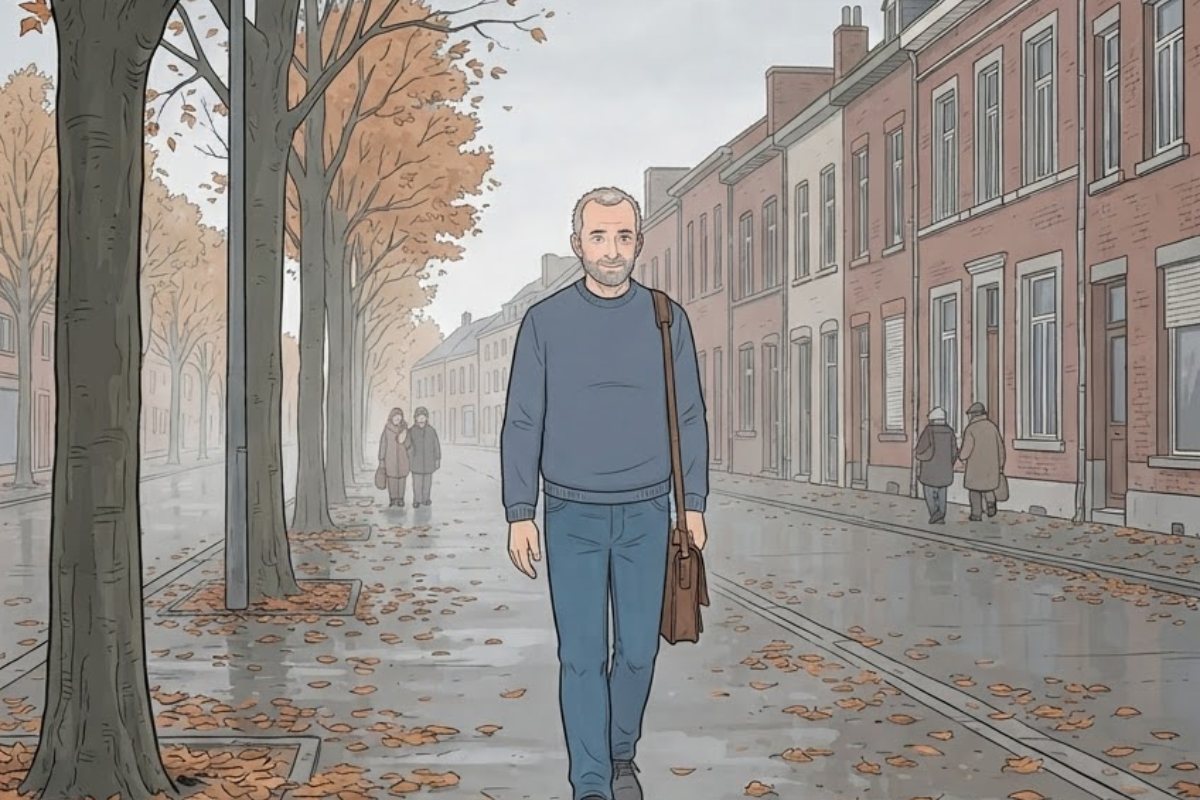
In Belgium it’s raining, naturally: that October rain that hangs suspended in the air. His father is waiting for him at Zaventem, looks him up and down like everyone else, but without searching for anything, since he already knows it all. He says he looks well, then carries his suitcase to the car. The narrator lets him: he learned to accept help over there, at the foot of a staircase guarded by two serpents.
In Alleur, his mother has made boulets sauce lapin, meatballs in “rabbit sauce,” as she does every time he comes home. For readers from elsewhere: there’s no rabbit in it. Around the kitchen table, he tells them everything, photo after photo. Looking at a photo of Chu, his mother says she seems to take good care of him. “It’s her job,” he replies. She corrects him: that’s not a job.
A book that ends with “to be continued”
On the fridge, a calendar is held up by a magnet shaped like a French fry. The narrator circles a date in red, three months away, and starts crossing off the days. After counting steps, he counts days: it’s easier, they come all by themselves.
The reader might have expected a tragic ending, facing the sea. Mr Schaka refuses it, with the humor that runs through the whole book: he breathes less well than a year ago, but he breathes, and as long as he breathes, the story goes on. Gabriel would say it’s like Kaamelott, which was supposed to end and got sequels. The story stops in a kitchen in Alleur. The next one will begin on a bench in Bangkok.
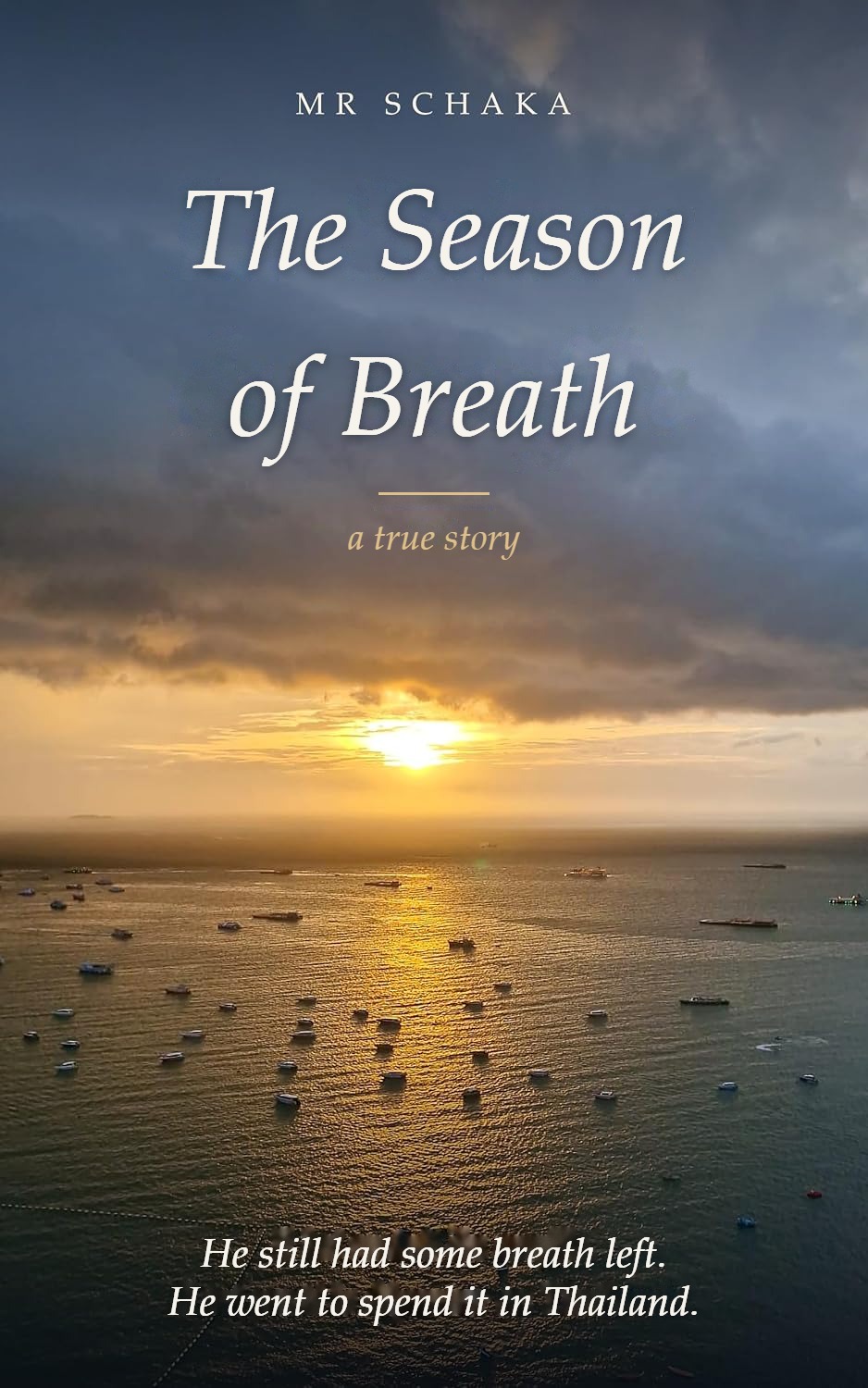
The book
The Season of Breath: the true story of a season in Thailand, which ends with a promise: to be continued. Available in English as a PDF ebook.