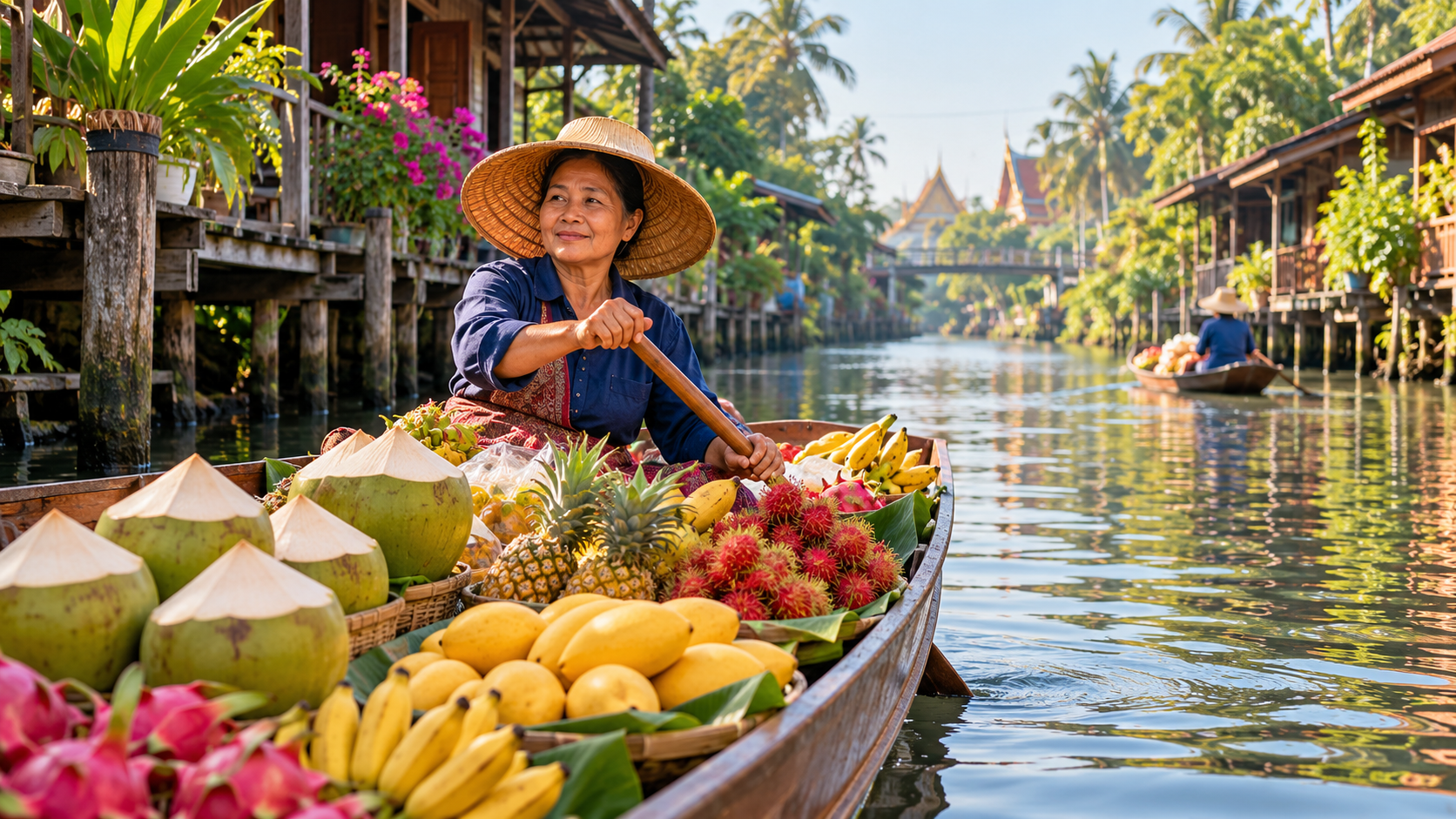
Koh Kret is one of those outings that make me fall back in love with Bangkok when the city gets too noisy. This small car-free island, sitting on the Chao Phraya north of the capital, has been home for more than two centuries to Mon families who still work the clay there. Here is how to get there by boat, what to see and which day to choose.
An island born from a canal
Koh Kret has not always been an island. In 1722, during the reign of King Thai Sa in the Ayutthaya period, a canal was dug to cut off a large bend in the river and shorten the voyage to what was then the capital. The work is said to have taken around ten thousand men for more than a month. Over time, the current widened the canal, which is now part of the river, and the cut-off bend became an island.
Later, under King Taksin, Mon people, who came from what is now Myanmar, were allowed to settle there. Their descendants still live there, and the island has a few thousand inhabitants. You feel it in the architecture of the temples, in certain dishes and above all in the pottery, which remains the island’s best-known activity. It lies in Nonthaburi province, about an hour from central Bangkok depending on traffic.
How to get to Koh Kret
Everything revolves around Pak Kret, the town opposite the island, and the Wat Sanam Nuea pier, where the ferry leaves from.
By taxi or bus to Pak Kret
The simplest option is a taxi or a car booked through an app to Wat Sanam Nuea in Pak Kret; allow just under an hour depending on traffic jams. Several bus lines also run to Pak Kret market, including the 166 from Victory Monument. From the market, the pier is a few hundred metres on foot, or two minutes by motorbike taxi.
By boat on the Chao Phraya
Chao Phraya express boats serve Pak Kret pier, but only on certain lines and at peak hours on weekdays: in the morning towards the centre, in the late afternoon towards Pak Kret. In June 2026, the Pak Kret–Sathorn journey cost 35 baht. So it is not practical for a there-and-back day visit. One solution is to take the orange-flag boat to Nonthaburi, then a taxi to finish. To understand the boat system, see my article on getting around Bangkok. Some companies also offer weekend boat trips from the centre; check the days and times before relying on them.
The Wat Sanam Nuea ferry
Behind Wat Sanam Nuea, a small ferry crosses the river continuously during the day. The crossing takes only a few minutes and costs a few baht. You land right next to Wat Poramai Yikawat.
What to see on Koh Kret
Wat Poramai Yikawat and the leaning pagoda
This is the main temple, in Mon style, right next to the landing stage. At the corner of the island, by the water, stands a leaning white chedi, the symbol of Koh Kret. The temple also houses a small museum and a beautiful marble Buddha statue. As in all temples, dress respectfully and take your shoes off before entering the buildings.
The potters’ villages
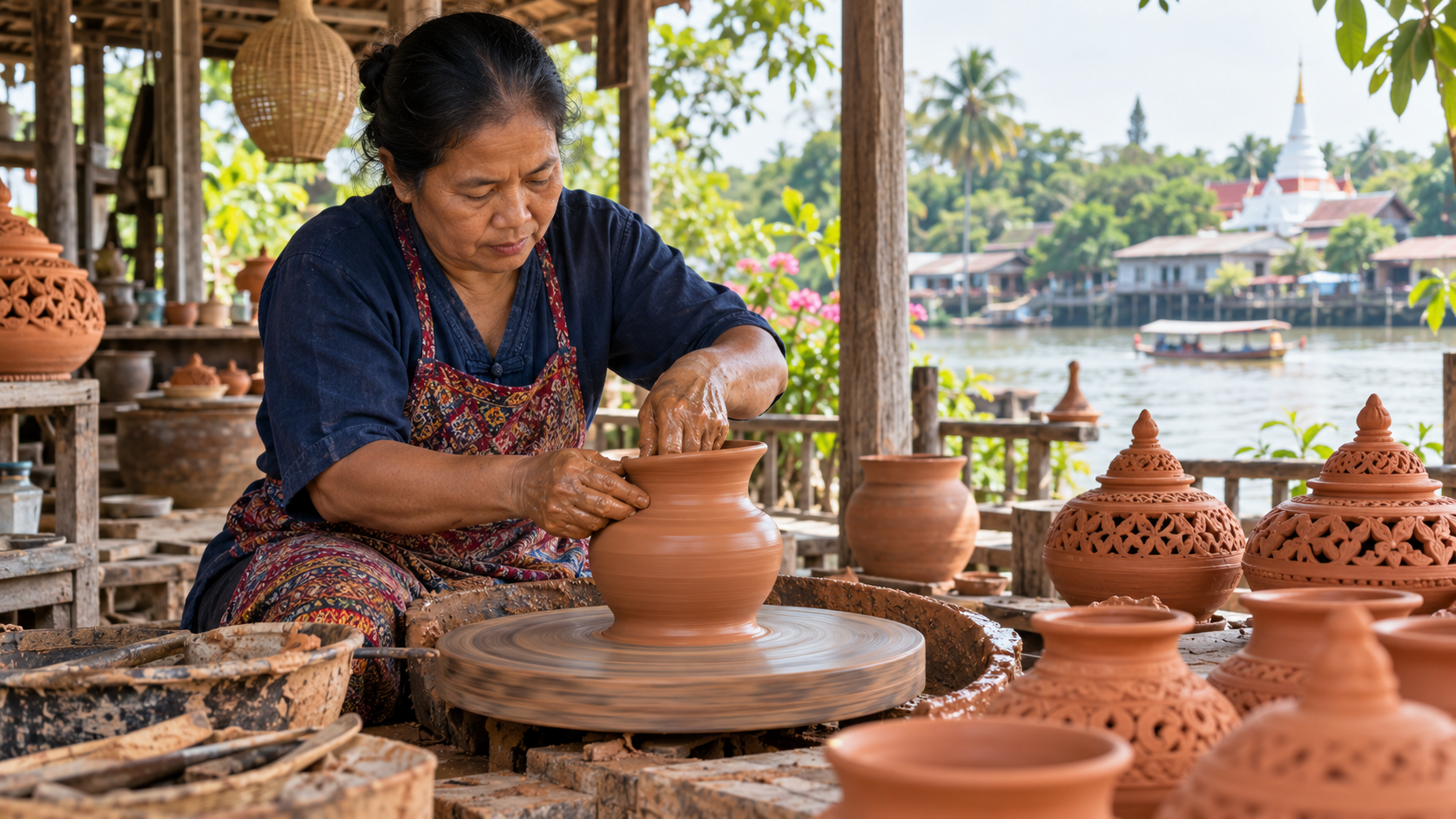
The workshops are mainly in the villages on the east and north of the island. You can watch potters throwing pieces, see old kilns and buy small objects in red terracotta. Some workshops let you try the wheel; ask on the spot. A small private museum of Mon pottery, Kwan Aman, also displays old pieces.
Around the island
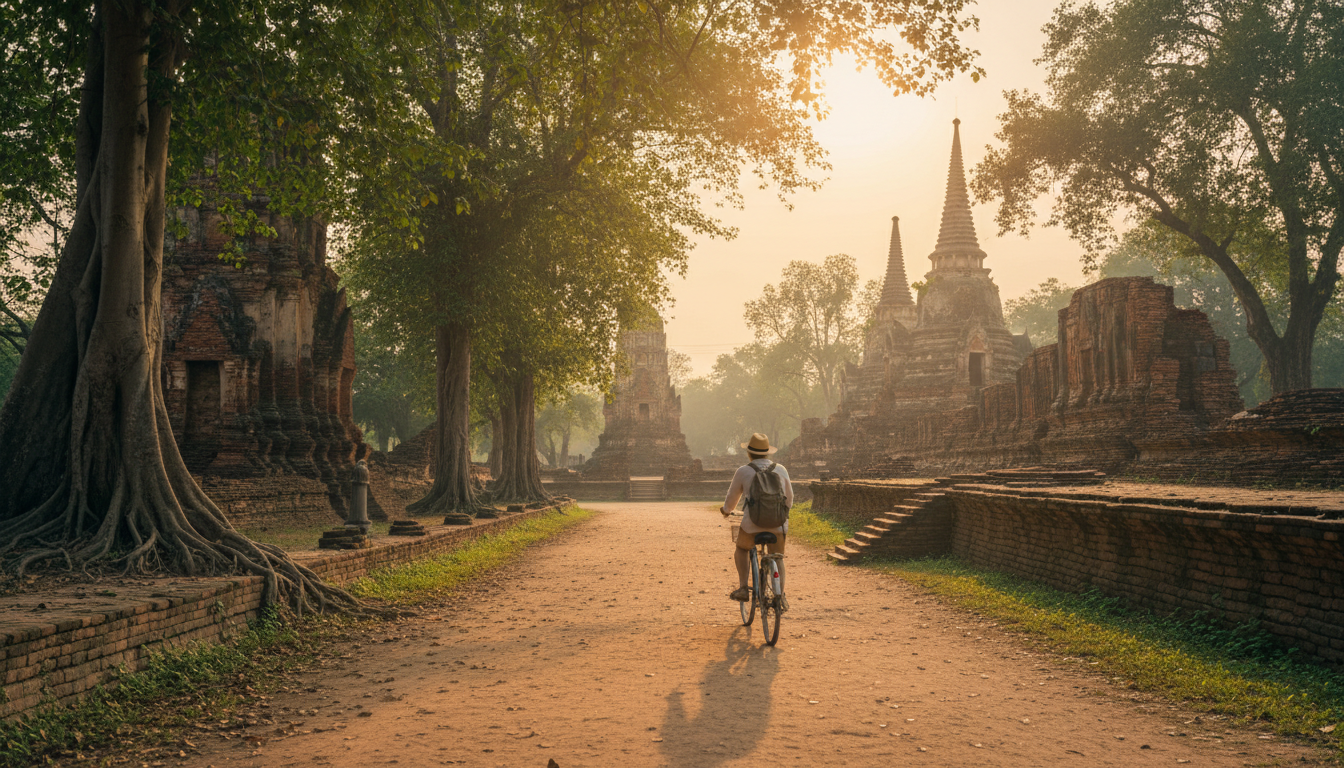
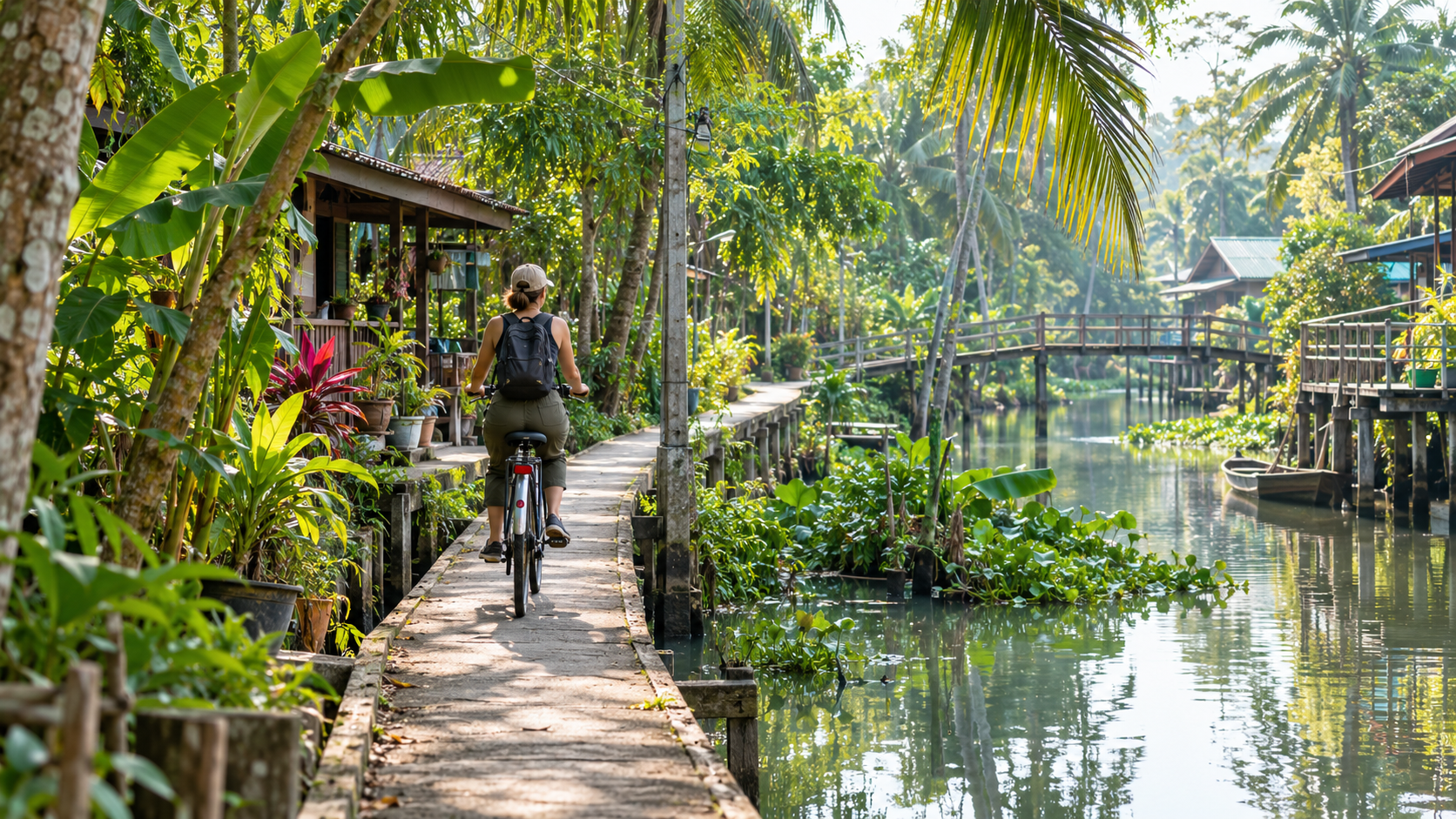
A path goes all the way round the island. On foot, allow between an hour and a half and two hours at a stroll. You can also rent a bicycle for the day for a few dozen baht. The path passes other temples, such as Wat Chimpli Suttawat or Wat Phai Lom, gardens, stilt houses and little piers. Part of it is narrow, so share the space with pedestrians and scooters.
What to eat
The best-known speciality is thot man no kala, crispy fritters of flowers and leaves served with a sweet-and-sour sauce. You will also find khao chae, rice served in scented water, mainly in the hot season, khanom chin noodles with curries and lots of sweets made with palm sugar. For more ideas, read my article on street food in Bangkok.
When to go to Koh Kret
At the weekend the island comes alive: food and pottery stalls multiply along the main path, and Thai families come in large numbers. It is lively, but crowded, especially in the afternoon. On weekdays the island is much calmer, with fewer stalls open. I like to go on a Saturday morning, early, to get the market atmosphere without the crush.
As for the season, temperatures are milder from November to February. During the rainy season the island is perfectly fine to visit, with an umbrella and a shower at the end of the day. Around mid-April, the Mon community also celebrates its own Songkran, about a week after Thai New Year, with a procession.
My practical tips
- Arrive before 10 am at weekends to avoid the crowds and the worst of the heat.
- Bring small notes: the ferry, snacks and small pottery are paid for in cash.
- Wear comfortable shoes and a hat: the walk round the island is largely in the sun.
- The water taxis that circle the island do not always provide life jackets; it is your call.
- To take a piece of pottery home, ask for it to be well wrapped, or choose small items.
- Combine it with a visit to Nonthaburi or another excursion around Bangkok if you have the whole day.
- Be discreet with your camera in the workshops and ask before photographing the potters.
Frequently asked questions
How much time should I allow for Koh Kret?
Half a day is enough for the temple, the leaning pagoda, a pottery workshop and a meal. With the full loop of the island, allow the whole day.
Can I visit Koh Kret on a weekday?
Yes, the island is calmer, but fewer stalls are open. It is ideal for a quiet stroll.
Do I need to book the ferry?
No. The Wat Sanam Nuea ferry crosses continuously during the day and you pay on the spot.
Is Koh Kret suitable for children?
Yes: no cars, pottery workshops and snacks everywhere. Just keep an eye on children along the water’s edge.
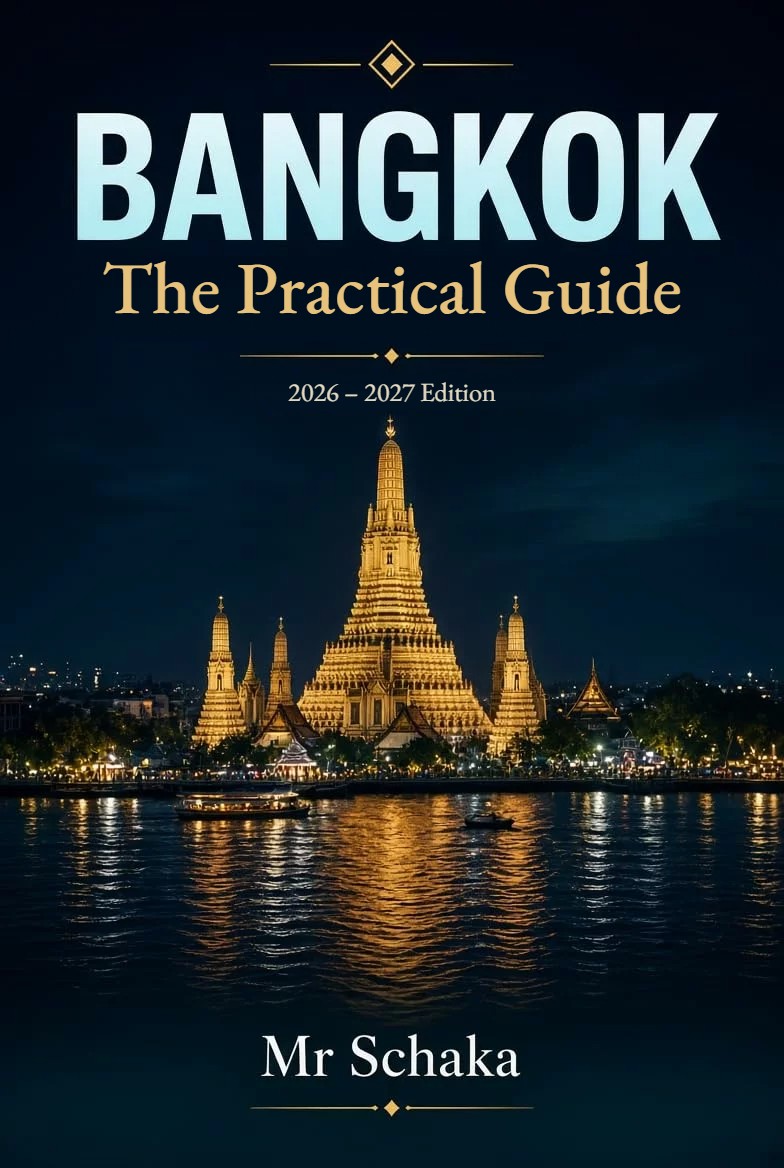
To go further
Mr Schaka’s guidebook, Bangkok – The Practical Guide, covers the essentials: transport, neighbourhoods, addresses, food, etiquette and safety, updated for 2026–2027.