A guesthouse in Thailand is often a small family house with a handful of rooms, run by the owners themselves, with a more personal welcome than a hotel and a gentler price. I have slept in dozens of them, in Bangkok, in the North and in Isan, and I have learnt to choose them with a few simple habits. Here is what I check before I put my bag down.
Guesthouse, hotel or homestay: what is the difference?
The three words appear side by side on booking sites, but they do not mean the same thing.
- The guesthouse: a small, often family-run place with a limited number of rooms. Reception is not always open day and night, breakfast is sometimes optional, and the owner often lives on site. It is simple, but you often get good advice about the area.
- The hotel: a reception desk that never closes, a lift, daily cleaning, sometimes a pool. You pay for that comfort and consistency, but the atmosphere is more anonymous.
- The homestay: you sleep in a local home, often in the countryside, with meals shared with the family. Some villages run community homestays. It is the deepest immersion, but comfort is basic and you have to accept the rhythm of the household.
For me, the guesthouse is the right compromise when I stay a few nights in a town and want a quiet, clean, inexpensive place without all the services of a hotel.
How much does a night in a guesthouse cost?
Prices vary a lot depending on the town, the season and the room’s equipment. To give you a rough idea, with no guarantee because things change quickly:
- Fan room (fan, sometimes a shared bathroom): roughly 250 to 500 baht a night in the provinces and small towns.
- Air-conditioned room with private bathroom: roughly 500 to 1,000 baht in most towns.
- Bangkok and tourist islands in high season: expect more like 800 to 1,500 baht, sometimes more for a pretty, well-located guesthouse.
Prices rise in high season and on Thai public holidays, and often drop during the rainy season. For the overall cost of a trip, I also break down a one-week budget in Bangkok. Always check the final price shown when you book, taxes included.
Choosing and booking your guesthouse
Most guesthouses are listed on the big platforms such as Agoda or Booking.com. I mainly read recent reviews, from the last few months, and look for the words that keep coming back: noise, cleanliness, hot water, how kind the owners are. A very high score with few reviews tells me less than a good score with hundreds of comments.
My habit: I book the first night or two online, especially if I arrive late. Once there, if I like the place, I ask the owner whether I can extend directly. Sometimes the price is a little lower if you pay cash on the spot, sometimes not: there is no rule. Keep a few notes on you, as many small guesthouses prefer cash; I cover cards and cash machines in my article on money in Thailand.
Location matters as much as the room. In Bangkok, a guesthouse near a metro station or a pier will save you a lot of time; I explain the neighbourhoods in where to stay in Bangkok.
What I check before saying yes
Air conditioning or fan
On the photos, look for a real wall-mounted air conditioner or just a fan. During the hot months, especially from March to May, a fan room can make sleeping hard. In the North in winter or by the sea, a fan is often enough. When possible, I ask to see the room before paying.
Noise
This is the point that makes the biggest difference. A guesthouse above a busy street, a market that sets up at five in the morning or next to a building site can ruin your nights. In the countryside, you also have roosters, dogs and sometimes the village loudspeakers. I ask for a room facing the courtyard, and I always keep earplugs in my bag.
The bathroom
Private or shared bathroom? Hot water or not? Many small guesthouses have an electric water heater in the shower: check that it works. In many places, toilet paper does not go in the bowl but in the small bin provided, because the pipes are narrow. A hand-held spray next to the toilet is normal.
The deposit
Some guesthouses ask for a deposit on arrival, often for the key or key card, usually a few hundred baht, refunded when you leave. Ask for a receipt or note the amount. The owner also has to report the foreigners staying with them to immigration, so it is normal for them to ask for your passport to make a copy. However, I never leave my passport as a guarantee: I offer a cash deposit instead.
Check-out time
Check-out is often between 11am and noon, check-in around 2pm. If your bus or flight leaves in the evening, ask whether you can leave your luggage at reception: most are happy to help. If reception closes at night, let them know your arrival time so you do not find the door locked.
Life in a guesthouse
A guesthouse is also a home where a family lives. You take your shoes off at the entrance when that is the custom, speak quietly in the evening and respect the private areas. A smile, a “sawasdee khrap” or “sawasdee kha” and a little patience open many doors. The owners often know the best soup stall in the neighbourhood or the time of the bus you are looking for: ask them.
Cleaning is not always daily. If you want fresh towels or the room cleaned, just ask. And if something is wrong, a calm, polite request always works better than a complaint.
My practical tips
- Read recent reviews and look for the words “noise”, “hot water” and “clean”.
- Book the first night online, then extend on the spot if you like the place.
- Look at the map: a guesthouse near public transport is sometimes worth a few extra baht.
- Check on the photos or on site that there is real air conditioning.
- Keep earplugs and a small torch in your bag.
- Give a cash deposit rather than leaving your passport, and note the amount.
- Ask about check-out time and whether you can leave your luggage.
- Carry cash: many small guesthouses do not take cards.
Frequently asked questions
Is a guesthouse safe in Thailand?
In the vast majority of cases, yes. Choose a place with many recent reviews, lock your room and keep important documents on you or in a safe when there is one.
Should I book in advance?
In high season, during holidays and in very touristy places, yes, at least for the first night. In low season and in small towns, you can often find a room on arrival, but it is more tiring with a pack on your back.
Can I negotiate the price?
For a single night, rarely. For a stay of a week or more, you can politely ask for a small weekly rate. If the answer is no, do not insist.
Is breakfast included?
Not always. Check the booking details. Often it is nicer and cheaper to eat at the market or at the stall on the corner.
To go further
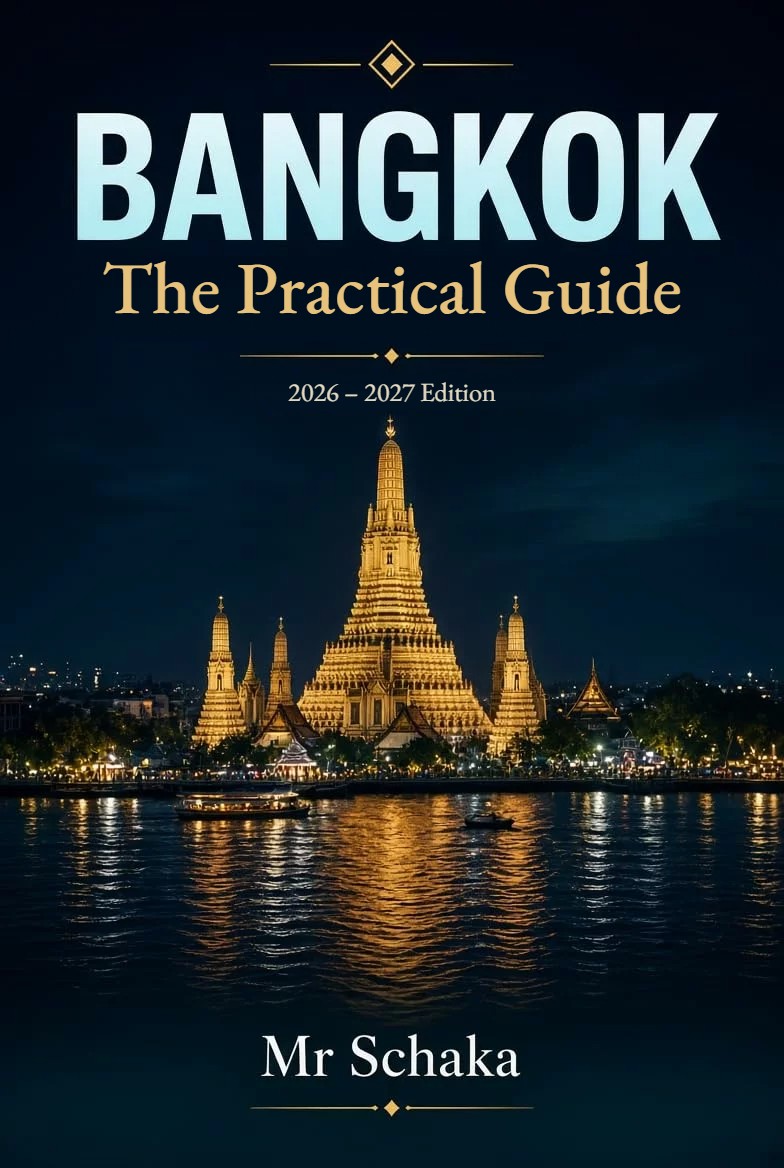
Mr Schaka’s guidebook, Bangkok – The Practical Guide, covers the essentials: transport, neighbourhoods, addresses, food, etiquette and safety, updated for 2026–2027.