Category: Thailand Notebook

Practical tips and travel stories from Thailand: Bangkok, Pattaya, Isan, the islands.

  • Bangkok Temples Off the Beaten Path: 6 Quiet Sacred Places

    Bangkok Temples Off the Beaten Path: 6 Quiet Sacred Places

    The Grand Palace and Wat Pho draw huge crowds. Yet Bangkok temples are far more than those postcard views. Here are six quieter sacred places, with prices, opening hours and routes so you can visit without stress.

    Dusit and Chinatown: marble and gold

    Wat Benchamabophit, the Marble Temple

    Built from 1899 under King Rama V, Wat Benchamabophit is clad in white Italian marble. This is the temple shown on the back of the 5-baht coin.

    In the ordination hall, the main Buddha image holds some of Rama V’s ashes. At the back, a cloister displays 52 Buddha images from different styles and periods. Come early: from 6am, monks receive alms in front of the temple.

    Practical: entry between 50 and 100 baht depending on the source (check at the ticket desk, prices noted in 2026), open roughly 8am to 5.30pm. No metro nearby: BTS Phaya Thai, then a short taxi ride.

    Wat Traimit, the Golden Buddha

    At the edge of Chinatown, Wat Traimit houses a solid gold Buddha weighing 5.5 tonnes and standing about 3 metres high. For centuries it was hidden under a layer of plaster. Only in 1955, while it was being moved, did the plaster break and reveal the gold.

    Practical: 100 baht for the Golden Buddha floor, 8am to 5pm (prices noted in 2026). The museums on the lower floors cost extra and are closed on Mondays. Getting there: MRT Hua Lamphong, then a 10 to 15-minute walk.

    Old Town: Wat Suthat and Wat Ratchabophit

    These two royal temples are a few minutes’ walk apart, near MRT Sam Yot station.

    Wat Suthat and the Giant Swing

    Opposite the entrance stands the Giant Swing, a red teak structure just over 21 metres tall. Inside, the ordination hall is one of the longest in the country. It holds a large 13th-century bronze Buddha brought from Sukhothai, and murals of the Buddha’s previous lives. Entry: 100 baht. Hours vary between sources: aim for 9am to 5pm.

    Wat Ratchabophit, the temple with two faces

    From the outside, Wat Ratchabophit looks very Thai: a 43-metre golden chedi in a circular courtyard, and walls covered in five-coloured bencharong ceramics. Inside the ordination hall comes the surprise: neo-Gothic decor with pointed arches, like a European chapel. The doors are black lacquer inlaid with mother-of-pearl.

    To the west, a small royal cemetery lines up monuments in very different styles. Entry is free and the grounds open roughly from 6am to 6pm.

    #Thailand #Bangkok #ThailandTravel #TravelTips #Asia #MrSchaka

    Thonburi side: Wat Prayoon and Wat Paknam

    Wat Prayoon and its turtle hill

    At the foot of Memorial Bridge, on the west bank, Wat Prayoon stays very peaceful. You can walk all the way round its great white Ayutthaya-style chedi. A small museum next to it shows amulets and figurines found inside during the restoration, which won a UNESCO award in 2013.

    The other treasure is an artificial hill covered in small shrines, set in a pond full of turtles. A stall sells fruit to feed them. Practical: open roughly 7am to 7pm; no ticket reported, but check on site. Chao Phraya Express boat to Memorial Bridge pier (Saphan Phut), then walk across the bridge, or MRT Sanam Chai and a 10-minute walk.

    Wat Paknam Phasi Charoen, the Big Buddha

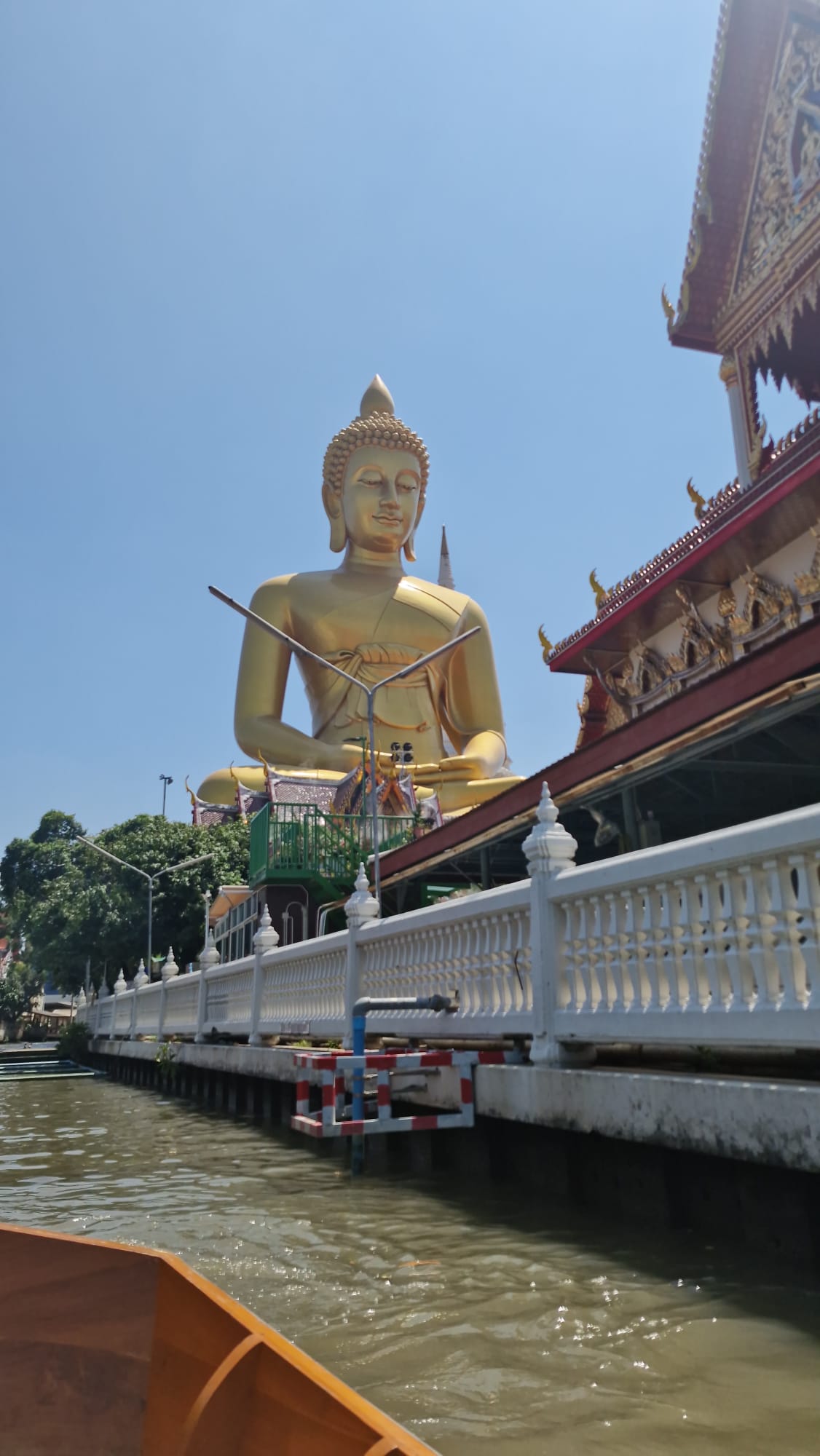
    Further out, Wat Paknam is worth the trip. A 69-metre seated Buddha towers over the area. Next to it, an 80-metre white stupa has five floors. Go right to the top: an emerald-green glass stupa about 8 metres high stands under a ceiling painted in psychedelic colours. It is one of the most beautiful rooms in Bangkok, and often almost empty in the morning.

    Practical: free entry, 8am to 6pm. MRT Bang Phai, then a 10 to 15-minute walk, or BTS Wutthakat and a short taxi ride.

    Dress code and etiquette

    These temples are active places of worship. The rule is the same for men and women: shoulders and knees covered. No shorts, no short skirts, no vests. A sarong or a light shirt in your bag is often enough.

    • Take your shoes off before entering the halls: wear sandals that slip off easily.
    • Never point your feet at a Buddha image or a monk; sit with your legs tucked to the side.
    • Women should not touch a monk or hand him anything directly.
    • Speak quietly and ask before photographing someone at prayer.

    Mr Schaka’s practical tips

    • Start early. Before 10am the heat is bearable and the courtyards are almost empty.
    • Group by area. Wat Suthat and Wat Ratchabophit in the morning, Wat Prayoon in the afternoon across the river. For routes, see getting around Bangkok by BTS, MRT and boat.
    • Carry small change. Tickets are often paid in cash, and a small coin for offerings is always welcome.
    • Bring water. Stone courtyards heat up fast, especially in April. Pick your dates with the best time to visit Bangkok.

    Frequently asked questions

    Which Bangkok temple is best for avoiding crowds?

    For the wow factor, Wat Paknam and its green glass stupa. For calm and elegance, Wat Benchamabophit, especially early in the morning.

    How much does it cost to visit these temples?

    From 0 to 100 baht per temple (prices noted in 2026). Wat Paknam and Wat Ratchabophit are free; Wat Traimit and Wat Suthat cost 100 baht.

    Can I visit Bangkok temples in shorts?

    No. Shoulders and knees must be covered, for everyone. Some temples lend or rent sarongs, but it is better to come prepared.
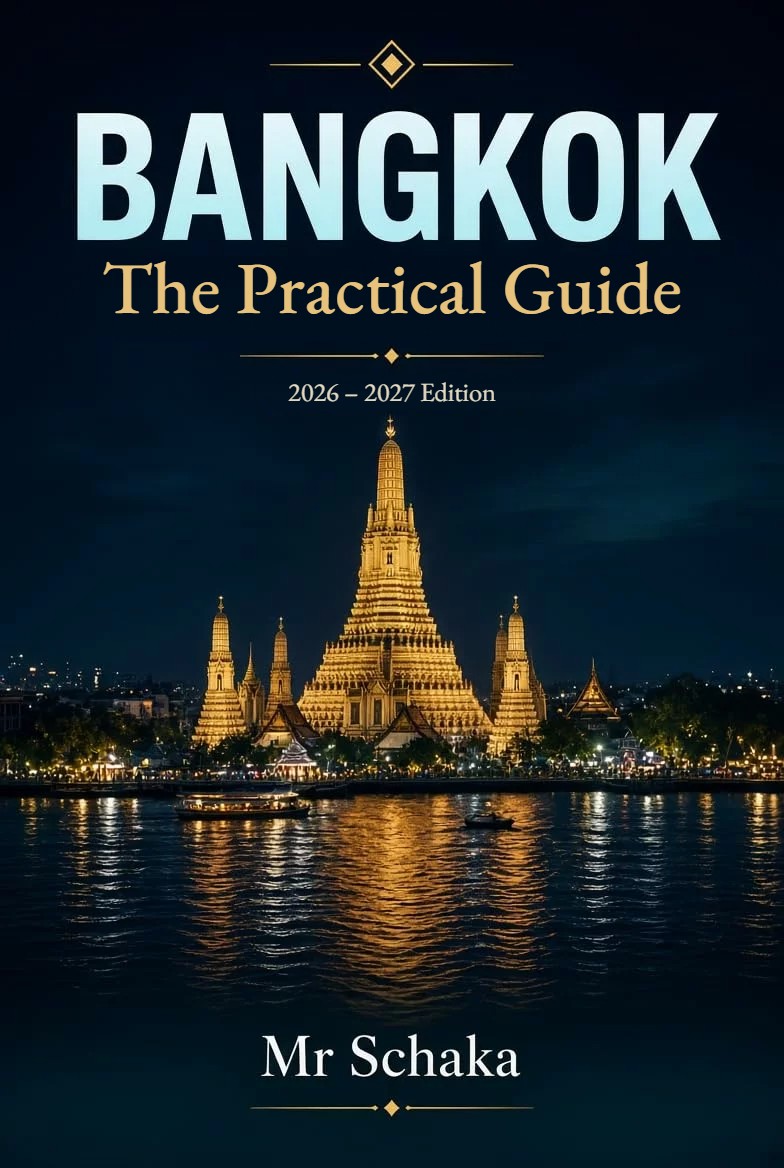
    Cover of Bangkok – The Practical Guide

    To go further

    Mr Schaka’s guidebook, Bangkok – The Practical Guide, covers the essentials: transport, neighbourhoods, addresses, food, etiquette and safety, updated for 2026–2027.
  • Hua Hin: Bangkok’s Favourite Beach Escape, a Practical Guide

    Hua Hin: Bangkok’s Favourite Beach Escape, a Practical Guide

    Three to four hours south of Bangkok, Hua Hin is the seaside town where Bangkok people escape at weekends. No huge parties, no backpacker crowds: a long beach, night markets, hilltop temples and plenty of calm. Here is how to get there and what to do, with prices checked in 2026.

    How to get from Bangkok to Hua Hin

    By train, to the historic station

    Most trains leave from Krung Thep Aphiwat, the big central station at Bang Sue. The most convenient is Special Express No. 43 at 7.30am: about 3 hours, 330 baht in air-conditioned second class. Ordinary trains in fan-cooled third class cost 44 baht and take about 4.5 hours.

    Since December 2023, trains stop at a new elevated station right next to the old one. The historic 1926 station, with its red-and-cream facade and teak royal pavilion built for King Rama VI, is now a heritage site. It is open daily and free.

    By minivan or bus

    • Nor Neane minivan from Ekkamai bus terminal: roughly hourly from 5am to 7pm, 200 baht at the counter, 3.5 to 4 hours.
    • Sombat Tour VIP bus from the Southern Terminal (Sai Tai Mai) or Mo Chit 2: about 291 baht, 4 hours.
    • Roong Reuang bus from Suvarnabhumi Airport (Level 1, near Gate 8): about 361 baht, 4 hours. It arrives near Hua Hin Airport, 7 km from the centre.

    Whichever you choose, allow 3 to 4 hours, more on Friday and Sunday evenings. Prices shown are counter prices; online sellers often add 50 to 100 baht.

    Hua Hin’s beaches

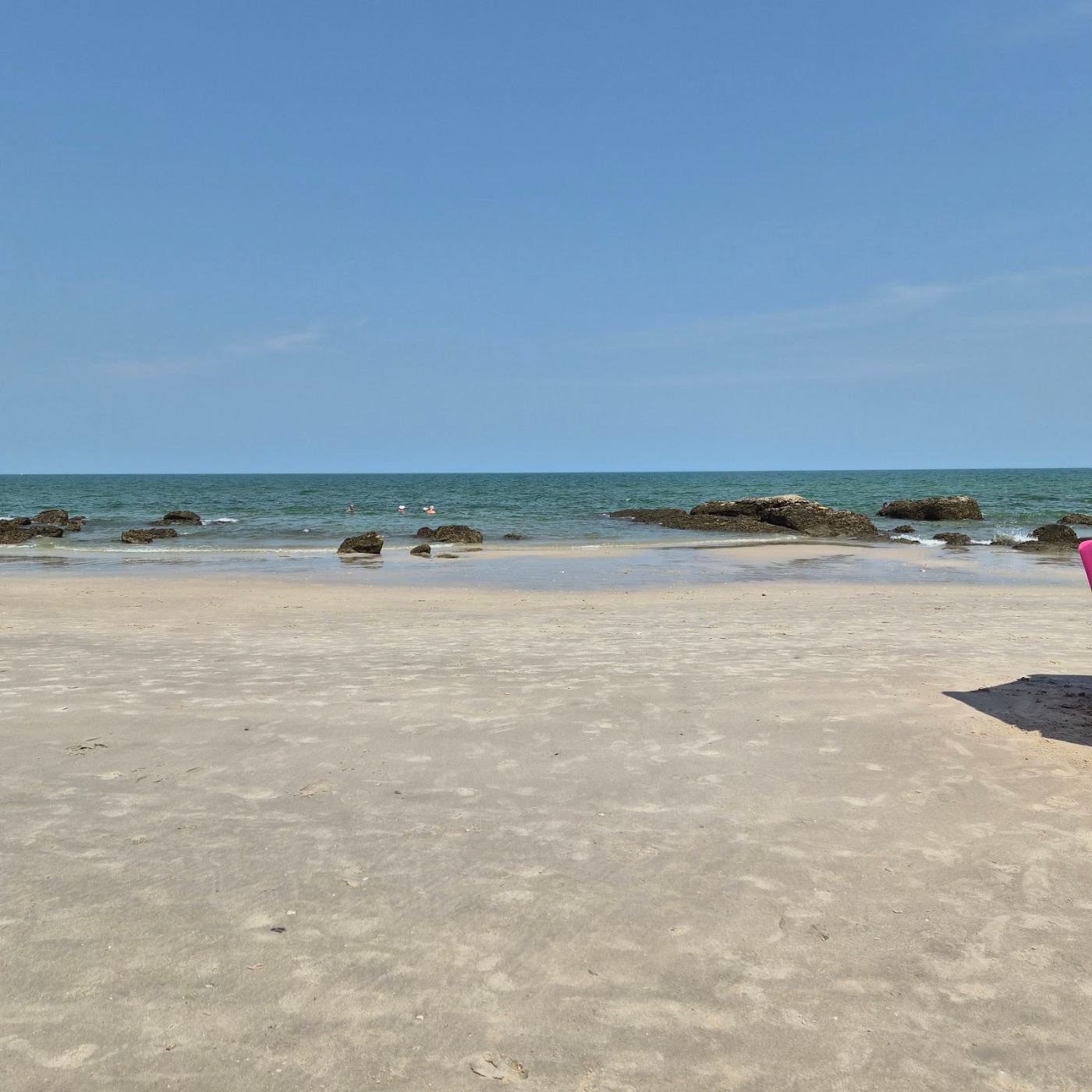
    The main beach starts in the town centre and runs south to Khao Takiab hill. The sand is pale and the water of the Gulf of Thailand is calm, with few waves. To be honest, this is not the turquoise water of the Andaman islands. But you can walk for ages with your feet in the sea, and in the morning it is almost empty.

    Khao Takiab and its monkeys

    About 7 km south of the centre, Khao Takiab hill closes the bay. A large standing Buddha looks out to sea from the cliff. Stairs lead up to Wat Khao Takiab temple, with a superb view of the beach and the fishing village. Entry is free.

    The macaques are everywhere. They are fun to watch, but they snatch bags, glasses and food. Keep your hands empty, no food in sight, and do not feed them. To get there, take a songthaew (shared pick-up) along the main road, about 30 to 40 baht paid when you get off, or a Grab.

    The night markets

    Hua Hin Night Market

    It fills Dechanuchit Road (Soi 72), between Phetkasem Road and the railway. It opens every evening, roughly 6pm to 11pm. Expect grilled seafood, pad thai, mango sticky rice, clothes and souvenirs.

    Cicada Market

    Cicada Market opens Friday, Saturday and Sunday, 4pm to 11pm, opposite the Hyatt Regency hotel, south of the centre. Makers, crafts, live music and food stalls in a garden setting. Get there by Grab or tuk-tuk, agreeing the fare before you get in.

    #Thailand #Bangkok #ThailandTravel #TravelTips #Asia #MrSchaka

    Royal palace and royal cave: two outings

    Maruekhathaiyawan Palace

    About fifteen kilometres north, between Cha-am and Hua Hin, this seaside summer palace was built in 1923-1924 for King Rama VI. It opens Thursday to Tuesday, 8.30am to 4.30pm (last ticket at 4pm), and is closed on Wednesdays. Entry is 90 baht for the ground floor and gardens.

    Khao Sam Roi Yot and Phraya Nakhon Cave

    Khao Sam Roi Yot National Park is about an hour’s drive south. From Bang Pu village, take a longtail boat to Laem Sala beach (about 150 baht return per person) or walk 30 minutes over the headland trail. Then a steep 430-metre climb, about 30 minutes, leads to Phraya Nakhon Cave.

    Inside, under a hole in the roof, stands the Khuha Kharuehat Pavilion, built for King Chulalongkorn’s (Rama V) visit in 1890. Park entry is 200 baht for a foreign adult and 100 baht for a child. The light is at its best in mid-morning on a clear day.

    When to go, and who is it for?

    Hua Hin sits on the western shore of the Gulf of Thailand. The best period is late November to mid-April: dry skies and a sea breeze. September and October are the wettest months, with afternoon storms. To compare with the capital, see our guide to the best time to visit Bangkok.

    Hua Hin suits families best (calm sea, easy markets), retirees who spend the winter there, and couples looking for peace. And if you only have one day, other day trips from Bangkok are closer.

    Mr Schaka’s practical tips

    • Book train No. 43 as soon as sales open, 30 days ahead.
    • Avoid travelling back on Sunday evening: the roads are jammed.
    • At Khao Takiab, keep your bag closed and nothing in your hands.
    • For Phraya Nakhon, start early with closed shoes, water and sun cream.
    • At the palace, dress modestly; sarongs are lent at the entrance.

    Frequently asked questions

    How long does it take to get from Bangkok to Hua Hin?

    About 3 to 4 hours by train, minivan or bus.

    How many days should I spend in Hua Hin?

    Two or three days are enough for the beach, Khao Takiab and the markets. Add a day for Khao Sam Roi Yot.

    Is Hua Hin good for children?

    Yes: calm sea, a long beach and evening markets. Just keep an eye on them near the monkeys at Khao Takiab.

    Cover of Hua Hin – The Practical Guide

    To go further

    Mr Schaka’s guidebook, Hua Hin – The Practical Guide, covers the essentials: transport, neighbourhoods, addresses, food, etiquette and safety, updated for 2026–2027.
  • Kanchanaburi and the River Kwai Bridge: a guide from Bangkok

    Kanchanaburi and the River Kwai Bridge: a guide from Bangkok

    Kanchanaburi and the River Kwai Bridge sit two to three hours from Bangkok, along with a war cemetery, a railway clinging to cliffs and turquoise waterfalls. It is a lovely trip, but first of all a place of remembrance. Here is how to get there, what to see and how to plan one or two days.

    How to get to Kanchanaburi from Bangkok

    The train from Thonburi

    It is the slowest option, but the most beautiful. Ordinary trains leave Thonburi station, on the west bank of the river, at 7.45am (train 257) and 1.55pm (train 259). Allow about 2 hours 45 minutes to Kanchanaburi. Foreigners pay a flat fare of 100 baht, whatever the distance (prices checked in 2026). No booking: you buy your ticket at the counter on the day. Third class, fans and open windows.

    Timetables change sometimes: check them at the station. To reach Thonburi, see our guide to getting around Bangkok.

    Bus and minivan

    Faster: the air-conditioned bus from the Southern Bus Terminal (Sai Tai Mai). The journey takes about 2 hours and costs around 110 to 180 baht depending on the company. Minivans leave from the Mo Chit terminal: about 3 hours, 170 to 350 baht depending on the operator. A private driver usually costs 2,000 to 2,800 baht one way (prices checked in 2026).

    The bridge, the cemetery and the museum

    The River Kwai Bridge and its history

    Between 1942 and 1943, the Japanese army forced the building of a railway of about 415 km between Thailand and Burma. More than 60,000 Allied prisoners of war (British, Australian, Dutch, American) and around 200,000 Asian labourers were made to work on it. About 13,000 prisoners died, along with an estimated 80,000 to 100,000 Asian civilians: hunger, exhaustion, cholera. It became known as the Death Railway.

    The steel bridge in Kanchanaburi became its symbol. Its curved spans came from Java. Bombed by the Allies in 1944 and 1945, it was repaired after the war: the straight central spans replace the destroyed sections. The famous 1957 film, based on the novel by Frenchman Pierre Boulle, is fiction.

    Kanchanaburi War Cemetery

    In the middle of town, Don Rak cemetery holds nearly 7,000 graves: 5,085 Commonwealth servicemen and 1,896 Dutch, almost all of whom died building the line. The paths are immaculate, the inscriptions simple and often deeply moving. Entry is free.

    The Thailand–Burma Railway Centre

    Right next to the cemetery, this museum explains everything: the route, the camps, the diseases, the bombing. It is open daily from 9am to 4pm, and entry costs 160 baht for an adult (prices checked in 2026). Some photos are harrowing, so it is not ideal for young children.

    #Thailand #Bangkok #ThailandTravel #TravelTips #Asia #MrSchaka

    Beyond the town: viaduct, Hellfire Pass and Erawan

    The train over the Wang Pho viaduct (Tham Krasae)

    After Kanchanaburi, the train carries on towards Nam Tok. About an hour further on, it slows down on the Wang Pho viaduct, also called Tham Krasae: 400 metres of timber clinging to the cliff above the Khwae Noi river, built by prisoners in 1943. The morning train crosses it in late morning. You can get off at the Tham Krasae halt and walk along the track, carefully.

    Hellfire Pass

    About 80 km from Kanchanaburi, Hellfire Pass is a cutting carved through rock in 1943 with hammers and chisels. Its name comes from the torches that lit up the prisoners working at night. The interpretive centre, run by Australia, is free and open from 9am to 4pm. It closes on some public holidays and for part of May, so check before you go. By bus from Kanchanaburi, allow 1.5 to 2 hours.

    Erawan Falls

    A breath of fresh air after so much history: seven tiers of waterfalls and turquoise pools in a national park. Entry: 300 baht for a foreign adult, 100 baht for Thais. The park is open from 8am to 4.30pm. Local bus 8170 leaves Kanchanaburi bus station from 8am, takes about 1.5 hours and costs 60 baht (prices checked in 2026).

    Kanchanaburi in 1 day or 2 days

    In 1 day: leave early by bus or minivan. Museum, cemetery, then the bridge. It is doable, but you will see neither the viaduct nor Erawan. For more ideas, see our day trips from Bangkok.

    In 2 days: on day one, take the morning train from Thonburi, then the museum, cemetery and bridge in the afternoon. Spend the night by the river. On day two, choose: either the train to Tham Krasae and Nam Tok, then Hellfire Pass, or Erawan Falls. Doing both on the same day is very tight.

    Mr Schaka’s practical tips

    • Start with the museum: the bridge and the cemetery make far more sense afterwards.
    • At the cemetery and Hellfire Pass, cover your shoulders, speak quietly and avoid inappropriate photos.
    • For Erawan, bring swimwear, shoes that grip in water and something to drink.
    • It is very hot from March to May: hat, sun cream and plenty of water.

    Frequently asked questions

    Can you visit Kanchanaburi in a day from Bangkok?

    Yes, for the bridge, the museum and the cemetery. For the viaduct, Hellfire Pass or Erawan, plan a night there.

    How much is the train from Bangkok to Kanchanaburi?

    100 baht for foreigners, a flat third-class fare (prices checked in 2026). Buy your ticket on the day at Thonburi station.

    Can you walk on the River Kwai Bridge?

    Yes, access is free. Trains still cross a few times a day: when one approaches, step onto the small side platforms.

    Cover of Secret Thailand – Where Nobody Goes – The Practical Guide

    To go further

    Mr Schaka’s guidebook, Secret Thailand – Where Nobody Goes – The Practical Guide, covers the essentials: transport, neighbourhoods, addresses, food, etiquette and safety, updated for 2026–2027.
  • Ayutthaya from Bangkok in a Day: Trains, Temples and Tips

    Ayutthaya from Bangkok in a Day: Trains, Temples and Tips

    A day trip to Ayutthaya from Bangkok is easy and cheap. Just over an hour away by train, the old capital of Siam lines up red-brick temples, Khmer-style prangs and headless Buddhas. Here is how to plan it: getting there, the temples, tickets and practical tips.

    A little history: Siam’s capital for four centuries

    Ayutthaya was founded around 1350 on an island ringed by rivers, where they meet the Chao Phraya. For more than four centuries it was the capital of the Kingdom of Siam.

    In 1767 the Burmese army took the city and burned it. The capital moved south, first to Thonburi, then to Bangkok. The ruins have been a UNESCO World Heritage Site since 1991.

    How to get to Ayutthaya from Bangkok

    By train: the best option

    Since 2023, long-distance trains leave from Krung Thep Aphiwat Central Terminal (formerly Bang Sue Grand), linked to the MRT at Bang Sue station (see our guide to getting around Bangkok). About sixteen trains a day stop at Ayutthaya. Allow one hour to an hour and a half depending on the train. A third-class ticket costs around 20 THB.

    New since 1 August 2026: the SRT Bangkok Connex (BNEX), a direct air-conditioned train between Krung Thep Aphiwat and Ayutthaya. Six departures a day on weekdays (the first at 5.15am), four at weekends and on public holidays (from 9.05am). The journey takes just over an hour. Launch fare until 31 October 2026: 50 THB at most.

    The old Hua Lamphong station still has a few ordinary trains, slow and fan-cooled: 15 to 20 THB, about two hours, tickets at the counter on the day.

    Ayutthaya station is on the east bank, off the historic island. Right opposite, a small ferry crosses the river for a few baht (5 to 10 THB). The last boat leaves around 5.30pm.

    By minivan

    Minivans leave from the Mo Chit 2 terminal, next to the Northern Bus Terminal. There are no longer any departures from Victory Monument. Vans leave roughly every hour from 6am to 6pm and cost 150 to 220 THB. Allow 1.5 to 2.5 hours depending on traffic.

    By boat

    There is no regular public boat between Bangkok and Ayutthaya. Organised cruises usually go up by coach in the morning and come back down the river with a buffet lunch on board, from about 1,850 THB (prices checked in 2026).

    The temples not to miss

    Wat Mahathat and the Buddha head

    A sandstone Buddha head caught in the roots of a tree has become the symbol of Ayutthaya. The spot is still sacred: for your photo, crouch down so your head is not higher than the Buddha’s.

    Wat Phra Si Sanphet

    The former royal palace temple, with no resident monks. Its three great chedis in a row held the ashes of Ayutthaya kings.

    Wat Chaiwatthanaram

    On the west bank of the Chao Phraya, off the island. Built in 1630 under King Prasat Thong in Khmer style, with a large central prang surrounded by smaller towers.

    Wat Lokayasutharam

    A huge open-air reclining Buddha, about 42 metres long, often draped in orange cloth. Free to enter, but there is little shade: go early in the morning or late in the afternoon.

    Wat Yai Chai Mongkhon

    East of the island, across the river. Its great chedi marks King Naresuan’s victory over the Burmese in 1592. It is a working temple, with monks, a reclining Buddha and rows of statues wrapped in orange. Entry is about 20 to 40 THB for foreigners, usually open from 8am to 5pm.

    #Thailand #Bangkok #ThailandTravel #TravelTips #Asia #MrSchaka

    On site: tickets, getting around and dress

    Tickets and opening hours

    The historical park itself is free to enter, but the main temples charge a fee. Expect about 80 THB per site for foreigners (some guides still say 50 THB). A combined ticket of about 300 THB covers seven sites, including Wat Mahathat, Wat Phra Si Sanphet, Wat Ratchaburana and Wat Chaiwatthanaram. Most sites open from 8am to 6pm. Prices checked in 2026: they change often, so check at the ticket desk.

    Bicycle or tuk-tuk

    On the island, the main temples are 1 to 3 km apart. Bikes cost 50 to 100 THB a day near the station ferry pier. In the heat, a tuk-tuk is often the wiser choice: about 200 to 300 THB an hour. Agree the price, the duration and the list of temples before you get in.

    Respectful dress

    Cover your shoulders and knees: light trousers or a long skirt, and a scarf in your bag. Take off your shoes before entering a building with a Buddha image. Do not climb on statues or point your feet at them.

    Mr Schaka’s practical tips

    • Set off early. Before 10am the light is beautiful and the heat still bearable.
    • Water, hat, sun cream. There is little shade between the temples.
    • Save Wat Chaiwatthanaram for last. That is where the sunset is most beautiful.
    • Note the time of the last train or last minivan in the morning, so you can get back without stress.
    • Try roti sai mai, candy floss rolled in a thin pancake, an Ayutthaya speciality.

    Frequently asked questions

    Is one day enough to visit Ayutthaya?

    Yes, for the five or six main temples. To enjoy the sunset without rushing, stay the night. For more ideas, see our day trips from Bangkok.

    What is the cheapest way to get to Ayutthaya from Bangkok?

    The ordinary third-class train, at around 15 to 20 THB.

    Do I need to book the train in advance?

    Not for ordinary trains or the BNEX: tickets are sold at the station on the day. At weekends, arrive a little early.

    Cover of Bangkok – The Practical Guide

    To go further

    Mr Schaka’s guidebook, Bangkok – The Practical Guide, covers the essentials: transport, neighbourhoods, addresses, food, etiquette and safety, updated for 2026–2027.
  • Bangkok with Kids: 10 Family Days Out and Practical Tips

    Bangkok with Kids: 10 Family Days Out and Practical Tips

    Visiting Bangkok with kids is very doable, and often easier than people expect. Parks, a river, air-conditioned museums, modern transport: here are 10 ideas for days out and my tips for coping with the heat, the pavements and getting around.

    Keeping cool: aquarium, museum and temple

    1. SEA LIFE Bangkok Ocean World

    The aquarium fills floors B1 and B2 of the Siam Paragon shopping centre (BTS Siam). It opens daily from 10am to 8pm, last entry 7pm. Underwater tunnel, sharks, penguins and feeding sessions between 11.30am and 4.30pm. Online tickets from about 799 baht (prices checked in 2026); free for under-2s, child rate from 2 to 11.

    2. Museum Siam

    A museum about Thai identity, designed for touching and playing: interactive screens and a mock classroom, market and shop. Open Tuesday to Sunday, 10am to 6pm, closed on Mondays. Exit 1 of MRT Sanam Chai comes out right in front. Entry prices vary between sources, so check at the ticket desk.

    3. Wat Pho and its Reclining Buddha

    The temple is a short walk from Museum Siam, so the two combine easily. Cover shoulders and knees, and come early, before the worst of the heat.

    Parks and river: room to breathe

    4. Lumphini Park

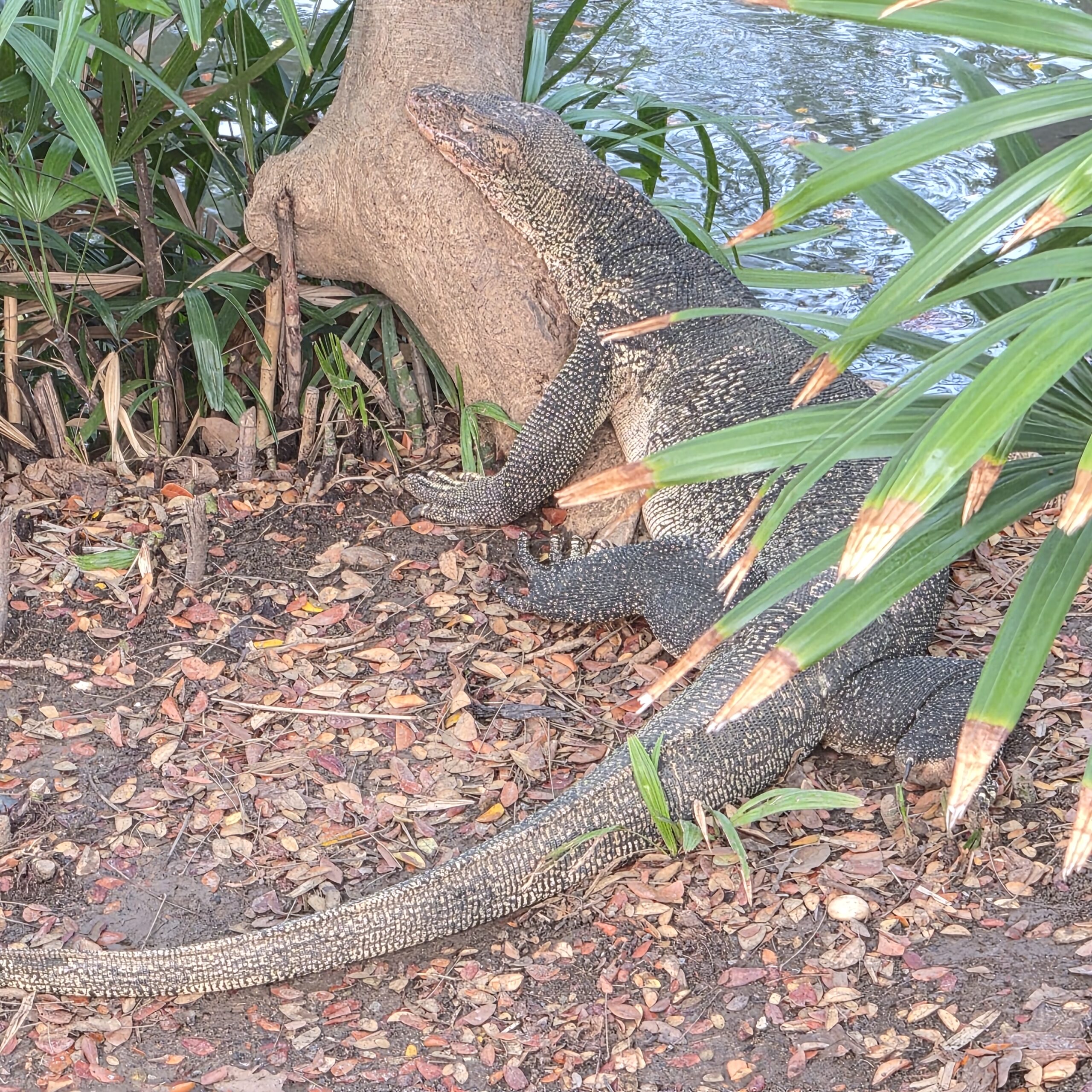
    Central Bangkok’s green lung, open daily from 4.30am to 9pm. Children watch for monitor lizards, large wild reptiles near the canals: shy, but nobody touches them. Swan pedal boats on the lake cost about 40 baht per half hour (check on the spot), and there are two playgrounds. Getting there: BTS Sala Daeng, MRT Si Lom or Lumphini.

    5. Benjakitti Park

    Free entry, open from 5am to 9pm. Its 1.67 km elevated skywalk is a hit with children, and you can hire bikes for 3.4 km of cycle paths. MRT Queen Sirikit National Convention Centre is right next door.

    6. A boat on the Chao Phraya

    The Chao Phraya Tourist Boat leaves Sathorn Pier (BTS Saphan Taksin) roughly every 30 minutes, with a cheap day pass. Free under 90 cm. Express boats are more crowded, so hold little ones tight when boarding. Details in my guide to getting around Bangkok.

    #Thailand #Bangkok #ThailandTravel #TravelTips #Asia #MrSchaka

    Out of the centre and at the markets

    7. Safari World

    About 40 km from the centre, in two parts: the Safari Park, seen from a vehicle among the animals, and the Marine Park, on foot, with the shows. Closed on Mondays; open from 9am until around 4pm on weekdays and 5pm at weekends. Combined ticket at the counter: about 1,500 baht per adult and 1,400 per child, less online (prices checked in 2026). Free under 100 cm.

    8. Dream World

    This theme park lies north of Bangkok, towards Rangsit. Rides, an artificial snow zone and shows, best for older children. Usually open 10am to 5pm on weekdays, 6pm at weekends. Expect over 1,000 baht per adult, and check before you go.

    9. Chatuchak Market

    The huge weekend market, Saturdays and Sundays from 9am to 6pm (MRT Kamphaeng Phet or Chatuchak Park, BTS Mo Chit). Come between 9am and 11am: fewer crowds, less heat.

    10. Air-conditioned shopping centres

    In the early afternoon, when the heat flattens the city, shopping centres become refuges: clean toilets, children’s areas, food courts.

    Two places to check. The two Children’s Discovery Museums (Chatuchak and Thung Khru) have been closed since 1 October 2026 while a new operator is found; no reopening date has been announced. And several sites report KidZania at Siam Paragon as closed, so check before promising it to the children.

    Heat, pushchairs, transport and health

    It is hot all year round. Do outdoor outings early in the morning or late in the afternoon, and air-conditioned places in the middle of the day. To pick your dates: the best time to visit Bangkok.

    Pavements are often narrow, broken or cluttered. A light folding pushchair helps; a baby carrier is often more practical. Not every BTS exit has a lift; the newer MRT lines are better equipped, with wide gates for pushchairs.

    On the BTS and MRT, children under 90 cm ride free. Above that, it is full fare on the BTS (17 to 65 baht per journey); the MRT offers a half-price child card for under-14s measuring 91 to 120 cm (check at the station). Avoid rush hours, roughly 7am to 9.30am and 4pm to 7pm on weekdays.

    Health: the French authorities advise sealed bottled water, avoiding doubtful ice and raw food, and protecting yourself from mosquitoes (dengue), especially in the rainy season: light, covering clothes, repellent, air conditioning or a mosquito net. For vaccinations and products suited to your children’s ages, see your doctor before you travel.

    Mr Schaka’s practical tips

    • One big outing a day, no more. The rest: pool, nap, park.
    • Water and a snack always in the bag.
    • Hat, sun cream, light clothes for every outing outdoors.
    • Grab or a metered taxi where neither BTS nor MRT goes.
    • Your phone number in the children’s pockets at the market.

    Frequently asked questions

    Is Bangkok suitable for young children?

    Yes, if you adapt the pace. Parks, the aquarium, boats and shopping centres suit even toddlers.

    Do children pay on the BTS and MRT?

    Free under 90 cm. Above that, full fare on the BTS; the MRT has a half-price child card, with conditions.

    What can we do when it rains or it is too hot?

    SEA LIFE at Siam Paragon, Museum Siam (closed on Mondays) and shopping centres with children’s areas.

    Cover of Bangkok – The Practical Guide

    To go further

    Mr Schaka’s guidebook, Bangkok – The Practical Guide, covers the essentials: transport, neighbourhoods, addresses, food, etiquette and safety, updated for 2026–2027.
  • Loy Krathong 2026: Where to Celebrate in Bangkok and Chiang Mai

    Loy Krathong 2026: Where to Celebrate in Bangkok and Chiang Mai

    Loy Krathong 2026 falls on Tuesday 24 November, the night of the full moon. It is one of the most beautiful nights of the year in Thailand: thousands of small lights drift across the water, and in Chiang Mai the sky fills with lanterns for Yi Peng. Here is where and how to enjoy it without getting lost in the crowds.

    Loy Krathong 2026: the key dates

    Loy Krathong is held on the full-moon night of the 12th month of the Thai lunar calendar. In 2026, that means Tuesday 24 November.

    Yi Peng, the lantern festival of the North (Lanna), falls on the same full moon. In Chiang Mai, celebrations usually run over three evenings around 24 November. The city’s official programme is published a few weeks beforehand, so check it before you book.

    Late November is also the start of the dry season: see the best time to visit Bangkok.

    What is a krathong?

    A krathong is a small round float, traditionally made from a slice of banana trunk and decorated with folded banana leaves and flowers. People add a candle, three incense sticks, and sometimes a coin, a lock of hair or a nail clipping.

    It is placed on the water to thank the water goddess, Phra Mae Khongkha, and to ask forgiveness for polluting the rivers. People also make a wish and let the year’s worries float away.

    Choosing a krathong that respects the water

    Polystyrene krathongs are banned in Bangkok’s parks. Choose one made from banana trunk or leaves, which breaks down quickly. Bread krathongs exist too, but the city advises against them in the parks’ closed ponds, as leftover food pollutes the water.

    Good news: of more than 514,000 krathongs collected in Bangkok in 2024, around 98% were made from natural materials.

    Where to float your krathong in Bangkok

    Along the Chao Phraya

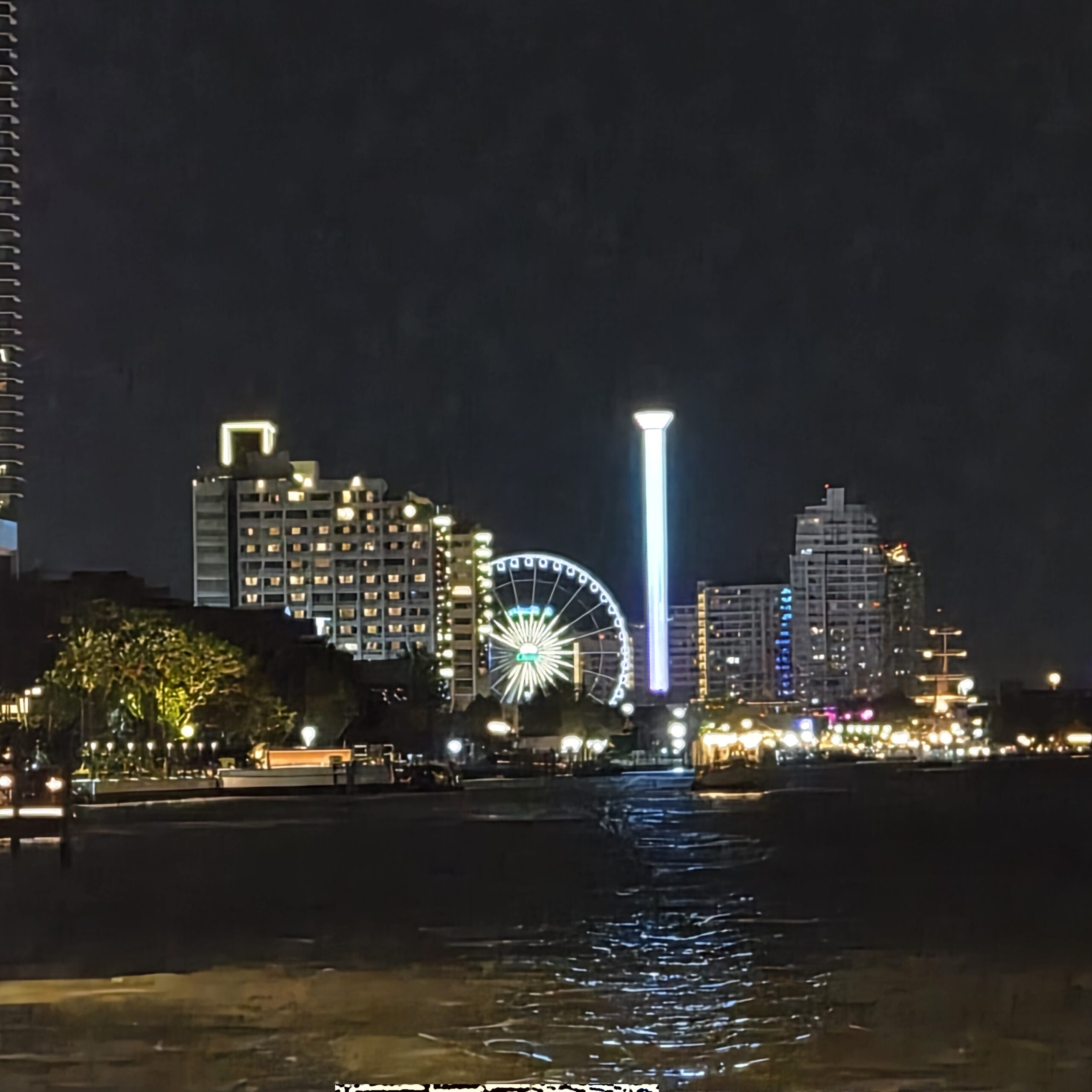
    The river is the heart of the festival. In recent years, the Bangkok River Festival has brought several piers to life: Wat Arun, Wat Pho, Tha Maharaj, ICONSIAM and Asiatique The Riverfront. Asiatique is very lively, but also very crowded.

    For Asiatique, take the BTS to Saphan Taksin, then the free shuttle boat from Sathorn Pier (about 10 minutes). For ICONSIAM, the Gold Line runs from Krung Thon Buri.

    In the parks: Lumphini, Benjakitti and more

    In 2025, the city opened 33 public parks until midnight for Loy Krathong. Lumphini (MRT Lumphini or Silom, BTS Sala Daeng) is the most central. Benjakitti, with its large lake, is a short walk from MRT Queen Sirikit National Convention Centre. Benchasiri and Santichaiprakarn are other options.

    Sky lanterns, fireworks, firecrackers and alcohol sales are banned in the parks. The atmosphere there is calmer and more family-friendly. To get around easily that night, read our guide to getting around Bangkok by BTS, MRT and boat.

    #Thailand #Bangkok #ThailandTravel #TravelTips #Asia #MrSchaka

    Yi Peng in Chiang Mai: the lanterns and the rules

    Yi Peng is the festival of paper lanterns, khom loi, released into the sky. In town, the highlights are the lantern decorations in the temples, the grand krathong parade from Tha Phae Gate to the city hall, and krathongs on the Ping River and the Old City moat.

    Releasing a lantern: watch out for no-go zones

    You cannot release a lantern wherever you like. In 2025, the authorities banned lanterns and fireworks in air-safety zones covering the whole of Mueang Chiang Mai district, Hang Dong and parts of four other districts. Offenders faced up to five years in prison and a fine of up to 200,000 THB. Temples such as Wat Phan Tao and Wat Chedi Luang, right in the Old City, are worth visiting for their decorative lanterns and ceremonies, not for releasing your own.

    Flights are affected too: in 2025, more than 160 flights were cancelled or rescheduled at Chiang Mai, with the last departure at 7pm. Check yours.

    Ticketed events

    To release a lantern legally, you need to join an authorised event outside the city. Tickets often cost roughly 2,500 to 9,000 THB depending on the package, sometimes including transport and a meal (prices checked in 2026, to be confirmed). They often sell out months ahead. Buy from the official website or a reputable agency: fake tickets are around.

    Mr Schaka’s practical tips

    • Arrive early: around 6pm you can still find a spot by the water. After 8pm, it is a crush.
    • Skip the car and taxi: roads near the river jam up. The metro and the boat are far quicker.
    • Buy your krathong on the spot from street vendors, and pick a banana-leaf one.
    • Keep an eye on your belongings and agree on a meeting point: the mobile network gets overloaded.
    • Take care by the water: the banks are slippery and packed, so hold children’s hands.
    • In Chiang Mai, book early: hotels and flights fill up months before Yi Peng.

    Frequently asked questions

    When is Loy Krathong 2026?

    Tuesday 24 November 2026, the night of the full moon. In Chiang Mai, Yi Peng is celebrated the same night, with several evenings of festivities around it.

    Can you release a lantern in Bangkok?

    No. Sky lanterns are banned in Bangkok’s parks, and the city strictly controls lanterns and fireworks. In Bangkok, you float a krathong.

    Do you have to pay to take part?

    Not for Loy Krathong: the parks and most riverbanks are free, and you only need to buy a krathong. To release a lantern in Chiang Mai, however, you need a ticket for an authorised event.

    Cover of Chiang Mai and the North – The Practical Guide

    To go further

    Mr Schaka’s guidebook, Chiang Mai and the North – The Practical Guide, covers the essentials: transport, neighbourhoods, addresses, food, etiquette and safety, updated for 2026–2027.
  • Thailand travel over 50: pace, comfort and pleasant surprises

    Thailand travel over 50: pace, comfort and pleasant surprises

    Thailand travel over 50 is entirely possible, and often more enjoyable than at 25: you take your time and choose better. The secret comes down to three things: pace, comfort and good preparation. Here is what really works on the ground.

    Choose your season: the heat decides everything

    According to the Thai government’s official portal, the country has three seasons. The hot season runs from mid-February to mid-May, with highs often between 35 and 39°C, sometimes above 40°C around mid-April. The rainy season lasts from mid-May to mid-October. The cool season, from mid-October to mid-February, is the gentlest on the body.

    If you struggle with heat, aim for November to January. Evenings are more pleasant, especially in the north. For a month-by-month breakdown, read our article on the best time to visit Bangkok.

    Pace your days

    Do as the Thais do. Go out early, between 7am and 11am: markets, temples, walks. Between noon and 4pm, head back somewhere cool for a nap or some time by the pool. Go out again around 5pm, when the light softens: night markets, the riverside, dinner outdoors. One big visit a day is enough.

    Comfortable destinations

    There is no need to rush around the whole country. Four places are ideal for a relaxed trip.

    • Bangkok: get around by BTS, the air-conditioned Skytrain, rather than walking in full sun. It is all explained in our guide to getting around Bangkok.
    • Hua Hin: a quiet seaside town about 200 km south-west of Bangkok, or 3 to 3.5 hours by road. Beach, walks and a family atmosphere.
    • Chiang Mai: a manageable northern city, cooler in the dry season, full of temples and cafés. About 1 hour 10 minutes by air from Bangkok.
    • Koh Samui: a well-equipped island with its own airport. About 1 to 1.5 hours by air from Bangkok, with no bus-and-ferry marathon.

    Two or three stops in three weeks is a good pace. Every change of hotel costs half a day of energy.

    Travel and sleep without wearing yourself out

    Transport

    For long distances, domestic flights are the most restful option: flights often last little more than an hour. The night train is still a wonderful experience. Between Bangkok and Chiang Mai, it leaves from Krung Thep Aphiwat station and takes about 12.5 to 13.75 hours. Book a lower berth, which is wider. In air-conditioned second class, expect roughly 760 to 1,040 THB; in first class, in a private compartment, roughly 1,250 to 1,650 THB depending on the train (prices noted in 2026, check when booking).

    In town, the Grab app lets you order a car with the fare shown in advance.

    Hotels

    Check three things before booking: a lift, a room not too far from it, and a BTS station or taxi rank nearby. Many charming small hotels only have stairs.

    #TheSeasonOfBreath #Thailand #TravelStory #TrueStory #MrSchaka

    Health, insurance and long stays

    Before you leave, see your GP a few weeks in advance. Take your prescriptions and enough medication, in the original packaging, in your hand luggage. Take out travel insurance covering medical costs and repatriation: Bangkok’s private hospitals have a good reputation, but they are expensive. Read the policy’s age limits carefully.

    Staying longer

    Since 15 September 2026, visa-free stays for tourists, including Belgian and French nationals, have been cut from 60 to 30 days. To spend the whole winter there, you will need a visa.

    The Non-Immigrant O-A (long stay) visa still exists in 2026 for people aged 50 and over. According to the Royal Thai Embassy in Vienna, it requires, among other things, 800,000 THB in a bank account or a monthly income of at least 65,000 THB, health insurance of at least 3,000,000 THB (or 100,000 USD), a criminal record certificate and a medical certificate. It allows a one-year stay, with a report to immigration every 90 days. Applications are made online through the official e-Visa website. The rules change often, so always check with the Thai embassy in your country before booking.

    A culture that respects age

    A pleasant surprise: in Thailand, age commands respect. Younger people greet their elders first, with the wai, palms pressed together. On the BTS, some seats are reserved for older passengers, and people will often offer you one. You may be called “lung” (uncle) or “pa” (auntie), an affectionate term. Return the courtesy: a wai, a smile, some patience.

    Mr Schaka, himself in his fifties, told the story of his own three months in Thailand in “La Saison du souffle”.

    Mr Schaka’s practical tips

    • Just one big visit a day, ideally in the morning.
    • Always carry a bottle of water, a hat and sun cream in your bag.
    • A lower berth on the train, an aisle seat on the plane so you can stand up easily.
    • Light, closed shoes: Bangkok’s pavements are often uneven.
    • A photo of your prescriptions and insurance policy on your phone.
    • A full day of rest after every long journey.

    Frequently asked questions

    What is the best time for Thailand travel over 50?

    The cool season, from mid-October to mid-February, and especially November to January. If possible, avoid April, the hottest month.

    Can I stay in Thailand for three months without a visa?

    No. Since 15 September 2026, the visa exemption has been 30 days for Belgian and French nationals. For a long stay, check with the Thai embassy.

    Is the O-A visa only for retirees?

    No, it is open from age 50, provided you meet the financial, insurance and criminal record requirements.

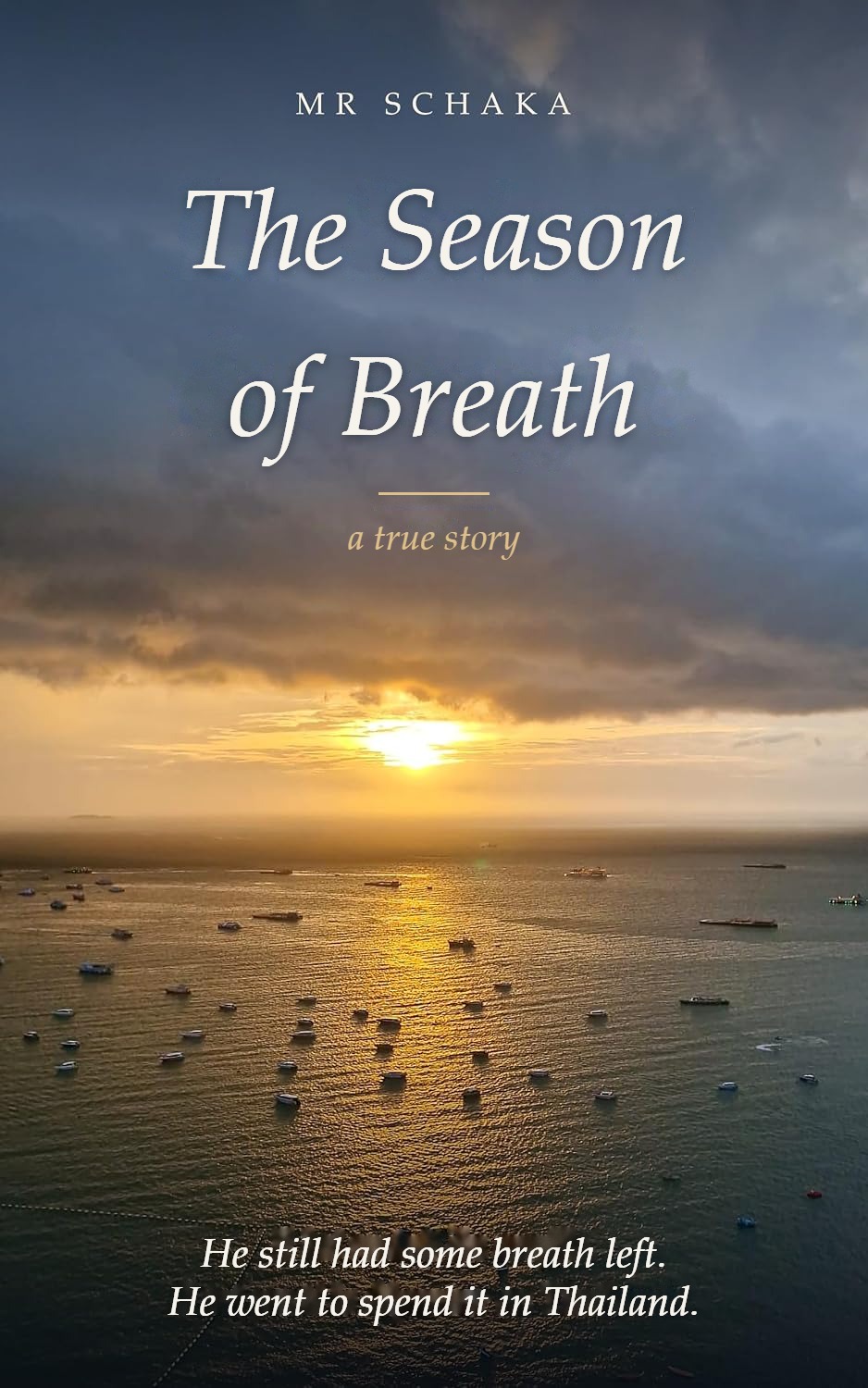
    Cover of The Season of Breath

    The book

    Mr Schaka lives with pulmonary fibrosis and has been travelling in Thailand for years. In The Season of Breath he tells the story of that journey, one step at a time, with humour and no self-pity.

  • Krabi Railay and Ao Nang: the practical guide

    Krabi Railay and Ao Nang: the practical guide

    Limestone cliffs dropping into turquoise water, wooden boats pulled up on the sand, islands half an hour away by boat: Krabi province, on the Andaman Sea, leaves few travellers indifferent. This Krabi Railay guide covers the essentials: choosing between Ao Nang and Railay, the beaches, the Tiger Cave Temple, boat trips, nearby Koh Lanta, the best season and how to get there. Prices were checked in 2026: confirm them locally.

    Getting to Krabi Railay: plane, bus and boat

    Krabi has no train station. Flying from Bangkok is the easiest option, but the night bus and night train suit tighter budgets.

    • Plane: about 1 h 20 from Bangkok (Don Mueang or Suvarnabhumi), with many flights a day. Book a few weeks ahead and tickets often cost between 900 and 2,000 THB.
    • Night bus: 11 to 12 hours from Bangkok’s Southern Bus Terminal (Sai Tai Mai), about 700 to 1,100 THB depending on the class.
    • Train + bus: night train to Surat Thani (Phun Phin station), then a bus or minivan to Krabi. Allow 14 to 15 hours in total.
    • Airport to Ao Nang: the shuttle bus costs about 150 THB (40 to 60 minutes). A pre-booked private car or a Grab ride starts at around 500 THB.

    Ao Nang or Krabi Town: where to stay

    Ao Nang is the beach resort on the coast, about 40 minutes from the airport: hotels at every price, restaurants, tour agencies and a decent beach. Above all, it is where the longtail boats to Railay and most island trips leave from. Next door, Noppharat Thara beach is quieter.

    Krabi Town, some twenty kilometres away, feels more Thai and costs less, with a lively night market, but it is far from the sea. It is, however, close to the Tiger Cave Temple. Mr Schaka recommends Ao Nang for a first stay, and Railay for two or three nights if your budget allows.

    Railay, Phra Nang and Tonsai: the peninsula with no road

    Railay is not an island: it is a peninsula cut off from the mainland by cliffs. No road leads there, so you can only arrive by boat. From Ao Nang, the longtail to Railay West costs 100 THB per person during the day (200 THB return), a little more in the evening. The boat leaves once it has about eight passengers. You get off in the water, often knee-deep: wear sandals and keep your bag above your waist. With heavy luggage, it is better to leave from Ao Nam Mao pier, which serves Railay East via a floating jetty.

    • Railay West: white sand, huge cliffs, sunsets. Hotels here cost more.
    • Railay East: a mangrove shore, not good for swimming, but cheaper places to stay.
    • Phra Nang: Railay’s postcard beach, about ten minutes on foot from Railay East. At the end of the beach, the Princess Cave is a local shrine covered in offerings: please be respectful. Come early, as crowds build from 11 am.
    • Tonsai: the neighbouring cove, simpler and quieter, a favourite with climbers. A ten-minute jungle trail links it to Railay: wear closed shoes, and never walk it at night.

    Railay is also a major climbing spot, with hundreds of bolted routes and schools that guide beginners. The viewpoint and lagoon trail above Railay East is an almost vertical climb with ropes: only for fit people with good shoes.

    Good to know: after sunset, longtails become rare and you may have to charter a boat for several hundred baht. If you sleep in Ao Nang, keep your return ticket and head back before dark.

    Tiger Cave Temple: 1,260 steps to the top

    Wat Tham Suea, or the Tiger Cave Temple, is about 9 km from Krabi Town and some thirty minutes from Ao Nang. Its staircase has about 1,260 steps (an old sign still says 1,237). You climb roughly 300 metres, in 40 minutes to an hour depending on your fitness. At the top: a large golden Buddha and a 360-degree view over the forest and limestone peaks.

    • Free entry, donations welcome.
    • Cover shoulders and knees. Sarongs can be rented on site.
    • Macaques live at the bottom of the stairs: keep your bag closed and no food in your hands.
    • Climb early in the morning or late in the afternoon, with water: at midday the heat makes it much harder.

    This climb takes real effort. If you have a heart or breathing condition, talk to your doctor before your trip, and read our tips on travelling in Thailand when you are short of breath.

    #Thailand #Bangkok #ThailandTravel #TravelTips #Asia #MrSchaka

    Boat trips: 4 Islands, Hong Islands and Koh Lanta

    Ao Nang’s agencies all sell the same classics. Compare prices and always ask whether the national park fee is included.

    • 4 Islands tour: Phra Nang, Koh Tup and Koh Mor (linked by a sandbar at low tide), Chicken Island (Koh Kai) and Koh Poda. By shared longtail, expect about 600 to 1,200 THB, a little more by speedboat. The fee for Hat Noppharat Thara – Mu Ko Phi Phi National Park is often extra: 400 THB per foreign adult, in cash (check before you go).
    • Hong Islands: north-west of Ao Nang, with an inner lagoon ringed by cliffs. Expect around 800 to 2,000 THB depending on the boat and trip length. These islands belong to another national park, with its own entrance fee.

    Koh Lanta, further south, is a large island with long beaches and a slow pace, perfect to end a trip. From roughly November to April, speedboats link it to Ao Nang in 1 h 30 to 2 h. All year round, a minivan with a car-ferry crossing takes about 3 hours, for 250 to 600 THB depending on the operator. To compare with other islands, see which Thai island to choose.

    When to go to Krabi?

    The best period is November to April: dry weather, calm sea, daily boat trips. December and January are the busiest and most expensive months; February to April is a good compromise. From May to October, the south-west monsoon brings showers and wind. It is often sunny between the rains, but the sea can be rough: trips get cancelled and some boats to Koh Lanta stop running. In return, you get fewer crowds and cheaper hotels. For a month-by-month view, see the best time to visit Thailand.

    Good to know: almost every trip to Krabi goes through Bangkok. For your days in the capital, Mr Schaka’s free app Thaïlande en poche installs straight from the website and brings together the guide’s maps and addresses.

    Frequently asked questions

    Can you drive to Railay?

    No. Railay is surrounded by cliffs and no road leads there. You go by longtail from Ao Nang (100 THB during the day) or from Ao Nam Mao pier.

    How many steps does the Tiger Cave Temple have?

    About 1,260 steps, for nearly 300 metres of climbing. Allow 40 minutes to an hour to reach the top.

    Should I stay in Ao Nang or Railay?

    Ao Nang is more practical and cheaper. Railay offers the scenery and quiet evenings. Many travellers do both.

    What is the best season for Krabi?

    November to April, during the dry season. From May to October the sea is rougher and some boat services are suspended.

    Cover of Krabi, Koh Phi Phi and Koh Lanta – The Practical Guide

    Want to dig deeper?

    Mr Schaka’s guidebook, Krabi, Koh Phi Phi and Koh Lanta – The Practical Guide, covers the essentials: transport, neighbourhoods, addresses, food, etiquette and safety, updated for 2026–2027.
  • Phuket guide: how to choose your beach and plan your stay

    Phuket guide: how to choose your beach and plan your stay

    Phuket, Thailand’s largest island, is much more than Patong. Quiet coves, a long wild beach in the north, a Sino-Portuguese old town and boat trips on the Andaman Sea: your stay depends on where you unpack. This Phuket guide helps you pick the right beach, the right season and the right way to get around, so you don’t waste time once you arrive.

    Phuket guide to the beaches: which one suits you?

    The west coast has the island’s best beaches. Mr Schaka’s advice: choose the atmosphere first, then the hotel.

    • Patong: the best known and the busiest. Crowded shopping streets, heavy traffic, noise late into the night. Handy if you want everything within walking distance, but best avoided if you want peace and quiet. The north end of the bay is a little calmer.
    • Kata: probably the best all-rounder. Relaxed mood, restaurants nearby, calm sea in high season. Ideal for a first visit or for families. Its little neighbour, Kata Noi, is even quieter, with snorkelling near the rocks.
    • Karon: a long, wide beach that rarely feels full. It sits just south of Patong but is far less hectic. Take care with currents during the monsoon.
    • Kamala: a village with a more local feel, markets and a calm beach in high season. Popular with families and couples.
    • Nai Harn: in the south, a crescent bay framed by green hills, with a lake just behind it. Many people consider it one of Phuket’s most beautiful beaches. Perfect for an early-morning swim.
    • Mai Khao: at the northern tip, about 11 km of almost wild sand inside Sirinat National Park. Sea turtles come here to nest. Very quiet, only a few large resorts, and the airport is close by. The water gets deep quickly: swim only on calm days.

    Good to know: on the west coast, a red flag means no swimming. During the monsoon, from May to October, rip currents are common, especially at Karon, Kata and Mai Khao. Always follow the flags and the lifeguards’ instructions, even when the sea looks calm.

    When to go to Phuket

    Phuket lies on the Andaman Sea, so its calendar is not the same as Koh Samui’s in the Gulf of Thailand. The dry season runs from November to April: calm sea, clear skies, ideal conditions for swimming and boat trips. December and January are the most popular months, and the most expensive. From late January to April the sea is often at its calmest, with slightly fewer visitors.

    From May to October, the southwest monsoon brings rain and wind. Showers are often short, but the sea is rough, some trips are cancelled and prices drop. April and May are the hottest months. To compare with the rest of the country, read our guide to the best time to visit Thailand, month by month.

    Phuket Town, the old town not to miss

    Away from the bustle of the beaches, Phuket Town tells another story: that of the Chinese merchants who came with the tin trade. Around Thalang Road, colourful Sino-Portuguese shophouses are home to cafés, small shops and workshops. Little Soi Romanee, a very photogenic lane, is right next door.

    On Sunday afternoons, Thalang Road becomes pedestrian for the “Lard Yai” market, meaning “big market” in the southern dialect: local specialities, sweets, handicrafts and street musicians. Entry is free. Arrive around sunset, before the crowds.

    Big Buddha: a view over the whole south of the island

    On Nakkerd Hill, between Kata and Chalong, the Big Buddha stands 45 metres tall. Covered in white Burmese marble, it can be seen from far away. From the terraces, the view stretches over Kata, Karon and Chalong Bay.

    • Opening hours: usually daily from 9 am to 6 pm, last entry around 5:30 pm.
    • Free entry, donations welcome.
    • Dress modestly: shoulders and knees covered. Sarongs are lent at the entrance.
    • Go in the morning: the terraces are in full sun.

    Good to know: access to the Big Buddha has been changed or closed several times since 2024, especially after heavy rain. Check that it is open on the day before you drive up.

    Wat Chalong, the island’s best-known temple, lies below the hill, so both visits fit easily into the same half-day.

    #Thailand #Bangkok #ThailandTravel #TravelTips #Asia #MrSchaka

    Day trips: Phang Nga Bay and the Phi Phi Islands

    The two big sea trips are best done in the dry season. Book with a reputable agency and check what is included.

    Phang Nga Bay, northeast of Phuket, is famous for its limestone pinnacles rising out of green water. Tours stop at Khao Phing Kan, the famous “James Bond Island”, and often at Koh Panyee, a Muslim fishing village built on stilts. Sea canoeing takes you into caves and mangroves that boats cannot reach.

    The Phi Phi Islands are about 2 hours by ferry from Rassada Pier (roughly 450 to 600 THB one way), or under an hour by speedboat (roughly 850 to 950 THB). The famous Maya Bay is protected: swimming is no longer allowed, only knee-deep wading, and it closes every year in August and September. The national park fee is 400 THB per adult, often included in tours. Check prices and dates before you go.

    Still torn between Phuket and another beach destination? Our article on which Thai island to choose compares the options.

    Arriving in Phuket and getting around

    Phuket International Airport (HKT) is in the north of the island, next to Mai Khao and Nai Yang beaches. It handles many flights from Bangkok and direct flights from several Asian countries. Allow 45 minutes to 1 hour by road to Patong, a little longer to Kata or Karon.

    • Smart Bus: the main line runs from the airport to Rawai via Kamala, Patong, Karon and Kata. Around 100 THB per trip, roughly one departure an hour from morning to evening (check fares and times before you go). Slow but very cheap.
    • Taxi, metered or fixed-price, from the official counter: often roughly 600 to 1,200 THB depending on the beach. Check the price on the spot.
    • Shared minivan: around 150 to 200 THB, but you wait until it fills up.
    • Apps (Grab, Bolt): handy around the island to know the fare in advance.

    Public transport on the island is limited, so ride-hailing apps are the simplest option. Renting a scooter is common, but the roads are steep and busy: only do it with a valid licence and a helmet, and check your travel insurance. To fit Phuket into a longer trip, see our Thailand itinerary for 2 or 3 weeks.

    Frequently asked questions

    Which Phuket beach is best for peace and quiet?

    Kata Noi, Nai Harn, Kamala or Mai Khao. If you want rest, avoid staying in Patong.

    How many days should I spend in Phuket?

    Four to five days let you enjoy two beaches, visit Phuket Town and the Big Buddha, and take one or two boat trips.

    Can you swim in Phuket during the monsoon?

    On some days, yes, but the sea on the west coast is often rough from May to October. Always respect red flags.

    How do I get from Phuket airport to Kata?

    The Smart Bus (around 100 THB) is the cheapest option. For a faster trip, take an official taxi or book a transfer.

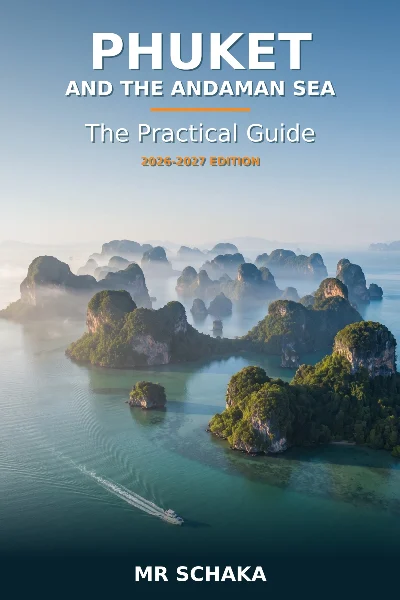
    Cover of Phuket and the Andaman Sea – The Practical Guide

    Want to dig deeper?

    Mr Schaka’s guidebook, Phuket and the Andaman Sea – The Practical Guide, covers the essentials: transport, neighbourhoods, addresses, food, etiquette and safety, updated for 2026–2027.
  • Thai Massage in Bangkok: History, Types and Good Habits

    Thai Massage in Bangkok: History, Types and Good Habits

    In Bangkok, there is a massage shop on almost every street corner. Thai massage is part of everyday life: people stop in after a long day on their feet, between two visits, or simply to relax. Behind this habit lies a real tradition, recognised by UNESCO. Here is where Thai massage comes from, the main types, typical prices in Bangkok and the right habits for choosing a trustworthy shop.

    Thai massage, a tradition recognised by UNESCO

    In Thai, it is called nuad thai (นวดไทย). In 2019, UNESCO inscribed it on the Representative List of the Intangible Cultural Heritage of Humanity. According to UNESCO, the practice grew out of village self-care: every community had its own massage healers, who eased the aches and pains of farm work. Over time, this knowledge became an organised system and a profession.

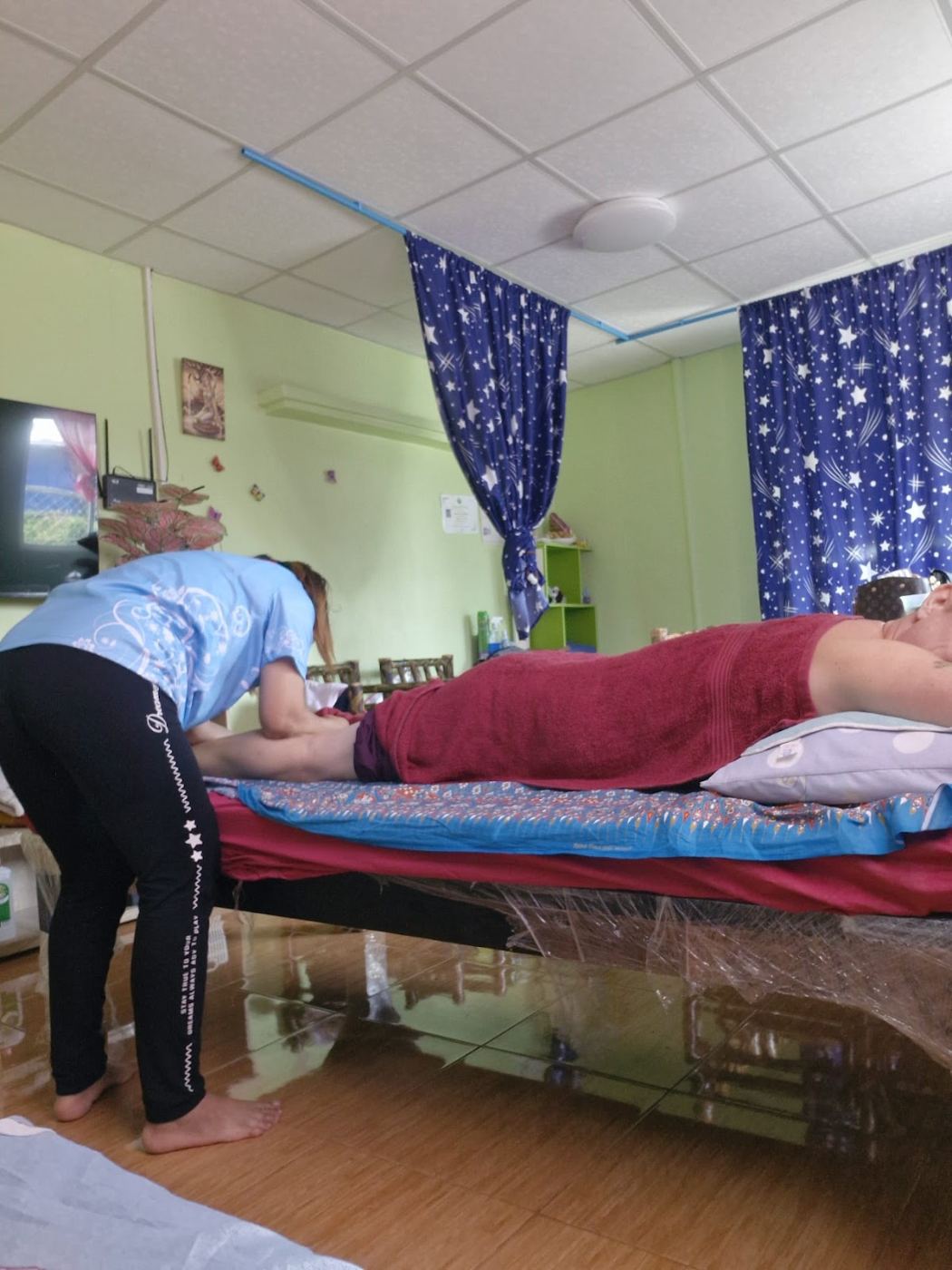
    Thai massage is part of traditional Thai medicine. It is based on the idea of energy lines, called sen, which the therapist works on with pressure and stretching. Therapists use their hands, but also their forearms, elbows, knees and sometimes their feet. You stay dressed, lying on a mattress on the floor, with no oil.

    Wat Pho, the home of Thai massage in Bangkok

    You cannot talk about Thai massage without mentioning Wat Pho, the Temple of the Reclining Buddha, right next to the Grand Palace. In the first half of the 19th century, under King Rama III, texts and diagrams of the body were carved on stone plaques there, to make traditional medical knowledge available to everyone. These Epigraphic Archives of Wat Pho have been on UNESCO’s Memory of the World Register since 2011.

    The temple is also home to a school of traditional medicine and massage, which has been training therapists since 1955 and offers courses, including for foreigners. Inside the temple grounds, massage pavilions welcome visitors. It is a lovely way to end your visit, but it often gets busy and there is no advance booking: sign up at the counter as soon as you arrive, then explore at your own pace.

    If you are planning your stay, Wat Pho is part of our 3-day Bangkok itinerary.

    The main types of massage

    On a shop’s menu, you will almost always find the same main options:

    • Traditional Thai massage: fully clothed, on the floor, with pressure and stretching. It can be firm. This is the classic one.
    • Oil massage (often listed as oil or aromatherapy): softer and smoother, on a table or mattress, with scented oils. It takes place in a private room or a curtained area.
    • Foot massage (reflexology): seated in an armchair, trousers rolled up to the knees. Ideal after a day of walking, and an easy first try.
    • Herbal compress massage: cloth bundles filled with herbs (lemongrass, turmeric, ginger…), steamed and pressed on the body. Often offered as an add-on to a Thai massage.
    • Head, neck and shoulder massage: short, often 30 minutes, handy between two visits.

    How much does a Thai massage cost in Bangkok?

    Prices depend on the area, the length and the type of place. Here are indicative ranges, checked in 2025-2026:

    • Neighbourhood shop: around 250 to 400 baht per hour for a Thai massage, a little less in residential areas and more on very touristy streets.
    • Foot massage: about the same rate, around 250 to 400 baht per hour, less for 30 minutes.
    • Wat Pho: around 340 baht for 30 minutes and 520 baht per hour (Thai or foot massage), on top of the temple entrance ticket (300 baht for foreign visitors).
    • Oil massage: a little more than a Thai massage in the same shop, often 350 to 500 baht per hour.
    • Spa: around 800 to 1,500 baht at the city’s spa chains; several thousand baht at luxury hotel spas.

    Prices are almost always displayed at the entrance. Tipping is not compulsory, but it is appreciated if you are happy: 50 to 100 baht for an hour is common, in cash, handed directly to your therapist. Rates change: check them on the spot before you sit down.

    Good to know: to find your way around the city, Mr Schaka’s free app Thaïlande en poche installs straight from the website. It brings together the maps and addresses from the guide, from Wat Pho to the neighbourhoods where you can rest after a day of sightseeing.

    #Thailand #Bangkok #ThailandTravel #TravelTips #Asia #MrSchaka

    How to choose a trustworthy shop

    In Bangkok, the vast majority of massage shops are honest places, used by locals and travelling families alike. A few simple signs help you choose well:

    • An open, well-lit shopfront, with the foot massage chairs visible from the street.
    • A clear price list at the entrance, with durations.
    • Clean premises, fresh linen and therapists in work uniforms.
    • A licence or certificate on the wall: a good sign.
    • Local customers: often the best indicator of all.
    • Be wary of pushy touts, or of an offer that changes once you are seated.

    Before you start, confirm the type of massage, the length and the price. To avoid the usual little traps, also read our article on Bangkok scams and how to avoid them.

    Etiquette: good habits during your session

    • Take off your shoes at the entrance. Many shops start by washing your feet.
    • Wear the clothes provided for a Thai massage: loose trousers and a top.
    • Say what feels right: bao bao (gently), nak nak (harder), jep (that hurts). Therapists are happy to adjust.
    • Mention any weak spots before you start: back, knees, recent surgery…
    • Avoid a heavy meal just before, and drink water afterwards.
    • Keep it calm: little talking, phone put away.

    These habits match everyday Thai courtesy, which we cover in our article on etiquette in Thailand.

    Thai massage and health: when to ask a doctor

    Thai massage can be firm, with stretches and deep pressure. It is not suitable for everyone. Thailand’s traditional medicine authorities advise against massage, or call for great caution, in cases such as:

    • fever, infection, open wounds or skin problems;
    • uncontrolled high blood pressure, heart or blood vessel disease, a history of blood clots;
    • taking blood thinners;
    • osteoporosis or fragile bones;
    • pregnancy;
    • cancer, poorly controlled diabetes or a recent injury.

    Important: this list is general and does not replace medical advice. If you have a chronic condition or any doubt, talk to your doctor before you travel. On the spot, choose a gentle massage, such as a foot massage, and always tell the therapist.

    Frequently asked questions

    Does Thai massage hurt?

    It can be firm, but it should not hurt. Say bao bao to ask for a gentler touch.

    How long does a Thai massage last?

    Usually one hour. Sessions of 30 minutes, 90 minutes or 2 hours are also common.

    Do I need to book?

    Not in a neighbourhood shop: just walk in and ask. In a spa, booking saves you a wait. Wat Pho does not take advance bookings, so go early.

    Can I bring children?

    Yes, foot massage is popular with families. Ask for light pressure for younger children and follow the shop’s advice.

    Cover of Bangkok – The Practical Guide, Mr Schaka’s practical guide to Bangkok

    Want to dig deeper?

    Wat Pho, its massage pavilions and the neighbourhoods where you can unwind after a day of sightseeing: Bangkok – The Practical Guide by Mr Schaka helps you plan your days in the capital. Available in English.