In Bangkok, there is a massage shop on almost every street corner. Thai massage is part of everyday life: people stop in after a long day on their feet, between two visits, or simply to relax. Behind this habit lies a real tradition, recognised by UNESCO. Here is where Thai massage comes from, the main types, typical prices in Bangkok and the right habits for choosing a trustworthy shop.
Thai massage, a tradition recognised by UNESCO
In Thai, it is called nuad thai (นวดไทย). In 2019, UNESCO inscribed it on the Representative List of the Intangible Cultural Heritage of Humanity. According to UNESCO, the practice grew out of village self-care: every community had its own massage healers, who eased the aches and pains of farm work. Over time, this knowledge became an organised system and a profession.
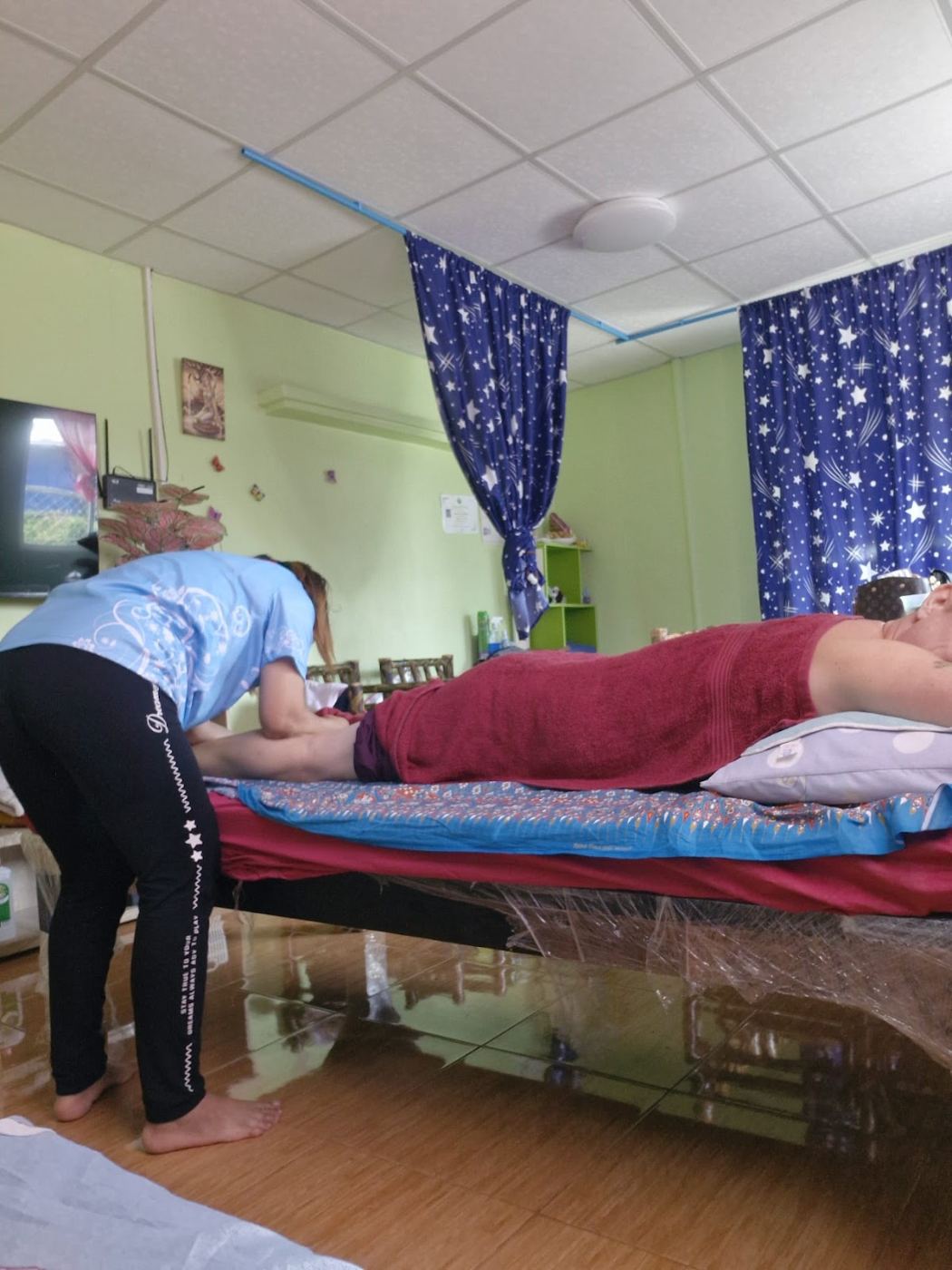
Thai massage is part of traditional Thai medicine. It is based on the idea of energy lines, called sen, which the therapist works on with pressure and stretching. Therapists use their hands, but also their forearms, elbows, knees and sometimes their feet. You stay dressed, lying on a mattress on the floor, with no oil.
Wat Pho, the home of Thai massage in Bangkok
You cannot talk about Thai massage without mentioning Wat Pho, the Temple of the Reclining Buddha, right next to the Grand Palace. In the first half of the 19th century, under King Rama III, texts and diagrams of the body were carved on stone plaques there, to make traditional medical knowledge available to everyone. These Epigraphic Archives of Wat Pho have been on UNESCO’s Memory of the World Register since 2011.
The temple is also home to a school of traditional medicine and massage, which has been training therapists since 1955 and offers courses, including for foreigners. Inside the temple grounds, massage pavilions welcome visitors. It is a lovely way to end your visit, but it often gets busy and there is no advance booking: sign up at the counter as soon as you arrive, then explore at your own pace.
If you are planning your stay, Wat Pho is part of our 3-day Bangkok itinerary.
The main types of massage
On a shop’s menu, you will almost always find the same main options:
- Traditional Thai massage: fully clothed, on the floor, with pressure and stretching. It can be firm. This is the classic one.
- Oil massage (often listed as oil or aromatherapy): softer and smoother, on a table or mattress, with scented oils. It takes place in a private room or a curtained area.
- Foot massage (reflexology): seated in an armchair, trousers rolled up to the knees. Ideal after a day of walking, and an easy first try.
- Herbal compress massage: cloth bundles filled with herbs (lemongrass, turmeric, ginger…), steamed and pressed on the body. Often offered as an add-on to a Thai massage.
- Head, neck and shoulder massage: short, often 30 minutes, handy between two visits.
How much does a Thai massage cost in Bangkok?
Prices depend on the area, the length and the type of place. Here are indicative ranges, checked in 2025-2026:
- Neighbourhood shop: around 250 to 400 baht per hour for a Thai massage, a little less in residential areas and more on very touristy streets.
- Foot massage: about the same rate, around 250 to 400 baht per hour, less for 30 minutes.
- Wat Pho: around 340 baht for 30 minutes and 520 baht per hour (Thai or foot massage), on top of the temple entrance ticket (300 baht for foreign visitors).
- Oil massage: a little more than a Thai massage in the same shop, often 350 to 500 baht per hour.
- Spa: around 800 to 1,500 baht at the city’s spa chains; several thousand baht at luxury hotel spas.
Prices are almost always displayed at the entrance. Tipping is not compulsory, but it is appreciated if you are happy: 50 to 100 baht for an hour is common, in cash, handed directly to your therapist. Rates change: check them on the spot before you sit down.
Good to know: to find your way around the city, Mr Schaka’s free app Thaïlande en poche installs straight from the website. It brings together the maps and addresses from the guide, from Wat Pho to the neighbourhoods where you can rest after a day of sightseeing.
How to choose a trustworthy shop
In Bangkok, the vast majority of massage shops are honest places, used by locals and travelling families alike. A few simple signs help you choose well:
- An open, well-lit shopfront, with the foot massage chairs visible from the street.
- A clear price list at the entrance, with durations.
- Clean premises, fresh linen and therapists in work uniforms.
- A licence or certificate on the wall: a good sign.
- Local customers: often the best indicator of all.
- Be wary of pushy touts, or of an offer that changes once you are seated.
Before you start, confirm the type of massage, the length and the price. To avoid the usual little traps, also read our article on Bangkok scams and how to avoid them.
Etiquette: good habits during your session
- Take off your shoes at the entrance. Many shops start by washing your feet.
- Wear the clothes provided for a Thai massage: loose trousers and a top.
- Say what feels right: bao bao (gently), nak nak (harder), jep (that hurts). Therapists are happy to adjust.
- Mention any weak spots before you start: back, knees, recent surgery…
- Avoid a heavy meal just before, and drink water afterwards.
- Keep it calm: little talking, phone put away.
These habits match everyday Thai courtesy, which we cover in our article on etiquette in Thailand.
Thai massage and health: when to ask a doctor
Thai massage can be firm, with stretches and deep pressure. It is not suitable for everyone. Thailand’s traditional medicine authorities advise against massage, or call for great caution, in cases such as:
- fever, infection, open wounds or skin problems;
- uncontrolled high blood pressure, heart or blood vessel disease, a history of blood clots;
- taking blood thinners;
- osteoporosis or fragile bones;
- pregnancy;
- cancer, poorly controlled diabetes or a recent injury.
Important: this list is general and does not replace medical advice. If you have a chronic condition or any doubt, talk to your doctor before you travel. On the spot, choose a gentle massage, such as a foot massage, and always tell the therapist.
Frequently asked questions
Does Thai massage hurt?
It can be firm, but it should not hurt. Say bao bao to ask for a gentler touch.
How long does a Thai massage last?
Usually one hour. Sessions of 30 minutes, 90 minutes or 2 hours are also common.
Do I need to book?
Not in a neighbourhood shop: just walk in and ask. In a spa, booking saves you a wait. Wat Pho does not take advance bookings, so go early.
Can I bring children?
Yes, foot massage is popular with families. Ask for light pressure for younger children and follow the shop’s advice.
Want to dig deeper?
Wat Pho, its massage pavilions and the neighbourhoods where you can unwind after a day of sightseeing: Bangkok – The Practical Guide by Mr Schaka helps you plan your days in the capital. Available in English.