
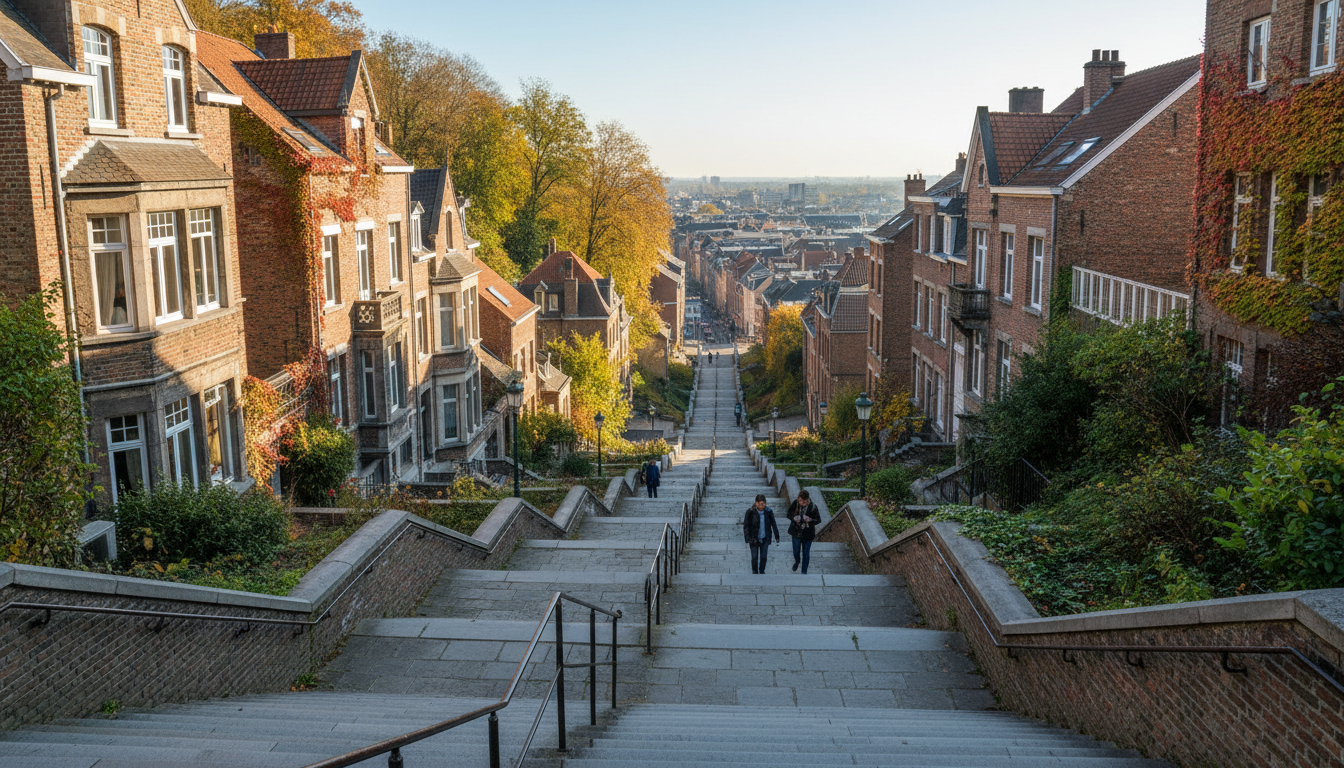
Minutes from central Liège, the Coteaux de la Citadelle form a network of paths, stairways, gardens and viewpoints. Busy streets below contrast with quiet passages above, where birds can sometimes be heard more clearly than traffic. The Montagne de Bueren is the best-known image, but it does not represent the whole area. Connect several places and accept that climbing is part of the walk.
A landscape shaped by hills
Liège developed in a valley crossed by the Meuse and surrounded by slopes. The Coteaux show how the city uses this terrain: streets, stairs, gardens and former religious spaces overlap. Marked routes connect dense neighbourhoods with greener areas. Access and routes may change, so check local tourism information before setting off.
This is not one single park, but a collection of places with different uses. You may cross a quiet garden, follow an old wall and emerge above the rooftops. A short loop can be rewarding; a complete route takes time and good shoes.
Montagne de Bueren: take your time
The steep staircase connects the lower neighbourhood to the heights. Climb at your own pace, use a handrail when available and leave room for residents. Breaks let you notice how the view changes. Nearby houses are homes: do not block doors, speak loudly beneath windows or photograph residents without permission.
Choose a suitable route
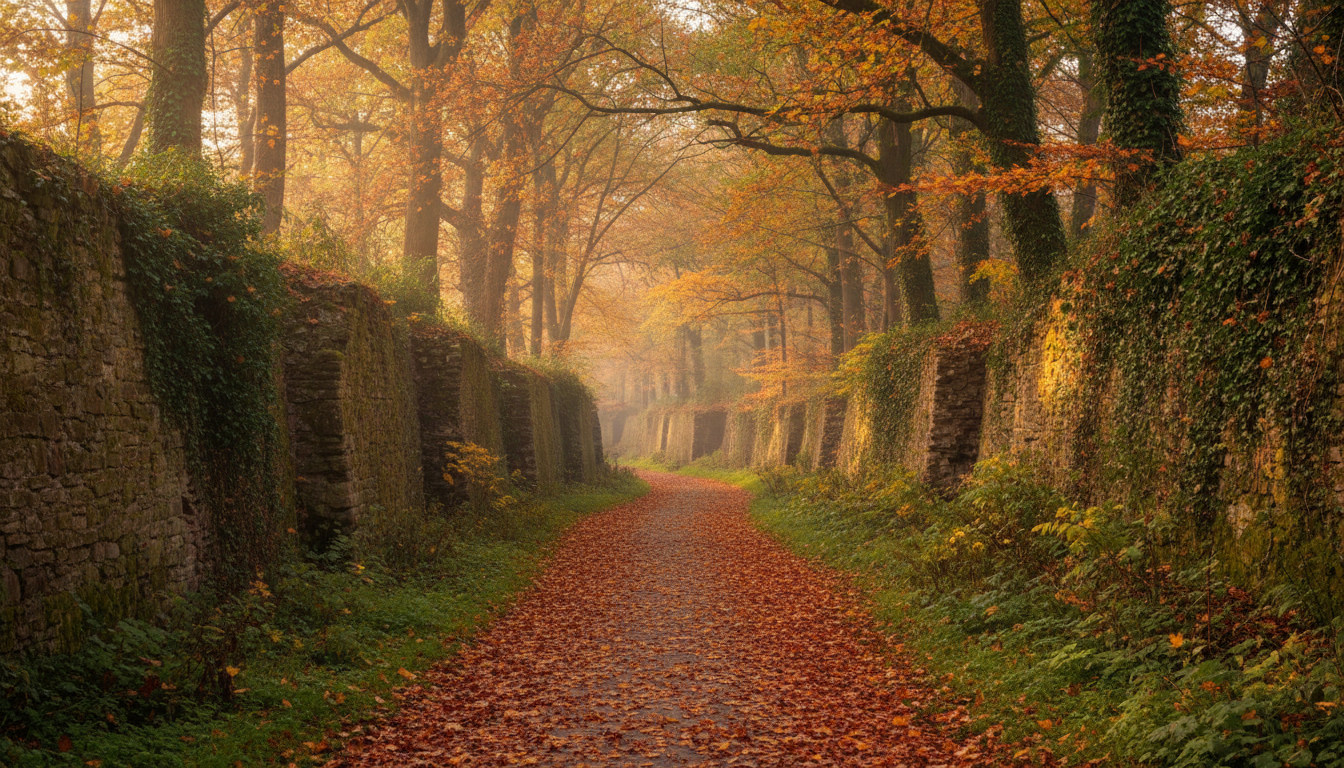
Check duration, elevation and stairs. A walk that looks short on a map may require real effort. For a relaxed outing, focus on the Terrasses des Minimes and a nearby viewpoint. Grippy shoes help on steps and cobbles; surfaces may be slippery after rain. In winter daylight fades early, while summer heat makes climbs harder.
Visitors with limited mobility and families with pushchairs should check the exact route. Paths are not equally accessible, and some stairs are difficult to bypass. The tourist office can suggest options. An urban walk is not automatically obstacle-free.
Terrasses des Minimes and other stops
The terraces offer gardens, remains and city views. Hours may vary by season; check before travelling, especially late in the day or in winter. Stay on open paths and respect closures. Depending on the loop, you may also discover Favechamps, the Bois des Carmélites or other passages. Local signs provide updates on works and access.
Read the views and respect the neighbourhood
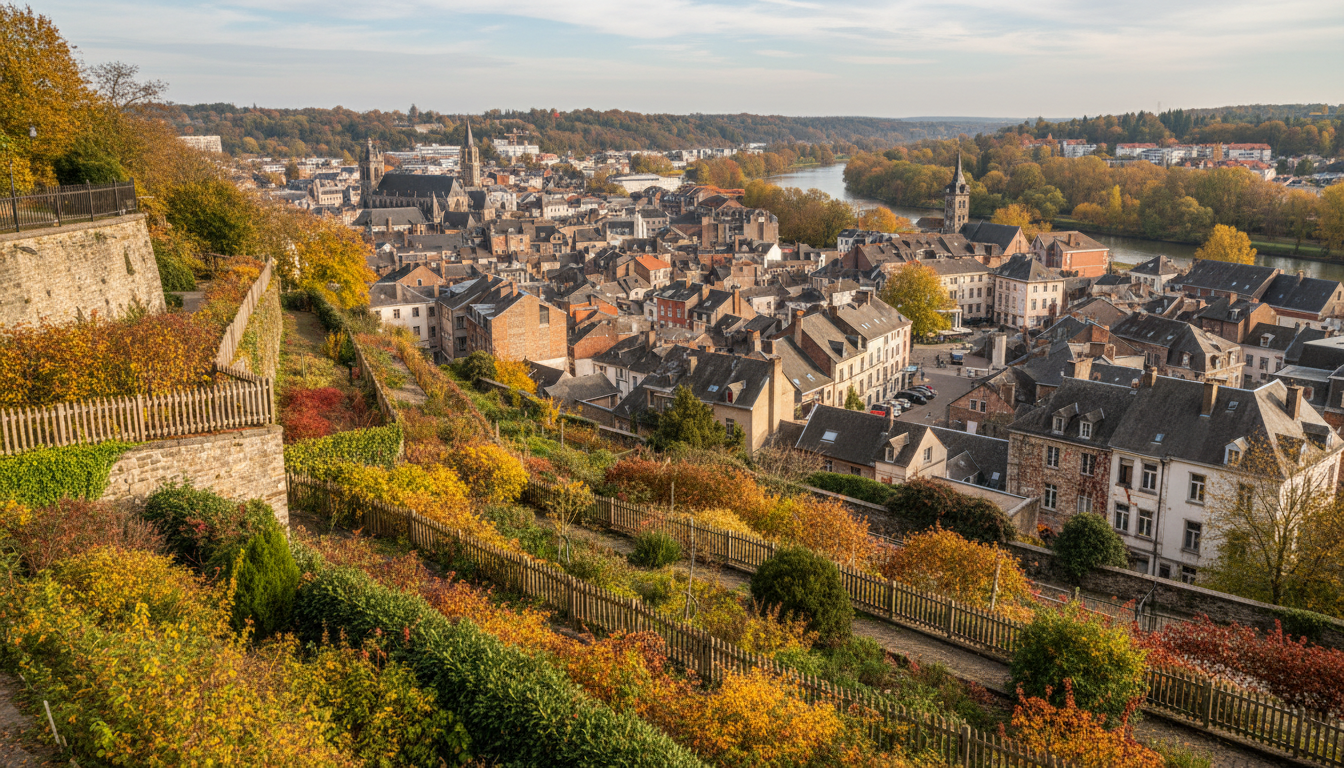
From above, spot church towers, rooftops, the Meuse and neighbourhoods in the valley. A viewpoint helps explain the city’s geography; take time to identify landmarks instead of thinking only about a photograph. Walls, enclosed gardens and old access routes also tell social and religious stories. A local guide adds context and signs help verify details.
The Coteaux are tourist heritage and a local amenity. Residents walk dogs and cross neighbourhoods. Keep dogs under control, clean up and do not block paths as a group. Avoid speakers, drones and shouting; quiet is part of the place’s value. Professional photography may require permission.
A half-day suggestion
Check weather, hours and works. Start on a marked path, pause at a viewpoint and climb Bueren if you wish. Continue to the terraces when open and look over the rooftops. Choose a return route whose difficulty you know: descending can strain knees and steps are slippery after rain. Start early in autumn and winter; in summer, choose morning or late afternoon.
FAQ
How long should I allow?
A short walk often takes one or two hours. A full route needs more time and energy.
Is Bueren difficult?
The staircase is steep. Go slowly, pause and choose another connection if you want to avoid steps.
Are the terraces always open?
Hours vary by season. Check official information on the day.
Can I use a pushchair?
Not everywhere. Stairs and uneven paths restrict access. Check the route first.
Your choice
Would you choose Bueren, the terraces or a quieter trail? Which walk would you recommend to a first-time visitor?
Preparing the walk for your needs
The Coteaux are close to the centre, but their elevation makes this different from a flat riverside stroll. Before setting out, check a map that shows stairs, slopes and links between sites. Note a starting point and a return option in case you get tired. Save the route offline; narrow or covered passages may weaken mobile reception. Check the weather too, since the heights can be windy and steps stay damp after showers. A little preparation prevents last-minute route decisions halfway up a staircase.
Choose closed shoes with grippy soles. Uneven steps, cobbles and roots need more attention than a flat pavement. Avoid wearing brand-new shoes on a long loop. Carry water and a light layer for wind; in summer, use sun protection, and in winter, start early enough to have daylight. If walking with children, agree on a shared pace and rest stops before leaving. Narrow passages are not a good place for a group to stop unpredictably.
Times shown on a sign may not include breaks, photographs or time spent looking around. Add a margin, especially if you want to visit several sites. For an after-work outing, choose one climb and a clear return route. A successful walk is not measured by the number of steps climbed. It should suit everyone’s energy so the last part does not feel forced.
Understanding the different parts of the Coteaux
The name can suggest one uniform loop, but each section has a different character. Designed terraces invite visitors to sit and look over rooftops; wooded paths require care around mud and roots; residential streets call for discretion. Signs and waymarking help, while a map explains how sites connect. If a path is closed for works or safety, do not try to bypass it through a garden, courtyard or private property.
Old walls, enclosed gardens and narrow access routes reflect successive uses of the hillside. Some are linked to religious institutions, others to defence or urban planning. They have changed over time, and not every story told about them is equally well documented. Consult tourism information or join a guided walk if historical context matters to you. In your own account, distinguish what you read on site from an anecdote you heard from a passer-by.
A viewpoint is more than a place to frame a picture. Look at the Meuse, church towers, rooftops and how neighbourhoods occupy the valley. A map can help identify landmarks, but take a moment away from your screen too. The landscape shows how the city developed around its slopes and river. This adds meaning to the walk and explains why the Coteaux are at once a green space, built heritage and everyday route.
Adapting the route to different needs
Accessibility should be checked for the whole route, not just the starting point. A loop may include stairs without a handrail, steep slopes or uneven surfaces. If you use a mobility aid or travel with a pushchair, ask the tourist office which sections are genuinely manageable and where alternatives exist. Conditions can change after works or bad weather. Having another route is not giving up; it helps everyone enjoy the outing.
Children can enjoy the Coteaux when the walk is divided into short stages. Give them an observation task, such as spotting a tower, comparing wall materials or finding a place name on a sign. This makes pauses part of the visit instead of waiting time. Bring a snack and keep a simple return option. Adults should not encourage children to run on stairs, where other people may be walking in either direction.
Dogs are allowed under rules that vary by area. Keep them under control, clean up after them and prevent them from running toward other walkers. Walk bicycles by hand in busy passages or where signs require it. Headphones that block all sound reduce awareness of pedestrians and traffic. Shared paths work when each person adjusts their pace and leaves room for others.
Visitors wishing to avoid stairs can focus on a single area reached by a gentler street, then enjoy a café or viewpoint without climbing farther. Ask for precise directions instead of assuming that a lift or ramp will be available. If one site is inaccessible, a nearby activity can still be rewarding. Confirm accessibility shortly before visiting because construction may change access.
Choosing the right time and checking openings
The Terrasses des Minimes have seasonal opening hours. In colder periods, access may end earlier than in summer; check the official information on the day. Do not build the whole outing around one terrace without a backup if it is closed. Nearby streets and paths can still be interesting, but stay on open routes and do not enter enclosed spaces.
Morning often brings pleasant light and less heat. Views may be attractive late in the day, but account for closing times and getting back before dark. After heavy rain, slow down and avoid muddy sections if your footwear is unsuitable. Events or construction may affect street access; check local notices before setting off.
The trip to the starting point deserves attention too. Identify the right bus stop or parking area and check your return journey. If arriving by car, follow parking rules and keep residential access clear. A well-chosen starting point avoids a stressful search and saves energy for the climbs. If combining the walk with a meal, check business hours and have a backup option.
Taking photographs without blocking the way
Views over Liège naturally attract photographers. At narrow viewpoints, wait your turn and do not leave a tripod blocking stairs. Ask before framing an identifiable person and avoid looking into home windows. Taking a picture from public space does not give permission to publish private details. If children are playing in a garden or residents are resting on a balcony, choose a frame that leaves them out.
Drones can disturb birds, residents and other visitors, and their use may be subject to specific rules. Check local requirements and do not fly over gardens or places of worship. Even when a flight is legal, people’s peace matters. Ground-level viewpoints offer many compositions already. Light and patience often make a better image than additional equipment.
The Montagne de Bueren is both a route and part of a living neighbourhood. Avoid poses that block steps, photographs requiring you to climb walls or long sessions in front of a doorway. If the staircase is busy, move somewhere less crowded. A good photograph should not interrupt people’s movement or expose residents. Follow signs about professional photography and events.
A flexible half-day
Check weather, opening times and announced works. Choose a route with a viewpoint and a terrace, with a possible shortcut back. Climb Bueren if you wish and feel able; otherwise, take another connection. Pause before exhaustion. Descents can strain knees, so keep a controlled pace and do not run on steps.
After walking, a café or meal in the neighbourhood can extend the visit without extra transport. Check opening times and respect working areas. Local businesses are part of daily life, but they are not a service guaranteed to visitors at every hour. For a group, choose a place that can accommodate everyone without blocking the pavement or disturbing other customers.
Afterwards, note the difficult sections and the parts you enjoyed. When sharing the route, mention the season, direction and stairs. A useful recommendation says who the walk suits. These details help older visitors, families and people with mobility needs make an informed choice. If opening times changed, include the date you checked and advise readers to confirm current information.
Taking time to look
The Coteaux are not a race between photo stops. The terrain sets the pace, gardens invite pauses and views reward attention. Walking slowly helps you notice transitions between neighbourhoods, historic traces and how residents use the paths. It gives an urban walk deeper meaning, even if you do not know Liège’s history in advance.
A considerate visit leaves the paths clean, respects quiet and does not turn residents into photographic subjects. It checks opening times instead of relying on an old post and adapts to the day’s weather. The best loop is one that lets you enjoy the landscape without disturbing others or exceeding your ability.
After the walk, share practical information you know to be accurate and flag details that may have changed. A specific note about shoes, elevation or opening hours is more helpful than a general superlative. Which detail would you tell someone discovering Liège: the staircase, the terraces, the gardens or the view over the Meuse?

The book
The Empty Wall is the second book of Oscar’s Notebook, a series of crime novels set in Liège.










