Category: Thailand Notebook

Practical tips and travel stories from Thailand: Bangkok, Pattaya, Isan, the islands.

  • Writing When Life Makes You Slow Down: What Stories Give Me

    Writing When Life Makes You Slow Down: What Stories Give Me

    There are times when we move forward as planned. And then there are times when life forces us to change pace, rethink our priorities and accept that not everything can be done the way it was before.

    For me, writing has become much more than a creative activity. It is a way to give shape to ideas, to build worlds and to keep room for projects, even when everyday life becomes harder.

    One page at a time

    We sometimes picture the writer sitting at the computer, inspired, able to fill page after page for hours. The reality is often simpler: you have to search for an idea, start a sentence again, leave a chapter to rest and come back to it later.

    Learning to respect your own pace matters. A productive day does not always look like the one before. And moving slowly does not necessarily mean not moving at all.

    Why tell stories?

    I love stories because they let us explore lives, places and questions we would not necessarily come across in our daily lives. A crime novel invites us to notice the details. A travel story pushes us to see things differently. A personal account can open a conversation we would not have dared to start.

    My worlds are different, from Liège to Bangkok, from the investigations of Le Carnet d’Oscar to more personal stories. Yet they have one thing in common: the wish to tell a story and share something with the reader.

    Creating without waiting for the perfect moment

    We sometimes wait until we have more time, more energy or ideal conditions before starting a project. But the perfect moment does not always come. Sometimes it is more useful to take a small step, even an imperfect one, than to keep putting off what matters to us.

    Writing a few lines, jotting down an idea or rereading a passage can be enough to keep a project alive. It does not solve every problem, but it lets you keep a space of your own.

    And you, what helps you keep going?

    I am sharing this reflection because we all go through periods of doubt, change or slowing down. We do not all live them in the same way, but it can help to talk about what keeps us moving forward.

    For my part, books remain a way to explore the world and to keep my love of stories. You can discover my novels, my stories and my other projects on mrschaka.com.

    And you, do you have a passion or an activity that helps you get through harder times?

    Find me on Facebook too and share your thoughts!

    Cover of The Season of Breath

    The book

    Mr Schaka lives with pulmonary fibrosis and has been travelling in Thailand for years. In The Season of Breath he tells the story of that journey, one step at a time, with humour and no self-pity.

  • Bangkok beyond the clichés: 5 ways to see the city differently

    Bangkok beyond the clichés: 5 ways to see the city differently

    When people think of Bangkok, they often picture traffic jams, skyscrapers, busy markets and a city that never stops. But the Thai capital is much more than that first impression.

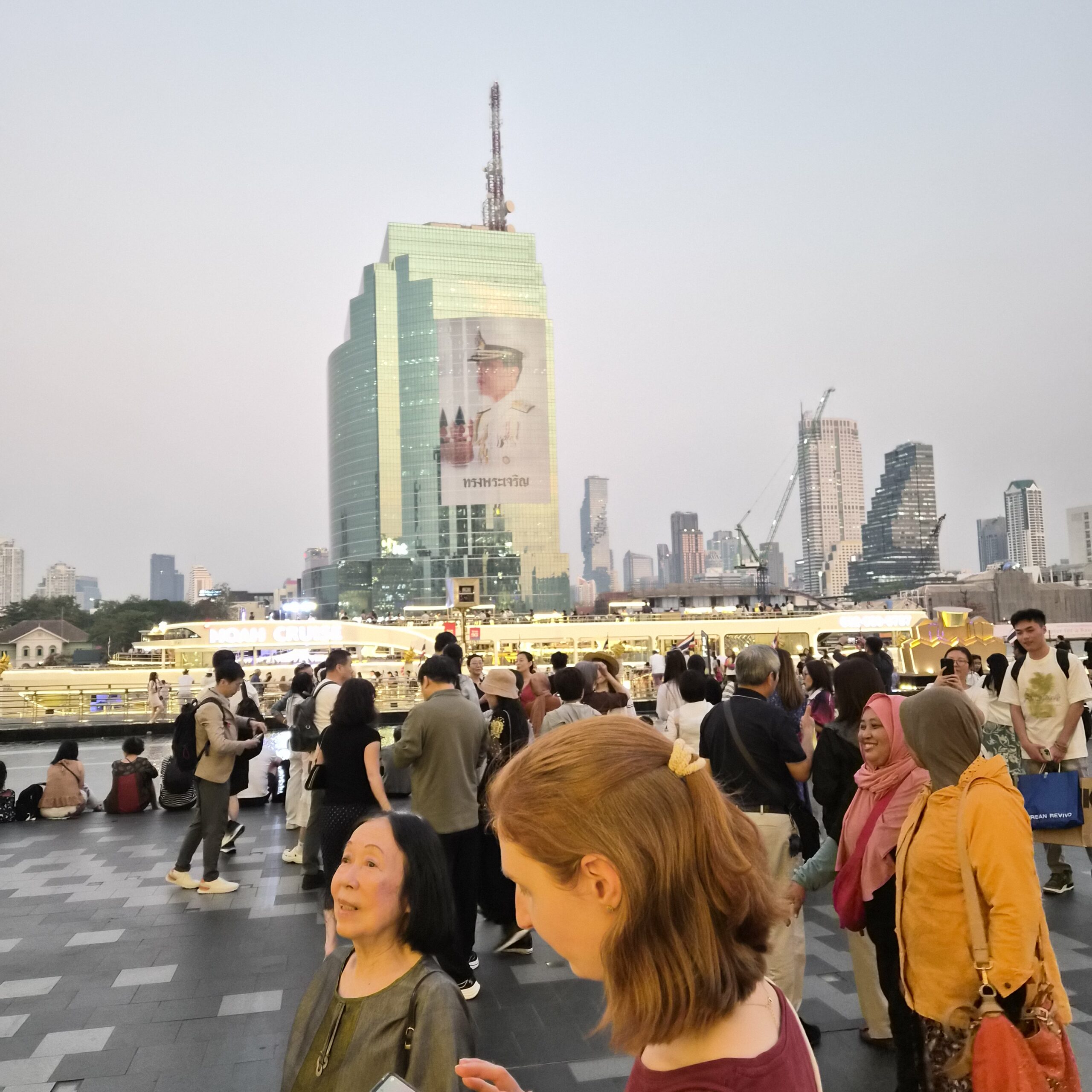
    Splitting part of my time between Belgium and Bangkok, I have learnt that a city is best discovered when you give it time to show its different sides. Here are five ideas for seeing Bangkok differently.

    1. Explore one neighbourhood rather than the whole city

    It is tempting to try to see as many places as possible in a single day. Yet choosing one neighbourhood and taking the time to wander around it can be far more enjoyable. Look at the side streets, the shops, the façades and the rhythms of daily life.

    Plan a few stops, but also give yourself the freedom to pause when something catches your eye.

    2. See Bangkok from the river

    The Chao Phraya offers another view of the city. Boats let you see the riverbanks, the temples and the contrasts between different districts. Depending on your route, the river can also be a practical way to reach certain sights.

    Check the lines and timetables before you set off, as services vary between operators and at different times of day.

    3. Take time to taste the local food

    Food is part of the journey. Markets and restaurants offer a wide range of dishes, from mild preparations to very spicy recipes. Ask for advice if you do not know a dish, and explain your dietary needs if you have an allergy or restriction.

    The most important thing is to stay curious while choosing what suits you.

    4. Choose transport to fit your plans

    The BTS Skytrain and the MRT can be very useful for getting around many areas. Ride-hailing apps can also make some journeys easier. The right choice depends on where you are going, the time of day and your luggage.

    Before you leave, find your station or pick-up point. A little preparation can save you a lot of detours.

    5. Plan some breaks

    The heat, the noise and all the travelling can make a day tiring. Bring water, plan breaks and keep your schedule realistic. You will enjoy the city more if you do not spend your stay rushing from one place to the next.

    A city to discover at your own pace

    Bangkok can be intense, surprising, traditional and modern all at once. There is no single right way to discover it: everyone shapes their trip around what they enjoy.

    On mrschaka.com, I share my practical guides and my projects about Thailand, including the Thaïlande en poche app. Before you travel, always check entry requirements and transport information with official sources, as they can change.

    If you have already visited Bangkok, which place or memory stayed with you the most? And if you dream of going, what would you like to discover first?

    Do you love Thailand? Find more tips and share this article with your travel companions.

    Cover of Bangkok – The Practical Guide

    To go further

    Mr Schaka’s guidebook, Bangkok – The Practical Guide, covers the essentials: transport, neighbourhoods, addresses, food, etiquette and safety, updated for 2026–2027.

  • Muang Boran Ancient City: a day trip from Bangkok in 2026

    Muang Boran Ancient City: a day trip from Bangkok in 2026

    Muang Boran Ancient City squeezes the whole of Thailand into one huge park in Samut Prakan, right on Bangkok’s doorstep. Temples, palaces and rebuilt villages are spread across a giant map of the country. Here is how I plan this trip, with 2026 prices and my tips for beating the heat.

    What exactly is Muang Boran?

    Muang Boran (“ancient city” in Thai), also called Ancient City or Ancient Siam, is an open-air museum created by Lek Viriyaphant and his wife Praphai. The same businessman was behind the Sanctuary of Truth in Pattaya and the Erawan Museum. The park opened in 1972.

    The site covers around 128 hectares (316 acres according to the official website) and its layout follows the shape of Thailand: each region has its own monuments, placed roughly according to their real location. There are about 116 structures. Some are replicas, often scaled down, others are reconstructions of buildings that no longer exist, and a few are genuine old houses taken apart and rebuilt here.

    The appeal: seeing sites scattered all over the country in a single day, in a green and peaceful park. It is nothing like a theme park.

    Monuments not to miss

    • Sanphet Prasat Palace: a reconstruction of a throne hall of the old royal palace of Ayutthaya, destroyed when the city fell in 1767.
    • Prasat Phra Viharn: a replica of the famous Khmer temple, perched on a hill. The climb is worth it for the view over the park.
    • Mount Sumeru: the mountain at the centre of the universe in Buddhist cosmology.
    • Dusit Maha Prasat Palace: a replica of the famous pavilion at Bangkok’s Grand Palace.
    • Pavilion of the Enlightened: a very photogenic traditional pavilion, best kept for the end of the day.
    • The floating market: a few stalls along the canals, handy for a drink or a simple meal.

    Bike, golf cart or tram: how to get around

    The park is far too big to see on foot. You have three options.

    By bike

    This is my favourite. The paths are flat and quiet. Depending on the period, bikes have either been included in the ticket or rented as an extra, at around 150 THB a day according to recent reports. Ask at the ticket desk what your ticket covers.

    By electric golf cart

    Ideal for families or if you struggle with the heat. Expect from around 350 THB for the first hour for a four-seater cart (recently reported price, check on site). The driver must be at least 18 and hold a Thai or international driving licence.

    By guided tram

    Trams loop around the main monuments several times a day. Restful, but the stops are short. Check the price and departure times at the ticket desk.

    Opening hours and prices for 2026

    • Open daily from 9am to 7pm, last ticket sales at 6pm.
    • Foreign adult: 800 THB.
    • Child aged 6 to 14: 400 THB.
    • Private car: 400 THB per vehicle, on top of the tickets.
    • Foreigners living in Thailand: Thai price on showing a work permit or a Thai driving licence.

    Prices checked on the official website in 2026. Some online booking platforms sometimes offer slightly cheaper tickets.

    #Thailand #Bangkok #ThailandTravel #TravelTips #Asia #MrSchaka

    How to get there from Bangkok

    The easiest way: the BTS Sukhumvit line (the green one) to the end of the line at Kheha, in Samut Prakan. From the centre, allow just under an hour depending on where you start. Everything about the network is in my guide to getting around Bangkok.

    From Kheha, the Ancient City is only a few minutes away by road. Take a taxi or a Grab (5 to 10 minutes), or songthaew no. 36, a shared pick-up that only leaves when full and costs a few baht. A free weekend shuttle has run from the station in the past: check before you go.

    Another option: a Grab from your hotel, about an hour without traffic jams, much longer at rush hour.

    How long to stay and when to go

    Allow at least half a day, ideally 3 to 4 hours on site.

    The real challenge is the heat: some parts of the park have very little shade. My advice: arrive around 2.30pm or 3pm and stay until closing time. The late afternoon light is beautiful on the temples and the temperature finally becomes bearable. Opening time at 9am is the other good slot.

    Combine it with the Erawan Museum

    The Erawan Museum, designed by the same founder, is also in Samut Prakan, about 450 m from BTS Chang Erawan station, on the same line, a few stops before Kheha. You will recognise it by its gigantic three-headed elephant. The museum in the morning, the Ancient City in the afternoon, and your day is well filled. Check its opening hours and price before you go.

    Mr Schaka’s practical tips

    • Hat, sun cream and plenty of water: shade is rare between the monuments.
    • Take a photo of the map at the entrance, you will use it all afternoon.
    • Do not try to see everything: pick two or three regions and take your time.
    • Keep your passport on you if you rent a golf cart, it may be requested.
    • Wear clothes covering shoulders and knees to enter the shrines.
    • Weekdays are quieter; at weekends there are more Thai families.

    Frequently asked questions

    Do I need to book my ticket in advance?

    No, you can easily buy it at the entrance. Booking online can sometimes save you a few baht.

    Is Muang Boran good for children?

    Yes. Children love the space and the bikes. A child ticket costs 400 THB for ages 6 to 14.

    What else can I do around Bangkok?

    Ayutthaya, Kanchanaburi or the floating markets: find my ideas for day trips from Bangkok.

    Cover of Bangkok – The Practical Guide

    To go further

    Mr Schaka’s guidebook, Bangkok – The Practical Guide, covers the essentials: transport, neighbourhoods, addresses, food, etiquette and safety, updated for 2026–2027.

  • Winter in Thailand over 50: region, visa and monthly budget

    Winter in Thailand over 50: region, visa and monthly budget

    Spending winter in Thailand over 50 means swapping Belgian or French grey skies for blue ones for one to three months. You still need the right region, the right visa and the right flat. Here is what I have learned between Liège and Bangkok.

    Which region for which months

    From November to February, most regions enjoy their driest season. From March, the heat climbs sharply until May.

    Hua Hin, the quiet choice

    About three hours by road from Bangkok, Hua Hin is calm, flat and well equipped: private hospitals, supermarkets, a long beach. Ideal for a first long stay.

    Pattaya and Jomtien, everything close at hand

    Pattaya is lively, but Jomtien and Pratumnak move at a gentler pace. You will find everything there, about two hours from Bangkok.

    Chiang Mai, lovely but not at the end of winter

    Cool mornings in December and January, temples, low prices. But from February to April, agricultural burning and forest fires push up fine-particle pollution (PM2.5), often peaking in March. Sensitive airways? Aim for December and January.

    Koh Samui, on its own calendar

    In the Gulf of Thailand, rain falls mostly from late October to mid-December, with November often the wettest month. Go from January to April instead.

    Visas and length of stay: what changed in 2026

    Since 15 September 2026, visa-free entry for Belgian and French tourists has dropped from 60 to 30 days. A 30-day extension can be requested in Thailand, at an immigration office, for 1,900 THB, at the officer’s discretion.

    • One month: the 30-day exemption is enough.
    • Two months: exemption plus extension (not guaranteed), or a tourist visa.
    • Three months: the tourist visa (TR), applied for online before departure, gives 60 days, extendable once by 30 days in Thailand. Around 40 euros, depending on the embassy.
    • Longer: the Non-Immigrant O-A visa, for people aged 50 and over, allows one year, subject to financial conditions (for example 800,000 THB in a Thai bank account or a monthly income of 65,000 THB) and health insurance. The O-X, over five years, is open to French but not Belgian nationals.

    These rules change quickly: check with the Thai embassy in Brussels or Paris before booking, and fill in the digital arrival card (TDAC) online before you land. Full details in my article on Thailand visa requirements in 2026.

    Renting by the month: condos and rough prices

    For one to three months, rent a condo by the month instead: a furnished studio or one-bedroom flat, often with a pool.

    • Chiang Mai: about 8,000 to 15,000 THB for a studio, 12,000 to 22,000 THB for a separate bedroom.
    • Hua Hin: about 10,000 to 18,000 THB for a one-bedroom in the centre, more towards Khao Takiab.
    • Jomtien: about 8,000 to 20,000 THB for a one-bedroom, depending on the building and the distance to the beach.

    These prices (checked in 2026) apply to long contracts. For one or two months in high season, from November to February, expect to pay around 30% more. Electricity is billed separately and a deposit is almost always required.

    #TheSeasonOfBreath #Thailand #TravelStory #TrueStory #MrSchaka

    What monthly budget to plan

    At roughly 37 baht to the euro (October 2026), here is a ballpark figure for a couple living simply, excluding flights and insurance:

    • Accommodation: 15,000 to 25,000 THB.
    • Food, mostly local cooking: 12,000 to 18,000 THB.
    • Electricity, water, internet: 2,000 to 4,000 THB.
    • Transport, outings, unexpected costs: 6,000 to 10,000 THB.

    Total: about 35,000 to 57,000 THB, or 950 to 1,550 euros a month.

    Health, insurance and pace of life

    I am not a doctor. Talk about your plans with your GP a few weeks before leaving. Take your prescriptions, with the generic names of the medicines, and enough medication for the whole stay.

    Ask your health fund or national health insurer how long it covers you abroad, and check the maximum trip length of your travel insurance. For three months, long-stay insurance covering hospital care and repatriation is essential: Thai private hospitals are expensive.

    As for the heat: go out in the morning and late afternoon, stay somewhere cool at midday, drink often. Life slows down, and that is the whole point.

    Staying in touch and planning the return

    Three months is a long time for the family. With a Thai eSIM, video calls cost next to nothing. Set a weekly call with the grandchildren. Time difference: six hours ahead of Belgium and France in winter, five after the clocks change at the end of March.

    To head home, aim for March or early April: the real heat arrives in Thailand, spring arrives back home. Book your flight early, especially around Songkran in mid-April.

    Mr Schaka’s practical tips

    • Book the first month from home, then choose the next one on the spot.
    • Never go past the date on your entry stamp: the fine is at least 500 THB a day.
    • As soon as you arrive, locate the nearest private hospital and pharmacy.
    • For the basics, read my guide to travelling in Thailand over 50.

    Frequently asked questions

    Can I stay three months in Thailand without a visa?

    No, not since 15 September 2026: 30 days, extendable once by 30 days. For 90 days, get a tourist visa.

    Which region for a first winter?

    Hua Hin or Jomtien. Chiang Mai is lovely in December and January, less advisable from February to April because of the smoke.

    What budget for a month there?

    For a couple living simply, about 35,000 to 57,000 THB, accommodation included, excluding flights and insurance.

    Cover of The Season of Breath

    The book

    Mr Schaka lives with pulmonary fibrosis and has been travelling in Thailand for years. In The Season of Breath he tells the story of that journey, one step at a time, with humour and no self-pity.

  • Jomtien Beach: the calm, family-friendly beach south of Pattaya

    Jomtien Beach: the calm, family-friendly beach south of Pattaya

    Jomtien Beach starts just south of Pattaya, on the other side of Pratumnak Hill. Same sea, same sun, but a slower pace: people come here to swim, walk by the water and eat grilled fish, not to rush from one attraction to the next.

    Who will enjoy Jomtien Beach?

    Jomtien mainly attracts people who want the sea without the bustle of the centre. Families find a long strip of sand, sunbeds to rent and plenty of simple restaurants. Long stays are common, especially among European retirees who spend the winter by the sea.

    For older travellers, it is a good compromise. The ground is flat, distances are short and songthaews pass constantly along Beach Road.

    Water sports fans are not forgotten. Jomtien has long been known for windsurfing, and several kitesurfing schools operate further south, towards Na Jomtien. The wind is not reliable all year round: check with the schools before booking a lesson.

    The different parts of the beach

    The beach stretches for about 6 km. It has three distinct moods.

    • Dongtan, in the north: the stretch closest to Pratumnak and central Pattaya. Shorter, and pleasant for a late-afternoon walk.
    • Central Jomtien: the heart of the beach, along Jomtien Beach Road. Sunbeds, umbrellas, small restaurants, jet-ski hire and parasailing.
    • Na Jomtien, in the south: quieter and more spread out, already in Sattahip district. Less transport, more room on the sand.

    The seafront has undergone a long renovation: a new drainage system under the road, redesigned pavements and parking. Beach Road went back to two-way traffic in late December 2025.

    Where to eat in Jomtien

    In the evening, the easiest option is the Jomtien night market, opposite the beach, easy to spot thanks to the windmill at the entrance. Stalls open around 5pm and close around 11pm. You will find salt-crusted fish, grilled seafood, som tam and desserts, far cheaper than on the seafront.

    At the weekend, the Thepprasit night market, on Thepprasit Road towards Sukhumvit, is worth the trip: it is in full swing on Friday, Saturday and Sunday, roughly from 5.30pm to 11pm.

    For a sit-down seafood meal, the beachfront restaurants display their fish on ice. Always ask for the price per weight before choosing, and have it written down.

    How to get to Jomtien

    From Suvarnabhumi Airport or Bangkok

    The most convenient option is Roong Reuang Coach bus 389, on level 1 of the airport (gate 8). It serves Pattaya and ends at its Jomtien terminal, at the start of the beach. Allow about 1.5 to 2 hours and a ticket of roughly 140 to 170 baht (prices checked in 2026, confirm on the operator’s website). From Bangkok, buses leave the Ekkamai and Mo Chit bus stations for North Pattaya bus station; you then need a songthaew or taxi to Jomtien.

    From central Pattaya

    Songthaews (also called baht buses) are blue pick-ups with bench seats. There is not always a direct route: you often change in South Pattaya, at the Second Road junction, then take a songthaew that runs along Jomtien Beach Road. A shared ride usually costs 10 to 20 baht per person (prices checked in 2026). If you climb into an empty vehicle and ask for a specific address, it is a private hire: agree the price first.

    #Thailand #Bangkok #ThailandTravel #TravelTips #Asia #MrSchaka

    Which season to choose and how to swim safely

    The best period runs from November to February: drier skies, bearable heat and an often calm sea. From March to May, it is very hot. From May to October, it is the rainy season, with short but heavy showers and a sea that can be rougher; September and October are often the wettest months.

    At the end of the rainy season, jellyfish are sometimes reported in Jomtien Bay. Follow the signs and flags: a red flag means you should not swim. Preferably swim near the lifeguard posts.

    Where to stay in Jomtien

    • Dongtan and northern Jomtien: close to Pratumnak and central Pattaya, handy for combining the beach with trips into town.
    • Central Jomtien: the best choice for a first stay, with markets, restaurants and songthaews on the doorstep.
    • Na Jomtien: for peace and quiet, large condos and long stays, as long as you accept longer journeys.

    If you are torn between Jomtien and the neighbouring hill, read our article on Pratumnak, the other side of Pattaya. And to fill your days, our guide to things to do in Pattaya brings the sights together.

    Mr Schaka’s practical tips

    • Always carry small coins and 20-baht notes for the songthaews.
    • Get to the night market before 6pm to find a table without waiting.
    • For a jet ski, photograph the machine before setting off and agree the price in writing.
    • Protect yourself from the sun between 11am and 3pm: the glare off the sand is strong.

    Frequently asked questions

    Is Jomtien Beach suitable for children?

    Yes. The sand is long, the slope gentle and the atmosphere calm. Stay near the lifeguards and watch the flags, especially in the rainy season.

    How much is a songthaew between Pattaya and Jomtien?

    On a shared ride, expect 10 to 20 baht per person, sometimes with a change in South Pattaya. A private hire is negotiated before you get in.

    When can you kitesurf in Jomtien?

    The wind depends on the monsoon and varies from year to year. The schools in Na Jomtien will tell you which weeks are most reliable: contact them before you come.

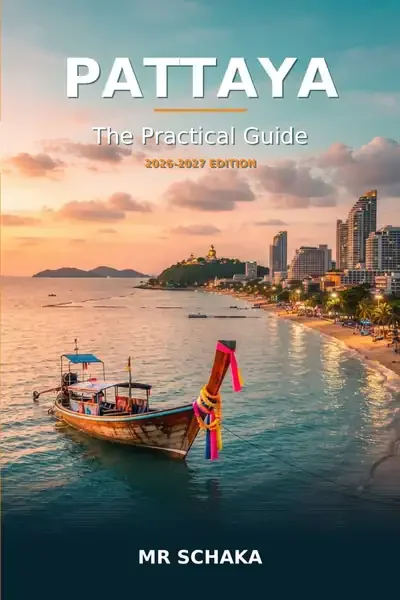
    Cover of Pattaya – The Practical Guide

    To go further

    Mr Schaka’s guidebook, Pattaya – The Practical Guide, covers the essentials: transport, neighbourhoods, addresses, food, etiquette and safety, updated for 2026–2027.
  • Naga Fireballs 2026: Getting to Nong Khai from Bangkok

    Naga Fireballs 2026: Getting to Nong Khai from Bangkok

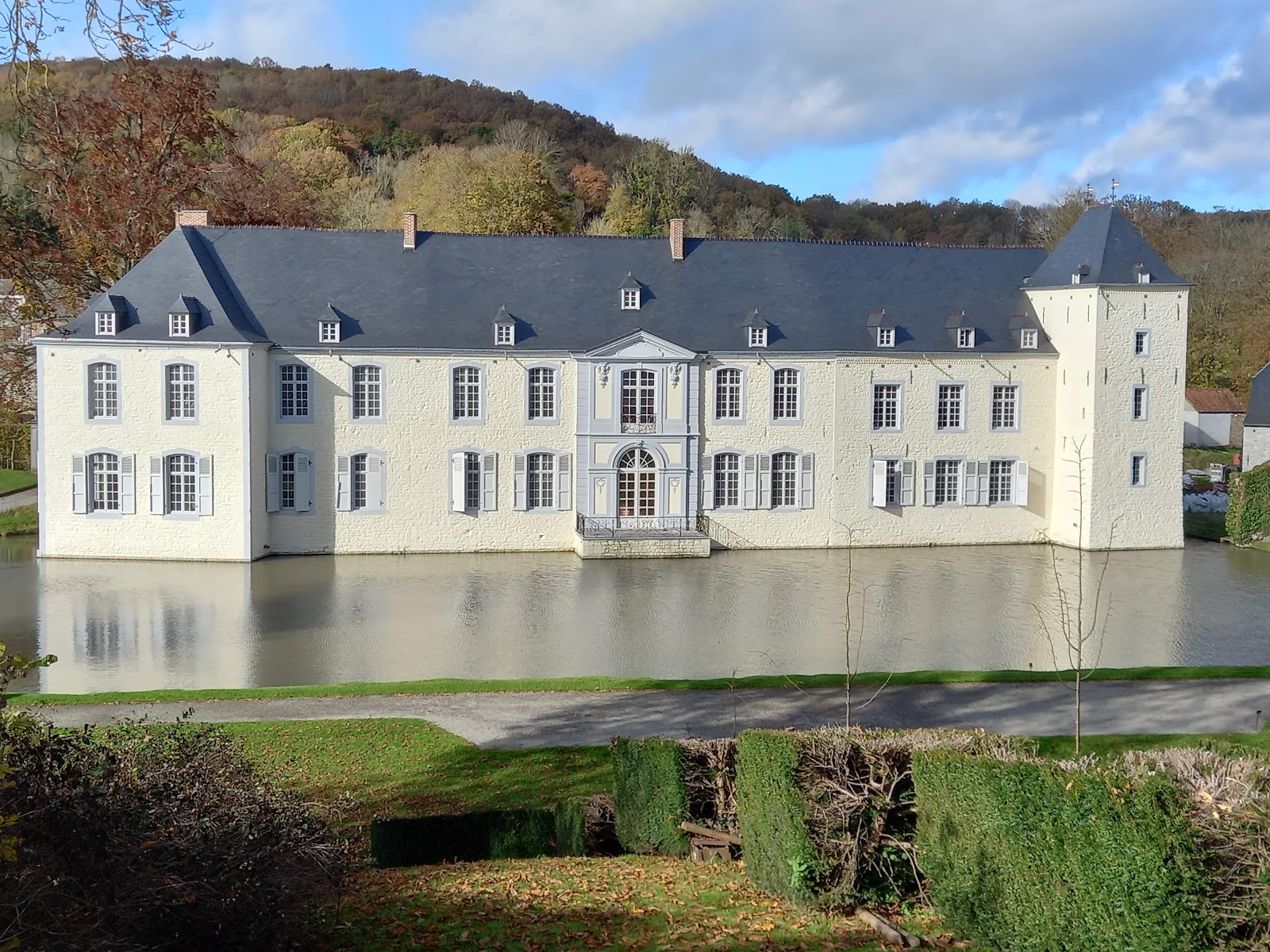
    Every year, on the full moon that closes Buddhist Lent, thousands of people gather on the banks of the Mekong to watch for the Naga fireballs. In 2026, the date is Monday 26 October, in Nong Khai province, facing Laos. Here is how to get there from Bangkok, where to stand and how to enjoy the night respectfully.

    Ok Phansa 2026: the right date

    The phenomenon is expected on the night of Ok Phansa (or Awk Phansa), which marks the end of the monks’ three-month retreat. In the Thai lunar calendar, it falls on the 15th day of the waxing moon of the 11th month. In 2026, that is Monday 26 October.

    Celebrations run for several days around that date. Announced programmes go roughly from 22 to 28 October in Nong Khai town, and into early November in Phon Phisai. Exact dates can shift, so check them locally or with the Tourism Authority of Thailand (TAT) before booking.

    What you see, and what people say

    After dark, reddish glowing balls seem to rise out of the river. They climb silently, with no smoke, for several dozen metres, then vanish. Some nights you count a handful; on others, many more. They come in bursts, with long waits in between.

    For many locals, they are sent by the Phaya Nak, the great mythical serpent of the Mekong, as an offering to the Buddha. Hence the Thai name, Bung Fai Phaya Nak. Others suggest natural explanations, such as gases from the muddy riverbed, or human ones, such as flares fired from the other bank. No theory convinces everyone. My advice: come for the atmosphere and the devotion, not to settle the debate. And keep mocking remarks to yourself in the crowd.

    Where to watch: Phon Phisai and the Nong Khai riverbanks

    Nong Khai town has the main stage, the food stalls and most of the hotels. It is convenient, but usually few fireballs are seen there.

    Most sightings are reported further downstream, in Phon Phisai district, about 50 km from town, and further on towards Rattanawapi. The banks are set up for the festival and access to the riverside is free. Arrive before sunset to find a spot, and plan to stay late.

    There is no official shuttle to Phon Phisai. The easiest option is to hire a car with a driver and agree on a return time in advance: the roads are very busy after the show.

    Processions, illuminated boats and almsgiving

    The fireball night is only part of the festival. Previous editions have featured a wax castle procession, illuminated boats on the Mekong (Lai Ruea Fai), long-boat races, shows about the Naga legend and street markets. The 2026 programme is not yet detailed everywhere, so ask locally.

    The next morning, many temples hold Tak Bat Devo, a large almsgiving to the monks. If you attend, stay discreet, dress properly and do not walk in front of people praying to get a photo.

    #Thailand #Bangkok #ThailandTravel #TravelTips #Asia #MrSchaka

    How to get there from Bangkok

    By night train

    This is my favourite option. Special Express No. 25 leaves Krung Thep Aphiwat station at around 20:25 and reaches Nong Khai at around 06:30, after a stop in Udon Thani. Expect about 900 to 1,000 THB for a second-class sleeper berth (fares to be checked, they change). Book early on the State Railway of Thailand website: these dates sell out fast.

    By plane, then by road

    The flight from Bangkok to Udon Thani takes about an hour. After that, it is roughly 55 km by road to Nong Khai, by minivan, taxi or hire car. Fares climb as the festival approaches.

    By bus

    Buses leave from the Northern Bus Terminal (Mo Chit), mostly in the evening. The journey takes about 10 hours, from around 450 THB depending on the company and class (indicative price, to be checked). It is the cheapest option, not the most comfortable.

    Where to stay, crowds and heat

    Hotels in Nong Khai and Phon Phisai are full weeks ahead. Book as soon as you can, or stay in the larger city of Udon Thani and accept the drive. Riverside homestays are a lovely option if you can find one with space.

    Expect dense crowds, especially on the evening of the 26th. It is still hot and humid in late October, mosquitoes are out and the banks are poorly lit. To explore the rest of the region, read my guide to Isan, the authentic northeast.

    Mr Schaka’s practical tips

    • Book your train and accommodation now: everything fills up in late October.
    • Reach the riverbank before sunset and bring plenty of patience.
    • Pack a head torch, mosquito repellent, water and a small mat.
    • Dress modestly, with shoulders and knees covered, especially near temples.
    • Do not mock local beliefs or push anyone aside for a photo. Brush up on the etiquette rules in Thailand.
    • Agree on a return time with your driver before you set off.

    Frequently asked questions

    When can you see the Naga fireballs in 2026?

    On the night of Ok Phansa, Monday 26 October 2026. Sightings are sometimes reported the night before and the night after.

    Are you sure to see fireballs?

    No. Their number varies a lot from year to year and from place to place. Phon Phisai remains the most often mentioned area.

    What is the best way to get there from Bangkok?

    The night train to arrive rested, or a flight to Udon Thani if you are short of time. Either way, book early.

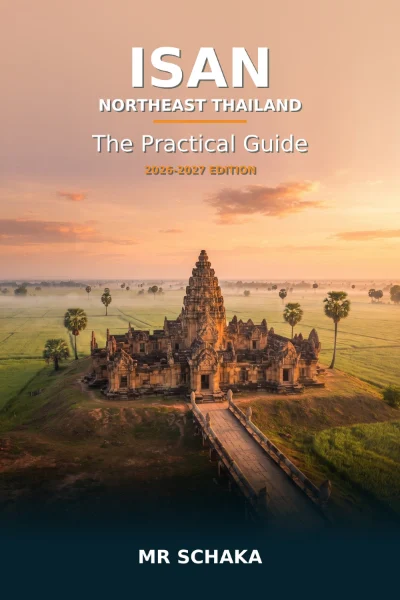
    Cover of Isan – The Practical Guide

    To go further

    Mr Schaka’s guidebook, Isan – The Practical Guide, covers the essentials: transport, neighbourhoods, addresses, food, etiquette and safety, updated for 2026–2027.
  • Bangkok flower market: a guide to Pak Khlong Talat

    Bangkok flower market: a guide to Pak Khlong Talat

    It is three in the morning, Bangkok is half asleep, yet one street near the river is overflowing with jasmine, marigolds and orchids. Welcome to Pak Khlong Talat, the Bangkok flower market locals have relied on for generations. Here is how to visit at the right time without getting in the way of the people who work there.

    Pak Khlong Talat, a market that never closes

    Pak Khlong Talat sits in the Phra Nakhon district, on Chak Phet Road, right next to Memorial Bridge (Saphan Phut). It is first and foremost a wholesale market: florists, street vendors and restaurants come here to stock up. The stalls are open 24 hours a day, every day, but the atmosphere changes completely depending on the hour.

    The place has a long history. Under Rama I it was a floating market, then a fish market under Rama V, before becoming the big fruit, vegetable and flower market we know today. Since 2016, the vendors who used to fill the pavements have been moved inside the market halls. So it is less chaotic than it once was, but just as lively.

    When to go: at night or at dawn

    The big moment is at night. Roughly between midnight and 5am, lorries and pick-ups arrive from nearby provinces, mainly Nakhon Pathom, Samut Sakhon and Samut Songkhram. Flowers that like cooler weather sometimes come from Chiang Mai or Chiang Rai. Sacks pile up, porters rush about, prices are haggled out loud. It is noisy, wet and fascinating.

    If you are not a night owl, come between 5am and 8am. There is still plenty going on, the morning light is lovely and the heat is still bearable. Late morning and in the afternoon, the market slows right down: you can still buy, but you miss the show.

    What you will see: jasmine, orchids, lotus

    The stars are the phuang malai, garlands of jasmine, marigolds and rosebuds offered at temples, hung from taxi mirrors or placed in front of shrines. In some aisles, women thread them flower by flower at astonishing speed. Take a moment to watch them work.

    Further on you will find buckets of orchids in every colour, bunches of lotus buds, mountains of orange marigolds and roses sold by the bundle. Bunches of flowers start at around 50 THB, and small offering garlands often cost a few dozen baht (prices noted in 2026, varying with the season and festivals). Alongside the flowers, part of the market is still devoted to fruit and vegetables.

    The Yodpiman building and the riverside

    On the Chao Phraya side, the Yodpiman building is a former port warehouse that has been part of the flower market since 1961. Now renovated, it hosts a riverside walk with shops and cafés behind colonial-style façades. It is a good spot to catch your breath after the bustle of the halls and watch the boats go by. Shop opening hours vary: check on the spot.

    #Thailand #Bangkok #ThailandTravel #TravelTips #Asia #MrSchaka

    Getting there: MRT or boat

    The easiest option is the metro: Sanam Chai station on the MRT Blue Line is about ten minutes’ walk from the market. Bear in mind the metro does not run all night: for a 3am visit, you will need a taxi or a Grab.

    By river, the Chao Phraya Express Boat stops at Memorial Bridge pier (N6), right next to the market. There is also a Yodpiman pier (N6/1), between Memorial Bridge and Rajini (N7), but not every line stops there: check before you set off. To make sense of the lines and piers, read my guide to getting around Bangkok by BTS, MRT and boat.

    Combine it with Wat Pho and the Grand Palace

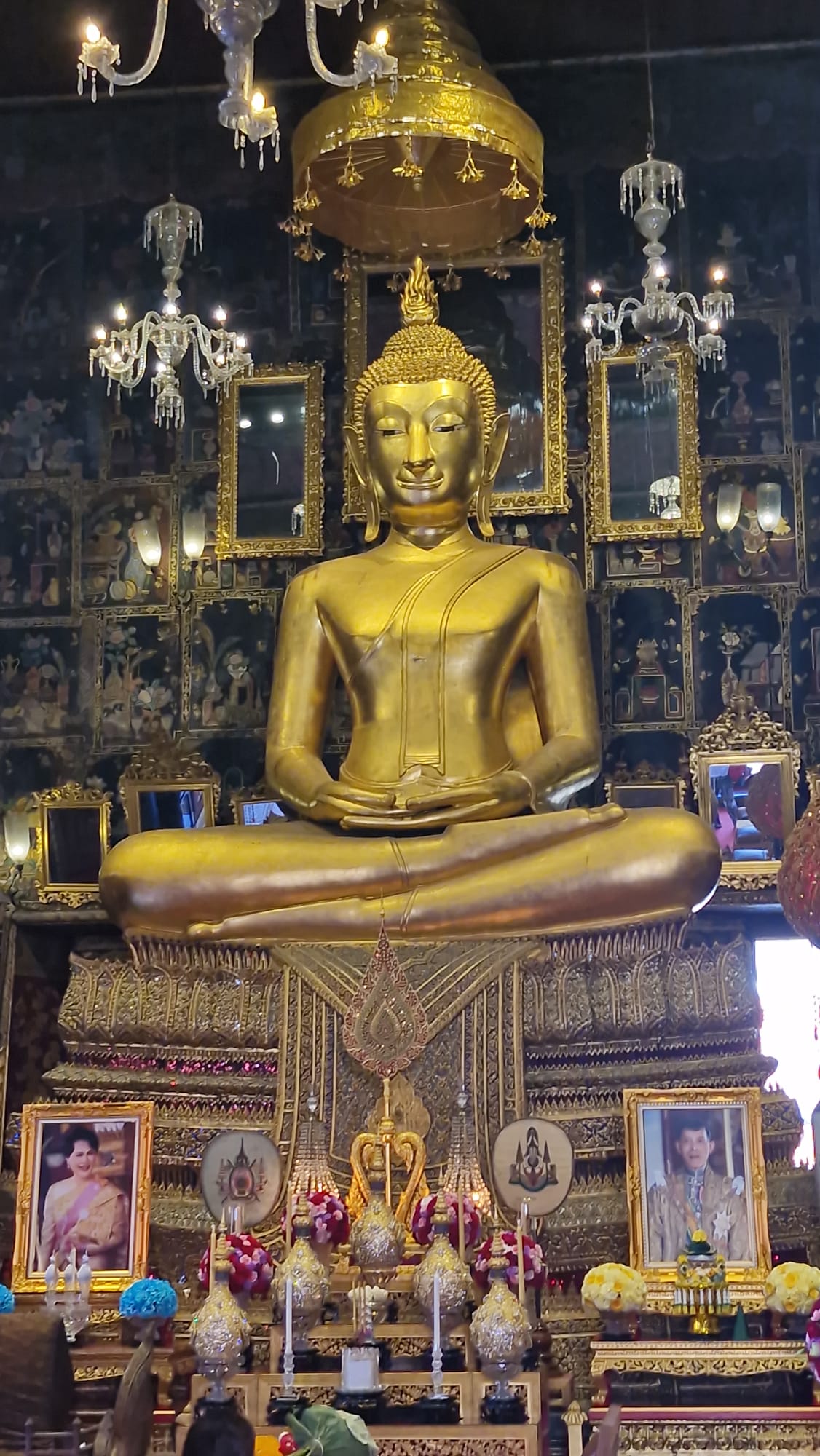
    The market is an ideal start to a day in the old town. Arrive around 6am, wander among the flowers for an hour, have breakfast at a local food stall, then walk about ten minutes to Wat Pho and its giant Reclining Buddha. The Grand Palace is right next door. You will be among the first in when the temples open, usually around 8am to 8.30am, ahead of the crowds and the worst of the heat. Check opening times and prices on the spot.

    Mr Schaka’s practical tips

    • Closed shoes: the floor is often wet from ice and water from the buckets.
    • Keep to the side: porters and trolleys will not stop for you. Never block an aisle for a photo.
    • Ask before photographing a vendor close up. A smile and a nod towards your camera is usually enough.
    • Do not touch the garlands or flowers unless you mean to buy.
    • Bring cash in small notes: cards are rarely accepted.
    • Haggle gently, or not at all: prices are already low.
    • Dress respectfully if you are heading on to the temples: shoulders and knees covered.

    Frequently asked questions

    Is the Bangkok flower market really open 24 hours?

    Yes, Pak Khlong Talat runs day and night, every day. But most of the activity happens between midnight and early morning. In the afternoon, many stalls are quiet.

    What is the best time to visit?

    Between 3am and 5am for the wholesale buzz, between 5am and 8am for a good balance of activity, light and cooler air.

    Can tourists buy flowers there?

    Of course. A bunch of flowers or a small jasmine garland costs very little. It makes a lovely gift for your hotel, or an offering to leave at a temple.

    Cover of Bangkok – The Practical Guide

    To go further

    Mr Schaka’s guidebook, Bangkok – The Practical Guide, covers the essentials: transport, neighbourhoods, addresses, food, etiquette and safety, updated for 2026–2027.
  • Sukhothai Historical Park: Getting There, Cycling, Temples

    Sukhothai Historical Park: Getting There, Cycling, Temples

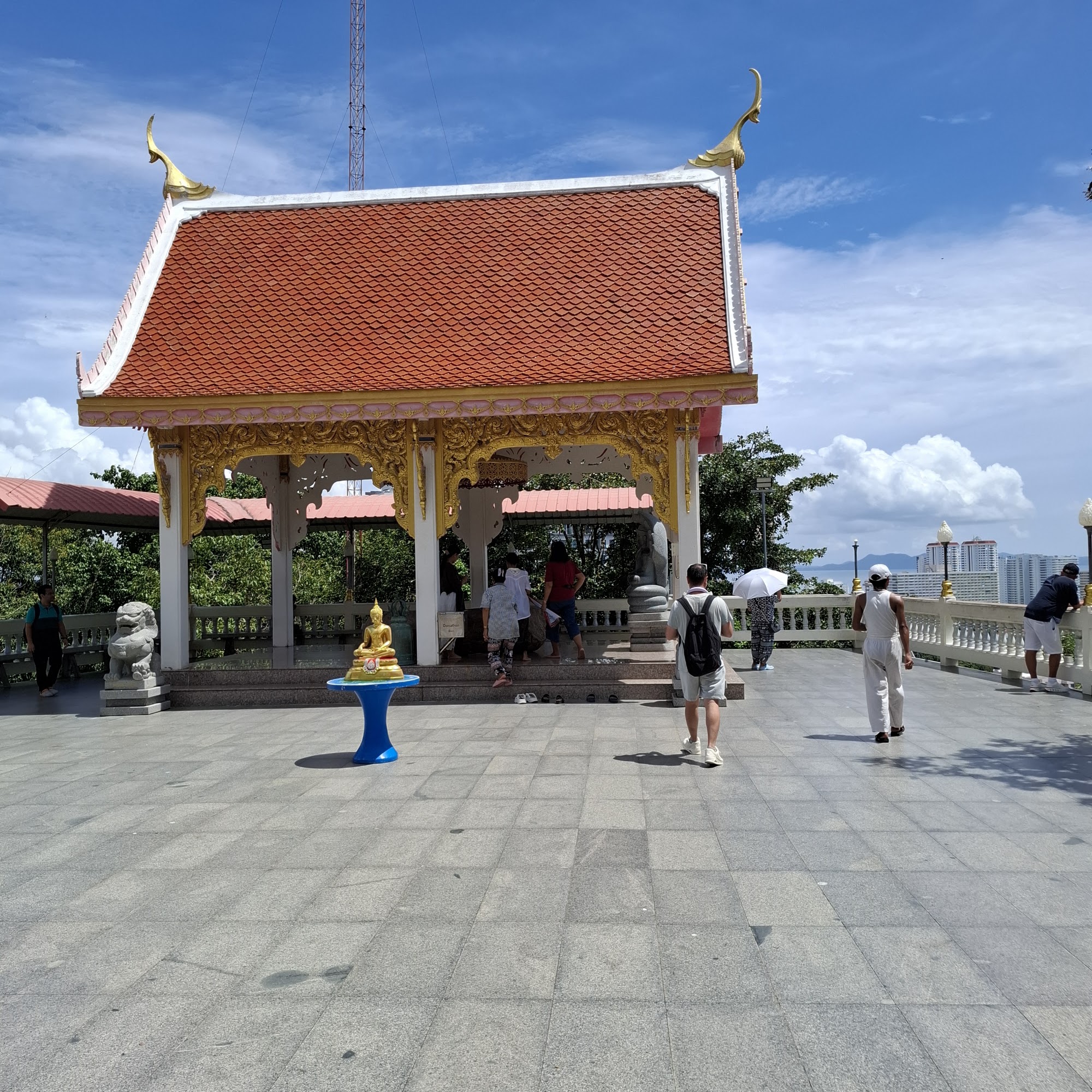
    Before Ayutthaya, before Bangkok, there was Sukhothai. Sukhothai Historical Park holds the ruins of the first great Siamese capital, from the 13th century: serene Buddhas, ponds and lotus-bud chedis. Here is how to get there from Bangkok, how to plan your visit and where to stay.

    Getting to Sukhothai from Bangkok

    Sukhothai lies about 430 km north of Bangkok. You have three options, depending on your budget and time.

    By bus: the easiest

    Buses leave from the Northern Bus Terminal at Mo Chit (Chatuchak). Allow about 6 to 8 hours depending on the company and stops, for around 370 to 500 THB (prices checked in 2026). There are morning departures and night buses. Most arrive at the bus station in the new town; a few services also stop near the historical park.

    By train via Phitsanulok

    Sukhothai has no railway station. Take the Northern Line from Krung Thep Aphiwat to Phitsanulok: about 5.5 to 7 hours, from around 200 THB in third class to around 800 THB for a second-class sleeper. Then a local bus reaches Sukhothai in about an hour, for 50 to 70 THB.

    By plane

    Bangkok Airways links Suvarnabhumi with Sukhothai Airport in about 1 hour 20 minutes, with only a few flights a day. The airport is far from town, so plan for a shuttle (around 300 THB per person). Another idea: fly from Don Mueang to Phitsanulok, then take the bus. Fares vary a lot, so compare before booking.

    Park zones and tickets

    The park, a UNESCO World Heritage Site, is split into several zones. The three main ones are paid separately: the central zone, the northern zone and the western zone, each around 100 THB for foreign visitors, with the ticket valid for the day. The smaller southern and eastern zones are often free or nearly free; check on the spot.

    A bicycle adds around 10 THB per zone. The park opens early, at about 6.30am. The Ramkhamhaeng National Museum, right next to the main entrance, is paid separately (around 150 THB).

    Exploring the park by bike

    Cycling is the smart choice in Sukhothai. The ground is flat, the paths are wide and the zones are several kilometres apart. Rental shops opposite the main entrance charge around 30 THB for the day.

    Set off early. At 7am the light is soft, it is still cool and the coach tours have not arrived. Between 11am and 3pm the heat quickly becomes hard going, so that is the time for lunch and a break in the shade. Come back in the late afternoon for sunset over the ponds.

    #Thailand #Bangkok #ThailandTravel #TravelTips #Asia #MrSchaka

    Three temples you shouldn’t miss

    Wat Mahathat

    The heart of the central zone and the main temple of the old city, next to the remains of the royal palace. The great lotus-bud chedi rises above rows of columns and seated Buddhas. It is the most photographed spot in the park, so go there at opening time.

    Wat Si Chum

    In the northern zone. A tall, roofless mondop shelters a huge seated Buddha, around fifteen metres high, which you first glimpse through a narrow opening. The effect is striking. Legend says the statue “spoke”, thanks to a hidden passage in the wall.

    Wat Sa Si

    This small temple sits on an island in the middle of Traphang Trakuan pond, north of Wat Mahathat. You reach it by a wooden bridge. With its bell-shaped chedi reflected in the water, it is one of the loveliest places in the park at the end of the day.

    How many days and where to stay

    One full day is enough for the central and northern zones. With two days you can add the western zone, wilder and hillier, and the museum, without rushing. From Bangkok, plan at least two nights there.

    The old town, around the park, is quiet. You will find guesthouses and a few boutique hotels a few minutes by bike from the temples. Perfect for being there at sunrise. The new town, about 12 km away, offers more choice, often lower prices, a night market and the bus station. Songthaews run to the park for around 30 THB. My advice: stay in the old town if you are only there for the temples.

    Sukhothai is also famous for Loy Krathong, the festival of lights, celebrated on a grand scale in the park with shows and lanterns. The dates change every year with the lunar calendar, so check them before booking, as accommodation fills up fast. If you love old stones, combine it with an Ayutthaya day trip from Bangkok.

    Mr Schaka’s practical tips

    • Rent your bike as soon as you arrive and start with the central zone before 8am.
    • Bring water, a hat and sunscreen: there is little shade between the zones.
    • Dress respectfully for the temples: shoulders and knees covered, and no climbing on statues.
    • The cool season, roughly November to February, is the most pleasant time to cycle.
    • Book your bus or train a few days ahead at weekends and on Thai public holidays.

    Frequently asked questions

    Can you do Sukhothai as a day trip from Bangkok?

    Not realistically. The bus takes at least 6 hours each way. Plan at least two nights there.

    How much does Sukhothai Historical Park cost?

    Around 100 THB per paid zone for foreigners, plus around 10 THB for a bike. Visiting the three main zones therefore costs around 300 THB, excluding the bike.

    Is it better to stay in the new town or the old town?

    The old town to be at the temples at dawn; the new town for more choice, more restaurants and gentler prices.

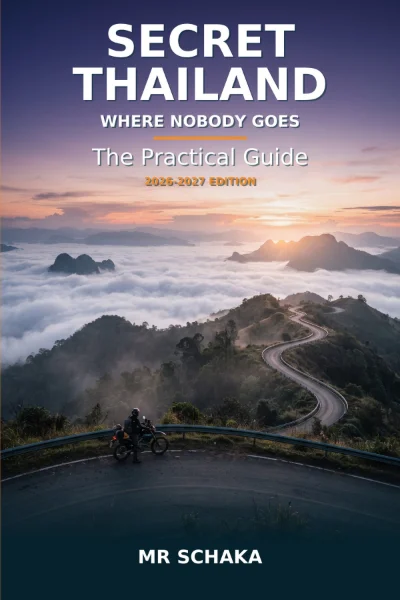
    Cover of Secret Thailand – Where Nobody Goes – The Practical Guide

    To go further

    Mr Schaka’s guidebook, Secret Thailand – Where Nobody Goes – The Practical Guide, covers the essentials: transport, neighbourhoods, addresses, food, etiquette and safety, updated for 2026–2027.
  • Koh Chang from Bangkok: Bus, Ferry and Best Beaches

    Koh Chang from Bangkok: Bus, Ferry and Best Beaches

    Koh Chang from Bangkok is an easy overland trip to an island of sea, jungle and waterfalls, with no flight needed. Here is the journey step by step, prices checked in 2026, the west coast beaches and the best time to go.

    Getting from Bangkok to Koh Chang

    Koh Chang lies about 300 km east of Bangkok, in Trat province, near the Cambodian border. First you reach the mainland near Laem Ngop, then you cross by ferry. Plan on a full day door to door.

    By bus from Ekkamai

    The Eastern Bus Terminal (Ekkamai) is the classic starting point. Buses to Trat leave from 5am, for about 315 THB and 5 to 6 hours on the road. Even handier: a government bus (the “999”) usually leaves around 7.45am and runs straight to Ao Thammachat pier, for about 330 THB. You arrive in the early afternoon. Check times the day before.

    If you end up at Trat bus station, a shared songthaew takes you to the pier for about 60 THB per person.

    By minivan, ferry included

    Minivans leave from Khao San, Suvarnabhumi Airport and other points in Bangkok and drop you at your hotel on the island. The ferry is included. Expect about 700 to 900 THB and 6 to 8 hours depending on stops. Easy with luggage, but not very comfortable.

    By plane to Trat

    Bangkok Airways links Suvarnabhumi to Trat in about an hour, with a few flights a day. The airport is around 20 km from the pier, and shuttles with the ferry included take you to your hotel.

    The ferry from Laem Ngop: Ao Thammachat or Centrepoint?

    Two companies used to share the crossing. Today it is mainly the Ao Thammachat ferry that runs: it sails to Ao Sapparot, in the north-west of the island, in 30 to 40 minutes. Departures are frequent, roughly every 45 minutes, from 7am to 7pm. A foot passenger ticket costs about 80 to 90 THB one way, paid in cash at the booth.

    The Centrepoint ferry, a little further along the same road, has been closed in recent years. Ask locally. On arrival, white songthaews wait at the pier. Rough prices per person: about 50 THB to White Sand Beach, 100 THB to Lonely Beach and 150 THB to Bang Bao.

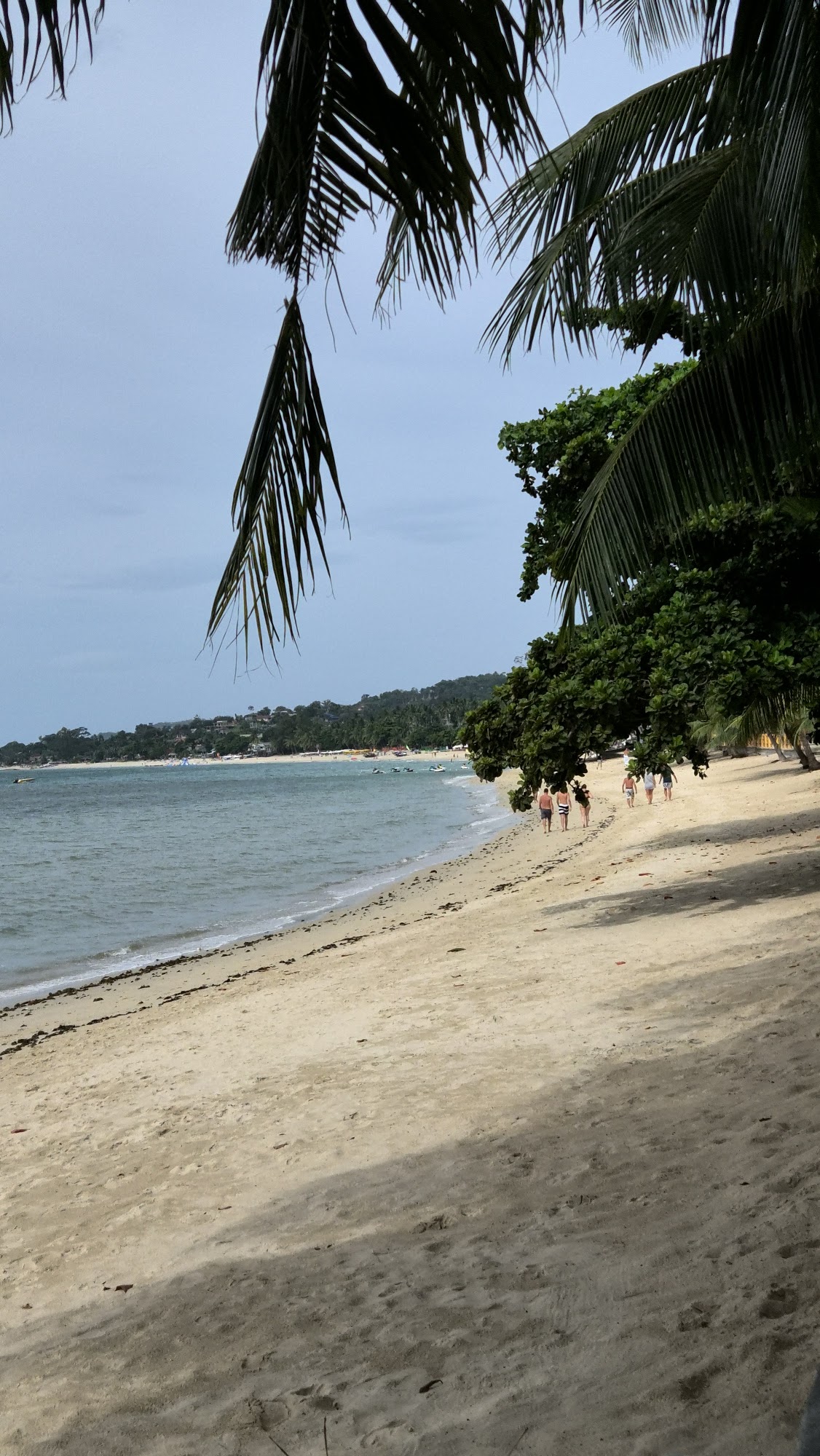
    The west coast beaches

    Beach life is concentrated on the west coast, along a single road between sea and hills.

    • White Sand Beach: the longest and liveliest, with restaurants, shops and hotels for every budget. The northern end is quieter.
    • Klong Prao: a wide, calmer sandy beach with pleasant resorts and a lagoon. Ideal for families.
    • Kai Bae: a small sheltered bay with shallow water and views of the islets offshore. A good base for snorkelling.
    • Lonely Beach: the backpacker hub, with simple bungalows and a young crowd in the evening. The sunsets are superb.
    • Bang Bao: a fishing village on stilts at the southern tip. Go for the seafood restaurants and the boat trips that leave from here.

    #Thailand #Bangkok #ThailandTravel #TravelTips #Asia #MrSchaka

    Koh Chang’s waterfalls

    Around 70% of the island is covered in forest, protected by Mu Ko Chang National Park. The best-known waterfall is Klong Plu, about a kilometre inland from Klong Prao beach. A 600-metre trail gets you there in 15 to 20 minutes. Park entry costs about 200 THB per adult, and the same ticket covers Than Mayom on the east coast on the same day.

    The small Kai Bae waterfall can be reached on foot from the beach. The smaller falls often run dry from February.

    When to go: end of the monsoon and high season

    High season runs from November to April. From November to February the sea is calm, the sky is clear and underwater visibility is excellent. March and April are hotter but still dry. From May to October, the south-west monsoon hits this coast hard: heavy showers, rough seas and some hotels closed.

    My favourite time is the end of the monsoon, from late October to December. The forest is green, the waterfalls are full and prices stay reasonable before the Christmas peak. If you are still torn between several islands, compare the options before you book.

    Mr Schaka’s practical tips

    • Leave Bangkok early: the last ferry leaves the mainland around 7pm, and the road can be busy at weekends.
    • Carry cash: the ferry, songthaews and park entry are all paid in baht.
    • On the island, the road between beaches is steep and winding. Avoid scooters unless you are an experienced rider.
    • Book your accommodation ahead for Christmas, New Year and Chinese New Year.
    • Agree the songthaew fare before you get in, especially at night when prices go up.

    Frequently asked questions

    How long does it take to get from Bangkok to Koh Chang?

    Allow 6 to 8 hours by bus or minivan, ferry included. Flying to Trat is quicker, but you need to add the transfer to the pier and the crossing.

    How much is the ferry to Koh Chang?

    About 80 to 90 THB per foot passenger one way on the Ao Thammachat ferry (prices checked in 2026). You pay in cash at the pier ticket booth.

    Which beach should I choose on Koh Chang?

    White Sand Beach for a lively atmosphere, Klong Prao or Kai Bae for families, Lonely Beach for the backpacker vibe. Bang Bao is mostly worth a visit for its stilt village.

    Cover of Secret Thailand – Where Nobody Goes – The Practical Guide

    To go further

    Mr Schaka’s guidebook, Secret Thailand – Where Nobody Goes – The Practical Guide, covers the essentials: transport, neighbourhoods, addresses, food, etiquette and safety, updated for 2026–2027.
  • Sanctuary of Truth Pattaya: Opening Hours, Prices and Tips

    Sanctuary of Truth Pattaya: Opening Hours, Prices and Tips

    The Sanctuary of Truth in Pattaya is a palace-temple around 105 metres tall, carved entirely from wood and set right by the sea in Naklua. For me, it is the most surprising visit on Thailand’s east coast. Here is its story, what you will see, opening hours, 2026 prices and how to get there from the centre.

    A wooden dream started in 1981

    The Sanctuary was the idea of a Thai businessman, Lek Viriyaphan, backed by his wife Praphai. The same couple created the Ancient City (Muang Boran) and the Erawan Museum near Bangkok. Lek loved art, religion and philosophy. He wanted to preserve old craft skills and remind people of a simple idea: science brings comfort, but it cannot lift the mind on its own.

    Work began in 1981. Lek died in 2000 and his family carried on. More than forty years later, the building is still not finished: carvers still work here, adding new pieces and restoring the ones damaged by the salty air. It is a museum of art and philosophy, not a temple where people come to pray, but the place is full of symbols and deserves respect.

    Everything is made of wood: teak, mai daeng, takhian and other local timbers. The grounds cover about 13 hectares at the tip of a headland called Laem Ratchawet. You will often read that there are no nails and no concrete; what is certain is that every surface you see was cut by hand.

    What you will see

    From a distance, the outline looks like a dark cathedral facing the Gulf of Thailand. Up close, you see nothing but carvings: gods, mythical animals, scenes from legends and floral patterns, from the ground to the top. The styles blend Thai, Khmer, Chinese and Indian traditions.

    Inside, the building is arranged around four large wings, each with a theme. The one facing the sea is about the origin of life and the universe. Another celebrates the sun and the moon, a third the love of parents, and the last humility, sacrifice and goodness. The guide explains the main scenes, and you soon realise nothing is there by chance.

    The guided tour is included in the ticket. Tours leave at set times, in several languages including English. A hard hat is compulsory inside, since building work is still going on: you are lent one at the entrance. Around the building, you can watch the carvers at work in their workshop. Thai dance and martial arts displays take place during the day (one source gives 11.30am and 3.30pm, check on site). Other activities cost extra, such as the horse carriage or the boat.

    Opening hours and prices (checked in 2026)

    • Open every day from 8am to 6pm, last entry around 5pm.
    • Night tour: in the evening, roughly 6.20pm to 8.30pm according to the official website, with the building lit up. Entry by about 7.30pm at the latest.
    • Adult (140 cm and over): 500 THB by day, 700 THB in the evening.
    • Child (about 110 to 140 cm): around 250 THB by day, price to confirm at the ticket desk.
    • Online tickets on the official website: valid only on the date you choose, non-refundable.

    Dress code

    Shoulders and knees must be covered, for men and women alike. If you turn up in shorts or a vest, you will be lent a sarong at the entrance, sometimes against a deposit. The easiest option is to come in light trousers and a T-shirt with sleeves. Wear good shoes too: there are steps, and the wooden floor can be slippery.

    #Thailand #Bangkok #ThailandTravel #TravelTips #Asia #MrSchaka

    How to get there from central Pattaya

    The Sanctuary is about 5 km north of the centre, in Naklua, at the end of Soi Naklua 12 (address: 206/2 Moo 5, Pattaya-Naklua Road).

    • Grab or Bolt: the easiest option, 15 to 20 minutes from the centre, around 150 to 250 THB depending on traffic.
    • Songthaew (baht bus): catch one heading north from the Dolphin Roundabout along Naklua Road, get off at Soi 12, then walk about 1 km. Very cheap, but slower. Ask the driver the price before you get on.
    • Tuk-tuk or motorbike taxi: agree the price first, including waiting time if you want a return trip.

    If you are coming from Bangkok for the day, allow about two hours by road to Pattaya. I cover this in my article on day trips from Bangkok.

    Mr Schaka’s practical tips

    • Arrive at 8am: it is cooler, and the tour coaches have not arrived yet.
    • Allow 2 to 3 hours on site, more if you love photography.
    • Walk round the outside on the sea side: that is where the façade looks best.
    • Look up. The finest carvings are often above your head.
    • Bring water, a hat and sun cream: the site has very little shade.
    • To see the wood under the lights, choose the night tour, which costs more but feels very different.
    • Do not climb on or touch the carvings: they are fragile, and the staff keep an eye out.

    Frequently asked questions

    How long does a visit to the Sanctuary of Truth take?

    Allow 2 to 3 hours with the guided tour and the walk around the outside. Half a day if you want to photograph everything.

    Can I go in wearing shorts?

    No, shoulders and knees must be covered. A sarong is lent at the entrance if needed, sometimes against a deposit.

    Is the Sanctuary suitable for children?

    Yes. Children pay a reduced price (around 250 THB for 110 to 140 cm) and wear a hard hat too. Keep them close on the stairs.

    Cover of Pattaya – The Practical Guide

    To go further

    Mr Schaka’s guidebook, Pattaya – The Practical Guide, covers the essentials: transport, neighbourhoods, addresses, food, etiquette and safety, updated for 2026–2027.