Category: Thailand Notebook

Practical tips and travel stories from Thailand: Bangkok, Pattaya, Isan, the islands.

  • A Portrait of Chu, the Woman Who Holds His Arm on the Stairs

    A Portrait of Chu, the Woman Who Holds His Arm on the Stairs

    The book is dedicated to her from the very first page: “For Chu, who holds my arm on the stairs without seeming to.” In The Season of Breath, Mr Schaka tells the story of a season in Thailand with an illness no one can see. But chapter after chapter, another figure quietly takes center stage without ever raising her voice: Chu. This is a portrait of Chu, a woman who loves with gestures rather than words.

    A portrait of Chu: who is she?

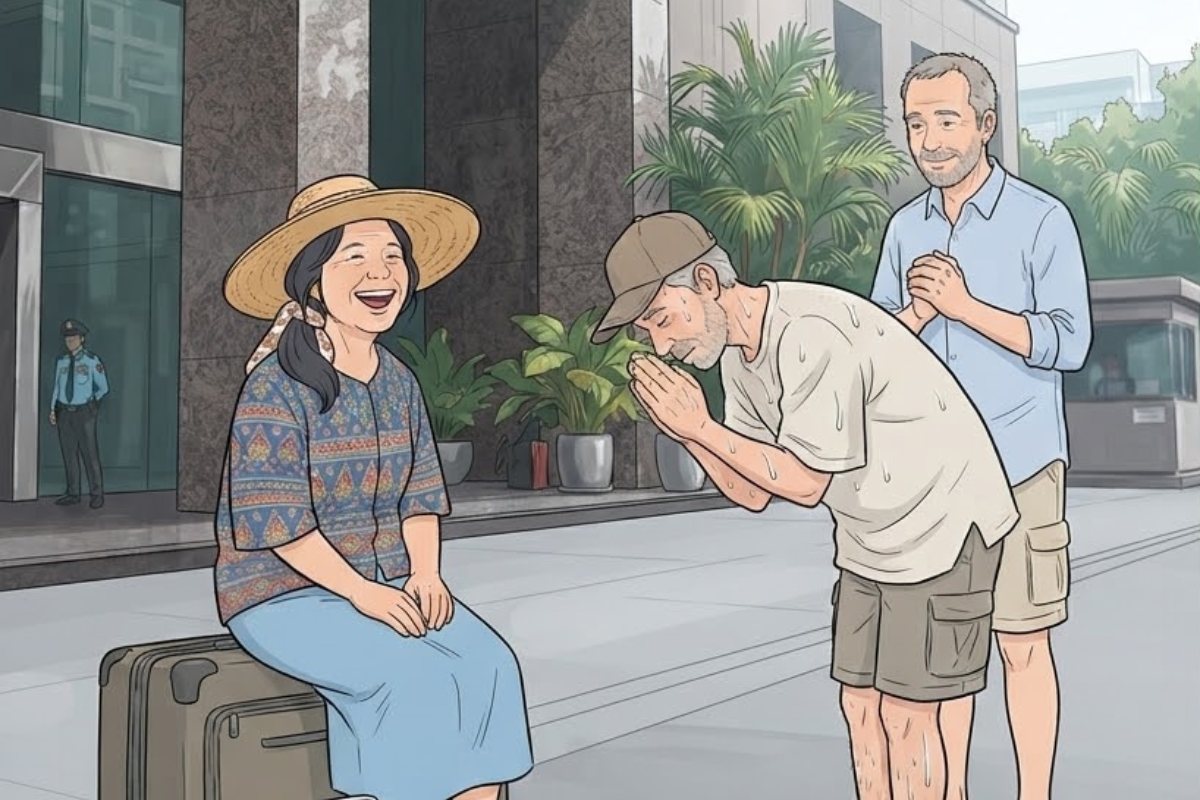
    Chu works in the basement of Saint Louis Hospital in Bangkok, in the pharmacy. For twenty years, she has known every box, every molecule, every lab name. Every late afternoon, the narrator waits for her in the lobby, always on the same bench, until she comes up, her white coat over her arm and her badge flipped against her chest so no one stops her in the corridors.

    On her ID card, her name is Chuampit. In Thailand, almost everyone has a long official first name and a short nickname given at birth. The book sums it up beautifully: your real name is for the bank, your nickname is for the people who love you. Her colleagues, her family, her son, her boss: everyone calls her Chu.

    She comes from Isan, the vast northeast of the country. Her son, Bombay, twenty-six, lives in the village, Nong Theng, in Roi Et province, where he delivers anything that will fit on a scooter. With her own people, Chu speaks Isan, a singsong language that makes her seem younger.

    A face that doesn’t move

    When the lung specialist gives the number over the phone, sixty-four instead of seventy-one, Chu doesn’t ask a single question. She holds out her hand, reads the little café receipt he has jotted it on, folds it in half and tucks it into her own wallet. The narrator has learned one thing about her: the worse the news, the less her face moves. When she misses her bus, she grumbles for ten minutes. This time, nothing.

    Then she simply says: let’s eat. In Thailand, people don’t ask how you are, they ask whether you’ve eaten rice. Coming from Chu, “let’s eat” means much more: I’m taking care of you.

    #TheSeasonOfBreath #Thailand #TravelStory #TrueStory #MrSchaka

    Chu’s time off

    The second chapter tells how she gets a month off, she who hasn’t taken leave in two years. She has to win over Khun Wanida, her boss, a small woman with glasses on a chain, who finally gives in: one month, not a day more, and he’s to bring her back “in good condition.”

    That evening, Chu cooks, which almost never happens: a sour fish soup and sticky rice, the food of Isan, her mother’s cooking. She makes it when she has something to say. Sitting on the mat, she finally talks about the prescriptions she has seen pass through her hands for twenty years, and about the patients who have the same illness as him. In the end, she says, they all say the same thing: they should have gone sooner, taken the trip sooner. The narrator then understands what she told her boss in Thai. Then she washes three bowls, for much longer than it takes.

    A woman of lists

    Chu makes lists the way other people pray. One night, around two o’clock, the narrator finds her at the living room table, a school notebook in front of her and a hospital pen in her hand. Two columns, in Thai and English: clothes on the left, medicine on the right. On the left, presents for the family, a swimsuit for the lake, a poncho for the Isan downpours. On the right, almost nothing, since there is no treatment for him: masks, sunscreen, rehydration salts.

    On the very first evening, on the balcony, she had set a box of masks on his lap. “For the trip.” It was her way of saying yes.

    At home, in Isan

    In Nong Theng, the reader discovers another Chu. The one who laughs, who touches arms and cheeks, who answers everyone in Isan amid a family whose exact size we’ll never know. The one who climbs to the upper floor of the old wooden house with the portraits of her father and mother under her arm, and sets them down in the exact spot where she slept as a child. The narrator then understands that it isn’t the house that belongs to Chu, but the other way around.

    The arm you end up taking

    On the skytrain stairs, she climbs one step below him, without holding his arm. She stops when he stops and looks at the same thing he’s looking at, as if it were fascinating. No one notices a thing. That is Chu’s whole art: helping without it showing. And perhaps that’s why The Season of Breath is dedicated to her.
    Book cover of The Season of Breath

    The book

    The Season of Breath (in English): the true story of a season in Thailand, and the portrait of a woman who holds his arm on the stairs without seeming to.

  • Arriving in Bangkok: From the Airport to Downtown, Stress-Free

    Arriving in Bangkok: From the Airport to Downtown, Stress-Free

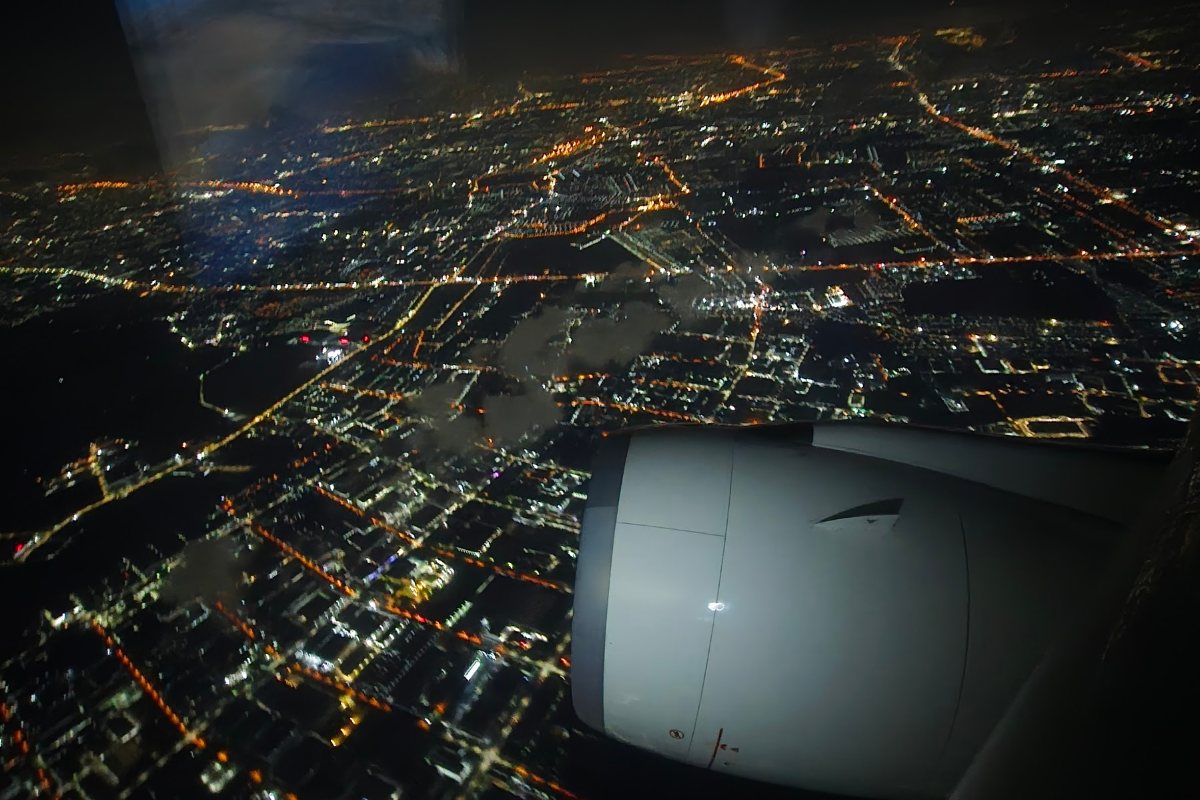
    The flight is long, you’re tired, and the city is huge. Arriving in Bangkok stress-free means knowing three things: which airport you’re landing at, how to get to the center, and what to do with your first few hours. Here are the essentials, taken from Mr Schaka’s practical guide, Bangkok – The Practical Guide.

    Two airports, two ways in

    Bangkok has two international airports. Check your ticket carefully to see which one is yours. They’re more than an hour apart, and mixing them up causes missed connections every single day.

    • Suvarnabhumi (code BKK), east of the city, is the big international airport. Direct flights from Brussels and Paris, and most long-haul flights, land here.
    • Don Mueang (code DMK), to the north, is the old airport. It has become the base for low-cost airlines (Thai AirAsia, Nok Air, Thai Lion Air) for domestic and regional flights.

    Arriving in Bangkok at Suvarnabhumi

    The route is simple: immigration, baggage claim, customs, then the arrivals hall on level 2. For immigration, have your passport, your TDAC confirmation and your hotel address ready. Depending on the time of day, allow anywhere from 20 minutes to more than an hour. Automated e-gates are gradually being rolled out for certain nationalities.

    Before you leave the terminal, three little things will make life easier:

    • buy a SIM card or activate your eSIM at the carriers’ counters on level 2;
    • withdraw or exchange a little cash. Airport rates are worse: change just enough to pay for transport and your first meal, or use the SuperRich on level B, near the train station;
    • download Grab and Bolt if you haven’t already.

    Getting downtown from Suvarnabhumi

    There are five options. Prices are approximate.

    • Airport Rail Link: 15 to 45 THB, 25 to 30 minutes to Phaya Thai, roughly 6 a.m. to midnight. Ideal if you’re traveling light and staying near a BTS or MRT station. It leaves from level B. Phaya Thai connects to the BTS, and Makkasan station connects to the MRT (Phetchaburi station) via a walkway. At rush hour the trains are packed: with big suitcases, it’s uncomfortable.
    • Public metered taxi: 350 to 550 THB, plus a 50 THB airport surcharge and tolls (25 to 75 THB). Allow 30 to 60 minutes, longer at rush hour. A good option for late arrivals, lots of luggage and families.
    • Grab or Bolt: 450 to 700 THB, 30 to 60 minutes. The price is fixed in advance, no haggling.
    • Pre-booked private transfer: from 650 THB, 40 to 60 minutes. For a first trip, a night arrival, or simply peace of mind.
    • S1 bus to Khao San: 60 THB, 60 to 90 minutes, roughly 6 a.m. to 8 p.m. For budget travelers staying in the old town.

    Public taxis are on level 1, at automatic kiosks that assign you a lane number. The driver must switch on the meter. You pay the tolls: he’ll ask you for the coins as you go through the toll gates. Have some small change ready.

    Watch out: in the arrivals hall, touts offer a fixed-price “taxi” or “limousine.” Ignore them politely and head to the official kiosks on level 1, or order a Grab. A flat fare of 1,000 or 1,500 THB to downtown is a scam.

    #Thailand #Bangkok #ThailandTravel #TravelTips #Asia #MrSchaka

    Don Mueang: smaller, but practical

    Don Mueang is more old-fashioned, but practical. Terminal 1 handles international flights, Terminal 2 domestic ones. To get into the city:

    • the SRT Red Line train to Krung Thep Aphiwat Central Station (Bang Sue), then the MRT: around thirty baht, 15 to 20 minutes to Bang Sue. The station is linked to the terminal by a covered walkway (follow the “Train / SRT” signs). Trains run roughly every 15 to 20 minutes, from 5:30 a.m. to midnight;
    • the A1 and A2 buses to Mo Chit (BTS) and Chatuchak (MRT): about 30 THB, 30 to 60 minutes;
    • the A4 bus to Khao San and the old town: about 50 THB, 45 to 90 minutes;
    • a metered taxi: 200 to 400 THB, plus the 50 THB surcharge and tolls.

    Switching airports on the same day? A free shuttle links BKK and DMK for passengers holding a boarding pass for a flight out of the other airport. Allow at least an hour, often more. By taxi, budget 400 to 600 THB including tolls. And leave a buffer of at least four hours between flights.

    Your first hours in Bangkok

    If you arrive by train, the new central station is Krung Thep Aphiwat, in the north of the city, on the MRT Blue Line. Buses arrive at Mo Chit, Ekkamai or Sai Tai Mai, three bus terminals you can reach by taxi or Grab.

    After a long-haul flight, don’t plan anything demanding on day one. The guide suggests a very simple formula: a late-afternoon stroll along the river, a boat ride at sunset, a first street-food meal and a foot massage. Then early to bed.

    Jet lag is easier to beat if you get up with the sun, around 6 a.m. The city is cool then, and the light is gorgeous. It may well be the best way to get acquainted with Bangkok.

    Cover of Bangkok – The Practical Guide

    Want to dig deeper?

    Mr Schaka’s practical guide, available in English, covers arriving at both airports, the train and bus stations, getting around the city and your first hours on the ground, with prices for every budget. The English edition is out now as a PDF ebook: buy it here →

  • Excerpt from La Saison du souffle: Lamai, the Beach of Airplanes

    Excerpt from La Saison du souffle: Lamai, the Beach of Airplanes

    A third excerpt from The Season of Breath. In chapter 8, Michael and Chu arrive on Koh Samui. First stop: a wooden bungalow on Lamai Beach, a hammock, a “well-mannered” sea, and airplanes to count.


    FOR THE first two days, we slept at Beer’s House, a small bungalow hotel set right on Lamai Beach, on the island’s east coast, about twenty minutes from the airport. Lamai is Samui’s second beach, quieter than Chaweng, its neighbor to the north, where people party until morning: a long curve of golden sand, coconut palms leaning toward the water, and at the far southern end, two famous rocks the Thais call Hin Ta and Hin Yai, Grandfather and Grandmother. I won’t describe their shape. Let’s just say that nature, that day, had a sense of humor very close to mine, and that tourists blush as they photograph them while the Thais laugh behind their backs. Legend has it they were an old married couple who set out by boat to ask for a bride for their son, were drowned by a storm, and were turned to stone by the sea so that they would be remembered. They’re still there, side by side, after centuries. I thought it was a lovely way to grow old together.

    Our bungalow was twenty steps from the water. A little burgundy wooden house with a green tin roof and a porch of roughly hewn logs, like in the westerns, but with palm trees. Under the porch there was a black hammock strung between two posts, a plastic chair, a small table, and a coconut frond hanging in front of the door like a curtain. Chu declared the hammock Thai territory within the first minute. She settled into it with her phone and a towel over her legs, and gave her orders from there, like a queen from her throne. I didn’t argue. You don’t argue with an Isan queen in her hammock.

    In front of the bungalow, as in front of almost every house, hotel and shop in the country, there was a spirit house. A little miniature house set on a pillar, gilded, with a temple roof, figurines and garlands of flowers. It shelters the spirits of the land, the ones who were there before us, so they won’t come and bother the living. Every morning, the lady from the front desk left offerings there: rice, fruit, a stick of incense and a glass of red soda, with a straw. Thai spirits like red soda. Chu told me so very seriously. I didn’t dare ask why. You don’t argue about the tastes of the dead.

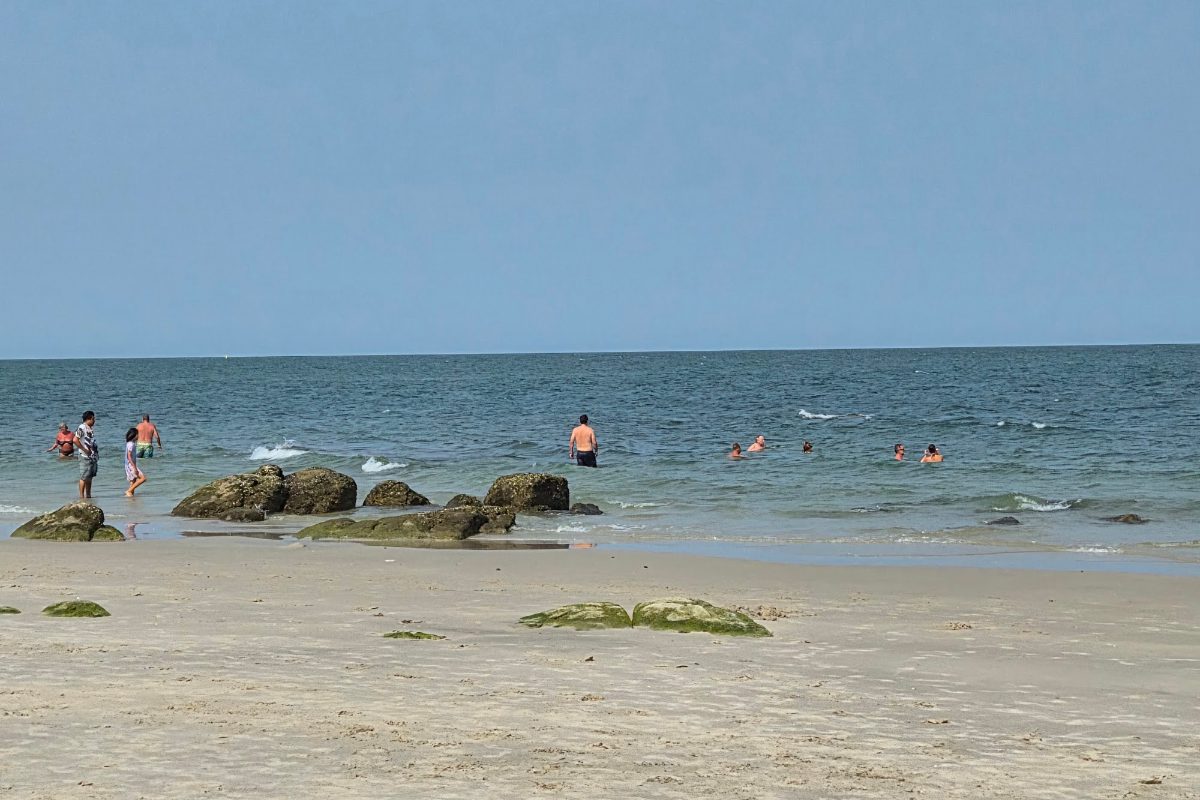
    Right next door was the terrace of a little beach bar: stone pillars, white plastic chairs, painted wooden tables, flags of every color snapping in the wind, and a metal railing above the sand. And beyond it, the sea. Not the gray, crowded sea of Pattaya. A pale green and blue sea, calm, clear at the edge, with little waves that came to die on the fine sand without making a fuss. A well-mannered sea.

    And then there were the airplanes.

    #TheSeasonOfBreath #Thailand #TravelStory #TrueStory #MrSchaka

    The airport wasn’t far, to the north, on the other side of the hills, and roughly every hour a plane that had just taken off appeared over the sea in front of us and climbed, banking gently toward the mainland. First you heard the rumble, then you saw it emerge from the hills, small and shining, with the sun on its wings. The first time, I followed it with my eyes. The second time, I raised my hand. The third time, I started counting them.

    For months now, I’ve been counting steps. On Lamai Beach, I counted airplanes. It’s far more restful. Airplanes, you don’t have to climb. You watch them go by from a distance, you wave, and they carry other people somewhere else. From her hammock, Chu pointed one out to me every time it came, the way you’d point out a shooting star to a child.

    “Another one, Michael.”

    “Another one. That one’s going back to Bangkok.”

    “How do you know?”

    “It’s dragging its feet.”


    Cover of The Season of Breath

    Read on

    This excerpt comes from chapter 8, “The Crossing,” of The Season of Breath, the true story of a man from Liège who goes to live a season in Thailand with an illness no one can see. The book is available in English.

  • Khao San Road and Banglamphu: Bangkok’s Lively Old Town

    Khao San Road and Banglamphu: Bangkok’s Lively Old Town

    Love it or hate it, Khao San Road deserves at least one evening. But the real treasure is the neighborhood around it: Banglamphu, the old working-class town, with its quiet temples, its artisans and its riverside streets. Here’s how to make the most of it.

    Khao San Road, backpacker central

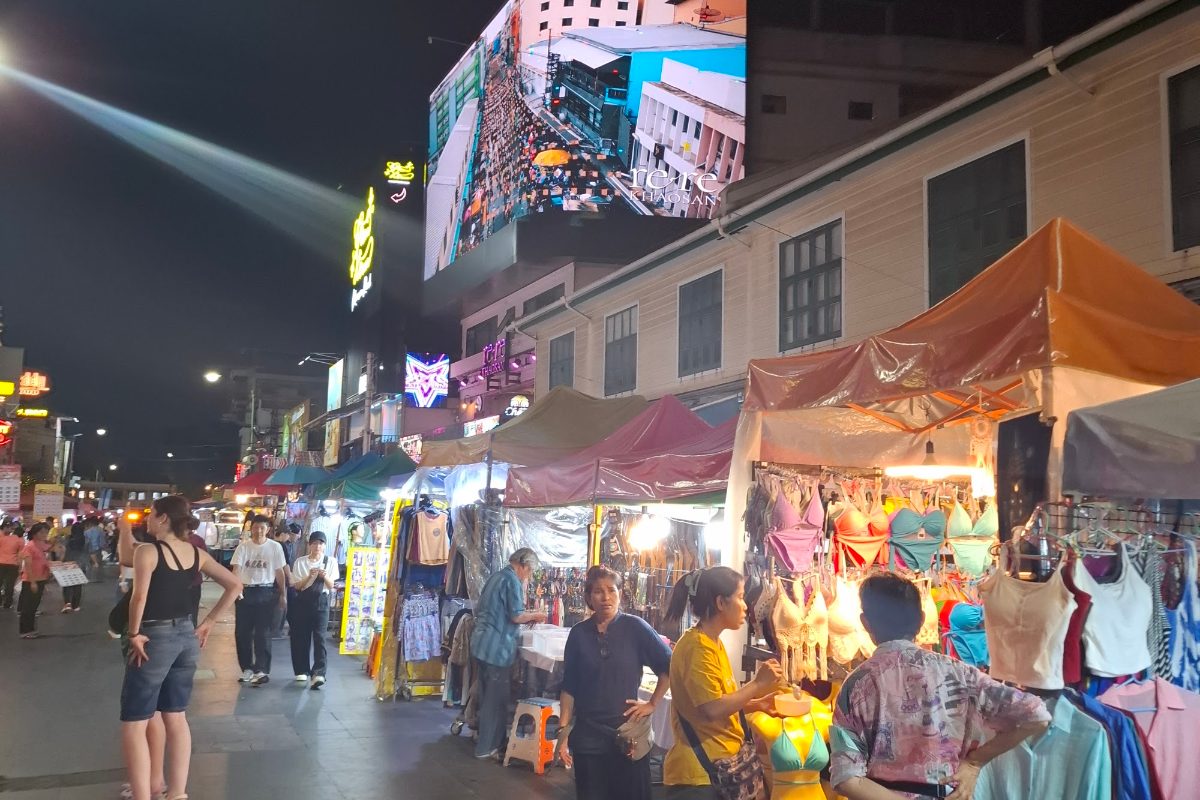
    Forty years ago, Khao San was a street of rice merchants: its name means “milled rice.” Since the 1980s, it’s been the world’s backpacker meeting point: hostels, travel agencies, tattoo parlors, pad thai stalls, scorpion skewers for selfies, bars serving cocktail buckets and music at full blast.

    In the evening, the street goes pedestrian and turns into one giant party. If that’s too much for you, the next street over, Soi Rambuttri, which curves around Wat Chana Songkhram temple, is more laid-back, with its terraces under the trees.

    Phra Arthit, the peaceful side

    Along the river, Phra Arthit Road is lined with cafés, small restaurants, galleries and bars frequented by students from nearby Thammasat University. At the end stands Phra Sumen Fort, white and octagonal, one of the last two remnants of the 18th-century city walls. In the little Santichai Prakan Park, locals do aerobics at the end of the day, and you can watch the boats go by at sunset.

    The Golden Mount, the best view of the old town

    This artificial hill topped with a golden stupa was long the highest point in Bangkok. A staircase of 344 steps, easy and shaded, winds around the hill up to a terrace with a 360-degree view. Go in the late afternoon for the sunset. Open every day, roughly 7:30 a.m. to 7 p.m.; 100 THB.

    Just across the way, Loha Prasat is a “metal palace” unique in the world, bristling with 37 spires that symbolize the 37 virtues leading to enlightenment. Inside, you make your way up to the top through a maze of corridors.

    #Thailand #Bangkok #ThailandTravel #TravelTips #Asia #MrSchaka

    Wat Suthat and the Giant Swing

    The Giant Swing, a 21-meter red teak frame, was once used for a ceremony in which men swung through the air to catch a bag of silver with their teeth. Behind it, Wat Suthat is one of the most beautiful temples in the city and one of the least visited: a large bronze Buddha, remarkable murals and cloisters of absolute calm (100 THB). Bamrung Muang Road, which leads there, is lined with shops selling religious goods: a sight in itself.

    Ban Bat, the last makers of monks’ alms bowls

    Near the Golden Mount, the small community of Ban Bat is the last in the city to make monks’ alms bowls by hand, from eight strips of metal, like the eight spokes of the dharma wheel. A few families let you watch them work. A bowl, from around 1,000 THB, is an authentic souvenir that keeps the community going.

    Where to eat in the neighborhood

    • Thip Samai, near the Golden Mount: pad thai wrapped in a thin omelet, since 1966.
    • Krua Apsorn, Dinso Road: refined home-style cooking, famous for its crab omelet.
    • Jay Fai, near the Giant Swing: the Michelin-starred cook in the ski goggles. Pricey and a very long wait, so book ahead.

    How to get there

    The nicest way: the orange-flag boat on the river to Phra Arthit pier. Otherwise, the MRT to Sam Yot, or the Saen Saep canal boat to Phan Fa, at the foot of the Golden Mount.

    Good to know: for a full day, combine the Grand Palace and Wat Pho in the morning, then the Golden Mount at sunset in the afternoon, and finish with dinner in Banglamphu and a stroll along Khao San.

    Cover of Bangkok – The Practical Guide, Mr Schaka’s practical guide to Bangkok

    Want to dig deeper?

    Mr Schaka’s guide, Bangkok – The Practical Guide (“Bangkok: The Practical Guide”), describes every Bangkok neighborhood in detail, with how to get there, opening hours, prices and the best addresses, from the old town to Sukhumvit. The English edition is out now as a PDF ebook: buy it here →

  • When to Go to Thailand? The Weather Month by Month

    When to Go to Thailand? The Weather Month by Month

    “When’s the best time to go to Thailand?” The short answer: November to February. The useful answer: it depends on where you’re going. Bangkok, the North, the Andaman islands and the Gulf islands don’t get the same weather at the same time. Here’s the calendar, month by month, so you can choose without getting it wrong.

    Thailand’s three seasons

    • The dry, “cool” season (November to February): blue skies, bearable heat, around 25 to 32 °C in Bangkok. This is high season: more crowds and pricier hotels.
    • The hot season (March to May): very dry and very hot, often 35 °C and above in Bangkok in April. Days are best lived early in the morning and late in the afternoon.
    • The rainy season (June to October): heavy downpours, often late in the day, broken up by lovely sunny spells. September and October are the wettest months. Fewer tourists, gentler prices, gorgeous greenery.

    Good to know: the Gulf of Thailand coast (Koh Samui, Koh Phangan, Koh Tao) works the other way around: its rainiest period tends to run from October to December, and summer there is often beautiful.

    Thailand month by month

    January

    The ideal month almost everywhere: dry weather, pleasant warmth, cool nights in the North. It’s also one of the busiest months: book early.

    February

    Still dry and sunny. Temperatures start to climb. In the North, the end of the dry season can bring smoke from agricultural burning and hazy skies. In 2027, Chinese New Year falls in early February: Bangkok’s Chinatown is in full party mode.

    March

    The heat settles in. The beaches of the Andaman (Phuket, Krabi, Koh Lanta) and the Gulf are at their best. Avoid the North if you can, as it’s often shrouded in haze from the burning.

    April

    The hottest month of the year. But it’s also Songkran, Thai New Year, from April 13 to 15: a gigantic water fight across the whole country. Unforgettable, as long as you protect your phone.

    May

    The first rains arrive and cool the air a little. In Isan, it’s the season of the rocket festivals (Bun Bang Fai), held to call the rain down onto the rice fields.

    June

    The rainy season begins in Bangkok and on the Andaman coast, where the sea gets rough. Koh Samui and the Gulf, on the other hand, often enjoy a lovely spell. Prices drop, and the rice fields turn a brilliant green.

    July and August

    Summer vacation in Europe. It rains regularly in Bangkok, but rarely all day. The Gulf (Koh Samui, Koh Tao) is the best choice for the beach at this time of year.

    September

    Often the rainiest month in Bangkok and on the Andaman. A few streets can flood after big storms. It’s the month for bargains, if you don’t mind getting a little wet.

    October

    Still very wet, especially early in the month. The rains gradually ease off in the center and the North, while the rain settles in over the Gulf. A transition month, with prices still low.

    November

    Good weather returns to Bangkok, the North and the Andaman. It’s also the month of Loy Krathong, the festival of lights: people float little flower-decked boats on the water under the full moon. In 2026, the festival is expected around November 24 (the official date is confirmed each year by the tourism authority). In Chiang Mai, it coincides with Yi Peng and its sky lanterns.

    December

    Blue skies and pleasant temperatures: this is the most sought-after period, with the end-of-year holidays. Hotel and flight prices go up: book several months ahead. The only downside: the Gulf (Koh Samui) can still be rainy.

    #Thailand #Bangkok #ThailandTravel #TravelTips #Asia #MrSchaka

    Region by region

    • Bangkok and the center: November to February for comfort. The rest of the year is perfectly doable if you adapt to the heat or the showers.
    • The North (Chiang Mai, Chiang Rai): November to January, with cool nights. Avoid February to April if you’re sensitive to pollution from the burning.
    • The Andaman coast (Phuket, Krabi, Koh Lanta): November to April.
    • The Gulf (Koh Samui, Koh Phangan, Koh Tao): January to August, preferably avoiding October to December.
    • Isan (the northeast): November to February, when it’s milder. After the rainy season, the rice fields are superb.

    Bangkok, Pattaya, Koh Samui, the rice fields of Isan: that’s exactly the route of The Season of Breath (“The Season of Breath”), Mr Schaka’s true-story memoir, available in French. Another way to discover the Thai seasons, from the inside.

    Our tips for choosing well

    • For a first trip: November to February, combining Bangkok, the North and the Andaman.
    • On a tight budget: May, June or September, when prices drop.
    • In July–August: Bangkok, then the Gulf islands.
    • For the festivals: Songkran in April, Loy Krathong in November.

    Before you go: remember the paperwork. Entry rules changed in 2026, with the TDAC digital arrival card. It’s all explained in our article Thailand visa 2026.

    Cover of Bangkok – The Practical Guide

    Go further

    Mr Schaka’s guidebook, Bangkok – The Practical Guide (“Bangkok: The Practical Guide”), helps you plan every step of your time in Bangkok: neighborhoods, transport, temples, street food and itineraries from 24 hours to a week. Whatever month you’re leaving. Available in English on Amazon. The English edition is out now as a PDF ebook: buy it here →

  • Budget for a Week in Bangkok: The Real Prices

    Budget for a Week in Bangkok: The Real Prices

    Bangkok has a reputation as a cheap capital. That’s true… as long as you know where your money is going. You can live very well there on a small budget, just as you can spend as much as in Paris on rooftop bars and grand hotels. Here are the real prices, item by item, and three sample budgets for a week.

    The exchange rate: in October 2026, 1 euro is worth about 37 to 38 baht (THB). For a quick calculation: 100 baht is a little under 3 euros. The prices below are a guide and may vary.

    Accommodation: the biggest expense

    • Dorm bed: €5 to €15 a night.
    • Small hotel or guesthouse: €20 to €35.
    • Mid-range hotel (3–4 stars, often with a rooftop pool): €50 to €100.
    • Grand hotel: from €150, and a lot more on the riverside.

    The neighborhood makes a big difference to prices: Khao San and Pratunam are the cheapest, Sukhumvit and the riverside the most expensive. To choose, read our article Where to stay in Bangkok.

    Eating: the best value for money in the world

    • A street food dish (pad kra pao, khao man gai, noodles): 50 to 100 baht, or €1.50 to €3.
    • A meal in a small Thai restaurant: 100 to 250 baht.
    • A Western restaurant: 300 to 600 baht per dish.
    • A beer from 7-Eleven: about 50 to 70 baht. In a bar: 120 to 250 baht.
    • A cocktail at a rooftop bar: often 400 to 700 baht.

    Eating on the street isn’t just cheap: it’s often where you’ll eat best. Our guide What to eat in Bangkok tells you what to order.

    Good to know: alcohol is the real hidden expense in Bangkok. It’s heavily taxed and comparatively expensive. A €3 street food dinner can turn into a €30 night out with a few cocktails.

    Getting around

    • BTS and MRT: about 17 to 65 baht per trip, depending on distance.
    • River boat (orange flag): about 20 baht.
    • Taxi, Grab or Bolt in town: often 60 to 250 baht.
    • From Suvarnabhumi airport: the Airport Rail Link train costs under 50 baht. By taxi, expect about 300 to 500 baht, tolls and airport surcharge included.

    All the details are in our article Getting around Bangkok.

    #Thailand #Bangkok #ThailandTravel #TravelTips #Asia #MrSchaka

    Sightseeing

    • Grand Palace: 500 baht.
    • Wat Pho (the Reclining Buddha): 300 baht.
    • Wat Arun: 200 baht.
    • Golden Mount (Wat Saket): 100 baht.
    • Jim Thompson House: 250 baht.
    • Chatuchak Market, Chinatown, Lumpini Park: free.

    Temple entry fees have gone up in recent years: check on site. And don’t believe the stranger who tells you the Grand Palace is “closed today”: it’s a well-known scam.

    The little extras

    • A one-hour Thai massage at a neighborhood parlor: often 300 to 500 baht.
    • Tourist SIM card or eSIM: about €10 to €20 for one to four weeks.
    • ATM withdrawals: most Thai banks charge 220 baht per withdrawal with a foreign card. Take out large amounts at once rather than small amounts often.

    Three budgets for a week in Bangkok

    These budgets are per person, for seven nights, not including airfare. On top of that, depending on the season and the airline, a round trip from Paris or Brussels often costs €600 to €1,000.

    • Shoestring budget: about €250 to €400. Hostel or small guesthouse, street food morning, noon and night, metro and boat, two or three temples, one massage.
    • Mid-range budget: about €700 to €1,000. A 3–4 star hotel with a pool (cheaper per person if you share a room), a mix of street food and restaurants, a few Grab rides, all the major sights, one rooftop bar.
    • Comfort budget: from €1,800. A grand hotel on the riverside or in Sukhumvit, good restaurants, taxis, spa and nights out.

    Our tips for spending less

    • Eat where Thai people eat: the busier it is, the better it is.
    • Take the metro at rush hour instead of a taxi: faster and ten times cheaper.
    • Buy water and drinks at 7-Eleven rather than at your hotel.
    • Avoid changing money at the airport, where the rate is worse.
    • Travel outside high season (May, June, September): hotels are noticeably cheaper. Our article When to go to Thailand helps you choose.
    Cover of Bangkok – The Practical Guide

    Go further

    Mr Schaka’s guidebook, Bangkok – The Practical Guide (“Bangkok: The Practical Guide”), lays out the real prices, the smart habits and the traps to avoid so you can enjoy Bangkok without breaking the bank, with itineraries from 24 hours to a week. Available in English on Amazon. The English edition is out now as a PDF ebook: buy it here →

  • Where to Stay in Bangkok: Which Neighborhood to Choose?

    Where to Stay in Bangkok: Which Neighborhood to Choose?

    In Bangkok, the neighborhood you sleep in matters almost as much as the hotel itself. The city is huge, the traffic jams are very real, and a badly placed address can cost you an hour of travel a day. The good news: there’s a neighborhood for every kind of trip. Here’s how to choose where to stay in Bangkok.

    The golden rule: sleep near a station

    Before you look at the pool photos, look at the map. A hotel less than a ten-minute walk from a BTS (Skytrain) or MRT (subway) station will save you precious time. For the old town, the other good option is to be close to a pier on the river. All the details on the lines are in our article Getting around Bangkok.

    Sukhumvit: the most convenient for a first visit

    A long avenue running east, Sukhumvit is home to a large share of the city’s hotels, international restaurants, shopping malls and bars. Asok station, where the BTS and MRT meet, is its heart. The further east you go (Phrom Phong, Thong Lo, Ekkamai), the more residential and trendy the vibe becomes.

    • Who it’s for: first-timers, families, anyone who wants everything within easy reach.
    • Pros: excellent transport, a huge choice of hotels, English widely spoken.
    • Cons: a bit pricier, far from the big temples, and some streets (Nana, Soi Cowboy) get very lively at night.

    Typical prices: around €20 to €40 a night for a hostel or small room, €50 to €100 for mid-range, from €150 for a big hotel.

    Silom and Sathorn: the business district that knows how to live

    By day, Silom and Sathorn are the land of offices and embassies. By night, it’s rooftop bars, the Patpong night market and cocktail bars. Lumpini Park, the city’s green lung, is right nearby: perfect for a morning jog among the monitor lizards.

    • Who it’s for: couples, business travelers, fans of slightly more upscale nightlife.
    • Pros: BTS and MRT, excellent restaurants, quick access to the river via Saphan Taksin.
    • Cons: less charm on weekends, when the offices are empty.

    Typical prices: from €25 for a basic room, €50 to €100 for mid-range, €250 and up at the luxury palaces.

    Riverside: the picture postcard

    Along the Chao Phraya, you’ll find Bangkok’s most legendary hotels, like the Mandarin Oriental. Sunsets over the temples from a waterside terrace are worth the trip alone. Many hotels offer a free river shuttle to BTS Saphan Taksin.

    • Who it’s for: couples, honeymooners, anyone who wants to treat themselves.
    • Pros: the setting, the views, the boat to reach the old town with no traffic jams.
    • Cons: the big hotels are expensive, and you rely on boats or taxis to get around.

    Typical prices: around €35 to €50 for a simple hotel, €80 to €130 for mid-range, €300 and up for the palaces.

    The old town (Rattanakosin): for temple lovers

    The Grand Palace, Wat Pho and, across the river, Wat Arun: you can do it all on foot. The old town has kept a slower pace, with charming little guesthouses and authentic, cheap street food.

    • Who it’s for: history buffs, early risers who like to sightsee before the crowds.
    • Pros: the atmosphere, temples within walking distance, gentle prices.
    • Cons: no BTS. You’ll rely on the boat, the MRT (Sanam Chai station) or taxis to reach the modern districts.

    Typical prices: €20 to €40 for a guesthouse, €50 to €100 for a boutique hotel, €150 and up for luxury addresses.

    #Thailand #Bangkok #ThailandTravel #TravelTips #Asia #MrSchaka

    Banglamphu and Khao San: budget travel and backpacker vibes

    Khao San Road is the legendary backpacker street: hostels, bars, hole-in-the-wall eateries, travel agencies. Right next door, the streets of Banglamphu and Phra Athit are much calmer and full of charm, while staying just steps from the action.

    • Who it’s for: budget travelers, solo travelers who want to meet people.
    • Pros: the lowest prices in town, the old town on foot, the boat at Phra Arthit pier.
    • Cons: very noisy at night on Khao San itself, no metro station nearby.

    Good to know: if you’re a light sleeper, pick a place on a street parallel to Khao San rather than on the street itself. You’ll enjoy the atmosphere without the music until two in the morning.

    Typical prices: a dorm bed from €5 to €8, a private room rarely over €30.

    Siam and Pratunam: for shopping

    Siam is the BTS crossroads and a shopping-mall paradise: Siam Paragon, MBK, CentralWorld. A little further north, Pratunam is the district of wholesale markets and textiles, with hotels that are often cheaper than in Sukhumvit.

    • Who it’s for: shopping fans, families who want convenience.
    • Pros: very central, with the Airport Rail Link nearby (Ratchaprarop station) for Suvarnabhumi airport.
    • Cons: not much charm, and little going on at night outside the malls.

    Typical prices: €20 to €35 for a simple hotel, €50 to €90 for mid-range.

    Chinatown (Yaowarat): for food lovers

    In the evening, Yaowarat Road lights up with neon and turns into a gigantic open-air canteen. Staying in Chinatown means having the best street food in Bangkok right outside your hotel. Since Wat Mangkon MRT station opened, the neighborhood is also well connected to the rest of the city. To know what to order, read our guide What to eat in Bangkok.

    • Who it’s for: foodies, photographers, people who love a bit of hustle and bustle.
    • Pros: the food, the atmosphere, the MRT and the river close by.
    • Cons: noisy, crowded, not the ideal place with a stroller.

    In short: which neighborhood is right for you?

    • First trip: Sukhumvit (around Asok or Phrom Phong).
    • Temples and history: the old town or Banglamphu.
    • Tight budget: Banglamphu, Khao San or Pratunam.
    • Romantic getaway: Riverside.
    • Food: Chinatown.
    • Shopping: Siam or Pratunam.

    Watch out: the prices shown on some websites don’t always include taxes and service charges, which can add around 17% to the bill. Check the final price before you book. And beware of drivers who tell you your hotel is “closed”: it’s a classic scam.

    Once you’ve found your hotel, all that’s left is to plan your days: our 3-day Bangkok itinerary is a good place to start.

    Cover of Bangkok – The Practical Guide

    Go further

    Mr Schaka’s guidebook, Bangkok – The Practical Guide (“Bangkok: The Practical Guide”), covers every Bangkok neighborhood in detail, with its addresses, its stations and the traps to avoid. Everything you need to choose your hotel with confidence. Available in English on Amazon. The English edition is out now as a PDF ebook: buy it here →

  • Excerpt from La Saison du souffle: The River

    Excerpt from La Saison du souffle: The River

    A second excerpt from The Season of Breath. In chapter 7, it’s the last day in Bangkok before heading off to the islands. Chu suggests spending it “like tourists,” on the Chao Phraya boat, all the way to Wat Arun.


    IN THE AFTERNOON, we took the boat. It was Chu’s idea: one last day in Bangkok, “like tourists.” She has never been a tourist in her own city, and I stopped being one a long time ago. That day, we gave it a try.

    At the Sathorn pier, under the Taksin Bridge, the water of the Chao Phraya is brown and thick, with clumps of water hyacinth drifting down toward the sea like little green rafts. The pier never stops moving. You don’t stand on it so much as negotiate with it.

    The orange-flag boat came in backward, in a great churning of engine. A boy in a blue shirt jumped onto the pier with a rope; another pulled out a whistle and started blowing it without stopping. Here, you board the way you’d jump onto a moving train. Thais do it without thinking, still chatting on the phone. An old lady with two bags of groceries stepped aboard ahead of me, light as a bird.

    Me, I hesitated. Half a second. Long enough to judge the distance between the pier and the deck of the boat, which kept rising and falling. Long enough to feel, in my chest, that I didn’t have the air to jump AND catch myself. The whistle kept whistling. Behind me, someone pushed, not unkindly.

    Chu’s hand came to rest on my elbow. She didn’t pull. She just laid her hand there, the way you rest a hand on a piece of furniture you’re moving. And I jumped.

    Once aboard, I sat down on the first bench and breathed through my mouth, slowly, watching the water, as the boat pulled away. My heart was pounding against my ribs. Nobody looked at me. The old lady with the groceries was already peeling a mandarin. The boy had put his whistle away. For everyone else, nothing had happened, and it’s true that almost nothing had.

    At the back of the boat, a few seats were marked with a small sign: reserved for monks. A monk in a saffron robe sat down there, alone, and nobody sat beside him. Chu explained to me in a low voice that a woman must never touch a monk, or hand him anything directly, even on a packed boat. If she wants to give him something, she sets it down in front of him, or goes through a man. And with that she slipped away from him with a dancer’s grace, without seeming to, while the boat rolled.

    #TheSeasonOfBreath #Thailand #TravelStory #TrueStory #MrSchaka

    Chu sat down next to me. She was looking at the riverbank. Her hand was still on my elbow.

    Then the river wind came, and with it, the air. An air that isn’t the city’s, an air that comes from far away, from the sea perhaps, smelling of water, diesel and the jasmine of an offering set on the bow. I took it in by the mouthful. On the river, I breathe better. I don’t know if that’s true, or if it’s because there are no steps to climb.

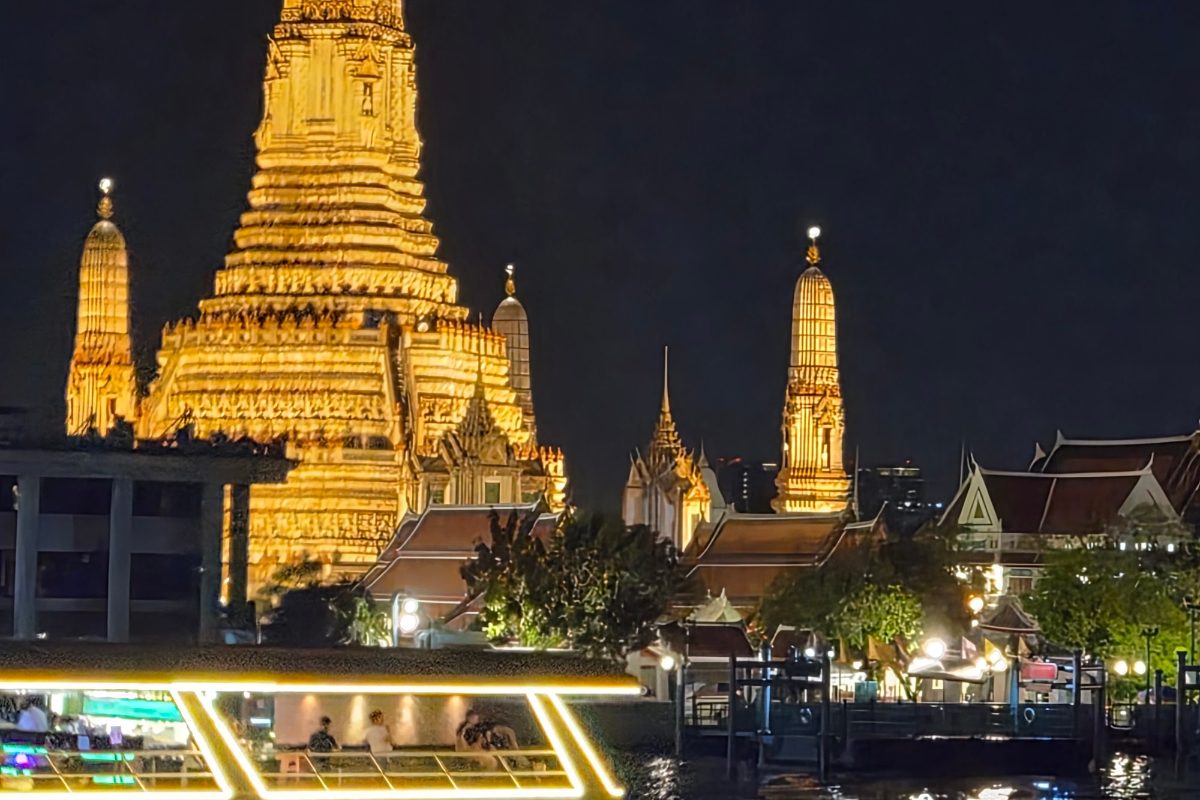
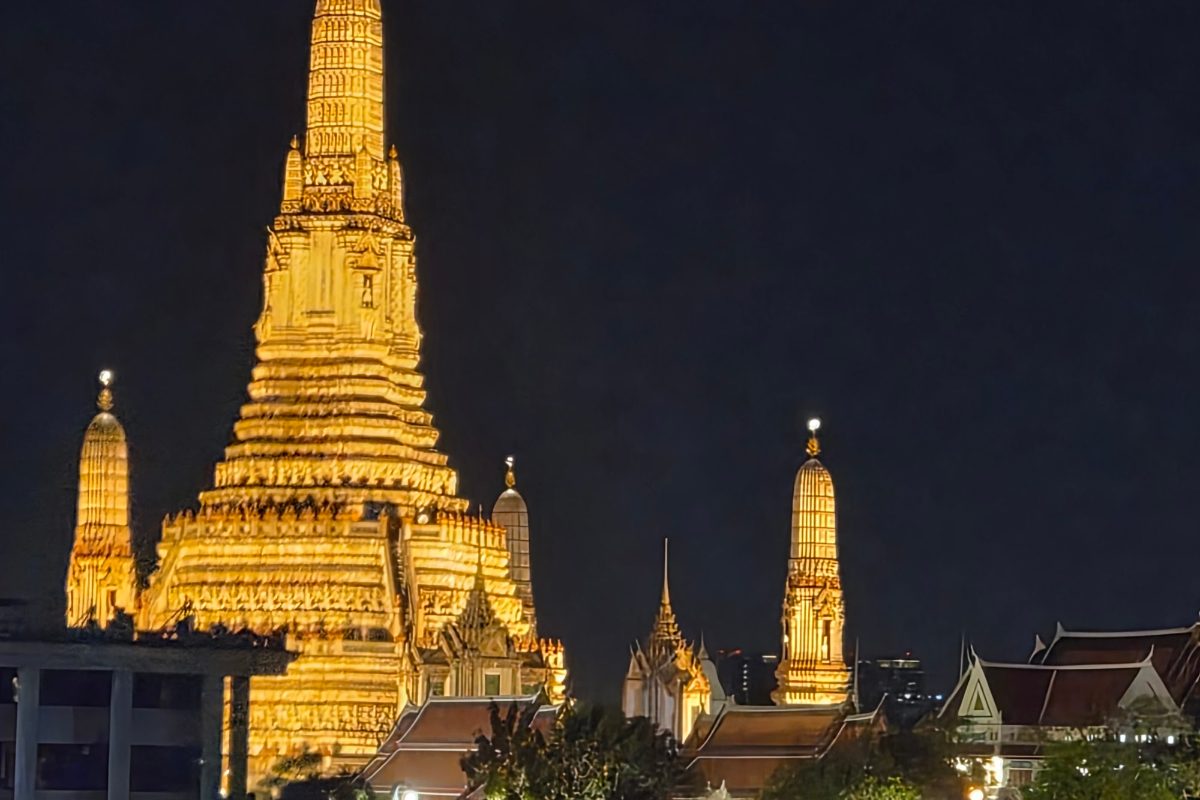
    We got off at Tha Tien. We sat on a café terrace facing Wat Arun, on the other side of the water. The temple rose in the late-afternoon light, bristling with porcelain, its steps so steep you almost climb them on all fours. Tourists were scaling them, tiny, clutching the handrail.

    “Do you want to go up?” Chu asked.

    It was a joke of a question. I took it as a joke.

    “I climbed it ten years ago. I remember the view.”

    That’s not true. Ten years ago, I wasn’t in Thailand. But I could have climbed it ten years ago, and I remember very clearly the view I would have had.


    Cover of The Season of Breath

    Read on

    This excerpt comes from chapter 7, “The River,” of The Season of Breath, the true story of a man from Liège who goes to live a season in Thailand with an illness no one can see. The book is available in English.

  • Excerpt from La Saison du souffle: Tiger Park in Pattaya

    Excerpt from La Saison du souffle: Tiger Park in Pattaya

    A first excerpt from The Season of Breath. In chapter 3, Michael, his partner Chu and his friend Gabriel from Liège spend a few days in Pattaya. Among the “two extraordinary days” of their stay is the day of the tigers.


    Tiger Park is on the edge of Pattaya, out toward Jomtien, along the big Sukhumvit highway. From the road, you’d never guess. You go in beneath a curtain of aerial roots hanging from a wall of foliage, with TIGER PARK spelled out in the middle in orange and green letters, like the entrance to a cartoon jungle. Gabriel and I posed in front of it, side by side, each with a bag slung across his chest, him in a white T-shirt and flip-flops, me in an Argentina jersey and Crocs. Two explorers. Livingstone and Stanley, Liège edition, kitted out for the swimming pool. Chu took the picture, laughing. She was wearing her Argentina jersey too. That day it was two against one, and Gabriel pointed it out all day long.

    The visit begins with a safari on a little electric train, protected by bars and windows, that winds through the park’s forest for a quarter of an hour. For me, it was perfect: a sit-down safari. The tigers live their tiger lives there, which is to say they sleep. Two big males were napping on the paving stones, between fallen tree trunks, pressed against each other like an old married couple who no longer speak but wouldn’t leave each other for anything in the world. Another was lying in a turquoise pool at the foot of a fake-rock waterfall, water up to his neck, eyes half-closed, like a retiree in his Sunday bath. A fourth had sat down in the middle of the path, bolt upright, paws together, and he looked the train in the eye as it went by, car by car, like a conductor checking tickets. Nobody dared show him theirs. Behind the trees you could see the balconies of an apartment building, with laundry drying. Even the jungle, in Pattaya, has neighbors. I wondered what it’s like to drink your morning coffee with a view of tigers. You probably stop seeing them in the end. That’s what happens to everything extraordinary, when you see it every day.

    Then come the encounters. You go into the enclosure in small groups, for about ten minutes, and a keeper explains the rules before opening the gate: move slowly, speak softly, touch the tiger from behind, on the back or the flank, never the head, never the paws. Each keeper holds a long stick, the way a shepherd holds his crook, and that gave me pause: between a two-hundred-kilo animal and me, there was a twenty-year-old kid and a stick.

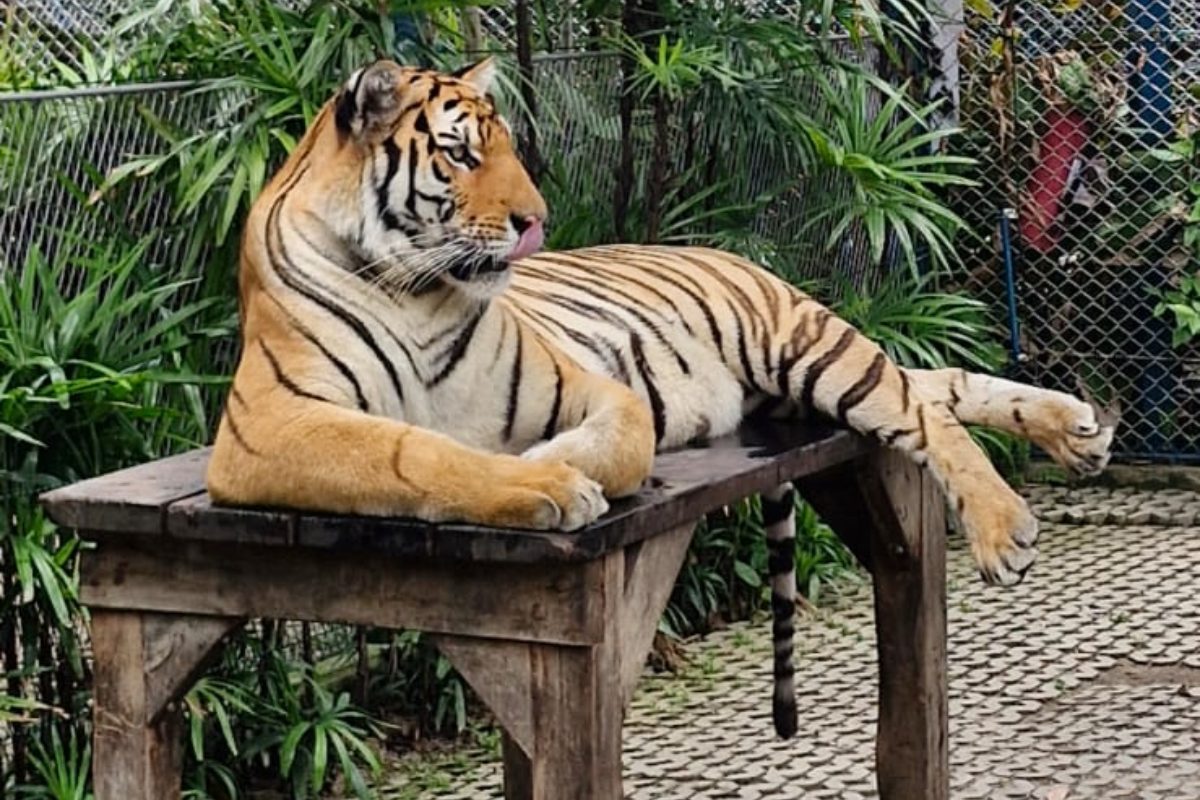
    The first tiger was enormous. He was stretched out full length on a wooden table, front paws dangling over the edge, tail softly thumping against a table leg, and he was sleeping like a cat after dinner. Gabriel went first. He reached out his hand, fingertips first, with the face of a man calculating his odds and not liking the answer. The tiger half-opened one eye. Gabriel pulled his hand back. The keeper laughed. Gabriel tried again, and this time he stroked him for real, looking at me as if to say: if I die, tell them I was brave.

    #TheSeasonOfBreath #Thailand #TravelStory #TrueStory #MrSchaka

    Me, I hesitated. I was afraid he’d sense that I was the weakest of the herd: animals know these things. So Chu took my hand, and we went around behind him, both of us in our Argentina jerseys, and I laid my hand flat on his back. He was warm, much warmer than I’d have thought, and under my palm his flank rose and fell, slowly, deeply, like a tide. I left my hand there for the whole photo, and a little longer. I didn’t think about his teeth or his claws. I thought about his lungs. A huge animal breathing without thinking about it, all the way, right to the bottom, never counting. I envied him, I think. He didn’t open an eye. I concluded that he thought I was in great shape.

    Then there were the little ones, in a cool room out of the sun. Chu lay down on the floor, barefoot, head propped on her hand, beside a sleeping young tiger, and stroked his flank the way you pat an old dog on the couch on a Sunday. The tiger sighed. So did Chu. They seemed to get along nicely. Gabriel knelt down, and a keeper handed him a bottle of milk. The baby tiger threw himself at it, eyes shut, ears back, one paw resting on Gabriel’s leg so he wouldn’t leave, and suckled with the sound of a pump. Gabriel didn’t move a muscle. He didn’t even dare breathe. Gabriel, who has never managed a soup in his life, was feeding a tiger. I told him that if things ever stopped working out in Belgium, he had a new career all lined up. He didn’t answer. He was watching the little one drink, with a face I’d never seen on him before.

    On the way out, all he said was:

    “We’ll tell this one at the bar, and nobody will believe us.”

    That’s partly why I’m writing this book. With the photos.


    Cover of The Season of Breath

    Read on

    This excerpt comes from chapter 3, “Pratumnak,” of The Season of Breath, the true story of a man from Liège who goes to live a season in Thailand with an illness no one can see. The book is available in English.

  • Bangkok in 3 Days: An Itinerary to See the Best Without Wearing Yourself Out

    Bangkok in 3 Days: An Itinerary to See the Best Without Wearing Yourself Out

    Bangkok is too big to be “done.” But with three well-planned days, you can see the essentials without running yourself ragged. The secret: group your visits by neighborhood and go with the city’s rhythm. Sightseeing early in the morning, a cool break during the hottest hours, outings at the end of the day.

    Day 1: the old town and the river

    • 8:30 a.m.: the Grand Palace and Wat Phra Kaew, right at opening time. By 10 a.m., the tour groups pour in and the heat climbs. Allow 2 to 3 hours and 500 THB.
    • Late morning: Wat Pho, just to the south, with its huge Reclining Buddha covered in gold leaf. Many people prefer it to the Grand Palace: less crowded, more alive.
    • Noon: a quick lunch at a canteen in Tha Tien, then a massage at the Wat Pho school, the most famous in the country.
    • Afternoon: an air-conditioned break at Museum Siam, then the ferry across to Wat Arun.
    • Evening: sunset from a rooftop in Tha Tien, dinner in Banglamphu and a stroll down Khao San Road.

    Watch out: the Grand Palace dress code is strictly enforced: shoulders and knees covered, no tight or ripped clothing. And if someone near the entrance tells you “the palace is closed today,” it’s a scam: go and check for yourself.

    Day 2: the canals and Chinatown

    • Morning: a long-tail boat ride through the Thonburi canals on the west bank, then Wat Paknam and its giant Buddha.
    • Afternoon: the lanes of Talat Noi and Song Wat, old warehouses turned into cafés and galleries, then Wat Traimit and its Golden Buddha.
    • Evening: a roving dinner along Yaowarat, Chinatown’s main street, from stall to stall.

    #Thailand #Bangkok #ThailandTravel #TravelTips #Asia #MrSchaka

    Day 3: modern Bangkok

    • Morning: the Jim Thompson House, a cluster of traditional teak houses, then the BACC, the contemporary art center.
    • Noon: the Siam Paragon food hall.
    • Afternoon: shopping in Siam and Ratchaprasong, the Erawan Shrine, then Lumpini Park and its monitor lizards.
    • Evening: a rooftop bar and dinner in Sukhumvit or Thonglor.

    Staying longer?

    For a five-day stay, add a Chatuchak day, Asia’s biggest weekend market (on a Saturday or Sunday), with the cafés of Ari in the afternoon and a night market in the evening. Then a day trip: Ayutthaya for history, the Maeklong railway market and Amphawa for markets, or Bang Krachao by bike for nature.

    Tips for keeping up the pace

    • On your first day after a long flight, don’t plan anything demanding: a walk along the river, a sunset boat ride, your first street food meal.
    • Take your midday break somewhere air-conditioned: a museum, a mall or a hotel.
    • To get from one neighborhood to another, combine the BTS, MRT and boats rather than taking a taxi at rush hour.
    • Drink plenty, and keep a scarf in your bag to cover your shoulders in temples.

    Good to know: during the royal funeral of Queen Mother Sirikit, from December 15 to 19, 2026, there will be road closures in the old town and modified opening hours at the Grand Palace. Check with your hotel.

    Cover of Bangkok – The Practical Guide, Mr Schaka’s practical guide to Bangkok

    Want to dig deeper?

    Mr Schaka’s guide, Bangkok – The Practical Guide (“Bangkok: The Practical Guide”), offers itineraries from a 24-hour stopover to a full week, with family or at a gentle pace, and describes every neighborhood in detail. The English edition is out now as a PDF ebook: buy it here →