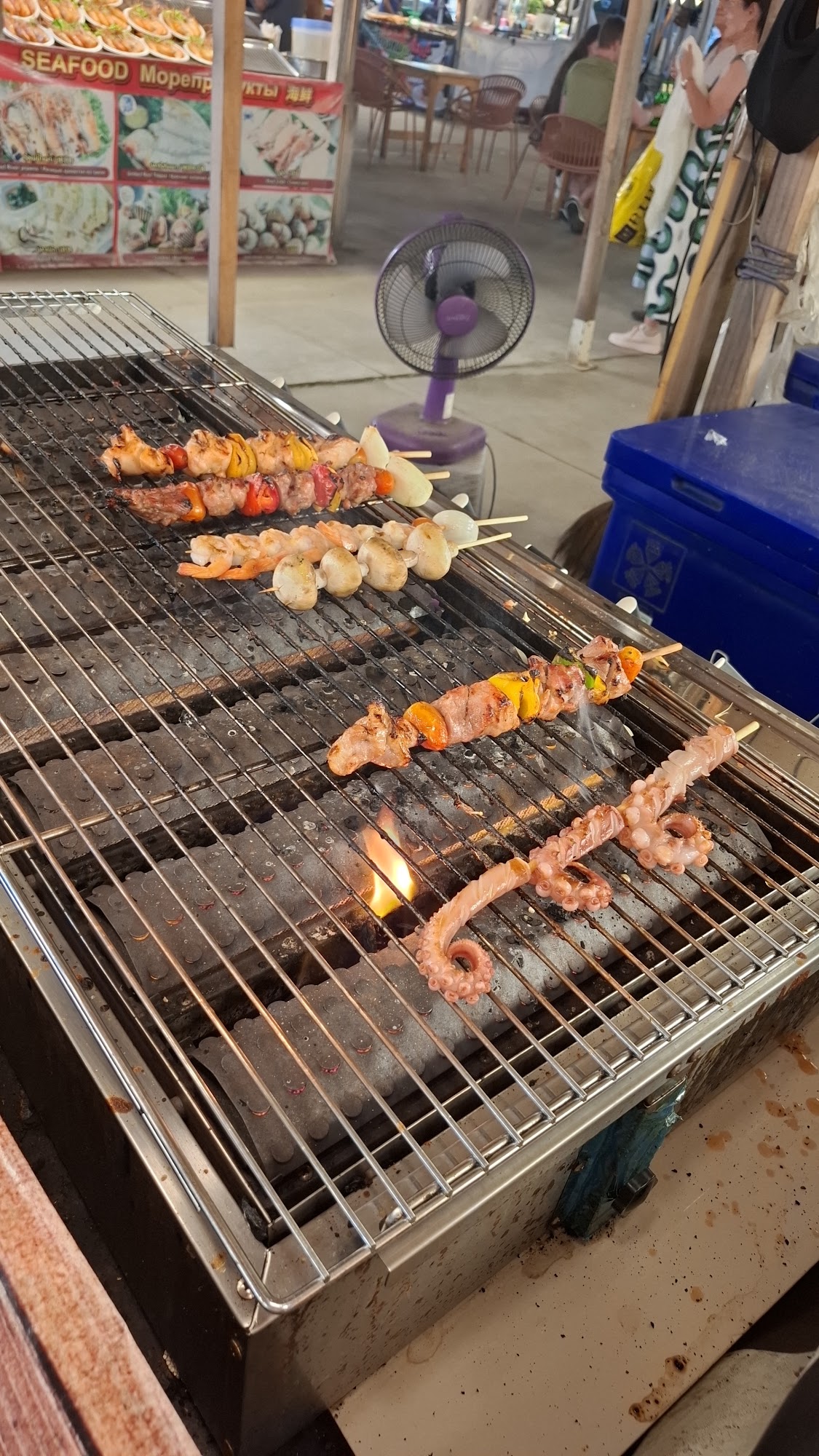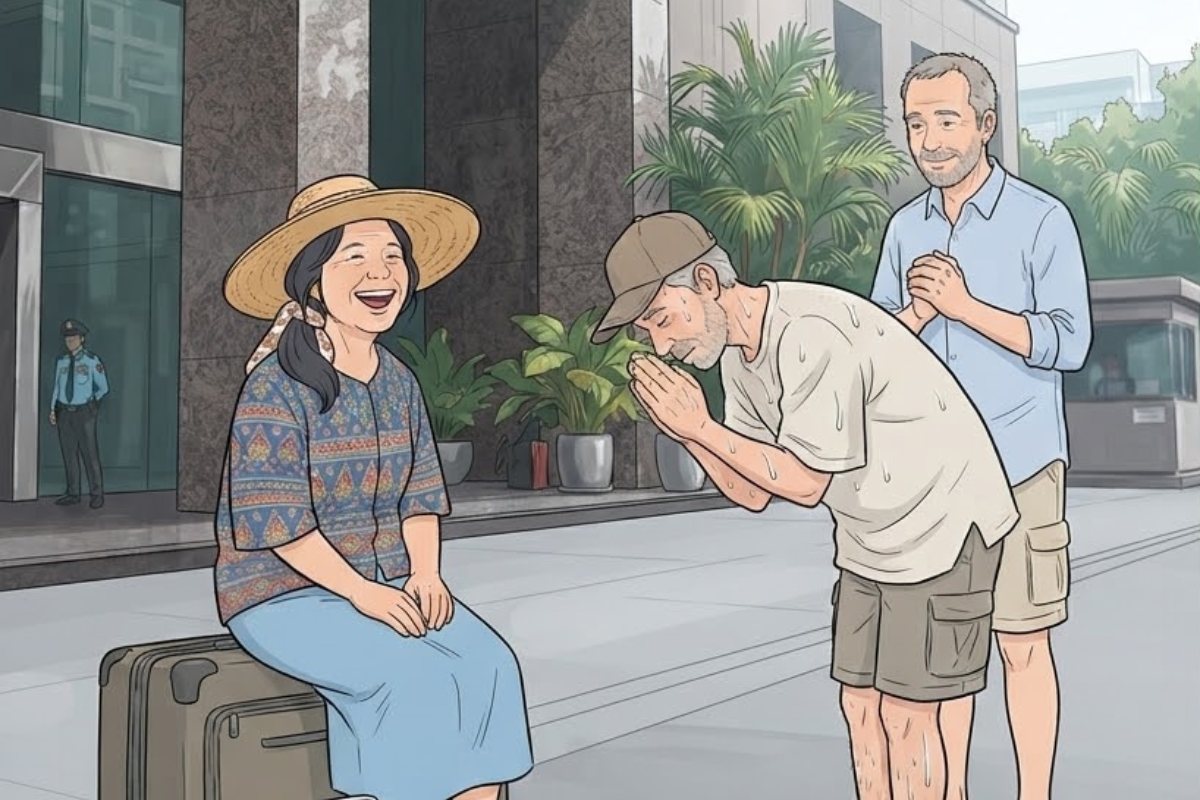
The book is dedicated to her from the very first page: “For Chu, who holds my arm on the stairs without seeming to.” In The Season of Breath, Mr Schaka tells the story of a season in Thailand with an illness no one can see. But chapter after chapter, another figure quietly takes center stage without ever raising her voice: Chu. This is a portrait of Chu, a woman who loves with gestures rather than words.
A portrait of Chu: who is she?
Chu works in the basement of Saint Louis Hospital in Bangkok, in the pharmacy. For twenty years, she has known every box, every molecule, every lab name. Every late afternoon, the narrator waits for her in the lobby, always on the same bench, until she comes up, her white coat over her arm and her badge flipped against her chest so no one stops her in the corridors.
On her ID card, her name is Chuampit. In Thailand, almost everyone has a long official first name and a short nickname given at birth. The book sums it up beautifully: your real name is for the bank, your nickname is for the people who love you. Her colleagues, her family, her son, her boss: everyone calls her Chu.
She comes from Isan, the vast northeast of the country. Her son, Bombay, twenty-six, lives in the village, Nong Theng, in Roi Et province, where he delivers anything that will fit on a scooter. With her own people, Chu speaks Isan, a singsong language that makes her seem younger.
A face that doesn’t move
When the lung specialist gives the number over the phone, sixty-four instead of seventy-one, Chu doesn’t ask a single question. She holds out her hand, reads the little café receipt he has jotted it on, folds it in half and tucks it into her own wallet. The narrator has learned one thing about her: the worse the news, the less her face moves. When she misses her bus, she grumbles for ten minutes. This time, nothing.
Then she simply says: let’s eat. In Thailand, people don’t ask how you are, they ask whether you’ve eaten rice. Coming from Chu, “let’s eat” means much more: I’m taking care of you.
Chu’s time off
The second chapter tells how she gets a month off, she who hasn’t taken leave in two years. She has to win over Khun Wanida, her boss, a small woman with glasses on a chain, who finally gives in: one month, not a day more, and he’s to bring her back “in good condition.”
That evening, Chu cooks, which almost never happens: a sour fish soup and sticky rice, the food of Isan, her mother’s cooking. She makes it when she has something to say. Sitting on the mat, she finally talks about the prescriptions she has seen pass through her hands for twenty years, and about the patients who have the same illness as him. In the end, she says, they all say the same thing: they should have gone sooner, taken the trip sooner. The narrator then understands what she told her boss in Thai. Then she washes three bowls, for much longer than it takes.
A woman of lists
Chu makes lists the way other people pray. One night, around two o’clock, the narrator finds her at the living room table, a school notebook in front of her and a hospital pen in her hand. Two columns, in Thai and English: clothes on the left, medicine on the right. On the left, presents for the family, a swimsuit for the lake, a poncho for the Isan downpours. On the right, almost nothing, since there is no treatment for him: masks, sunscreen, rehydration salts.
On the very first evening, on the balcony, she had set a box of masks on his lap. “For the trip.” It was her way of saying yes.
At home, in Isan
In Nong Theng, the reader discovers another Chu. The one who laughs, who touches arms and cheeks, who answers everyone in Isan amid a family whose exact size we’ll never know. The one who climbs to the upper floor of the old wooden house with the portraits of her father and mother under her arm, and sets them down in the exact spot where she slept as a child. The narrator then understands that it isn’t the house that belongs to Chu, but the other way around.
The arm you end up taking
On the skytrain stairs, she climbs one step below him, without holding his arm. She stops when he stops and looks at the same thing he’s looking at, as if it were fascinating. No one notices a thing. That is Chu’s whole art: helping without it showing. And perhaps that’s why The Season of Breath is dedicated to her.

The book
The Season of Breath (in English): the true story of a season in Thailand, and the portrait of a woman who holds his arm on the stairs without seeming to.