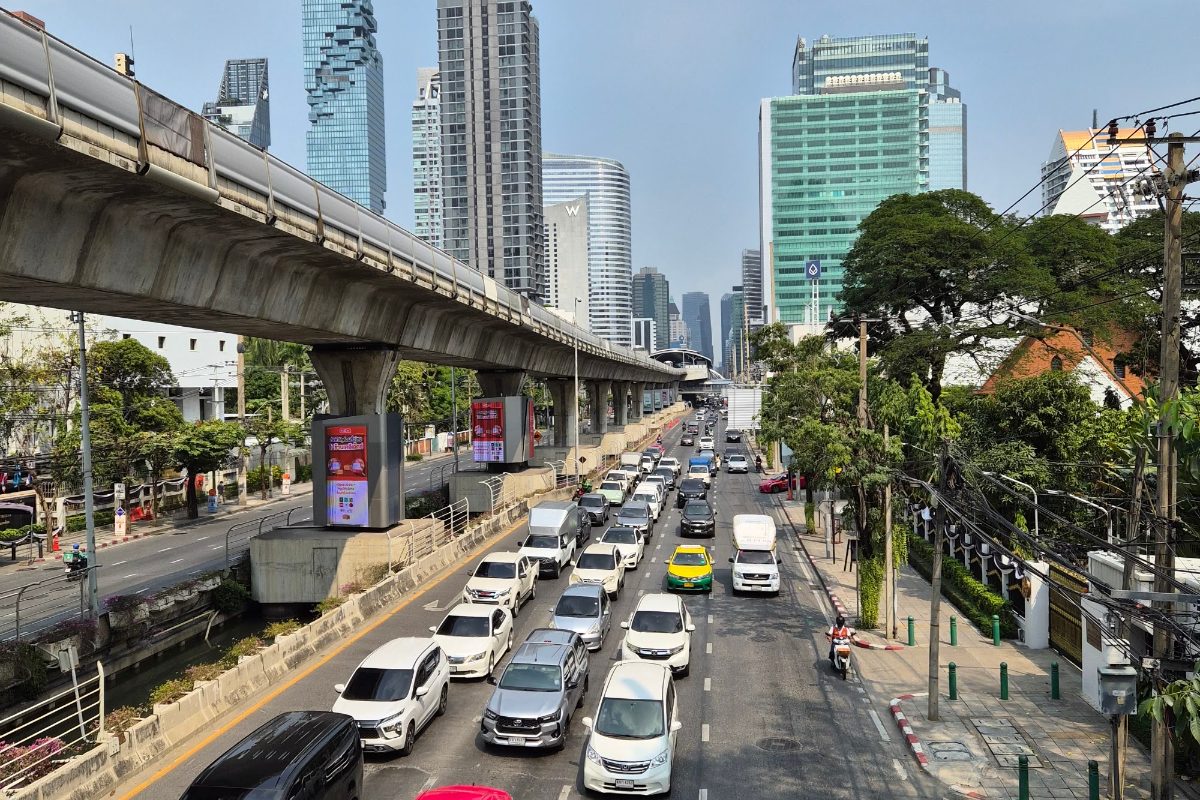
For a long time, Bangkok was a byword for monster traffic jams. That’s still true at rush hour, but today the city has a clean, air-conditioned and cheap rail network. The golden rule for getting around Bangkok: to cross the city, take the train; for the last few kilometers, a taxi, a Grab or your own two legs; for the old town, the boat.
The BTS, the elevated railway
Opened in 1999, the Skytrain is still the backbone of the city center. Its two main lines cross at Siam, the central station:
- Sukhumvit Line (light green): from the north (Mo Chit, Chatuchak) to the east, via Siam, Chit Lom, Asok, Phrom Phong, Thong Lo and Ekkamai.
- Silom Line (dark green): from National Stadium to the west bank of the river, via Siam, Sala Daeng and Saphan Taksin, the station for the main pier.
Expect 17 to 65 THB per ride depending on distance. The one-day pass (150 THB) pays off from four or five rides. For a longer stay, the rechargeable Rabbit card is sold at ticket counters on presentation of your passport.
Watch out: the BTS doesn’t accept contactless bank cards at the gates. Buy a ticket from the machine or use a Rabbit card.
The MRT, the underground metro
Along with the BTS, the Blue Line is the most useful for visitors: it serves Chatuchak, Sukhumvit (interchange at Asok), Lumpini, Silom (interchange at Sala Daeng), Chinatown (Wat Mangkon) and Sanam Chai, a stone’s throw from Wat Pho and the Grand Palace.
Good news: the MRT accepts contactless Visa and Mastercard. Just tap your card or phone on the reader at the entrance and the exit. It’s the easiest option for a tourist.
Good to know: you’ll hear about a flat 20-baht fare. It has existed since October 2025, but it’s reserved for Thai citizens registered with their national ID number. Visitors pay the regular fare.
The boat, the city’s most beautiful highway
The Chao Phraya river dodges the traffic and offers a superb view of the temples. The color of the flag at the back of the boat tells you the service:
- Orange flag: the regular line, about 20 THB, serving most of the tourist piers.
- Blue flag: the tourist boat with commentary, about 60 THB per ride or 300 THB for a day pass.
The piers to remember: Sathorn (connection to BTS Saphan Taksin), Ratchawong (Chinatown), Tha Tien (Wat Pho, plus the ferry across to Wat Arun), Tha Chang (Grand Palace) and Phra Arthit (Khao San).
Good to know: for a first taste, take an orange-flag boat from Sathorn to Phra Arthit in the late afternoon. For 20 baht, you’ll glide past the Mandarin Oriental, Wat Arun and the Grand Palace in the golden light. Note that most boats stop running around 6:30–7 p.m.
Taxis, Grab and Bolt
Metered taxis are everywhere: a red light means they’re free. The flag fall is 35 THB and a ride in town usually costs 60 to 200 THB, plus tolls. Insist on the meter (“meter”): if the driver quotes a fixed price, get out and take the next one.
The Grab and Bolt apps work very well. The price is shown before you book and the address is sent to the driver: no more language problems. Bolt is often a little cheaper, Grab more reliable at busy times.
Tuk-tuks and motorbike taxis
The tuk-tuk is a fun experience for a short evening ride, but it’s neither the cheapest nor the fastest option. Negotiate the price before you get in: expect at least 100 to 200 THB in the city center.
Watch out: a tuk-tuk offering a “city tour” for 20 or 50 baht will mostly take you to jewelers and tailors who pay the driver a commission. It’s one of the oldest scams in Bangkok.
Motorbike taxis, with their numbered orange vests, wait at the mouth of the side streets (10 to 50 THB). Perfect for escaping the traffic over a short distance. Insist on a helmet.
In short: which transport to choose?
- Crossing the city during the day: BTS or MRT.
- Going to the old town: BTS to Saphan Taksin then the boat, or MRT to Sanam Chai.
- Heading home after midnight: Grab or Bolt (the metro closes around midnight).
- With big suitcases: taxi or Grab.
- Just for fun: a boat on the river, a tuk-tuk in the evening.
To go further
Mr Schaka’s guidebook, Bangkok – The Practical Guide, details every line, every pier and the routes from both airports, with a network map. Everything you need to get around Bangkok stress-free without getting ripped off. The English edition is out now as a PDF ebook: buy it here →