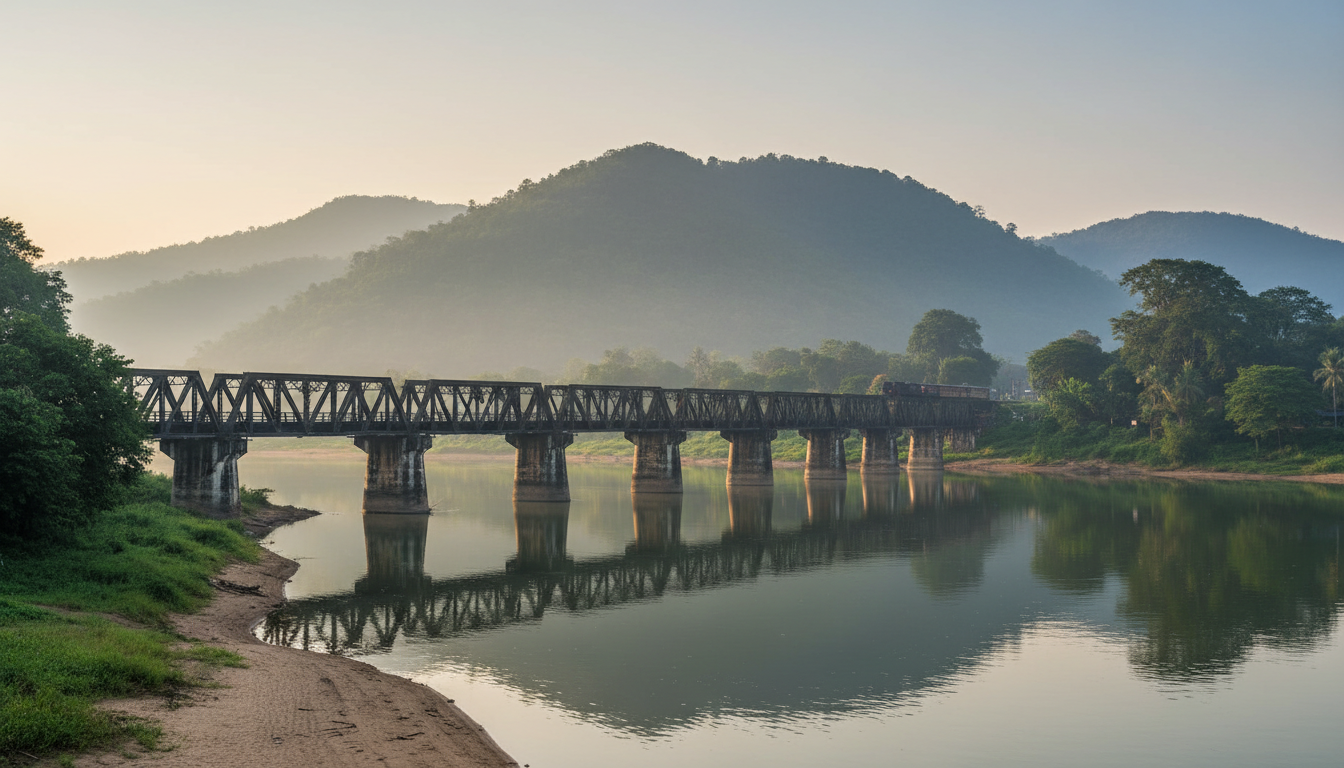
For me, the national parks of Thailand are the best way to see another side of the country: tropical forests, turquoise waterfalls, cool mountains and protected islands. Here is my selection of the most beautiful ones, with entrance fees for foreigners, seasonal closures, how to get there and a few rules for respecting these fragile places.
What to know before you go
The country has more than 150 national parks, managed by the Department of National Parks, Wildlife and Plant Conservation (DNP). Foreigners pay a different rate from Thais, often five to ten times higher. It is an official rule, not a scam.
- Entrance fees: generally 300 to 500 baht per foreign adult depending on the park, roughly half price for children. Add a few dozen baht for a car or a motorbike.
- Payment: bring cash, as cards are not always accepted at the gate.
- E-tickets: since October 2025, several marine parks, including the Similan Islands, have used an electronic ticket system that you buy in advance.
- Closures: most marine parks in the Andaman Sea close during the monsoon, roughly from mid-May to mid-October. In land parks, some trails, campsites or waterfalls also close during the rainy season.
Fees and dates change regularly: always check the park’s official announcements before you set off.
Khao Yai: the most famous, three hours from Bangkok
Khao Yai was the first national park created in Thailand, in 1962, and it is part of the Dong Phayayen – Khao Yai Forest Complex, a UNESCO World Heritage Site. People come for the forest, waterfalls such as Haew Suwat, the hornbills and, with a bit of luck, the wild elephants that sometimes cross the road.
- Entrance: about 400 baht for a foreign adult.
- Getting there: bus or minivan from Bangkok to Pak Chong, then a songthaew to the park entrance. But the park itself is huge, and without a car or an organised tour you will not see much.
- Good to know: some trails, such as the one to the Pha Diao Dai viewpoint, close for part of the rainy season.
I have written a full article about this park: Khao Yai National Park from Bangkok.
Erawan: the turquoise falls of Kanchanaburi
Erawan National Park, in Kanchanaburi province, is famous for its seven-tier waterfall, with milky blue pools where you can swim. The trail climbs gradually: the first tiers are easy, the last ones need good shoes.
- Entrance: about 300 baht for a foreign adult.
- Getting there: from Kanchanaburi town, a local bus from the bus station (about 1 hour 30 minutes) or a rented scooter. Kanchanaburi itself is reached by bus or minivan from Bangkok’s Southern terminal.
- Good to know: come early and on a weekday; at weekends the pools are packed.
All the practical details are in my guide to the Erawan Falls in Kanchanaburi.
Khao Sok: the jungle and Cheow Lan Lake
Khao Sok, in Surat Thani province, protects one of the oldest rainforests in the country. The highlight is Cheow Lan Lake, created by a dam, with limestone cliffs rising out of the green water. You can stay overnight in floating bungalows.
- Entrance: about 300 baht for a foreign adult.
- Getting there: most travellers stay in the village at the park entrance, reached by bus or minivan from Surat Thani, Khao Lak or Phuket. Lake trips leave from the pier at the dam.
- Good to know: from December to April the trails are easier; in the rainy season some paths flood and the leeches come out.
Doi Inthanon: the roof of Thailand
South-west of Chiang Mai, Doi Inthanon is home to the country’s highest peak, at about 2,565 metres. You will find spectacular waterfalls, a moss-covered high-altitude forest, terraced rice fields in the surrounding villages, and two large royal chedis with a superb view. In the cool season, mornings are cold at the summit.
- Entrance: about 300 baht for a foreign adult.
- Getting there: about 1 hour 30 minutes by road from Chiang Mai. The easiest options are a car with a driver, a scooter if you are comfortable on mountain roads, or a day tour.
- Good to know: the Kew Mae Pan trail closes during the rainy season, usually until the end of October. Bring a warm jacket.
Ang Thong: the archipelago off Koh Samui
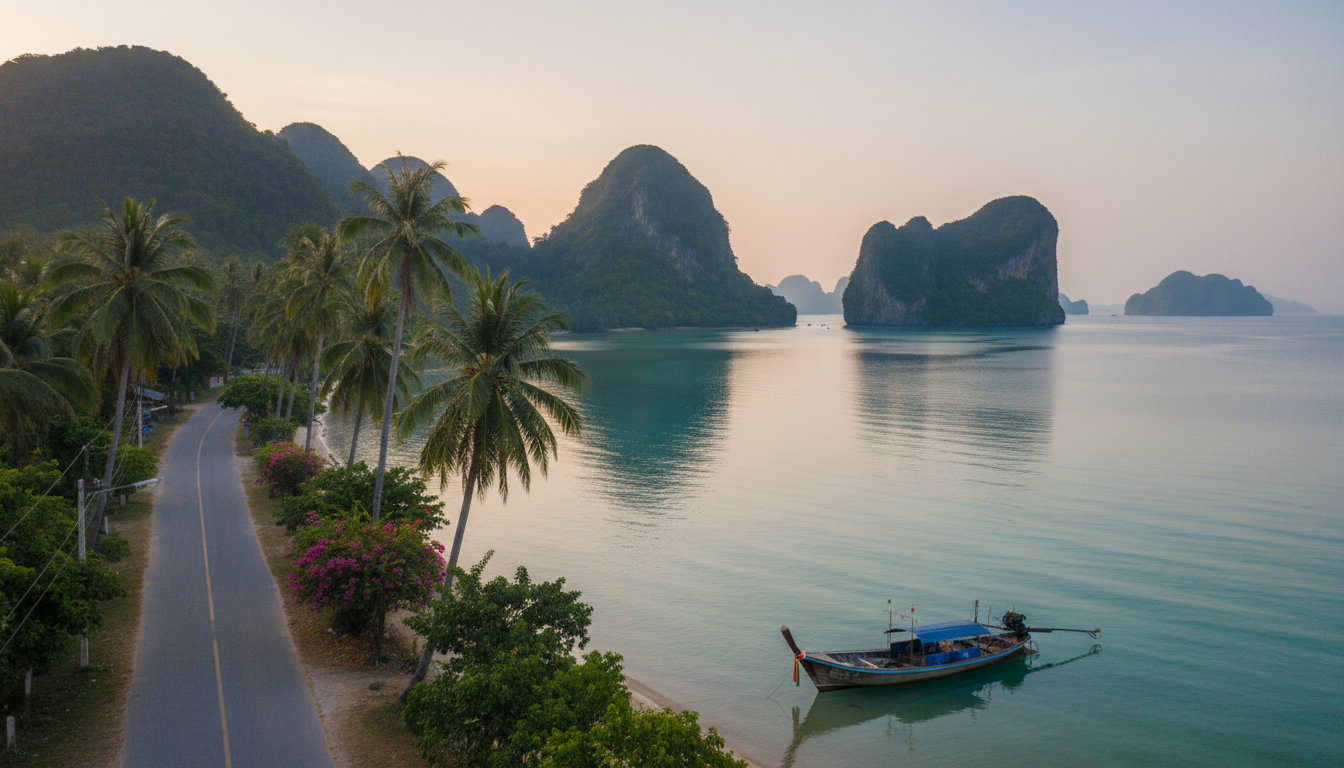
Ang Thong Marine National Park groups around forty jungle-covered limestone islands in the Gulf of Thailand. You discover it on a day trip by boat from Koh Samui or Koh Phangan: kayaking, snorkelling and a viewpoint over the archipelago.
- Entrance: about 300 baht for a foreign adult, often included in the tour price. Check when you book.
- Getting there: only by boat, on an organised tour from Samui or Phangan.
- Good to know: the Gulf is rougher from October to December; in some years the park closes for part of November and December. Check locally before you go.
Similan: the finest water in the Andaman Sea
The Similan Islands, off Khao Lak in Phang Nga province, are known for their clear water, granite boulders and some of the richest marine life in the country. It is a strictly protected park: overnight stays are no longer allowed, and the number of visitors is limited each day.
- Entrance: 500 baht for a foreign adult, 250 baht for a child.
- Opening: in principle from 15 October to 15 May. The rest of the year the park closes for the monsoon and to let nature recover.
- Getting there: by speedboat, mainly from Thap Lamu pier near Khao Lak, or on a liveaboard dive cruise of several days.
- Good to know: the e-ticket must be issued before 8 a.m. on the day of your visit; in practice, the tour agency often takes care of it.
Respecting nature in the parks
These parks are protected for good reasons, and the rules are enforced. A few simple principles:
- Never feed the animals, not even the monkeys that beg: it makes them aggressive and ill.
- Take all your rubbish back with you, especially plastic.
- In marine parks, do not touch or stand on the coral. Sunscreens containing certain chemical filters harmful to coral, such as oxybenzone, are banned there.
- Stay on marked trails and keep the noise down: you are in the animals’ home.
These rules match the general spirit of etiquette in Thailand: discretion and respect.
My practical tips
- Set off early in the morning: fewer people, more animals and less heat.
- Bring cash, water, insect repellent and shoes that hold your feet well.
- Avoid weekends and Thai public holidays, when the parks near Bangkok are crowded.
- For marine parks, book with an agency that clearly includes the entrance fee in its price.
- In the rainy season, check which trails are closed before making the journey.
Frequently asked questions
Why do foreigners pay more to enter the parks?
It is an official dual-pricing policy. The argument put forward is that Thais already fund the parks through their taxes; the revenue also goes towards maintaining and protecting the sites.
What is the best season to visit the national parks?
The cool, dry season from November to February is the most pleasant for most parks. For the marine parks of the Andaman Sea, you need to come between mid-October and mid-May.
Can you visit the parks without a car?
Yes for Erawan or Ang Thong. For Khao Yai and Doi Inthanon it is possible but complicated: a car with a driver or a tour makes things much easier.
Do you need to buy your ticket in advance?
For land parks, you generally pay at the entrance. For some marine parks such as the Similans, an e-ticket is required, often handled by the tour agency.
To go further
Mr Schaka’s guidebook, Phuket and the Andaman Sea – The Practical Guide, covers the essentials: transport, neighbourhoods, addresses, food, etiquette and safety, updated for 2026–2027.