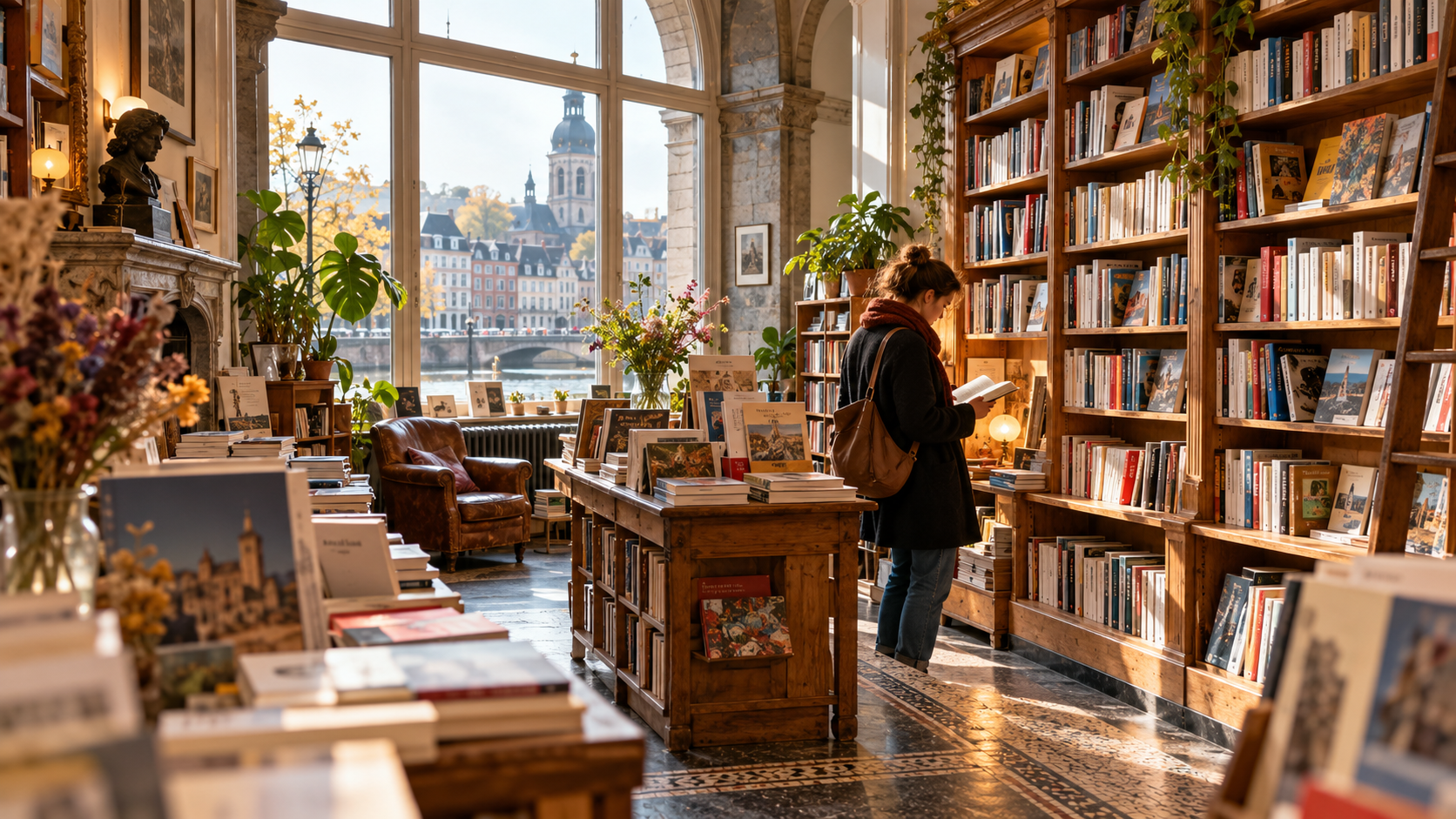
Central Liège is well suited to a walk linking squares, cafés, shopping streets and bookshops. A literary itinerary is more than a sequence of shop visits: it shows how a city tells stories about travel, residents and imagined worlds. Independent bookshops often reflect the interests of their teams and neighbourhoods. Take time to browse, ask for advice and open a book. The most memorable find may be unexpected.
Begin with travel writing
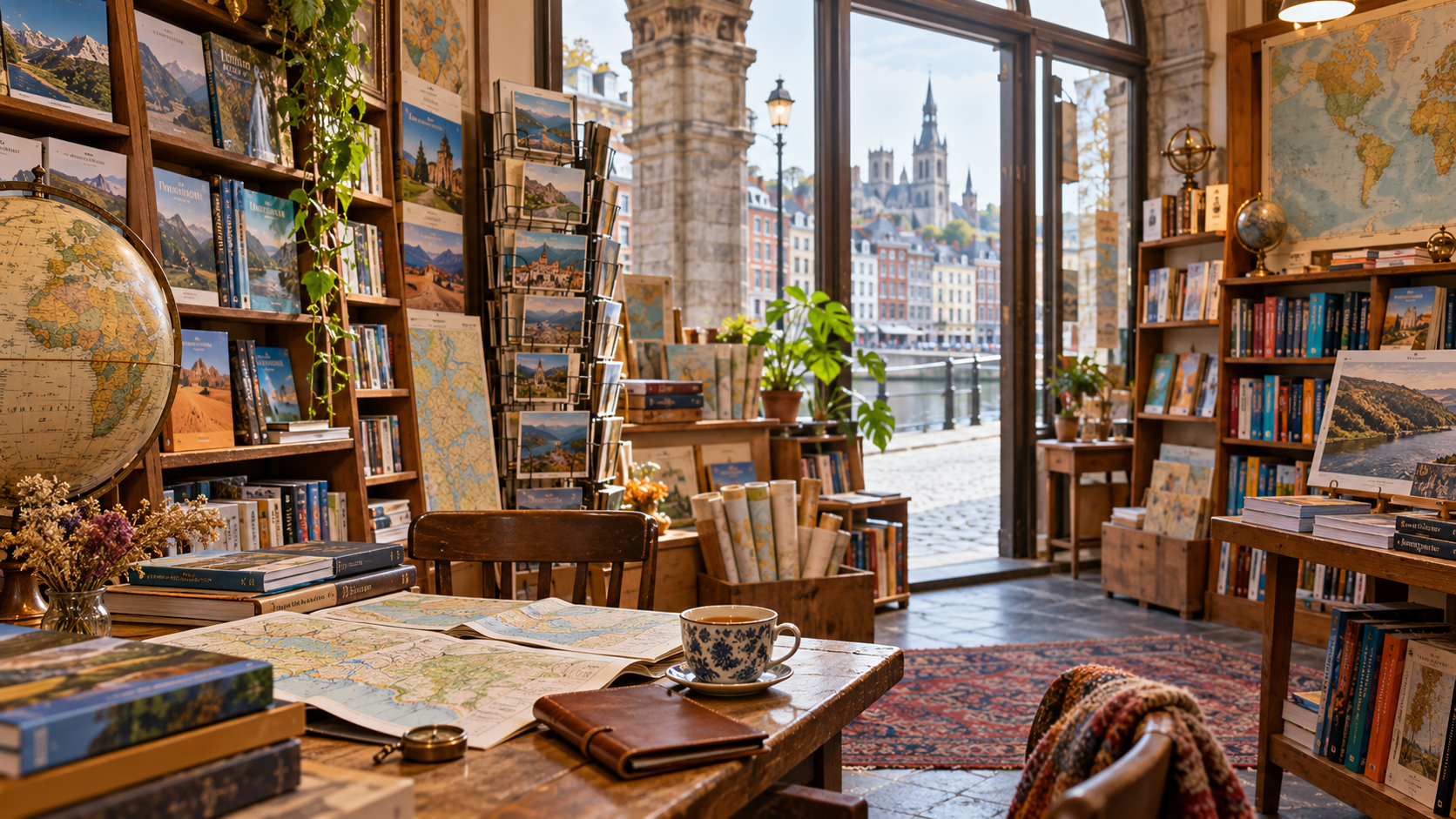
Toutes Directions on Rue de la Violette is known for travel books and accounts of journeys. Maps, guides and literature can inspire very different trips. Stock and opening times change, so check the official listing or contact the shop before going. Ask for a recommendation about Liège or Wallonia; a bookseller may suggest a route you had not considered. Treat the shop as a place for conversation as well as shelves to browse.
Continue to general books
Pax, on Place Cockerill, offers another perspective. General bookshops let you move from fiction to essays, children’s books or titles about the region. A specific edition may not be available. Call ahead if you need a particular title; otherwise ask staff what they recommend. A café or square provides time to read a few pages and plan the next stop.
Comics as cultural heritage
Slumberland BD World on Rue des Dominicains focuses on comics and graphic storytelling. Liège has a strong connection with Belgian and Francophone comics. If you do not know the series, ask for an accessible first album, a local work or a recommendation for a young reader. Comics can be adventure, satire, history or visual literature. Follow the shop’s browsing rules and ask before taking photographs inside.
Following Simenon
Georges Simenon was born in Liège. The city’s “In Simenon’s Footsteps” route explores the city through biography and fiction. Check the official tourism page before setting out for the route and practical details. Rather than expecting every place to look exactly as it does in a novel, notice how streets and atmosphere can shape a writer’s imagination. Bring a Simenon book for a break, remembering that the city has changed over time.
Build a comfortable route
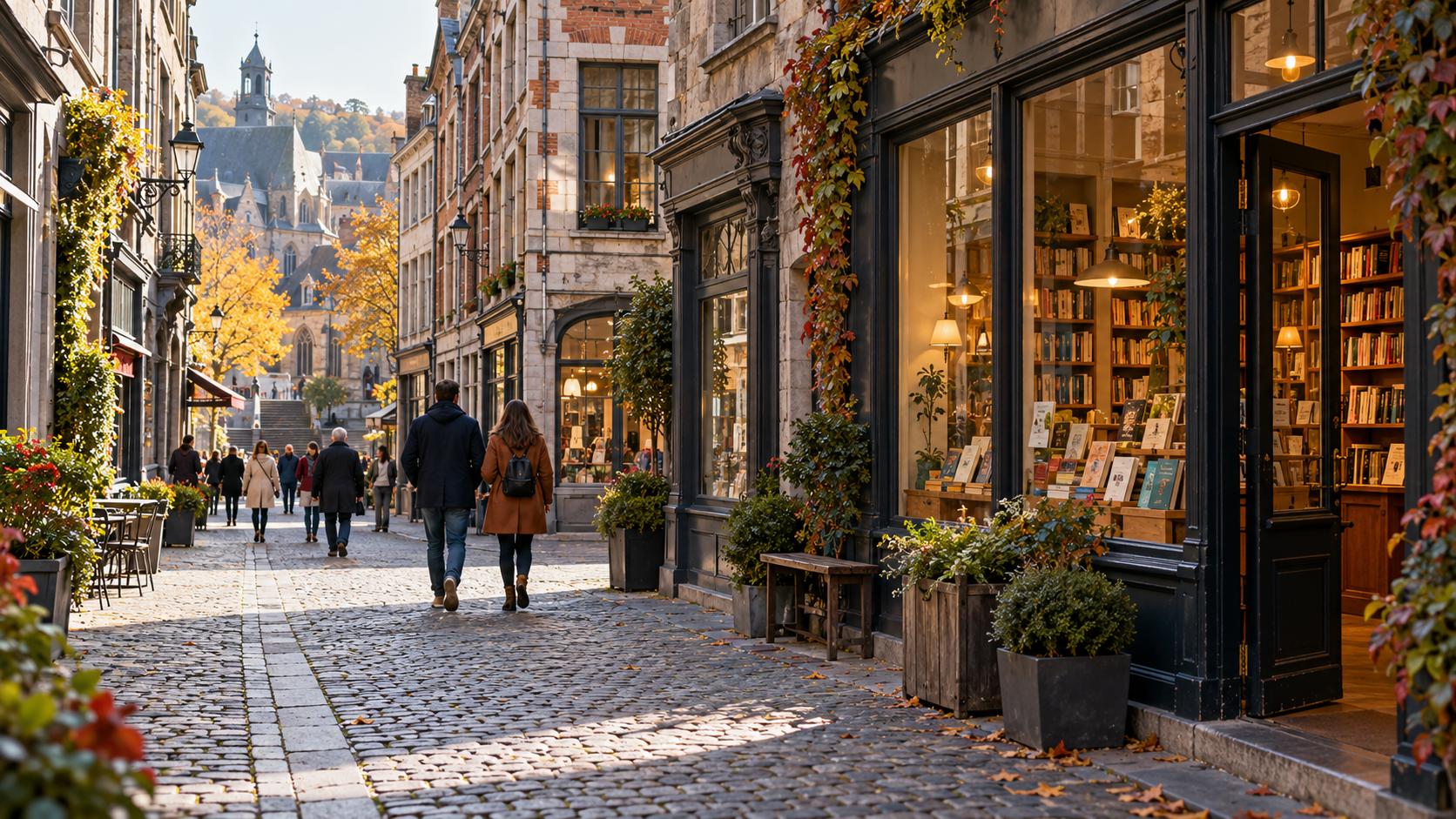
Start in late morning at the travel bookshop, pause for lunch, then visit a general bookshop and the comic shop. Add the Simenon route if time and distance allow. Change the order to match opening hours, which differ by day. Check official pages and plan transport if walking becomes tiring. For a half-day visit, two bookshops and one heritage stop are enough; the walk need not be exhaustive.
Support independent booksellers
Buying a book locally helps sustain cultural life. If a title is unavailable, ask whether it can be ordered. You can also request suggestions based on your interests and budget. Attending a listed event, recommending a shop or sharing your visit thoughtfully helps too. Photograph windows without blocking pedestrians and ask permission before taking pictures inside or of people.
Let each bookshop be a stop, not a race
A literary walk needs space between visits. In an independent bookshop, a themed table, a handwritten recommendation or a conversation may change the rest of your route. Arrive with a clear curiosity—an author, region or genre—but leave room for surprise. With one hour, choose one shop and browse properly. With a full day, alternate reading, walking and a meal. Spending ten minutes in each place rarely gives you time to understand what makes it distinct.
Before setting out, note addresses and confirm opening times directly with booksellers. Holiday hours, weekly closing days and events can change the route. A shop may open later than a café or close at lunchtime; use current information instead of an old listing. If one place is closed, the day is not lost: change the order, continue the city walk or save the address for another visit. Flexibility is part of exploring a city.
Prepare a few questions for booksellers
Booksellers can help with very different interests. Ask for a novel set in Liège, an accessible introduction to regional history, a first graphic novel or a travel account by a woman writer. Say whether you prefer a short format, illustrations, a translation or a second-hand edition if available. A recommendation is more useful when you describe what you enjoy than when you ask for “the best book.” You can mention your budget and how much time you have to read.
You do not have to buy a recommendation immediately. Browse it, read the cover and ask whether the shop can hold or order it. If a title is missing, share the exact title and publisher; editions and translations can differ. Staff may check availability, though delivery time depends on suppliers. Ordering locally can support the shop even when a book is not in stock. If you are visiting from elsewhere, ask whether remote payment or shipping is possible without assuming the service is available.
Read the city between pages
The walk links neighbourhoods, not only shelves. Between addresses, notice façades, street names, squares and changes in atmosphere. Liège bears traces of different periods; walking helps you feel distances and slopes that a map cannot convey. Some routes include hills, cobbles or busy roads. Wear comfortable shoes and carry books in a secure bag. In rain, shorten the route and plan indoor breaks. Reading a few pages somewhere warm is better than rushing across town to keep an overpacked schedule.
A café stop can become time for reading or notes. Write down a title, a shop address and an idea you want to remember. A small notebook turns a simple outing into a personal route you can revisit or share. If travelling with friends, let each person choose a stop: a travel bookshop, a comics store or a place linked with a writer. The visit becomes a conversation about everyone’s reading tastes instead of a checklist of addresses.
From comics discovery to collecting
A specialist shop makes it easy to compare a classic album, graphic novel, manga, comics and archival editions. If you are buying a gift, share the reader’s age and a few works they enjoy; staff can suggest a better match. A self-contained story is a good first choice if you want to avoid a long series. Collectors should check format, edition, condition and language. Reprints and special editions can look similar without being identical. The shop may order a missing volume or suggest another title by the same artist.
Comics are also a way into the history of images and Belgian cultural identity. Browse a few pages and notice panel rhythm, colour and the relationship between text and drawing. Visual storytelling rewards a different pace from prose. If a reference is unfamiliar, ask the bookseller: some series rely on a particular context, while others need no background. With children, allow time and let them choose part of the reading, while setting a clear limit on how many books you can carry.
Approach Simenon without turning residents into scenery
The Simenon route links biographical places with literary atmosphere. Read the official introduction before starting and choose the stops that interest you most. You might read an excerpt first, then compare the fiction with the present-day city. Neighbourhoods change, shops close or move, and some places are private. A literary walk does not grant access to interiors or permission to photograph residents. Stay in public space and treat the story as a way to listen to the city rather than as a stage set involving people who live there.
Reading Simenon can also raise questions about urban memory. What does a city preserve about a well-known author? Which places are marked, and which stories are less visible? A respectful visit can recognise the writer’s importance without reducing Liège to a single biography. Bookshops and cultural organisations offer other perspectives: contemporary writing, social history, poetry and regional accounts. Ask for recommendations that broaden your view. You may leave with several books that speak to one another and a fuller picture of the city.
Accessibility and route planning
The centre can be explored on foot, but distance, cobbles, slopes and weather affect comfort. Visitors using mobility aids should check shop entrances and any construction before leaving. Not every shop has the same space or step-free access. Contact the places you particularly want to visit for specific details. Public transport or a taxi can reduce a long walk between stops. On busy days, choose places where entering and leaving is manageable.
To avoid fatigue, take a break every one or two stops and carry a light bag. If you buy several books, return them to your accommodation before continuing. In winter, daylight fades earlier; prioritise indoor visits during opening hours and outdoor walking in daylight. In summer, check special hours and bring water. An accessible route is not always the shortest: it is one you can complete comfortably while enjoying each stop.
Create a personal theme
Give the walk a thread by choosing a theme: “Liège through its writers,” “travel and elsewhere,” “Belgian comics,” “children’s books” or “neighbourhood history.” A theme guides your questions without limiting discovery. Note books that connect and ask whether the booksellers know of upcoming readings or events. Calendars change; check official announcements and confirm whether registration is needed.
A themed route might also include a library, museum or commemorative plaque if it is open and accessible. Check entry conditions and hours. Avoid packing in far-apart stops: a coherent story matters more than a high number of points. If you publish the route, state when you checked opening times and link readers to the shops for current details. Make clear that practical information can change.
More FAQ
How do I choose a shop if I do not know the area?
Start with a specialist that matches your interests, then ask the staff where to go next. Check distances and hours before crossing town.
Do bookshops sell English-language books?
Selection varies. Contact a shop directly if you need a specific English title or a broader selection.
Can I find second-hand books?
Some shops carry them, but stock varies. Ask staff and check the condition and edition before buying.
How do I attend a literary event?
Check the shop or organiser’s calendar. Some events are open; others require registration or a reservation.
What budget should I plan?
The walk itself may be free apart from transport and meals. Book spending depends on what you buy; set a limit if you want to keep your bag light.
What if a shop is closed?
Keep an alternative stop, continue through the neighbourhood or save it for another day. Check the opening time before returning.
Leave a little space in the day
A bookshop walk works best when there is time to browse without watching the clock. Keep one optional stop rather than filling every hour, and check the final opening time before leaving. If you find a book that changes your plan, let the route change too. Note the title and the shop where you found it; that small detail can make the walk easier to remember and recommend.
Before heading back, check that your books are secure and that you have left room for the journey. If a title is unavailable, ask whether it can be ordered or whether another nearby shop may carry it. A polite conversation can be useful even when you leave without a purchase. The aim is to make the local book trade part of the visit, not to rush through it.
FAQ
Can I do the walk in half a day?
Yes, by choosing two or three stops and shortening the heritage route.
Are shops open every day?
No. Check current opening times before leaving.
Do I need to book?
Not for browsing; some literary events may require registration.
Is it suitable for children?
Yes, especially with a comics stop and breaks; adjust the distance.
Can I follow the Simenon route without a guide?
Official tourism resources can help you prepare; check current directions.
How can I support the shops?
Buy locally, order a title or recommend the bookshop.
A bookish day out
This walk connects travel at Toutes Directions, general shelves at Pax, comics on Rue des Dominicains and Simenon’s memory. Check opening hours, leave time to browse and keep room in your bag. Which book would you bring: a Liège story, a graphic novel or a travel journal? Share your recommendation and favourite bookshop.
Official sources and listings
- Literary Liège — Visit Liège
- In Simenon’s Footsteps — Visit Liège
- Toutes Directions bookshop — Independent Bookshops

The book
The Empty Wall is the second book of Oscar’s Notebook, a series of crime novels set in Liège.