Category: The Season of Breath: articles

Places, people and excerpts from the memoir La Saison du souffle.

  • In the Footsteps of La Saison du souffle: From Pattaya to Isan

    In the Footsteps of La Saison du souffle: From Pattaya to Isan

    The Season of Breath tells the story of three months in Thailand, from Pattaya to the rice fields of Isan. Every place in the book is real. Here is a little road journal for following Michael, Gabriel and Chu, with a line from the book at every stop.

    Pattaya: the trip begins among friends

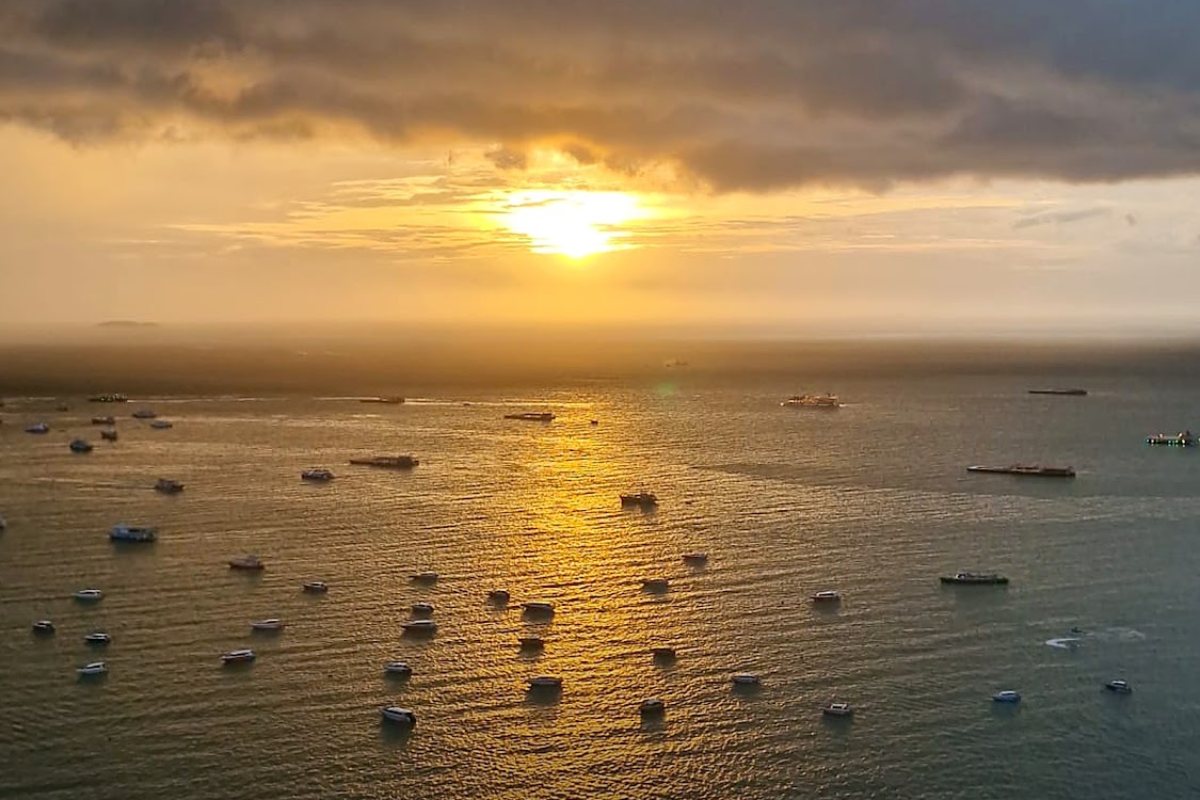
    For the first few days, they play tourist, crisscrossing Pattaya by Grab: “a pharmacy worker from Isan, a sick guy from Liège and another guy from Liège in flip-flops.” At the Terminal 21 shopping mall, every floor is dressed up as a different country, with a papier-mâché fishing harbor and an Eiffel Tower standing among the escalators. Then a speedboat to the island across the bay, and at last, a real beach.

    The Pratumnak neighborhood, between Pattaya and Jomtien, gives the third chapter its title. Quieter than the center, it’s where the journey really begins.

    Bangkok: the river and the hospital lobby

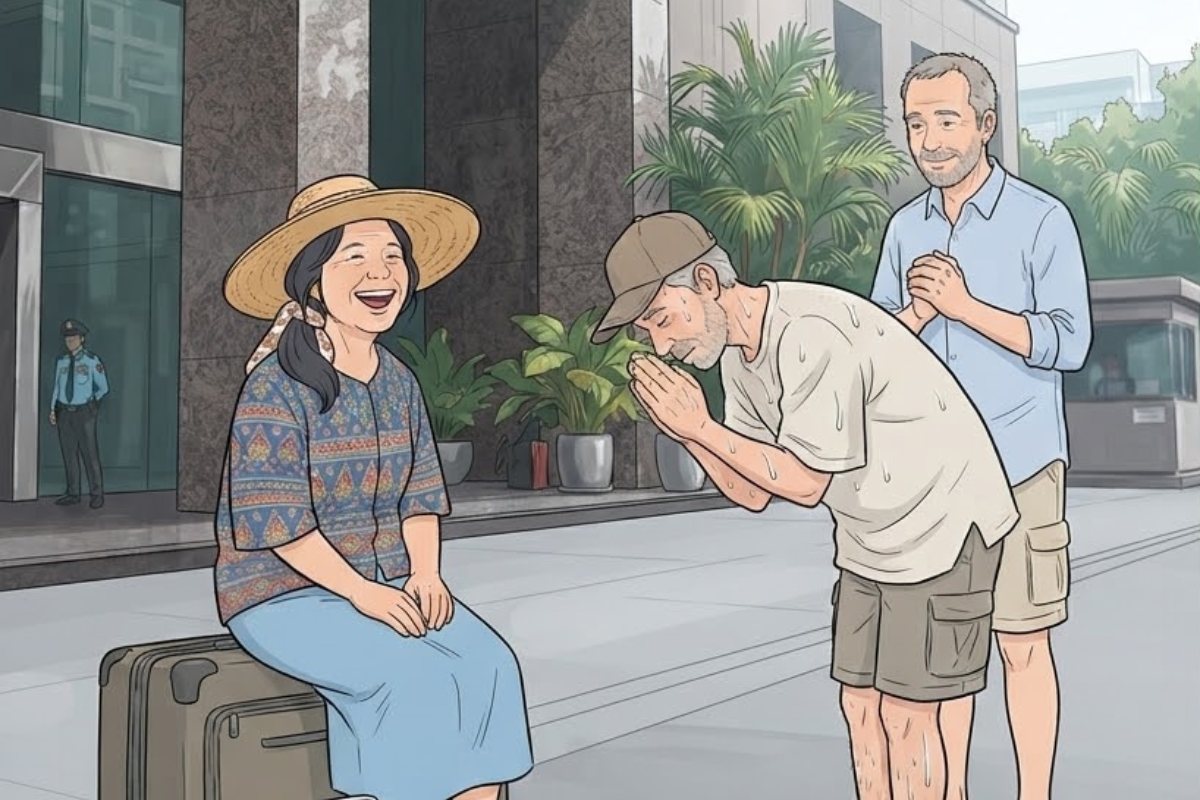
    In Bangkok, Chu works at the pharmacy of Saint Louis Hospital. Every evening, Michael waits for her in the lobby, in a wooden armchair facing a statue of the Virgin Mary. Then she steps out of the elevator, her jacket over her arm, and says: “Shall we eat?”

    The chapter “The River” follows the Chao Phraya, the city’s great artery. And on the flight to Koh Samui, Chu points out to Michael a round green patch in a bend of the river: Bang Krachao, “the green lung of Bangkok.” “Even Bangkok breathed better than I did. I found that unfair, and then I found it funny, and then I found it beautiful.”

    Koh Samui: Bophut and the Fisherman’s Village

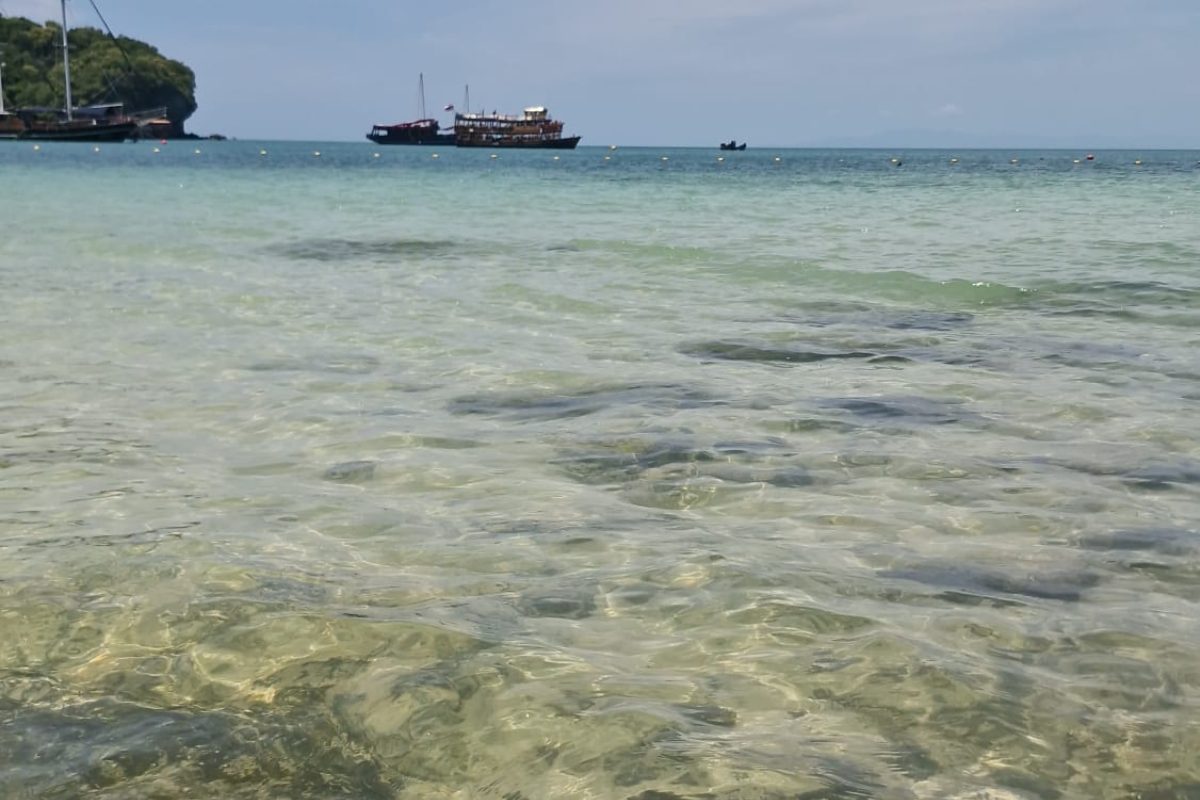
    In Bophut, on Samui’s north coast, the hotel balcony looks out over a sea that is “pale green, clear, calm as a bowl of soup left to cool,” and over the old pilings of a long-gone pier, “very dignified.”

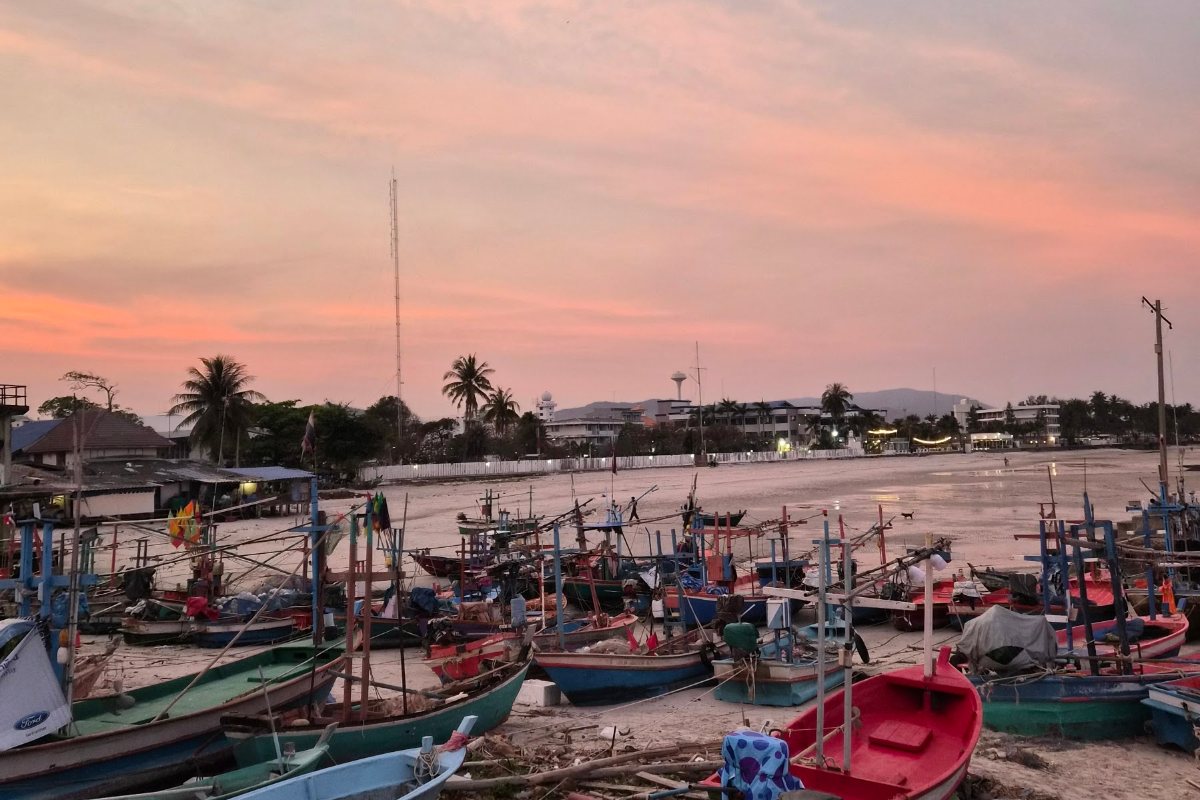
    Bophut’s Fisherman’s Village doesn’t have many fishermen left. It’s a narrow street running along the beach, lined with old wooden houses where Chinese merchants once bought copra and dried fish. On Friday evenings it closes to cars and becomes the Walking Street: wok-fried pad thai, skewers, banana pancakes, musicians… and fried insects, which Chu buys “the way you’d buy a bag of chips.”

    #TheSeasonOfBreath #Thailand #TravelStory #TrueStory #MrSchaka

    Ang Thong: the day of happiness

    Ang Thong National Park is a cluster of some forty islands off Samui, an hour away by speedboat: “green islands planted in a turquoise sea like broccoli in a bowl of soup.” Michael and Chu go kayaking there, her up front, him on the paddle. “It was there, between two strokes of the paddle, at the foot of a cliff in Ang Thong, that I thought I was happy. Not pleased. Not fine. Happy.”

    Good to know: in Ang Thong, you have to earn the viewpoint overlooking the famous emerald-green lagoon: the climb is steep. Michael chose to stay at the bottom, “and I didn’t regret a thing.”

    Isan: Chu’s house and the lake

    The journey ends in the northeast, in Isan, in Chu’s village: a straight road between flooded rice paddies, a two-story house from two different eras, and life lived under a big corrugated-metal awning. It’s there, far from the beaches, that you understand Thailand best.

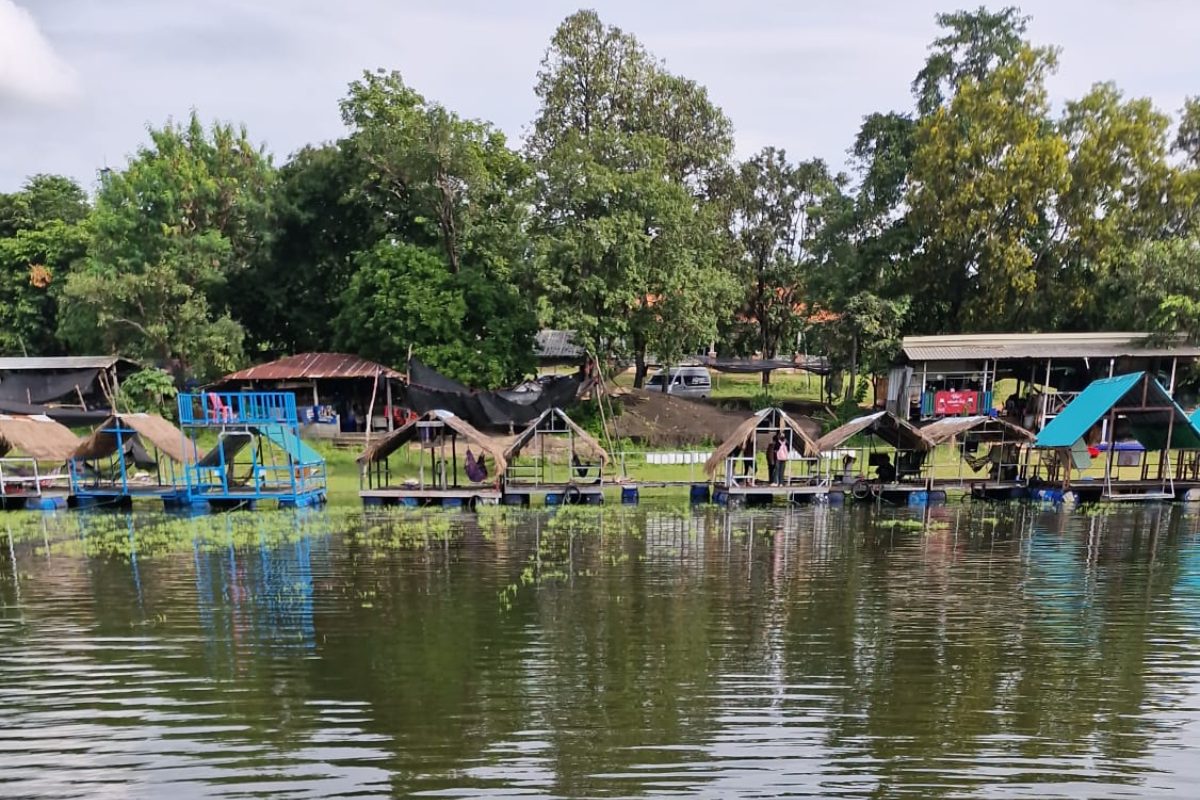
    And then there’s the lake, with its floating restaurants: bamboo platforms tied to the shore by a cable, which a boy pushes out onto the water. “A restaurant that delivers you to the middle of a lake, where nobody can leave before the meal is over.” And if the cable snaps? “Then we live here.”

    And you, what would your itinerary be?

    This trip isn’t a tourist circuit; it’s a life. But it makes you want to take your time, to climb the steps one by one, and sometimes to stop just before the top. To plan the Bangkok part, the Thailand Notebook and the practical guide are there for you.
    Book cover

    The book

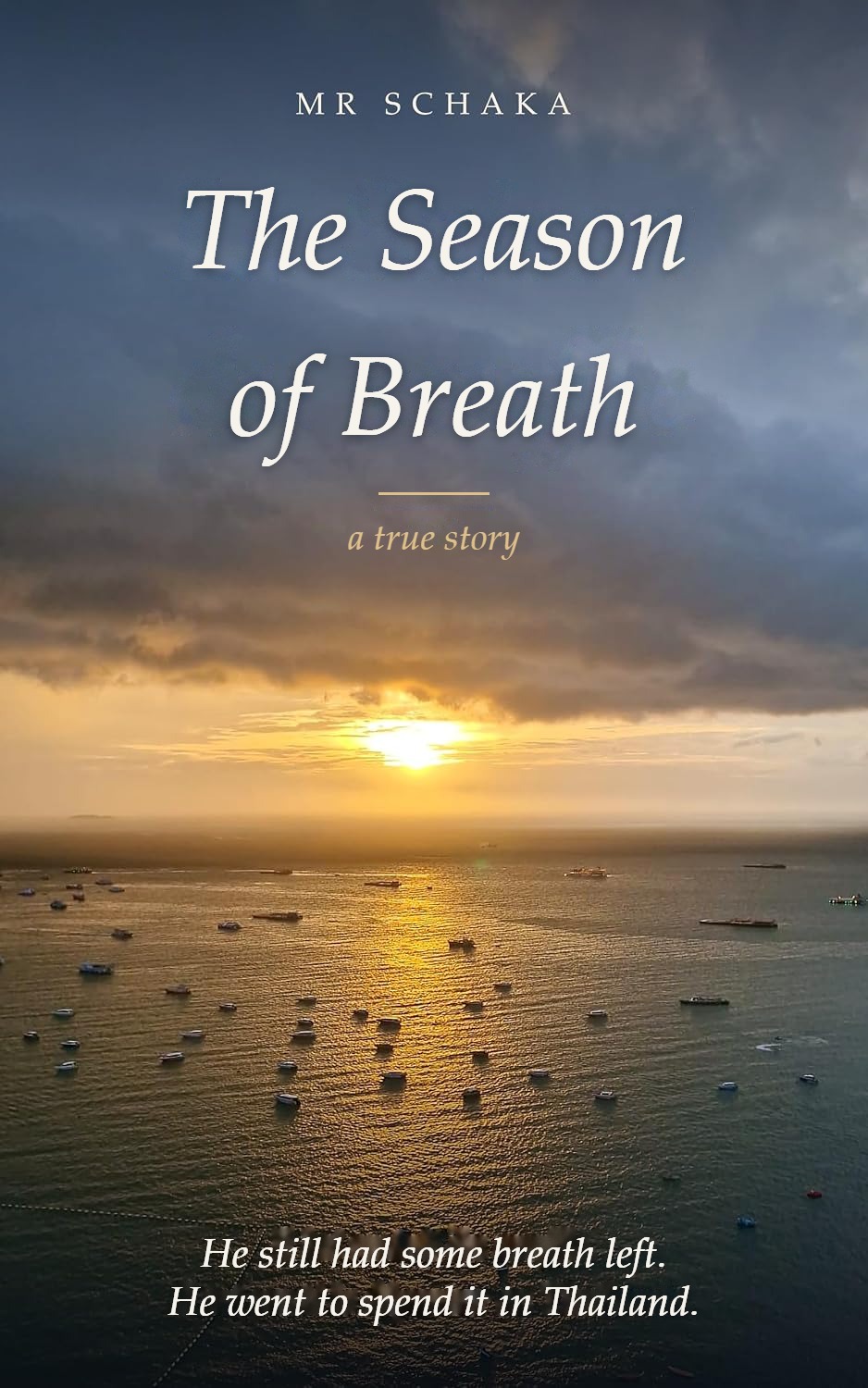
    The Season of Breath: three months in Thailand, a true story that is funny and full of light. Available in English as a PDF ebook.
  • Back to Belgium: “To Be Continued”

    Back to Belgium: “To Be Continued”

    Every season comes to an end. In chapter 14 of The Season of Breath, Mr Schaka tells of going back to Belgium: the last mornings in Thailand, the goodbyes, the Liège rain. But the book’s last words aren’t “The End.” They’re To be continued. Here, without giving everything away, is what awaits the reader in those final pages.

    A seashell in his pocket

    On his last morning in Bophut, the narrator goes back to Fisherman’s Village before daybreak. The old fisherman is there, on his boat, with his net, as he has been every morning for sixty years, no doubt. With his hands, the narrator explains that he’s leaving: the plane, the sky, far away. The old man taps his chest twice and gives a thumbs-up. He does the same. “Two old engines wishing each other a safe journey.” The fisherman gives him a small white seashell. It’s still in his pocket.

    The bench beneath the Virgin

    Chu’s vacation is coming to an end, and Chu is not a woman who adds days to a prescription. Back to Bangkok. The next day she puts her white coat back on, and he goes back to his own job: waiting on the same bench in the lobby of Saint Louis Hospital. The lady at the stand pours him a coffee without his ordering, and the security guards greet him as if he’d never left.

    Nobody sees anything, same as before. But he knows what this tanned traveler now carries inside: a temple on a hill in Isan, a lake and a boat at the end of a cable, a night of pool and Connect 4, a dragon, an old fisherman who breathes like him. Maybe that’s why, he writes, people like him look so healthy: they’re full of things you can’t see.

    Mai pen rai, let’s eat

    A few days before he leaves, a rainy-season downpour refuses to move on. It falls for two days and two nights. The khlongs overflow, the city is declared a disaster zone, and messages from Belgium pour in by the dozen. From his balcony in Sathorn, spared by the water, he sees only a white curtain and a puddle on the tiles. Down below, life goes on: delivery riders pass on scooters, water up to their ankles, and a skewer vendor keeps grilling, feet in the water, smiling.

    Thais have an expression for this: mai pen rai, it’s nothing. Not indifference, the book explains, but a way of not giving misfortune more room than it already takes. Chu turns off the TV and asks the eternal question: shall we eat? The narrator thinks that might be this country’s secret, and a little bit his own, too.

    #TheSeasonOfBreath #Thailand #TravelStory #TrueStory #MrSchaka

    Two words in Isan

    At the airport, Chu checks his passport and ticket twice, like a prescription. She gives him masks for the plane, dried mangoes for his parents, a jar of her sister’s balm for his back. She’d made a list, of course. Then she lays her hand flat on his chest and says a sentence in Isan, the one she had said to him one evening on a lake. This time he answers in her language: he had learned it in secret, at night, on his phone. What those words mean, the book leaves you to guess.

    Before passport control, she gives him a gentle push: “Go. Three months. I’m counting.”

    Back to Belgium, in the rain

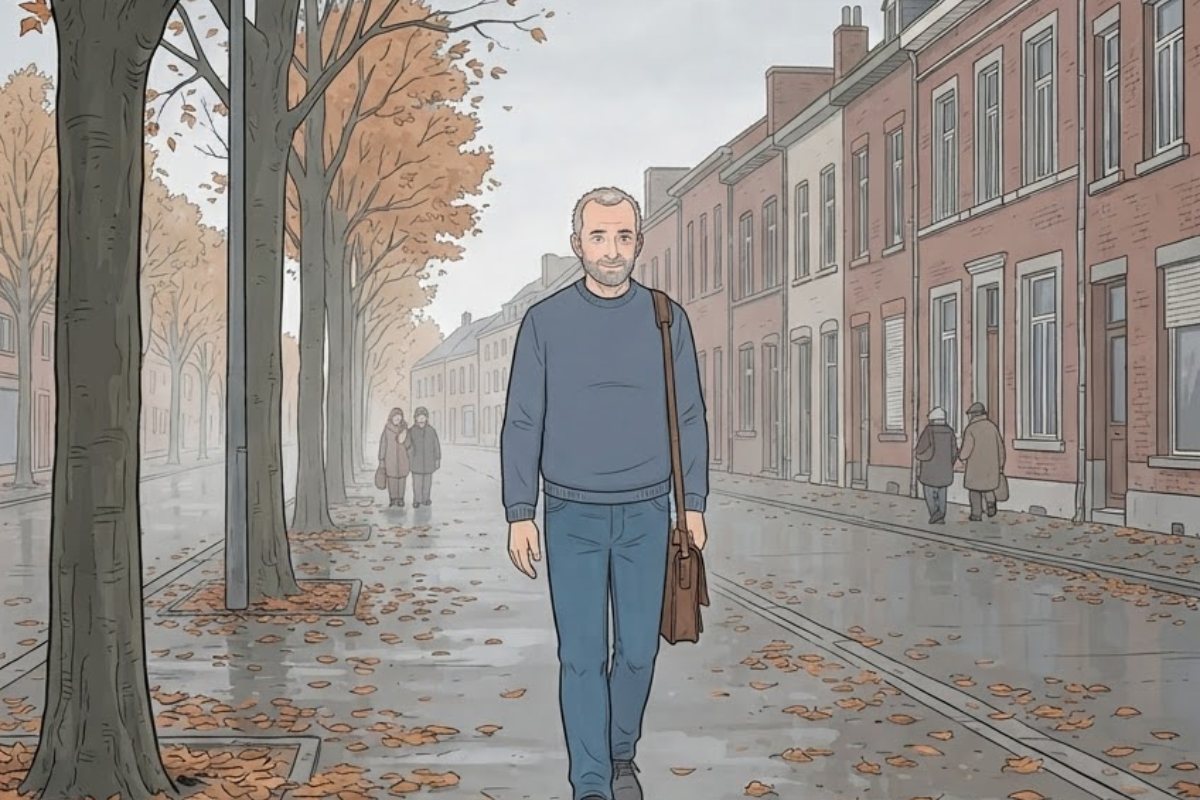
    In Belgium it’s raining, naturally: that October rain that hangs suspended in the air. His father is waiting for him at Zaventem, looks him up and down like everyone else, but without searching for anything, since he already knows it all. He says he looks well, then carries his suitcase to the car. The narrator lets him: he learned to accept help over there, at the foot of a staircase guarded by two serpents.

    In Alleur, his mother has made boulets sauce lapin, meatballs in “rabbit sauce,” as she does every time he comes home. For readers from elsewhere: there’s no rabbit in it. Around the kitchen table, he tells them everything, photo after photo. Looking at a photo of Chu, his mother says she seems to take good care of him. “It’s her job,” he replies. She corrects him: that’s not a job.

    A book that ends with “to be continued”

    On the fridge, a calendar is held up by a magnet shaped like a French fry. The narrator circles a date in red, three months away, and starts crossing off the days. After counting steps, he counts days: it’s easier, they come all by themselves.

    The reader might have expected a tragic ending, facing the sea. Mr Schaka refuses it, with the humor that runs through the whole book: he breathes less well than a year ago, but he breathes, and as long as he breathes, the story goes on. Gabriel would say it’s like Kaamelott, which was supposed to end and got sequels. The story stops in a kitchen in Alleur. The next one will begin on a bench in Bangkok.

    Book cover

    The book

    The Season of Breath: the true story of a season in Thailand, which ends with a promise: to be continued. Available in English as a PDF ebook.
  • Chu’s House in Isan: One Family, One Village

    Chu’s House in Isan: One Family, One Village

    Nong Theng isn’t on the maps the narrator is used to reading. You get there by a straight road between flooded rice paddies, then down a street of dirt and concrete where the chickens cross whenever they feel like it. In chapter 5 of The Season of Breath, Mr Schaka finally steps through the gray wall behind which stands Chu’s house, in Roi Et province.

    Chu’s house, a house of two ages

    The house has two floors and two ages. Downstairs, concrete painted a pale aqua green, peeling in patches to reveal older greens underneath, like the layers of a cake. Upstairs, dark wood, wide planks worn by the rain, and white windows with arched frames cut like lace. Downstairs, the house of today. Upstairs, the house of before.

    Out front there’s even a third house, brand new: the massage parlor of Lalita, Chu’s sister. Apple-green walls, air conditioning, midnight-blue curtains scattered with white stars, and her diploma framed on the wall. It’s the cleanest and proudest room in the house.

    Life under the awning

    Everything happens out front, under a big corrugated-iron awning: concrete benches, red and green plastic chairs, blue water jugs, a fan turning for nobody and a hammock strung between two posts. A little girl does her homework on a flowery tablecloth. A white-and-pink dog, the size of a small pig, comes to sniff the visitor’s ankles and decides he’s acceptable.

    Before going in, you take your shoes off, and the narrator adds his Crocs to the mountain of flip-flops by the door. The book recalls a few simple rules from Isan, and from all of Thailand:

    • the head is the highest and most sacred part of the body: you never touch it, not even a child’s;
    • the feet are the lowest part: you never point them at a person, at the altar or at an image of the Buddha;
    • when sitting on the floor, you tuck your legs to the side, feet pointing backward.

    The narrator spends the evening keeping an eye on his feet “like two badly behaved dogs.”

    #TheSeasonOfBreath #Thailand #TravelStory #TrueStory #MrSchaka

    A family too big to count

    Then the family arrives, from everywhere: from the house, from the yard, from next door. The narrator never did find out how many of them there were. There’s Lalita, who looks like Chu with ten more years of sun. Wichan, the brother, in a red shirt, who laughs so hard when he sees him that he has to lean on the doorframe. Nephews, nieces, nephews’ children. In the middle of it all, Chu answers everyone in Isan, laughing, touching arms, shoulders, cheeks.

    Wichan declares that the man from Liège is now his brother. He says that to everyone, Chu translates, but this time she thinks he means it. Neither understands a word of what the other is saying, and it doesn’t matter in the slightest.

    On a bamboo table, Lalita pounds som tam in a wooden mortar: shredded papaya, garlic, tomatoes, lime, tiny crabs and a handful of chilies. Tok, tok, tok, “the sound of Isan.” When the narrator asks in Thai for it not to be too spicy, the whole terrace bursts out laughing, and Lalita takes out one chili. Just one. The fire makes him cough; everyone thinks it’s the chili. Only Chu doesn’t quite laugh.

    Lalita’s hands

    After a nap in the hammock, offered the way you’d offer the best room in a hotel, Lalita is waiting for him on the threshold of her parlor. She has decreed that he walks like an old man, and that it’s his back. She kneads his shoulders with all her weight. Then her hands reach his ribs, and stop. They listen. Nobody in the village knows anything about his illness, but her hands have understood. Without a word, she lightens her touch there and goes back at his shoulders with renewed vigor. When he comes out, he walks a little less like an old man.

    The parents’ floor

    Chu then shows him around the house. On the ground floor, Bombay’s delivery scooter is parked indoors, like a horse in its stable. At the foot of the stairs, under a red plastic bag, two gilt frames are waiting: her father, and her mother, who had exactly her chin. She tucks them under her arm and climbs the thirteen wooden steps.

    Upstairs, everything is wood, golden light and cobwebs. Nobody really lives there; the floor belongs to the past. Chu shows where she slept with her sister, where her brother and parents slept, then sets the portraits down at the exact spot where her childhood bed stood. That evening, during dinner under the neon light, she quietly gets up with sticks of incense and climbs the stairs without stopping. Nobody comments. Here, everyone knows what you go upstairs to do with incense.

    Book cover

    The book

    The Season of Breath: the true story of a season in Thailand, from Bangkok to Chu’s house in a village in Isan. Available in English as a PDF ebook.

  • Fisherman’s Village in Bophut, Koh Samui

    Fisherman’s Village in Bophut, Koh Samui

    Bophut’s Fisherman’s Village doesn’t have many fishermen left. “It has kept the name, the way you keep a grandfather’s name on a mailbox.” In chapter 13 of The Season of Breath, Mr Schaka takes his readers to the coast of Koh Samui, to this wooden village that changes its face between evening and dawn.

    Bophut’s Fisherman’s Village, then and now

    It’s a narrow street running along the beach, lined with old wooden houses one or two stories high. The shutters are weary, the balconies lean a little toward the street, like old folks listening in on conversations.

    A hundred years ago, the book tells us, these were the houses of Chinese merchants who came to buy the island’s copra and dried fish. Today you’ll find cafés, shops selling linen dresses and silver jewelry, restaurants with red lanterns. But the walls have stayed. The wood has kept the smell of salt. Run your hand over a façade and you feel the years, the way you feel wrinkles under your fingers.

    The Friday night Walking Street

    On Friday evenings, the street closes to cars and becomes the Walking Street. The narrator and Chu walk there from their hotel by the water, stopping often. To look around. And partly to catch his breath, too.

    As night falls, the street fills up:

    • stalls everywhere and lamps coming on one by one;
    • pad thai sizzling in woks, skewers on the coals, banana and condensed-milk pancakes;
    • grilled fish, lemongrass, and incense from a little shrine wedged between two shops;
    • musicians with guitars, and children running between the tourists’ legs.

    A vendor is selling fried insects: crickets, grasshoppers, silkworms, scorpions. Chu buys a bag the way you’d buy chips and hands him a grasshopper. “Isan, like at home.” After a long exchange of looks with the creature, he eats it. Crunchy, salty, a little peppery, and not bad at all. Chu applauds.

    They end the evening on the balcony of an old creaking wooden café, above the crowd, with the black sea beyond the rooftops and the lights of another island. The narrator realizes that maybe this is what he came looking for: an evening of no importance, a perfect evening.

    #TheSeasonOfBreath #Thailand #TravelStory #TrueStory #MrSchaka

    Dawn, when the village becomes a village again

    At night he sleeps badly; the sea weighs on his chest. So he gets up before daybreak, without waking Chu, and walks back to the village along the beach. At that hour, Fisherman’s Village becomes a fishermen’s village again. The lanterns are out, the dogs sleep in the middle of the street, a man sweeps in front of a café, an old lady places an offering of flowers and rice on a little shrine.

    On the beach, a few longtail boats are pulled up on the sand, with ribbons of colored cloth tied to the bow. They are for Mae Ya Nang, the spirit who lives in every boat and protects it. Fishermen make offerings to her before heading out to sea and never step over the bow, because that’s where she lives.

    The old fisherman who breathed like him

    On one of the boats, a thin old man, gnarled as a root, is mending a net with a big wooden needle. Every so often he stops and breathes. The narrator instantly recognizes that way of breathing: in small gulps, mouth half open, shoulders a little too high.

    They don’t speak the same language. The fisherman taps his chest twice and points to the bottom of the sea. Chu will later explain that many old fishermen used to dive without tanks, very deep, for shellfish, and that their lungs still remember it. The narrator in turn taps his chest twice and makes a vague gesture toward the sky, toward Belgium. The old man nods. “Between two men who can’t breathe properly, there’s no need for a dictionary.”

    For an hour, he holds the net taut while the fisherman repairs the mesh, one loop at a time. They breathe in the same rhythm, slow, short, patient, facing a sea that breathes a little better than they do. The sun rises behind the island across the water.

    When he gets back, Chu is drinking her coffee on the balcony. She looks at his hands, still sandy and smelling of wet net. All she says is that he’s found someone. He answers: someone who breathes like me.

    If you go to Koh Samui, make both visits: Friday night for the party, and the following dawn for the village.

    Book cover

    The book

    The Season of Breath: the true story of a season in Thailand, all the way to Fisherman’s Village in Bophut, Koh Samui. Available in English as a PDF ebook.
  • Gabriel, My Friend from Liège: A Friendship on the Road

    Gabriel, My Friend from Liège: A Friendship on the Road

    All it takes is one message: “We’re going on a trip with Chu. I’ll pick you up at the airport.” The reply comes straight back: Gabriel is taking his leave starting the next day. In The Season of Breath, Mr Schaka devotes a whole chapter to Gabriel, his friend from Liège, the one he has never needed to explain anything to. Two weeks in Thailand, plenty of giggling fits, and a friendship that gets along just fine without big words.

    The friend from Liège lands in Bangkok

    Gabriel comes out through the automatic doors at Suvarnabhumi after fourteen hours in the air, rumpled, head shaved, beard going gray, a beige cap screwed on his head and already in flip-flops. A big guy, “like a family wardrobe that’s always stood in the hallway.”

    His first sentence is a joke: so this is where Belgians come to end their days? They both hear what’s underneath, and the narrator bursts out laughing. Only Gabriel could say it, and only he could laugh at it. Then his friend holds him in a long hug, and the narrator can feel him silently taking the measure of his shoulders, his back, his breathing.

    Old Bangkok at human scale

    For his first two days, the narrator has picked Banglamphu, the old neighborhood by the river, where nothing is allowed to rise above the spires of the Grand Palace. A low-rise Bangkok, with almost no stairs. The hotel has an elevator: he checked before booking.

    Gabriel discovers everything with the zeal of a new convert:

    • the bum gun hanging next to the toilet, which he eyes like a weapon before concluding that Belgium needs the same thing;
    • fried rice for breakfast instead of croissants, of which he goes back for a second plate;
    • the spoon, not the fork, which is only for pushing: by the third meal, he’s the one correcting his friend;
    • the smoothies from the street carts, all tasted in menu order before he proclaims that the Holy Grail is iced fresh orange juice.

    #TheSeasonOfBreath #Thailand #TravelStory #TrueStory #MrSchaka

    Tuk-tuks and 4XL boxers

    On his first tuk-tuk ride, Gabriel looks for the seatbelt, clings to the bar and yells, without knowing whether it’s fear or joy. On the second, he haggles twenty baht off the fare and, very proud of himself, leaves a fifty-baht tip. On the third, he settles in as if in an armchair and asks the driver to speed up. In three rides around town, the book notes, a cautious man from Liège has turned Thai.

    At MBK Center, he needs clothes. A Bangkok XL is a Liège M. The saleswoman climbs onto a stool to hold the T-shirts against his chest, brings out the 3XLs and 4XLs from the back of the shop, then holds a pair of boxers up at arm’s length in front of him, right in the middle of the aisle, to judge the width. Gabriel turns red; she laughs so hard she has to sit down. In Thailand, that laughter has a name: sanuk, the pleasure of things being funny.

    The elevator that waited politely

    One night, coming back at two in the morning, the two friends get into the hotel elevator. The doors close. Nothing moves. Gabriel tries to pry the doors open, reads aloud the emergency instructions written entirely in Thai, then raises a finger toward the alarm… and stops. No button is lit. For five minutes, the elevator has been politely waiting for someone to tell it which floor. Gabriel presses five. They laugh all the way to the room. His conclusion: their whole friendship is right there, they can do anything except press the right button.

    Pool, Connect 4 and Kaamelott

    In Pattaya, in a little bar at the end of a street that opens onto the sea, every table has its own Connect 4 and the back of the room has a pool table with worn-out felt. Gabriel loses his first game in eleven moves, the second in nine, then lets out a “Sire, on en a gros !” that nobody understands. Then he studies the grid, and ends the evening holding his own against half the bar. The narrator, meanwhile, picks up a cue: no breath needed, just an eye and a hand. He wins nine games out of ten.

    One evening, on a rooftop, a laughing fit over a Kaamelott line turns into a cough, the bad kind, the kind that won’t stop. Gabriel lays his hand flat on his friend’s back and waits. Then he asks for the number. Sixty-four. He remembers seventy-one, the year before, heard just once over the phone. After a long silence, he settles it: we’ve got two weeks, we’re not here to do math.

    On the last morning, on the sidewalk, two men from Liège who don’t know how to say goodbye. Gabriel calls out through the car window, with all the seriousness of Perceval: “Faut pas respirer la compote.” (“Don’t breathe the applesauce.”) The narrator laughs, coughs, then laughs again.

    Book cover

    The book

    The Season of Breath: the true story of a season in Thailand, with the woman you love, a friend from Liège and plenty of laughter. Available in English as a PDF ebook.
  • Pratumnak Hill: The Other Side of Pattaya

    Pratumnak Hill: The Other Side of Pattaya

    Pattaya means noise, neon and jet skis. But at the southern end of the bay there is a hill where the city falls silent. In The Season of Breath, Mr Schaka takes his readers there in chapter 10: Pratumnak Hill, covered in trees and villas, with a giant hand, a big golden Buddha and one of the most powerful moments in the book.

    Pratumnak Hill, far from the noise

    For the last days of Gabriel, his best friend over from Liège, the narrator decides to get away from the racket. Pratumnak separates Pattaya from Jomtien, he writes, “like an old man separating two kids in a fight.”

    Up there you hear the birds, the wind in the palm fronds, and now and then a scooter struggling up the slope. You breathe better. Or maybe, he adds, it was just him who breathed better there, which comes to the same thing. For a man with pulmonary fibrosis, that distinction matters.

    Sitting in a giantess’s hand

    At the edge of the cliff, a café with a wooden terrace looks out over the sea. In the middle stands a woman’s head as tall as a house: hair of green lawn dotted with roses, big blue eyes, red lips, a face of absolute serenity. In front of her, her hand rises out of the ground, palm open to the sky, its nails painted with seashells. You can sit in it.

    The narrator sits in it, of course, wearing an Argentina jersey and Crocs. Gabriel, raised on Kaamelott, immediately sees the Lady of the Lake, ready to hand him Excalibur. The narrator’s reply: she has already given him a dragon, no need to push his luck. In the photo, the giantess seems to be holding him the way you’d hold a baby bird fallen from its nest.

    He stays a long time in that concrete hand, the sea behind him, and in front of him Chu and Gabriel bickering good-naturedly over the bill, each in their own language. A good spot, he writes, from which to watch the people you love.

    #TheSeasonOfBreath #Thailand #TravelStory #TrueStory #MrSchaka

    The big Buddha and the naga staircase

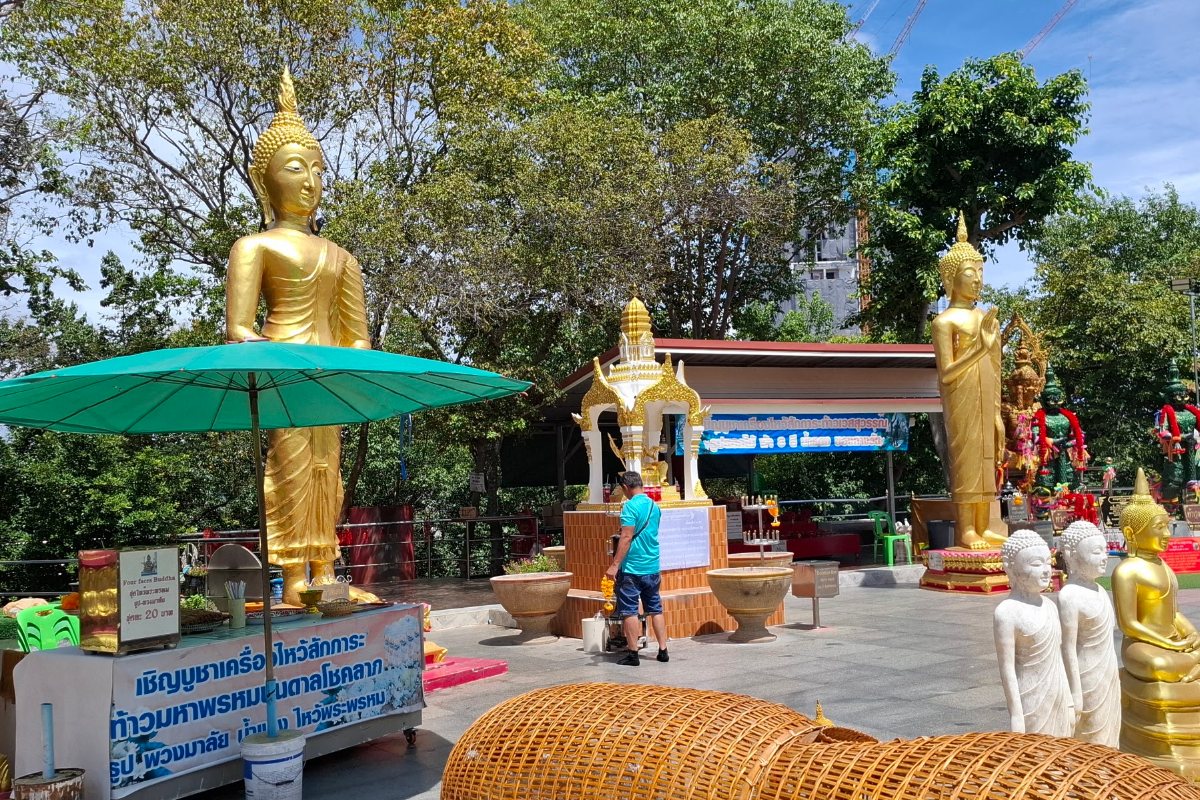
    At the very top of the hill, a big golden seated Buddha gazes out over Pattaya Bay with infinite patience. You get there by a staircase. Naturally. In Thailand, the book reminds us, everything sacred is up high, and everything up high has to be earned.

    The staircase is guarded by two nagas, two great serpents with green and gold scales that run down the handrails, jaws open at the foot of the steps. The naga is the sacred serpent that sheltered the Buddha from the rain by spreading its heads above him. Ever since, it has been placed along temple staircases, like a handrail guarding the passage between the world below and the world above. The narrator would gladly have installed one on every staircase of his life.

    The day he took Chu’s arm

    The staircase isn’t long. But that day, his breath has already done its sums. Gabriel understands before anyone else: he announces he’s going to see whether there’s a drinks machine at the top, and climbs the steps two at a time without looking back. He leaves the two of them alone.

    At the foot of the steps, between the two serpents’ jaws, Chu simply holds out her arm, bent, at the height of his hand. Throughout the whole trip he had refused it: at the airport, on the Skytrain, on the hill of the chedi in Isan. Accepting that arm felt like signing something. That day, he takes it.

    They climb together, at Chu’s pace, which has become his own. And this time, during the pauses, nobody pretends to be looking at the view: they really look at it. At the top, Gabriel is waiting on a bench with three bottles of cold water. He says nothing. As for the narrator, he takes away a very simple lesson from that day: “letting yourself be helped takes nothing away. It adds someone.”

    Pattaya, the bright-lights side

    In the evening, the three of them walk down to the Bali Hai pier at the end of Walking Street, where the boats leave for the islands. On Pratumnak Hill, the PATTAYA city sign glows purple above the sea, “like Hollywood, only more modest and more sincere.” Chu takes one last photo of the two men from Liège. They look like two guys with all the time in the world.

    If you’re passing through Pattaya, save half a day for Pratumnak. And if someone holds out an arm to you at the foot of a staircase, take it.

    Book cover

    The book

    The Season of Breath: from Bangkok to Pattaya, from Isan to Koh Samui, the true story of a season in Thailand with an illness no one can see. Available in English as a PDF ebook.
  • Excerpt from La Saison du souffle: The Lake, in Isan

    Excerpt from La Saison du souffle: The Lake, in Isan

    A fifth excerpt from The Season of Breath. In chapter 13, Michael is staying with Chu’s family, near Roi Et, in Isan. Bombay, a scooter delivery driver, has taken the day off to drive them to Huai Pung Yai Lake, where you eat lunch on floating huts.


    BOMBAY HAD taken the day off. For a delivery driver, Chu pointed out to me, that’s a sacrifice on the scale of a day off at the Saint Louis pharmacy, and she looked very proud of him. He showed up late in the morning, in his red-and-gray delivery jacket, which he never takes off, even when he isn’t working, his fiancée behind him on the scooter, with a plastic bag full of swimsuits and towels, not one of which matched another.

    “Today, lake!” he announced, the way you’d announce a victory.

    Huai Pung Yai Lake isn’t far from the village. You get there on a red-dirt track, between fields and scrawny trees, and then all of a sudden the horizon opens up: a great sheet of calm, shining water, mirroring the sky. Along the shore stood a row of little floating huts, houseboats, as I immediately called them for lack of a better word. They’re platforms of bamboo and planks set on floats, with a tin or thatched roof, a mat on the floor and a low table in the middle. Each one is tied to the shore by a long cable.

    You settle in, you order, and then a boy pulls on the cable and pushes the boat off. It glides slowly out onto the water, farther and farther, until the cable goes taut and the shore is nothing but a green line in the distance. Then you’re alone in the middle of the lake. There’s nothing but water all around, and the sky above.

    I thought it was brilliant. A restaurant that delivers you to the middle of a lake, where nobody can leave before the meal is over, and where, if the waiter forgets about you, you’re in for life in the wild. I asked Bombay what would happen if the cable snapped. He gave it serious thought, then answered, very seriously too:

    #TheSeasonOfBreath #Thailand #TravelStory #TrueStory #MrSchaka

    “Then we live here.”

    It was the perfect answer.

    That’s the spirit of this place, summed up in two expressions. “Mai pen rai”: never mind, it doesn’t matter. The cable snaps? Mai pen rai, we’ll live here. And “sanuk,” fun, which I’d already seen at work with the underwear saleswoman at MBK. For a sick man, I know no better philosophy. Mai pen rai for everything else. Sanuk for today.

    The food arrived by little boat, dish after dish, which the boy passed to us over the side. I had never seen so many dishes on such a small table. Nothing but Isan food, nothing else. Som tam, of course, two kinds, one of them for me, with a single chili, which is a start. Pork larb, minced with herbs and pounded toasted rice, sour and fragrant. A whole fish grilled in a salt crust, with a stalk of lemongrass stuck in its mouth like a cigar. Grilled chicken. Grilled pork neck, sliced, fatty and melting, with a dark dried-chili sauce. An herb soup that smelled of the forest. And sticky rice in little woven baskets, again, always, everywhere.

    I took a slice of pork neck, watched the fat glisten in the sun, and thought very hard about Karadoc, of Kaamelott. Fat is life. For once, I wasn’t going to argue with him.

    We ate with our fingers, sitting cross-legged on the mat, the four of us, Chu, Bombay, his fiancée and me. The boat rocked gently. The wind passed underneath and lifted the edge of the tablecloth. Bombay showed me how to make a ball of sticky rice and dip it in the sauce, with the patience of a teacher for a pupil already doomed to repeat the year. His fiancée laughed at each of my failures, kindly, her hand in front of her mouth. Chu, for her part, watched me eat. I think she was counting the mouthfuls. Chu is always counting. It’s her job.


    Cover of The Season of Breath

    Read on

    This excerpt comes from chapter 13, “The Lake,” of The Season of Breath, the true story of a man from Liège who goes to live a season in Thailand with an illness no one can see. The book is available in English.

  • Counting the Steps: The Little Philosophy of the Book

    Counting the Steps: The Little Philosophy of the Book

    There are forty-two steps between the sidewalk and the platform at Saint Louis station in Bangkok. The narrator knows because he has counted them. In The Season of Breath, Mr Schaka has got into the habit of counting steps everywhere, the way other people count sheep. Chapter 6, “The Steps,” turns that habit into a small philosophy of life.

    Why count the steps?

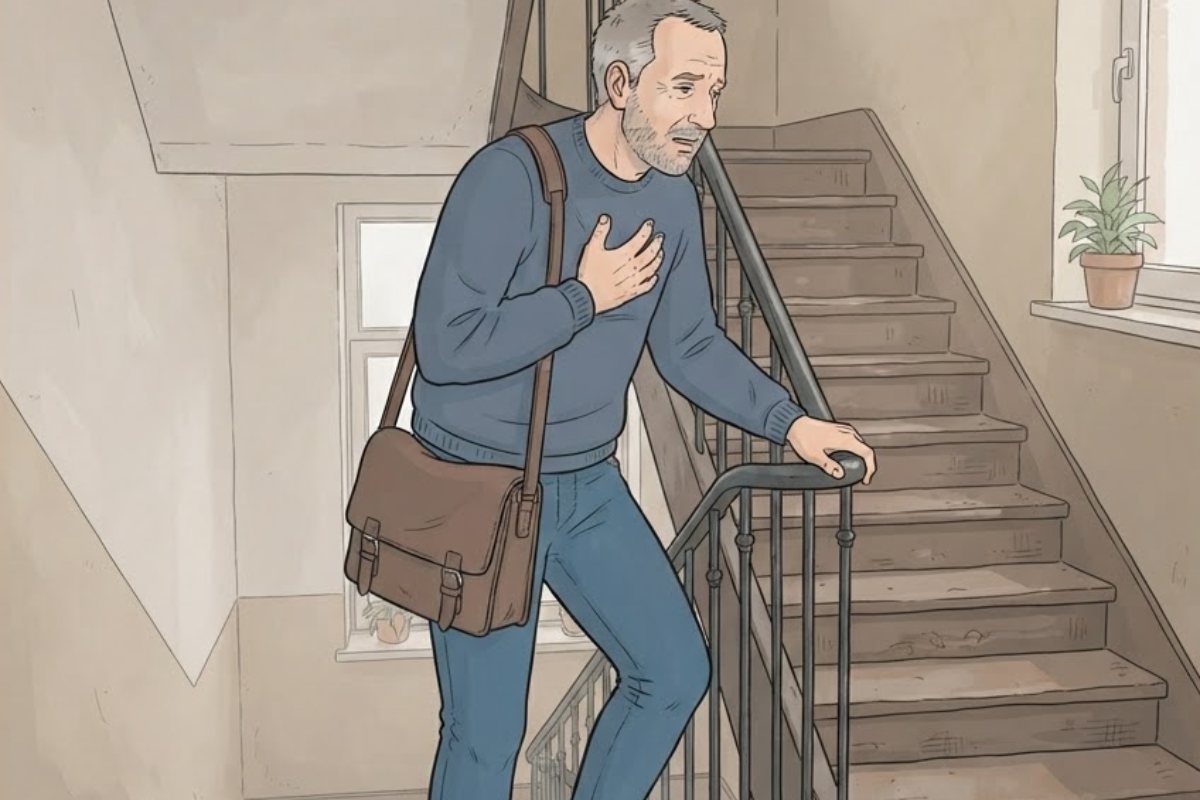
    With pulmonary fibrosis, every staircase becomes a negotiation. The narrator counts the ones at Guillemins station, the ones in his parents’ house, and on Sundays he looks up at the Montagne de Bueren from the bottom, no longer climbing it. In Bangkok, he takes the skytrain’s forty-two steps in three goes. At each pause, he turns toward the street, hand on the rail, and pretends to admire the traffic.

    It isn’t vanity. It’s his way of keeping a grip on an illness no one can see: knowing how many, knowing where to stop, and making sure nobody notices a thing.

    The chedi of Roi Et

    The chapter takes place in Isan, on a forest-covered hill, the only one for miles around. At the top stands the Phra Maha Chedi Chai Mongkhon, which Chu introduces with the quiet pride of the people from there: one hundred and one meters wide, one hundred and one long, like the name of the province — Roi Et means one hundred and one. White and gold, surrounded by little chedis, it was built at the initiative of a great monk, Luang Pu Sri.

    There are two ways up: a brightly colored little tourist train, or the staircase through the trees. Chu looks at the train, then at him. He says no. He’ll walk up. Alone.

    Climbing alone

    Just once, he wants to climb something without anyone watching him climb. Without anyone stopping when he stops. Chu and her brother take the train, and Chu doesn’t look back. The book notes that this probably cost her more than the steps cost him.

    Twenty steps. Thirty. First pause at forty, in front of a tree he pretends to find fascinating, though there’s no one there to see. His heart is pounding at sixty. At eighty, he’s breathing in small gulps. A monk in a saffron robe comes down barefoot and smiles at him: a red-faced, breathless foreigner climbing to the temple, nothing unusual there. Then he stops counting. He thinks: I won’t make it. And right after: yes, I will, but slowly. “Both thoughts were right.”

    At the top, Chu is waiting with a paper tissue for his forehead. Her brother, Wichan, claps three times, very loudly.

    #TheSeasonOfBreath #Thailand #TravelStory #TrueStory #MrSchaka

    The step where you stop

    The finest moment of the chapter is a failure. At the very top of the chedi, beneath the golden spire, a small room holds relics of the Buddha brought from Sri Lanka. It’s reached by a narrow spiral staircase where the air no longer moves. On the third turn, his breath can’t keep up. The narrator doesn’t decide to give up: his body informs him. He describes it like a string of office memos, short and without any pleasantries.

    He sits down on the step and tells Chu: “You go up. Go up for me.” She goes up with her brother. Alone, facing a small window and its square of sky, he thinks of the hundred and one marble monks he passed lower down, so serene, and tells himself that reaching the top may not be the point: someone can climb for you, and that’s another way of getting there. When Chu comes back down, he asks her what she prayed for. She smiles: “Time.”

    A philosophy at the height of a step

    On the way back, Wichan feeds some coins into a vending machine and hands him a bottle of ice-cold water. For a second, they both hold it. Then Chu’s brother says two words in Isan, which Chu translates: drink slowly.

    That’s the book’s little philosophy, without any grand speeches:

    • climb at your own pace, and stop before you’re forced to;
    • accept that a limit is information, not defeat;
    • let others climb for you, sometimes;
    • drink slowly, and really look at the view.

    In the introduction, Mr Schaka wishes every person living with an illness people who hold their arm on the stairs without seeming to, and a step to stop on, just before. Chapter 6 shows what that looks like.

    Book cover of The Season of Breath

    The book

    The Season of Breath (in English): the true story of a man who counts the steps, and who has decided to keep on climbing, one at a time.

  • Excerpt from La Saison du souffle: Ang Thong, Where the Sea Comes In Secret

    Excerpt from La Saison du souffle: Ang Thong, Where the Sea Comes In Secret

    A fourth excerpt from The Season of Breath. In chapter 9, Chu signs Michael up for an excursion to Ang Thong National Park, a cluster of some forty islands off Samui. There are kayaks, cliffs, and a very steep trail.


    Then the islands appeared. Dozens of them. Sugarloaves of gray limestone, bristling with spikes, covered in jungle right to the top, rising out of the water like the teeth of a giant jaw. Cliffs hollowed out at their base by the sea, caves, tiny white-sand beaches wedged between two rocks. The whole boat pulled out its phones at once.

    They gave us kayaks. Yellow plastic two-seaters, with orange life jackets that smelled of the sea and other people’s sunscreen. Chu took the front, I took the back. She said she would steer and I would paddle. I said that was exactly like life. She said yes.

    I paddled along the foot of the cliffs, in jade-colored water so calm you could see the bottom. Slowly, not too much, stopping often. Above us the rock rose sheer, gray and streaked, with trees clinging in the cracks like climbers who had given up on getting back down. Birds wheeled up high. It was hot, and the shade of the cliffs was cool. Chu turned around to take a selfie, with me behind her, paddle in hand, wearing the focused look of a man who doesn’t know where he’s going but is going there in earnest.

    It was there, between two strokes of the paddle, at the foot of a cliff in Ang Thong, that I thought I was happy. Not pleased. Not fine. Happy. It’s not a word I use often. It came to me on its own, like a fish leaping out of the water, and I didn’t chase it away.

    AFTER THE kayaking, the boat dropped us off on the island of Mae Ko. A little white-sand beach in the shade of the trees, speedboats lined up in the green water, and at the back, against the cliff, a carved wooden sign with the Thai flag and a yellow flag on either side: Ta Le Nai Lagoon. The inner lake.

    The guide explained it to us in English, then in Thai, then with his hands: in the middle of the island, hidden behind the mountain, there is a lake. A saltwater lake, emerald green, enclosed in a ring of cliffs, connected to the sea by underground tunnels that nobody can see. The sea gets into the island from below, in secret, and makes a lake there. To see it, you have to climb to the viewpoint.

    I went as far as the start of the trail. There was a rope strung between posts, steps cut into the rock, and two signs, one above the other. On the first, in Thai and English, you could read: The path is steep and has sharp rocks. Please take care every step. On the second: Do not feed the animals, in four languages, including Russian and Chinese, because apparently the monkeys can’t tell the difference.

    I read the first sign three times. Take care every step. Somebody, somewhere in the Department of National Parks, had written my life on a wooden sign and planted it in the middle of the jungle, right in front of me. I found that very thoughtful.

    I put my foot on the first step, water bottle in hand, Crocs on my feet, shirtless, in palm-tree shorts, and turned to Chu so she could take the picture. The explorer’s pose at the start of the expedition. The kind of photo you take before setting off to conquer Everest.

    Then I took my foot off the step.

    I didn’t go up. Not this time. It wasn’t even a defeat. I knew. I didn’t need to try. You learn. My body and I have come to agree on certain things, like two old business partners who no longer fight over the same old stories.

    #TheSeasonOfBreath #Thailand #TravelStory #TrueStory #MrSchaka

    Chu looked at me.

    “Do you want me to go up? For you?”

    “No,” I said. “Stay with me.”

    We went back down to the beach. The others climbed, single file, in clusters, puffing. We sat at the water’s edge, on the sand, where the sea wets the rocks. The water was so clear it had no color, only reflections. The sun drew nets of light in it that trembled over the pebbles on the bottom.

    Chu put her hand in the water, flat, fingers spread, with her painted nails and her blue bracelet. The light played on her skin through the water, in dozens of tiny moving stars. She looked at it for a long time, her hand, without saying anything, as if she had never seen it before. Then she took a photo.

    “Why are you photographing your hand?”

    “So I remember.”

    “Remember what?”

    She didn’t answer right away. She left her hand in the water a moment longer.

    “That it was here. That I was here. With you.”

    I put my hand in the water next to hers. The koi on my arm caught the light, and for a moment, beneath the surface, it looked as if it were really swimming.

    When the others came back down from the viewpoint, red-faced, out of breath, delighted, they showed us their photos of the lagoon. An emerald-green lake at the bottom of a ring of cliffs. It was magnificent. I looked at it on a phone screen, and I didn’t regret a thing. I too had seen a place where the sea comes in secret. It was shaped like a hand.


    Cover of The Season of Breath

    Read on

    This excerpt comes from chapter 9, “Ang Thong,” of The Season of Breath, the true story of a man from Liège who goes to live a season in Thailand with an illness no one can see. The book is available in English.

  • A Portrait of Chu, the Woman Who Holds His Arm on the Stairs

    A Portrait of Chu, the Woman Who Holds His Arm on the Stairs

    The book is dedicated to her from the very first page: “For Chu, who holds my arm on the stairs without seeming to.” In The Season of Breath, Mr Schaka tells the story of a season in Thailand with an illness no one can see. But chapter after chapter, another figure quietly takes center stage without ever raising her voice: Chu. This is a portrait of Chu, a woman who loves with gestures rather than words.

    A portrait of Chu: who is she?

    Chu works in the basement of Saint Louis Hospital in Bangkok, in the pharmacy. For twenty years, she has known every box, every molecule, every lab name. Every late afternoon, the narrator waits for her in the lobby, always on the same bench, until she comes up, her white coat over her arm and her badge flipped against her chest so no one stops her in the corridors.

    On her ID card, her name is Chuampit. In Thailand, almost everyone has a long official first name and a short nickname given at birth. The book sums it up beautifully: your real name is for the bank, your nickname is for the people who love you. Her colleagues, her family, her son, her boss: everyone calls her Chu.

    She comes from Isan, the vast northeast of the country. Her son, Bombay, twenty-six, lives in the village, Nong Theng, in Roi Et province, where he delivers anything that will fit on a scooter. With her own people, Chu speaks Isan, a singsong language that makes her seem younger.

    A face that doesn’t move

    When the lung specialist gives the number over the phone, sixty-four instead of seventy-one, Chu doesn’t ask a single question. She holds out her hand, reads the little café receipt he has jotted it on, folds it in half and tucks it into her own wallet. The narrator has learned one thing about her: the worse the news, the less her face moves. When she misses her bus, she grumbles for ten minutes. This time, nothing.

    Then she simply says: let’s eat. In Thailand, people don’t ask how you are, they ask whether you’ve eaten rice. Coming from Chu, “let’s eat” means much more: I’m taking care of you.

    #TheSeasonOfBreath #Thailand #TravelStory #TrueStory #MrSchaka

    Chu’s time off

    The second chapter tells how she gets a month off, she who hasn’t taken leave in two years. She has to win over Khun Wanida, her boss, a small woman with glasses on a chain, who finally gives in: one month, not a day more, and he’s to bring her back “in good condition.”

    That evening, Chu cooks, which almost never happens: a sour fish soup and sticky rice, the food of Isan, her mother’s cooking. She makes it when she has something to say. Sitting on the mat, she finally talks about the prescriptions she has seen pass through her hands for twenty years, and about the patients who have the same illness as him. In the end, she says, they all say the same thing: they should have gone sooner, taken the trip sooner. The narrator then understands what she told her boss in Thai. Then she washes three bowls, for much longer than it takes.

    A woman of lists

    Chu makes lists the way other people pray. One night, around two o’clock, the narrator finds her at the living room table, a school notebook in front of her and a hospital pen in her hand. Two columns, in Thai and English: clothes on the left, medicine on the right. On the left, presents for the family, a swimsuit for the lake, a poncho for the Isan downpours. On the right, almost nothing, since there is no treatment for him: masks, sunscreen, rehydration salts.

    On the very first evening, on the balcony, she had set a box of masks on his lap. “For the trip.” It was her way of saying yes.

    At home, in Isan

    In Nong Theng, the reader discovers another Chu. The one who laughs, who touches arms and cheeks, who answers everyone in Isan amid a family whose exact size we’ll never know. The one who climbs to the upper floor of the old wooden house with the portraits of her father and mother under her arm, and sets them down in the exact spot where she slept as a child. The narrator then understands that it isn’t the house that belongs to Chu, but the other way around.

    The arm you end up taking

    On the skytrain stairs, she climbs one step below him, without holding his arm. She stops when he stops and looks at the same thing he’s looking at, as if it were fascinating. No one notices a thing. That is Chu’s whole art: helping without it showing. And perhaps that’s why The Season of Breath is dedicated to her.

    Book cover of The Season of Breath

    The book

    The Season of Breath (in English): the true story of a season in Thailand, and the portrait of a woman who holds his arm on the stairs without seeming to.