Category: Thailand Notebook

Practical tips and travel stories from Thailand: Bangkok, Pattaya, Isan, the islands.

  • Ayutthaya by Bicycle: Visiting the Former Capital with Care

    Ayutthaya by Bicycle: Visiting the Former Capital with Care

    About 80 kilometres north of Bangkok, Ayutthaya was a major capital of the Siamese kingdom. Temples, stupas and brick remains tell stories of power, trade and spirituality. A bicycle connects sites at your own pace. Yet cycling among historic monuments requires planning for heat, careful riding and respect for religious places.

    Understand the city before choosing a loop

    The ruins are not gathered in one museum. Temples, canals, markets and modern neighbourhoods coexist. Use a map to choose an area without creating a rigid schedule. Sites may look close in photographs, but heat and humidity slow travel. Select a few places, plan shaded breaks and leave time for water and lunch. The visit is better when you can look at a monument without watching the clock.

    Ruins belong to architectural and spiritual settings. A chedi or Buddha image is not interchangeable scenery. Read site information and listen to a knowledgeable guide to distinguish documented history from legend. Structures are fragile: do not climb, touch sculptures or take fragments. Barriers protect heritage and visitors; do not cross them for a better angle.
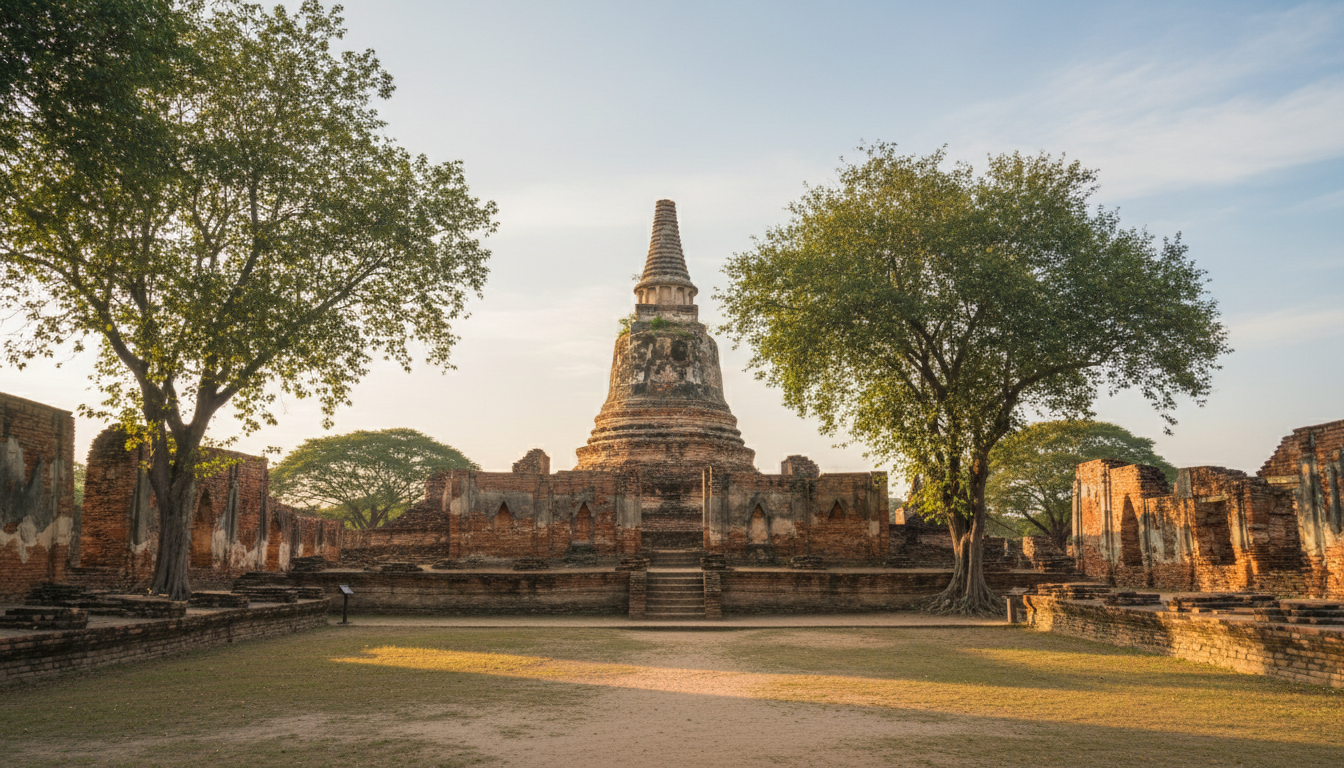
    Ancient brick stupa and walls at Ayutthaya
    The remains form a fragile heritage landscape.

    Ride safely

    Check the brakes, tyres, saddle and lights. Roads are shared with cars, motorbikes, tuk-tuks, pedestrians and animals. Ride at a moderate speed, signal turns and do not assume drivers have seen you. A helmet is strongly recommended. If traffic feels uncomfortable, choose a short loop or another transport option.

    Mornings are often cooler and offer gentle light. At midday, choose a museum, meal or shaded break. Rain can make surfaces slippery; check the forecast and adapt your route. Children and people sensitive to heat need shorter distances and frequent pauses.

    Respect the temples

    Some places are visitor monuments; others remain places of worship. Wear covering clothing, remove shoes when asked and follow signs. Do not climb on statues, sit above sacred images or crowd people who are praying. Ask before taking someone’s photograph. Observe first and ask politely if unsure.

    A unique photograph is not worth damage. Do not stand on walls or cross barriers. Small repeated actions wear materials down. A local guide can explain historical context without turning the walk into a lecture.
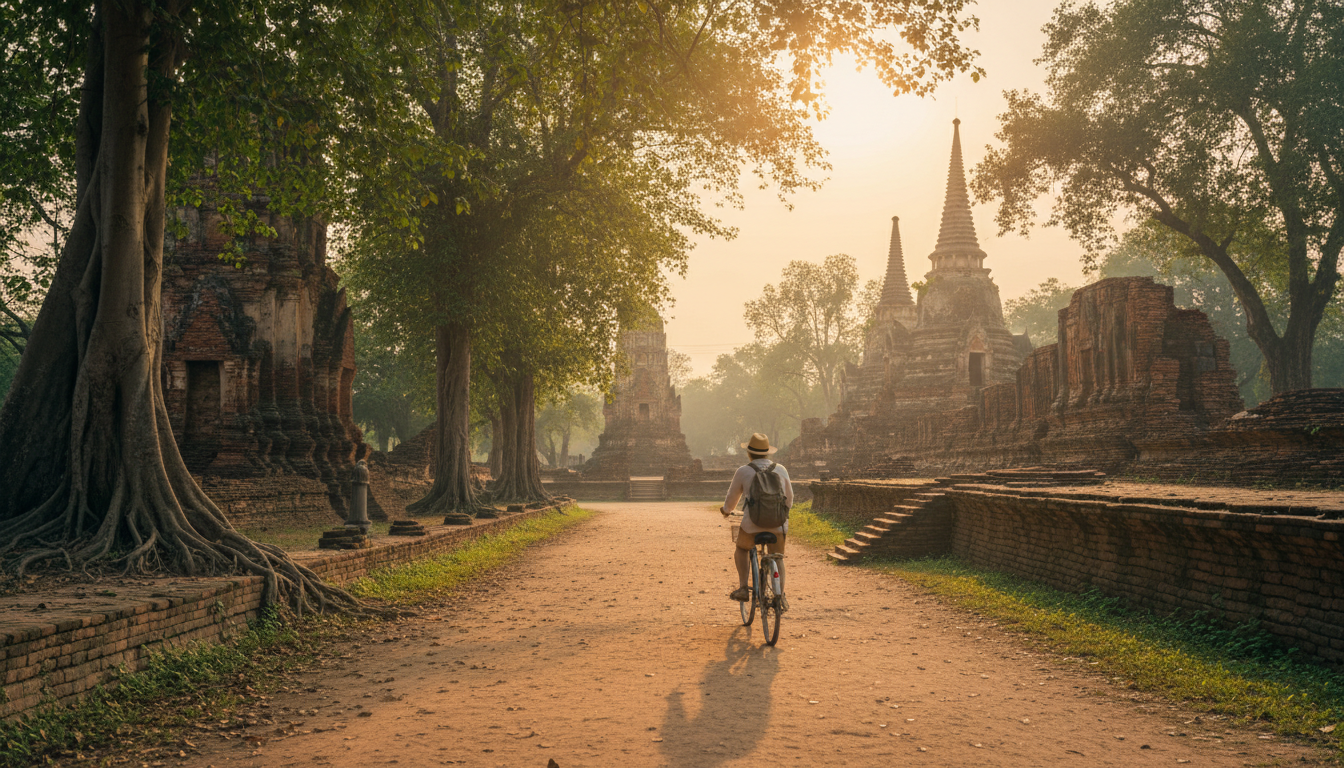
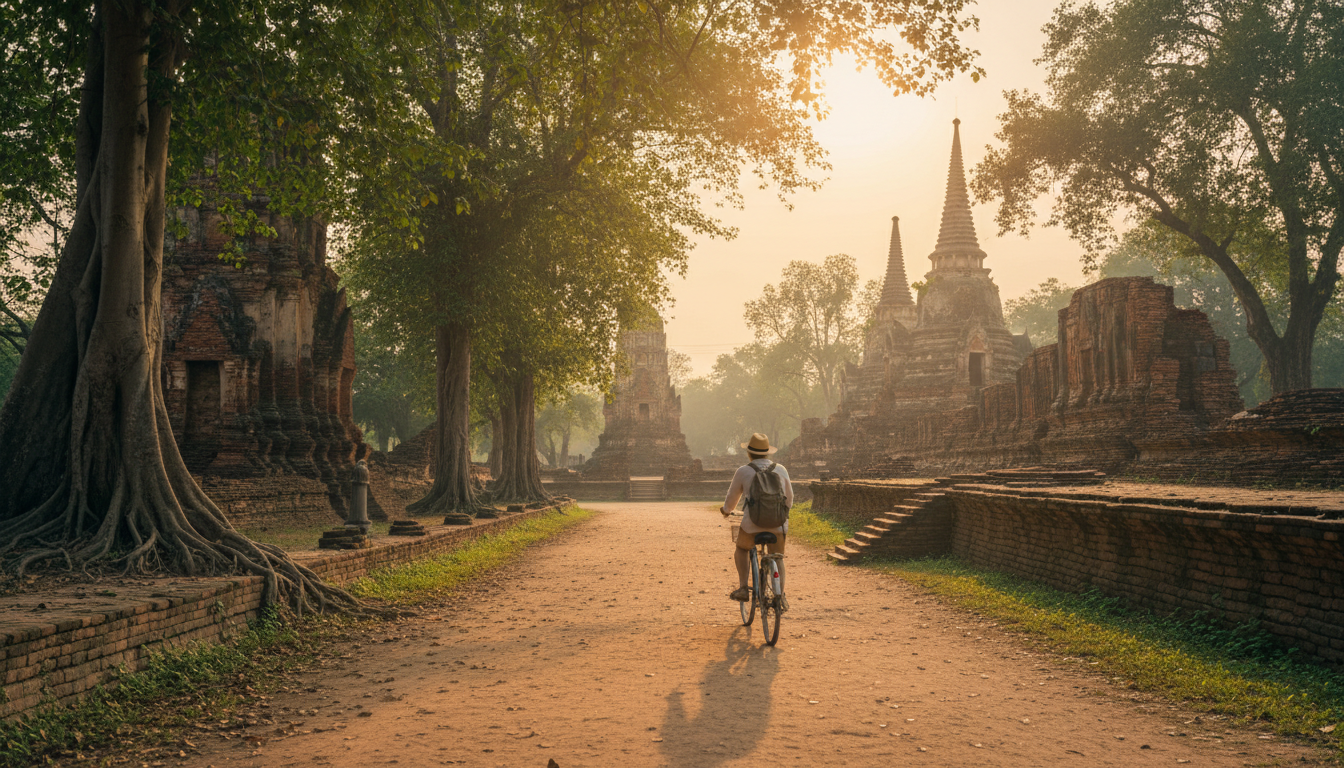
    Cyclist on a path between Ayutthaya temples
    A bicycle connects sites when riders remain attentive to others.

    Food and local businesses

    Markets and restaurants are part of contemporary city life. Choose a clean place, mention allergies and accept that menus vary. Ask before photographing a seller up close. If bins are full, keep rubbish until you find a collection point. Local spending can support families, but does not automatically guarantee sustainability.

    Choose transparent services, pay the agreed price and avoid humiliating bargaining. Politely decline activities that disturb temples or animals. Curiosity should remain compatible with respect.

    Plan a balanced day

    Check hours, closures and prices through official sources shortly before travelling. Bring water, sun protection and accommodation details offline. In the morning, explore one major complex, then pause before a second site. In the afternoon, choose a museum or short walk. A good day depends on attention, not the number of monuments checked off.

    Visitors with limited mobility should check steps, surfaces and toilets. Access varies. If fatigue or weather changes your plan, rest. A flexible schedule is safer and more memorable than an overloaded day.

    FAQ

    Is Ayutthaya easy to cycle?

    Some areas suit bicycles, but heat, traffic and distance require care. Choose a short route if inexperienced.

    Should I visit every temple?

    No. Choose a few complexes and take time to understand them.

    Can I climb on ruins?

    No, unless explicitly allowed. Structures are fragile and closed areas protect heritage.

    When should I go?

    Mornings are often more comfortable. Check the forecast and plan a sheltered break.

    Your turn

    Would you explore by bicycle or with a guide? What helps preserve historic sites?

    Checking the bicycle and packing useful items

    A few minutes of checking can prevent a breakdown in the hottest part of the day. Test the front and rear brakes separately, look at the tyres, make sure the saddle is secure and check the bell. Ask the rental shop how to report a puncture and what area the rental covers. Take a short test ride on a quiet street before entering traffic. If the bicycle pulls to one side, the brakes feel weak or the chain slips, ask for another one. It is easier to fix a problem near the starting point than halfway through a ride.

    Choose a bag that stays secure and does not interfere with your arms or handlebars. Keep a water bottle within reach without letting go of control. Put your phone in a closed pocket rather than holding it; stop somewhere safe to check a map. Carry a small first-aid kit, some cash and your accommodation details. A clear contact and written address make assistance easier if the mobile network is weak.

    Clothing matters too. Breathable garments that cover your shoulders can protect you from the sun and remain suitable for temple visits. Wear comfortable shoes for both cycling and walking on uneven surfaces. If you plan to enter a shrine, be ready to follow the dress code rather than improvise. A light layer in your bag may help, but local requirements vary, so read the signs at the entrance.

    Reading traffic and sharing the road

    Ayutthaya’s roads serve residents going to work, delivery vehicles, motorbikes and visitors. Cyclists should be predictable: ride at a steady pace, signal turns and avoid sudden moves around parked cars. Slow at intersections and look in every direction. Do not cross simply because another cyclist has started. If unsure, get off and walk the bicycle to a clearer crossing.

    Streets near markets and popular sites can become crowded. Tuk-tuks stop, visitors get out of vehicles and vendors move goods. In a narrow passage, walking your bicycle is often the better choice. A bicycle does not automatically have right of way over a pedestrian leaving a shop. Watch for opening car doors, children crossing and animals emerging between vehicles. A slower pace reduces abrupt braking and lets you notice street life.

    If travelling in a group, ride single file rather than side by side on a narrow road. Agree on a meeting point after major intersections and make sure faster cyclists do not leave others behind. One person can stay at the back and help if someone has a problem. Children should remain with an adult, wear a suitable helmet and know what to do if separated. Group organisation improves safety without making the ride feel rigid.

    Building a visit around a question

    Instead of racing between monuments, choose a theme to guide your visit. Compare chedi shapes, notice different brickwork, look at the links between temples and waterways, or consider how sacred places fit within the modern city. This approach turns a ride into a discovery and makes the sites easier to remember. Note the place names and read site signs; if you later write about the route, you can separate verified information from personal impressions.

    Spend the first part of the day at one major complex, then take a long shaded break. After lunch, a museum or a smaller site changes the physical effort. Do not add a distant excursion just because it appears on the map. The ride back in the heat may be harder than the outward journey, especially if you lack water or the bicycle is uncomfortable. Plan a return option and keep funds for alternative transport if fatigue sets in.

    Local guides can explain history, religious practices and conservation. Before booking, ask about duration, meeting point, language, cost and any entrance fees. A good guide can acknowledge uncertainty and does not present every anecdote as proven fact. A guided visit does not replace site rules or personal observation; it gives context and helps you ask better questions.

    Understanding restoration and conservation

    Visible structures are not all in the same condition. Some have been stabilised or restored, while others remain exposed to weather and vegetation. Differences in colour and material may reflect modern work rather than construction at the same time. Do not assume that a wall is “untouched” or “exactly as it was” without a source. Museums and signs sometimes explain conservation choices; a guide can describe why specialists stabilise a structure rather than rebuild a complete form.

    Conservation often aims to preserve what remains and reduce risk, not create a new-looking monument. Visitors can help by staying on open paths, avoiding contact with surfaces and telling staff about damage instead of trying to repair it. Barriers protect fragile areas; moving them or ducking underneath risks both visitor safety and the site. This rule matters even when nobody appears to be watching.

    Monuments can also remain active religious places. People may come to pray, leave offerings or reflect. They are not extras in a historical tour. Keep a discreet distance, speak quietly and put your camera away when appropriate. If unsure whether photographs are allowed, read signs or ask a caretaker. It is perfectly acceptable to observe without taking a picture.

    Making room for different needs in a group

    A route that suits an adult accustomed to heat may be too demanding for a young child or older traveller. Before leaving, ask everyone what distance feels realistic and schedule shaded breaks. It is better to finish early with good memories than to continue until exhausted. People taking certain medicines or living with heart conditions should follow their health professional’s advice and stop at unusual symptoms.

    Families can make rules concrete for children: stay on paths, touch nothing, use a quiet voice and ask before photographing anyone. Invite them to look for a pattern, inscription or change in brickwork instead of rushing to the next place. This gives them an observation task and reduces the need to repeat prohibitions. Identify somewhere to rest and a return plan that does not depend only on the bicycle.

    Visitors with limited mobility should check surfaces, kerbs, steps and toilets at each planned site. Distance on a map does not always reflect access difficulty. If someone cannot enter a building, find a nearby alternative so they are not left without a choice. Access can change; a phone call ahead is more reliable than an old photograph.

    Taking a proper meal break

    Lunch should be part of the route, not postponed until the group has no energy left. Choose a place with shade and, if possible, a way to refill water. Markets offer a chance to try local dishes, but keep paths clear and avoid touching food you are not buying. Ask about ingredients if you have allergies. If a vendor is busy, wait your turn rather than asking for a long explanation while they serve other customers.

    Small restaurants work at their own pace, and menus may depend on available ingredients. A wait is not necessarily poor service. Order clearly, pay the posted price and keep rubbish with you if bins are full. Ask before photographing staff or customers. Shops are workplaces; daily business continues even when visitors stop by.

    After lunch, do not immediately ride into the hottest part of the day. A museum, shaded space or café may be more comfortable than another long stretch. Shorten the route if tired. The cost of a paid rental is not a reason to take a risk. The quality of a visit comes from curiosity and comfort, not kilometres travelled.

    Sharing reliable advice afterwards

    When posting about your visit, include the date or season and distinguish checked information from impressions. Opening hours, fees and access rules change. “I found this path slippery after rain” is more useful than a universal claim about difficulty. If sharing a route, mention breaks, water and busy traffic areas so readers can adapt it to their fitness.

    Do not share ways to bypass closures, climb ruins or enter restricted areas. Before posting a photograph, check that it does not show someone praying or in a private moment. Dramatic images can normalise harmful behaviour if they show a person standing on a statue. Choose another frame and explain preservation rules.

    A good account also leaves room for the present-day city. Mention shops where you stopped, traffic conditions and helpful interactions without turning residents into characters in a story made for visitors. If reviewing a provider, describe facts, dates and what was agreed. A precise review allows a response; a personal attack helps neither future visitors nor the people involved.
    #Ayutthaya #Thailand #Heritage #ResponsibleTravel

    Cover of Bangkok – The Practical Guide

    To go further

    Mr Schaka’s guidebook, Bangkok – The Practical Guide, covers the essentials: transport, neighbourhoods, addresses, food, etiquette and safety, updated for 2026–2027.

  • Koh Yao Noi: Discovering a Thai Island at Its Own Pace

    Koh Yao Noi: Discovering a Thai Island at Its Own Pace

    Koh Yao Noi, in Phang Nga Bay, moves at a calmer pace than nearby beach resorts. Limestone cliffs, green roads and sea views invite visitors to slow down. Yet the island is more than scenery: families live, fish, farm and welcome guests according to local customs. A good visit begins by respecting an inhabited place.

    Observe before choosing activities

    Light and tides change the bay. In the morning, karst islands look sharp; after rain, clouds and reflections reshape them. A pause at a viewpoint can be more memorable than several excursions. Mangroves, seagrass and fishing grounds are living environments. Choose a boat operator who explains the rules, avoids disturbing wildlife and cancels when the sea is unsafe.

    Many residents are Muslim. Modest clothing in villages and religious places shows respect. Ask before photographing people and do not turn ceremonies into shows. Piers may be workplaces, and beaches near homes are not always public spaces. Notice how an area is used before settling in.

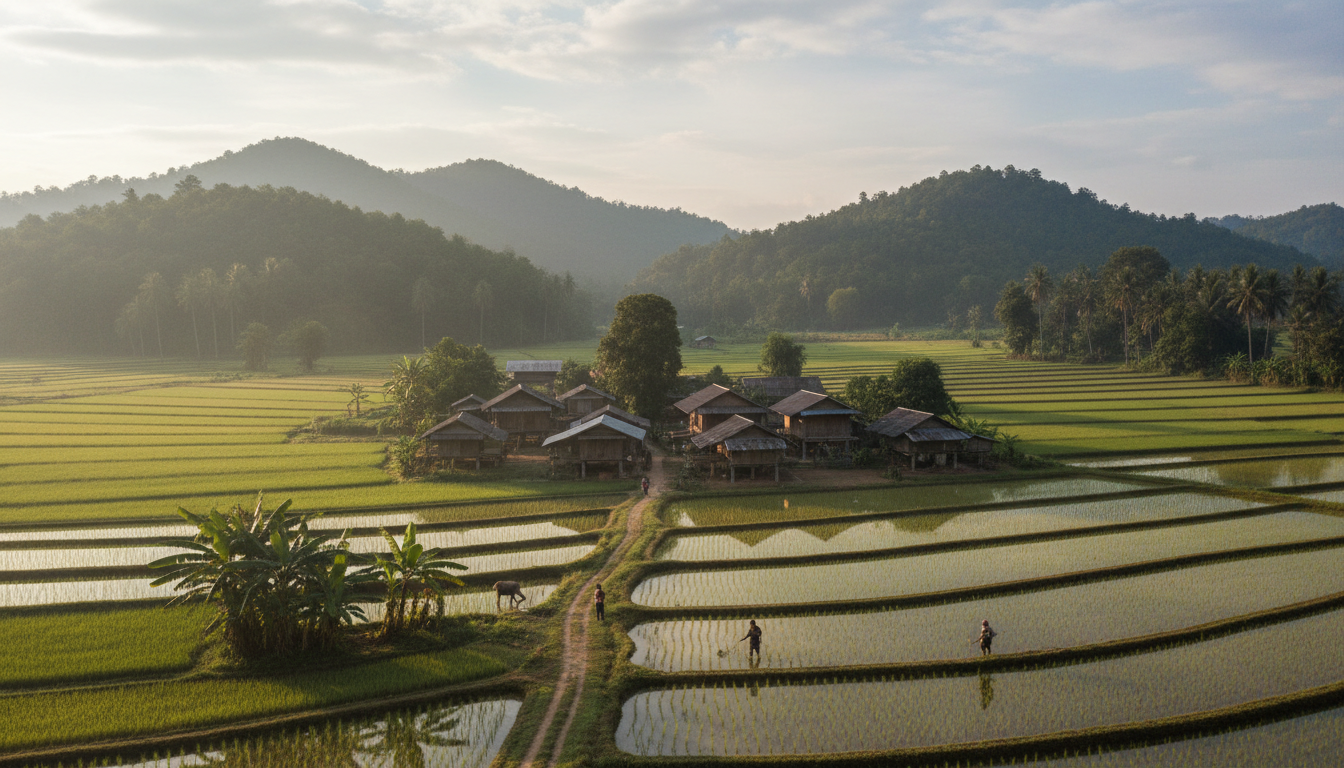
    Rural landscape on Koh Yao Noi
    The island’s interior reveals its rural side.

    Getting around safely

    A bicycle suits visitors comfortable with hills and heat. Start early, carry water, wear a helmet and check the brakes. Roads are shared with residents, motorbikes, pedestrians and sometimes animals. Ride slowly and never cross private property. If weather or terrain makes cycling unsuitable, arrange local transport. A scooter requires a valid licence, insurance that covers riding and enough experience; this is not a place to learn.

    Boat schedules vary with season and sea conditions. Confirm your transfer with your accommodation, allow time to reach the pier and keep travel information offline. One main activity each day leaves time to rest and adjust to weather.

    Choosing considerate experiences

    Before booking, ask who organises an activity, who receives payment and what happens if weather forces a change. Community activities work best when residents set the rules and payment is transparent. Be wary of guaranteed wildlife encounters or tours claiming to reveal residents’ “real life.” A workshop, guided walk or local meal can be rewarding without turning people into attractions.

    Reduce waste: carry a reusable bottle where safe water is available, decline unnecessary disposables and leave nothing on the beach. Ask your accommodation how it handles water and rubbish. Do not touch animals, collect plants or enter protected areas without a guide.

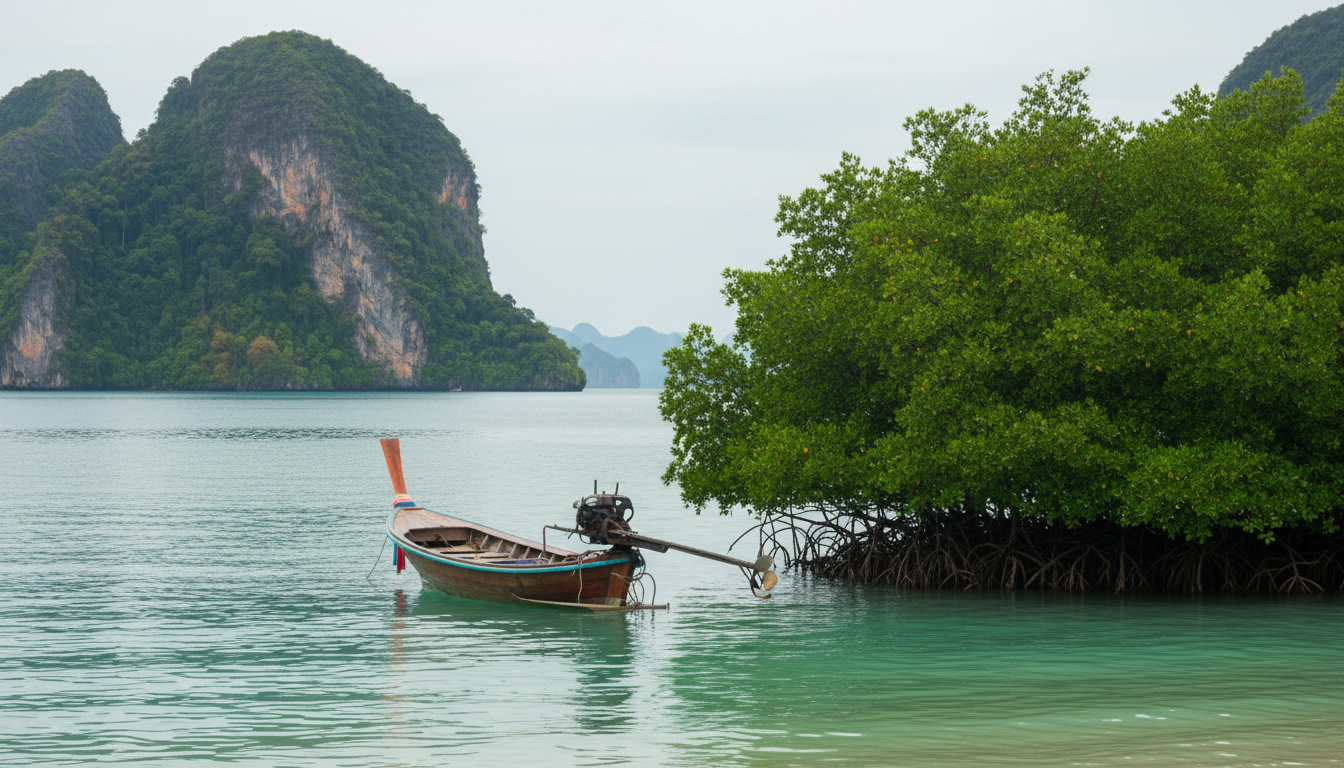
    Fishing boat near Koh Yao Noi mangroves
    The bay is also a place of work and local life.

    Planning a balanced stay

    On your first day, settle in, find useful shops and watch the bay in the late afternoon. The next day, choose one main outing. If staying several nights, keep a day free of bookings. Check schedules shortly before departure. Choose businesses with clear terms, pay the agreed price and write useful reviews without posting people’s photographs without consent.

    Memories need not be spectacular: a conversation, a quiet journey or changing light on the cliffs can be enough. Let residents decide what they wish to share.

    FAQ

    How many nights should I stay?

    Two or three nights allow exploration without many transfers. Stay longer to alternate rest and local activities.

    Can I visit without a scooter?

    Yes. Walk, rent a bicycle if comfortable or arrange local transport. Check distances and hills.

    Are boat trips guaranteed?

    No. Sea conditions can cause delays or cancellations. Confirm with the operator and put safety first.

    How can I respect residents?

    Dress modestly in villages, ask before taking photographs and avoid disrupting workplaces.

    Your turn

    Would you explore an island by bicycle, with a guide or on foot? What helps you travel respectfully?

    Planning transfers and daily outings

    A relaxed stay begins before you board the boat. Confirm where it will drop you, who will meet you and when the transfer is expected. Details given at booking may change with weather or daily operations. Save your accommodation’s name in Thai on your phone; this helps when the connection is weak. Keep a local contact number and a copy of your ticket available offline. These simple preparations reduce arrival stress and avoid asking several people for urgent help.

    Once on the island, take time to understand distances. A road that looks short on a map may include hills, little shade or more traffic than expected. Ask your host which routes are pleasant on foot, which suit a bicycle and which places are private. If travelling without a guide, share your destination and approximate return time with someone you trust. Do not head onto a remote road or out to sea without water, battery power and a return plan. Independence works best with sensible preparation.

    On very hot days, schedule the most demanding activity early. Leave the afternoon for meals, rest or swimming in a safe area. Humid heat can tire even people who walk regularly at home. Drink regularly, use sun protection and pause when needed. A holiday should not become a challenge to see everything. Children, older travellers and people taking medication may need a slower pace and extra breaks.

    Groups with different preferences should agree on one main activity and keep other options optional. One person can rest while another visits a shop if the meeting place and return time are clear. Avoid renting multiple vehicles just to save minutes; that adds risk and unnecessary traffic. Before booking a local service, ask whether postponement is possible. Flexible planning recognises both group needs and island constraints.

    Assessing boat trips

    Before boarding, check that the crew explains safety procedures, that life jackets are available in suitable sizes and that the passenger count is reasonable. Ask about duration, stops and what happens if weather changes. A responsible operator answers clearly and does not encourage passengers to lean over the side for a photograph. If sea conditions worry you, say so. You may decline a trip without having to prove that danger is imminent.

    Trips combining several islands may seem convenient, but a tight schedule leaves little time to appreciate a place and can pressure the crew to travel quickly. Prefer an outing with a clear plan and time to disembark, rest and follow local rules. Check whether fees, meals or equipment are included. A booking intermediary’s terms may differ from those of the people actually operating the boat.

    In mangroves, stay on authorised routes and do not step on roots. Do not collect shells or coral, and never feed wildlife. A guide can explain why some channels matter to fish, birds and fishing livelihoods. When viewing animals, keep a comfortable distance and accept that none may appear. Nature cannot guarantee an encounter. A successful trip can deepen your understanding of an ecosystem even if you do not see the species you hoped for.

    After the trip, take your packaging and belongings with you. Retrieve floating rubbish only if it is safe; do not ask the pilot to leave the route for a risky clean-up. If you observe a concerning practice, report it to the operator or accommodation with specific details and a date. Factual feedback can be checked and answered; a vague public accusation is less useful.

    Choosing accommodation with practical criteria

    A bungalow photograph does not always show its location, nearby noise or distance from services. Before booking, locate the pier, shops, restaurants and transport options. Ask whether late arrivals can reach the property and whom to contact outside office hours. To limit travel, choose accommodation near activities you genuinely plan to do rather than selecting a remote place solely for its view.

    Ask practical questions about water, electricity, waste and laundry. On an island, these resources depend on infrastructure that may be limited. Find out whether tap water is drinkable, where to refill a bottle and how rubbish is collected. Answers may not be perfect, but they clarify what a stay involves. Reusing towels or turning off air conditioning when leaving reduces some demand without pretending to solve infrastructure challenges.

    Read online reviews carefully. Check their date, season and traveller type. A dry-season experience may not describe monsoon conditions. A simple room may suit someone who spends the day outside but not a family needing easy access and regular services. If a detail matters, ask directly before paying. Requesting clear information is not demanding special treatment.

    Clarify cancellation terms and transfer fees before confirming. If a boat changes time or bad weather disrupts travel, you will know the options. Keep booking messages and receipts. Disagreements are easier to resolve when everyone knows the terms. Preparation protects your budget and avoids placing the burden of a misunderstanding on local staff when it began with an intermediary.

    Discovering food without imposing expectations

    Meals reveal a region through ingredients, cooking methods and service rhythms. Ask what is available rather than assuming an online photograph represents every menu. Clearly mention allergies and explain if you avoid an ingredient for medical reasons. A restaurant may not be able to guarantee the absence of traces; in that case, choose a safer option. Simple, polite communication works better than a last-minute list of demands.

    Meal times may depend on work, deliveries and religious periods. A limited menu is not necessarily poor service; it may reflect what is available that day. Try a small portion of a new dish if you wish, but do not waste food for a photograph. Vendors and cooks do not have to explain an entire culture to every customer. If conversation develops naturally, listen and say thank you; if someone is working, let them continue.

    When sharing a meal, ask how dishes are served and whether someone prefers separate utensils. Customs vary between families. A respectful question is better than an assumption. Avoid constantly comparing local cuisine with food from home. Saying what you enjoy invites a better exchange than judging a dish against one standard.

    Single-use packaging can accumulate quickly. Request a takeaway container only when needed. Bring reusable cutlery when practical, but do not complicate service by insisting on a solution a small business cannot manage. Waste reduction works best as a simple habit rather than a demand directed at one vendor.

    Sharing an experience without stereotyping the island

    When describing your stay, mention the season, transport and conditions you encountered. A specific note such as “the road was steep after the village” is more helpful than a blanket claim that the island is easy or difficult. Experiences vary with weather, age, health and accommodation. Present impressions as your own and do not speak on behalf of residents.

    Do not describe an entire community with absolute adjectives. A pleasant encounter does not mean every resident shares the same view of tourism; a problem with one service does not define the whole island. Give enough context for readers to understand what happened while keeping unrelated personal details private. An honest account can flag a problem without identifying an employee or family.

    Images remain accessible long after a trip. Check the frame, seek consent from identifiable people and remove details that reveal a private place. A boat photo may show a name or registration; a child’s image should not be shared without appropriate permission. Respect does not end when you leave the village.

    Before recommending a quiet site, consider whether access is genuinely open and whether increased traffic could damage it. Social media can quickly turn a calm place into a gathering point. You can describe the general experience without revealing every precise location. This gives residents and site managers room to manage visitors at their own pace.

    Spending locally with care

    Buying from a village shop or booking a local guide can help keep part of a visitor’s budget on the island. Ask what a price includes, agree on it before the service begins and pay the person or business identified in the booking. A low price is not automatically fair, and an expensive activity is not automatically responsible. Look for clear information about duration, equipment, cancellation and the people providing the service. If you are unsure, ask a short question rather than bargaining aggressively. Respectful spending supports an exchange without creating an expectation that residents must provide access to private places or personal stories.

    Markets are working spaces, not staged attractions. Keep walkways open, wait your turn and avoid touching goods you do not intend to buy. Ask permission before photographing a vendor, especially when the stall is busy. If a person declines, thank them and move on. You can still write about a meal or a market without identifying a seller or publishing a close-up image. These choices protect privacy while allowing other travellers to learn useful details about prices, opening times and the kinds of food available.

    Keep expectations flexible

    Travel information changes quickly on islands. A shop may close for a local holiday, a boat may run on a different schedule, or rain may alter an outdoor plan. Check the most important details shortly before setting out, and do not rely only on a post written months earlier. Keep one alternative activity in mind, such as a short walk, a quiet meal or time to rest. Flexibility reduces pressure on local staff and helps you enjoy a day even when the original plan cannot happen. What matters most is not completing a checklist, but leaving room to notice the island as it is.

    #KohYaoNoi #Thailand #PhangNga #ResponsibleTravel

    Cover of Phuket and the Andaman Sea – The Practical Guide

    To go further

    Mr Schaka’s guidebook, Phuket and the Andaman Sea – The Practical Guide, covers the essentials: transport, neighbourhoods, addresses, food, etiquette and safety, updated for 2026–2027.
  • Chiang Mai on Foot: Lanna Temples and Old City Lanes

    Chiang Mai on Foot: Lanna Temples and Old City Lanes

    Chiang Mai Old City is best explored at a slower pace. Inside the former moat, temples, shopping streets, homes and small cafés share a compact but rich area. The goal is not to tick off every stop; it is to see how Lanna heritage, Buddhist practice and contemporary life meet in a lived-in neighbourhood.

    Reading the city’s shape

    The moat and traces of old walls recall Chiang Mai’s plan. Founded in the late thirteenth century as the capital of the Lanna Kingdom, the city still uses historic gates such as Tha Phae Gate as landmarks. They are not isolated scenery: traffic, shops and ceremonies continue around them. Walk along one stretch of the moat and enter through a gate that suits your route. Morning light is gentle and the heat easier. Download an offline map and choose a few places. Not every street is shaded, pavements can be interrupted and scooters require attention.

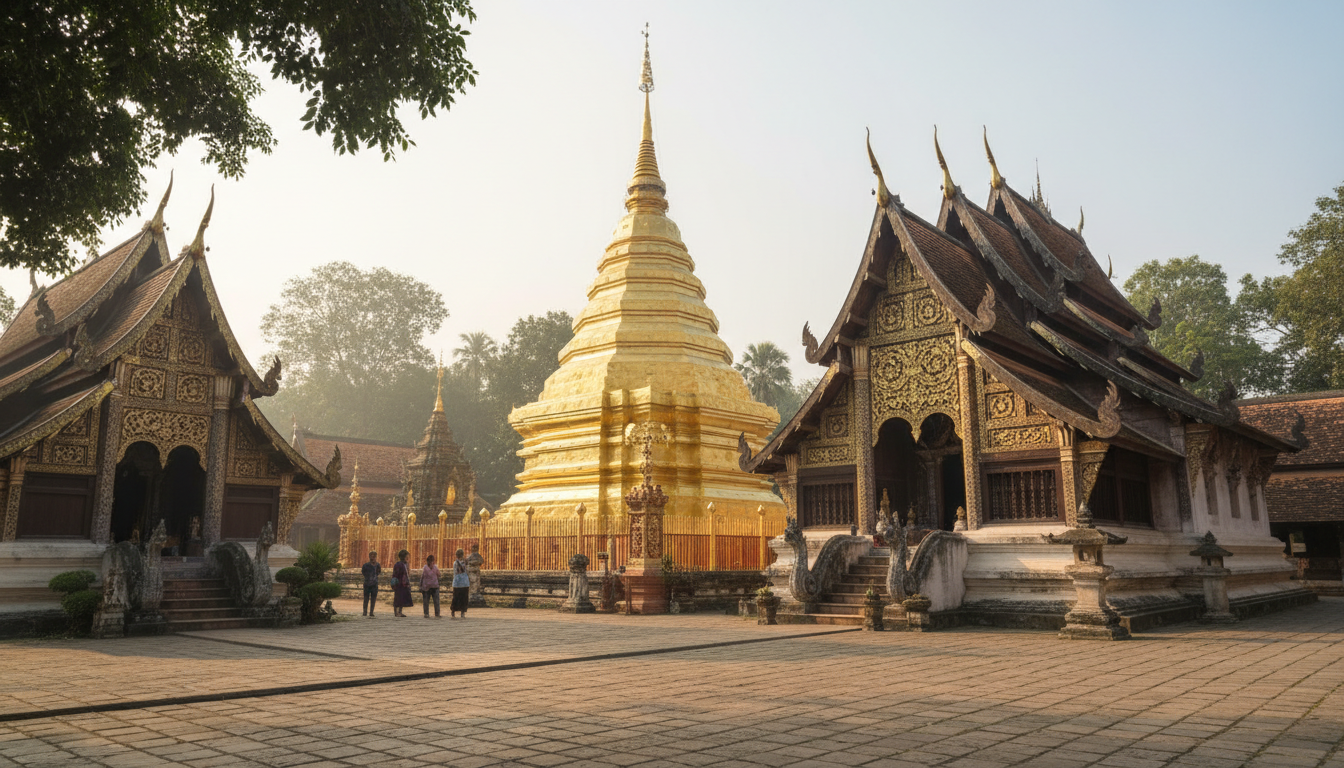
    Architecture d’un temple Lanna à Chiang Mai.
    Lanna temple details reward a slower look.

    Choose a few temples

    Wat Phra Singh is among the best-known temples and shows forms of Lanna religious art. Wat Chedi Luang, with its large chedi, offers another view of the city’s history. Wat Phan Tao is admired for wooden features and its courtyard. Choose two or three and notice details rather than racing through a list.

    Temples are active places of worship. Cover your shoulders and knees, remove shoes when asked and keep your voice low. Some areas are reserved for worshippers or have specific rules. Follow signs, ask before photographing people and do not block doorways. Read available information or ask a guide how the temple functions today. Donations are voluntary and can go through official boxes.

    Lanes and daily life

    The lanes contain workshops, homes, schools and local businesses. A photogenic street is not necessarily public space. Do not enter courtyards, photograph residents through gates or leave litter. For coffee or a meal, choose a place and sit without disturbing the neighbourhood.

    Markets have different schedules. The Sunday market on Ratchadamnoen Road is associated with the weekend, but operations can vary. Check local information. Vendors sell food, crafts and everyday goods: ask prices politely and do not handle fragile items without permission.

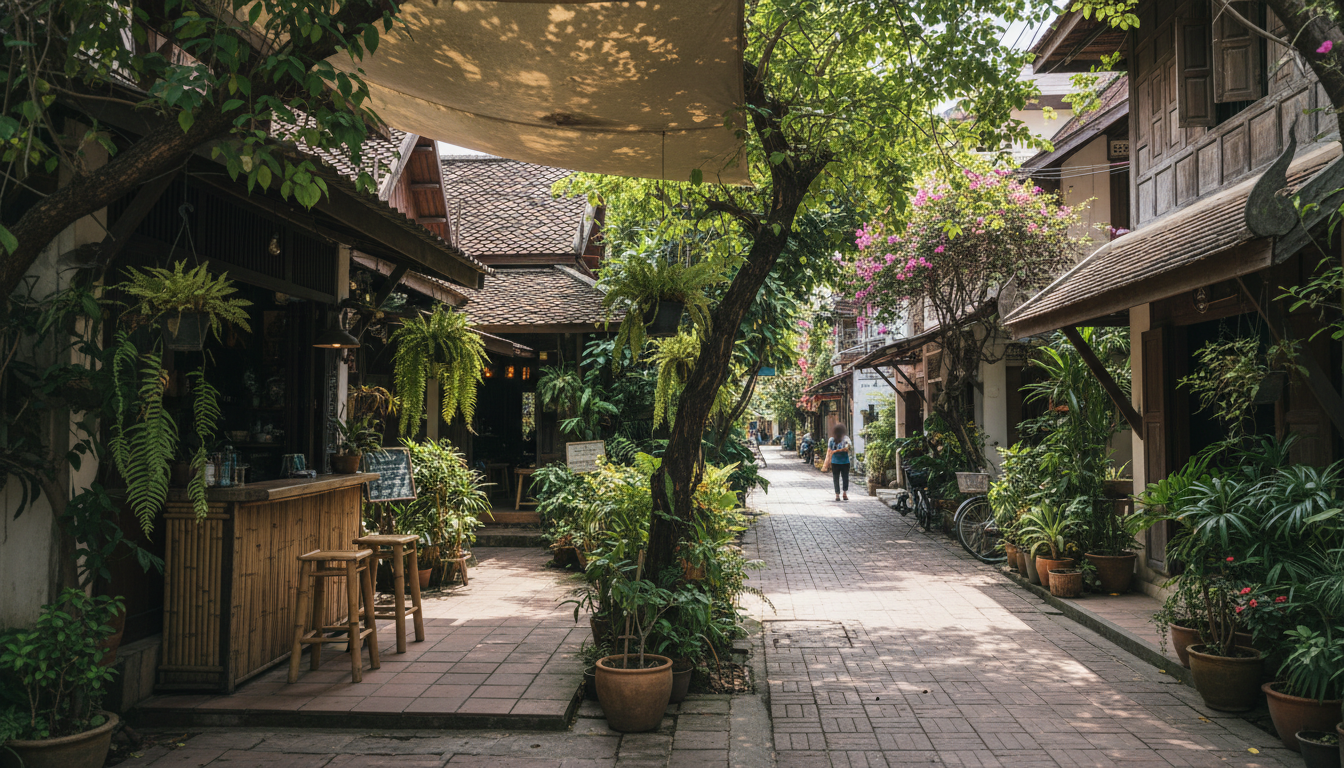
    Ruelle ombragée de Chiang Mai.
    A shaded lane offers a pause between visits.

    A flexible route

    For a first visit, start near a historic gate, walk to a temple using side streets and pause at a café. Visit a second temple early or late in the day, then return by another side of the moat. Allow three to five hours depending on breaks and heat. With only an hour, stay in one compact area rather than crossing the whole old city.

    With children, bring water, plan shaded breaks and pick an easy meeting point. Visitors with mobility needs can ask about transport to the closest entrance; access varies, and temple steps cannot always be avoided.

    Heat, rain and culture

    Bring water, a hat, sun protection and comfortable shoes. In the rainy season, surfaces get slippery and showers can arrive quickly. Check the weather and keep a backup plan. Tuk-tuks, taxis and ride apps connect more distant areas; confirm fare and destination before leaving. If renting a bicycle, check the brakes and make sure you are comfortable with local traffic.

    Lanna is a complex historical and cultural heritage, not just a decorative style. Chiang Mai is a contemporary city where traditions evolve. Avoid reducing it to costumes, dances or a frozen image. Compare explanations at temples and museums, ask respectful questions and support local activities directly. Ask before photographing vendors, monks or craftspeople; do not stage a ritual for social media.

    Food and breaks

    Thai restaurants, stalls and cafés are plentiful. Try a northern dish if you wish, ask about spice and mention allergies clearly. Small businesses have changing schedules, so keep another option nearby. Sitting down helps you recharge and observe the area. A reusable bottle and respect for queues improve the visit.

    Reading the city on foot beyond the monuments

    A map helps with orientation but may not show pavement conditions or shade. Identify main streets, then allow time for detours around shops, construction and busy roads. The moat is a useful boundary for understanding the centre, but it is not everywhere a continuous, comfortable walking route. Crossing busy roads takes patience. When the heat rises, an indoor break is better than extending the walk just to finish the loop. Check that your navigation app is not sending you through a private courtyard or restricted entrance.

    Visitors interested in architecture can choose a theme: gates and fortifications, temples and carvings, or markets and crafts. A route does not need to be long to feel coherent. Pick two details to look for, such as roof patterns or how a temple courtyard is used, then leave room for discovery. This reduces the urge to check your phone at every junction. Photograph a useful map or sign, then put the screen away while crossing streets.

    Following good temple etiquette

    Before entering, check whether a ceremony is taking place and follow instructions about shoes, clothing and areas open to visitors. If a monk or worshipper is praying, keep your distance and stay out of their line of sight. Photographing a statue may be allowed in one place and restricted in another; read signs instead of assuming one rule applies everywhere. When sitting, avoid pointing your feet toward a Buddha image or people. These small gestures show consideration.

    A temple is a community space with activities, donations and sometimes classes or ceremonies. You do not need to understand every ritual to behave appropriately. Observe quietly, do not touch ritual objects and avoid interrupting volunteers. If you have a question, wait for a suitable moment and ask simply. A local guide can explain differences between buildings or symbols; curiosity works best when it includes listening.

    Exploring crafts and neighbourhoods

    Chiang Mai is associated with several crafts, but the old city is not an open-air shop. Some workshops welcome visitors; others are private workplaces. Ask before entering, check whether a demonstration is planned and do not touch tools or works in progress. Buying directly from a maker can support their work; ask what is made on site and how it should be cared for. A souvenir need not be expensive: a postcard, small ceramic piece or local meal can be just as memorable.

    The neighbourhood changes with the hour. Mornings are quieter and daily routines are more visible. Late afternoons bring more shoppers. Sunday evening draws visitors to walking streets; if you prefer calm, choose another time and return later for the market. At any hour, do not block entrances for photos and keep lanes clear for residents walking or riding scooters.

    Adapting the route for your group

    A visit with children works best with short stops and a clear place to rest. Temples may interest them through colour and animals, but they also need somewhere to drink and sit. Explain why voices stay low and why some moments should not be photographed. Older visitors or people with mobility needs should check step-free access and toilets before leaving. It may be better to choose one accessible temple and add a short vehicle ride than to insist on a long loop.

    Groups of friends should agree on a shared pace. Some will want to read every panel; others will prefer a break. Choose a meeting point at a gate or familiar café and keep phones charged. If someone separates, exchange the hotel address and next stop. A flexible plan prevents frustration and lets everyone enjoy the neighbourhood.

    Tasting Chiang Mai with curiosity

    A meal can become an essential part of the walk. Northern dishes have varied flavours and textures; ask about ingredients and mention allergies. If you cannot tolerate chilli, say so clearly when ordering. Busy stalls may have a limited menu and service can take patience. Watch how local customers order, but let staff guide you. A cool drink and simple dish may feel better than a heavy meal during the hottest part of the day.

    Markets are workplaces too. Ask before taking a close photograph of a person or stall. If buying something, avoid aggressive bargaining over a few baht. Carry your rubbish, do not feed animals around food stalls and keep a safe distance from motorbikes on nearby streets.

    Returning at another time

    A first walk often inspires another visit at a different time of day or year. The rainy season brings showers and dense greenery; cooler months can make walking easier, though conditions vary. Opening hours and ceremonies differ by site. Check before returning and do not treat an old recommendation as a guarantee. For a second visit, choose a neighbourhood or theme you did not have time to explore.

    At the end of the day, note temple names and details that stayed with you. This helps you find reliable information later and recommend a place accurately. A helpful recommendation also mentions limitations: a street may be beautiful but noisy, a temple impressive but hard to access, or a market interesting but crowded. That honesty helps future visitors decide whether it fits their needs.

    Making the walk your own

    There is no single route that suits every visitor. Someone interested in religious architecture may spend half an hour in one temple, while another traveller may prefer a quick look and more time at a market. Build a short list of priorities, then leave open space between them. If a temple is preparing for a ceremony, change direction rather than treating the schedule as an obstacle. If rain begins, pause in a café and decide whether to continue. The best route is one that still feels comfortable at the end of the day.

    Notice how the old city functions beyond its visitor landmarks. Residents use the same streets to reach work, school and shops. Keep entrances clear, step aside before checking a map and avoid blocking narrow lanes for group photographs. At busy intersections, wait for a safe crossing instead of following a crowd without checking traffic. If you rent a bicycle, use lights when visibility falls and park only where permitted. Small choices like these make the neighbourhood easier to share.

    Planning a second visit

    If you return, choose a different time or focus. Early morning can reveal a quieter rhythm around temples; evening brings food stalls and busier streets. A rainy afternoon might suit a museum or workshop, while a clear day makes a longer walk more appealing. Check current opening days rather than relying on an old itinerary. Keep notes on which places require more time than expected, where you found shade and how you travelled between areas. Those practical observations can make the next visit more relaxed and help you give specific advice to friends.

    Noticing seasonal differences

    At a return visit, compare the same street at another hour. Morning, afternoon and Sunday evening bring different patterns of light, activity and crowding. Record the day and time of a market recommendation so readers know that schedules can change. A short note about shade, seating and the walk between stops is more useful than claiming that every visitor will have the same experience.

    Respectful recommendations

    When recommending a temple, describe what you observed and avoid presenting a personal impression as a religious rule. Point readers toward posted instructions and official information for current access. This helps visitors arrive prepared while leaving space for the temple community to set its own guidance.

    Frequently asked questions

    How long should I plan?

    A half-day covers a few places; a full day allows for markets, museums and breaks.

    Which temples should I choose?

    Wat Phra Singh, Wat Chedi Luang and Wat Phan Tao are common choices. Check access on the day.

    Can I do everything on foot?

    The centre is compact, but heat and pavements can be tiring. Combine walking with transport if needed.

    What should I wear?

    Cover shoulders and knees, remove shoes when asked and follow posted guidance.

    Walk with curiosity

    The old city rewards visitors who leave room for the unexpected: a carved detail, a small shop or a conversation can matter as much as a monument. Plan a flexible loop, choose a few places and respect residents and worshippers. Which temple or lane made you slow down? Share practical advice for the next visitor.

    Sources

    #ChiangMai #Thailand #Culture #MrSchaka

    Cover of Chiang Mai and the North – The Practical Guide

    To go further

    Mr Schaka’s guidebook, Chiang Mai and the North – The Practical Guide, covers the essentials: transport, neighbourhoods, addresses, food, etiquette and safety, updated for 2026–2027.

  • Kanchanaburi: Understanding the Death Railway

    Kanchanaburi: Understanding the Death Railway

    Kanchanaburi draws visitors for its rivers, scenery and famous bridge. Yet a visit focused only on a photograph misses the place’s deeper meaning. The railway built during the Second World War is tied to forced labour, captivity, illness and the deaths of thousands. A thoughtful visit begins with context: take time to read, listen and distinguish documented history from images popularised by cinema.

    The bridge and the river

    The Bridge over the River Kwai stands in Kanchanaburi town beside the Mae Klong, known locally as the Khwae Yai in this stretch. Damaged during the war and repaired after 1945, it became a historical landmark. The real site is not identical to the film’s story. Walk only on designated passages and remember that the railway is active. Do not stop on the tracks for photographs; wait for an authorised area, watch children closely and leave room for others. If the bridge is crowded, take a riverside walk or pause at a nearby café.

    Cimetière commémoratif de Kanchanaburi sous les arbres.
    Kanchanaburi War Cemetery is a memorial site to visit quietly.

    Understanding the railway

    The Burma–Siam Railway was built under Japanese occupation to connect Thailand with Burma, now Myanmar. The project crossed difficult terrain and was carried out in brutal conditions. Allied prisoners of war and Asian labourers, conscripted or recruited under coercion, suffered hunger, illness, exhaustion and violence. Figures vary by group and source, so be cautious of simplified totals without context. “Death Railway” reflects the project’s terrible mortality, but cannot summarise survivors’ experiences or those of local communities.

    Combine the remains with a museum or exhibition. Documents, signs and testimony explain the timeline, military decisions and workers’ daily lives. Read captions, notice sources and take time to understand the people mentioned. Some exhibits are difficult; it is fine to pause or choose a shorter route. A good guide distinguishes established facts from legends, welcomes questions and treats victims with dignity.

    Memorial sites

    Kanchanaburi War Cemetery, also called Don Rak, commemorates prisoners of war who died during construction. Speak quietly, do not walk on graves or touch objects, and avoid poses that turn graves into scenery. For photographs, choose a broad view and do not photograph mourners without consent. The carved names represent people and families. Check opening hours before setting out; museums and memorials can change their schedules. A guided visit may support preservation and explain the context.

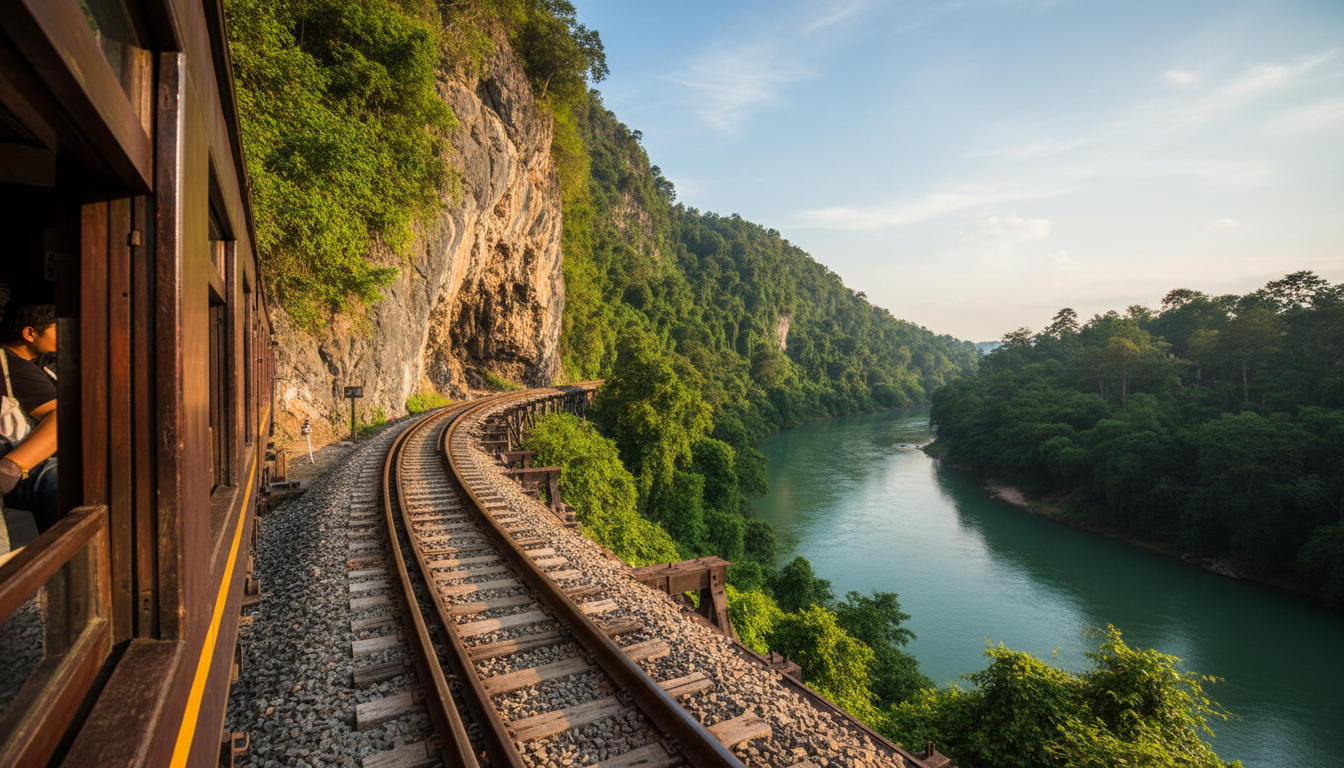
    Train panoramique près de Kanchanaburi.
    The train follows part of the historic corridor and reveals the region’s terrain.

    Taking the train and planning a day

    The tourist train follows part of the old corridor, showing rivers, cliffs, villages and railway structures. Timetables, stops and services change: consult official railway information on the day, arrive early and allow time for onward travel. This is not a historical reenactment and does not cover the whole original line. Follow staff announcements and do not lean out of windows.

    Travel from Bangkok can take several hours depending on traffic, transport and station. A day trip is possible, but choose a few nearby stops and plan your return in advance. You might spend the morning at the bridge and a museum, then visit the cemetery without rushing. To explore distant parts of the line, staying overnight is often more comfortable than several quick transfers.

    Practical advice

    The town has restaurants, markets and varied accommodation. Bring water, sun protection and comfortable shoes. Heat and showers can affect plans. The station, bridge and museums may be difficult to walk between; confirm a taxi or tuk-tuk fare before leaving and agree on a pickup point. An offline map and place names in Thai can help.

    Exploring accounts and sources

    The film and popular stories made the bridge famous, but they also simplified complex realities. A more accurate visit distinguishes real places, historical events, individual memories and artistic choices. Museums do not all take the same approach: some focus on prisoners of war, others on Asian labourers, military operations or local history. Notice who produced an exhibit and whose voices are included. If an anecdote surprises you, make a note and check it against a historical source or a qualified guide before repeating it as fact.

    Death tolls are often repeated without explaining whom they refer to, which period an estimate covers or what records were used. Avoid reducing the project to one number or comparing suffering as if it were a ranking. The experiences of prisoners of war and Asian labourers were distinct and sometimes documented unevenly. Reading captions and names carefully keeps people at the centre of the story rather than leaving only an impressive engineering structure. After your visit, you can continue with testimony and historical work from several communities.

    Planning arrival and local transport

    Before leaving Bangkok, confirm the exact departure point for your train or tour. Stations and terminals are not interchangeable, and traffic in the capital varies. Allow time to find the platform, buy water and collect tickets. On arrival in Kanchanaburi, ask how to travel between the bridge, museum, cemetery and your accommodation. Maps do not always show the open entrance or temporary works, so confirm with your hotel or local staff.

    A day can centre on a railway journey or the sites in town, but too many stops create a race against the clock. Check return times before booking a guided visit and keep a backup plan in case the train is delayed. For a commercial excursion, read what is included: transport, admission, meals and the actual time at each stop. Ask whether the schedule allows a calm visit to memorials. A modest itinerary with time to read and reflect often offers more than a long list of quick photo stops.

    Choosing a guide thoughtfully

    A good guide does more than recite dates. They explain the landscape, point to sources, answer questions and acknowledge uncertainty. Before booking, ask about language, group size, time in museums and the approach to memorial sites. Be wary of commentary that turns war into entertainment or blames one community for all suffering. If you do not hire a guide, use interpretation from heritage institutions rather than anonymous posts without references. A visit can be valuable without a packed schedule when explanations are reliable and stops are well chosen.

    Kanchanaburi’s shops, accommodation and restaurants are part of the living region. Choosing a small transport operator or eating at a local restaurant contributes directly to the neighbourhood economy. Confirm prices, respect agreed times and give notice if plans change. At memorials, avoid loud conversations, staged social-media scenes and sensational captions. Supporting the region and respecting these sites belong together.

    Preparing for heat and delays

    Humid heat can make a visit more tiring than expected, especially after several hours of travel. Drink regularly, rest in shade before you feel exhausted and keep medication accessible. Closed shoes help on uneven paths and near railway tracks. During the rainy season, pavements and river edges can become slippery; do not take a riverside shortcut just to save a few minutes. If you feel unwell, stop somewhere safe and ask for help instead of pushing on with the itinerary.

    Keep your phone charged, share the hotel address with your group and note the return station. An offline map is useful when mobile service is slow. Carry some cash for small rides and water, but store tickets and documents separately. If a site closes or a shower changes your plans, choose a sheltered activity rather than making rushed transfers. These simple preparations leave more attention for the history you came to understand.

    Continuing the reflection afterwards

    Back home, compare several accounts instead of keeping only the one that confirms your first impression. When sharing a photograph or recommendation, name the place correctly and say whether you are describing a personal memory or verified information. Do not share images of mourners without consent or write sensational captions. A thoughtful post can encourage other travellers to visit a museum and understand the site, rather than simply recreate a film scene. You can also note unanswered questions and look for books or museum resources once you return.

    Planning for different visitors

    People respond to wartime history in different ways. Before visiting a museum, explain the subject to children and agree on a signal to pause if an image or testimony feels too difficult. Adults may choose not to enter an exhibit and meet the group in a quiet place. Visitors with family connections to conflict may also want to move at their own pace. You do not need to see everything to understand the site’s importance. A short, attentive visit is better than requiring everyone to complete the same route. Ask staff whether a room contains particularly graphic material, and use rest areas when available.

    Solo travellers may find a small guided group useful for context and transport between sites. Keep personal documents with you and confirm the return point. When photographing the tracks, stand on stable ground with a clear route; do not walk backwards to frame the scenery. In a group, agree that nobody will move onto the railway or near the river edge for a better picture. Looking after one another also makes it easier to focus on the visit.

    Questions to ask before booking

    Check whether transport includes a return to the same station, whether admission is included and how much time is spent at the cemetery and museum. Ask about the walking distance between stops and whether there is shade or seating. If a tour combines several provinces or distant attractions, compare the time in transit with the time at each site. A package can appear convenient while leaving only a few minutes for a memorial. Reviews may help, but favour recent descriptions that mention the actual schedule and guide’s interpretation. Confirm cancellation terms and what happens if weather or rail delays disrupt the day. These details help you choose a visit that matches your priorities instead of discovering the limits after departure.

    Preserving memories and records

    Small choices during the visit help protect the sites. Do not place stickers, carve marks or move objects found near the railway. If you notice damage, tell staff instead of trying to repair it yourself. In museums, follow rules about bags, drinks and photography. Some items are loaned or fragile; following instructions helps teams preserve them for future visitors. If you buy a book or guide at the museum, you take home a source to consult later instead of photographing every panel. This also reduces the risk of sharing an isolated image without its context.

    For families, a simple activity is to ask each person to remember one name, object or detail that helped them understand the period. Share observations in a quiet place away from graves and reflection spaces. Children may ask direct questions; answer in age-appropriate language and be honest when you do not know. You can look for a reliable source after the trip. A visit does not need to answer every question to be valuable: it can open a subject to explore together.

    These checks make the day easier and keep the memorial visit focused, calm and respectful.

    Frequently asked questions

    Is this exactly the bridge from the film?

    The real bridge has its own history. The film made it famous but does not tell the railway’s complete story.

    Can visitors walk across it?

    Yes, when access is open. Follow signs and staff instructions, especially when a train approaches.

    Is one day enough?

    It is enough for a few nearby sites. Staying overnight gives more time for the train and distant places.

    How should I behave at the cemetery?

    Keep quiet, do not touch graves and avoid intrusive photographs.

    Visit with care

    Kanchanaburi becomes more meaningful when the scenery is connected to people who endured the railway project and to residents today. Plan a realistic route, check schedules and leave time for memorial sites. Which resource helped you understand the history most clearly? Share your experience respectfully and cite your sources.

    Sources

    #Kanchanaburi #Thailand #History #MrSchaka

    Cover of Secret Thailand – Where Nobody Goes – The Practical Guide

    To go further

    Mr Schaka’s guidebook, Secret Thailand – Where Nobody Goes – The Practical Guide, covers the essentials: transport, neighbourhoods, addresses, food, etiquette and safety, updated for 2026–2027.

  • Koh Kret: Mon Pottery, Local Food and a Chao Phraya Island Walk

    Koh Kret: Mon Pottery, Local Food and a Chao Phraya Island Walk

    Koh Kret lies in Nonthaburi on the Chao Phraya River, north of Bangkok. A canal separated the land from the riverbank and created an island of small lanes, gardens and boat crossings. Visitors come for Mon pottery, temples and local food, but this is not an open-air museum. Families live and work here, and skills are passed on while adapting to everyday life.

    Plan the crossing

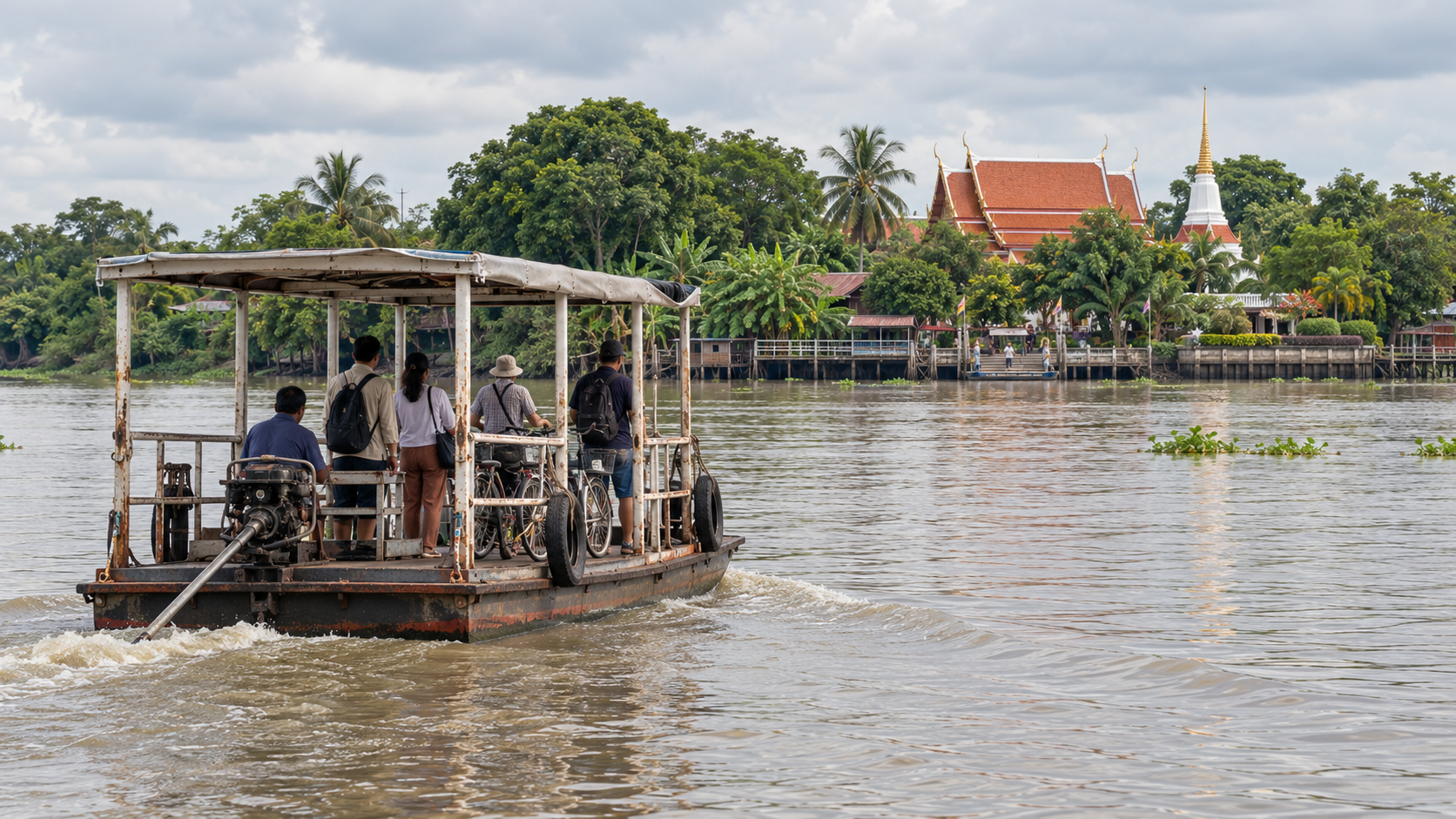
    Visitors usually reach Koh Kret by boat from a Nonthaburi pier, often around Pak Kret. Services and schedules can change by pier, day and season. Confirm departures locally before setting your itinerary and allow time for the return. Weekends are busier; workshops and shops may keep different weekday hours. Bring cash and water, especially if you plan to walk for several hours.

    Watch the makers at work

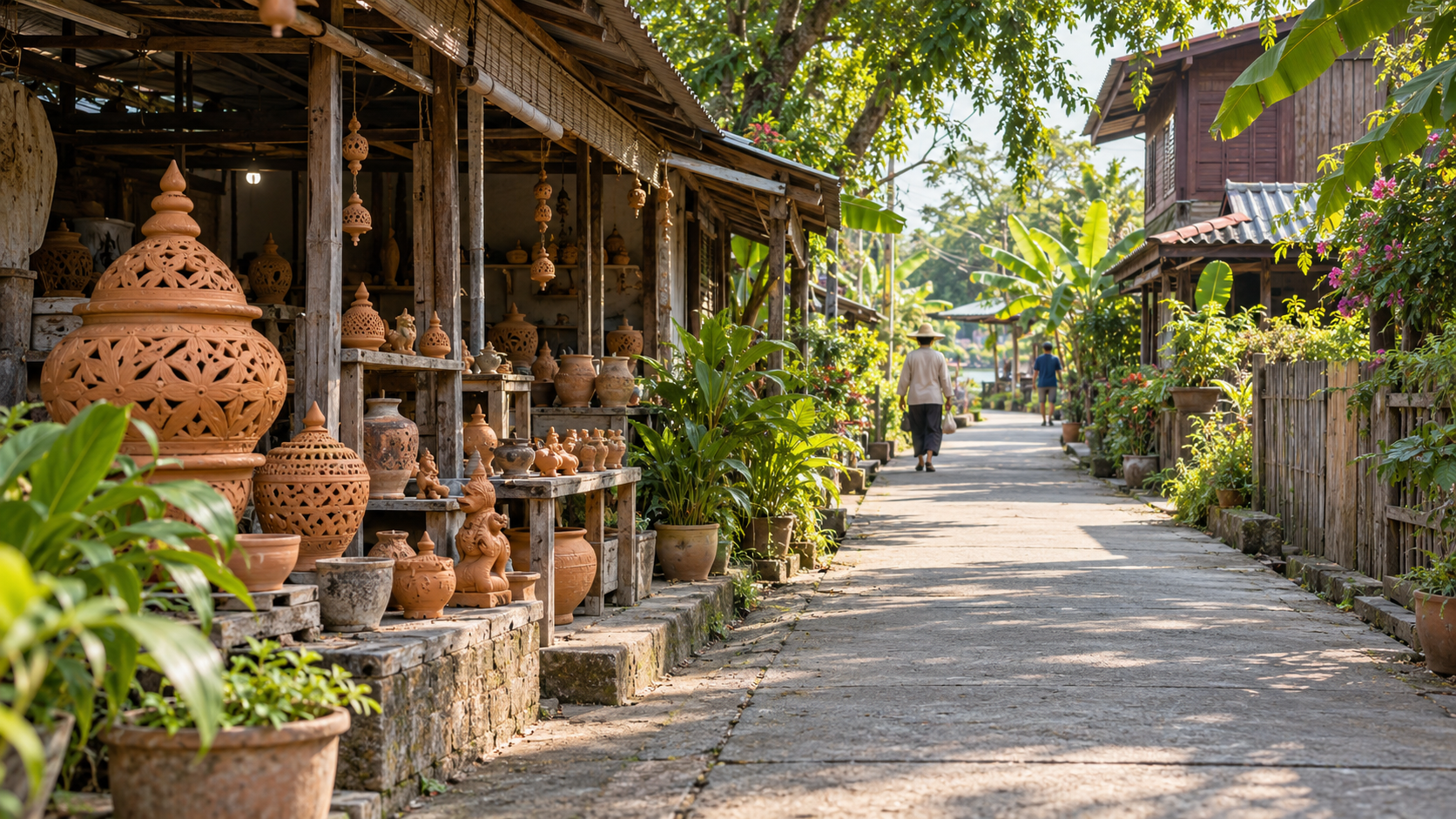
    Ceramics are one of the island’s best-known crafts. Shapes and patterns reflect practical uses as well as cultural identity. At a workshop open to visitors, first observe the tools and techniques, then ask whether a demonstration is possible. Artisans are not obliged to stop working, so respect their time and workspace. Buying directly supports the maker. Handle each piece carefully and ask how it can be protected for your journey.

    Potter shaping clay in a Koh Kret workshop
    Watching the clay take shape offers a glimpse of local craft.

    Explore on foot or by bicycle

    Walking makes it easy to pause and notice the lanes. A bicycle covers a wider loop, but some paths are narrow and shared. Ask for a map, check the brakes and confirm where to return the bicycle. Choose a few stops: a workshop, a temple, a riverside break and lunch. Trying to see everything at once turns the visit into a checklist. Heat, stairs and conversations all take time.

    Temples and living heritage

    Temples are places of worship and community life, not simply photo stops. Dress respectfully, remove your shoes when requested and keep your voice low. Ask permission before photographing a person or ceremony and respect closed areas. Heritage also lives in daily routines, families and workshops. Understanding this context makes the walk more meaningful than collecting pictures.

    Taste the island

    Small shops sell sweets, snacks and dishes influenced by Mon cuisine. Availability changes with the day and vendor. Ask what a dish is called, what it contains and how spicy it is. If you have an allergy, explain it clearly and never assume a dish is safe. A meal is a chance to escape the heat and support local businesses. Put packaging in bins and keep the riverbank clean.

    Local boat approaching Koh Kret on the Chao Phraya
    The boat crossing is part of the Koh Kret experience.

    When to go and what to bring

    Mornings are often more comfortable for walking. Rain can make paths slippery and affect crossings, so check the forecast. Bring water, a hat, sunscreen, insect repellent and shoes with grip. Ask the maker for protective packing if you buy pottery. At busy times, leave room for residents on the piers and lanes.

    Read the island through its landscape

    Koh Kret reflects changes to the river and human planning. The canal that made it an island also shaped its links with the banks and the movement of residents. Water is not simply a backdrop: it organises crossings, travel, work and views from the shore. When you arrive, notice the piers, lanes and places where gardens meet homes. This helps explain why the island is different from an ordinary urban neighbourhood. Maps show its broad shape but may not reveal narrow passages, steps or the rhythm of local boats.

    Mon heritage is one thread through a visit. It appears in craft traditions, some foods, temples and family histories. It would be reductive to expect a single “cultural experience” to consume in a few minutes. Culture is alive and varied, and residents may relate to their heritage in different ways. Listen to explanations from makers and site caretakers; do not turn a tradition into a performance you expect on demand. A respectful question often opens a more interesting exchange than a hurried photograph.

    What a workshop can teach

    A ceramic piece involves a series of choices: clay, preparation, shape, drying, decoration and firing. Each workshop has its own routine and constraints. If someone is working, begin by observing from the indicated place. Ask before approaching the wheel or touching tools. A demonstration may not be available, or may happen only at certain times. If work is underway, wait for an invitation instead of assuming that the maker is ready to receive visitors. Curious children should stay close to an adult and away from kilns, tools and fragile objects.

    A hands-on activity, where offered, may not produce a finished piece you can take away immediately. Clay may need to dry or be fired later; ask about timing, collection and any charges before starting. If your return time is fixed, buying a completed item is simpler. Purchasing pottery can support the craft, but respect the stated price and avoid aggressive bargaining over handmade work. Ask how to pack the object, do not place it beneath heavy luggage and keep it protected during the crossing.

    Connect stops at an easy pace

    A simple loop can start at the pier, continue to an open workshop, visit a temple and follow a quieter lane before lunch. The order matters less than having time to stop. Notice places to get water, shelter and a seat. Maps and signs point to major attractions, but a quiet lane or river view may become the strongest memory. If cycling, match your speed to pedestrians and walk through crowded stretches. If walking, remember that scooters and bicycles may appear on narrow paths; keep to the side without blocking doorways.

    Visitors with only half a day can choose one area instead of attempting a complete circuit. A workshop, a temple and a meal already make a rich visit. With a full day, add riverside pauses and time to browse local shops. Groups should agree on a shared pace and avoid spreading across the entire lane. Older visitors or those with limited mobility may prefer a shorter route, check for steps and take frequent breaks. Access varies by site, so contact any place you especially want to visit ahead of time.

    Photograph with care

    Kilns, wheels and rows of pottery can be photogenic, but a workshop remains the maker’s workplace. Ask whether photographs are allowed and whether the person is comfortable appearing in them. Avoid flash around ceramics and do not block access. Temple rules vary by building; signs and requests from caretakers take priority. During a ceremony, do not stand in front of worshippers or make noise to attract attention. Photographing architecture without faces can preserve the memory while protecting privacy.

    Online posts can shape how others visit. Add context, avoid presenting a family as an attraction and do not share images of private spaces. If a maker explains the history of a piece, ask before quoting them or using their name. Social media can help people discover a craft, but consent and accuracy matter. A recommendation with verified opening details is more useful than a broad promise of an “authentic experience” that may not suit everyone.

    Manage crowds, heat and rain

    Weekends and holidays can bring visitors, boats and vendors to the same areas. For a quieter visit, arrive early, follow an alternative route where signs allow it or choose a weekday. That does not guarantee every workshop will be open, so check directly. A lively day can be enjoyable for tasting different foods and watching commerce, as long as you remain patient and do not block lanes.

    Heat is strongest in open areas and on the piers. Drink water, cover your head and rest in shade. After rain, paving, steps and boards near the water may be slippery. Shoes with grip are safer than smooth sandals. In a heavy shower, ask locally whether boats are operating normally and wait in a safe place. Do not approach the river’s edge for a photo when surfaces are wet. A waterproof bag protects your phone and documents; light clothing dries faster than heavy denim.

    Make useful purchases

    If you want to take pottery home, choose it with use and transport in mind. A small, well-packed piece may be more practical than a large object that is difficult to protect. Ask whether the maker has a box or wrapping and how delicate the finish is. Do not buy only because an item appears in a popular photograph; choose a shape or finish that speaks to you. You may also support a maker by choosing a small-run or imperfect piece if it is offered and appeals to you.

    For food, buy what you can eat and avoid waste. Ask whether packaging can be recycled or whether you may use your own container. Carry small change. Prices and products vary, so do not rely on a rate from an old blog post. Ask the price before ordering and treat sellers courteously. Responsible tourism is also made of small decisions repeated by many visitors.

    More FAQ

    Are workshops always open to visitors?

    No. Some work by order or open according to their schedule. Contact a specific workshop before making a special trip.

    Is a demonstration included?

    Not necessarily. Ask whether one is offered, when it happens and whether a fee applies.

    Can children try pottery?

    It depends on the workshop and the child’s age. Confirm conditions, duration and collection arrangements before booking.

    How should I carry a fragile item?

    Ask for protective packing, keep it with you and do not place heavy luggage on top. Check transport rules if flying.

    Is the island suitable in the rainy season?

    It can be, if crossings operate and you are ready to adapt. Paths may be slippery; check weather and boat conditions.

    Should I bring a gift or tip?

    It is not necessary. The price of an item, meal or activity pays for the service; follow local customs and do not feel obliged to add an unsolicited payment.

    Keep a flexible plan

    A practical plan includes a primary workshop, a food stop and a return crossing, while leaving the rest open. The exact order depends on which places are working that day. Save the pier name, keep enough time for the boat and do not assume that a route shown online is open to bicycles. If a workshop is closed, ask a nearby shop whether there is another public demonstration, but do not enter a private work area without an invitation.

    Before you leave, check that purchased pottery is packed securely and that you have your phone, wallet and water. Ask the maker about care instructions, especially if the piece has a special finish. If your trip continues by train, bus or plane, keep the fragile object in a place where it will not be crushed. A few thoughtful checks at the end of the visit protect both the object and your memory of the craft.

    Leave the island as you found it: take rubbish with you, keep lanes clear and thank local hosts before crossing back.

    FAQ

    How long should I stay?

    Half a day covers a few workshops and lunch; a full day allows more wandering.

    Is a weekday a good time?

    Yes, it can be quieter, though some shops may close.

    Should I book a workshop?

    Not always for browsing; contact the workshop for a demonstration or group.

    Can I cycle around the island?

    Yes, but paths are narrow and shared. Ride slowly and walk when needed.

    Are boat times fixed?

    They can vary, so confirm at the pier on the day.

    A thoughtful visit

    Koh Kret rewards curiosity and respect. Pottery becomes more compelling when you watch the craft and listen to the makers; temples make sense when you remember that the island is a community. Check the boats, start early, choose a few stops and leave time to taste a local dish. Which would you take home: a handmade pot, a Mon recipe or a river walk memory?

    Useful source

    #KohKret #Thailand #MrSchaka

    Cover of Bangkok – The Practical Guide

    To go further

    Mr Schaka’s guidebook, Bangkok – The Practical Guide, covers the essentials: transport, neighbourhoods, addresses, food, etiquette and safety, updated for 2026–2027.
  • Bang Krachao by Bicycle: A Practical Guide to Bangkok’s Green Peninsula

    Bang Krachao by Bicycle: A Practical Guide to Bangkok’s Green Peninsula

    Bang Krachao feels far removed from Bangkok’s avenues and towers. South of the Chao Phraya, this green peninsula still has gardens, plantations and neighbourhoods linked by narrow lanes. A bicycle connects several stops without turning the day into a race. Slow down beside a canal or stilt house: this is a lived-in community, not a theme park.

    Crossing the river

    Many visitors reach a pier on the Khlong Toei side and cross by local boat. Piers and schedules can vary, so confirm service locally on the day. Rentals are available near several piers. Test brakes, tyres, bell and seat height; confirm where to return the bicycle and ask for a suitable loop. Carry small cash and download an offline map.

    A relaxed first route

    Begin at Sri Nakhon Khuean Khan Park and Botanical Garden. Walk its shaded paths, look at the ponds and rest before cycling on. Follow local lanes towards the waterways and gardens, then stop at a café or market if open. Distances appear short, but narrow paths, heat and breaks take time. Leave room for the return crossing.

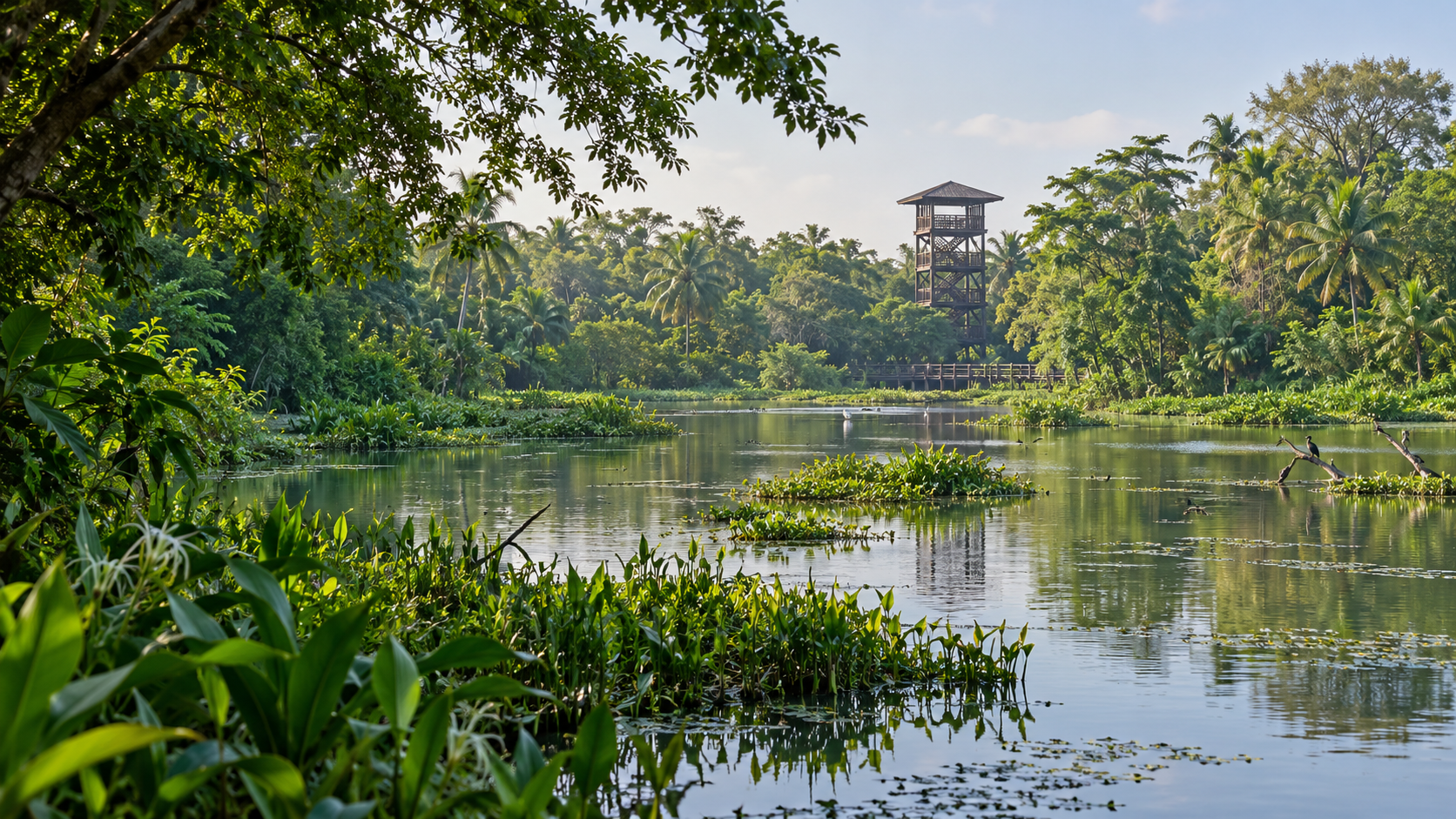
    Tropical walkway in Bang Krachao
    The botanical garden offers a shaded break.

    Care for nature and neighbours

    Wildlife is free to move and may stay hidden. Do not feed animals or pick plants; remain on marked paths. In residential areas, slow near homes, bridges and blind corners. Lanes are shared with pedestrians, scooters and residents. Signal turns, walk the bicycle where the path narrows, and ask before photographing people or private property.

    Eat and pause locally

    Small eateries and markets let you try local food and support neighbourhood businesses. Opening days vary, so confirm locally and keep another option in mind. Ask about spice, take time to sit and dispose of rubbish properly. A shaded pause makes the ride more comfortable and lets you observe daily life without intruding.

    Timing and packing

    An early start avoids the hottest hours. Rain can make paths slippery, so check the forecast. Bring water, sunscreen, insect repellent, closed shoes, a light rain layer and a charged phone. A helmet is strongly recommended. Drink regularly and stop if you feel dizzy or unwell.

    Local market stop in Bang Krachao
    A market pause offers a taste of local life.

    Read the landscape before you ride

    Bang Krachao does not appear as one uninterrupted forest. A neighbourhood lane may lead to a patch of greenery, then a canal, a garden and another lived-in area. That changing pattern is part of the attraction. Trees shade some paths; open stretches reveal waterways and houses. Gardens and plantations point to a daily relationship with land, water and the seasons. Notice these transitions instead of looking only for one dramatic viewpoint. They help explain why the peninsula is called Bangkok’s green lung while reminding visitors that it remains connected to the city and its residents.

    The river shapes the experience. Crossing it can feel like leaving the noise of major roads, but it does not separate the city from untouched wilderness. Boats carry residents, visitors and sometimes goods. Sounds change after landing: distant engines, birds, conversations and small scooters. Take a few minutes to orient yourself before riding. Identify toilets, water, open shops and the return pier. A photograph of the rental map can help you find your way later.

    Plan your departure from Bangkok

    Your route to the pier depends on where you start. A taxi or ride service may be convenient, but traffic can vary considerably by time of day. Rail may bring you closer without taking you all the way to the pier, so check the final leg and do not assume neighbouring piers use the same crossing. Watch how bicycles are loaded onto the boat and follow staff instructions. If you bring your own bicycle, ask ahead whether it is accepted and under what conditions; boat rules can vary with the vessel and crowding.

    Before leaving, give the rental bike a simple check. Squeeze the brakes while stationary, make sure the chain moves properly, test the bell and set the seat so you can put a foot down. Ask what to do in case of a puncture and how to contact the shop. A low rental price is useful only if the bicycle is safe and fits you. If you have not ridden recently, choose a comfortable bike, a lower seat and a short loop instead of a fast model. Avoid an unstable basket or a bag that could catch in the spokes.

    Build a day without a rigid timetable

    A pleasant day can begin with the crossing and a short ride around the lanes near the pier. Continue to the botanical park while you still have energy for walking. Afterwards, find shade, water and lunch, then decide whether you want to explore another part of the peninsula. This leaves room if the garden is more interesting than expected or the heat calls for a longer rest. Travelling with someone who prefers walking? You can leave the bike at a rental point, take a short walk and then continue. The purpose is a rewarding visit, not a target distance.

    For photography, morning light is often softer and paths quieter. But the best time for a picture is not automatically the right time to photograph another person. Do not point a camera into a resident’s garden or home without asking. Narrow bridges can become unsafe if you stop in the middle to take a photo; move to a place where you are not blocking anyone. Cloudy weather can bring out greens and soften harsh shadows. If a shower starts, protect your phone and camera instead of riding one-handed with a device exposed.

    Match the route to your ability

    The terrain is generally flat, but that does not mean every path suits every rider. Lanes can be narrow, turns sharp and surfaces uneven. A beginner should choose a short loop, avoid the busiest times and ride at a speed that allows an immediate stop. Families can focus on areas near the park and avoid passages where two bicycles barely fit. Adults should position themselves according to visibility and agree on a stopping point in case the group becomes separated. Visitors with limited mobility may prefer the park areas nearest the main entrances; confirm access conditions on arrival.

    Breaks are not a failure. Humid heat can affect you quickly, especially after a city journey and a sunny crossing. Drink before you feel very thirsty, find shade and avoid strenuous riding immediately after a heavy meal. If someone develops a headache, nausea or weakness, stop somewhere safe and cool down. If symptoms are worrying, ask a nearby business or resident for help and contact local services. Do not try to finish the loop at all costs. A successful outing is one where everyone returns comfortably.

    Finding your way on small lanes

    Paths may look alike, and a digital map cannot always tell you whether a lane is public, rideable or pleasant. Use the rental map as a starting point, watch signs and ask for directions when needed. If unsure, return to a known junction rather than taking a lane that seems to cross private property. Do not enter a yard, plantation or closed path just because an app suggests a shortcut. Barriers and signs should be respected. Using shared space thoughtfully is part of visiting.

    Before leaving a familiar area, note a visible landmark such as a temple, bridge, large junction or shop. Keep the name or address of your starting pier accessible. If your phone battery is low, ask for a return route before riding farther and shorten your trip. Groups can agree on a meeting point. Navigation apps are useful, but they cannot judge path width, traffic or permission to enter a space.

    Choose food and purchases thoughtfully

    Food can become as memorable as the landscape. Small stalls sell dishes and snacks that vary by day. If you do not recognise something, ask its name or ingredients; a simple exchange may introduce you to a speciality you would not have chosen at random. Vegetarians and people with allergies should explain their needs clearly and remain careful about sauces and shared preparation surfaces. Bring tissues and a reusable bottle, then buy a drink or snack locally instead of accumulating disposable packaging.

    Keep purchases modest enough to carry comfortably. If buying local produce, ask where it comes from and how to store it. Do not collect plants, seeds or natural objects. Something that looks abandoned may be part of a garden or habitat. Supporting existing businesses is more useful than taking a souvenir from the environment. A thoughtful visit may be no more than a shared meal and a polite conversation.

    Understand the weather

    Tropical weather can change quickly. A clear morning may turn cloudy, and a shower can make lanes slippery within minutes. Check the forecast but allow for uncertainty. A light rain poncho works better than an umbrella on a bicycle, where it may affect balance and sightlines. In heavy rain, wait under a safe shelter until visibility improves. Do not speed over a wet bridge. After a shower, test the brakes again before continuing.

    The wet season makes plants lush and colours vivid, but paths may become muddy or temporarily difficult. The drier season does not remove the heat: water, a hat and breaks still matter. Visitors who struggle with heat can take a short early ride and return before midday. A slow pace and basic preparation are better than an ambitious route chosen only because it looks feasible on a map.

    More practical answers

    Should I bring my own helmet?

    If you have one, use it. Otherwise ask whether the rental shop has a helmet in good condition. Do not skip protection just because the ride is short.

    Can I use an electric bicycle?

    Rental choices and rules change. Check with the shop and keep your speed moderate; shared lanes are not suited to fast riding.

    What if I get lost?

    Stop somewhere safe, check your map and ask a shop or resident for directions. Do not follow a shortcut through private property.

    Can I visit in the rain?

    A light shower may be manageable with suitable clothing, but stop cycling if rain reduces visibility or makes bridges slippery.

    Should I carry cash?

    Yes. It is prudent for boats, rentals and small businesses; payment options vary.

    What makes the best souvenir?

    Often it is the pace of the day: the crossing, a simple meal and an unhurried walk. A local purchase can add to the memory, but it is not essential.

    Allow room for the unexpected

    A useful itinerary is a framework, not a promise that every stop will be open or reachable. A lane may be temporarily blocked, a shop may close, or rain may change your plans. Keep one optional stop and one simple way back to the pier. Save your starting point offline and agree on a meeting place if travelling with others. These small preparations reduce stress without making the day feel over-planned.

    Before returning the bicycle, check that you have your phone, wallet, water bottle and any items bought along the way. Return the bike to the agreed location and tell the rental staff about any mechanical issue, even if it seemed minor. The next rider may depend on that information. If you have time before the boat, use it to rest in shade rather than squeezing in one last detour.

    FAQ

    How long should I allow?

    Half a day covers the park and a short loop; a full day allows time for food and breaks.

    Can I visit without a bicycle?

    Yes, though a bicycle makes it easier to connect neighbourhoods.

    Can children join?

    Yes, with a suitable distance, adult supervision and helmets.

    Should I reserve?

    Groups should check bicycle availability ahead.

    Is the market open daily?

    No, confirm opening days locally.

    Will I see monitor lizards?

    You might, but sightings are not guaranteed. Keep your distance and never feed them.

    A day at your own pace

    Cross early, choose a realistic loop and leave time to walk, eat and observe. Check boat and rental arrangements, then adapt to the weather. Would you focus on the garden, quiet lanes or a market stop? Share how you would explore this green escape near Bangkok.

    Official sources for planning

    #BangKrachao #Thailand #MrSchaka

    Cover of Bangkok – The Practical Guide

    To go further

    Mr Schaka’s guidebook, Bangkok – The Practical Guide, covers the essentials: transport, neighbourhoods, addresses, food, etiquette and safety, updated for 2026–2027.
  • Floating Markets Near Bangkok: Which One Should You Choose?

    Floating Markets Near Bangkok: Which One Should You Choose?

    Floating markets around Bangkok do not all offer the same experience. Some are internationally known and busy; others make for a shorter outing, a neighbourhood visit or a rural look at canals and orchards. Your best choice depends on your time, whether you want a boat ride and the atmosphere you prefer.

    This guide compares Damnoen Saduak, Amphawa, Taling Chan, Khlong Lat Mayom and Tha Kha. Opening days and services can change, so check official information before travelling.

    Damnoen Saduak: the iconic image

    Outside Bangkok, Damnoen Saduak is known for its canals and boats carrying produce. Consider it if you want to see a famous market and are comfortable with a longer journey and substantial visitor numbers. Decide in advance whether you want a boat trip. Before boarding, confirm the price, duration, route and return point. You can also explore accessible areas on foot and buy directly from vendors.

    Amphawa: food and a waterside walk

    Amphawa is popular for its wooden houses, restaurants and canal-side stalls. Thailand’s tourism authority presents it as a weekend destination. Visitors can combine the market with a meal and a walk by the water. Firefly trips are offered in the area, but fireflies are a natural occurrence and cannot be guaranteed.

    Vendors offer prepared food and fresh produce from boats beside a wooden walkway at a Thai floating market.
    Floating vendors serve local dishes and produce from their boats.

    Amphawa suits travellers who want to take their time. Check the opening information for your chosen day and plan your return, especially if you are not staying nearby.

    Taling Chan and Khlong Lat Mayom: closer to the city

    For a shorter trip from Bangkok, compare Taling Chan and Khlong Lat Mayom. Bangkok’s public-space platform lists Taling Chan on Saturdays, Sundays and public holidays, generally from 8 am to 5 pm. It also mentions transport options, including bus service and a free electric shuttle at certain weekend and holiday times. Check current service details before leaving.

    The Tourism Authority of Thailand lists Khlong Lat Mayom on weekends and public holidays from 8 am to 5 pm, and mentions boat trips on Bang Ramat Canal. The market is known for food and fresh produce. Arrive hungry and leave time to browse its different areas.

    Tha Kha: a rural visit to plan ahead

    In Samut Songkhram province, Tha Kha has a quieter setting among canals and orchards. Its market schedule follows the lunar calendar, so consult the tourism authority’s official page before choosing a date. It rewards a planned itinerary and is less suited to an unprepared stop.

    A boat carrying coconuts travels along a canal lined with wooden homes and orchards in the Thai countryside.
    In rural areas, canals connect markets with nearby orchards and villages.

    Practical tips

    • Check opening days and hours with an official source.
    • Plan the return journey; distant markets can take most of a day.
    • Confirm the fare, duration and route before taking a boat trip.
    • Carry small notes and buy directly from local vendors when possible.
    • Ask before taking close-up photographs of people.
    • Bring water, sun protection and shoes suited to hot weather.

    Frequently asked questions

    Which market is best for a first visit?

    Damnoen Saduak is the iconic choice. For a shorter trip from Bangkok, compare Taling Chan and Khlong Lat Mayom. Amphawa works well for a weekend outing with a meal.

    Are floating markets open every day?

    No. Several operate mainly on weekends and public holidays. Tha Kha follows a special calendar. Confirm your date before arranging transport.

    Do I need to take a boat?

    Not necessarily; some areas can be explored on foot. If you choose a boat trip, agree on the fare, duration, route and return point before boarding.

    When should I arrive?

    Morning can help avoid some crowds and heat, but activity varies. Check the hours and account for travel time.

    Can I visit more than one market in a day?

    For a relaxed day, choose one market and perhaps a nearby attraction. Distant markets need time for travel and the return journey.

    Which market fits your trip?

    Choose Damnoen Saduak for a famous destination, Amphawa for a weekend outing, Taling Chan or Khlong Lat Mayom for a closer visit, and Tha Kha for a planned rural experience. What appeals to you most: local food, quiet canals or the bustle of boats? Tell us in the comments.

    Sources: Tourism Authority of Thailand – Khlong Lat Mayom · Bangkok Public Space – Taling Chan · Tourism Authority of Thailand – Tha Kha · Tourism Authority of Thailand – floating markets.

    #Bangkok #Thailand #FloatingMarkets #Amphawa #MrSchaka

    #Thailand #Bangkok #ThailandTravel #TravelTips #Asia #MrSchaka

    Cover of Bangkok – The Practical Guide

    To go further

    Mr Schaka’s guidebook, Bangkok – The Practical Guide, covers the essentials: transport, neighbourhoods, addresses, food, etiquette and safety, updated for 2026–2027.
  • How to visit Ayutthaya by bicycle?

    How to visit Ayutthaya by bicycle?

    Ayutthaya was the capital of Siam before Bangkok, and its historical park is now one of Thailand’s most visited sites. The ruins are scattered through a modern town, separated by canals and roads: the bicycle is the best way to link them.

    Why by bike

    Too big on foot, and tuk-tuks get expensive. A bike gives freedom, lets you stop at will and leaves the main circuits.

    Rental

    Rental shops offer bikes by the day for a modest price, often near the station or by the park. Bikes are simple but sufficient. Check brakes and tyres; a lock is usually provided.

    The main ruins

    Several temples form the central park, including the most photographed, where a Buddha head is held in tree roots. Another is the model for Bangkok’s Emerald Temple. Tickets at each site or as a pass.

    Wat Chaiwatthanaram

    By the river, one of the most spectacular. Outside the central park, which makes it a pleasant bike stage. Superb at sunset.

    The reclining Buddha

    A large open-air reclining Buddha is an easy, photogenic stop between temples.

    The canals

    The town is ringed by canals: following them by bike shows a greener, calmer side. Some paths are narrow: adapt your speed.

    The roads

    Be careful: traffic is real and cars do not always leave room. Ride on the left side of the road as locals do, stay predictable and avoid rush hours.

    The heat

    Hot all year. Start early, bring water and rest in the shade. Between noon and two, find a cool place.

    How long

    A full day covers the main sites and one or two further temples. A half-day suffices for the central park.

    #Thailand #Ayutthaya #MrSchaka

    From Bangkok

    The train is simplest: one and a half to two hours. Minivans and cars are faster but pricier. Arrival is near the centre, which helps with bike rental.

    Prices

    Bike rental is cheap and temple entry moderate. Combined passes save money if you visit several sites.

    Mistakes to avoid

    Visiting at the weekend without starting early. Thinking the ruins are all in one place. Forgetting sun protection.

    FAQ

    Without a bike?

    Yes, by tuk-tuk or car, but a different experience.

    Mountain bike needed?

    No, the terrain is flat.

    How many temples?

    Three to five depending on time.

    Cars?

    Yes, be careful.

    By train?

    Yes, the most common option.

    Also read

    • How to visit Ayutthaya
    • How to visit Sukhothai
    Cover of Bangkok – The Practical Guide

    To go further

    Mr Schaka’s guidebook, Bangkok – The Practical Guide, covers the essentials: transport, neighbourhoods, addresses, food, etiquette and safety, updated for 2026–2027.

  • What to do in Hua Hin with children?

    What to do in Hua Hin with children?

    Hua Hin is the historic seaside town of the Thai royal family, three hours from Bangkok. It has kept a quieter atmosphere than Pattaya or Phuket, which makes it comfortable with children.

    The beach

    Several kilometres long, lined with restaurants and hotels. Fine sand, gentle slope, shallow water over much of it: reassuring with small children. In late afternoon Thai families picnic and play ball.

    Water parks

    Slides, wave pools and children’s areas: the most popular activity when it is hot. Allow a full day.

    Markets

    The central night market offers food, clothes and souvenirs: lively, family-friendly, with skewers and ice cream for children.

    Temples

    Khao Takiab, on the hill south of town, offers a bay view and hosts monkeys. Beware: they are used to tourists and can be insistent. Another temple west of town is an important pilgrimage site.

    The station

    One of Thailand’s most photographed, with its architecture and old carriages. A short, free visit children enjoy.

    The reconstructed village

    Old houses rebuilt with shops and restaurants, showing life of the past. Touristy but pleasant with children.

    Excursions

    Boat trips, horse rides on the beach and plantation visits. Check safety and supervision before booking.

    Animals

    Elephant sanctuaries and care centres. Choose structures with no rides and no shows, which explain how they work.

    #Thailand #HuaHin #MrSchaka

    Climate

    Relatively dry, with less rain than other regions. The cool season, November to February, is most pleasant.

    Getting around

    Compact: on foot in the centre, otherwise tuk-tuk, taxi or apps. Scooter rental is risky with children. A car with driver is practical for excursions.

    Where to stay

    Family hotels line the beach and the centre. The south, towards Khao Takiab, is calmer and better suited to families.

    FAQ

    How many days?

    Three to four to combine beach, water park and visits.

    Is the sea calm?

    Generally yes, but check flags.

    Easy from Bangkok?

    Yes, by car, bus or train, three to four hours.

    Hospitals?

    Yes, hospitals and clinics.

    Best period?

    November to February.

    Also read

    Cover of Hua Hin – The Practical Guide

    To go further

    Mr Schaka’s guidebook, Hua Hin – The Practical Guide, covers the essentials: transport, neighbourhoods, addresses, food, etiquette and safety, updated for 2026–2027.
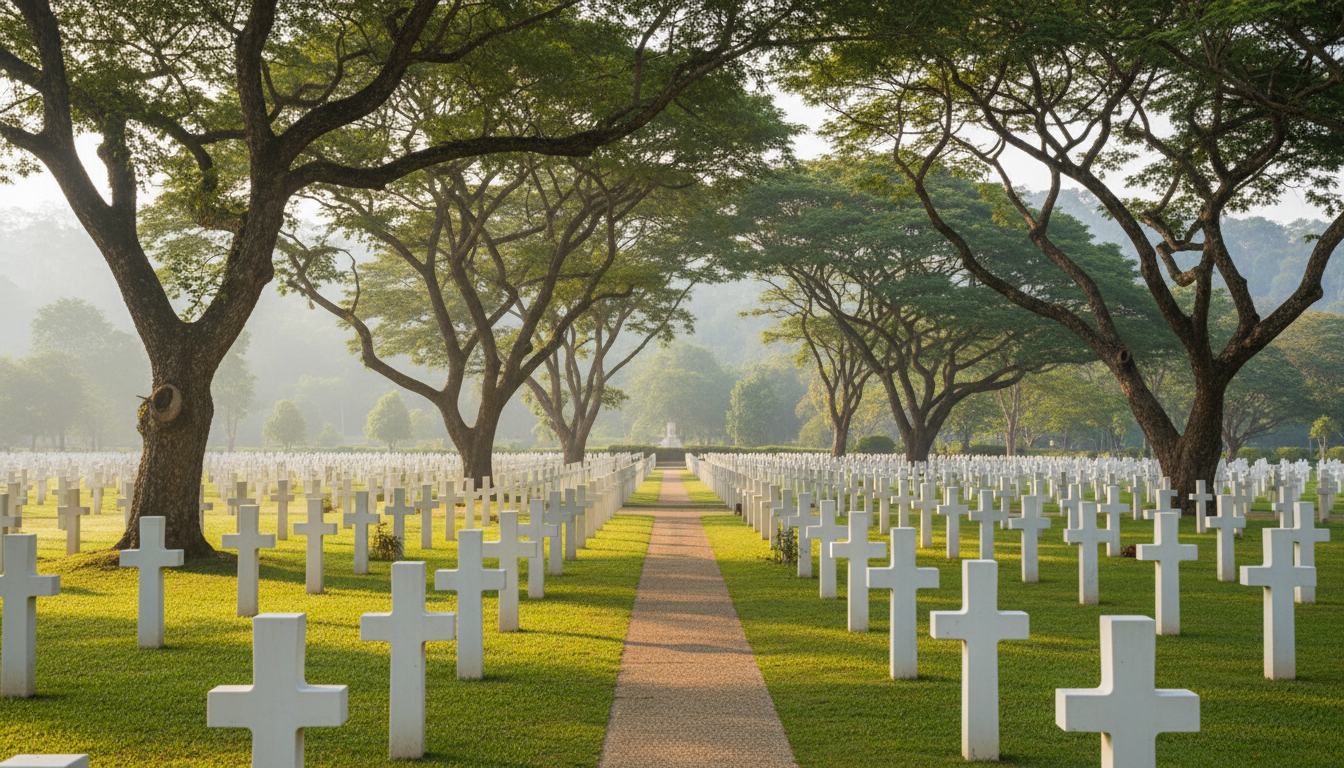
  • Where to stay on Koh Samet?

    Where to stay on Koh Samet?

    Koh Samet is the closest island to Bangkok: three to four hours by road and a short boat crossing. It is also a national park, which limits construction and gives the island a particular character.

    Accommodation matters more here than elsewhere, because beaches have very different atmospheres and getting around is not always simple.

    Understanding the island

    Koh Samet is small: you can go round it in a day. Beaches follow the east coast, while the west is wilder and rockier. Most accommodation is on the east, busier in the south, calmer in the north.

    Sai Kaew

    The main beach, busiest, with restaurants, bars and varied accommodation. Also the loudest in the evening. Simplest choice for a short stay.

    Ao Wong Duean

    A long curved beach, calmer than Sai Kaew, with bungalows and restaurants. A good balance.

    Ao Prao

    On the west coast, known for calm and sunsets. More upmarket and isolated. The choice of couples and silence-seekers.

    Other beaches

    Smaller beaches such as Ao Tubtim or Ao Nuan offer simple bungalows and a family atmosphere. Less accessible, which guarantees calm.

    Types of accommodation

    Simple bungalows, guesthouses, hotels and resorts. Prices vary widely by season and proximity to the beach.

    Prices

    Moderate in low season; sharply higher in high season and at weekends, especially seafront.

    Booking

    Online platforms work, but many places take direct bookings. Compare prices and check the real location on a map: a ‘sea view’ can be far from the beach.

    #Thailand #KohSamet #MrSchaka

    Access

    From Bangkok, reach Ban Phe by bus or car, then the island by ferry or speedboat. Arrival is often at Sai Kaew or the main pier. Plan the transfer to your accommodation: some beaches need a boat taxi.

    The national park

    The island is a national park: entry is charged and construction limited. Park rules apply: no wild camping, no fires.

    On the island

    Getting around is on foot, by motorbike taxi or boat taxi. There are no cars. Bring cash: ATMs are rare.

    FAQ

    How many nights?

    Two to three are enough.

    Should I book?

    Yes in high season and at weekends.

    Best beach for families?

    Ao Wong Duean, calm and spacious.

    Arrive without booking?

    Possible in low season, but you may have to search.

    ATMs?

    Few: bring cash.

    Also read

    • Koh Samet for a weekend
    • Where to stay on Koh Chang
    Cover of Pattaya – The Practical Guide

    To go further

    Mr Schaka’s guidebook, Pattaya – The Practical Guide, covers the essentials: transport, neighbourhoods, addresses, food, etiquette and safety, updated for 2026–2027.