Across the Chao Phraya, Thonburi was briefly the capital of the kingdom, between 1767 and 1782. Less visited than the east bank, it has better preserved the web of canals that once made Bangkok a city on the water. Here you’ll find Wat Arun, the most photographed temple in the city, but also old communities, markets and a little-known monumental temple.
Wat Arun, the Temple of Dawn
Sitting on the bank opposite Wat Pho, Wat Arun takes its name from Aruna, the Hindu god of dawn. Its great central prang, a Khmer-style tower about 80 meters high, is entirely covered in fragments of Chinese porcelain and seashells arranged into flowers. Up close, the craftsmanship is astonishing. You can climb part of the tower via very steep steps for a lovely view over the river.
Here’s the nice paradox: despite its name, Wat Arun is at its most beautiful at sunset, seen from the opposite bank (Tha Tien). It turns into a silhouette, then lights up. To visit it, come in the morning instead, when the light falls on its facade.
- Opening hours: daily, 8 a.m. to 6 p.m.
- Admission: 200 THB.
- Getting there: ferry from Tha Tien (a few baht, every 10 minutes) or the orange-flag boat.
Near the entrance, shops rent out traditional Thai costumes for photo shoots in the temple. It’s become hugely popular with Asian visitors, and the photos are stunning.
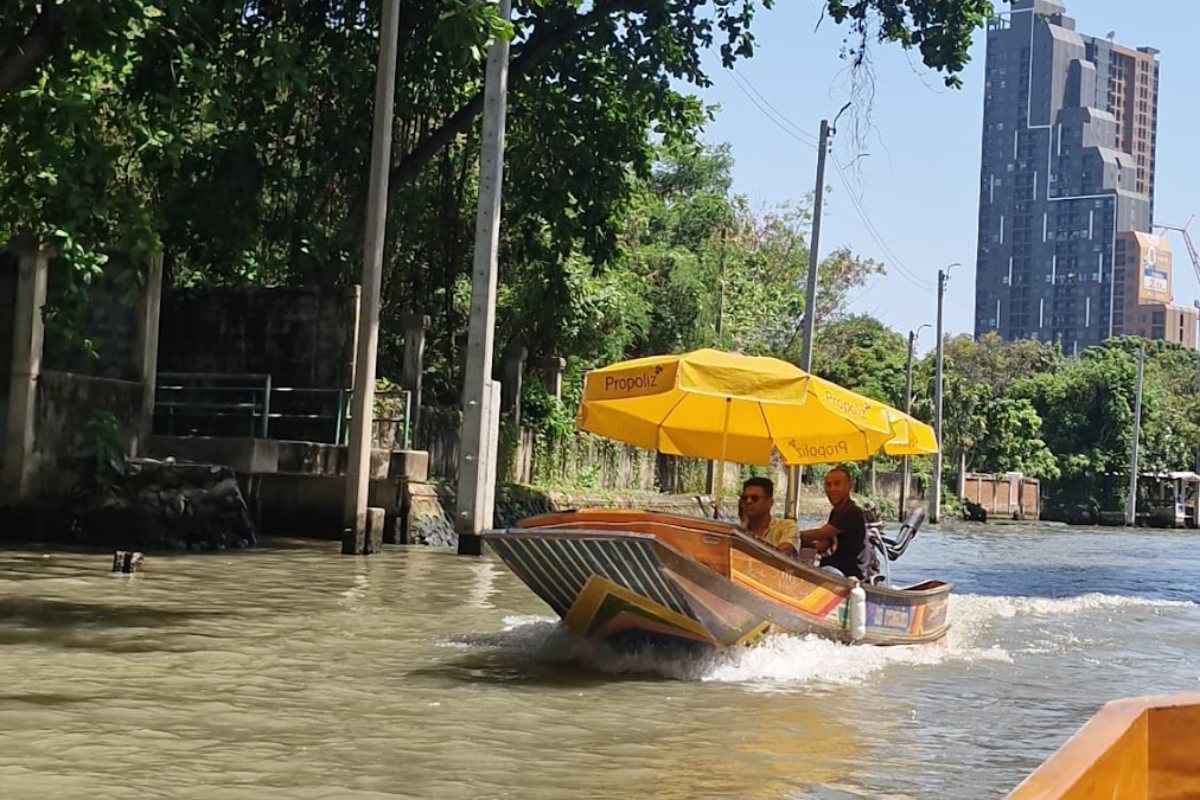
Thonburi’s klongs by longtail boat
A ride along the khlongs is one of the most transporting experiences in Bangkok. You glide past houses on stilts, neighborhood temples, orchid gardens and jetties where kids dive into the water. Now and then you pass a vendor in his boat, or a monitor lizard lounging on the bank.
- Where to board: at Tha Chang, Tha Tien, Sathorn or Maharaj piers. Ticket booths display the official prices.
- Price: about 1,000 to 1,500 THB for the whole boat for one hour, 1,500 to 2,000 THB for two hours, whatever the number of passengers (up to 6 to 8 people).
- Ideal length: an hour and a half to two hours, so you get beyond the main canal.
Tip: agree on the route and duration before setting off. Also say whether or not you want to stop at a catfish farm or a shop: those stops earn the boatman a commission and cut your ride short.
Royal barges and a giant Buddha
The Royal Barges Museum occupies a boathouse on Khlong Bangkok Noi. It displays the ceremonial vessels used in the great royal processions on the river: long, carved and gilded boats, including the Suphannahong, whose prow takes the form of a mythical swan, rowed by some fifty oarsmen. Admission: about 100 THB, plus an extra fee for cameras. The visit is often included in boat tours.
Wat Paknam Phasi Charoen, in southern Thonburi near MRT Bang Phai, is a large working temple. Its huge seated bronze Buddha, 69 meters tall, can be seen from far away. But the real treasure is inside the great white stupa. On the top floor, a small green glass stupa rests beneath a ceiling painted with a cosmic spiral: a magical setting. Free entry. Respectful dress and silence are a must, as this is a place of meditation.
Kudi Chin and its Portuguese heritage
Along the river, near Memorial Bridge, the small Kudi Chin community descends from the Portuguese soldiers and merchants who helped King Taksin in the 18th century. The pale yellow, domed Santa Cruz Church has stood here since 1916, on the site of a much older chapel.
In the alleys, a few families still make khanom farang Kudi Chin, little cakes inspired by Portuguese baking. Nearby, Wat Kalayanamit houses a large seated Buddha revered by the Chinese community, and a mosque recalls the Muslim presence in the area. A peaceful stroll, easy to do on foot from Wat Arun.
Iconsiam, Lhong 1919 and Wang Lang
Iconsiam, which opened in 2018 across from the Charoen Krung district, is one of the largest shopping malls in Asia. On the ground floor, SookSiam recreates a floating market with food and craft stalls from the country’s 77 provinces: a great introduction to the diversity of Thai cuisine. In the evening, an illuminated fountain show livens up the esplanade. Getting there: free shuttle boat from Sathorn pier (BTS Saphan Taksin), or the BTS Gold Line.
Right next door, Lhong 1919 occupies a 19th-century Chinese trading post. The restored warehouses house craft shops, cafés and a small shrine to Mazu, the Chinese goddess of the sea. A calm, photogenic counterpoint to the sheer scale of the mall next door.
Finally, near Wang Lang pier, opposite Tha Chang, Wang Lang Market is popular with students and staff from Siriraj Hospital: clothes, snacks, fruit and takeaway dishes at rock-bottom prices.
Want to go further?
Mr Schaka’s practical guide, Bangkok – The Practical Guide (“Bangkok – The Practical Guide,” in English), covers Thonburi and every other Bangkok neighborhood, with boat prices, temple opening hours and ready-to-follow itineraries. The English edition is out now as a PDF ebook: buy it here →