When to visit Bangkok? The city is hot all year round. So the real question isn’t “Will the weather be nice?” but “Just how hot, humid or rainy will it be?” Here’s how to choose your dates, and why the rainy season isn’t necessarily a bad idea.
Bangkok’s three seasons
- The “cool” season, November to February: 24 to 32 °C, clear skies, drier air. The best time to go, but also high season: higher prices and packed sights.
- The hot season, March to May: 28 to 36 °C, sometimes feeling like 40 °C. Crushing heat, especially in April.
- The rainy season, June to October: 25 to 33 °C, heavy but often short downpours in the late afternoon. September is the wettest month.
The best compromise is from mid-November to early February. To avoid the crowds and pay less, aim for late October or June: it rains, but rarely all day.
Should you really avoid the rainy season?
No. The downpours are often short, the city is green, prices are low, and Bangkok is packed with indoor things to do while you wait it out:
- the big museums: the National Museum, Museum Siam, the BACC;
- the shopping malls and their food halls;
- a massage, or half a day at the spa;
- a Thai cooking class;
- a movie in a luxury cinema with reclining seats.
Pack a compact umbrella and sandals that don’t mind getting wet: some streets flood in places after a big storm. And protect yourself from mosquitoes, because dengue spreads more during this season.
Songkran, Thai New Year (April 13–15)
Songkran is the biggest water fight in the world. Silom, Khao San and the party districts turn into a giant swimming pool, and nobody escapes. It’s also when many Bangkokians head back to their home provinces: the city empties out, so do the roads, and it’s a pleasant time to visit… as long as you don’t mind getting soaked.
Good to know: book your hotel well in advance for Songkran, as you would for Chinese New Year and the end-of-year holidays: it’s high season.
Other key dates
- Chinese New Year (January or February): Chinatown in red and gold, dragons and firecrackers. In 2027, it falls on February 6.
- Vegetarian Festival (late September or October): yellow flags and meat-free food in Chinatown.
- Loy Krathong (November full moon): people float small, illuminated flower rafts on the water. In 2026, around November 24.
- December 31: fireworks over the river, especially in front of Iconsiam.
On Buddhist holidays (Makha Bucha, Visakha Bucha…) and on election days, alcohol sales are banned everywhere, except in some hotels and at the airport.
Beware of air pollution early in the year
From January to March, Bangkok often sees spikes in fine-particle pollution (PM2.5). If you have asthma, a respiratory or heart condition, are traveling with children or are pregnant, keep an eye on the air quality index (IQAir or AirVisual apps) and pack FFP2 masks. On peak days, stick to indoor visits.
Good to know: from December 15 to 19, 2026, the royal funeral of Queen Mother Sirikit will bring road closures in the old town and modified opening hours at the Grand Palace. If you’re in town, dress soberly near the ceremony sites.
Read also: Loy Krathong 2026: Where to Celebrate in Bangkok and Chiang Mai
Want to dig deeper?
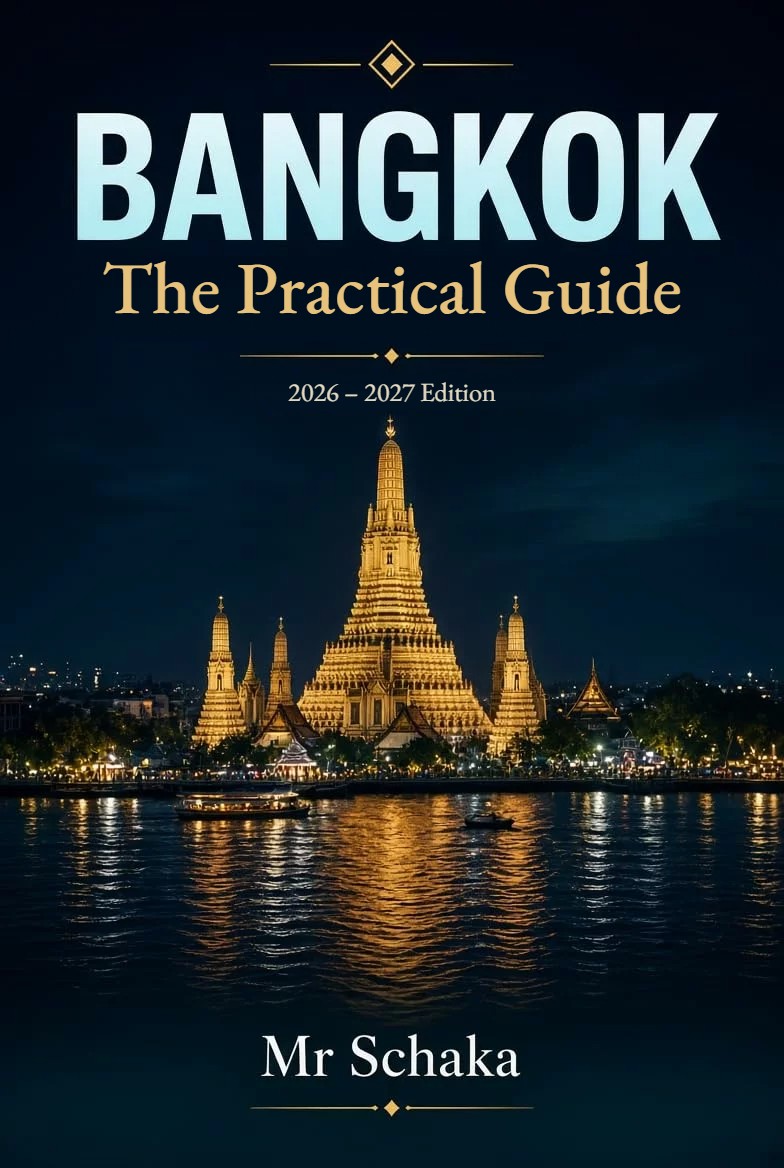
Mr Schaka’s guide, Bangkok – The Practical Guide (“Bangkok: The Practical Guide”), helps you plan every detail: seasons, budget, packing, health, money and the festival calendar, updated for 2026–2027. The English edition is out now as a PDF ebook: buy it here →