Huy: three ways to read a town beside the Meuse
A day in Huy can begin with a reasonable ambition: understand how the town appears from its river, then from the spaces closer to its buildings. The Meuse, the Collegiate Church of Notre-Dame and Saint-Domitien, Grand-Place and the old town provide reference points documented by official tourism sources. They do not need to become a race. This approach suggests three ways of looking: the broad lines of the landscape, the scale of a building, and the uses of a square. It supports a personal walk, adapted to weather, access and the abilities of everyone taking part, rather than promising an exhaustive visit.
Separate an intention from a booking
Deciding that you would like to see the collegiate church does not mean an interior visit is guaranteed. Likewise, noticing the fort among tourism suggestions does not reserve an activity. Make two lists: things you can observe from public space, and things requiring an opening check or reservation. This prevents the whole programme from depending on one open door. If an interior visit matters to you, confirm it with the place concerned before departure. Otherwise, keep it as an extra possibility and build the day around a coherent outdoor area, instead of a succession of services assumed to be available whenever you reach them.
Prepare the connection from your arrival point
Your first map should show the connection between your arrival and the first landmark, rather than only the monuments. Depending on your transport, identify the stop, permitted parking place or location where someone will drop you off. Then check an actual pedestrian route, including appropriate crossings. A short distance on a screen does not establish a direct route or one suitable for everybody. Also note how to return without repeating the entire walk. For someone who tires easily, that connection may matter more than choosing between two additional attractions. The practical framework makes the interesting parts possible; it deserves attention before a long list of sights.
Begin by reading the Meuse
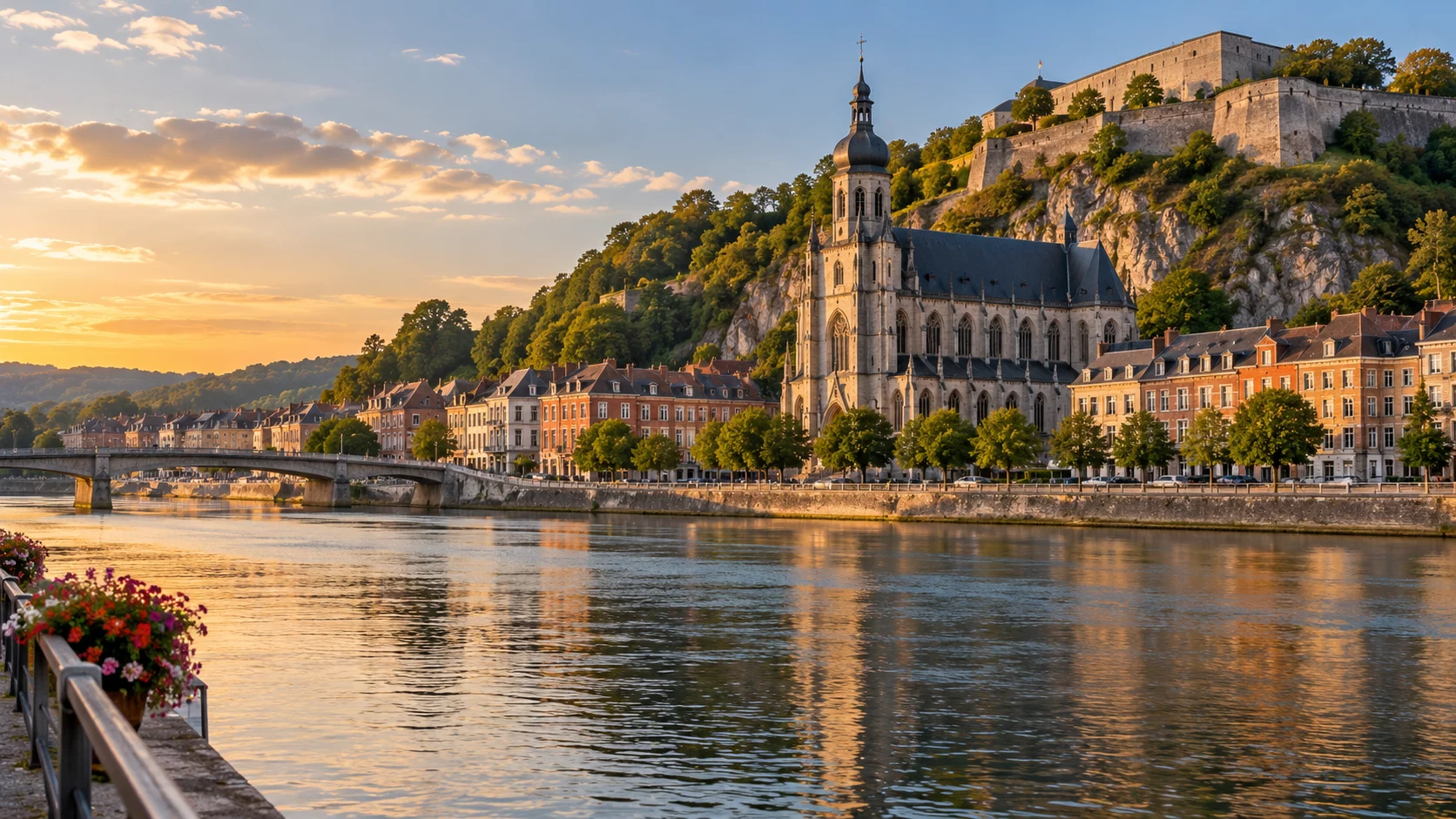
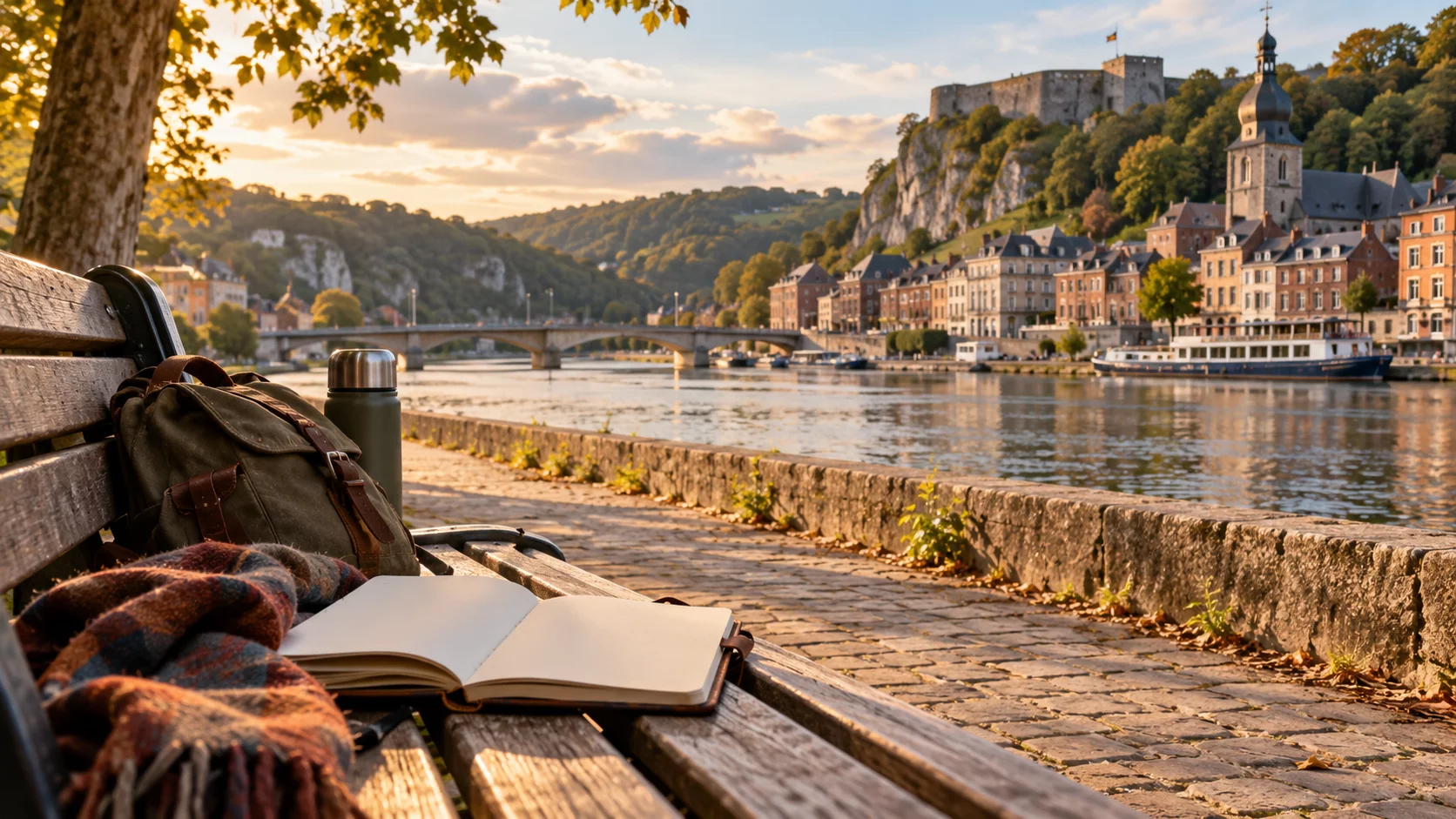
A river provides a scale that the details of a facade cannot. From a public place where you can stop without causing an obstruction, first notice lines: the bank, the water surface, buildings, and whatever rises behind them. Resist naming everything immediately. Simply ask what connects the foreground and the town. A bridge might act as a visual joint, while a row of facades forms a continuous line. No architectural vocabulary is required. This way of looking turns a general view into relationships you can recognise as you move. It also gives you a reference when later streets temporarily hide the river from sight.
Draw a map of relationships
On a page, use one line for the river and three signs for landmarks of your choice. This is not a navigation map. It helps remember what is on your side, what appears opposite, and what remains uncertain. Use a question mark instead of inventing a location. Then compare your sketch with a reliable map. Differences may reveal a misleading perspective or an underestimated distance. The exercise works with a family: everyone can explain their representation without producing a realistic drawing. Orientation difficulties become something to discuss rather than a mistake to conceal. Keep the practical map available; an impressionistic sketch cannot replace the information needed to return.
Photograph the river without seeking its edge
An interesting composition does not require standing as close as possible to the water. Choose a permitted viewpoint, keep an appropriate distance from the edge and consider other users. A foreground element can create depth without changing your position. Check the edges of the photograph: a recognisable person or private object may appear there. If conditions worsen or an access is restricted, change the viewpoint. Photography remains secondary to moving comfortably through the town. You can also write an impression and leave the phone in your pocket. Not taking a picture is a valid decision, and it does not erase the scene you have taken time to observe.
Move from landscape to the collegiate church
The Collegiate Church of Notre-Dame and Saint-Domitien offers a second kind of attention: leaving the broad view to examine a building. The Walloon regional heritage page places it beside the Meuse and describes its Gothic architecture. For this walk, a few questions are enough: where does your eye begin, which shape carries it upwards, and where does stone or an opening interrupt that movement? You can answer from an accessible exterior position. A possible interior visit adds another perspective but is not essential to the activity. Nevertheless, do not present a facade observation as comprehensive knowledge of the entire building and everything it contains.
Choose one detail and remain with it
A large building can offer so much detail that it becomes difficult to begin. Choose a small area visible without standing in a route used by others. Compare two shapes, follow a contour, or notice how an opening fits into a more massive composition. You do not need a date or stylistic term for every feature immediately. Historical information can enrich your attention later. For now, record something you can describe precisely. A well-formed question attached to an observable detail is more useful than a vague declaration that everything around you is exceptional. It also gives you a specific reason to consult a source after the walk.
Respect the purposes of the place
If you enter a place of worship open to visitors, adapt your voice, camera and movement to signs and current activities. Tourism access does not remove other uses. A group can wait briefly or abandon a photograph without losing the value of the day. Before any paid visit, check what is included and its access conditions. Do not confuse an exterior photograph with evidence that a room or treasury was available. In your notebook, state what you actually saw. That boundary makes the account more dependable and more personal. A short accurate description is preferable to a comprehensive-looking account built from things you did not experience.
Find the smaller scale of the old town
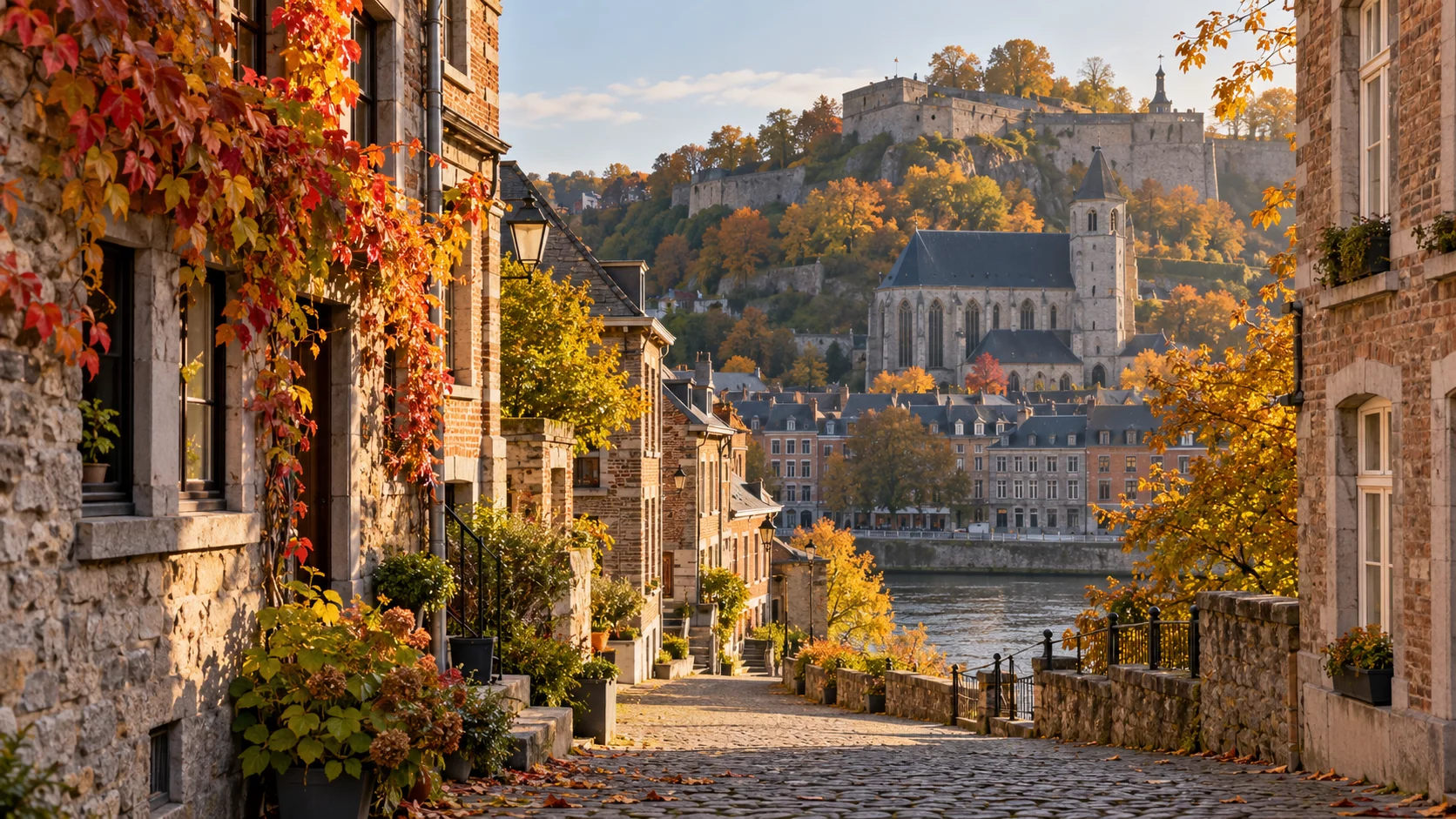
VisitHuy presents a town-centre walking circuit linking, among other places, the old town, Grand-Place and collegiate church. Use it to understand connections, then adapt the distance to your circumstances. Notice how the view changes in streets where the river is no longer directly visible. Closer facades, changes of direction and thresholds give the town a different scale. Do not assume an appealing alley is a continuous public passage. Respect private boundaries and local directions. A deliberate turn back is better than an uncertain shortcut taken only to preserve a theoretical loop. You can still enjoy a short street without needing it to lead somewhere else.
Look at a threshold without looking into a home
Doors, frames and changes of material show how a street is composed. They do not authorise inspecting interiors or photographing residents. Keep your attention on the public side and avoid lingering in front of an occupied window. Describe a sequence of colours, the relative height of two openings or a transition from stone to another material. If you do not know the age of a facade, leave the question open. An old appearance does not establish a date. Attention to detail becomes more interesting when it includes restraint. Your notebook can preserve the visible pattern without treating private life as an attraction offered to the visitor.
Grand-Place as a shared space
A square can also be understood through its uses. Find somewhere to pause without cutting across movement, then notice passages, pauses and distances. Look separately at the centre and edges: whatever attracts the eye is not always what accommodates people who stay. Do not invent the occupation, origin or mood of passers-by. Record their visible actions instead. Official information situates Grand-Place as a landmark; your notebook preserves a particular moment. These approaches complement rather than replace each other. A temporary scene does not become a definitive portrait of the town, and a guide description does not determine everything you should notice while you are there.
Include a real pause
A break is more than waiting while the quickest member checks a phone. Put it into the programme before everyone is tired. Depending on your preferences and what is actually open, it might mean a drink, a meal or sitting down. Check prices and whether the group can be accommodated before settling in. This route guarantees no particular business. Keep time for practical needs too: toilets, water, adjusting clothing and discussing what comes next. A visit often feels richer when these matters are handled straightforwardly rather than postponed until the return. If the first option is unavailable, use another suitable choice instead of walking indefinitely in pursuit of an ideal break.
Two rhythms for the same day
A short version might include a view of the Meuse, an exterior observation of the collegiate church and a pause around Grand-Place, followed by a checked return connection. A longer version could add a confirmed interior visit or more of the official circuit. Neither suggestion supplies a guaranteed duration or compulsory order. Decide according to your arrival point and the day's conditions. When reducing the programme, preserve a pleasant connection between two landmarks instead of attempting to retain every stop. Understanding a small area can be more satisfying than passing many places without time to engage. The shorter version is a complete day, not a failed attempt at the longer one.
Allow for children and different interests
Give a child a simple task: find a repeating line, draw an opening, or notice a change of surface. Avoid instructions that require touching buildings or leaving the permitted route. Adults may prefer different activities too: reading a description, photographing a broad view, or looking without taking notes. Set a clear meeting place and avoid turning the walk into a competition in knowledge. The desire to tell a story sometimes comes afterwards. A child who wrote nothing may remember a detail everyone else missed and want to discuss it only on the way home. Leave space for that delayed response instead of requiring an immediate demonstration of interest.
Adapt to paving, slopes and abilities
An old centre calls for specific attention to surfaces and passages. Before selecting a loop, check the sections that are genuinely manageable for your party. A general description of an easy walk cannot capture every constraint faced by a wheelchair user, a pushchair or a visitor uncomfortable with long distances. Ask the tourism office for details when needed and keep a way to shorten the route. A general photograph cannot establish that there are no steps. On arrival, a less picturesque but more comfortable connection may be the best choice. The experience depends partly on that adaptation, and nobody needs to justify choosing a route that works for them.
Protect a margin for the return
Calculate the return separately. Add time to find your stop, vehicle or meeting point to the estimated walk, then include a suitable margin. Check the transport operator's information instead of inferring frequency from a journey made earlier. With a group, agree on a point after which no more stops will be added. This prevents an improvised final visit from turning the end of the day into a rush. Keep necessary information accessible if the connection disappears. The most useful memory of the last neighbourhood may not come from crossing it while constantly watching the time. A calm departure belongs to the plan as much as the opening view does.
Reread the day in three sentences
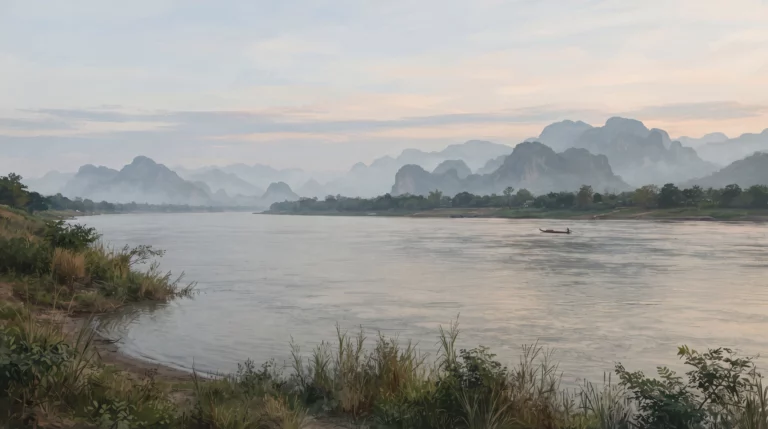
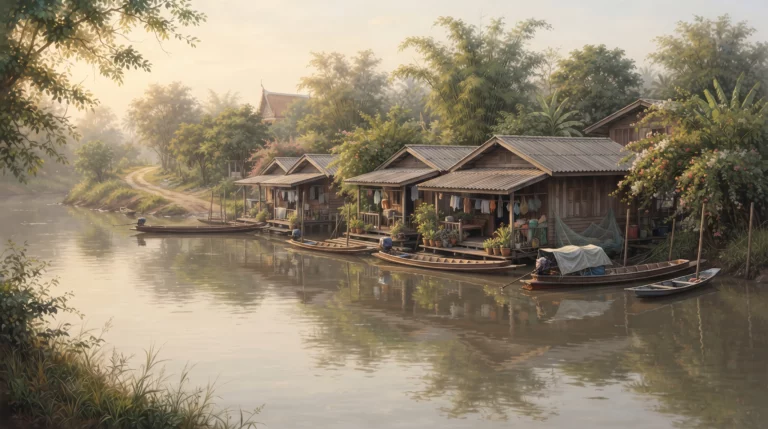
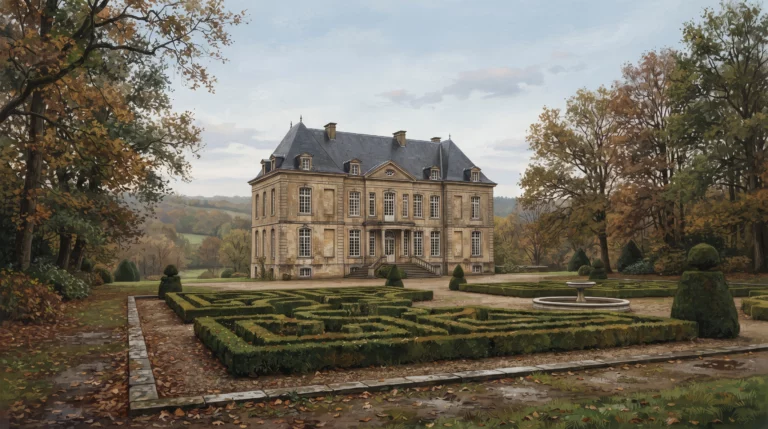
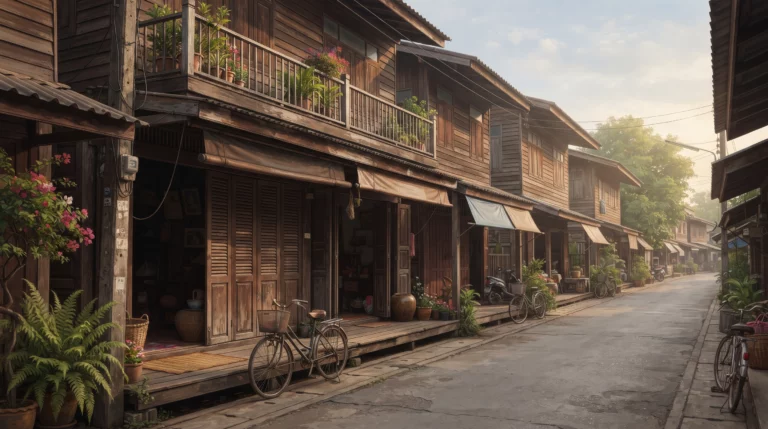
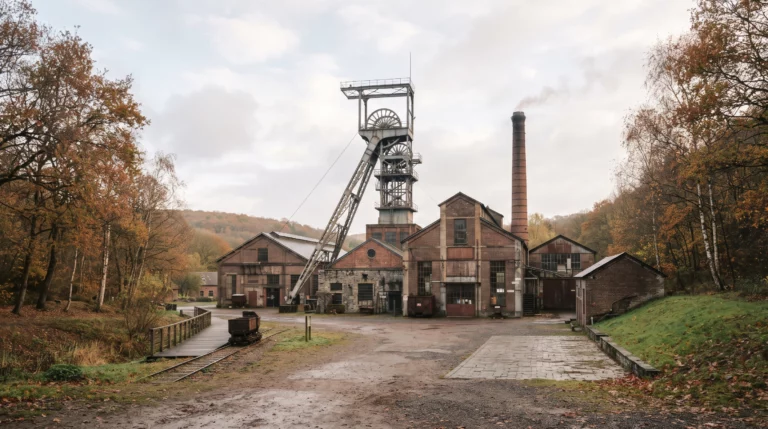
After returning, write one sentence for the river, one for the building and one for the square. Give each a different detail: a relationship of lines, a shape, then an observable human movement. You are not writing an official summary of Huy. You are bringing together three angles from your own visit. Add questions for checking rather than filling gaps with imaginary facts. If you publish generated images, identify their nature; they do not prove a place's condition during your visit. The illustrations used here are AI creations, offered to evoke the subject. Your own documentary pictures, if used, should have captions that accurately reflect what and when they show.
What to check before leaving
Consult the tourism office for a current map and arrangements for any visits that interest you. Check transport, weather conditions and accessibility requirements separately. This text suggests a way of discovering the town and some urban landmarks; it is not an event announcement or a commitment about openings on 31 October and 1 November. You can take just three words: river, building, square. They are enough to organise attention without enclosing the day in a heavy programme. An attentive Huy walk can become a precise memory while leaving enough freedom to pause, change direction and return another time. The invitation is to notice more, rather than to claim that one outing has explained the whole town.
Official sources: recheck practical arrangements before visiting
Compare the map with the street
At a quiet moment, compare the planned walk with what you actually encountered. A distance on a map can conceal an interesting pause, an awkward crossing or a need to rest. Record one useful adjustment for a future visit: a different starting point, more time beside the Meuse or fewer changes of direction. This practical observation belongs to your experience on that day; it does not become a rule for every visitor. If you share the route, distinguish what you checked on the ground from what remains to be confirmed. That makes your account more helpful than presenting a personal walk as universally easy.

The book
The Empty Wall is the second book of Oscar’s Notebook, a series of crime novels set in Liège.