Visiting Blegny-Mine offers a different way to understand the landscape of Belgium’s Liège province. Behind the headframe and industrial buildings lies a practical question: how did coal move from underground rock into the everyday life of towns? Answering it means connecting the galleries, surface installations and people who worked within the system. The visit becomes more rewarding when these elements form a sequence rather than a collection of impressive objects.
This guide suggests how to prepare, what to observe and which questions can make the experience memorable. It separates confirmed visitor information from ideas for looking and learning. That distinction matters in November, when a place appearing on a map does not mean that every activity runs daily. Start by choosing an available programme, then leave enough room in the day to listen, rest and make sense of what you have seen together.
Plan for an available visiting day
The official individual visitor programme for 2026 runs at weekends and on public holidays through 15 November, with additional seasonal dates listed separately. Friday 6 November is not an ordinary opening day for the full programme. Use this article to prepare a visit on Saturday 7 or Sunday 8 November, for example, after checking availability. Group bookings have separate arrangements; do not assume that information for groups applies to an individual ticket. Official source.
Published activity lengths are around one hour forty-five minutes for the mine, one hour for the museum and fifty minutes for the spoil heap habitat experience. Treat these as planning guides, then add arrival time, movement between activities, a meal and a buffer before travelling home. Confirm the language of the guided departure and what your ticket includes. Save the booking confirmation where you can open it without relying on a mobile connection at the entrance.
Choose two questions before you begin
Blegny-Mine is one of the four Major Mining Sites of Wallonia inscribed together on UNESCO’s World Heritage List in 2012. This designation concerns industrial heritage and the human history surrounding it. For a visitor, it is an invitation to look beyond the outline of a dramatic machine. An installation becomes understandable when its purpose, its operators and its relationship to other parts of production are considered together during the visit. Official source.
Choose two simple lines of inquiry before setting off. One might follow the material: where did the coal go next? The other might follow people: how did workers move, communicate and organise tasks? These questions provide enough structure without turning the outing into an examination. There is no need to memorise every unfamiliar technical word. A few clearly understood relationships will be easier to remember and more useful when you explain the experience to somebody afterwards.
Read the surface before going underground
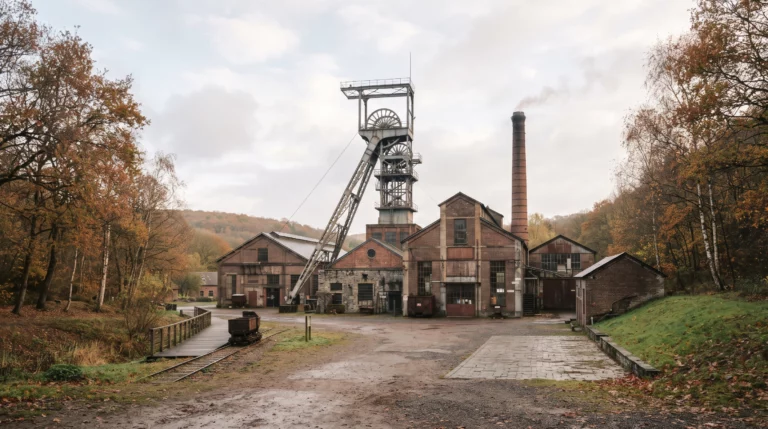
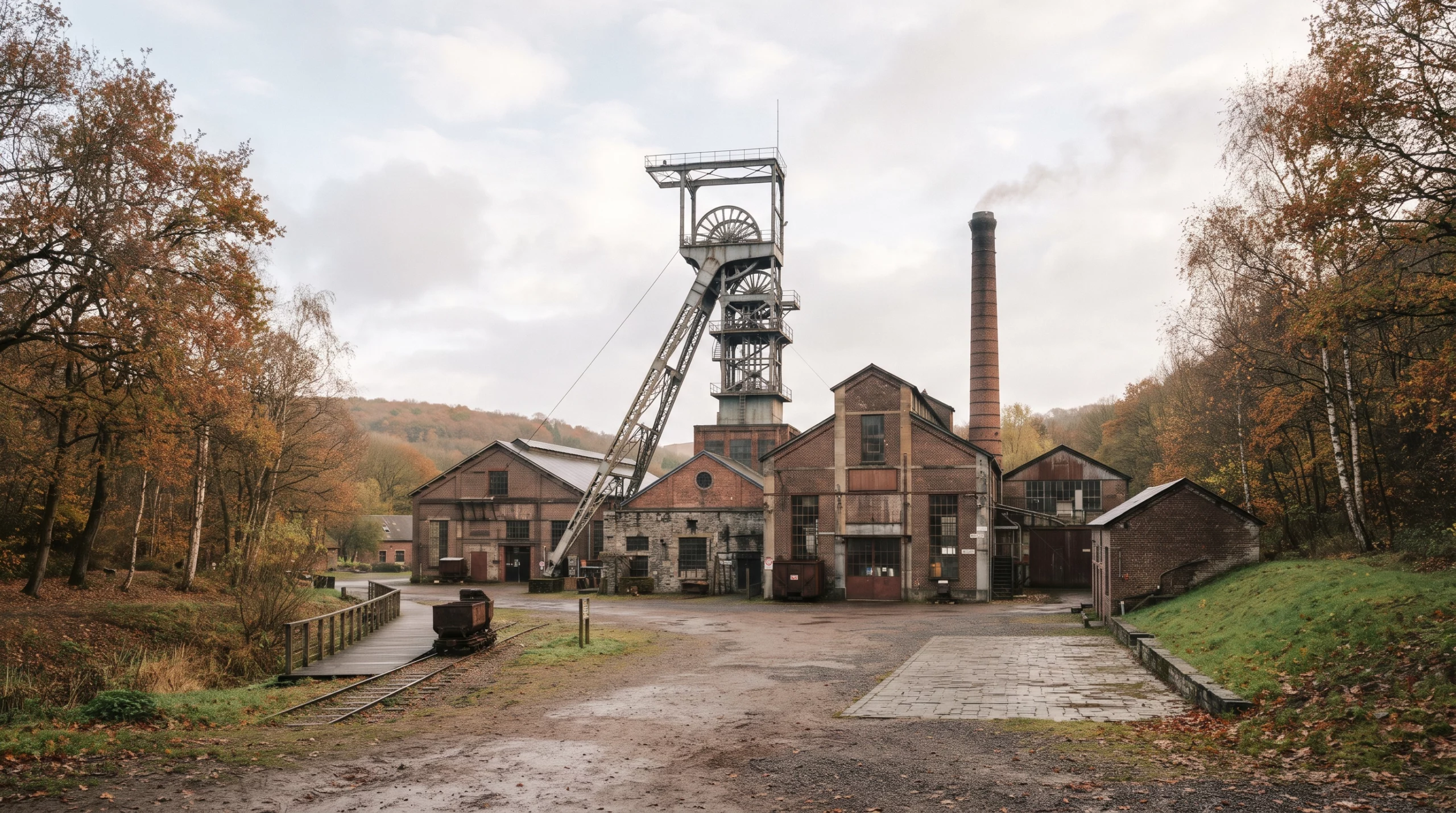
Take a moment in the authorised visitor areas to orient yourself. Notice differences in height, construction materials and the ways buildings connect. Ask where people might have entered and where materials travelled. Avoid deciding that a structure had a particular function simply because it resembles something familiar. The aim is to collect questions that the guide and interpretation can help answer. Industrial architecture often responds to requirements that cannot be understood from a facade alone.
For a useful first photograph, include a relationship between elements: a vertical structure and the buildings beside it, or a doorway and the route approaching it. Context will help you understand the image later. Stay behind barriers and follow the marked visitor route; visibility does not imply permission to enter. If children are coming, offer a small observation task, such as finding three different materials, rather than asking them to absorb the whole history immediately on arrival.
Pay attention to movement underground
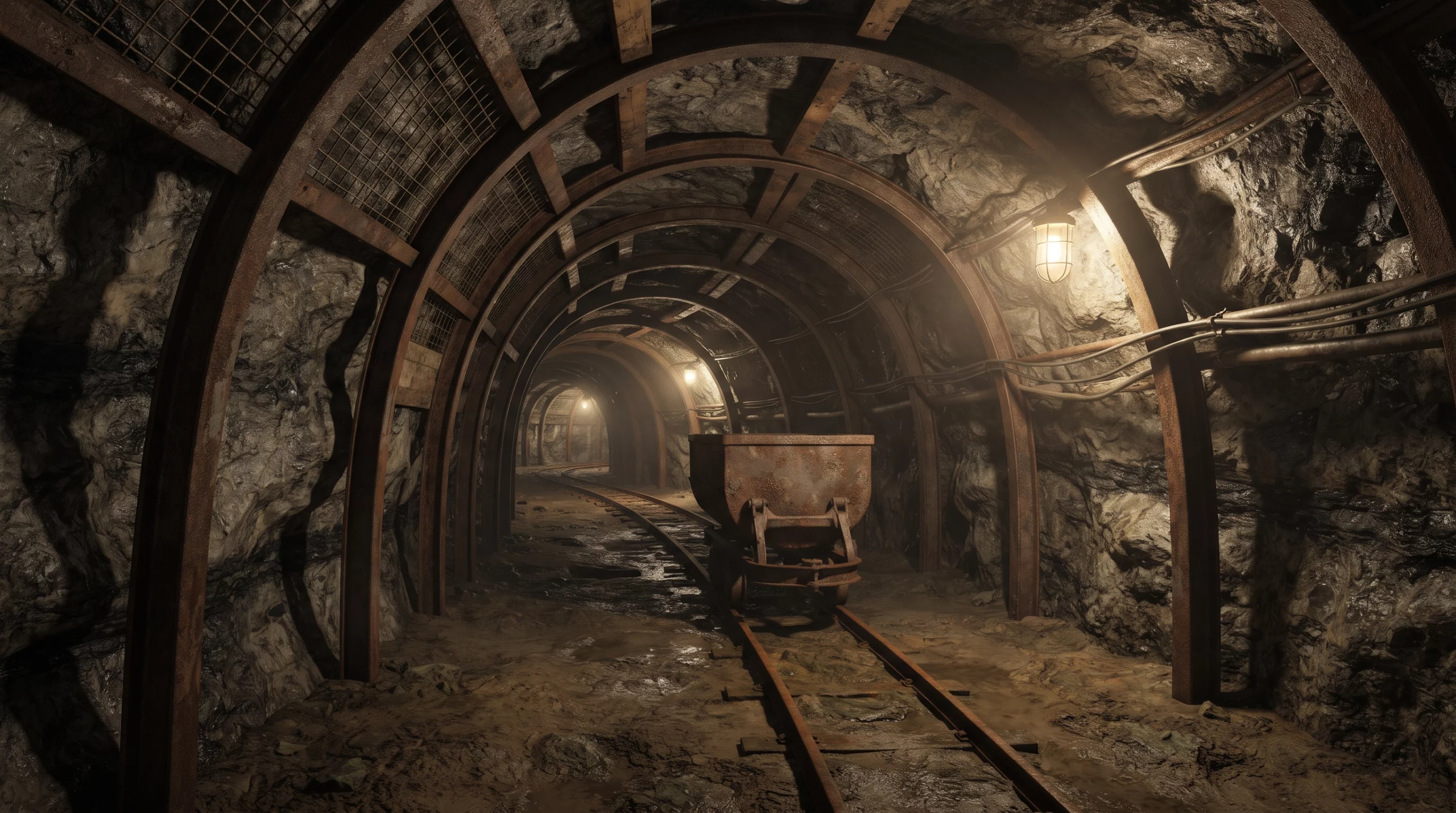
The guided mine visit uses the original shaft and includes the thirty- and sixty-metre levels described by the operator. Going underground changes the scale of what you are observing. Space affects how a group moves, stops and listens. Stay with the guide, use the equipment as instructed and keep your hands available whenever requested. Practical cooperation makes it easier for everyone to hear an explanation and understand the environment without unnecessary distraction. Official source.
Instead of seeking a dramatic sensation, try to understand a working sequence. Which action had to happen first? How could a message reach another person? Where did tools and materials pass? Such questions make technical explanations concrete without pretending that a present-day tour reproduces an entire historical working shift. A heritage visit has its own adaptations and conditions. It provides evidence and interpretation, while leaving room to recognise what a short experience cannot fully convey about other people’s lives.
Follow the coal after it reaches daylight
Coming back to the surface is not the end of the material’s story. The operator also presents the sorting and washing installations. This offers a chance to see why extracting a material is only one part of preparing it for use or sale. Try reducing the process to a short chain of ordinary verbs: raise, separate, treat, store, dispatch. Ask whether your sequence matches the equipment being shown, and correct any connection you have misunderstood.
Following a flow helps prevent the machines from becoming isolated exhibits. Where the route allows, look for differences in level, entry points and exits. A photograph with a short note explaining a function will remain useful long after an unexplained close-up has become puzzling. If something is unclear, record a question rather than an invented answer. Curiosity is a better souvenir than false certainty, particularly when a complex installation is being encountered for the first time during a guided group visit.
Keep people within the industrial story
Mining heritage involves more than engineering. In the museum, look for material that helps you understand individual experiences, working conditions and changes in daily life. Read labels carefully enough to distinguish an object’s date, its use and the context in which it is presented. A photograph, an administrative record and a tool offer different kinds of evidence. Bringing them together can deepen a question, but treating them as interchangeable can produce an overly simple account.
When a personal testimony is included, retain the person’s attribution rather than turning the words into an anonymous quotation. Avoid assuming that one experience represents every worker, period or mine. A useful family discussion might begin with this question: what did the museum tell us that the exterior buildings could not? It moves the conversation from visual impressions towards understanding. It also leaves room for emotion without expecting children to produce a complete historical explanation before they have had time to reflect.
Select a few museum objects carefully
After a guided tour, it is tempting to move rapidly past the displays. Try selecting three objects or documents and spending longer with each. Note a material, a purpose and an unanswered question. If the label does not provide everything, accept the gap or ask a member of staff. This approach turns a potentially tiring museum circuit into a small investigation that you can describe accurately later, rather than a long sequence of things barely noticed.
Compare a displayed document or diagram with something you saw underground. Ask what becomes clearer when the same subject appears in another form. A drawing may explain movement that was difficult to recognise in a gallery; an object may provide scale for a written account. Keep observation and interpretation separate in your notes. Beginning with “I can see” and then adding “I wonder whether” is a straightforward way to stop assumptions hardening into memories of facts that were never actually established.
Understand the spoil heap as a changed landscape
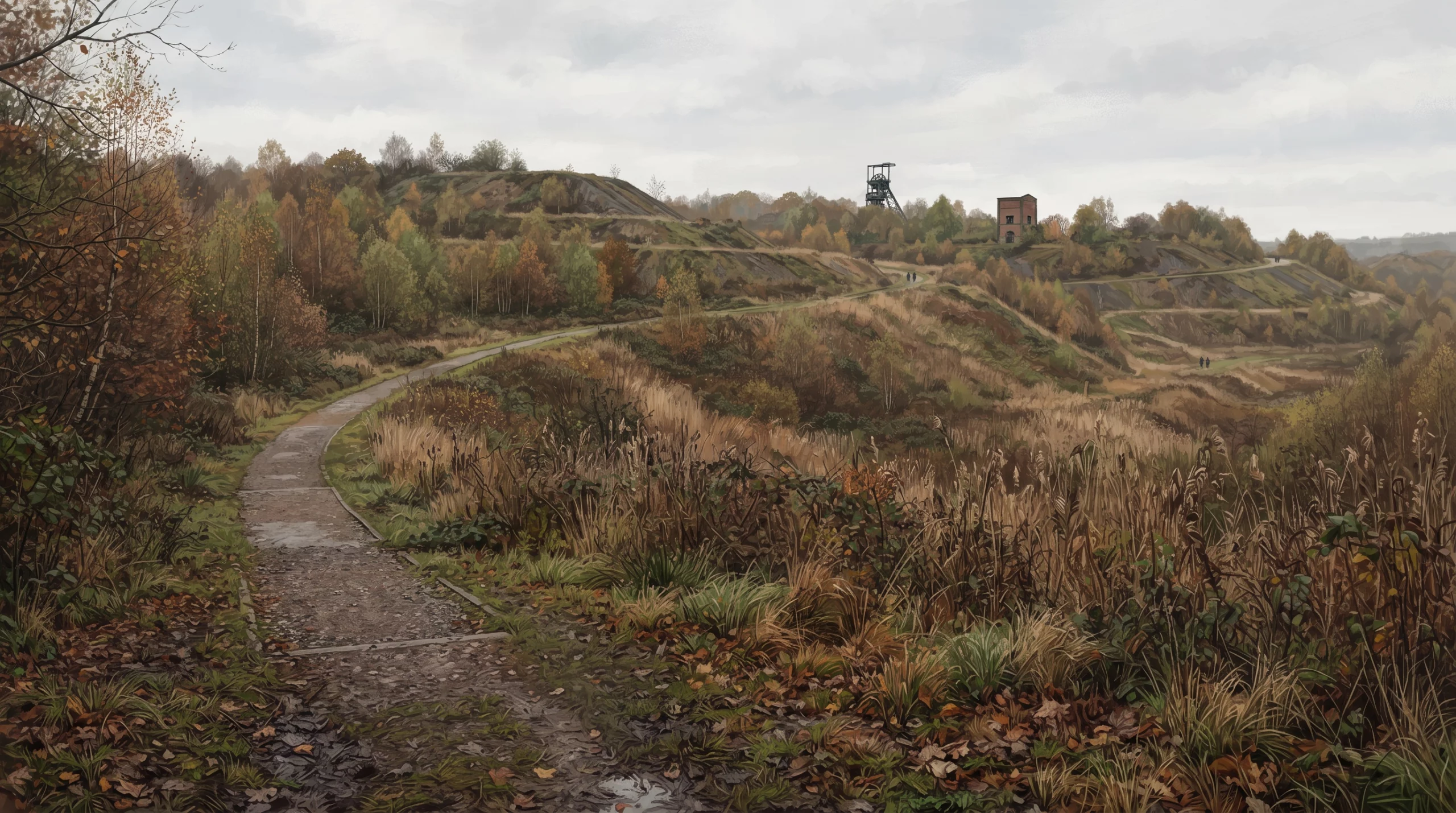
If your programme and local conditions allow this section, the spoil heap habitat experience offers another perspective. Attention shifts from technical interiors to landform, soil and vegetation. Do not treat the greenery as a picturesque cover that removes the earlier industrial story. Instead, consider how traces of activity and living systems share the same landscape. Follow the designated route and local instructions, even if an informal shortcut seems likely to provide a more attractive view or photograph.
In November, adapt the outdoor section to daylight, ground conditions and the group’s energy. Suitable walking shoes and protection against rain are more useful than an ambitious schedule. Leave plants and material where they are. A sketch of the landform or a description of the difference between two visible areas can record the experience without taking anything away. This also encourages a slower kind of observation: describing what the ground looks like often reveals details that a quick photograph fails to register.
Build a comfortable day around the guided departure
Your underground departure is the fixed appointment; arrange the other activities around it. Before committing to lunch or a second attraction, make sure the times genuinely fit together. A buffer accommodates a longer explanation, a necessary break or the ordinary movement of a group. If the museum holds your attention more than the outdoor route, adapt the day. A ticket offers possibilities; it does not require every member of the party to complete every activity regardless of comfort or interest.
If you are travelling without a car, check the complete door-to-door journey using official transport information for your chosen date. The final connection and the return deserve as much attention as the outward trip. A service reaching the surrounding municipality is not automatically a service stopping at the visitor entrance. Agree a meeting point if your group separates, and keep the reception contact available. Sorting out these details beforehand frees your attention for the actual visit when you arrive.
Discuss access needs before buying tickets
The operator states a minimum height of one metre for the mine visit. That requirement does not answer every individual question. If someone has mobility limitations, concerns about underground spaces or another access need, describe the situation to the team before booking. Ask which parts are suitable and what arrangements are possible if one person does not go below ground. A specific answer about your circumstances is more useful than an assumption based on a photograph or a general accessibility symbol. Official source.
Explain the sequence simply to children: equipment, group, listening to the guide and returning to the surface. Avoid presenting the outing as a test of bravery. Allow a break and take questions seriously, including questions that seem obvious to an adult. Choosing an appropriate alternative is also a reasonable decision for grown-ups. A successful heritage visit depends on what people can discover in good conditions, rather than on how many discomforts they are willing to ignore in order to follow the same route.
Photograph selectively and preserve the context
Ask what photography is permitted before taking out your camera. The guide’s instructions come before finding a perfect angle. Inside, avoid actions that delay the group, and put equipment away when it interferes with movement. A coherent set of pictures may need only an overview, an explained technical detail and an outdoor landscape. A small selection makes the story easier to follow and reduces the temptation to accumulate many nearly identical images without understanding the differences.
When sharing the outing, add only information that you actually checked. Do not present an AI-generated illustration as a photograph taken at the attraction. The images accompanying this article are visual interpretations rather than documentary records of individual buildings or galleries. Making that clear supports readers’ trust and encourages them to encounter the real place. It matters especially where architectural and technical details carry a particular history, and where an attractive invented detail could otherwise be mistaken for evidence.
Leave with one connection you can explain
Before heading home, choose one idea that you could explain to somebody who has never visited a coal mine. It might connect an underground task with a surface installation, or show how a personal document changes your understanding of a machine. If your explanation feels vague, revisit one note and put the idea into everyday language. Understanding an important relationship does not require mastery of every machine, term and historical date encountered throughout the day.
You can extend this approach through other heritage outings in Liège province, keeping the same attention to use, work and people. Explore Mr Schaka’s guides when planning another day, rather than trying to collect several destinations in one hurried trip. Blegny already offers enough to sustain a thoughtful visit: observing a material, following its route, listening to human experiences and recognising how work has shaped a landscape that might previously have seemed familiar from a distance.
Sources and planning
Sources checked on 4 November 2026. Confirm practical arrangements with the operators before visiting.
- Blegny-Mine — calendrier individuel 2026
- Blegny-Mine — visite guidée
- UNESCO — Major Mining Sites of Wallonia
- Blegny-Mine — histoire

The book
The Empty Wall is the second book of Oscar’s Notebook, a series of crime novels set in Liège.