You may know Liège through a station, a market, an expression or the memory of an evening. But if you had to organise a day for someone who had never walked through it, where would you begin? That question sits at the heart of LIÈGE – La Cité ardente – Le guide pratique by Mr Schaka. The book connects neighbourhoods, heritage and daily life so the city becomes more than names and pictures you recognise without knowing how to approach them.
The 2026–2027 edition brings together twenty-one chapters, illustrated maps and a practical notebook. It supports a stay, but may also interest someone from the region wanting to look differently at familiar habits. What would you most like to show? Which journeys would you choose? How much room would you give the Meuse, cafés and slopes? Answers already suggest something more personal than an impersonal ranking of supposedly essential attractions. This introduction explores those questions as ways of discovering the book and deciding what use it could have for your own plans.
What do you picture when you think of Liège?
One image often appears first: Guillemins, the Perron, a riverbank or a climbing street. That reference point is useful, yet it can reduce the city to what is already familiar. The guide makes room for different faces of Liège. Heritage, museums, walks, food, a neighbourhood or time together can all become starting points. You do not have to choose everything at once. You need to understand why one possibility appeals now and what kind of day that preference might help you create.
Write three words before opening the contents, then see whether the chapters answer them or suggest alternatives. This avoids treating the book only as a directory. It can broaden a question as well as supply an address. Perhaps you wanted a monument and discover that connections between districts interest you more. Good preparation need not simply confirm the original plan. It can provide reasons to change it while keeping the outing realistic for the time available. A guide becomes interesting when it helps explain those reasons rather than merely replacing one list with another.
Is a neighbourhood a stop or a way of looking?
The contents distinguish the historic centre, the Carré, Outremeuse, Guillemins and the quays, then Pierreuse and the slopes. These names organise discovery without creating sealed compartments. Ask what changes in the walk: space, uses, the relationship with water or the terrain. A neighbourhood becomes more engaging when it introduces a different question rather than simply another line in a programme where every stop is interchangeable. You begin to recognise not only what can be found there, but what spending time there might contribute to the wider visit.
This helps with group planning too. One person wants a museum, another a walk and another a proper seated break. The guide can give discussion a shared basis. Instead of combining lists until the day becomes impossible, seek coherence within an area, adding something else if conditions allow. A neighbourhood becomes a tool for choosing together rather than a demand to visit everything that appears nearby on a page. The plan then belongs to the people taking part, not to the quantity of suggestions collected before they have considered their actual priorities.
How do you move from arrival to discovery?
The book treats arrival and circulation as part of the experience. They may seem secondary to monuments, yet shape its beginning. With luggage or after a long journey, your first need may not be sightseeing. What should happen first: leaving bags, understanding a route, resting or reaching the starting point without an unnecessary detour? Asking this makes the opening of a stay more realistic. It also protects the time intended for looking, instead of consuming it in a chain of small logistical problems that could have been clarified earlier.
Separate these needs from the discovery programme. A station can be both something to observe and a practical arrival point without those functions being identical for everybody. The guide introduces ways to circulate; current operator information confirms the actual service. You need not memorise everything before departure. Preparing the first movement sufficiently allows you to lift your eyes towards the city rather than spend that entire hour solving avoidable questions. Practical organisation can support curiosity, leaving a traveller more available for the architecture, people and streets encountered immediately afterwards.
Must the famous places come first?
Well-known sites provide anchors and may make a fine introduction. Fame alone, however, does not determine how much time you want to give them. The book brings together heritage and museums, including the Saint-Lambert and market areas and city collections. Before selecting a stop, ask what you hope to understand or feel. Even a simple answer can shape a visit based on interest rather than fear of omission. A place is easier to remember when you can explain why you paused there instead of merely knowing it appeared on a recommended list.
Choose one thread: how a square organises movement, a building’s changing role or the relationship between a collection and its setting. The guide suggests possibilities; observation tests them. Someone unfamiliar with architectural terms can still compare, describe and ask. Curiosity requires time and permission to stay with a question, not prior expertise. Moving immediately to the next stop may look efficient while preventing any real encounter. The practical choice is therefore not always the fastest one, particularly when attention is the reason you came to explore rather than simply pass through.
What does the Meuse change in your route?
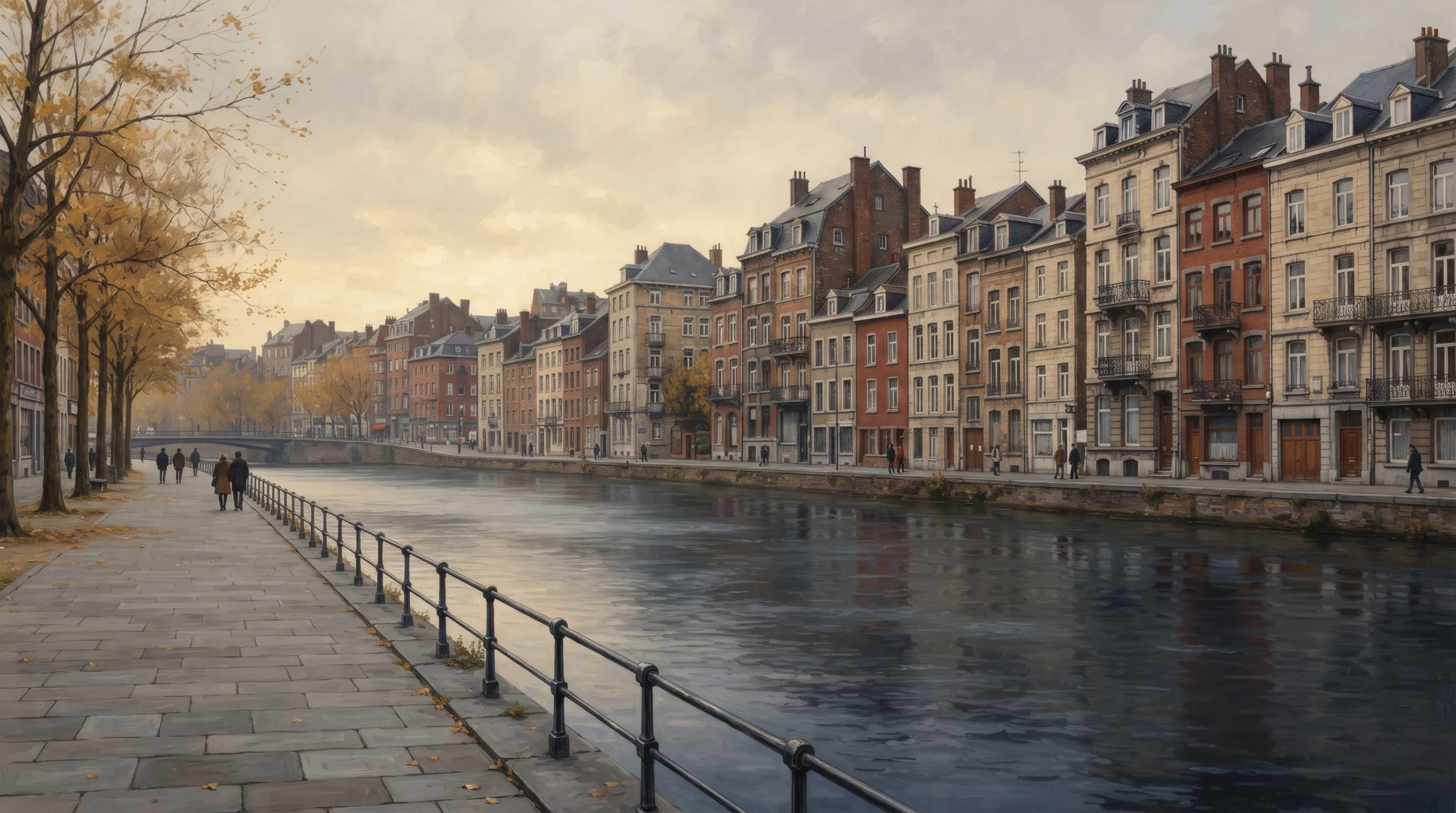
The guide gives the river and natural areas a place of their own. The Meuse may serve as an anchor, a walking subject or a connection between parts first considered separately. What would you like from that section: breathing space between visits, a longer walk or another view of the city? Giving the river a purpose prevents it becoming only a transition towards the next monument. It also makes it easier to decide how long to remain, where to pause and whether to build the day around the water rather than cross it without noticing.
An illustrated map explains the whole while local conditions clarify the usable route. Do not turn a simplified representation into a guarantee of uninterrupted passage or accessibility. Confirm the points relevant to your group and retain a return option. This preparation creates freedom afterwards: pausing for a facade or conversation need not undermine everything. The river becomes a presence whose role you choose, rather than a line on a plan. Knowing where the flexible parts are lets a walk remain open without leaving companions uncertain about how they will get back comfortably.
Is the terrain part of the pleasure you seek?
Pierreuse and the Coteaux de la Citadelle feature in the book. Their inclusion reminds readers that one city can require different kinds of effort. Do you want height, or would a simpler route suit this visit? Your answer need not resemble another traveller’s. A guide is valuable when it reveals consequences, not when it makes every proposal a performance required to qualify as having seen the destination. Choosing an appropriate alternative can be a well-informed decision rather than a lesser version of somebody else’s more demanding outing.
Consider available time, surface conditions and people’s needs. Distance alone does not establish ease. A climb or a few steps may change the experience, while a more comfortable route can improve the entire stay. The book identifies questions; information suited to your circumstances should complete preparation. You can then choose a viewpoint or another activity without guilt, knowing what you want to retain. An outing is not made complete by ignoring a limitation. It becomes coherent when its parts support the attention and comfort needed to enjoy what has been chosen.
Can the city be learned at the table?
Local food, markets and evenings have their own space in the guide. They do more than fill time after visits. A meal offers opportunities to encounter a practice, ask an explanation or compare an assumption with what is served. What would you like to try, and in what setting? A seated pause, brief discovery and conversation require different choices. Naming this before hunger takes over gives the food chapter a practical function and keeps the break connected with what the people travelling together actually need that day.
Distinguish interest in a product from a particular business’s current arrangements. Offers, hours and conditions can change. Confirm what matters to your visit and ask relevant questions on arrival. A speciality need not become an authenticity test imposed on hosts. Discovery can remain straightforward and respectful. Eating in Liège does not require tasting everything; understanding one preparation or enjoying a shared pause may enrich memory as much as a succession of addresses. The guide can encourage curiosity without turning the table into another place where a visitor must complete an exhausting checklist.
Why prepare a museum instead of adding one at the last moment?
The book introduces cultural venues including the Grand Curtius, La Boverie and the Museum of Walloon Life. Variety offers possibilities while requiring choices. With limited hours, which subject appeals, and how much time should remain for streets? A museum should not be a spare box between journeys without checking its programme. Its quality as an experience partly depends on the place given to it within the day and the attention available when you arrive. An interesting venue can become a poor encounter if visited solely because an unplanned gap needs filling.
Preparation may involve only three decisions: the chosen venue, one discovery question and current access information. You need not arrange every room. The guide orients, while the museum’s resources clarify what is actually presented and the day’s conditions. This preserves a useful distinction between a planning publication and a changing programme. You arrive with a clear interest while remaining receptive, instead of expecting an experience inferred from an old picture. The book helps begin the conversation with a place; the visit supplies details that cannot be completely determined in advance.
What changes between one day and a longer stay?
The contents offer one-, three-, five- and seven-day itineraries. Their purpose is to show ways of distributing discovery rather than impose a universal number of attractions. Calculate real time first: arrival, departure, appointments and rest. Two nights do not always provide two complete days. Recognising that prevents a short stay becoming a compressed long programme in which every ordinary delay feels irretrievable. Time understood honestly is often more useful than a large selection of ideas that depend on every connection working perfectly and nobody ever needing a pause.
With longer, deepen rather than automatically add. Revisit a district, spend more time with a collection or move a walk according to conditions. The guide can support this flexibility without requiring every hour to produce another name. What does extra time make possible: variety, comfort or closer attention? Different answers can produce equally successful stays because they reflect genuine intentions. Rest and repetition may belong within discovery, not outside it. A second look can make a place clearer in a way that a new destination reached while tired cannot always provide.
Does local knowledge remove the need to check?
The guide is presented as written by an author from the Liège region. This connection can give coherence to selection and relationships between places. It does not make practical information permanent. The manuscript dates its collection to October 2026 and notes possible changes. Some sections explain the city; others need recent confirmation before booking or using a service. Understanding which function a passage serves makes the book easier to use without either expecting constant updating or dismissing its wider value when one small detail has changed after publication.
Retain consultation dates and access to useful sources. A changed item does not invalidate the whole publication; it marks the distinction between reading and acting. Consider how you advise a friend: do you name somewhere, or explain why it could suit them? The guide is most interesting when it nourishes the second action. It supplies connections and criteria for adaptation rather than asking a reader to accept every preference simply because somebody knows the area. Local knowledge becomes shareable when reasons accompany recommendations and leave room for different circumstances.
What could a local resident still discover?
Living nearby does not mean looking closely every day. Familiar routes become efficient and cease to demand much attention. A book can shift that habit. Choose a chapter about a known area and find a question you never ask while passing through. Why does this place organise your movements? What do you show a visitor automatically, and what is always left aside? You need not pretend to be a tourist. You can simply allow a familiar environment to become slightly less automatic, using the book as an opportunity rather than an examination of existing knowledge.
Interest may also come from differences between your experience and a proposed route. Instead of immediately deciding who is right, consider the needs each choice addresses. A daily commute and a short discovery have different purposes. The guide becomes a conversation with the city and other readers. You retain knowledge while giving it a chance to become more precise. Familiarity grows richer when it can be explained without assuming everyone shares the same habits. A route you once considered obvious may reveal reasons you had never needed to put into words before.
Which Liège would you like to take home?
The question may now be less simply where to go than what relationship you want with the city: monuments, walking time, encounters or reference points to find again later. LIÈGE – Le guide pratique offers a structure connecting those intentions. Its official page presents current formats without implying every announced medium is already available. This is a useful place to begin a practical choice before opening the book with questions that belong to your own stay, whether it lasts a day or extends across a longer week.
The contents may confirm a plan or give reasons to change it. That distinguishes a discovery tool from a list: it leaves you a place in decisions. Between the Meuse, neighbourhoods and cultural venues, Liège can be remembered through what you chose to notice. The result need not be a city exhausted in a few days. It can be a first route understood well enough to make returning appealing. What would you want to look at again, and how might that second visit differ once the first has given familiar names a more personal meaning?
The book and this introduction
Discover the book on Mr Schaka’s website.
Prepared from the book or its opening and the official book page, checked on 4 November 2026. Interpretations are offered as reading suggestions. Check the book page for current formats and availability.
French, English and Thai versions of this article do not imply that the book is sold in all three languages.

The book
The Empty Wall is the second book of Oscar’s Notebook, a series of crime novels set in Liège.