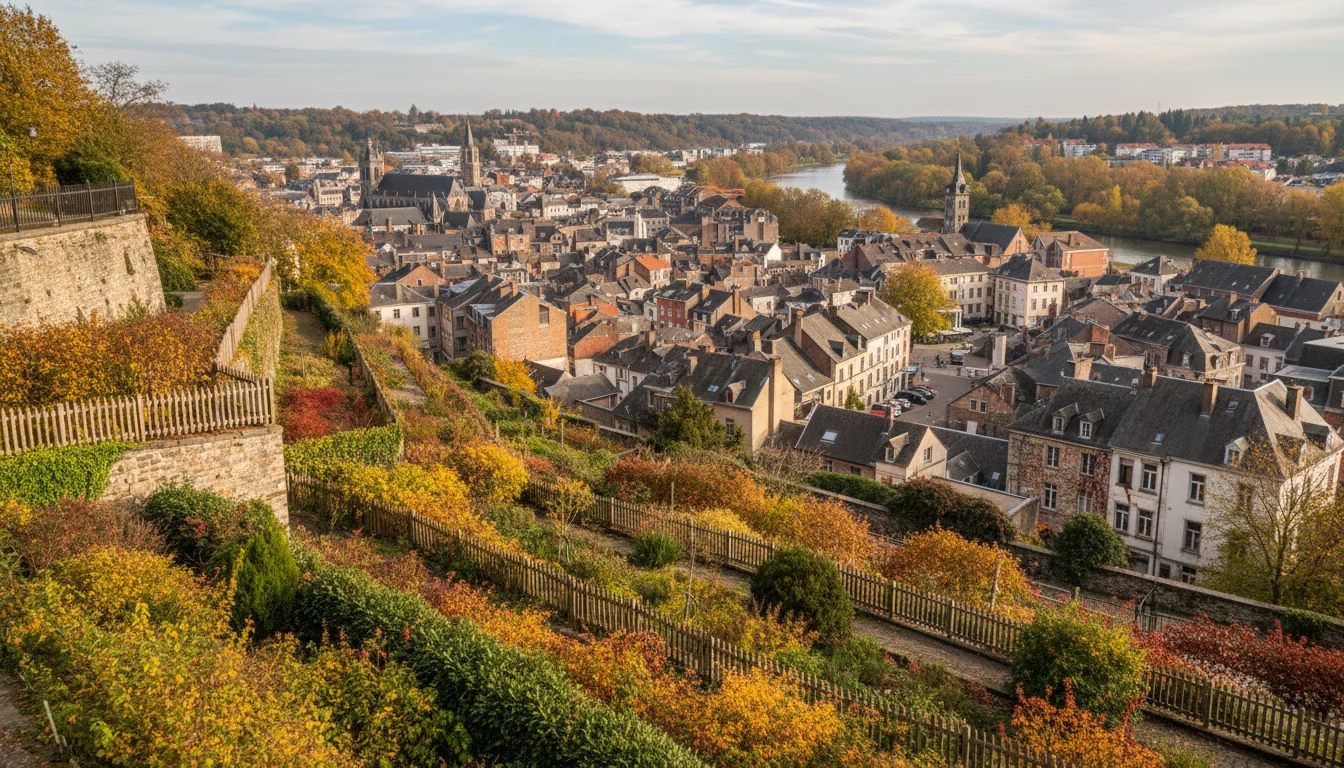
Why explore Namur on foot
Namur makes particular sense on foot because a manageable distance brings together three different landscapes: the streets of the centre, the Citadel’s fortified heights and the quays where the Sambre and Meuse meet. This is not a race to tick off monuments. Walking helps you see how the city grew around its rivers and beneath its rocky headland. Plan a flexible day with time for detours, a break and any interior visits. Attraction hours and access can change, so check official information before setting out.
Begin in the old quarter
From the centre, follow the pedestrian streets and smaller lanes that keep a human scale. Notice the façades, shop windows and changes in level: Namur reveals itself through details as well as landmarks. Historic buildings share space with present-day shops and daily life. Avoid close photographs of residents without permission and keep shop entrances clear. A brief pause in a quieter street lets you notice materials and proportions without treating the neighbourhood as a backdrop. Then choose a route towards the Citadel that suits your energy.
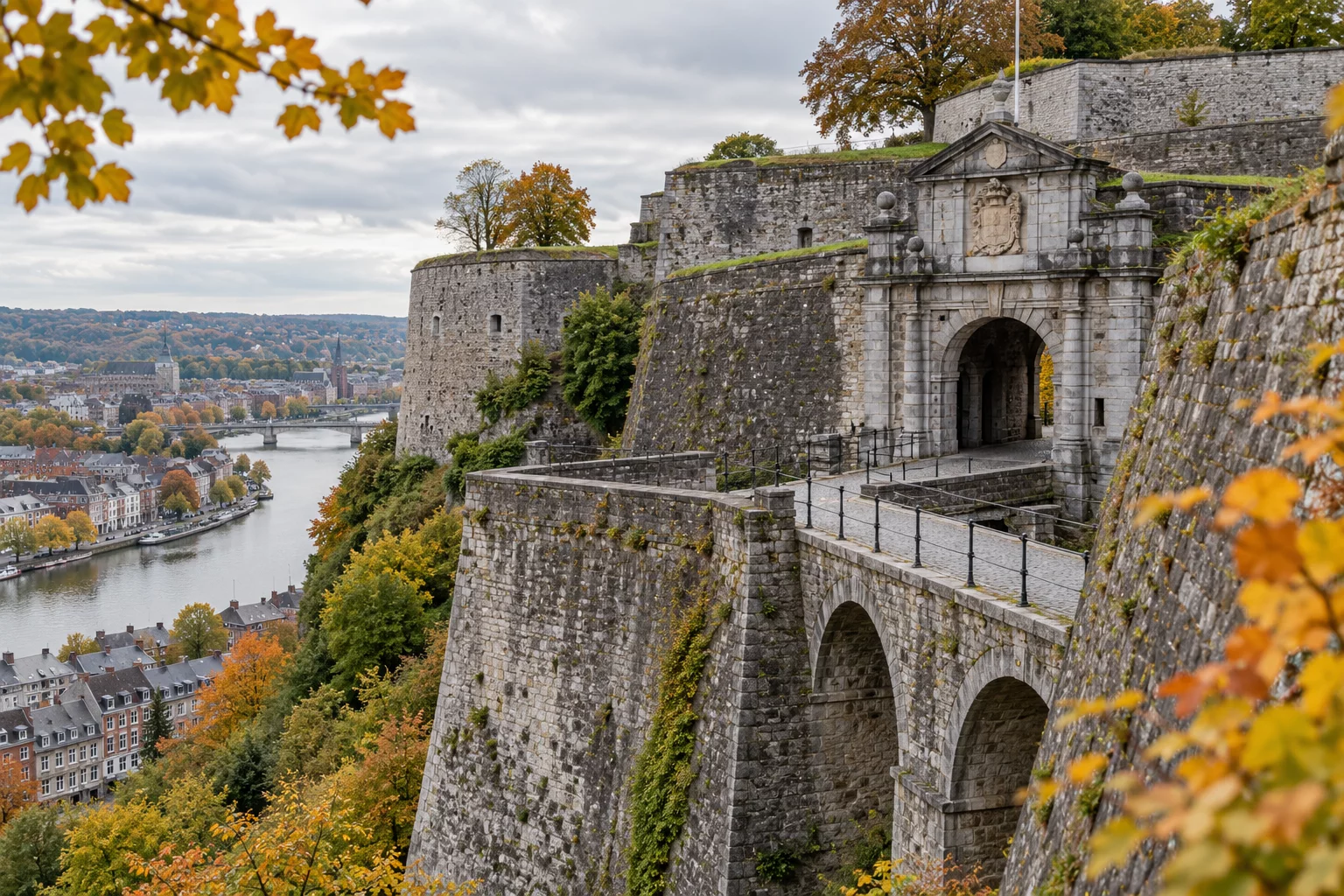
Make your way up to the Citadel
The Citadel overlooks the city from a rocky spur and preserves traces from several periods. You can climb on foot or, depending on the day’s conditions, take the cable car from the centre. Check opening times, access and service updates before travelling, since routes or facilities may change. At the top, look beyond the panorama: notice the ramparts, gates, paths and how the fortification follows the land. The Terra Nova visitor centre and guided tours add historical context, but confirm their programme through official channels.
Read the landscape from the ramparts
From the Citadel’s viewpoints, the city unfolds between the Sambre and Meuse. Take a few minutes to identify bridges, quays and the point where the rivers join. This simple geographical reading shows how waterways shaped movement and Namur’s strategic position. Light changes the view, and morning or late afternoon often create different contrasts. Stay in permitted areas, especially near slopes and old walls. With a camera, take one wide view followed by a close detail of stonework or vegetation.
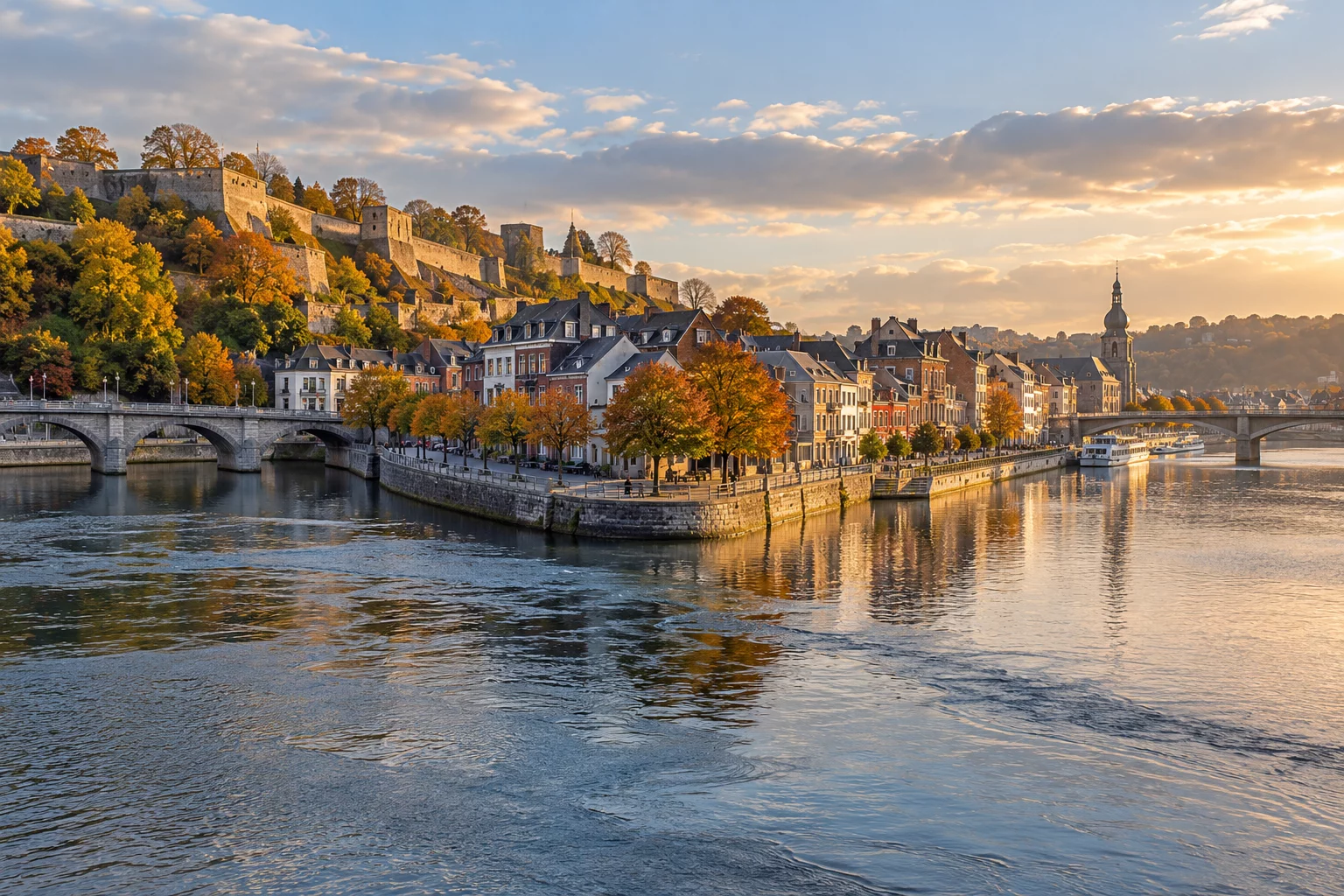
Return to the confluence
After the Citadel, come back down to the quays to see Namur from river level. The Sambre–Meuse confluence is more than a scenic background: it shapes walks, bridges and water activities. Cruises, small river shuttles and seasonal options depend on the time of year, so check schedules before relying on them. A riverside walk alone offers a fresh perspective. Keep children close, use marked paths and avoid unsecured banks. The walk then forms a coherent loop between the heights and the water.
Balance the day and plan for access
To keep the visit enjoyable, spread out the effort. If you walk uphill, wear comfortable shoes, bring water and allow time for steps. The cable car may reduce the climb, but confirm access arrangements and hours on the day. Visitors with limited mobility should check each section rather than assume the whole site is step-free. Paths may be slippery in rain. With children, choose a few stops and alternate walking, resting and exploring. A good day is not about seeing everything; it is about understanding the links between city, fortress and rivers.
Make the visit memorable
Before leaving Namur, choose one last stop on a quay or in the centre and compare it with your first impression. What stayed with you most: the stone fortifications, quiet streets or the meeting of the rivers? Note what you would like to see on another visit, perhaps an exhibition, a guided walk or a boat trip. This ending keeps the city from becoming a checklist of photographs and gives you a reason to return. Namur rewards a second visit because its scenery and heritage reveal themselves at different paces.
Read the Citadel in layers
The Citadel is not a monument frozen in one period. Its strategic position led to repeated changes, and a walk lets you read those layers in walls, entrances and open spaces. Look for shifts in masonry and orientation instead of imagining the whole complex was built at once. Terra Nova panels and guided visits help distinguish medieval remains, later fortifications and more recent adaptations. If a detail raises a question, note it and check its interpretation with a local source.
Underground galleries offer another scale
Below the ramparts, the underground passages create a different experience from an outdoor walk. Timed, staged tours operate under specific conditions, so check the official programme before booking or travelling. A guide can explain why the galleries were built, how they formed part of the defences and which sections have been restored. In an enclosed space, follow instructions, stay with the group and bring a light layer if you are sensitive to cool air. Do not touch walls or equipment.
Use the cable car as a transition
The cable car links the centre to the Citadel in minutes and turns the journey into a chance to read the landscape. From above, the relationship between lower town, slope and fortifications becomes visible. Operating hours and conditions for bicycles or pushchairs can change, so check current information. If service is interrupted, use a planned alternative rather than improvising a shortcut on a slope. Put your phone away briefly on the ride and watch the viewpoint change as you rise.
Identify neighbourhoods from above
At viewpoints, look beyond the postcard image. Notice street lines, bridges, church towers and places where the urban fabric opens towards the valley. The view helps explain links between the Citadel and surrounding districts, while contemporary buildings are also part of the living city. A thoughtful photograph can show the fortifications within a lived landscape instead of isolating one monument. If you share the image, describe the viewpoint and season accurately so readers have a useful reference for their own walk.
Walk a loop instead of rushing back
A smoother day can form a loop: begin in the old quarter, climb to the Citadel, descend towards the quays and return through another part of the centre. This avoids retracing every step and creates a visual progression from lanes to heights to water. Adapt the direction to your energy and to which entrances are open that day. If you book a guided visit or boat trip, fit it into the route only after confirming its time and departure point. Always leave room for an unplanned stop.
Spend unhurried time in the old quarter
A few minutes without a fixed destination can reveal details that a strict route misses. Notice thresholds, cornices and passages between houses, while respecting private property and closed courtyards. The city contains architecture from several periods, so avoid assigning a precise date without a source. Shops and cafés also show everyday life. A pause at a local business supports the centre and gives you a chance to rest before continuing.
See the rivers from more than one viewpoint
The confluence is easier to understand when you change elevation and riverbank. From the Citadel, you can read the valleys; from the quays, the current, bridges and riverside activity are more apparent. If time allows, compare these views instead of searching for one “best” photo spot. Stay on marked promenades and follow rules for water activities. Water levels and weather affect the scene, while evening light changes quickly. An overcast sky can create softer reflections than direct sun.
Plan for breaks and weather
Namur’s slopes make weather important for a walking day. In rain, stairs, paving and paths may become slippery; choose stable shoes and slow down on descents. In warm weather, carry water and alternate sunny stretches with shaded breaks. Tour schedules and cable car operation can change, so check them that day. Pack a light jacket even when the sky looks clear: wind near the Citadel can alter how cool it feels.
Keep a family outing manageable
With children, turn the walk into an observation game: find a bridge seen from above, spot a gate in the ramparts or compare the width of two streets. Small tasks make history tangible without long explanations. Avoid scheduling every indoor visit on the same day; alternate activity, movement and rest. Keep children close near water and slopes, and observe barriers. Have a shorter option ready if tiredness sets in early. A flexible plan protects the pleasure of discovery.
Check access for every segment
An accessible attraction does not mean every part of the route is accessible. Slopes, paving, steps and room layouts differ between the centre, Citadel and quays. Before travelling, check access information for the cable car, visitor centre and any booked tours. Contact venues if you need a specific accommodation for a wheelchair, pushchair or assistance. A backup route prevents discovering on arrival that a passage is impractical. The same care helps anyone who needs frequent breaks or avoids steep gradients.
Choose a useful guided visit
A guided tour can explain walls whose purpose is not obvious at first glance. Choose a theme that matches your interests—military history, architecture, underground passages or landscape—and check duration, language and access conditions. Prepare one or two questions, such as how the Citadel changed roles or how the rivers influenced defence. After the tour, explore a section independently to revisit the details the guide mentioned. Combining explanation with personal observation often creates a more lasting understanding.
End beside the water
Before leaving Namur, a final pause beside the Sambre or Meuse can bring the day together. Look back at the fortress from the quays: its scale changes and the relationship between hill and city becomes clear. If a cruise is available, check its length and route and choose it according to your time rather than adding it at the last minute. Otherwise, a short walk is enough to enjoy bridges and reflections. Leave the riverbank clean and respect others using the path.
A closer look at the riverfront
The quays offer a practical way to understand how Namur lives with its two rivers. Notice where paths widen, where boats are moored and how bridges carry traffic between banks. The waterfront is a working public space, not only a sightseeing zone. Keep to pedestrian routes, give cyclists room and follow any temporary signs. When taking photographs, avoid blocking access ramps or gathering at narrow points. If you have time, walk a short stretch on both sides and compare the views back towards the Citadel; the skyline shifts with every bend.
Food breaks that fit the walk
A meal can become a useful pause between the climb and the riverside section. Choose a place in the centre or along a quay that fits your timing, and check opening hours directly rather than assuming they follow a fixed schedule. Namur’s local food scene can be explored without turning lunch into a long detour: a simple café stop may be enough to rest and refill water. If you have dietary needs, ask about ingredients before ordering. Leave time to return to your route at an unhurried pace.
Notice how the fortification meets the city
At the edge of the Citadel, look for the transitions between military structure and green paths. The walls do not simply divide spaces; they follow the terrain and create passages that guide movement. Some sections frame a view while others conceal it until you turn a corner. This is a useful way to understand defensive architecture as an experience of movement rather than as a static object. Stay within signed areas and resist the temptation to climb on masonry for a better view. The official paths are there to protect both visitors and historic fabric.
Use a simple map strategy
A saved map can reduce stress, but do not rely only on a phone signal. Before leaving the centre, identify your next stop, the way back down and a place to pause if the group needs a break. Mark the river crossing or cable car departure point if you plan to use it. A paper visitor map or an offline screenshot can help when battery power is low. Keep the route flexible: a closure or a change in weather should lead to an easy alternative, not a rushed decision on a steep path.
A second visit can follow a theme
If one day is not enough, return with a single theme rather than repeating every stop. You might focus on military architecture, the relationship between the city and the rivers, or the cultural life of the old centre. A themed walk helps you notice details that were hidden by the first visit’s broad itinerary. Check whether a museum, guided tour or underground visit is operating before travelling. Returning at another time of day also changes the light and the feel of the quays. Namur rewards curiosity more than speed.
FAQ
How much time should I allow for Namur?
One day is enough to see the central districts, the citadel and the confluence area without rushing. If you want to enter several sites, join a guided visit or take long breaks, allow more time. Hills, walking distances and pauses all affect the schedule.
Is the citadel suitable for every visitor?
The citadel covers a large area with different slopes and paths. The effort depends on the route you choose. Visitors with mobility needs should check access and available tours through official information before setting out.
Can I visit Namur without a car?
The centre is easy to explore on foot, and public transport connects several areas. For the citadel, choose an approach suited to your fitness and check current stops and schedules. Comfortable shoes help once you are there.
When is the best time to enjoy the confluence?
Riverside walks can be pleasant at different times of day. Light changes with the season and weather, so there is no single perfect hour. Keep paths clear, stay in accessible areas and check conditions when water levels or wind are high.

The book
The Empty Wall is the second book of Oscar’s Notebook, a series of crime novels set in Liège.