An old capital in its landscape
Sukhothai Historical Park is experienced through temples, ponds, routes and traces of old walls. UNESCO notes that the wider historic property also preserves evidence of water management and settlement planning. This relationship between architecture and landscape matters as much as any single monument. The site is extensive, so allow time for travel, breaks and observation. Before leaving, check official visitor information for current rules, opening times and access.
Start at Wat Mahathat
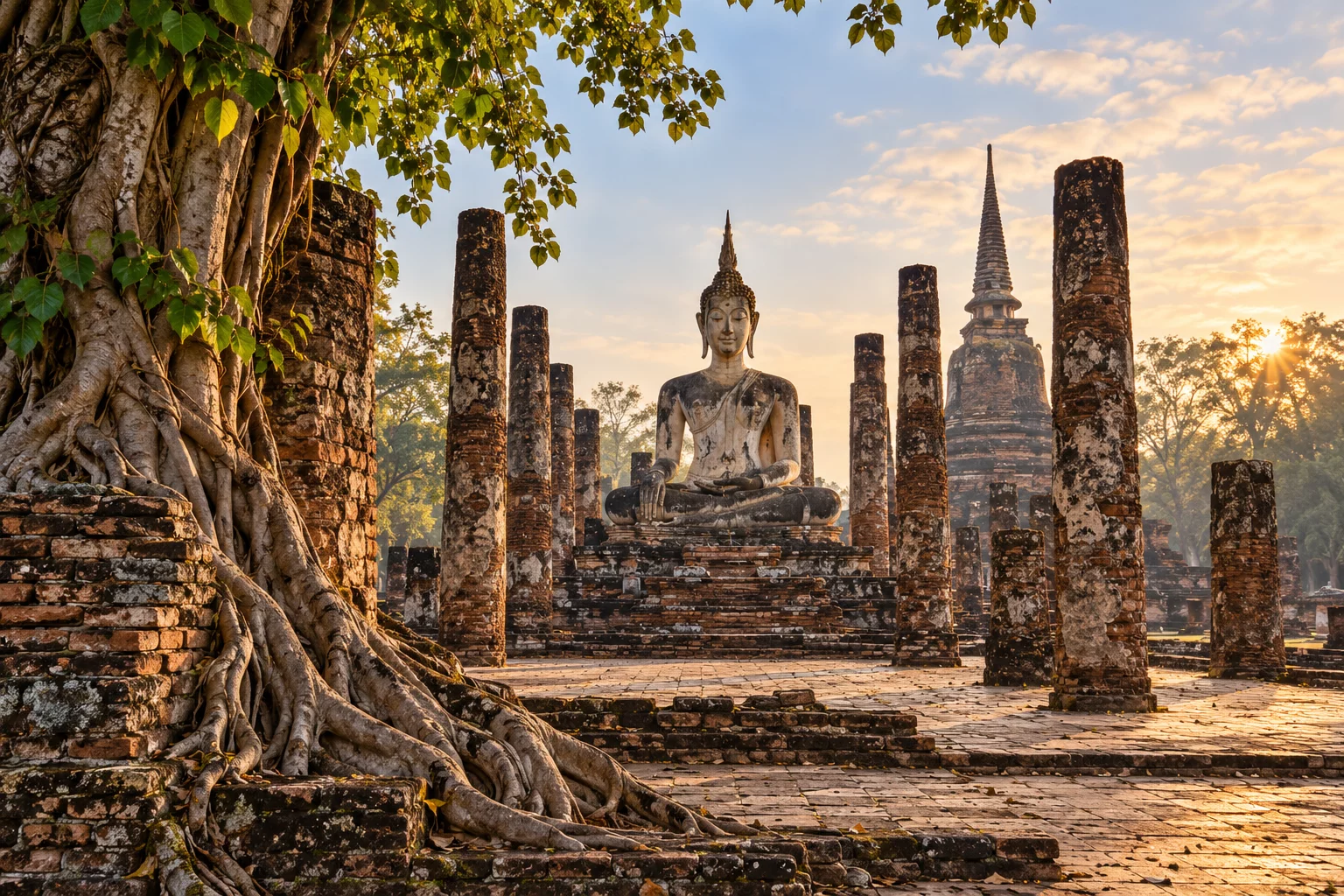
Wat Mahathat is a central reference point for understanding the historic city. Its main chedi, surrounding structures and nearby water create several ways to read the site. Step back first to see the overall layout, then look closer while staying on authorised paths. Notice differences between restored sections and ruins. Instead of hurrying from one photo spot to another, choose one architectural detail and consider how it fits into the larger complex. This makes the walk more meaningful.
Take your time at Wat Si Chum
Wat Si Chum is known for Phra Achana, a monumental Buddha image within a high-walled mondop. The architecture frames the sculpture and directs attention, creating a different experience from the park’s open spaces. Keep a calm manner, follow instructions and avoid playful posing in front of sacred images. Dress respectfully at religious sites. Read the available interpretation, then notice how light and the scale of the building shape what you see.
Choose how to get around
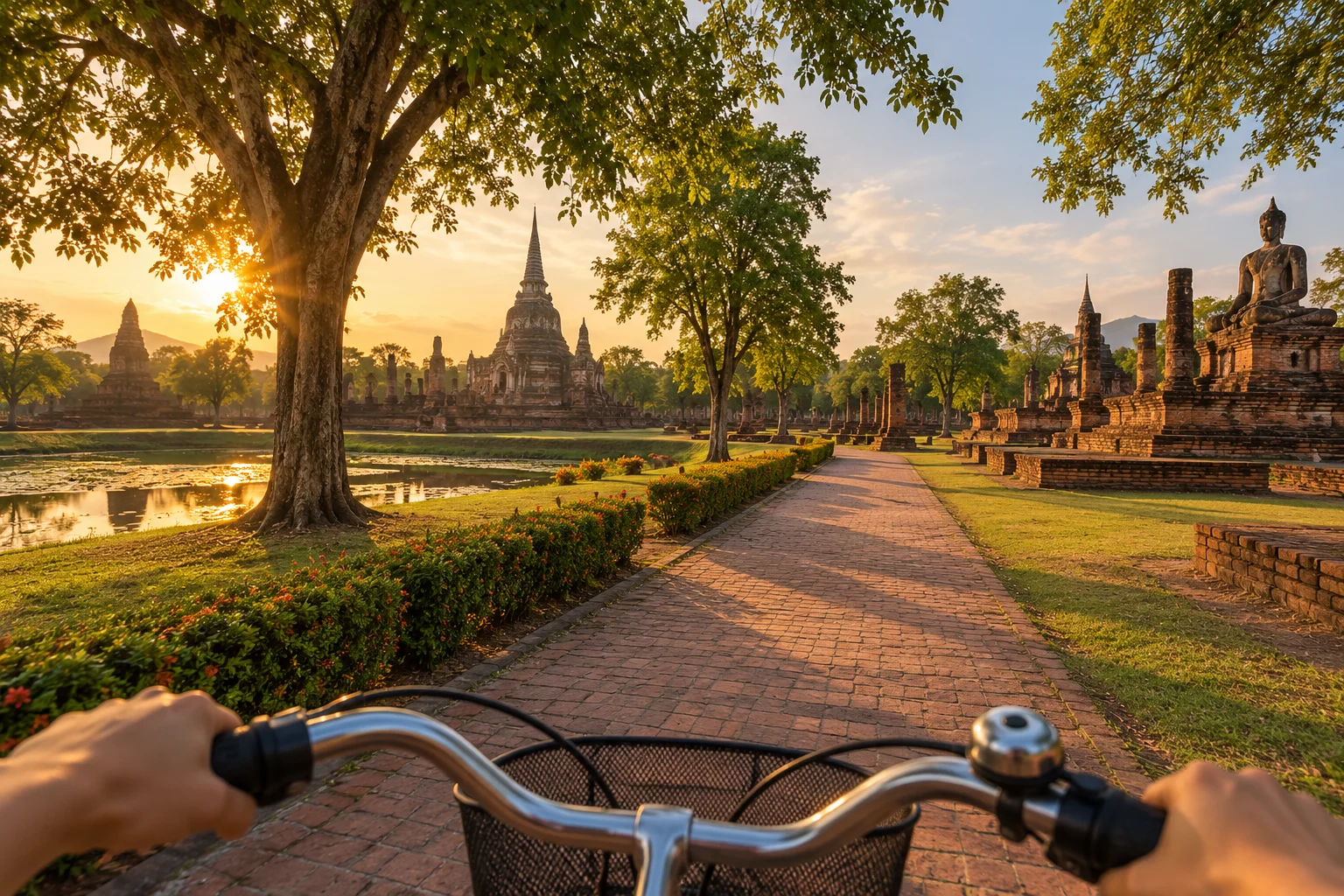
Some parts of the park suit walking; a bicycle can make travel between monument groups easier if permitted and appropriate for the conditions. Look at the map before choosing instead of deciding in the heat. If cycling, use marked routes, slow down near pedestrians and avoid fragile areas. Bring water, sun protection and comfortable shoes. Covering more distance does not mean you need more stops: it is often better to see fewer monuments and observe them carefully.
Read the water and old walls
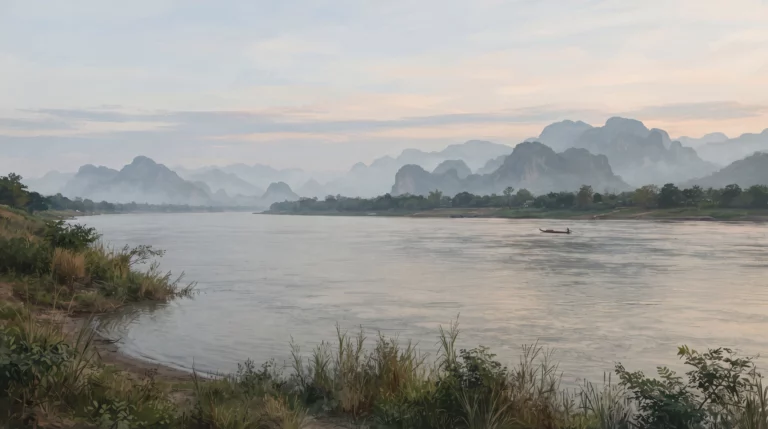
Ponds, canals and embankments are more than a backdrop. They help explain how the city managed water and organised access. Compare their alignment with the temples and notice routes connecting different spaces. From a bridge, take a moment to read the landscape before taking a photograph. Keep away from unstable banks, do not throw anything into the water and respect conservation boundaries. The park makes sense as a historic system, not a set of isolated ruins.
Protect the site and its places of worship
The remains are protected and some structures are fragile. Do not climb on chedis or touch sculptures; stay on marked paths. Stone can deteriorate even when a place seems empty. Some areas remain important for religious practice, so speak quietly and allow visitors space to reflect. Ask permission before photographing people. These small actions make the visit more respectful and help protect the heritage for future generations.
Plan a balanced day
For a first visit, choose a few complementary groups rather than trying to cover everything. Start early if conditions allow, pause in the shade, then select another area based on your time and transport. Confirm available services and hours through official sources, since they can change. Leave time to read signs and look at the landscape away from a screen. On your way back, note which monuments stayed with you and what you would like to learn next.
A memory beyond photographs
Sukhothai is more than ruins at sunset. Historic towns are connected to traditions, religious use and a continuing history of conservation. Canals and routes show that the landscape was long inhabited and organised. As you leave, separate what you observed from what interpretation panels explain and what you inferred. This helps you describe the site accurately without turning a complex history into a tourism slogan.
Read the chedis instead of collecting photographs
Sukhothai’s chedis have different outlines and details, even when they look similar at first glance. Compare their bases, height and the way sculptures or niches shape their surfaces. Look without touching: weathered materials are fragile and contact increases wear. One eye-level photograph and another showing the monument in its wider setting often say more than a long series of close crops. Interpretation panels provide names and context; use them when describing forms and avoid assigning a function without evidence.
Water as historic infrastructure
Ponds and canals are more than decoration. They show a landscape organised around water, with connections to movement, protection and everyday life. As you walk, notice how waterways relate to monuments and imagine how access might change by season. Do not describe every pond as a reservoir without specific evidence: say what you can observe and use official interpretation to explain its role. This care makes the story more accurate and helps visitors understand the site as a complex landscape.
Choose areas to match your interests
The park contains several groups of monuments, and there is rarely time to see everything. Architecture enthusiasts may compare chedis and carved details; families may prefer shaded spaces and easier paths; visitors on a short schedule can focus on a few landmarks. Use the official map to plan distances and check access. A short list of three or four stops leaves room to look closely and take breaks. The goal is to choose a thread for the day rather than follow the crowd from one monument to the next.
Photograph without turning the site into a set
The ruins attract photographers, especially in early morning and late afternoon. Find a composition that shows scale and landscape instead of approaching structures for a dramatic angle. Respect restricted areas, worshippers and other visitors. Drones, tripods or commercial photography may have rules, so check with park authorities before bringing equipment. A respectful photograph does not require climbing a base or moving objects. Leave the site as you found it.
Read interpretation panels methodically
On-site information helps distinguish monument names, construction periods and conservation work. Read a few panels rather than photographing everything to review later. If information appears in two languages, compare key terms; if a translation seems uncertain, avoid drawing a categorical conclusion. Record the exact site name before leaving because temples may have similar names or different common labels. This simple method keeps your memories reliable and helps you share useful information afterwards.
Plan around the heat
Heat can make short distances feel demanding. Start early if conditions and access allow, carry water, sun protection and a hat, and schedule regular shade breaks. Do not assume there will be a refreshment point at every stop. If cycling, slow down when tired or overheated rather than trying to cover the whole park. Families with children or older travellers should plan a shorter route. If anyone feels unwell, stop and seek help from park staff.
Dress and behave respectfully at religious sites
Some monuments remain places of worship or retain religious significance. Dress appropriately, follow posted guidance and remove shoes when requested. A sacred image is not a photography prop: avoid posing with your back to it or touching it. If worshippers are present, keep a respectful distance and let them take priority. Customs can differ by space, so observe local instructions rather than assuming one rule applies everywhere.
Connect the visit with local life
The park sits within a lived-in region where residents work, travel and maintain connections with historic places. Choose local businesses when it fits your day, ask before photographing people and keep routes clear. If you buy a drink or souvenir, carry your rubbish to a bin. Services and transport may be more limited than in a large city, so plan your return in advance. An attentive visit supports a respectful relationship between heritage and community.
Understand how ruins are conserved
Conserving an old site involves decisions about what to stabilise, restore or leave visible as a ruin. Work may use materials and methods intended to protect authenticity, and it changes as research advances. Do not confuse a repair with a complete reconstruction: a new element may secure a structure without recreating its full past form. Heritage managers document such interventions. This is another reason not to move bricks or climb walls; even a small action can disturb a fragile balance.
Keep learning after the visit
At the end of the day, choose one monument and learn more from a museum or heritage source. Compare dates, names and interpretations instead of relying only on a legend. If you publish an account, separate verified facts from personal impressions. A visit may raise questions about architecture, historic trade or water management; keep them for a future stop, perhaps Si Satchanalai or a regional museum if your itinerary allows. Curiosity can continue after leaving the park.
Traces of everyday life
Beyond temples, the historic landscape points to people who farmed, traded and travelled through the region. Archaeological information and objects in interpretation spaces add context to monumental remains. When you encounter pottery or evidence of an activity, look for context before drawing a broad conclusion. A workshop remnant or water system can illuminate practices, but cannot by itself describe an entire society. This approach keeps the history nuanced and avoids reducing the visit to a few rulers and buildings.
Read the site in changing light
Morning and afternoon create different impressions of the same structures. Low light can reveal brick relief, while a cloudy sky softens contrast and makes details easier to see. If photography matters to you, consider sun and heat, but do not let the perfect light dictate the whole schedule. Pause and look at a monument without a screen. Memory also comes from scale, sound and distance, not only from an image.
Keep a short visit notebook
A small notebook or phone note can help you remember names and observations. Write down a monument’s name while you are there, then record one concrete detail: orientation, shape, relation to water or conservation condition. Separate what a panel says from what you infer. This habit is useful if you later write an article or share photographs; it reduces mix-ups between sites with similar names. A few sentences are enough to make your memory more precise.
Choose souvenirs thoughtfully
Around the park, favour objects whose use and origin you understand. Ask whether a product is locally made and avoid archaeological fragments or items presented as antiques without documentation. A craft souvenir does not need to imitate an antiquity to recall the trip. Check your country’s customs rules before carrying natural materials or restricted objects. A considered purchase can support local activity without putting heritage at risk.
Plan the journey beyond the park
Sukhothai province includes other historic and cultural sites, but adding them requires realistic travel time. If you are combining the central park with another destination, confirm transport, opening information and return arrangements first. Do not assume that a short map distance means a quick trip. A driver or accommodation host can help check practical routes, but confirm the terms and costs before departure. Leaving a buffer makes it easier to adapt if weather or traffic changes.
Notice what has been restored
Conservation work can make some sections look different from untouched ruins. Rather than guessing, look for on-site explanations and remember that stabilising a wall may require visible intervention. The aim is to protect remains while keeping their historical character legible. Visitors can help by staying on paths, avoiding contact and not leaving objects behind. If a barrier restricts access, respect it even when the structure seems easy to reach. These boundaries protect both the site and the people exploring it.
Make the visit engaging for children
Children often respond to a simple question better than a long history lecture. Ask them to find repeated shapes, compare two chedis or trace a route from a pond to a temple on the map. Explain that ruins are fragile and give them a clear rule: look closely, do not climb or touch. Build in shade and water breaks, and let them choose one stop that interests them. This gives young visitors a role in the day while keeping the site safe.
What makes a thoughtful travel story
A strong account of Sukhothai combines a few specific observations with accurate context. Name the places you actually visited, describe how you moved between them and distinguish historical information from personal response. Avoid presenting a single monument as the whole story of the kingdom. Mention the conservation rules and the landscape features that shaped the city. A reader can then imagine the experience and plan responsibly, instead of receiving a list of interchangeable photo spots.
FAQ
How long should I spend at Sukhothai?
A full day lets you explore several areas, but the park is extensive and visitors move at different speeds. Two days allow more time to study the temples, take breaks and enjoy the landscape at a relaxed pace. Check opening times and access conditions before travelling.
Which way should I get around the park?
Cycling is practical on suitable routes, while walking works well for a more focused visit. Heat, distance and path conditions should guide your choice. Stay on permitted routes, slow down near monuments and bring water.
How can I visit the temples respectfully?
Dress appropriately, follow signs and staff instructions, and do not climb on structures. Avoid touching sculptures and keep a calm manner in prayer areas. Rules can differ from one site to another.
Is the visit suitable for families?
Yes, if the route accounts for heat, distances and breaks. Start early, bring water and choose transport suited to the children. Keep them close around ponds, roads and fragile remains.
To go further
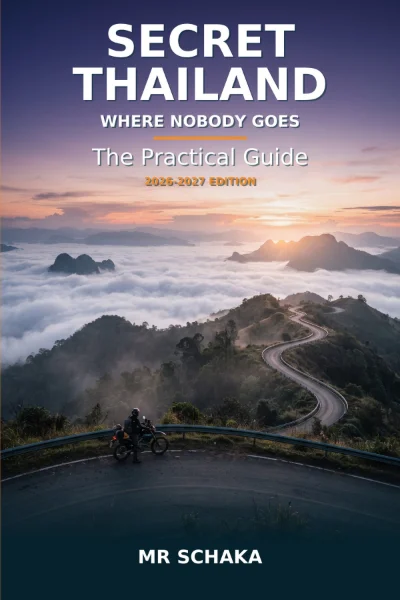
Mr Schaka’s guidebook, Secret Thailand – Where Nobody Goes – The Practical Guide, covers the essentials: transport, neighbourhoods, addresses, food, etiquette and safety, updated for 2026–2027.