Chiang Rai without a collection of completed boxes
Chiang Rai often enters a journey with a ready made list: a white temple, a blue temple, a black house, a viewpoint and several pictures to find again. These references can inspire travel, but they do not yet make a day. Between them are roads, neighbourhoods, pauses and places whose names do not contain a colour. To explore the city more precisely, select fewer stops and give each a reason. The purpose is not to reject well known sites. It is to understand what they add to your way of looking while retaining space for the Chiang Rai where people live and work today, beyond the itinerary suggested by familiar promotional images.
Separate the city from the provincial map
A tourism page about Chiang Rai naturally brings together destinations spread across the province. That helps in planning a stay, but it can mislead when the page becomes a single day’s itinerary. Look at where each address actually lies in relation to your accommodation or arrival point. Divide ideas into three groups: the urban area you have selected, a specific journey beyond that area, and a project for another day. This prevents counting only time inside attractions while ignoring connections. It also makes it possible to compare choices that require different levels of effort, transport and availability, rather than allowing every attractive name to compete as though it were equally easy to reach.
Give each selected reference a purpose
Before booking a journey, write one sentence explaining the interest of each stop. A temple might answer a question about religious history; an art site might open a discussion about contemporary creation; a street might reveal an everyday use of space. If two stops answer exactly the same expectation, keep the one that interests you most and leave the other in reserve. No specialist knowledge is required. It is enough to move from wanting to see everything towards a clear intention. The day then gains a structure you can change, instead of becoming an accumulation from which no item seems possible to remove without feeling that something essential has been lost.
Choose a first area that helps you find your bearings
The beginning of a visit is a chance to understand scale and movement. Save your arrival point, the Thai name of a useful address and your way back. Then choose an initial stop with confirmed access and a position that helps explain the area. It does not need to be the most famous site in the province. A well placed urban visit may provide a stronger starting point than a long journey made before you know how the group feels. Leave room to sit and drink, then decide the pace from this first experience rather than insisting on a programme designed far from the conditions you will actually encounter.
Wat Phra Kaeo connects history with present presence
Wat Phra Kaeo is a cultural reference in Chiang Rai described by the national tourism authority. It is associated with the history of the Emerald Buddha, which is now kept in Bangkok; it also houses another image known as Phra Yok Chiang Rai. The distinction prevents a common confusion between a history connected to a place and an object’s current location. If you choose the visit, look for the available explanations and respect the site’s religious function. You can be interested in what an institution communicates, the spaces carrying that account and the way visitors and worshippers move through them, without reducing the whole experience to a photograph of a statue.
Read a courtyard before comparing the buildings
A courtyard can reveal things that are easily missed when moving directly from one facade to another. Look at distances, passages, shaded areas and places where people stop. These are elements of organisation as well as visual composition. Take a moment to understand where your presence is appropriate before reaching for a telephone. If an area is being used for a ceremony or prayer, let that activity continue without turning it into a tourist scene. You can wait, look elsewhere or leave. An attentive visit does not have to access every space to retain its value. It can recognise uses that existed before its arrival and do not need to adapt to it.
Describe architecture before putting it into categories
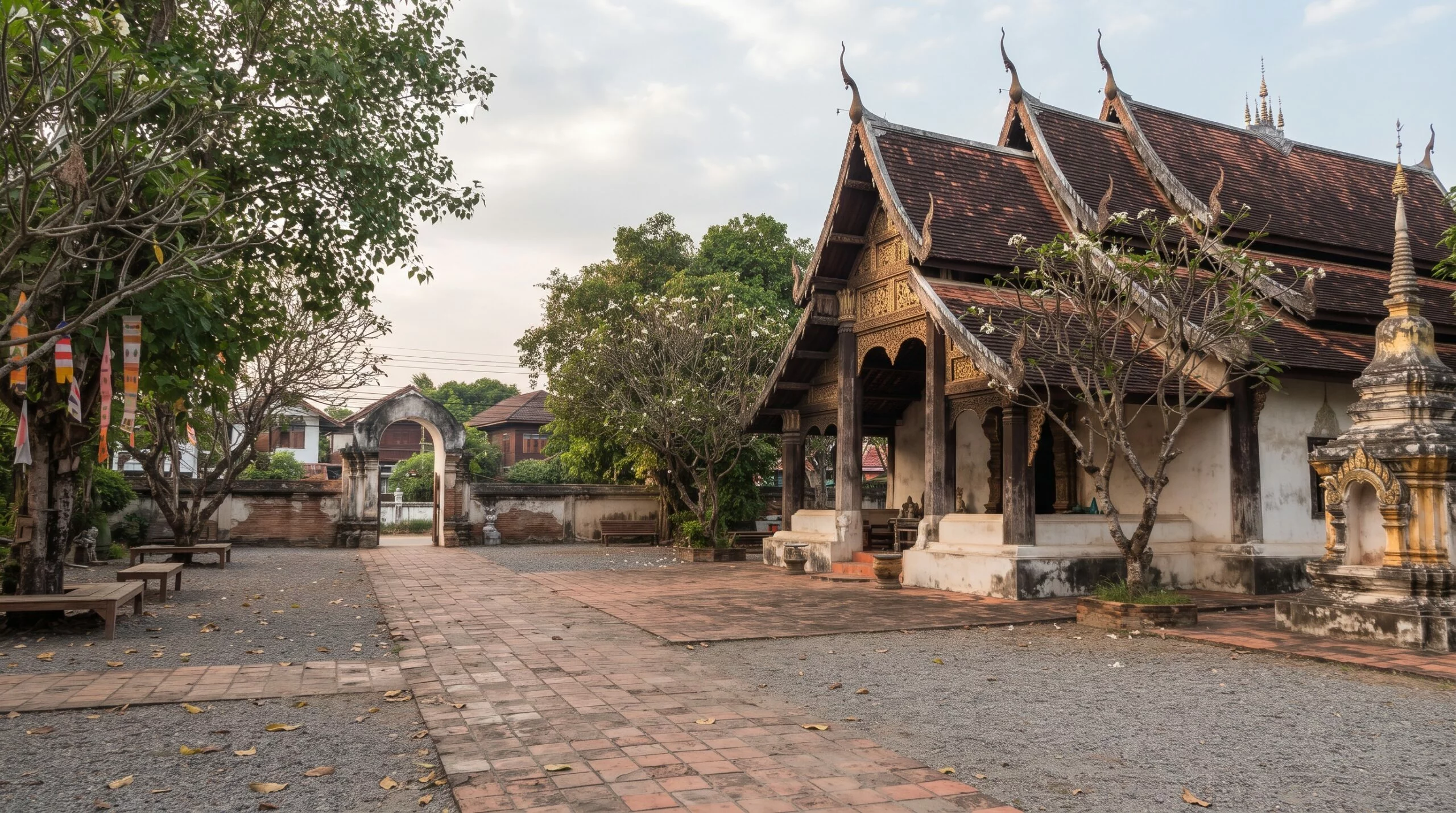
In Chiang Rai you might notice a roof’s slope, overlapping volumes, the material of a column or differences between two buildings. These observations are available without immediately assigning a period or style. If a text on site offers an explanation, connect it with the detail you actually examined. Otherwise, keep the question open. A label selected too quickly can conceal what makes a particular arrangement distinctive. Describing first does not diminish cultural enjoyment; it gives it a reliable starting point. Curiosity becomes more precise when built from a visible feature rather than a broad formula that claims to explain every temple in northern Thailand in the same way.
Prepare Wat Rong Khun as a visit in its own right
The tourism authority attributes the design of Wat Rong Khun to artist Chalermchai Kositpipat. The site lies beyond the central urban area you might choose to explore on foot; official provincial information helps establish its position. If you want to see it, plan a dedicated connection and check current arrangements. Avoid treating it as a brief improvised interval between two addresses on a city walk. Once there, look at how a creation organises movement and attention. Familiarity with a white image does not remove the need to observe details. Your interest may extend far beyond confirming a photograph already known from countless travel pages and other people’s accounts.
Look beyond colour to understand different functions
Popular names associated with white, blue and black are easy to remember, but they may suggest that every site offers the same experience in a different shade. Official introductions distinguish temples from Baan Dam Museum, associated with works by Thawan Duchanee. Before gathering them on a list, ask what each place displays, communicates or helps you understand. A colour is neither a sufficient cultural category nor an indication of the time needed. Keeping that nuance allows you to select one art site and one place of worship with better attention than an itinerary that treats them as interchangeable stops in an efficient sequence of visually contrasting backgrounds.
A city also exists between the famous stops
After a selected visit, allow some time in an ordinary area where walking is practical. Notice the relationship between shops and pavement, protection from sunlight, maintained facades and small repairs. This is not a search for a more authentic truth behind monuments. It is a way to bring together two dimensions of one city. A famous site and an everyday street do not cancel each other out. One supplies a cultural reference; the other recalls continuing uses around the visitor’s experience. Your perspective gains depth when you can move between them without declaring that only one represents the real Chiang Rai and everything else is somehow less worthy of attention.
A coffee pause can connect separate experiences
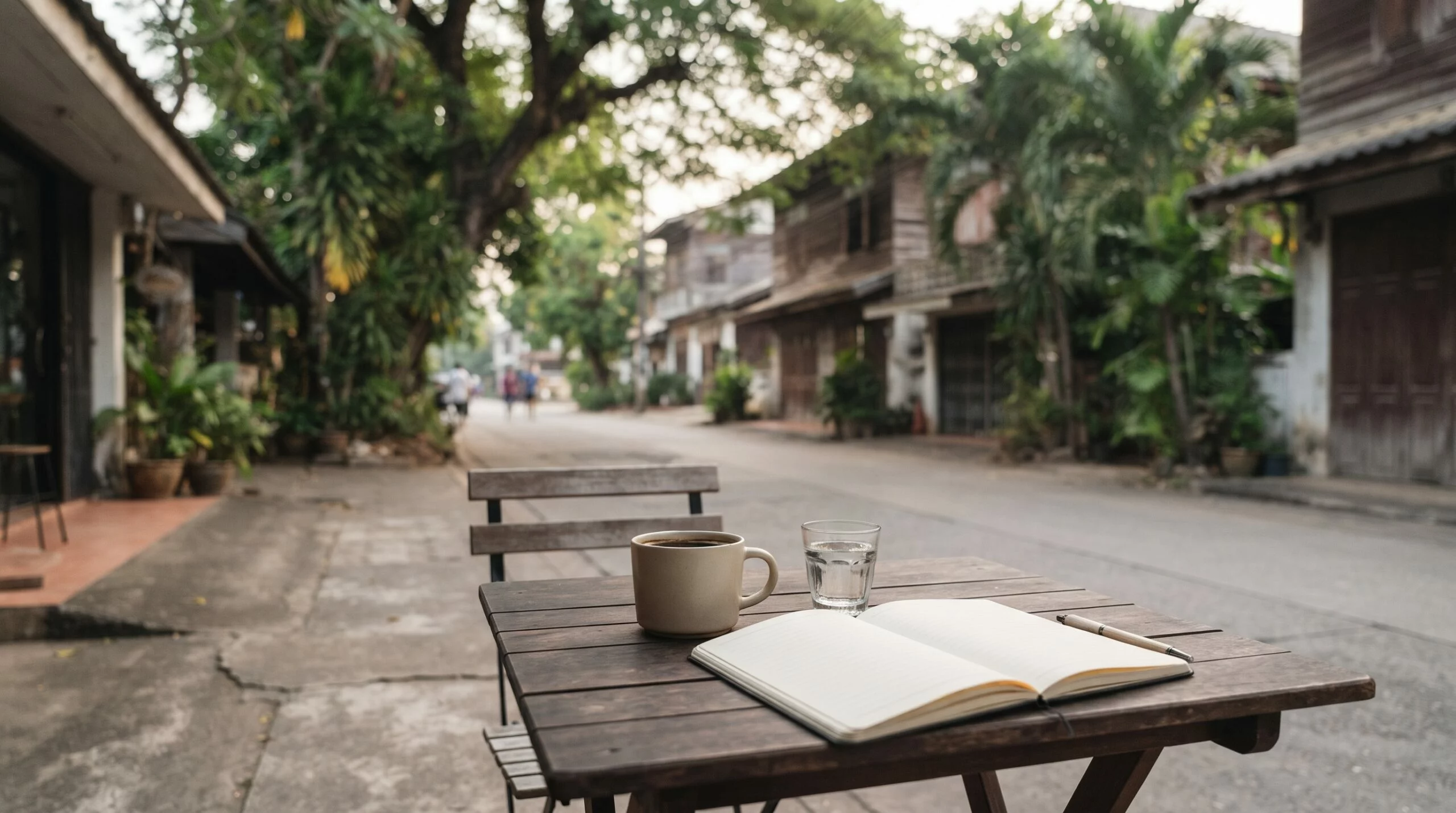
A café or small establishment can provide the moment when stops cease to be isolated. Choose somewhere open that welcomes you, order what suits you and use the interval to revisit an observation. Which detail became clear through a sign? What question remains? Why does the next stop still interest you? Such conversation may change the afternoon. You are not required to maintain a transfer simply because it was written down in the morning. A pause is not an empty space that must be filled by frantic map checking. It can be a place for decision, conversation and rest that restores clarity to whatever you choose afterwards.
Choose food around real needs
A meal depends on hunger, comfort and the group’s requirements as much as a recommended address. Take time to understand what is offered and confirm ingredients when an allergy or restriction matters. Avoid ordering as though every dish must prove you have tried everything. A considered meal eaten without hurry can accompany discovery better than an inventory of specialities. Remain attentive to how the establishment functions, including space needed for service. A comfortable table also allows everyone to decide whether to continue. Eating becomes part of the day actually lived rather than a logistical interruption endured between visits that have been assigned greater importance in an overly ambitious plan.
Photograph without allowing the picture to decide everything
A photograph may help retain a composition or detail, but it should not determine the entire order and speed of a visit. Before positioning yourself, observe queues, entrances and uses of the ground. Respect areas where photography is limited and do not insist on a portrait after a refusal. If a composition would obstruct a passage, choose another viewpoint. You can also retain an impression without an image. Experiencing a place is not limited to reproducing a celebrated view. A note about material, light or an explanation may sometimes communicate what you learned more faithfully than a picture taken simply because the angle is instantly recognisable.
Prepare journeys with the margins they need
For stops requiring a vehicle, confirm the means of transport, exact address and return arrangements before leaving. If booking a service, clarify what is included: duration, waiting, stops and finishing point. This article gives neither a fixed fare nor an assumed service frequency. Useful information depends on your date and the service actually available. Keep a margin between a journey and an important commitment. A short looking list can still produce a tiring day when it requires several changes of area. Removing an unnecessary transfer often creates more discovery time than trying to speed up the visits themselves while leaving every connection untouched.
Do not treat the mountains as an immediate backyard
Provincial landscapes may make you want to travel further. On a map, natural sites can appear close to a city whose scale is still unfamiliar. Before adding an extension, investigate its distance, access and specific conditions. Chiang Rai does not name one compact area that can easily be covered on foot. Reserving a separate day for a landscape project may be wiser than attaching it to an urban discovery at the last moment. That choice allows the destination to receive the time, equipment and preparation it needs. It also prevents the road from becoming an invisible part of the programme, noticed only when the journey consumes the attention originally intended for the place.
Make room for different rhythms within the group
One person may want to read every explanation while another prefers a few shorter observations. Define shared moments and places where people can look independently with a clear meeting arrangement. With children, suggest one detail to choose rather than a series of expected answers. With someone who has difficulty walking, check specific entrances, surfaces and opportunities to rest. No programme described here is certified accessible in its entirety. A shared day should be prepared around the people actually present, not an imaginary average visitor. Shortening one area to preserve everyone’s attention may be better than maintaining a stop that nobody can still appreciate by the time it is reached.
Understand the images accompanying this article
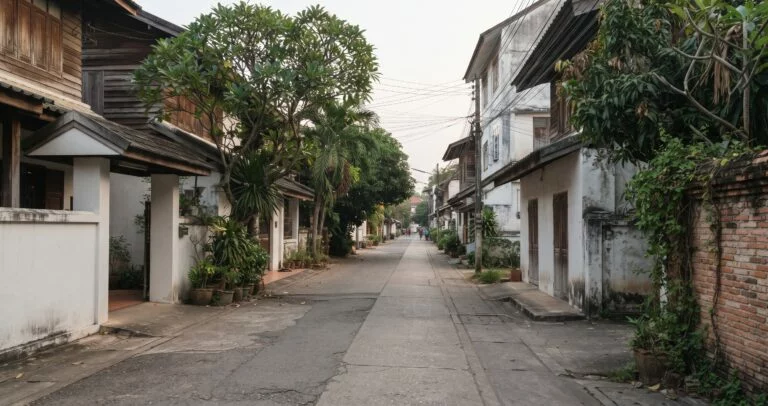
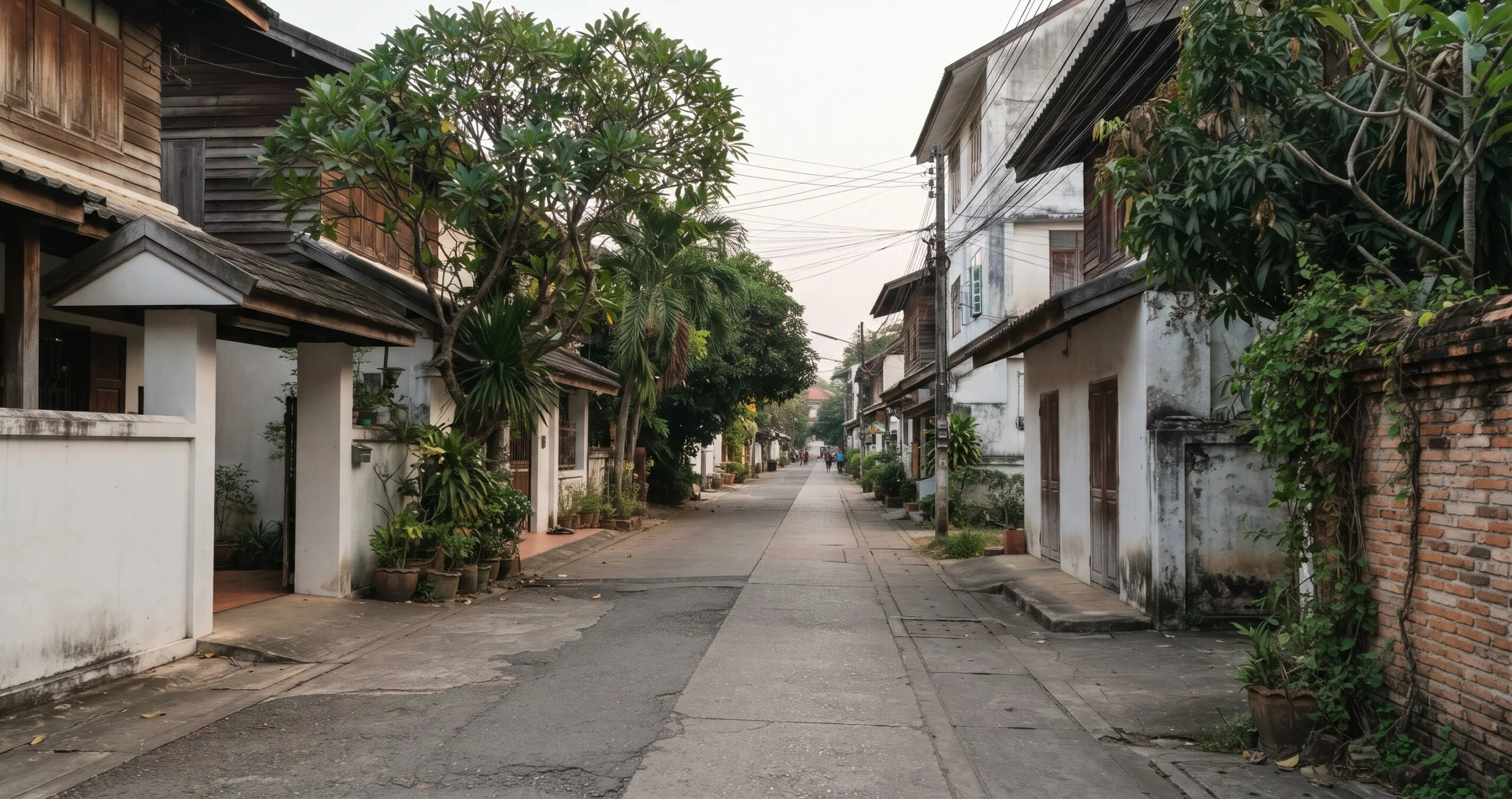
The illustrations here were generated with Gemini and supplied to accompany the text. They evoke a street, a northern Thai temple courtyard and a pause at an ordinary café. They are not photographs of identified Chiang Rai locations and do not prove access arrangements, opening times or commercial activity. Keep the difference between illustration and observation clear when preparing travel. Use images to enter an atmosphere, then current official information and local guidance to make decisions. Your own visit may later produce situated details that these evocative scenes are not intended to certify. Their realism does not turn them into evidence of a particular address or an experience already lived.
Follow one question in a notebook
Instead of recording every name, choose a question that links several moments. How does a courtyard guide movement? What does an explanation change in the way you look at an object? What did you notice in the street after the visit? Write one observation and identify the source of something learned. Keep space for what you could not verify. The notebook then becomes a tool for continuity rather than a ranking. It can be only a few lines long. Its value is that you can return to a thread later with enough precision to distinguish a fact, an interpretation and a personal preference, rather than allowing them to merge into one confident account.
End by choosing what can wait
Near the end of the day, reconsider the final stop in light of the return journey and available energy. An interesting place does not become less interesting because it waits for another occasion. If you feel you will no longer look carefully, keep the address rather than crossing the site merely to remove a line from the programme. You can return to a street you liked or simply sit down. This last decision gives the day a shape by showing what you chose to prioritise. Freedom not to add another stop matters as much as the possibility of discovering more, especially when the original plan began with particularly persuasive images.
Let Chiang Rai remain an invitation rather than a tally
What you take away does not have to summarise an entire province. A visit can leave one understood distinction, an observed detail and a question that has become more interesting. Well known places retain their power, but they now relate to the journeys, pauses and neighbourhoods you actually encountered. Before leaving, review your reference points and keep return information easy to find. Afterwards, you can describe a Chiang Rai situated within your own experience, with acknowledged choices and limits. That account will be more precise than a collection of completed boxes, while leaving the territory enough room to continue surprising you on another day.
Sources for planning your visit
- Tourism Authority of Thailand — Chiang Rai
- Tourism Authority of Thailand — Wat Phra Kaeo
- Chiang Rai Provincial Office of Tourism and Sports — Wat Rong Khun
- Chiang Rai Provincial Cultural Office — cultural attractions
To go further
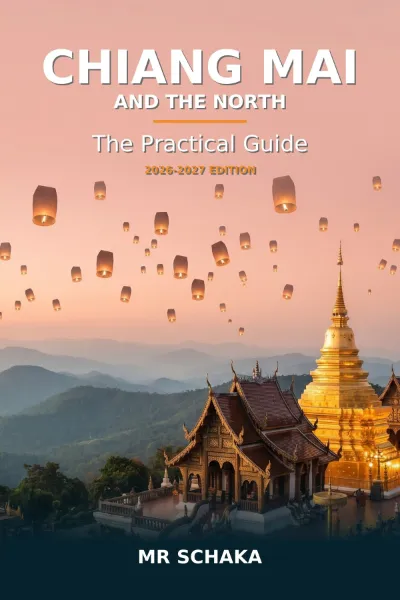
Mr Schaka’s guidebook, Chiang Mai and the North – The Practical Guide, covers the essentials: transport, neighbourhoods, addresses, food, etiquette and safety, updated for 2026–2027.