Choose a town rather than a checklist
A day in Stavelot can begin with a tempting idea: include Coo, Francorchamps, a forest walk and several museums in the same outing. These names all belong to the municipality’s tourism landscape, but combining them does not automatically make a better visit. The official tourism website distinguishes the historic centre and Stavelot Abbey, the waterfall at Coo and the circuit at Francorchamps. Each involves its own journey and visiting arrangements. For a first day on foot, this guide suggests using Stavelot town centre as your anchor, with the abbey as the main cultural choice if its programme suits you.
This is a way of planning, rather than a marked walking route or a promise that a particular entrance will be open. It helps you make ordinary decisions: where to begin, which visit to choose, when to stop and how to get home. You can shorten a walk, replace a stop or spend longer in an exhibition that catches your attention. A successful day need not produce a large collection of photographs. It can leave you with something more useful: a clear impression of one town, without spending the whole visit thinking about the attractions you have not reached.
Give the day a simple shape
Before collecting addresses, write one sentence describing what you want. For example: “I would like to explore the centre, visit one part of the abbey and have time for lunch.” Use that sentence as a filter. An activity that does not support it can wait for another trip. When travelling with others, ask everyone for one preference and one limit. One person may enjoy architecture, another may prefer an exhibition, while someone else wants to avoid a long walk. A manageable shared plan becomes easier when these needs are stated before you arrive.
Divide the available time into three broad parts: arrival and orientation, the main visit, then a walk and departure. Leave the spaces between them partly empty. A little spare time can absorb a queue, an unexpected conversation or tired feet. This matters especially with children or a journey involving connections. You do not have to predict everything that might go wrong. You simply need enough room for a small change to remain small. A timetable with no spare space can turn an otherwise pleasant outing into a continual attempt to catch up with yourself.
Understand the return journey first
Look at your journey home before concentrating on the outward trip. Record the precise place you need to return to, your chosen departure and a reasonable alternative. For public transport, consult official information for the actual date of travel. A weekday service should not be assumed to operate in the same way on a Sunday. Keep a screenshot or a note that remains available without a connection. This lets you choose your final stop with the return journey already understood, rather than discovering its constraints when everyone is ready to leave.
If you drive, check the conditions of the parking place you actually use and photograph its location. A precise note is more reliable than a vague memory of a street. When members of a group separate for a while, agree on an identifiable public meeting point. “Near the abbey” leaves too much room for interpretation; an entrance shown on your map is clearer. Set a time as well, and agree what each person will do if a phone is unavailable. These arrangements only take a moment and can make independent exploration much more comfortable.
Begin by reading the town
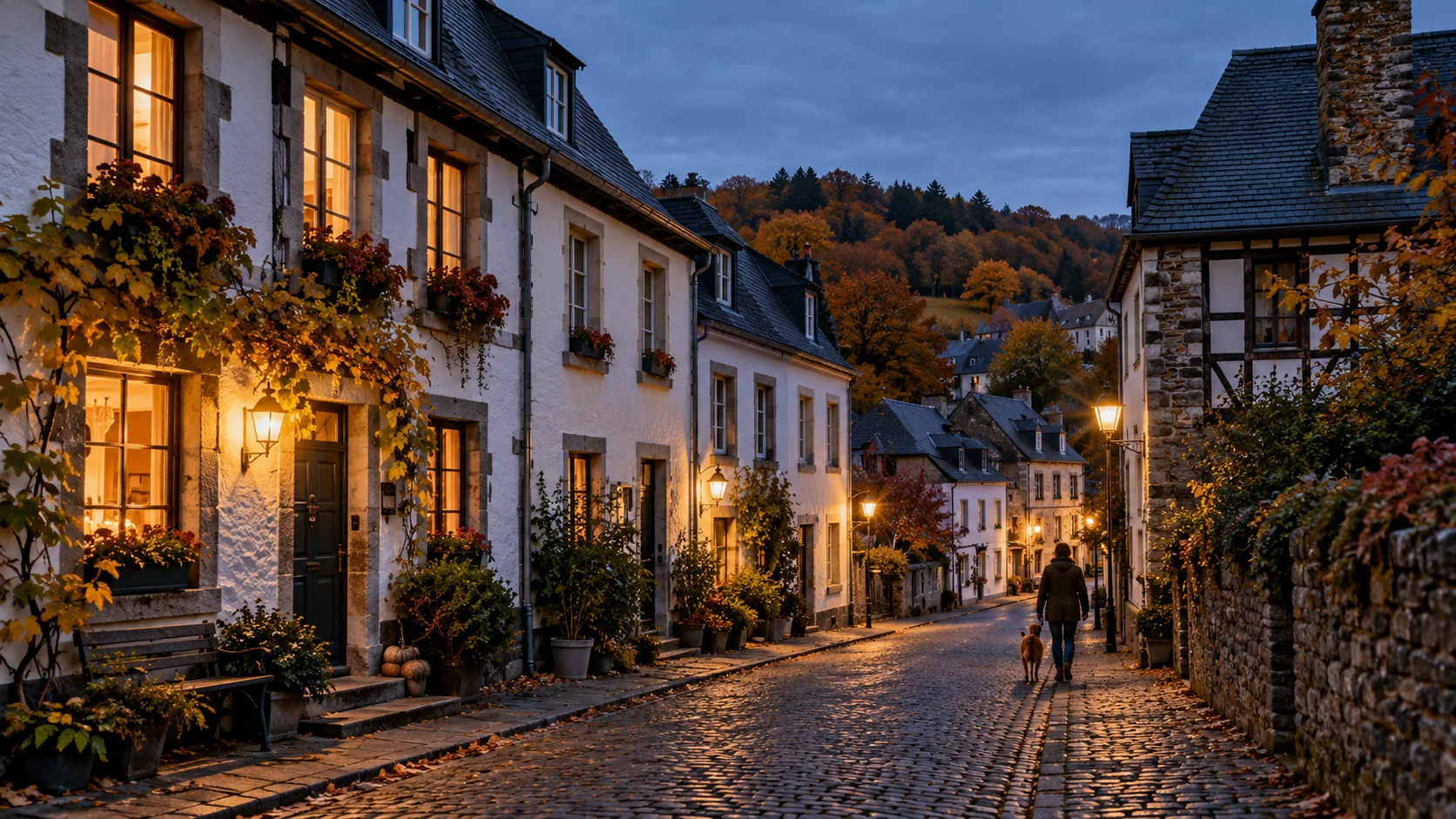
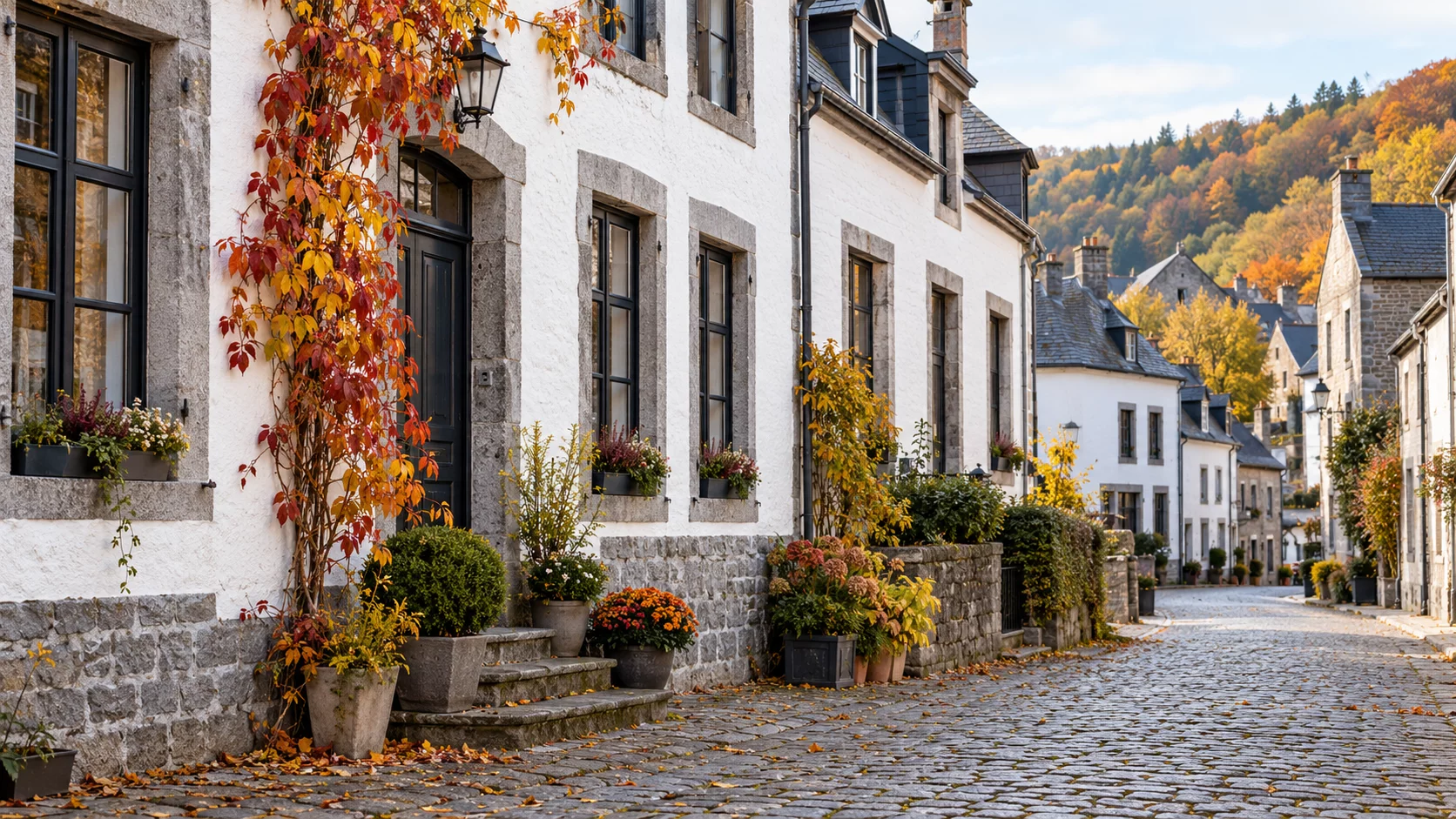
Use the first part of the visit to orient yourself. Notice how streets connect, where walking feels comfortable and which way leads back towards your arrival point. You do not need to learn the history of every facade immediately. Start by separating observation from assumption: an inscribed date, a building material, a proportion or a visible present-day use. This gives the walk substance without inviting confident guesses. An old house does not, by itself, tell you what its previous inhabitants did for a living or what happened behind its windows.
Choose one detail to follow for a few streets. You might look at the relationship between doors and windows, the place of small shops or the way views change at corners. In a family, each person can choose a different detail and share one observation later. There is no need for a remarkable discovery. A small task makes walking active without turning it into a competition. Keep noticing traffic, entrances and people using the same space. A residential street remains part of everyday life even when its buildings would make an attractive photograph.
Choose an abbey visit before buying
The abbey’s official website presents several cultural spaces and offers, including the Spa-Francorchamps Circuit Museum and the historical museum of the Principality of Stavelot-Malmedy. Read the descriptions before selecting a ticket. A museum name can create different expectations for different visitors. Think about what your group actually wants to see: local history, objects, an exhibition narrative or another programme available on your visiting date. One carefully chosen visit may offer a more satisfying encounter than several spaces hurried through because they were included in an ambitious plan.
There is also a dated practical point to check. When the official abbey website was consulted on 29 October 2026, it announced that the historical museum would close for works from 2 November to 19 December 2026. That notice concerns the historical museum; it does not establish that the whole abbey complex closes. Read the full notice and any update before a later visit. This article is prepared for 1 November but may be read afterwards. Temporary information should therefore stay attached to its dates and to the exact part of the venue it describes.
Visit without trying to remember everything
Inside, try a light rule: choose three things that deserve your full attention. One object, one explanation and one question are enough. Read information that helps you understand what is in front of you, then look again. When taking notes, record where an idea came from. This prevents a museum explanation and your own interpretation from blending together later. Follow the photography instructions and other notices in each space rather than assuming a single rule applies throughout. Taking fewer photographs can also leave you more time to notice what first attracted your interest.
With children, an open question can work well: “What makes you want to ask for an explanation?” An adult does not need to know every answer in advance. You can investigate together, read a label or ask available staff. If attention fades, shorten the visit. One room approached with curiosity can leave better memories than a complete circuit finished in frustration. Adults benefit from the same freedom. Where the venue’s arrangements allow it, agree on a meeting point and let people move at different speeds instead of requiring everyone to read every panel together.
Make room for a proper break
A break need not be a gap between more important activities. It can be a part of the day worth enjoying in its own right. Before sitting down, check the menu, the likely total cost and any conditions that matter to your group. If someone has a particular dietary need, ask the establishment directly. A general description of a destination cannot guarantee that a specific business can meet that need. Keep another possibility in mind and avoid making the whole outing depend on one table unless you have confirmed the arrangements you need.
Use the pause to reconsider the rest of the day in the light of your actual energy. The main visit may have lasted longer than expected; the weather may have changed. Choose between a short walk, another stop or an earlier return. This is an ordinary adjustment, not a failure to complete the plan. The original programme remains a tool. A simple conversation over a drink or lunch can reveal that everyone wants the same change but has been reluctant to suggest it. Make that choice while there is still time to enjoy it.
Approach a riverside walk thoughtfully
If you include a walk towards the Amblève, prepare it using a reliable map and check which accesses are actually open. Water appearing close by on a map does not prove that a continuous public path follows every bank. Choose a short section with an understood return and crossings suitable for your group. Do not pass fences or closure barriers to reach a viewpoint. After poor weather, local notices and what you can see on the ground should guide your decision more strongly than an appealing photograph found while planning the trip.
Use the walk to notice the relationship between the town and its surroundings: opening views, changes in sound, or boundaries between buildings and vegetation. A precise description is interesting without an invented historical anecdote. With a child, keep an appropriate distance from the banks and choose a stopping place that does not obstruct the path. For anyone needing a regular walking surface, check paving and obstacles before extending the route. A short, comfortable section is a better choice than committing the group to a longer walk whose conditions nobody has examined.
Adapt the day to the people taking it
Accessibility involves more than a short distance. A slope, uneven surface, steps or a lack of places to sit can change the experience entirely. If these details matter, contact the venues concerned and explain the practical need. Ask whether the entrance you will use offers step-free access, for instance, or whether part of a route can be omitted. An answer about a particular requirement is more useful than a broad phrase such as “easy for everyone”. Remember to consider the links between stops, rather than checking only the entrance arrangements at each building.
Weather changes the shape of a Stavelot day as well. In rain, reduce outdoor walking and allow more time for an indoor activity confirmed open. In cold conditions, make outdoor sections shorter. In fine weather, avoid removing every break just to add distance. The outing should remain pleasant for the person with the least energy in the group. This does not diminish everyone else’s experience. It helps create a shared day that each person can remember with pleasure, without feeling obliged to hide discomfort or apologise for wanting a rest.
Keep a record without collecting proof
Before leaving, note three things: what you saw, what you understood and what you want to investigate further. Keeping these categories separate makes the memory more accurate. You may have observed a building without learning its history; that can remain a question for a future visit. Give a saved photograph a useful caption and date. Avoid turning a person seen in the street into a character whose thoughts or motives you invent. Describing the limits of your own viewpoint is enough to give a travel notebook a distinctive and honest voice.
One final note can concern organisation: which decision made the day easier? A prepared return journey, a longer break or a deliberately limited museum visit can all be useful knowledge for your next outing in the province of Liège. Such observations often help more than a list of addresses copied without context. You could return for another side of Stavelot or plan a separate day at Coo or Francorchamps after checking their own arrangements. A town does not need to be exhausted in one visit for the memory of that visit to feel complete.
Three possible shapes for the day
For a first introduction, choose the centre and one cultural visit, leaving the remaining time for a break and departure. For an observation-focused outing, reduce the indoor part and select a short, checked walk with a few pauses to look at changing views. For a family day, alternate a period of attention with a moment when everyone can simply rest. These are planning structures, not official circuits. Adapt them to your journeys, the weather and what is available. Choose the version that suits your group today rather than trying to combine all three into one increasingly crowded programme.
Questions to settle before departure
Must everything be booked? Check the requirements of your chosen activities rather than assuming one arrangement covers the destination. Can a long hike be added? Yes, if it becomes a prepared activity with its own route, time allowance and access checks, rather than an improvised extra. Is half a day enough? It can accommodate a limited aim if journeys are realistic and other possibilities are set aside. The most useful programme is one whose choices you understand and can adjust calmly once you are there.
Preparation sources: Stavelot Tourism Office, https://tourismestavelot.be/ ; Stavelot Abbey, https://abbayedestavelot.be/. Consulted on 29 October 2026. Check opening arrangements, tickets, exhibitions and access again for your actual visiting date.
#Stavelot #LiegeProvince #Walking #MrSchaka
Share a suggestion someone else can adapt
When recommending the day to someone else, include the reasons behind your choices. A limited visit may have suited your group, while another traveller would enjoy longer in an exhibition. Explain what depended on weather, energy or transport. Your suggestion then becomes adaptable: a reader can use its structure without copying every decision. Useful advice gives the next visitor enough understanding to make choices that fit their own circumstances.

The book
The Empty Wall is the second book of Oscar’s Notebook, a series of crime novels set in Liège.