Lumphini: an open notebook in the middle of Bangkok
You can visit Lumphini Park without collecting attractions. You can also arrive with a simpler question: what becomes noticeable when you stop looking for the next photograph? This guide proposes an observation walk with a notebook, making room for sounds, movement, textures and the small decisions that shape a journey. It promises neither complete silence nor a particular encounter. A public park is a living, shared place, used in different ways. That coexistence offers useful material for anyone who wants to describe Bangkok through something more personal than a checklist of monuments or a sequence of picture captions.
Choose a modest intention
Before leaving, choose one intention. You might listen for three sounds, describe a tree without using the word beautiful, or notice how paths connect different spaces. A short intention lets you start without the pressure to produce a remarkable account. It also leaves room to change your mind. If the park is busy, your walk could focus on the distances people leave between one another. If light attracts your eye, follow the shapes of shadows. Your subject then emerges from what is actually in front of you, rather than from a story you decided to illustrate before arriving.
Understand the return before you arrive
The official Greener Bangkok page identifies MRT Silom and Lumphini, and BTS Sala Daeng, among the public transport approaches. That does not remove the need to check the route between your chosen station exit and park entrance. A station and a park may look close on a map while an avenue requires a particular crossing. Identify an entrance, a meeting point and your return route before putting the phone away. Check conditions on the day. For opening arrangements, facilities and rules, the manager's current signs and information are your practical reference. This article is not a guarantee of a particular gate being available.
Carry equipment that leaves your hands free
A small notebook, a pencil and water are enough for this activity. A phone can replace the notebook, although it brings other demands on your attention. Prepare an empty note, silence unnecessary notifications and keep the map needed for your return. Do not turn the activity into a test of digital abstinence: use the phone when you need it. The purpose is to protect your attention, not to obey an artificial rule. Choose a bag that closes and stays conveniently beside you when sitting down. The fewer objects you need to watch, the more attention you can give to the place.
First stop: describe before explaining
Near the entrance, write down five observable things. A path divides. Someone adjusts a shoe. A sound approaches and fades. A surface catches the light. A branch moves above a bench. Avoid immediately adding a psychological explanation. You do not know whether the person is hurried, happy or worried. This small discipline makes notes more precise and prevents strangers becoming invented characters. Afterwards, you can include your own response, clearly presented as a response. Saying that a junction feels lively to you is different from claiming everyone comes there to seek excitement. A notebook can hold uncertainty without losing its interest.
Listen at three distances
Sit somewhere permitted, without obstructing movement. Begin with nearby sounds: your bag, footsteps beside the bench, a leaf moving. Then shift attention to the middle distance, and finally to the city's background sound. You do not have to identify every noise. Record its length, rhythm and apparent direction. A short sound may seem metallic without revealing what produced it. Writing “metallic click, somewhere behind me” preserves that uncertainty. For a travel notebook, honest description is more useful than a confident but imaginary identification. Leave enough time between notes to hear a change, rather than continuously writing about what you have already heard.
Read changes in light
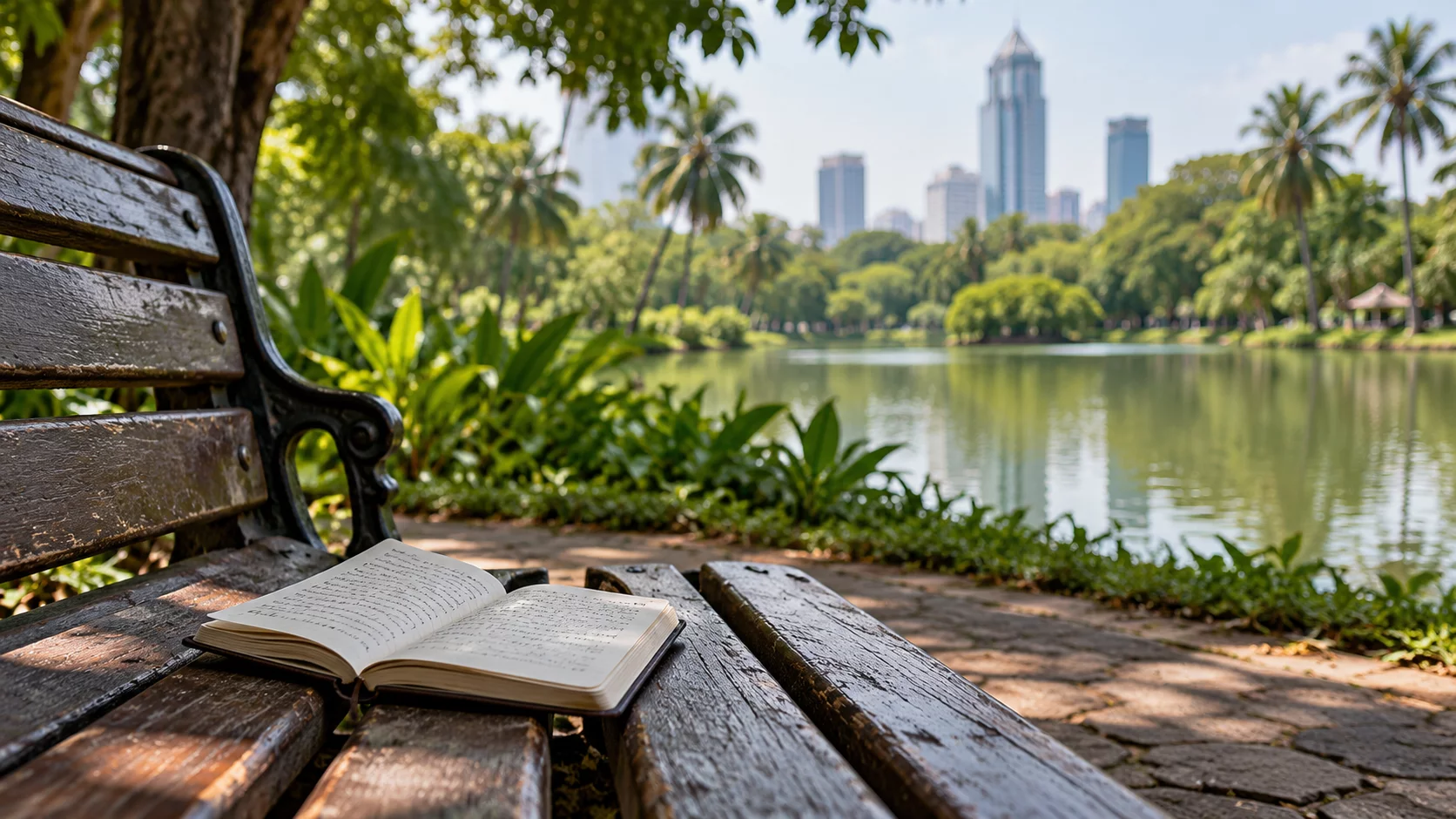
Choose a small area instead of trying to describe the entire view. Notice how a shadow crosses the ground, how a reflection breaks on water, or how neighbouring leaves receive different light. Describe shape and contrast without forcing a metaphor. You could draw three small rectangles and mark only the light and dark masses. The sketch does not need to resemble finished artwork. It helps retain a relationship between elements. If the light changes before you finish, leave the drawing unfinished and note that change in the margin. An incomplete drawing can be an accurate record of a changing scene.
Look at trees without taking anything
Approach only from areas where visitors may circulate. Look at bark, the way a trunk branches, and the overall shape of the canopy. Do not scrape a surface to obtain a texture, and do not automatically collect something because it appeals to you. A drawing or description is enough. If you do not know the species, write “pale-trunked tree beside the bench” and add your location reference. Lacking a botanical label does not prevent observation. It may encourage you to look longer instead of treating a name as the completion of the experience and immediately searching for the next item.
Animals are not accessories
If an animal appears, observe from a distance, without feeding it or trying to change its behaviour for a picture. Keep children close and leave the animal an open route. Do not approach an unstable edge or enter planting to improve your composition. You can describe a brief encounter, or the absence of one, without making it dramatic. A notebook does not require a spectacular episode. Movement in water, a bird too distant to identify, or a wait that produces nothing can become worthwhile notes when you distinguish what happened from what remains unknown. Never manufacture an encounter to improve the story.
Share the path with other uses
Other people in the park are not participating in your travel project. They may be walking, talking or exercising. Move to a clear side before stopping to write. Do not put your bag across a route or treat a group activity as a performance arranged for visitors. Ask before photographing a recognisable person, and accept refusal without bargaining. A distant figure does not justify inventing a caption about their life either. Your writing can describe collective movement without assigning participants a biography or motive you cannot know. Good observation includes noticing your own position and the inconvenience your stopping might create.
A pause that belongs to everyone
Travelling together does not mean observing in the same way. Suggest a short interval in which each person chooses a detail, then meet at an agreed landmark. One person might sketch, another count recurring sounds, and another simply look. Nobody needs to read their note aloud. With children, a concrete invitation is more helpful than a general request to pay attention: find two leaf shapes, or notice a sound becoming louder and quieter. Adapt the distance and duration to the person who needs the most frequent pause. An enjoyable shared walk is not measured by the most energetic participant's preferred pace.
Separate quiet from comfort
A quiet location may not be comfortable for you. It might lack shade, be far from your exit, or involve a surface you find difficult. A bench beside a busier path may suit a short pause better. Assess what you need instead of searching for a supposedly perfect place. If someone in your party has accessibility requirements, check the actual route and useful facilities with the manager. A general photograph or an impression of flat ground cannot establish accessibility from start to finish. Also consider how easily you can return if someone decides to stop earlier than expected. Comfort is a practical condition, not an aesthetic ideal.
When conditions change
This walk is not a reason to remain outside when conditions become unfavourable. Check weather information before leaving, assess conditions on arrival and follow staff instructions. Have an independent indoor alternative instead of assuming a particular shelter will be available. If you leave early, the notebook still has value: record what prompted the change. Rain does not automatically make the day a narrative failure. It changes the point of view. Nevertheless, a good description is not worth an unnecessarily exposed journey or an uncomfortable wait. Put practical decisions first, and write about them afterwards, once you are somewhere appropriate to pause.
A walk with three stops
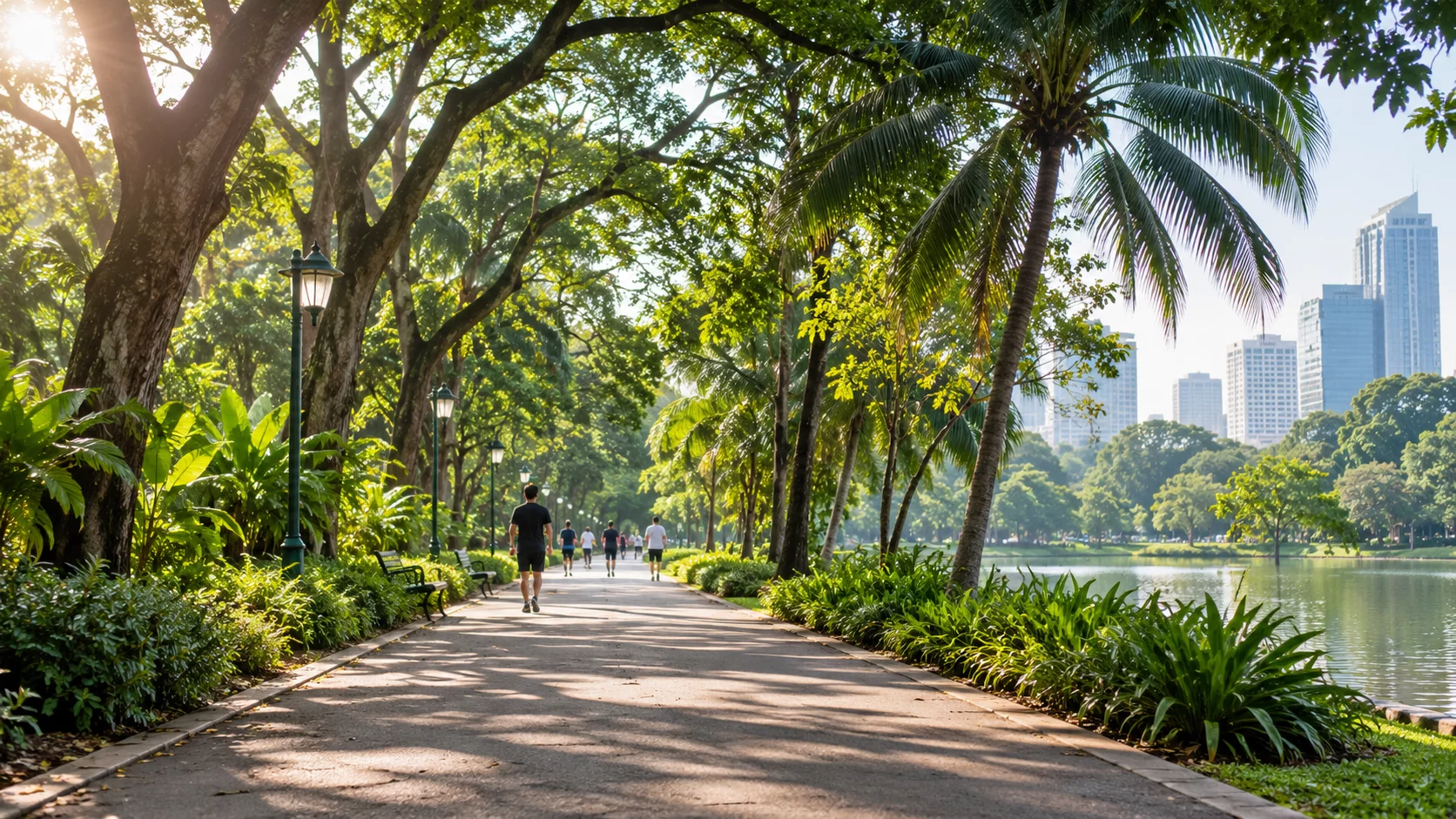
For a simple version, choose three stops reasonably close together: an entrance to observe movement, a shaded place to listen, and an open viewpoint to notice contrasts. Use the plan and your own assessment to decide whether these stops make a suitable route. This is an activity framework, not an official itinerary or a loop to complete at any cost. You can retrace your steps, remove a stop or stay in one place longer. The important reference is the exit you will use to return, rather than the number of pages filled. Leave time to pack away your materials before joining a busy path again.
Turn separate words into a scene
After two or three stops, choose one note and develop it into a few sentences. Start with a precise location, add movement, then your response. As an exercise, describe a reflection disappearing when water moves and explain why the observer waits for it to return. This is a writing prompt, not a claim that the scene actually happened. In your own notebook, keep details you can stand behind. If you no longer remember the order of events, avoid constructing a flawless chronology. “I cannot remember which happened first” is a valid sentence. It may preserve the experience more accurately than an elegant reconstruction.
Choose two pictures that contribute something
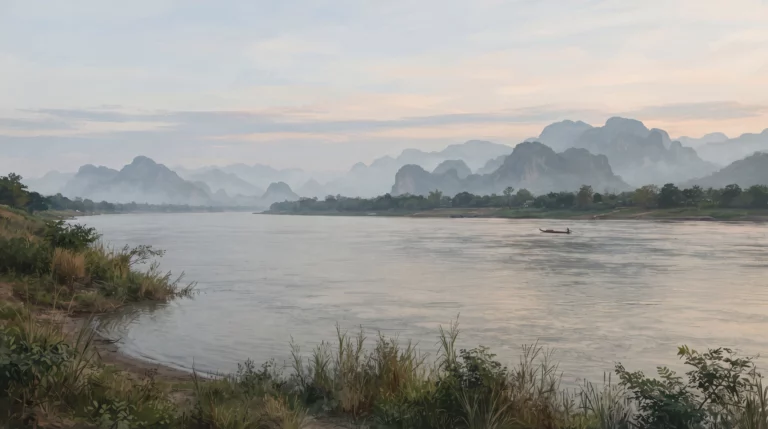
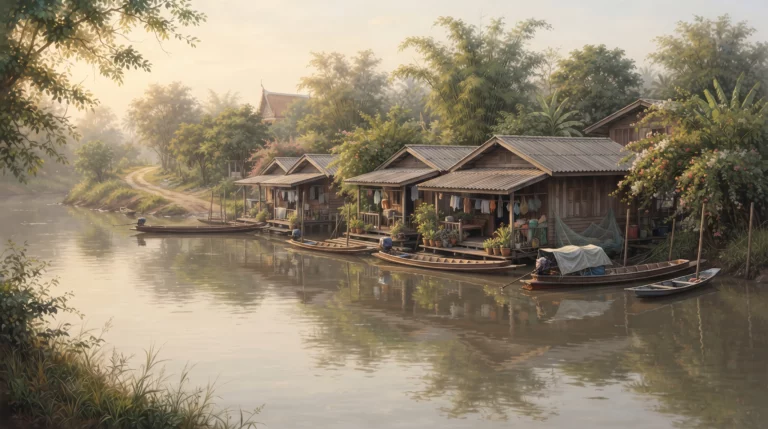
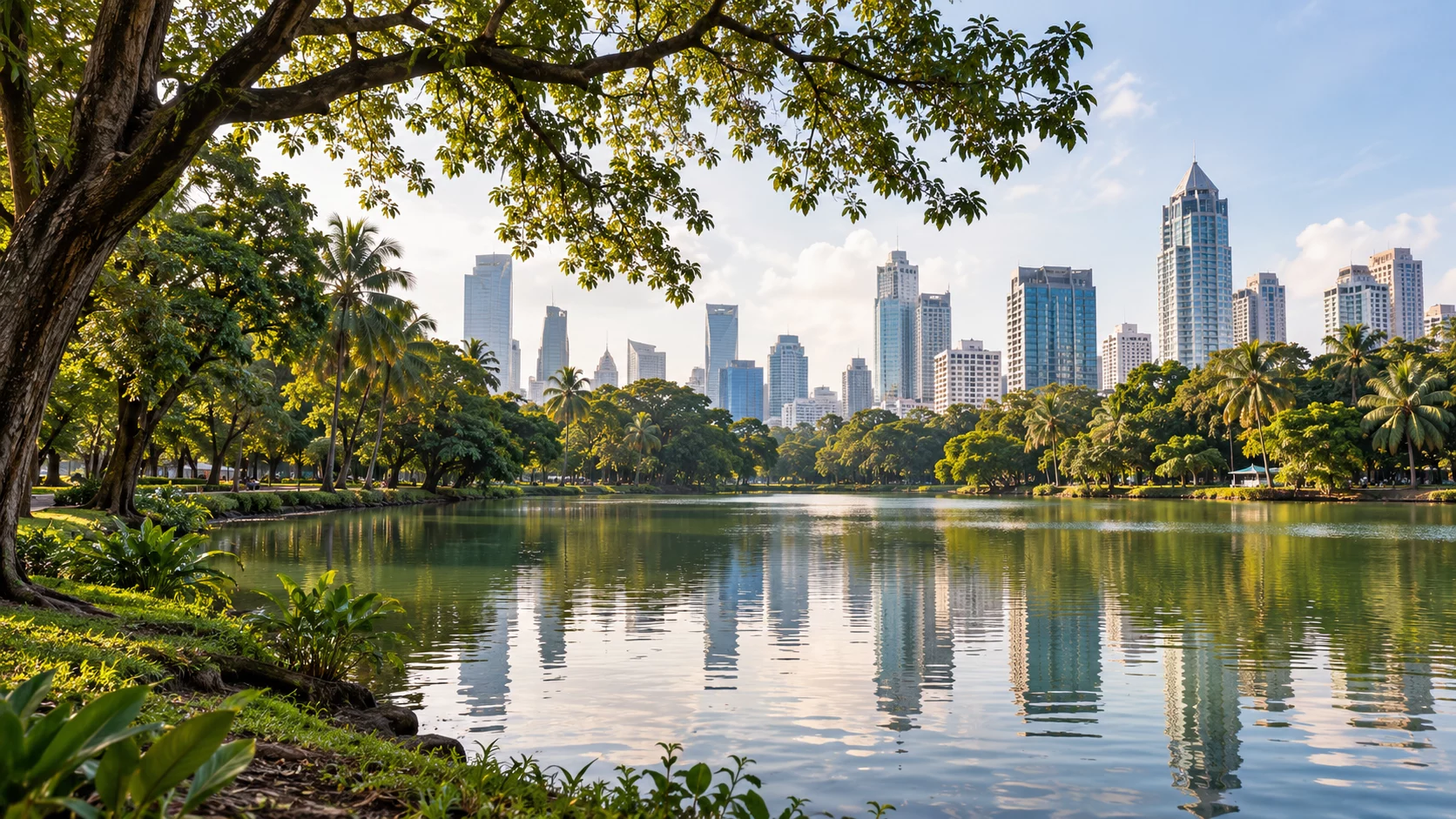
A photograph might retain the organisation of a path or the relationship between a tree and distant buildings. Another might show a texture or the notebook itself. Two different images can communicate more than several nearly identical frames. Before taking the photograph, inspect its edges as well as the centre: an identifiable person, a child or a personal object might appear unintentionally. This article uses images generated with artificial intelligence. They illustrate the proposed activity; they are not documentary evidence of the park's appearance on a particular date. When sharing your own work, use captions that make the nature and limits of each image clear.
Reread without improving strangers' stories
After returning, underline what you observed and circle what you assumed. Both can remain, provided they are not confused in a published account. Correct place names and directions when you have a reliable reference. Remove a detail if you cannot confirm it. A memory does not become less valuable because it contains a gap. Rereading can reveal your personal perspective more clearly: what you noticed, what you missed, and how your attention changed during the walk. You might discover that the most useful sentence concerns an ordinary moment rather than the view you initially expected to describe. Give that sentence space instead of forcing a predetermined conclusion.
A memory that fits on one page
Finally, try composing a page with a title, three details and a sentence about your pace. The title can be concrete: “Three sounds beside a path” or “The bench where I stopped looking for a photograph.” You do not need to summarise Bangkok. A city cannot be reduced to one walk, and your notebook is not required to attempt it. A successful page can convey a particular moment with its limits intact. Keep a question for a future visit if you wish. The memory then invites another look without turning the next journey into a test of whether an expectation has been fulfilled.
Practical questions before closing the notebook
Must you be able to draw? No: lines, arrows and words are enough to retain an observation. Must you stay a long time? Choose a duration compatible with your energy and other commitments, leaving a margin for the return. Can you do this without a phone? Yes, when you have kept the necessary return information elsewhere. Can the whole activity happen from one bench? Yes: a fixed position already offers distances, sounds and changes. The objective is to build a precise memory from your actual presence, rather than to perform attention successfully. You can also leave a blank page, return to the activity later, or decide that simply being there was sufficient.
Practical source: Greener Bangkok, official Lumphini Park page, checked 29 October 2026.
One final observation before closing the notebook
Before leaving the park, choose one sentence in your notebook and check its elements. Have you written what you saw, or an interpretation that should remain tentative? Replace a claim about a passer-by’s mood with an observable detail: a pause, a direction or a gesture. This revision does not remove sensitivity from the writing. It gives the description firmer ground. Add a sentence about your own position as well: you were sitting, had changed paths or were looking from the shade. A reader can then understand the limits of the view. Finally, keep one question open instead of seeking a definitive conclusion about Bangkok. A walk is a situated encounter, not a complete portrait of a city or its residents. The useful record preserves both what became clear and what you still do not know.
To go further
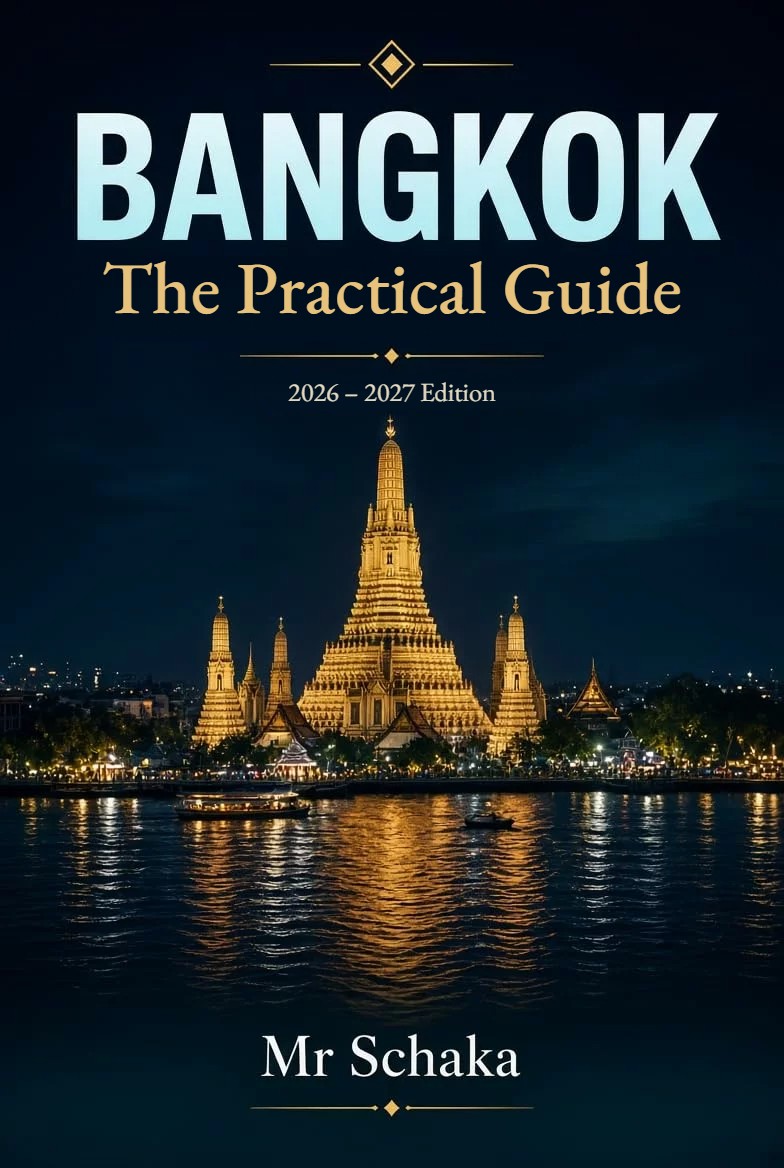
Mr Schaka’s guidebook, Bangkok – The Practical Guide, covers the essentials: transport, neighbourhoods, addresses, food, etiquette and safety, updated for 2026–2027.