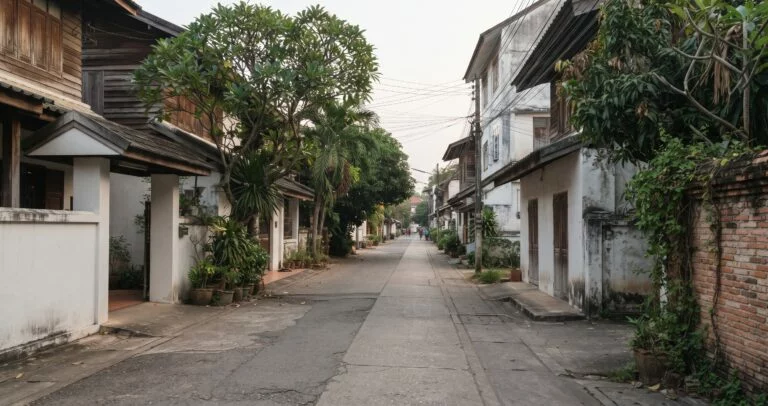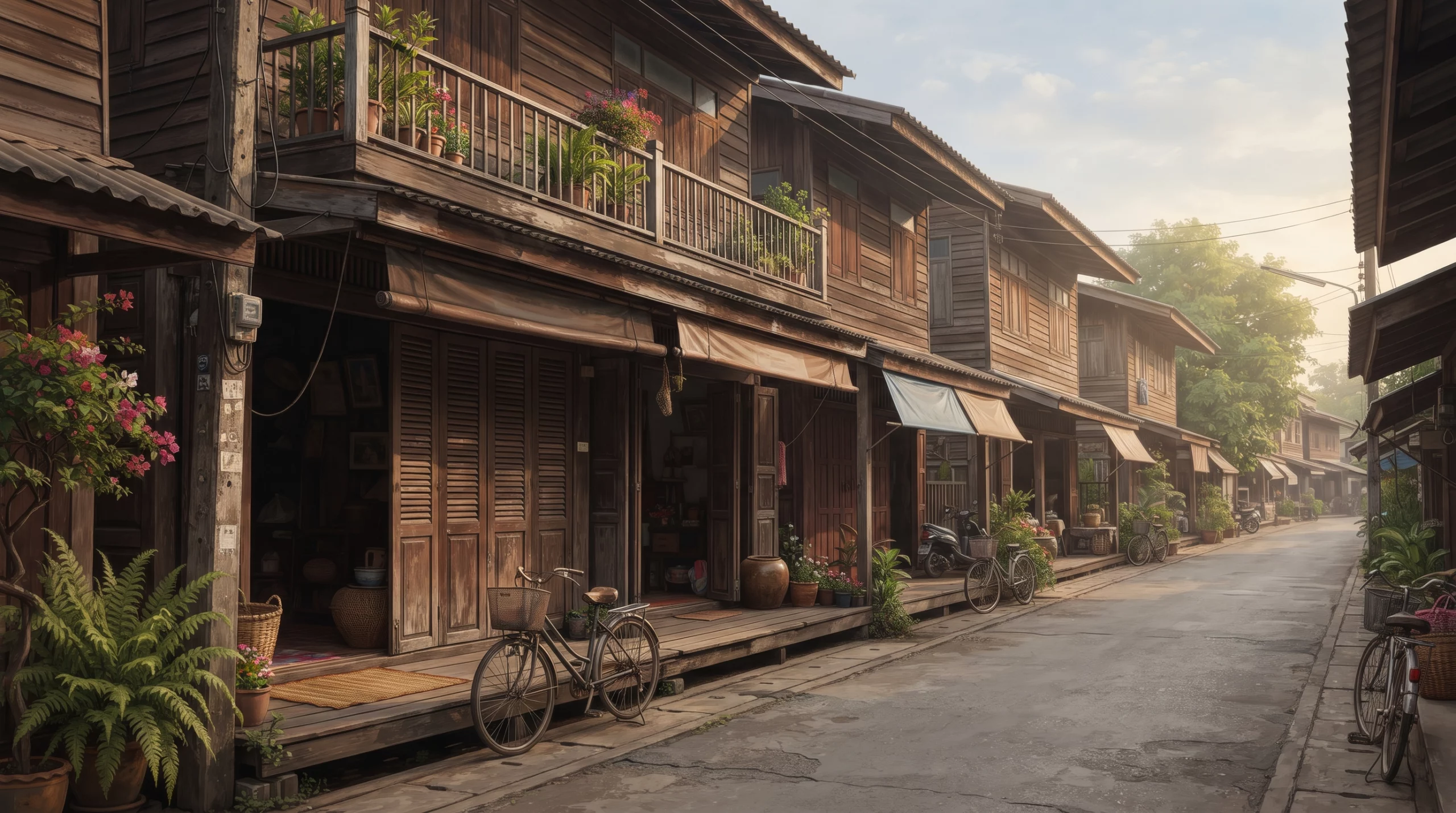
Chiang Khan is best approached at street level. In this town in Thailand’s northeastern province of Loei, timber houses and the presence of the Mekong encourage an unhurried visit. But slowing down does not mean searching for a scene preserved outside ordinary life. A facade may contain a shop, guesthouse or private home. Behind a doorway, someone is getting on with the day. The pleasure comes from noticing how architecture and current uses meet within the same neighbourhood.
For a first visit, choose a manageable area: a few older streets, a proper break and time beside the river. This guide offers ways to read the buildings, organise a walk and take photographs thoughtfully. It does not promise a market that always opens, a ceremony available on demand or a particular sunset. The aim is enough preparation to feel comfortable, combined with enough flexibility to respond to the actual conditions and people you encounter when you arrive.
Locate Chiang Khan before planning the journey
Chiang Khan is in Loei province beside the Mekong. It is a different destination from Chiang Mai and Chiang Rai, despite names that can be confused during a hurried search. Check the province, the exact accommodation address and the stated arrival point before paying for transport. A search result that looks plausible at first glance may concern another town, an unsuitable connection or an excursion unrelated to the place where you intend to stay during your trip.
The old neighbourhood, viewpoints outside town and activities on the river do not form one continuous walking route. Combining them requires additional journeys and separate time allowances. For an introduction, concentrate on the streets and riverbank. You can then decide whether another outing deserves its own half-day. Keeping these areas distinct prevents a town with a human scale from becoming a race between widely separated pins on a tourist map, leaving little time to notice any of them properly.
Begin with a small group of houses
Choose an easily recognised starting point and save it on your map. Walk a short section first without immediately searching for the perfect photograph. Notice the width of the street, the depth of the awnings and the way entrances are used. A chair, plant or bicycle sometimes says more about a building’s everyday life than decoration aimed at visitors. Watch where space has been left for movement and place yourself accordingly when stopping to look at a particular detail.
The Tourism Authority of Thailand describes rows of timber houses, some now accommodating guesthouses, cafés and restaurants. This provides a useful question: how does an older structure adapt to a present-day use? Look for visible clues from the public street without entering private areas. An open ground floor does not automatically invite a tour, and an attractive doorway remains somebody’s entrance. If the boundary is unclear, ask before approaching rather than assuming that the entire building has become an attraction. Official source.
Read timber without inventing its history
Wood attracts attention through colour, grain and texture. Distinguish a shutter, balcony structure, wall panel and later addition before treating everything as one decorative surface. A difference in colour does not establish a date or identify a particular species of timber. Parts may have been repaired or replaced. Unless a reliable explanation is available, describe the visible detail instead of assigning every house an age, an origin or an important former owner simply because the story sounds appealing.
Try comparing two houses from the street. How does each protect its entrance from sun or rain? Where are the openings placed? What difference does a balcony make to the facade? These questions connect form with practical needs. They also make a walk worthwhile when businesses happen to be closed. You do not need an open door at every stop to appreciate the variety of an inhabited street or to recognise the care involved in maintaining buildings over time.
Respect thresholds and everyday movement
Stay within accessible circulation areas and leave room outside shops. If you pause to look or talk, step aside without blocking a delivery or forcing someone into the road. Avoid touching objects placed near the entrance of a house. Being visible from the street does not turn somebody’s belongings into props for a photograph. Small acts of courtesy allow a longer and more relaxed encounter with the neighbourhood because your presence is less likely to interfere with ordinary work.
To start a conversation, offer a greeting and a short question. Someone serving customers may not have time to describe the history of the street. Accept a brief answer or a refusal gracefully. Ask clearly before photographing a recognisable person and, if useful, show the intended framing. Buying an item does not automatically buy the right to use someone’s image. The quality of a travel memory includes how it was made, not only how attractive the resulting picture appears afterwards.
Reach the Mekong to change your sense of scale
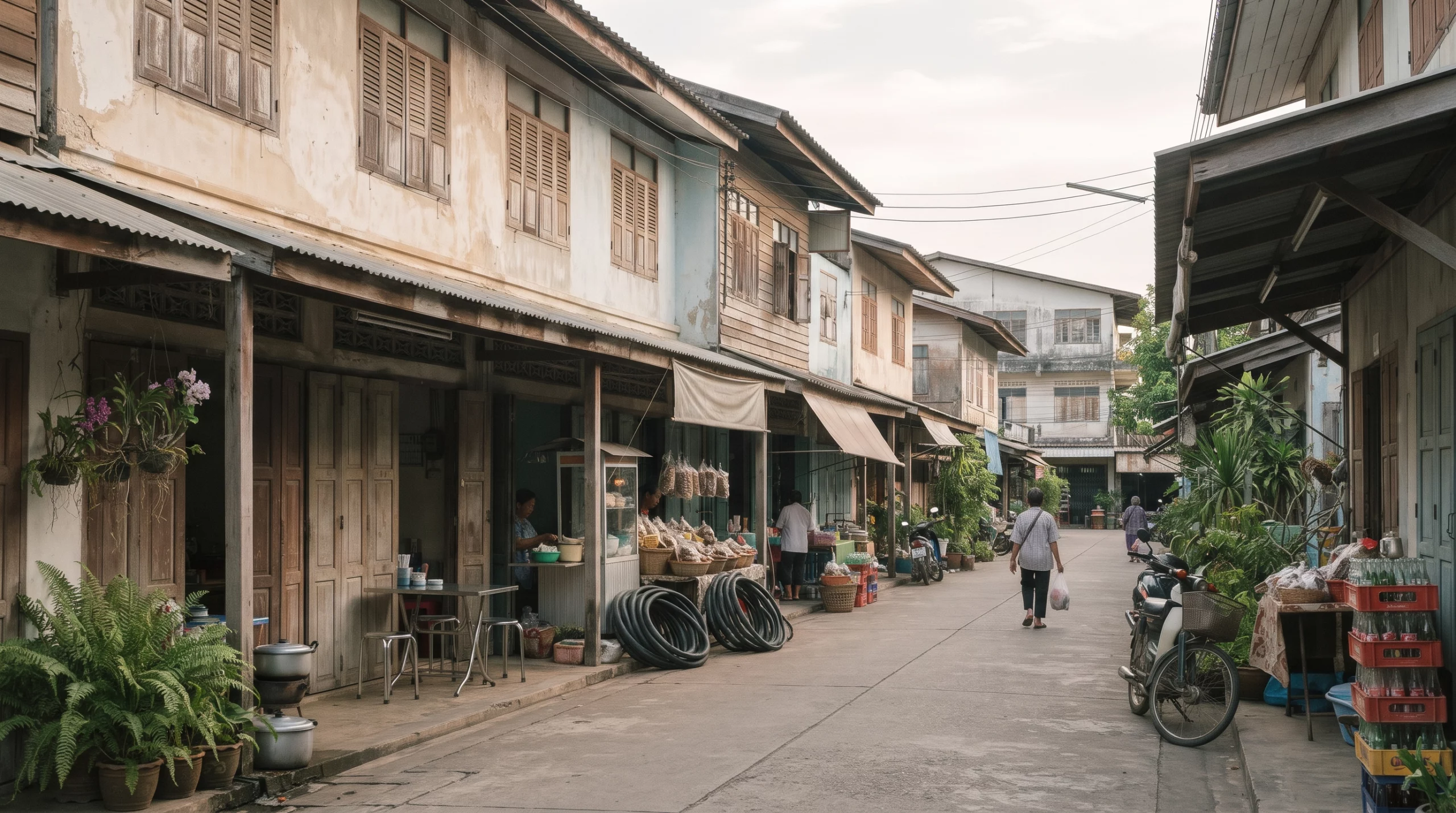
After the close detail of houses, the river opens the view. Moving between streets and riverbank connects the neighbourhood with its setting rather than treating them as unrelated scenes. Stop in an authorised public area and notice the layers of distance: the near bank, the breadth of water and the land beyond. River access and local conditions can vary. Follow the paths actually available and respect signs or barriers even where another route appears obvious on a digital map.
Do not make this part of the visit depend on a sunset colour seen in promotional photography. Cloud, haze and light all change. An overcast view can be equally useful for understanding shapes and distance. Observe visible activity without assuming that every boat provides trips for visitors. If you want an excursion on the water, enquire separately about the operator, conditions that day, equipment and the return arrangement. A river view and a bookable boat service are different things to plan.
Decide whether walking or cycling suits your purpose
Walking works well for close observation because stopping does not involve handling a vehicle. A bicycle can extend your range where local rules and current conditions make it appropriate. However, a street that happens to look quiet is not necessarily a dedicated cycling route. Pedestrians, children, deliveries and visiting groups can quickly change how much space is available. This is especially relevant in narrow passages, where an unexpected stop may affect several other people using the same stretch.
Before renting, check the brakes, saddle height, return conditions and suitable equipment. Ask where cycling is appropriate and where you should dismount. Stop somewhere that leaves space for others before reading a map or examining a building. Groups should leave reasonable gaps and agree a meeting point in case they separate. A shorter route enjoyed attentively is preferable to an ambitious circuit in which everyone spends more time negotiating movement than looking at the place they came to discover.
Give food a proper place in the day
A meal can deepen a visit without becoming a checklist of dishes. Look at what is available, ask about ingredients that matter to you and choose a suitable portion. Explain allergies clearly using a reliable translation when needed; removing a visible ingredient does not resolve every issue. If you need to discuss chilli, make a specific request instead of judging the heat from a dish’s colour or appearance. Allow enough time to understand the answer before placing your order.
Choose according to practical priorities: somewhere to sit, an early meal, vegetarian options or a quieter setting. Ask the price before ordering when it is not clearly displayed. Carry a payment method that works locally and some small notes. Your spending will depend on actual choices rather than a universal daily figure. A comfortable break also supports the next part of the walk. Resting is not time lost when the alternative is moving through an interesting neighbourhood too tired to notice its details.
Approach religious practices discreetly
The tourist authority mentions morning offerings of sticky rice to monks as part of local life. This helps explain the town; it does not make a religious practice a guaranteed performance for travellers. If you witness it, remain at a respectful distance and pay attention to how participants behave. Do not step into their route to obtain a picture, request a repeated gesture or turn a quiet moment into a conversation directed at your camera or telephone. Official source.
If you hope to participate, ask an informed local person about suitable preparation, conduct and clothing. Discreet observation without participation is also a legitimate choice. In temples open to visitors, follow directions about footwear and reserved areas. Thoughtful cultural travel does not require the closest possible access to every ceremony. It requires understanding that places and practices have purposes beyond our presence, and that accepting a boundary can be part of learning rather than a missed experience to complain about.
Adapt to heat, weather and daylight
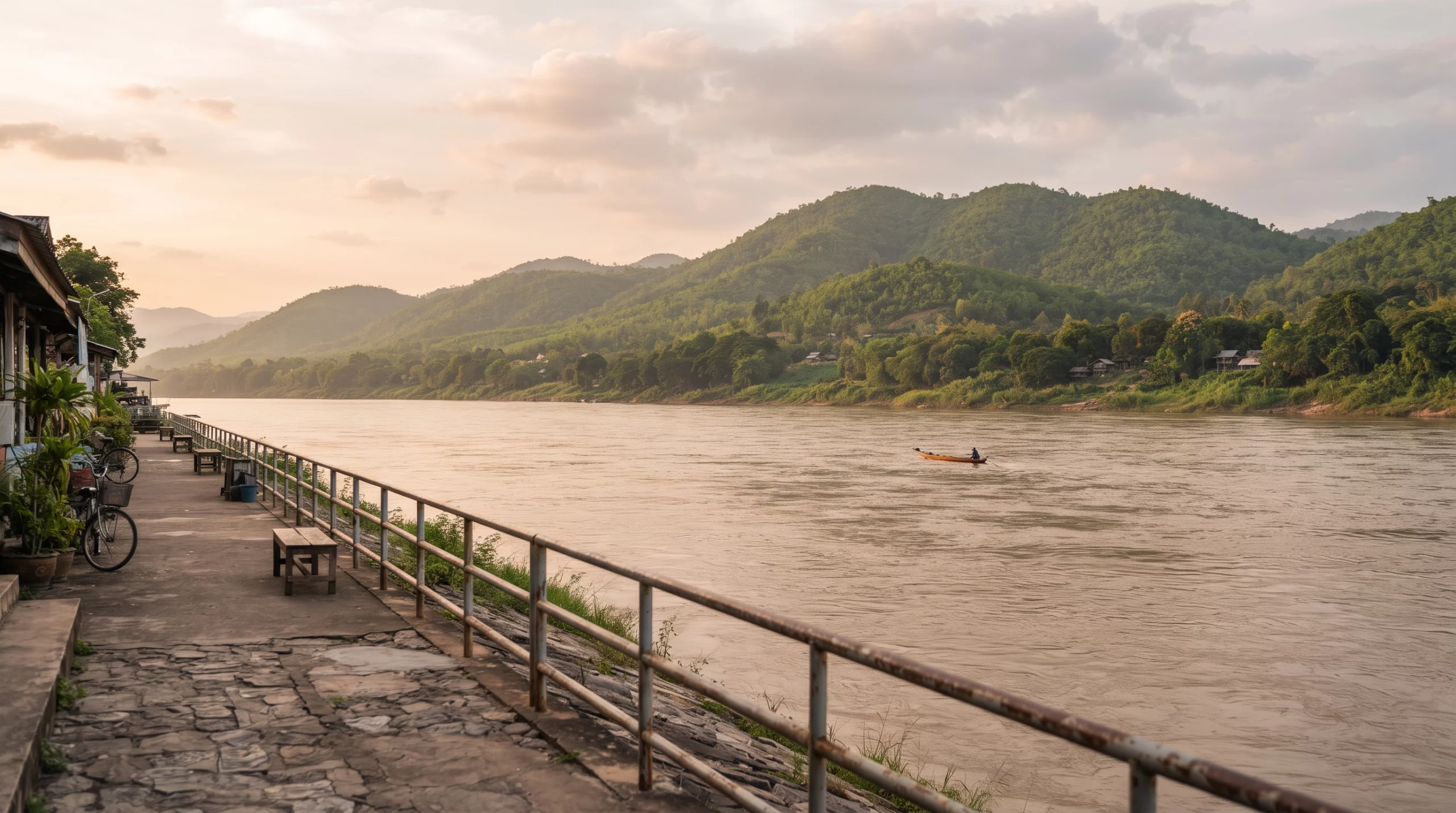
Plan a short outing with an easy return to your starting point. Carry water and allow a shaded break rather than extending the route simply to reach one final pin. Consult local forecasts and access information before leaving. Do not infer the weather from a season described as ideal in a general guide. A calendar date cannot guarantee clear skies, cool temperatures or a dry pavement, and a flexible plan is more useful than confidence based on an old photograph.
For a full day, one possible rhythm is older streets in the morning, a longer break and a return towards the water when conditions feel comfortable. This is a suggested structure, not an official timetable. Families and travellers who tire quickly can reduce the area while keeping both scales of discovery: close architectural detail and a wider river view. Save energy for the return journey. It belongs within the plan rather than appearing as an inconvenient extra once everybody has already reached their limit.
Choose accommodation using practical questions
Pictures of timber houses may encourage an overnight stay in the older neighbourhood. Before booking, ask where the room is, how to reach it and which services are actually provided. An appealing exterior says little about stairs, sound insulation or check-in arrangements. If quiet matters, ask about the immediate room surroundings rather than relying on a general description of a peaceful town. A lively street and a restful bedroom can coexist, but you need information specific to the property.
Connect your arrival plan with the accommodation address. A late arrival may require arrangements for transport or collecting a key. Save the address in Thai and keep the host’s contact accessible. On a short stay, an uncomplicated final journey may matter more than a long list of facilities. Simple, suitable choices leave more time for the town and less time solving an avoidable check-in problem. Confirming those details beforehand also makes it easier to change a plan calmly if the journey is delayed.
Check connections without assuming a direct service
Build the journey from services operating on your actual dates. Check the stated arrival point, interchange time and final section to the accommodation. A service to Loei province does not automatically mean a service to the old streets of Chiang Khan. Timetables, operators and booking conditions need confirmation when buying. An older travel account may be useful for inspiration but should not be treated as a current transport instruction, especially when a missed connection could shorten an already brief stay.
If leaving the same day, establish a time to begin the return without rushing. Allow for collecting luggage and reaching the correct departure point. Travelling companions should share ticket details and a common contact. A very short visit after a lengthy journey can leave stronger memories of transport than of the destination. Where your schedule allows, it is better to give one neighbourhood sufficient time than to promise a complete introduction between two tight connections with no margin for ordinary delays.
Make a memory beyond a row of facades
Aim for three complementary images: a street showing the neighbourhood’s arrangement, a timber detail described cautiously and a Mekong landscape. Avoid collecting so many similar doorways that their differences disappear when you look back. A note about a building’s visible use is more valuable than an invented historical label. If sharing a portrait, make sure the permission covers the intended use and respect a later change of mind. Careful travel stories depend on both accurate information and fair treatment of people.
This article’s illustrations were generated with AI and do not document particular houses. To extend your trip, explore Mr Schaka’s Thailand guides with the same attention to use and everyday life. Chiang Khan’s interest does not depend on a promise that a town has stood still. It lies in the ways people continue to inhabit timber streets beside a moving river, adapting familiar spaces to present needs while visitors learn to notice more than an attractive surface during their stay.
Sources and planning
Sources checked on 4 November 2026. Confirm practical arrangements with the operators before visiting.
- Tourism Authority of Thailand — Chiang Khan
- Ministère thaïlandais du tourisme — Chiang Khan Walking Street
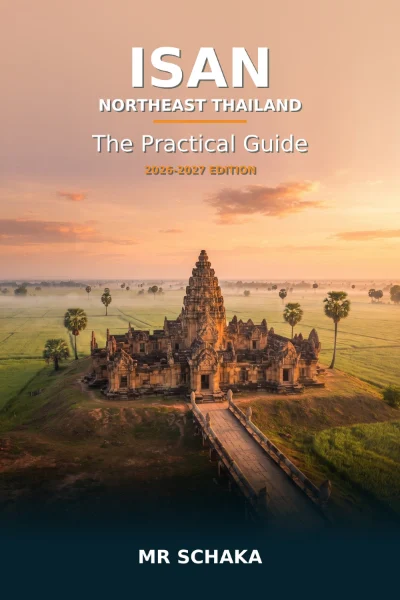
To go further
Mr Schaka’s guidebook, Isan – The Practical Guide, covers the essentials: transport, neighbourhoods, addresses, food, etiquette and safety, updated for 2026–2027.