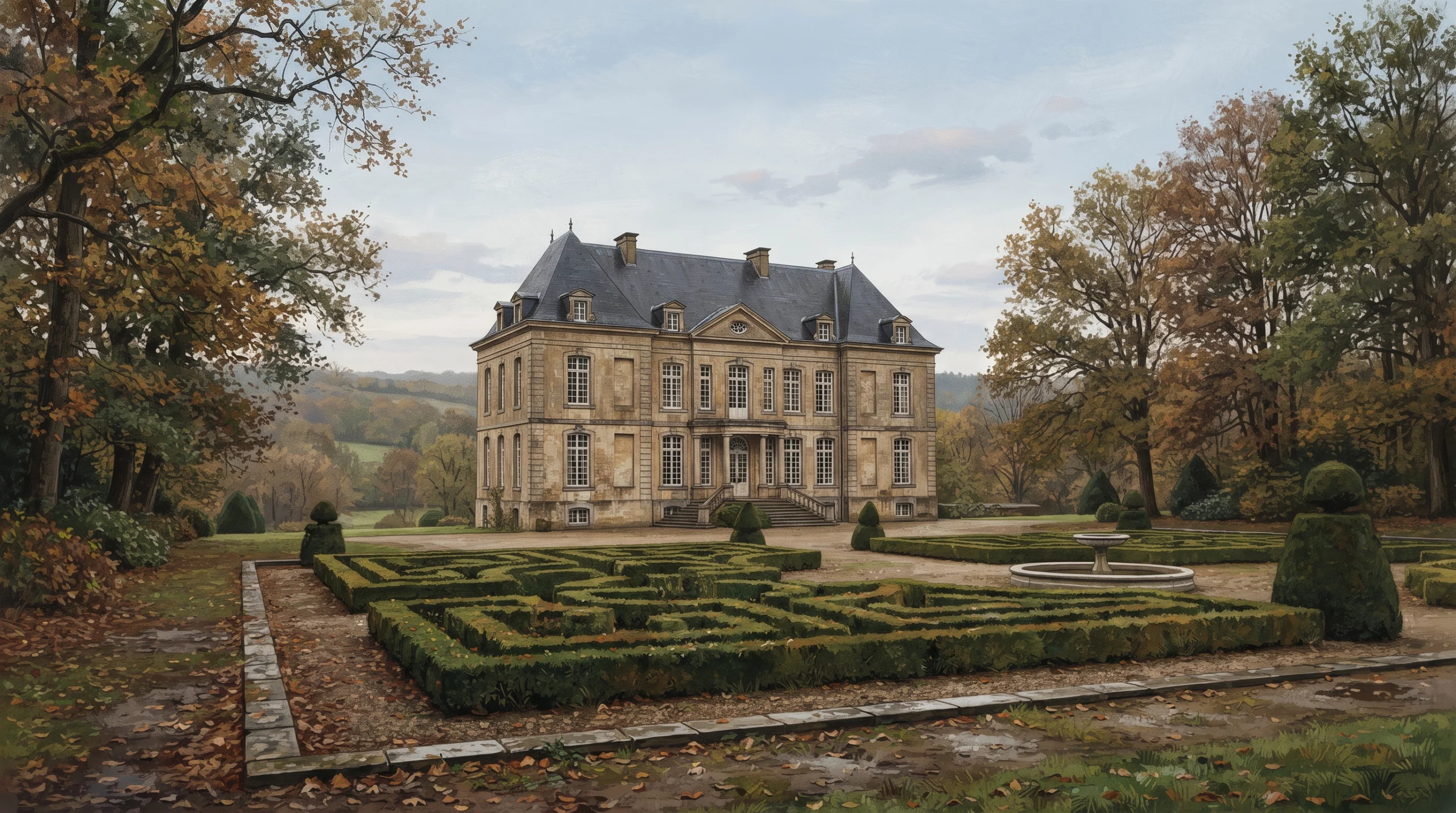
Château de Modave brings together several scales of discovery: a country residence, decorated rooms, gardens and a valley landscape. These elements become more interesting when allowed to answer one another rather than treated as separate boxes to tick. A window can explain a relationship with the outside; a terrace may prompt you to reconsider the arrangement of a room. The visit becomes a way of reading a place, accessible without specialist knowledge of architectural history or decorative art.
In Belgium’s Liège province, within the Condroz region, Modave deserves an outing of its own. This guide suggests a way to look, practical choices and a flexible plan for November. It distinguishes visiting the château from hiking in the surrounding area. The two may complement each other, but they require different amounts of time, preparation and equipment. Keeping those choices clear makes it easier to enjoy the day instead of discovering too late that a short garden walk has become a much longer undertaking.
Check the advertised season before setting off
The official website advertises opening from 1 April to 15 November, between ten in the morning and six in the evening, with last admission at quarter to five. The usual Monday closure has specified exceptions. Friday 6 November therefore falls within the advertised season. Nevertheless, check the current agenda before travelling. An article appearing at four in the afternoon is not a recommendation to arrive at that hour: publication time and a suitable visiting time are separate matters to consider. Official source.
An audio guide accompanies a circuit of more than twenty-five rooms, for which the operator suggests at least fifty minutes. Allowing longer gives room to look carefully and retain some time outside. Check the current price applicable to your circumstances rather than relying on an old figure. If you want a particular service or are travelling as a group, confirm arrangements with reception. A self-guided admission and a separately arranged guided experience need not have identical booking conditions or availability. Official source.
Look at the whole before collecting details
From the accessible arrival areas, take in the overall arrangement before focusing on individual ornaments. Notice the facade’s proportions, the placement of openings and its relationship with the gardens. You do not have to name an architectural style immediately. Start with visible rhythms: what repeats, and where does something change? These observations provide reference points to revisit after the interior, when uses and connections that were hidden from outside may have become easier to understand during the room sequence.
The building has an older history, but its present appearance results from change. The château’s account describes restoration after seventeenth-century destruction that gave the residence a classical facade. This prevents an overly simple reading of the entire building as an untouched product of one moment. In your notes, separate dated information supplied by interpretation from your own observation. A seemingly unified appearance can contain several phases of work that cannot be reliably assigned just by looking at stone, windows or rooflines. Official source.
Follow one question through the rooms
Trying to retain every decorative detail can become tiring. Choose one question instead: how were guests received, how does daylight organise a room, or how do people move between spaces? A single question can hold the circuit together. It also permits you to spend longer in some rooms and move more quickly through others without feeling obliged to comment on every displayed object. Attention is more useful when directed towards something you can actually compare from one space to the next.
Let the audio guide provide the framework while your eyes find a concrete example. After an explanation, pause over the feature that helps it make sense: an opening, a ceiling or the space between furniture and a doorway. Avoid starting the next commentary before looking. A device’s sequence does not require a fixed walking speed. If another visitor occupies the clearest viewpoint, observe something else and return calmly, leaving space for people who need to move past you through the room.
Read decoration without inventing meanings
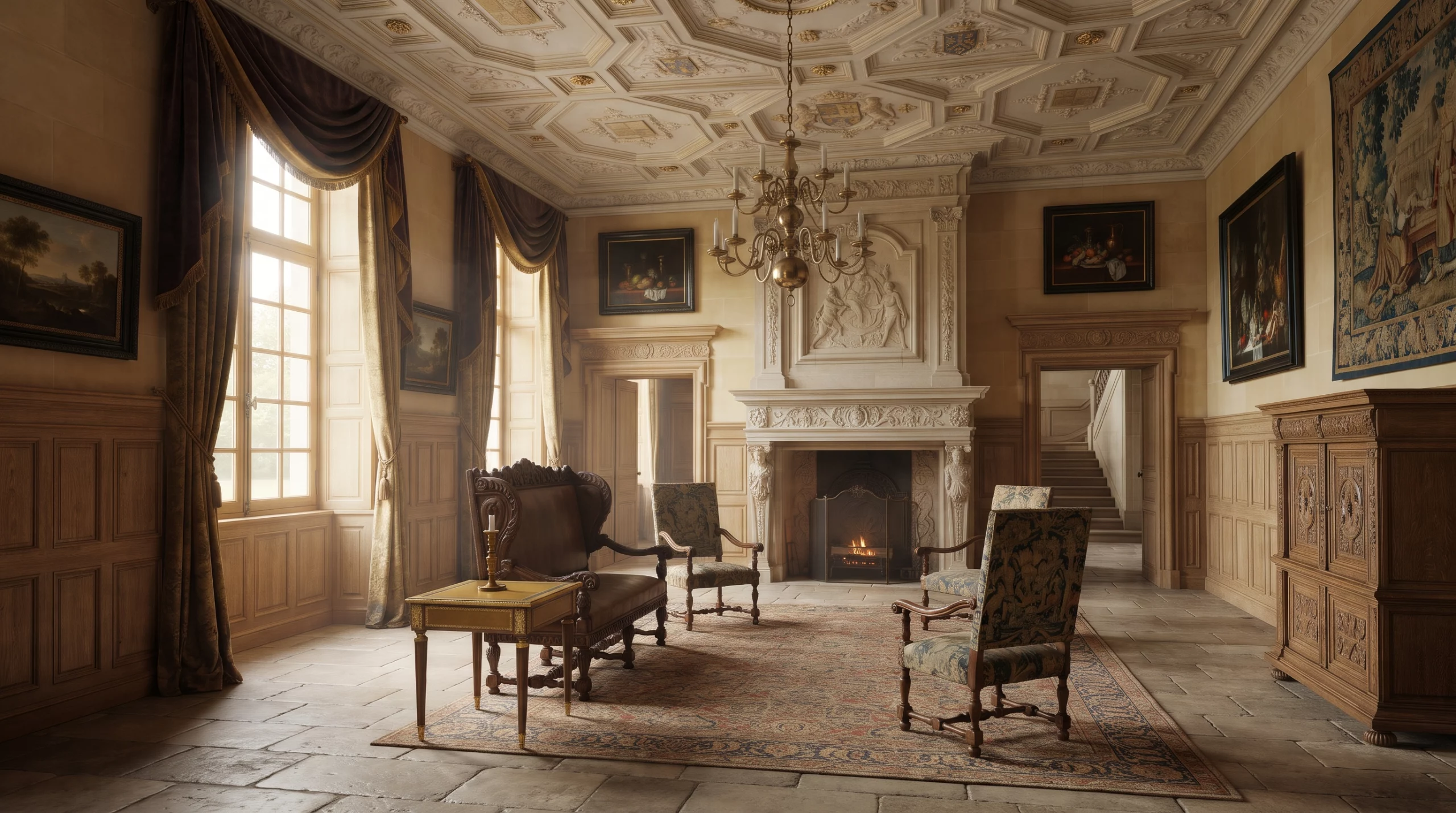
Ceilings, woodwork and textiles call for different kinds of attention. First notice where a decorative feature sits within a room, then examine detail from the permitted viewing area. Something above a doorway addresses the visitor differently from an element at the centre of a ceiling. Placement can reveal how a space creates an impression even when you do not know the artist, the represented subject or the full visual conventions used at the time of its creation.
Do not immediately identify a painted figure or assign meaning to a symbol. Use the interpretation provided and leave unresolved questions open. A cautious description is more valuable in a travel notebook than an attractive but mistaken attribution. You can write “raised decoration around the opening” before learning a precise term. Curiosity does not require expertise at every stop. It often begins with an observation clear enough to discuss, followed by the willingness to revise an interpretation when better information becomes available later.
Connect the windows with the garden
Where a room allows an outside view, notice how the setting enters the interior experience. A window frames a landscape, admits light and directs attention before you step outdoors. Compare this framing with the approach you saw on arrival. It makes the garden more than an additional activity after the rooms. The residence becomes a building placed within a landscape, rather than a sequence of decorated interiors whose surroundings have no influence on how they are understood or enjoyed.
Keep the comparison practical. Record an axis, colour or contrast between shade and daylight, then look for it outside without demanding an exact match. Seasons change vegetation, while maintenance may alter a particular view. November is neither an incomplete version of summer nor a guarantee of what another day will show. It offers its own conditions, perhaps making a line or relationship easier to recognise. Treat the actual light and leaves as part of the visit rather than as a failure to resemble a brochure.
Make room for the story of water
Modave is not explained only through the decoration of a residence. The official circuit also introduces water, including information about Vivaqua’s abstraction activities. This invites a connection between heritage and present-day functions of the area. Instead of retaining only an organisation’s name, consider how water changes your reading of the estate. A landscape admired from a terrace may also be a managed space with purposes extending beyond the visitor’s enjoyment of a view or a pleasant afternoon outside.
Approach a technical explanation using the same simple structure as the rooms: a problem, a means and an outcome. If water is being moved, establish where it begins, what produces the movement and where it goes. Do not invent a link between an older work and a current installation unless the interpretation actually makes that connection. Sharing a site does not establish continuity of engineering, identical operation or an unchanged purpose across several centuries of history and management.
Enter the gardens at a different pace
The operator states that the gardens are free to access during the château’s opening hours. This does not mean that all paths in the surrounding area are permanently available. Stay in open sections and enquire if a barrier or sign changes your intended route. Outside, try a slower rhythm: one viewpoint, a short walk and a look back at the facade. A little distance can reveal proportions and relationships that were less obvious when standing close to the entrance on arrival. Official source.
For a photograph, choose a relationship between vegetation and architecture instead of accumulating unrelated details. A path can provide direction, a hedge scale and a tree depth. Do not enter planting beds to manufacture symmetry or move objects for a better composition. Observation remains worthwhile when light becomes less convenient. A few written lines may capture something a picture cannot, especially when the experience involves moving between views rather than standing in one ideal position with every element aligned for the camera.
Read the valley from authorised viewpoints
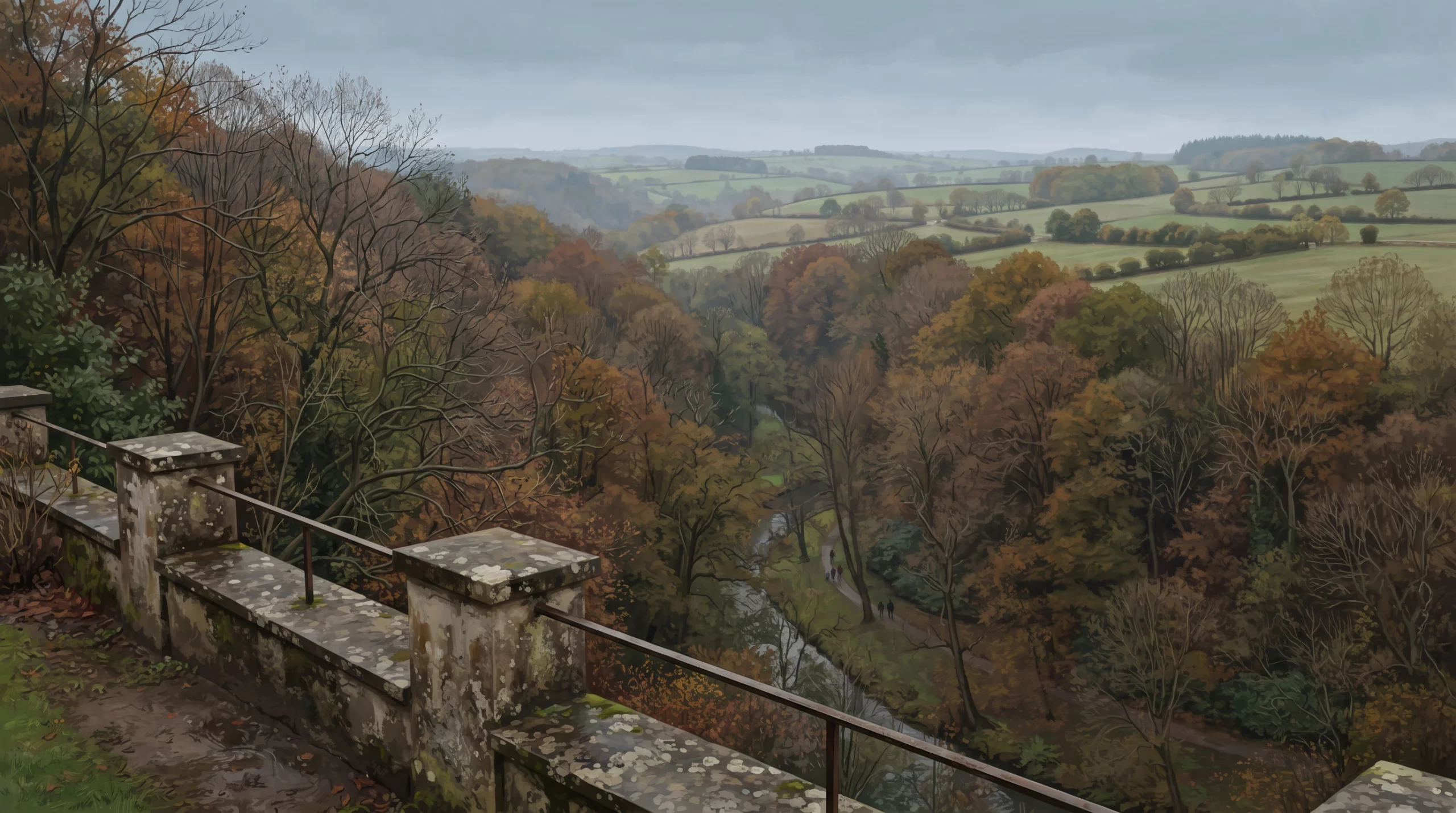
The château overlooks the Hoyoux valley. From accessible viewpoints, the relief adds depth and places the residence within its terrain. Distinguish foreground, slopes and the more distant landscape. Avoid naming every settlement or watercourse from an uncertain glimpse. When identification is missing, describing a landform is more accurate than attaching a place name because it seems plausible on a map. The purpose is to understand what you can see, not to prove instant recognition of everything beyond the terrace.
A good view never requires crossing a boundary, sitting on protective structures or moving onto unprepared ground. With children, choose a place where everyone can look without dispersing. Afterwards, compare the outdoor panorama with a view from the rooms. Asking what seems closer outside opens a straightforward discussion about perspective. It does not need to become an abstract lesson or a geographical quiz. The comparison can simply help everybody recognise how a change of position changes their experience of the same landscape.
Keep a surrounding hike separate from the garden visit
The château presents a seven-and-a-half-kilometre Petit Modave walk beginning at the estate. This is a distinct outing requiring preparation, rather than a minor extension of the gardens. Ask for the route information and check conditions before adding it. In autumn, the château recommends consulting hunting information, while the municipality also stresses local signs. A downloaded map does not override directions on the ground. Treat a restriction encountered during the walk as current information, even when your saved route suggests continuing ahead. Official source.
Adjust the plan to weather, possible mud and the time needed to return in daylight. Not finding a restriction online does not prove a path will be open when you arrive. Respect closures and retain an alternative. If walking conditions make the longer route unsuitable, spending more time at the château and in open visitor areas is a coherent choice. A heritage day does not require a long circular walk to become complete, and a simpler plan may allow a much better experience for the whole group.
Ask specific questions about access and transport
Official information states that access for visitors with reduced mobility inside the château is limited to the ground floor. Before booking, explain your needs to reception and ask which sections are actually suitable. Do not infer accessibility across the entire estate from a level entrance or a garden photograph. Outdoor surfaces, distances and access to facilities may matter just as much as visible steps. A useful answer should concern your circumstances and the route you intend to follow, not merely the attraction’s general description. Official source.
The address is Rue du Parc 4 in Modave. If using public transport, check the whole journey for the chosen day, including the final section and return. Huy railway station, mentioned by the château, is not immediately outside the estate. Groups should share a meeting point and a realistic departure time. Transport planning needs to leave space for the visit rather than reduce the interior to a hurried passage before the next connection. Save important details where they remain available without a dependable signal.
Rest and select the photographs that tell your story
A break between indoors and outdoors can restore attention. Ask about services available that day instead of assuming continuous catering. Bring what you need while respecting the areas where food may be consumed. Inside, follow photography rules and leave circulation space. If discussing an audio-guide explanation with companions, keep voices low enough for other visitors to hear their own commentary. Small adjustments help different people enjoy the same rooms without turning every pause into a competing group conversation.
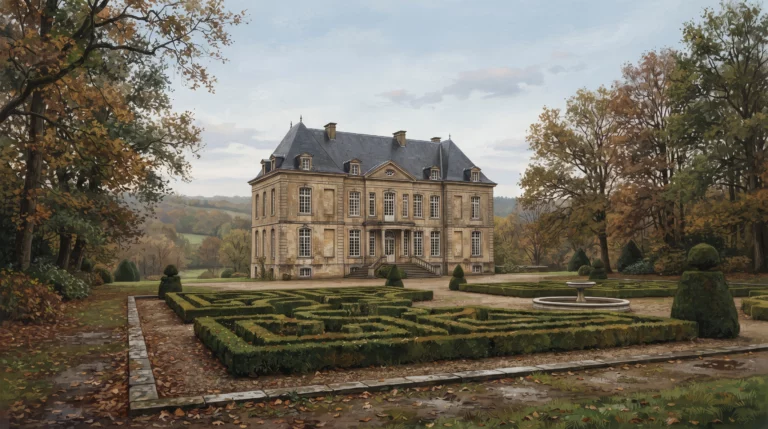
Three pictures can make a readable account: the overall residence, a permitted interior detail and the valley setting. Record their context during the visit. This article’s AI-generated illustrations are interpretations, not exact records of the château or its collections. Saying so avoids attributing an invented painting or architectural feature to Modave. Your own photographs, where permitted, have a different value: they record an actual encounter with the place. Keeping these categories clear makes a travel story more useful and more trustworthy for later readers.
Leave with a residence connected to its surroundings
At the end, connect three things you noticed instead of reciting room names. A window, a garden axis and a slope may together explain a way of inhabiting the landscape. Water adds a further dimension by introducing functions beyond the pleasure of looking. This exercise gives memory a clear structure and makes the visit easier to describe without retaining every date or proper name. A relationship understood well often lasts longer than several disconnected facts learned too quickly while moving on.
For another Condroz or Liège province outing, explore Mr Schaka’s guides and choose a separate day that suits your interests. Modave already merits its own time: listening to an explanation, returning to a detail and allowing the view to open towards the valley. An attentive visit does not try to exhaust every possibility. It offers enough reference points for the place to remain meaningful afterwards, when an ordinary window, garden path or discussion of water unexpectedly recalls what you discovered there.
Sources and planning
Sources checked on 4 November 2026. Confirm practical arrangements with the operators before visiting.
- Château de Modave — visite et informations pratiques
- Château de Modave — histoire
- Château de Modave — jardins
- Commune de Modave — actualités et balades
The book
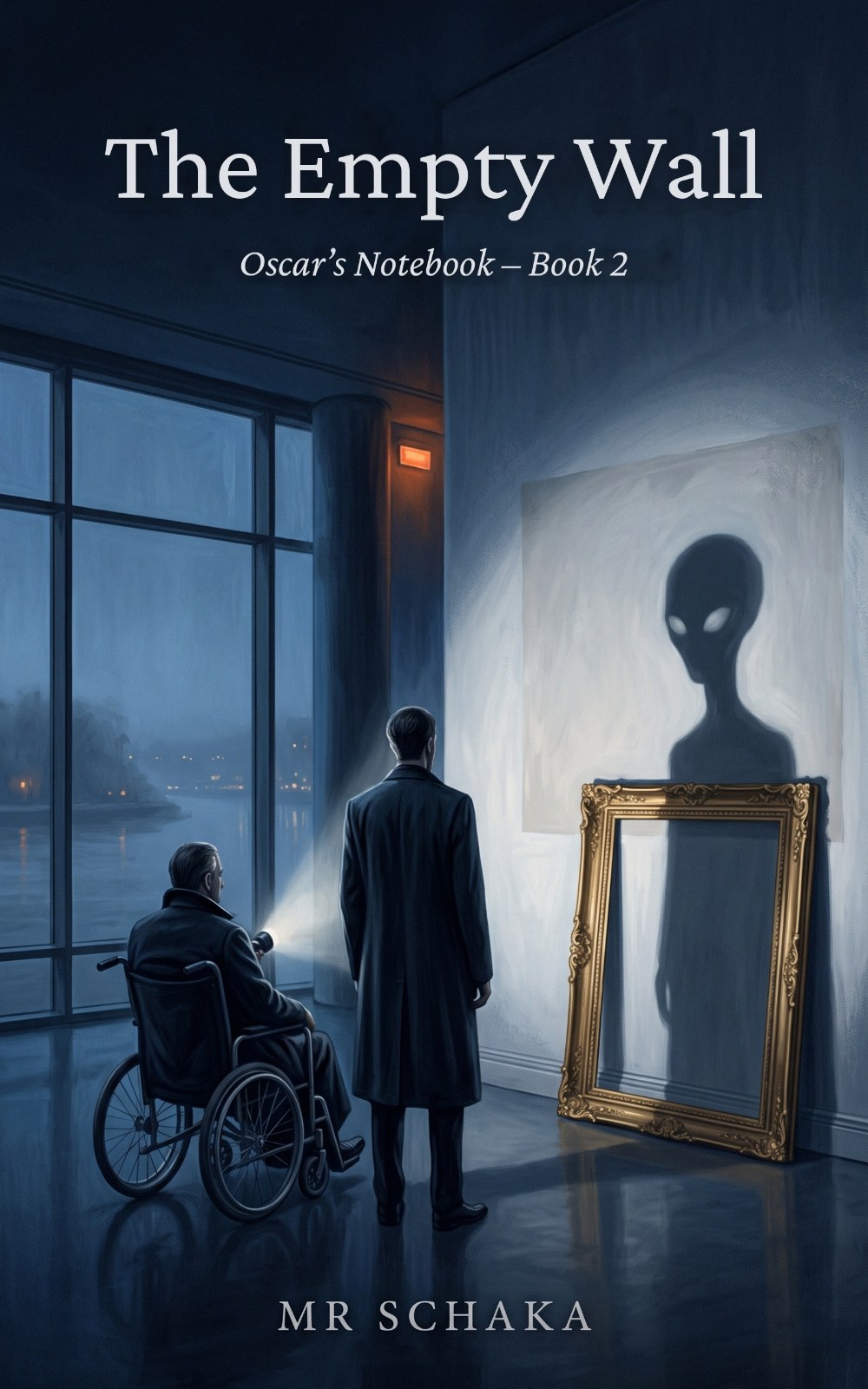
The Empty Wall is the second book of Oscar’s Notebook, a series of crime novels set in Liège.