Category: Thailand Notebook

Practical tips and travel stories from Thailand: Bangkok, Pattaya, Isan, the islands.

  • How to visit Chatuchak market without getting lost?

    How to visit Chatuchak market without getting lost?

    Chatuchak is Bangkok’s largest market, and probably the largest weekend market in the world: around fifteen thousand stalls across twenty-seven sections, open at weekends only. It is also where most travellers give up after an hour, exhausted, having seen nothing. The difference between a good visit and a bad one is not stamina: it is arrival time, a sense of direction, and what you agree not to see.

    Choose your moment

    The market opens only on Saturday and Sunday, and that is the first thing to check before planning your day. In practice, it opens late morning and closes late afternoon; some stalls start earlier, others pack up before time. On Friday evening part of the market works as wholesale, but that is a different experience and no substitute for a weekend visit.

    The right window is clear: from opening until eleven. At that point it is still bearable, the aisles are workable and the sellers are available. From noon, heat settles under the canvas, air circulates poorly and the crowd becomes a physical obstacle. Mid-afternoon is the worst slot: you move at the speed of the flow and choose nothing.

    How to get there

    The market is served by two lines, which simplifies arrival. By metro, Kamphaeng Phet station drops you practically inside the market: it is the most direct exit towards the central sections. Chatuchak Park station, on the same line, leaves you at the north entrance, useful if you want to start with plants and household goods.

    By skytrain, Mo Chit station leaves you a few minutes’ walk away, by the park. It is the simplest option from Sukhumvit or Siam, with a possible connection. Avoid taxis at weekends: the streets around the market are saturated from late morning, and the driver will drop you at a distance anyway.

    Finding your way between sections

    The market is organised in numbered sections, linked by main aisles and a maze of secondary ones. The system works, but you must accept one rule: you will get lost, and it does not matter. Signs indicate sections, not shops; the same aisle can change character within ten metres.

    The method that works is to set yourself three objectives per visit, no more. Clothes and accessories in one area, crafts and decoration in another, plants and animals in a distinct zone, antiques and collectables elsewhere, food in the centre. If you are looking for something specific — a lamp, a fabric, a bag — ask: sellers pass you on to each other and know their section better than any map.

    Note a fixed point on arrival: a tower, an entrance, the metro station. Without a landmark, finding the exit becomes a twenty-minute negotiation.

    What to buy, and what to leave

    Chatuchak is good for simple clothes, fabrics, crockery, wooden objects, travel accessories and plants. Prices are low, quality varies, and the main interest is choice: ten stalls offer the same thing, which lets you compare.

    Three categories need care. Antiques and art objects: many are reproductions, and exporting genuine archaeological pieces is regulated. Animals: the trade exists, it is often cruel, and nothing justifies taking part. Counterfeits: they are everywhere, and customs checks on arrival are not a myth.

    Eating on site

    Food is one of the reasons to come. The central aisles concentrate street food stalls, and you eat for a few baht, standing or on a stool, next to regulars. Classic dishes are well executed: noodle soups, grills, sharp salads, iced desserts.

    Two tips. First, eat early: by noon queues lengthen and tables vanish. Second, choose the stalls where things are moving: an empty stall in the middle of a busy aisle is not a good sign. Water and drinks are everywhere; cafés are rarer and a good stop to find air conditioning.

    Haggling without losing your temper

    Haggling works on clothes, crafts and decoration, much less on food and displayed prices. The local rule: a smile, a question, a reasonable counter-offer. Asking for half the price is a second-rate technique that only works on tourist stalls.

    The real lever is not haggling, it is comparison. The same bag is found at three different prices in three sections. Walk first, buy afterwards. And keep small change: many sellers have none early in the day.

    #Thailand #Bangkok #MrSchaka

    Heat, water, breaks

    The market is covered by canvas, not walls: it is hot and air circulates badly. Bring water, a hat for the open aisles, and light clothes. Toilets exist but are uneven; the neighbouring shopping centres, one of them linked to the metro, offer a welcome air-conditioned break.

    A reasonable visit lasts two to three hours. Beyond that, fatigue decides for you and you will buy anything to get out. Two short visits are better than one long one.

    Mistakes to avoid

    Coming on a weekday, when the market is closed. Arriving at noon and believing you will last. Entering at one end and wanting to cross everything. Buying the first object seen without comparing. Paying with a large note. And starting a fragile purchase without thinking about transport: ceramics in a backpack are broken ceramics on arrival.

    FAQ

    Which day should I come?

    Saturday or Sunday. Both are equivalent; Saturday is sometimes slightly less dense.

    How long should I allow?

    Two to three hours for a useful visit. Half a day if you are looking for something specific.

    Can I bring children?

    Yes, early in the morning, and a pushchair is impossible in the narrow aisles: prefer a baby carrier.

    How do I carry my purchases?

    Bring a strong bag or buy one on site. Fragile objects travel better in cabin luggage.

    Is the market expensive?

    No, it is one of the cheapest in the city. But tourist-stall prices are three times those of the inner aisles.

    Also read
    Cover of Bangkok – The Practical Guide

    To go further

    Mr Schaka’s guidebook, Bangkok – The Practical Guide, covers the essentials: transport, neighbourhoods, addresses, food, etiquette and safety, updated for 2026–2027.
  • What to know about the Thailand-Cambodia crisis as a traveller?

    What to know about the Thailand-Cambodia crisis as a traveller?

    Thailand and Cambodia are going through a bilateral crisis that has lasted for months, with very concrete consequences for travellers: land crossings between the two countries no longer operate normally, and diplomatic relations remain degraded despite calls to restore them.

    What happened

    Tensions led to a deterioration of relations, with border incidents and mutual accusations. The situation led to the closure of land crossing points and a reduction in exchanges. On 21 October 2026, Cambodian authorities publicly asked Thailand to honour agreements and restore diplomatic relations, while accusing it of encroaching on its territory.

    Land borders

    The most important point for a traveller: land crossings are not operational. Classic routes — Bangkok to Siem Reap by road, or the Poipet crossing — no longer work as before. Information circulates mainly through travel agencies and traveller groups; verify it daily.

    Air traffic

    Flights between the two countries continue and are currently the only reliable way to cross. Bangkok-Siem Reap and Bangkok-Phnom Penh links remain served. Prices may be higher and flights fuller: book early.

    Visas

    With land crossings closed, land-border visa rules no longer apply in practice. Travellers arriving by air follow airport procedures. Check the conditions for your nationality and entry point.

    Itineraries to revise

    Routes crossing the land border must be rethought: replace the land crossing with a flight, or change the order of stages. The classic Bangkok-Ayutthaya-Siem Reap route becomes more expensive but remains feasible.

    Advisories

    Several countries have updated their travel advice, flagging the border closures and recommending avoiding areas near the border line. These are not travel bans but indicate concrete risks.

    Areas to avoid

    The immediate border surroundings, especially where incidents occurred. Major sites — Angkor, the Isan temples — remain accessible, but excursions approaching the border must be checked. Temples on either side have long been subject to tension: ask locally.

    Effect on tourism

    Both countries depend heavily on tourism, and the crisis weighs on flows. Cambodian operators report cancellations and modified routes; on the Thai side, border regions are most affected.

    The political situation

    The crisis is part of a wider context of territorial accusations and blocked talks. Calls to restore relations multiply without immediate result. A date for normalisation is hard to predict: plan fallback solutions.

    #Thailand #Cambodia #MrSchaka

    Staying informed

    Three sources: your foreign ministry’s website, local media in both countries, and agencies on the ground. Social media give faster but unverified information.

    If you are stuck

    If a crossing is closed, the fastest solution is usually to reach an airport. Contact your embassy if the situation drags on, and keep documents and insurance at hand. Always leave a margin in bookings.

    Insurance

    Check clauses on civil unrest and border closures. Many policies cover medical costs but not itinerary changes linked to a political situation.

    FAQ

    Can you cross overland?

    Not normally. Land crossings are not operational; verify before planning.

    Do flights operate?

    Yes, the reliable solution today.

    Are sites closed?

    No, Angkor and major sites remain accessible; border areas are the problem.

    Should I cancel?

    No, but adapt the itinerary and follow official advice.

    How long will it last?

    Impossible to predict. Plan replacements.

    Sources and references

    Cover of Bangkok – The Practical Guide

    To go further

    Mr Schaka’s guidebook, Bangkok – The Practical Guide, covers the essentials: transport, neighbourhoods, addresses, food, etiquette and safety, updated for 2026–2027.
  • What to know about Thailand’s tougher drug laws?

    What to know about Thailand’s tougher drug laws?

    On 21 October 2026, Prime Minister Anutin Charnvirakul, also interior minister and leader of the Bhumjaithai Party, filed two bills amending narcotics legislation with MPs from his party. The texts request urgent consideration and introduce several major changes: possession presumed to be dealing, heavier penalties, longer detention and broader powers for anti-drug services.

    The facts

    The bills were handed to House Speaker Sophon Sarum with a request for urgent listing. According to the government, they stem from workshops with public agencies, field officers, local authorities and citizens, whose conclusions shaped the amendments.

    Possession presumed to be dealing

    The most commented measure: possession of drugs would be presumed intended for distribution. Today the prosecution must show intent to sell; tomorrow possession alone would trigger that classification, and the accused would have to rebut it.

    Heavier penalties

    The second text increases penalties for certain offences, especially those involving minors: those who make young people consume drugs, encourage them to offend, or exploit legal loopholes.

    Rehabilitation

    The bill also clarifies the rehabilitation system, aligning treatment procedures with real practice and allowing families or relatives to bring a suspected person voluntarily into treatment.

    Powers of the anti-drug office

    The text broadens the powers of the Narcotics Control Board: access to central databases for prosecution, and power to order suspension or deletion of computer data encouraging drug use. It also strengthens investigative powers, allowing narcotics police to seek court approval to access information through any channel.

    Detention up to seven days

    The most concrete change for an arrested person: maximum detention by officers rises from three to seven days, to allow time to gather evidence.

    Additional means

    The Prime Minister mentioned more staff and equipment, including additional X-ray vehicles for police checks at borders and high-risk areas.

    The context

    Thailand has faced a synthetic drug crisis for years, with massive seizures and wide distribution of methamphetamine tablets. The government has made the fight against narcotics a stated priority, alongside a tightening of cannabis policy after the 2022 deregulation.

    What it changes for a traveller

    Thailand applies zero tolerance, and the new presumption makes carrying substances riskier. Penalties are severe and detention conditions are not those of a European country. Do not carry illicit substances, accept parcels from strangers, or lend your bag.

    #Thailand #Law #MrSchaka

    Cannabis

    Cannabis is a special case: long tolerated after 2022, it is now subject to a return to strict control, with a medical-use bill and statements about closing the sector. Until a new framework applies, caution means not buying or carrying products.

    Not yet decided

    The texts have been filed, not adopted. They must go through Parliament, with debates and possible amendments. This article describes bills, not a law in force.

    Possible criticism

    The presumption of dealing is debated in Thailand too, because it could target users holding small quantities. Longer detention raises procedural questions.

    FAQ

    Are the texts in force?

    No, filed on 21 October 2026, still to be examined by Parliament.

    What does the presumption mean?

    Possession would be presumed for sale, reversing the burden of proof in practice.

    Is detention seven days?

    The bill would raise the maximum from three to seven days; not yet applied.

    Is cannabis legal?

    Use is increasingly strictly regulated; check rules before any purchase.

    Are penalties severe?

    Yes. Drug trafficking carries very heavy penalties and detention conditions are difficult.

    Sources and references

    Cover of Bangkok – The Practical Guide

    To go further

    Mr Schaka’s guidebook, Bangkok – The Practical Guide, covers the essentials: transport, neighbourhoods, addresses, food, etiquette and safety, updated for 2026–2027.

  • What to know if your bag is searched at a Thai airport?

    What to know if your bag is searched at a Thai airport?

    A case of a searched bag at Suvarnabhumi airport revived, in late October, a question many travellers ask without ever voicing it: what happens if your suitcase is opened without you? The airport denied the account reported by a passenger, while acknowledging a rule allowing inspections without the owner present.

    The facts

    A passenger, who told her story on social media, says her bag had been opened and searched. Suvarnabhumi denied that its staff carried out the search, according to Thai and international media reporting the case on 21 October 2026. At the same time, the press recalled a rule allowing bag inspections without the owner — this coexistence explains the confusion.

    What the rule provides

    At an airport, security may require a bag to be opened, especially in the hold. In the passenger’s absence, the inspection is generally done with witnesses and a report. The key point is that a bag can be opened without you, and there is normally a trace.

    Why it happens

    Three reasons: security checks, customs checks, and prohibited items to be removed. Usually the passenger is informed, often by a notice slipped inside. The problem arises when no notice is left.

    What it changes for you

    You must be able to prove what the bag contained; know what to do if something is missing; and avoid putting valuables in the hold.

    With a padlock

    Airport-approved locks can be opened by security services holding a master key. An ordinary lock will be cut if inspection requires it. It is protection against opportunistic openings, not against the state.

    What to photograph

    Before check-in, photograph the open suitcase with the main items visible, then the closed bag and the lock. One minute, and the best evidence in a dispute.

    If you find it opened

    On arrival, check the bag before leaving the delivery area. If it is open, damaged or carries an inspection notice, report it immediately to the airline’s baggage service, before leaving the airport.

    If something is missing

    Declare the loss to baggage services, then file a written claim. Deadlines are short: ask on the day. Notify your travel insurance and keep all documents.

    Never in the hold

    Medicines, jewellery, electronics, documents, keys, anything with sentimental or financial value. Hand luggage is for that. Liquids remain subject to security rules.

    Risk zones

    Bags pass through several hands: check-in, sorting, loading, unloading, delivery. Each step is an opportunity. This is why the advice is the same in every airport, not just in Thailand.

    #Thailand #Airport #MrSchaka

    The airlines’ role

    The airline is responsible for your checked bag, within the limits set by international conventions. Contact it first, not the airport. Compensation caps are often below real value.

    And the airport’s denial

    The denial means the airport contests having carried out the described search. That does not prove the bag was not opened: it may have been opened earlier, or by another party.

    Should you avoid Suvarnabhumi?

    No. The airport handles tens of millions of passengers a year, and an isolated case does not justify changing an itinerary.

    Five-minute precautions

    Photograph the contents. Put valuables in the cabin. Close the bag with an approved lock. Check the bag on arrival. Keep receipts and the tag number.

    FAQ

    Can I refuse a search?

    A security inspection is not optional: refusing usually means not boarding.

    Is a notice always left?

    In principle yes, but in practice it can be missing.

    Is a padlock useful?

    Against unauthorised openings, not against legal inspections.

    What deadline to claim?

    Short: ask the airline on the day.

    Does insurance cover it?

    Depending on the policy; check the baggage clause.

    Sources and references

    Cover of Bangkok – The Practical Guide

    To go further

    Mr Schaka’s guidebook, Bangkok – The Practical Guide, covers the essentials: transport, neighbourhoods, addresses, food, etiquette and safety, updated for 2026–2027.
  • What to know about Thailand’s new visa rules?

    What to know about Thailand’s new visa rules?

    Thailand has changed its entry rules, and the change directly concerns travellers: since 15 September 2026, visa exemption is no longer 60 days but 30 days for most nationalities concerned. New categories have been created and limits introduced for land border crossings.

    What changed

    Until 14 September 2026, a number of nationalities benefited from a 60-day tourist exemption. It ended at that date, and a new framework took effect on 15 September: a 30-day exemption for nationals of about sixty countries and territories, a 15-day exemption for two countries, plus visa on arrival for three nationalities, while existing bilateral agreements continue.

    Why the change

    The measure is part of a tightening of entry conditions after a period of openness meant to relaunch tourism. Authorities intended to regain control over long stays disguised as tourism and over repeated border runs.

    The 30 days

    Holders of passports from sixty countries and territories are exempt for a tourist stay of up to 30 days. This is the category that concerns most European travellers. The full list is published by the Thai tourism authority: check that your nationality appears before booking.

    The 15 days

    Two countries — Seychelles and Mauritius — fall under a 15-day exemption, a more restrictive regime.

    Land borders

    The most important novelty for travellers touring Southeast Asia: those entering by land under the 30-day exemption may in principle do so only twice per calendar year. The limit does not apply to nationals of Malaysia, Brunei, Indonesia and Singapore, nor to other nationalities designated by the ministry.

    Visa on arrival

    Visa on arrival concerns three nationalities: Azerbaijan, Belarus and Serbia. It is obtained on arrival at designated entry points.

    Bilateral agreements

    Separate agreements continue to apply and provide, depending on the case, exemptions of 90, 30 or 14 days. Two travellers may therefore have different rights depending on their passport.

    What it changes for a tourist stay

    For a classic two- or three-week stay, nothing changes in practice: thirty days are enough. For six weeks to two months, the question arises: apply for a tourist visa before departure, plan an extension on site, or organise a shorter stay and return.

    Extension on site

    It is generally possible to request an extension at the immigration office, according to the conditions in force and the entry category. Rules, durations and fees may change: check with Thai immigration or the embassy. Do not assume it is automatic.

    The tourist visa

    The classic tourist visa, requested before departure from a consulate, remains the solution for long stays. It requires a file, supporting documents and time, but it secures a stay of several weeks.

    Repeated stays

    Travellers chaining stays — retirees, digital nomads, families split between two countries — are most affected. The end of the 60-day exemption and the land border limit reduce margins.

    Documents to prepare

    A passport valid at least six months after entry, a return or onward ticket, proof of accommodation and sometimes proof of sufficient funds. These requirements are not always checked, but they may be.

    Counting days

    The day of entry counts as the first day. The stamp indicates the deadline: photograph it on arrival, it is the reference in case of control.

    #Thailand #Visa #MrSchaka

    Already in the country

    Those who entered before 15 September 2026 keep the rights attached to their entry. The change concerns new entries. Check the date on your stamp, not the general rule.

    Airlines

    Airlines check documents at departure and may refuse boarding if the return ticket exceeds the authorised duration. Plan an onward ticket consistent with your stay: it is the first thing asked for.

    Long-stay regimes

    For stays of several months, dedicated categories exist: non-immigrant visas for family, professional or study reasons, and long-stay programmes for certain profiles.

    Families and couples

    In a couple of different nationalities, authorised duration may vary from one person to the other. Organise the stay on the basis of the shortest regime, or apply for the appropriate visas.

    Overstaying

    Staying beyond the authorised duration exposes you to penalties: fines, detention, and a ban from returning in some cases. The count is in days.

    What to check before booking

    Three things: nationality and applicable regime, total length of stay, and mode of entry (air or land). Check official sources: the Thai embassy, the tourism authority, and airlines.

    Mistakes to avoid

    Relying on an old paper guide or article: rules changed in September 2026. Assuming the 60-day duration still exists. Counting on an automatic extension. And ignoring the land border limit.

    FAQ

    Do I need a visa for two weeks?

    No, if your nationality is among those benefiting from the 30-day exemption.

    Does the 60-day duration still exist?

    No, the old 60-day exemption ended on 14 September 2026.

    Can I extend on site?

    An extension may be requested at immigration, but it is not guaranteed.

    How many land entries?

    In principle two per calendar year for 30-day exemption holders.

    Where to check nationality?

    On the list published by the Thai tourism authority and with the embassy.

    Sources and references

    Cover of Bangkok – The Practical Guide

    To go further

    Mr Schaka’s guidebook, Bangkok – The Practical Guide, covers the essentials: transport, neighbourhoods, addresses, food, etiquette and safety, updated for 2026–2027.
  • What to know about the floods hitting Thailand this 22 October?

    What to know about the floods hitting Thailand this 22 October?

    Thailand is going through one of its most widespread flood periods of the year. Authorities have recorded flooding in nineteen provinces and Bangkok, with more than a million people affected and a death toll that has risen over the days.

    What happened

    Monsoon rains, particularly heavy this year, have overflowed several catchment areas in the centre and north. Water first hit farming provinces, then moved down towards the Chao Phraya delta and the capital, part of which is built on subsiding low-lying ground.

    The result is a slow flood spread over weeks, which drowns whole districts and saturates drainage.

    The toll as published

    According to figures relayed by Thai and international media, flooding has affected nineteen provinces and Bangkok, hitting about 1.22 million people. The human toll reported by several outlets stands at 82 deaths. These figures change as evacuations and assessments proceed.

    The situation in Bangkok

    The capital was partly hit, with flooding concentrated in eastern districts, notably Nong Chok and Lat Krabang. The city declared some areas public disaster zones, then reduced the perimeter as water receded. As of 22 October only two districts remained classified, indicating a gradual decline elsewhere.

    The authorities’ response

    Bangkok mobilised technical teams to assess housing damage, with several hundred technicians deployed. It also sent telephone warnings to residents, specifying that official messages contain no link — a warning against scams that flourish during disasters.

    Why the water rises so much

    Three factors combine: above-average rainfall, a difficult topography (Bangkok sits a few metres above sea level and some districts are subsiding), and urbanisation, which seals surfaces and blocks the canals once used for drainage.

    What it changes for a traveller

    In the central tourist areas life continues: hotels, restaurants, transport work and major sites remain open. But check before going, and accept longer journeys. Excursions outside Bangkok may be cancelled or rerouted.

    Transports

    International flights are not affected. Rail links to the north may be interrupted or diverted, and some road sections are cut. In Bangkok, metro and skytrain usually run normally and are the most reliable means during a flood.

    Practical advice

    Follow local information, avoid flagged areas, and never cross a flooded road on foot or by scooter: depth is deceptive and manhole covers can lift. Bring closed shoes and a change of clothes. If your hotel is in an affected area, contact it before travelling.

    The fake-message scam

    Authorities explicitly warned that official flood messages contain no link. Any request to click for aid, compensation or a refund should be treated as suspect.

    #Thailand #Floods #MrSchaka

    Should you cancel?

    It depends on the itinerary. A Bangkok stay with classic sites, or the west-coast beaches, runs normally in most cases. An itinerary in the affected central-north, or a river cruise, needs daily verification.

    What happens next

    Water is receding in several provinces, and cleaning and assessment have begun. But water takes weeks to leave low areas, and material damage remains visible for long. The rainy season ends gradually in November.

    Wider context

    Thailand has recurrent major floods. What changes is accumulation: saturated soils, full reservoirs and a vulnerable capital. For residents these episodes are not an anomaly but a constraint, which explains the speed of relief arrangements.

    Sources

    The information comes from Thai and international press: The Star, Thai PBS World, Siam Rath, and Bangkok city communications relayed by Thairath. Figures are those published on 21 and 22 October 2026 and may have changed since.

    FAQ

    Is Bangkok entirely flooded?

    No. Flooding is concentrated in some eastern districts, notably Nong Chok and Lat Krabang. The tourist centre is largely spared.

    Can you get around Bangkok?

    Yes, in most districts. Avoid flagged streets and prefer metro and skytrain.

    Are airports affected?

    No closure has been announced for international airports. Check with your airline anyway.

    Is insurance needed?

    Recommended at any time, and essential if travelling in affected areas.

    Where to follow news?

    Thai press websites and official city accounts, cautiously on social media.

    Sources and references

    Cover of Bangkok – The Practical Guide

    To go further

    Mr Schaka’s guidebook, Bangkok – The Practical Guide, covers the essentials: transport, neighbourhoods, addresses, food, etiquette and safety, updated for 2026–2027.
  • The best national parks of Thailand: a practical guide

    The best national parks of Thailand: a practical guide

    For me, the national parks of Thailand are the best way to see another side of the country: tropical forests, turquoise waterfalls, cool mountains and protected islands. Here is my selection of the most beautiful ones, with entrance fees for foreigners, seasonal closures, how to get there and a few rules for respecting these fragile places.

    What to know before you go

    The country has more than 150 national parks, managed by the Department of National Parks, Wildlife and Plant Conservation (DNP). Foreigners pay a different rate from Thais, often five to ten times higher. It is an official rule, not a scam.

    • Entrance fees: generally 300 to 500 baht per foreign adult depending on the park, roughly half price for children. Add a few dozen baht for a car or a motorbike.
    • Payment: bring cash, as cards are not always accepted at the gate.
    • E-tickets: since October 2025, several marine parks, including the Similan Islands, have used an electronic ticket system that you buy in advance.
    • Closures: most marine parks in the Andaman Sea close during the monsoon, roughly from mid-May to mid-October. In land parks, some trails, campsites or waterfalls also close during the rainy season.

    Fees and dates change regularly: always check the park’s official announcements before you set off.

    Khao Yai: the most famous, three hours from Bangkok

    Khao Yai was the first national park created in Thailand, in 1962, and it is part of the Dong Phayayen – Khao Yai Forest Complex, a UNESCO World Heritage Site. People come for the forest, waterfalls such as Haew Suwat, the hornbills and, with a bit of luck, the wild elephants that sometimes cross the road.

    • Entrance: about 400 baht for a foreign adult.
    • Getting there: bus or minivan from Bangkok to Pak Chong, then a songthaew to the park entrance. But the park itself is huge, and without a car or an organised tour you will not see much.
    • Good to know: some trails, such as the one to the Pha Diao Dai viewpoint, close for part of the rainy season.

    I have written a full article about this park: Khao Yai National Park from Bangkok.

    Erawan: the turquoise falls of Kanchanaburi

    Erawan National Park, in Kanchanaburi province, is famous for its seven-tier waterfall, with milky blue pools where you can swim. The trail climbs gradually: the first tiers are easy, the last ones need good shoes.

    • Entrance: about 300 baht for a foreign adult.
    • Getting there: from Kanchanaburi town, a local bus from the bus station (about 1 hour 30 minutes) or a rented scooter. Kanchanaburi itself is reached by bus or minivan from Bangkok’s Southern terminal.
    • Good to know: come early and on a weekday; at weekends the pools are packed.

    All the practical details are in my guide to the Erawan Falls in Kanchanaburi.

    Khao Sok: the jungle and Cheow Lan Lake

    Khao Sok, in Surat Thani province, protects one of the oldest rainforests in the country. The highlight is Cheow Lan Lake, created by a dam, with limestone cliffs rising out of the green water. You can stay overnight in floating bungalows.

    • Entrance: about 300 baht for a foreign adult.
    • Getting there: most travellers stay in the village at the park entrance, reached by bus or minivan from Surat Thani, Khao Lak or Phuket. Lake trips leave from the pier at the dam.
    • Good to know: from December to April the trails are easier; in the rainy season some paths flood and the leeches come out.

    Doi Inthanon: the roof of Thailand

    South-west of Chiang Mai, Doi Inthanon is home to the country’s highest peak, at about 2,565 metres. You will find spectacular waterfalls, a moss-covered high-altitude forest, terraced rice fields in the surrounding villages, and two large royal chedis with a superb view. In the cool season, mornings are cold at the summit.

    • Entrance: about 300 baht for a foreign adult.
    • Getting there: about 1 hour 30 minutes by road from Chiang Mai. The easiest options are a car with a driver, a scooter if you are comfortable on mountain roads, or a day tour.
    • Good to know: the Kew Mae Pan trail closes during the rainy season, usually until the end of October. Bring a warm jacket.

    #Thailand #Bangkok #ThailandTravel #TravelTips #Asia #MrSchaka

    Ang Thong: the archipelago off Koh Samui

    Ang Thong Marine National Park groups around forty jungle-covered limestone islands in the Gulf of Thailand. You discover it on a day trip by boat from Koh Samui or Koh Phangan: kayaking, snorkelling and a viewpoint over the archipelago.

    • Entrance: about 300 baht for a foreign adult, often included in the tour price. Check when you book.
    • Getting there: only by boat, on an organised tour from Samui or Phangan.
    • Good to know: the Gulf is rougher from October to December; in some years the park closes for part of November and December. Check locally before you go.

    Similan: the finest water in the Andaman Sea

    The Similan Islands, off Khao Lak in Phang Nga province, are known for their clear water, granite boulders and some of the richest marine life in the country. It is a strictly protected park: overnight stays are no longer allowed, and the number of visitors is limited each day.

    • Entrance: 500 baht for a foreign adult, 250 baht for a child.
    • Opening: in principle from 15 October to 15 May. The rest of the year the park closes for the monsoon and to let nature recover.
    • Getting there: by speedboat, mainly from Thap Lamu pier near Khao Lak, or on a liveaboard dive cruise of several days.
    • Good to know: the e-ticket must be issued before 8 a.m. on the day of your visit; in practice, the tour agency often takes care of it.

    Respecting nature in the parks

    These parks are protected for good reasons, and the rules are enforced. A few simple principles:

    • Never feed the animals, not even the monkeys that beg: it makes them aggressive and ill.
    • Take all your rubbish back with you, especially plastic.
    • In marine parks, do not touch or stand on the coral. Sunscreens containing certain chemical filters harmful to coral, such as oxybenzone, are banned there.
    • Stay on marked trails and keep the noise down: you are in the animals’ home.

    These rules match the general spirit of etiquette in Thailand: discretion and respect.

    My practical tips

    • Set off early in the morning: fewer people, more animals and less heat.
    • Bring cash, water, insect repellent and shoes that hold your feet well.
    • Avoid weekends and Thai public holidays, when the parks near Bangkok are crowded.
    • For marine parks, book with an agency that clearly includes the entrance fee in its price.
    • In the rainy season, check which trails are closed before making the journey.

    Frequently asked questions

    Why do foreigners pay more to enter the parks?

    It is an official dual-pricing policy. The argument put forward is that Thais already fund the parks through their taxes; the revenue also goes towards maintaining and protecting the sites.

    What is the best season to visit the national parks?

    The cool, dry season from November to February is the most pleasant for most parks. For the marine parks of the Andaman Sea, you need to come between mid-October and mid-May.

    Can you visit the parks without a car?

    Yes for Erawan or Ang Thong. For Khao Yai and Doi Inthanon it is possible but complicated: a car with a driver or a tour makes things much easier.

    Do you need to buy your ticket in advance?

    For land parks, you generally pay at the entrance. For some marine parks such as the Similans, an e-ticket is required, often handled by the tour agency.

    Cover of Phuket and the Andaman Sea – The Practical Guide

    To go further

    Mr Schaka’s guidebook, Phuket and the Andaman Sea – The Practical Guide, covers the essentials: transport, neighbourhoods, addresses, food, etiquette and safety, updated for 2026–2027.
  • What to do in Bangkok in the morning?

    What to do in Bangkok in the morning?

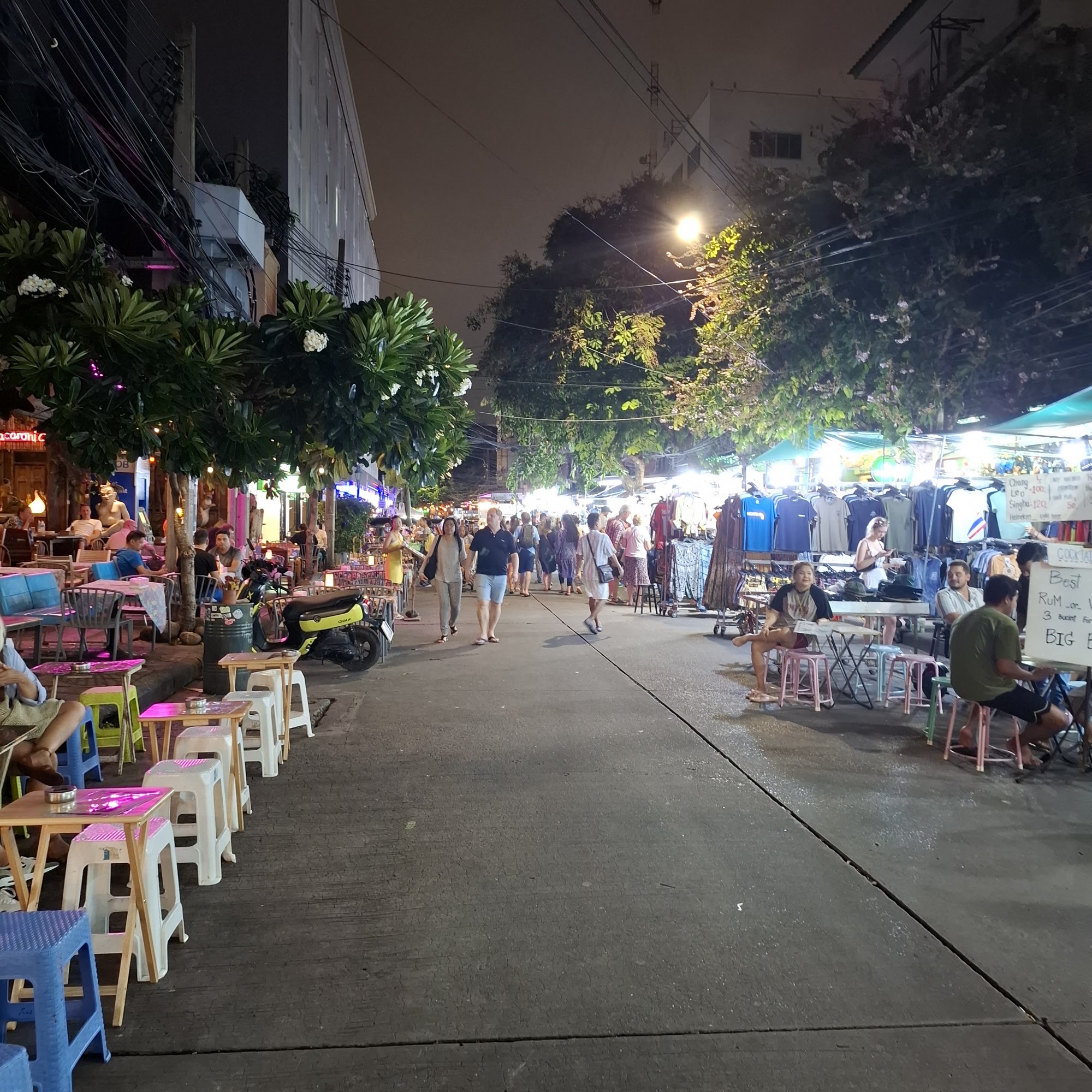
    Bangkok before eight is another city: fewer cars, low light, streets where you hear brooms. It is the best hour to understand how the city works.

    Alms to the monks

    At daybreak, monks walk in file and receive rice, fruit, sometimes prepared dishes. You can take part by buying something to offer in the street. The gesture needs no words: you place it, receive a blessing, move on.

    Parks waking up

    Lumpini at six hosts groups moving slowly, runners, and caged birds being taken out for air. Benjakitti, further south, offers water and walkways in a light that does not last.

    Markets before the crowds

    The flower market, by the river, is at its best between four and seven: deliveries arrive, stems are cut, bouquets are composed. By eight, the essential is done.

    Temples with nobody in them

    A temple at seven has nothing to do with the same place at eleven. Courtyards are empty, sweeping is under way, smells are sharper. It is when a visit becomes a moment rather than a route.

    Breakfast

    Rice porridge, rice soup, fritters and iced coffee: Thai breakfast is eaten in the street, standing or on a stool, for a few baht. It is the fastest and least touristy meal of the day.

    #Thailand #Bangkok #MrSchaka

    Practical information

    Go out before seven if you want cool air and empty streets. The skytrain opens early and works well. Bring water: by nine, the heat is already installed.

    FAQ

    Can you join the alms without being Buddhist?

    Yes, it is an act of generosity, not a religious membership.

    Do temples open that early?

    Some do, some do not. Check, or settle for the outer courtyards.

    What to have for breakfast?

    Rice porridge, iced coffee, and a fritter on the way.

    Also read

    Cover of Bangkok – The Practical Guide

    To go further

    Mr Schaka’s guidebook, Bangkok – The Practical Guide, covers the essentials: transport, neighbourhoods, addresses, food, etiquette and safety, updated for 2026–2027.
  • Where does La Saison du souffle sit in the author’s work?

    Where does La Saison du souffle sit in the author’s work?

    A book is easier to understand when you know where it comes from and what surrounds it. For this author, the work divides into three families, and La Saison du souffle occupies a precise place between two of them.

    The personal narratives

    La Saison du souffle and Je respire encore form a set: two first-person texts where the body, illness and breath are central. They can be read in any order, but they answer each other. This is the most intimate part of the work.

    The crime series

    Oscar’s Notebook is of another kind: investigations, a city, recurring characters. Readers arriving through it will not find the same register, but they will find a setting — Liège, its streets, its stairways — that circulates from one book to another.

    The guides

    The Thailand guides are practical books, but they share with the narratives the same attention to places: a market, a street, a quality of light. You look for addresses there; you also find a way of looking.

    What this changes for the reading

    Placing the book avoids two misunderstandings. The first would be to look for an investigation: it is not a crime novel. The second would be to read it as mere testimony: it is a constructed text, with a form and a progression.

    #LaSaisonDuSouffle #Reading #MrSchaka

    Practical information

    If you are discovering the author, start with La Saison du souffle or with one of the Oscar novels depending on what you want — intimacy or plot. Both paths meet, but not in the same place.

    FAQ

    Must the books be read in a set order?

    No. The narratives are independent, the crime series reads in publication order, the guides in any order.

    Is the novel autobiographical?

    It is a first-person narrative, but that is no reason to read it as a document.

    Which book to start with?

    La Saison du souffle for the writing; an Oscar novel for the story.

    Also read

    Cover of The Season of Breath

    The book

    Mr Schaka lives with pulmonary fibrosis and has been travelling in Thailand for years. In The Season of Breath he tells the story of that journey, one step at a time, with humour and no self-pity.

  • Where to eat vegetarian in Bangkok?

    Where to eat vegetarian in Bangkok?

    Eating vegetarian in Bangkok is easier than expected, provided you know two words and three kinds of address. The difficulty is not finding food, it is avoiding the fish sauce that slips into everything.

    Jay restaurants

    The Thai word ‘jay’ means strict vegetarian cooking of Chinese origin. These restaurants are recognisable by their yellow flags and meat-free menus: no fish sauce, no shrimp paste. It is the simplest solution, and the cheapest.

    The Indian quarter

    Around Phahurat, next to Chinatown, Indian restaurants offer vegetarian dishes without negotiation: dals, vegetable curries, breads. It is also a chance to cross a district that hurried visitors ignore.

    Temple canteens

    Some temples serve simple vegetarian meals, often at midday. The food is frugal, the atmosphere quiet, and you eat among worshippers rather than tourists.

    Vegetarian cafés

    In Sukhumvit and around Siam, a generation of cafés offers bowls, salads and adapted Thai dishes. More expensive, but practical when you do not speak Thai.

    The phrases you need

    ‘Kin jay’ means ‘I eat vegetarian’. To avoid fish sauce, say ‘mai sai nam pla’. Many servers will understand, but always check: oyster sauce hides in stir-fries.

    #Thailand #Bangkok #MrSchaka

    Practical information

    The Yaowarat vegetarian festival, in October, turns part of Chinatown into a huge meat-free canteen. The rest of the year, look for yellow flags. Avoid ordering ‘no meat’ without saying more: they will remove the meat, not the sauce.

    FAQ

    Is it hard without speaking Thai?

    Not in jay restaurants and vegetarian cafés, where menus are clear.

    Is tofu always vegetarian?

    Yes, but it may be fried in oil also used for meat.

    Can you eat vegetarian in the street?

    Yes, with tofu skewers and some noodle stalls, asking for no fish sauce.

    Also read

    Cover of Bangkok – The Practical Guide

    To go further

    Mr Schaka’s guidebook, Bangkok – The Practical Guide, covers the essentials: transport, neighbourhoods, addresses, food, etiquette and safety, updated for 2026–2027.