Chatuchak is Bangkok’s largest market, and probably the largest weekend market in the world: around fifteen thousand stalls across twenty-seven sections, open at weekends only. It is also where most travellers give up after an hour, exhausted, having seen nothing. The difference between a good visit and a bad one is not stamina: it is arrival time, a sense of direction, and what you agree not to see.
Choose your moment
The market opens only on Saturday and Sunday, and that is the first thing to check before planning your day. In practice, it opens late morning and closes late afternoon; some stalls start earlier, others pack up before time. On Friday evening part of the market works as wholesale, but that is a different experience and no substitute for a weekend visit.
The right window is clear: from opening until eleven. At that point it is still bearable, the aisles are workable and the sellers are available. From noon, heat settles under the canvas, air circulates poorly and the crowd becomes a physical obstacle. Mid-afternoon is the worst slot: you move at the speed of the flow and choose nothing.
How to get there
The market is served by two lines, which simplifies arrival. By metro, Kamphaeng Phet station drops you practically inside the market: it is the most direct exit towards the central sections. Chatuchak Park station, on the same line, leaves you at the north entrance, useful if you want to start with plants and household goods.
By skytrain, Mo Chit station leaves you a few minutes’ walk away, by the park. It is the simplest option from Sukhumvit or Siam, with a possible connection. Avoid taxis at weekends: the streets around the market are saturated from late morning, and the driver will drop you at a distance anyway.
Finding your way between sections
The market is organised in numbered sections, linked by main aisles and a maze of secondary ones. The system works, but you must accept one rule: you will get lost, and it does not matter. Signs indicate sections, not shops; the same aisle can change character within ten metres.
The method that works is to set yourself three objectives per visit, no more. Clothes and accessories in one area, crafts and decoration in another, plants and animals in a distinct zone, antiques and collectables elsewhere, food in the centre. If you are looking for something specific — a lamp, a fabric, a bag — ask: sellers pass you on to each other and know their section better than any map.
Note a fixed point on arrival: a tower, an entrance, the metro station. Without a landmark, finding the exit becomes a twenty-minute negotiation.
What to buy, and what to leave
Chatuchak is good for simple clothes, fabrics, crockery, wooden objects, travel accessories and plants. Prices are low, quality varies, and the main interest is choice: ten stalls offer the same thing, which lets you compare.
Three categories need care. Antiques and art objects: many are reproductions, and exporting genuine archaeological pieces is regulated. Animals: the trade exists, it is often cruel, and nothing justifies taking part. Counterfeits: they are everywhere, and customs checks on arrival are not a myth.
Eating on site
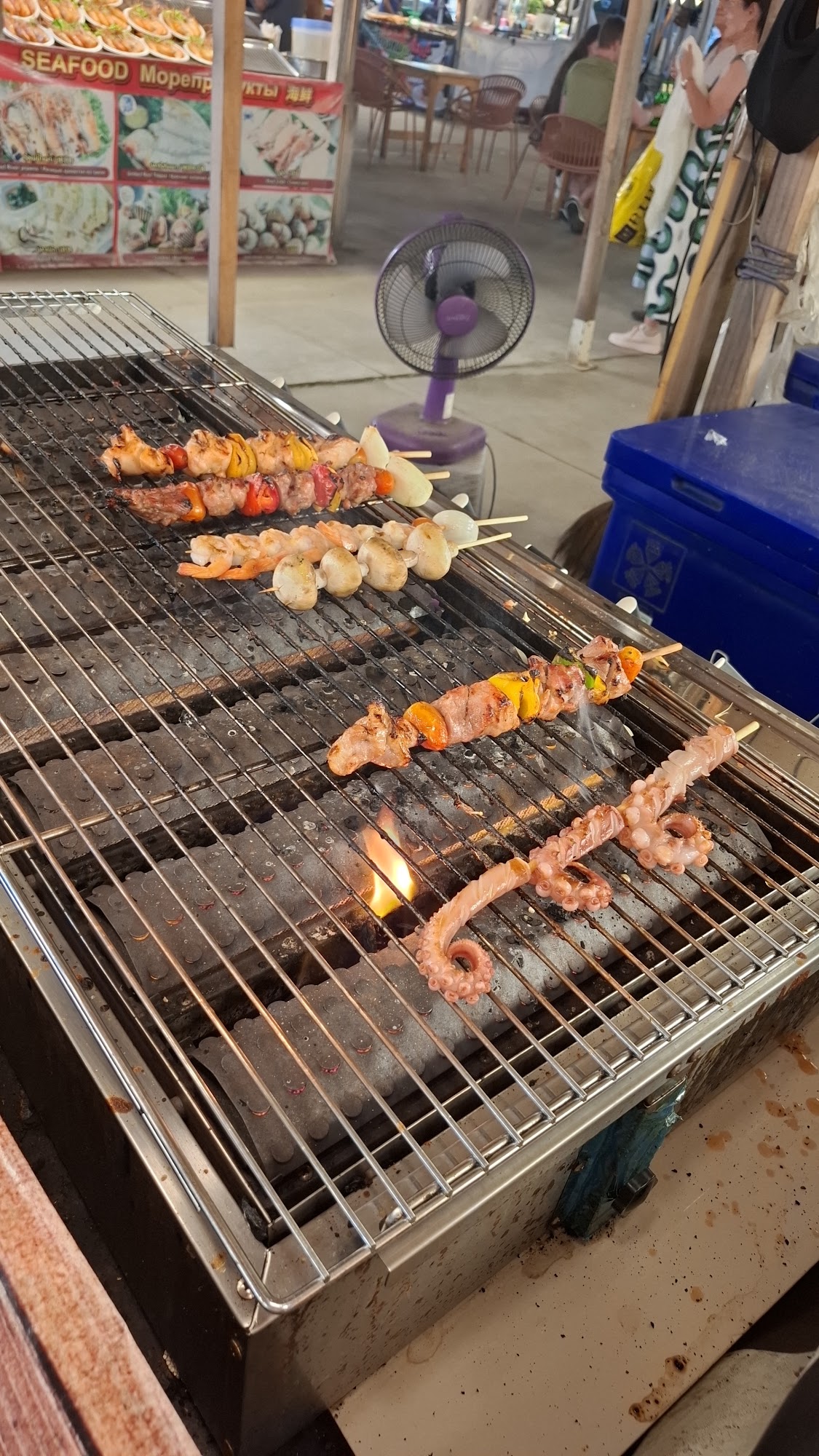
Food is one of the reasons to come. The central aisles concentrate street food stalls, and you eat for a few baht, standing or on a stool, next to regulars. Classic dishes are well executed: noodle soups, grills, sharp salads, iced desserts.
Two tips. First, eat early: by noon queues lengthen and tables vanish. Second, choose the stalls where things are moving: an empty stall in the middle of a busy aisle is not a good sign. Water and drinks are everywhere; cafés are rarer and a good stop to find air conditioning.
Haggling without losing your temper
Haggling works on clothes, crafts and decoration, much less on food and displayed prices. The local rule: a smile, a question, a reasonable counter-offer. Asking for half the price is a second-rate technique that only works on tourist stalls.
The real lever is not haggling, it is comparison. The same bag is found at three different prices in three sections. Walk first, buy afterwards. And keep small change: many sellers have none early in the day.
Heat, water, breaks
The market is covered by canvas, not walls: it is hot and air circulates badly. Bring water, a hat for the open aisles, and light clothes. Toilets exist but are uneven; the neighbouring shopping centres, one of them linked to the metro, offer a welcome air-conditioned break.
A reasonable visit lasts two to three hours. Beyond that, fatigue decides for you and you will buy anything to get out. Two short visits are better than one long one.
Mistakes to avoid
Coming on a weekday, when the market is closed. Arriving at noon and believing you will last. Entering at one end and wanting to cross everything. Buying the first object seen without comparing. Paying with a large note. And starting a fragile purchase without thinking about transport: ceramics in a backpack are broken ceramics on arrival.
FAQ
Which day should I come?
Saturday or Sunday. Both are equivalent; Saturday is sometimes slightly less dense.
How long should I allow?
Two to three hours for a useful visit. Half a day if you are looking for something specific.
Can I bring children?
Yes, early in the morning, and a pushchair is impossible in the narrow aisles: prefer a baby carrier.
How do I carry my purchases?
Bring a strong bag or buy one on site. Fragile objects travel better in cabin luggage.
Is the market expensive?
No, it is one of the cheapest in the city. But tourist-stall prices are three times those of the inner aisles.
Also read
To go further
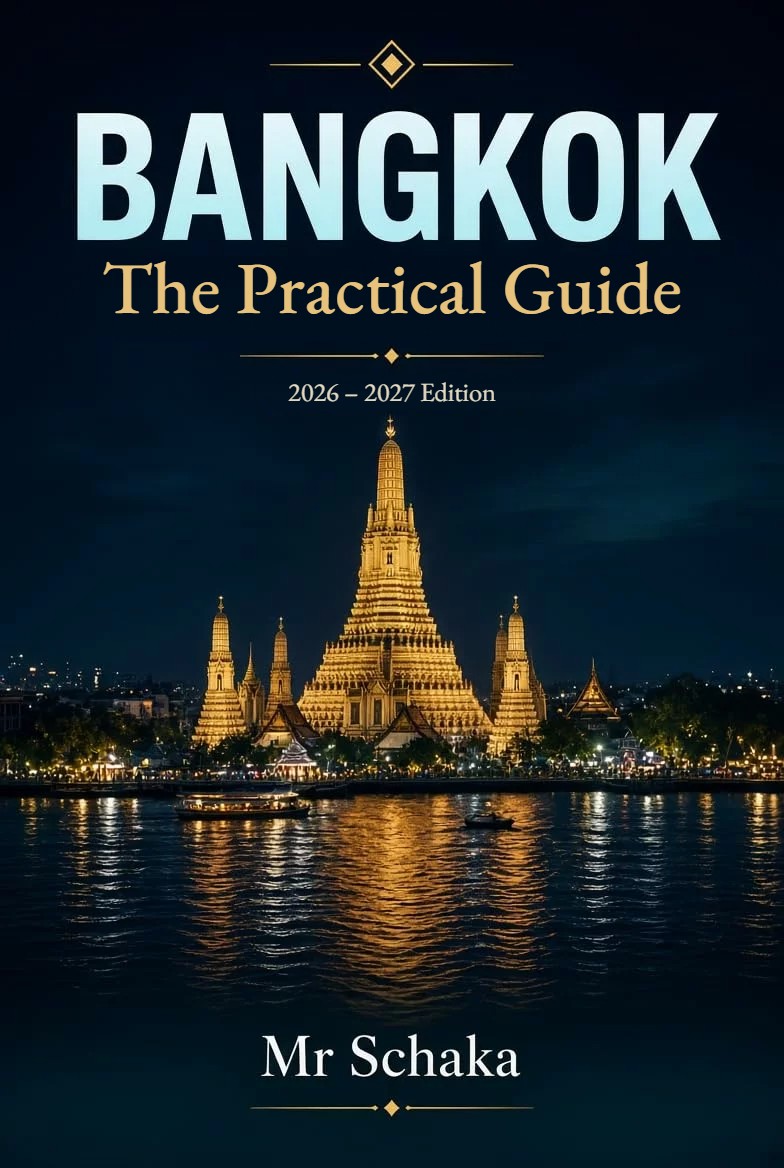
Mr Schaka’s guidebook, Bangkok – The Practical Guide, covers the essentials: transport, neighbourhoods, addresses, food, etiquette and safety, updated for 2026–2027.