On Friday 17 October 2026, Chu went to the vegetarian festival in Yaowarat, Bangkok’s big Chinatown. She came back with about fifty photos and a bag of fritters. Here is everything you need to know about the festival, with her pictures: the dates, what you can eat, the rules of “jay” food and how to get there.
What is the vegetarian festival?
In Thai, it is called Thetsakan Kin Jay (เทศกาลกินเจ), the festival where people “eat jay”. It is a Taoist tradition of the Thai-Chinese communities, dedicated to the Nine Emperor Gods. It takes place during the first nine days of the ninth month of the Chinese lunar calendar, so usually between late September and October.
For nine days, believers eat “jay” to purify body and mind. Many dress in white, the colour of purity. The most famous festival is held in Phuket, with spectacular processions. In Bangkok, it all happens in Yaowarat, in a more festive atmosphere that is all about food.
The 2026 dates
In 2026, the festival starts on 9 October, the day of “cleansing” (wan lang thong). The vegetarian period runs from 10 to 18 October 2026. In Yaowarat, the celebrations last from 9 to 18 October. The opening ceremony took place on 10 October, from 4 pm to 10 pm, with the street closed to cars between the Chinatown Gate and the Lamphun Chai Road junction.
The yellow flags and the “jay” character
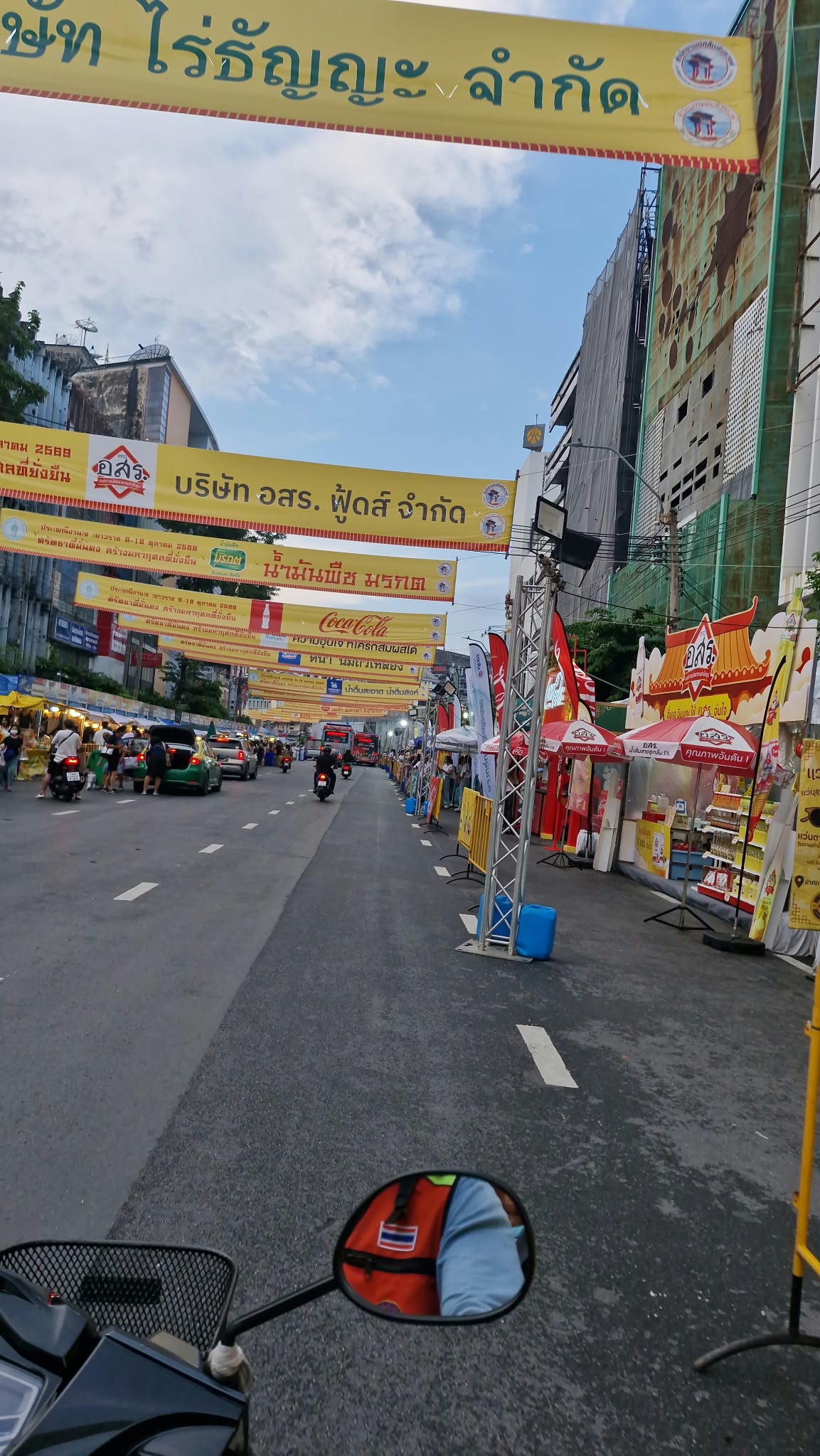
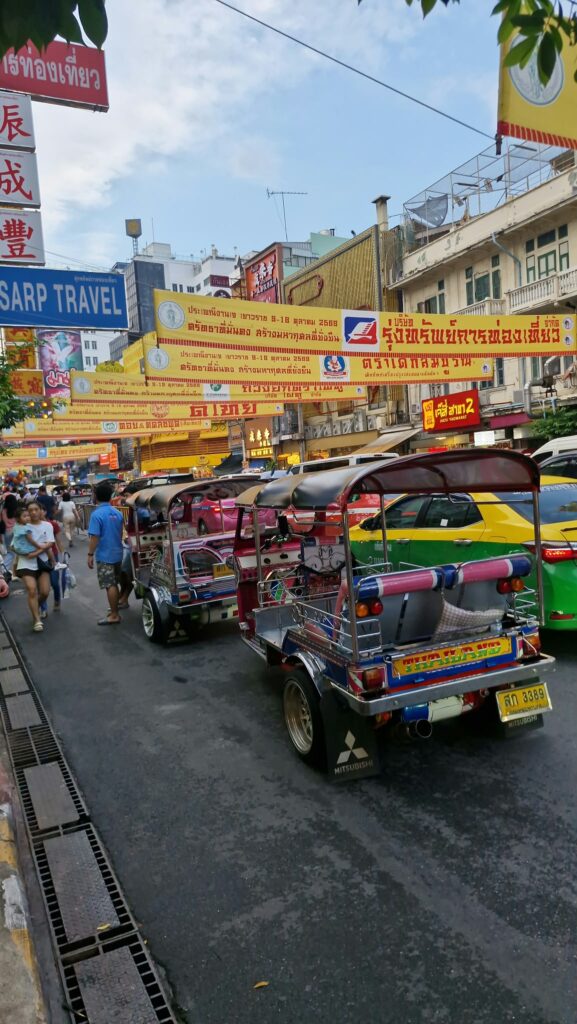
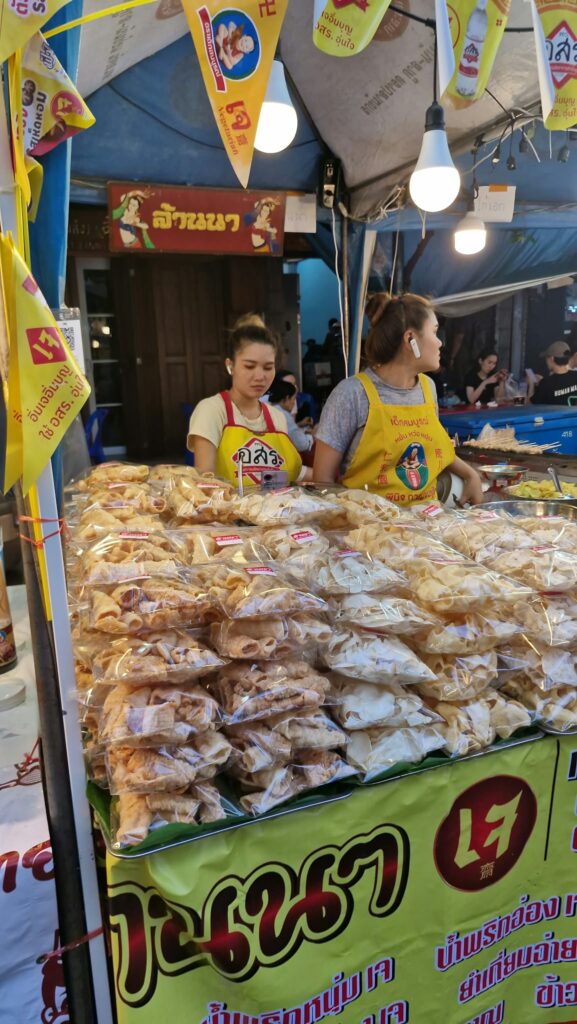
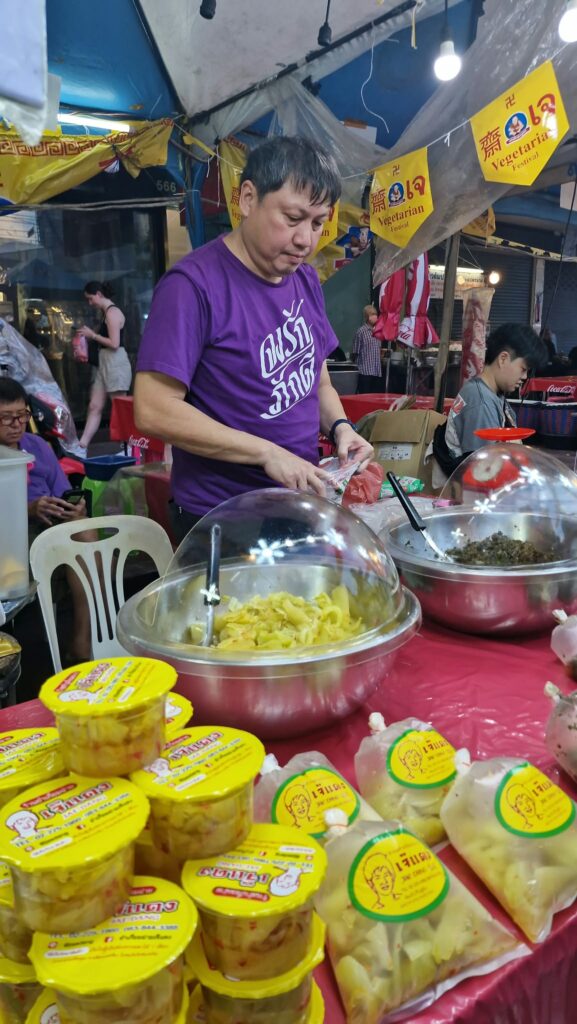
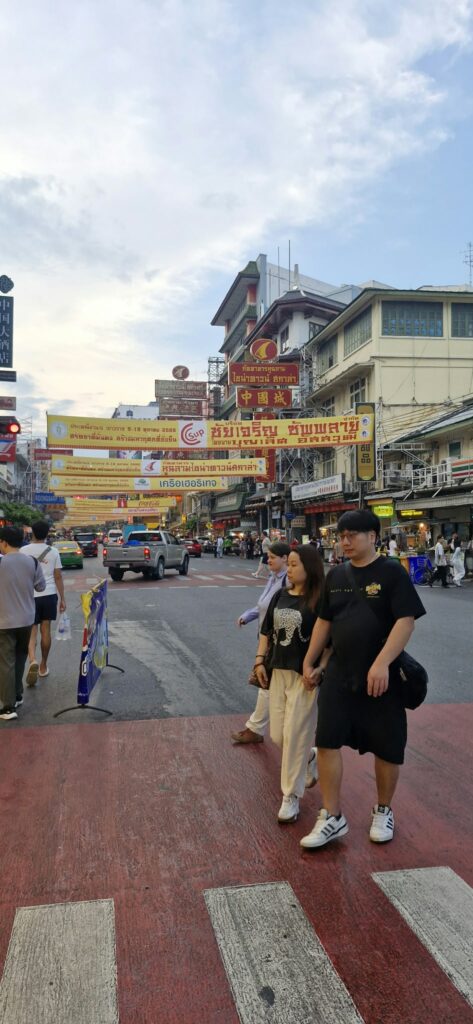
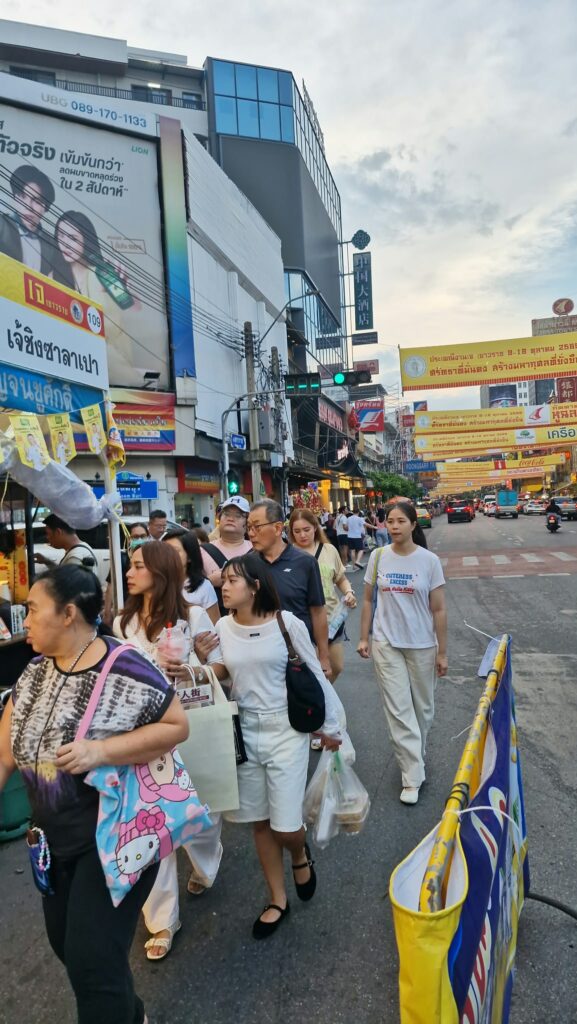
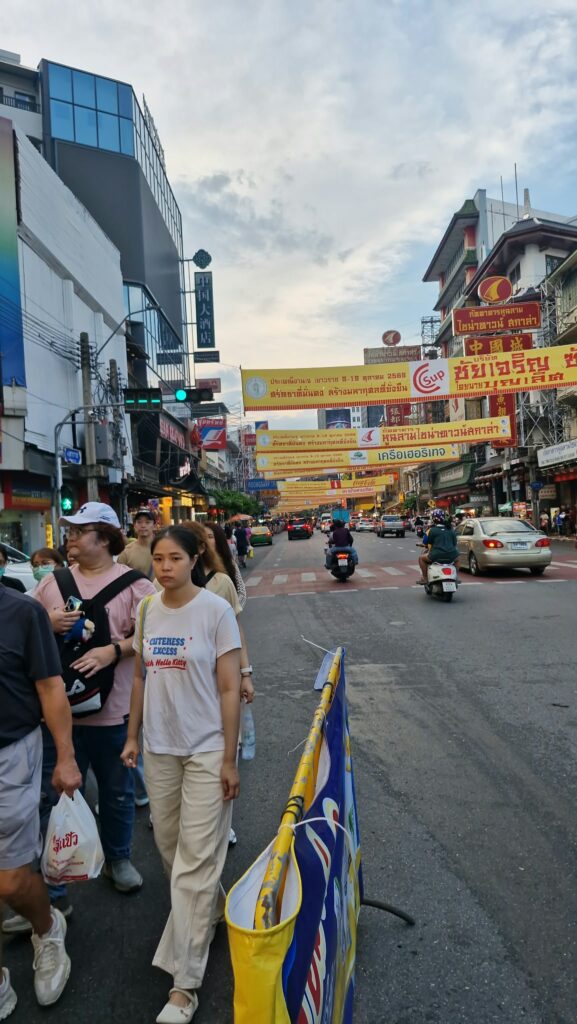
You cannot miss the festival: Yaowarat Road is covered with yellow banners and flags, marked with a red character. In Thai, it is the word เจ (jay). On a stall, a restaurant or a packet of crisps, this flag means that the food follows the jay rules. It is your best guide during these nine days, everywhere in Thailand, even at 7-Eleven.
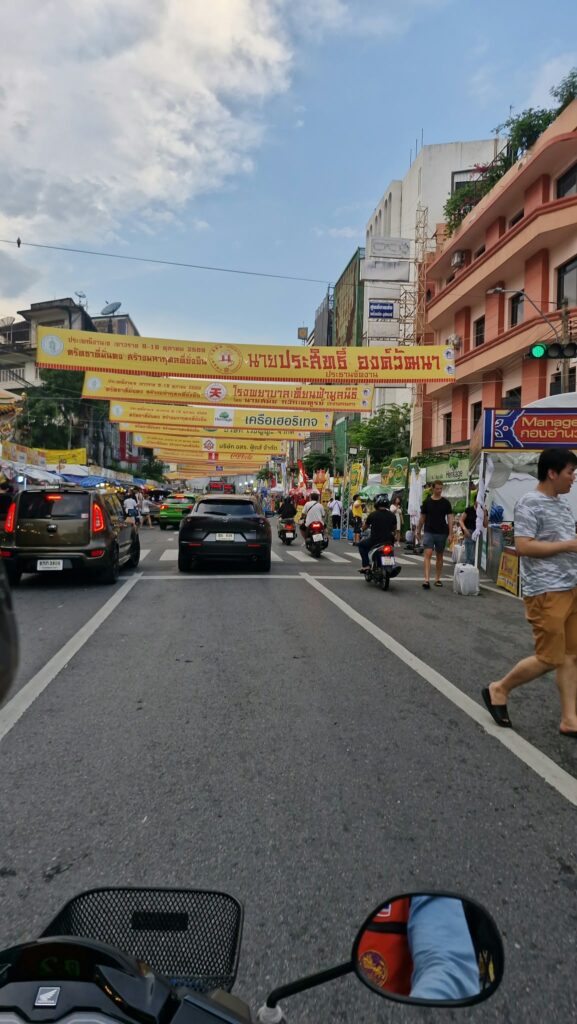
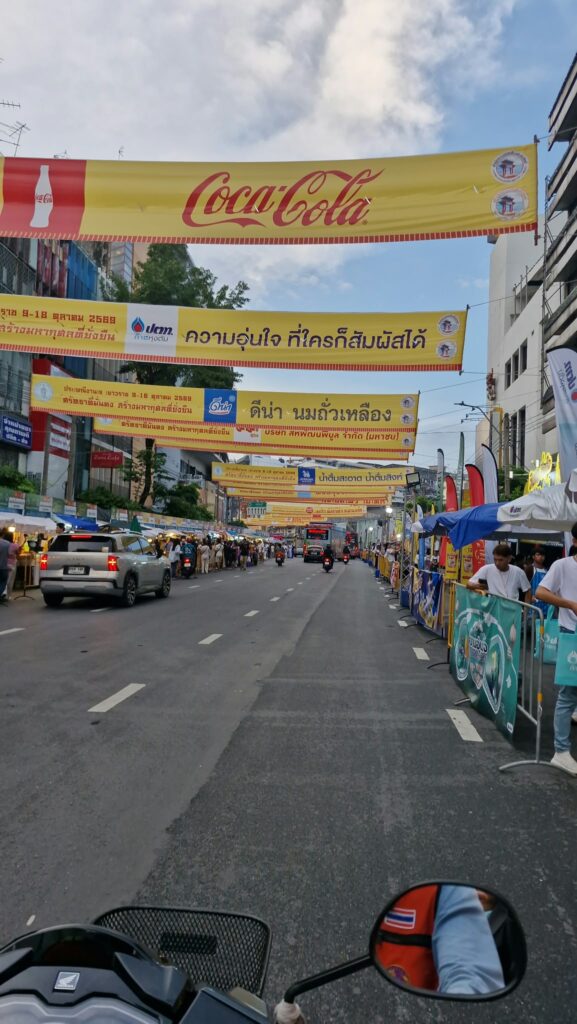
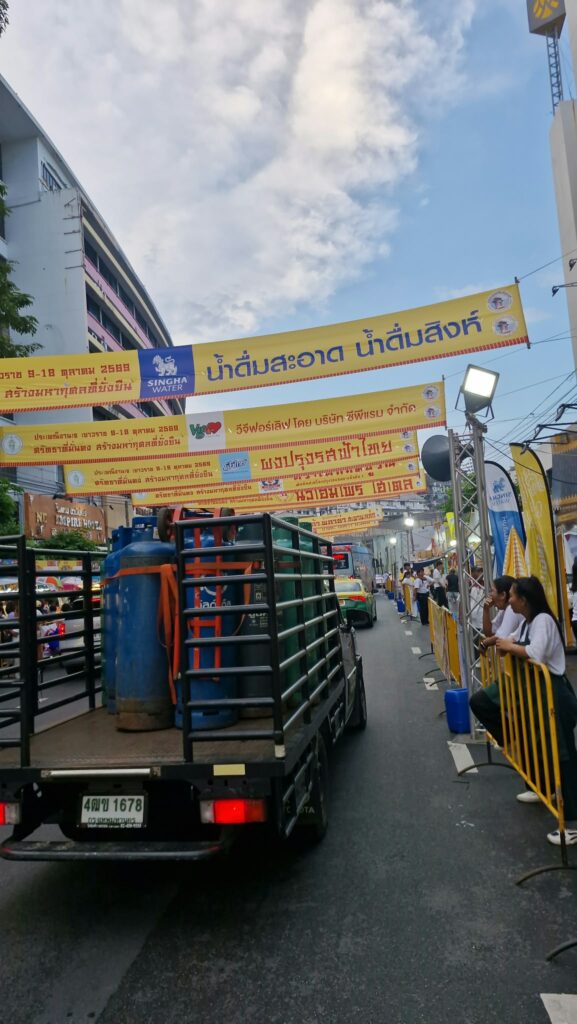
Yaowarat during the festival
The heart of the celebrations is around the Chinatown Gate, at the Odeon roundabout, at the start of Yaowarat Road. According to the Tourism Authority of Thailand, more than a hundred vegetarian restaurants and street food stalls set up along the street. There are also lion and dragon dances and ceremonies in the Chinese shrines of the area.
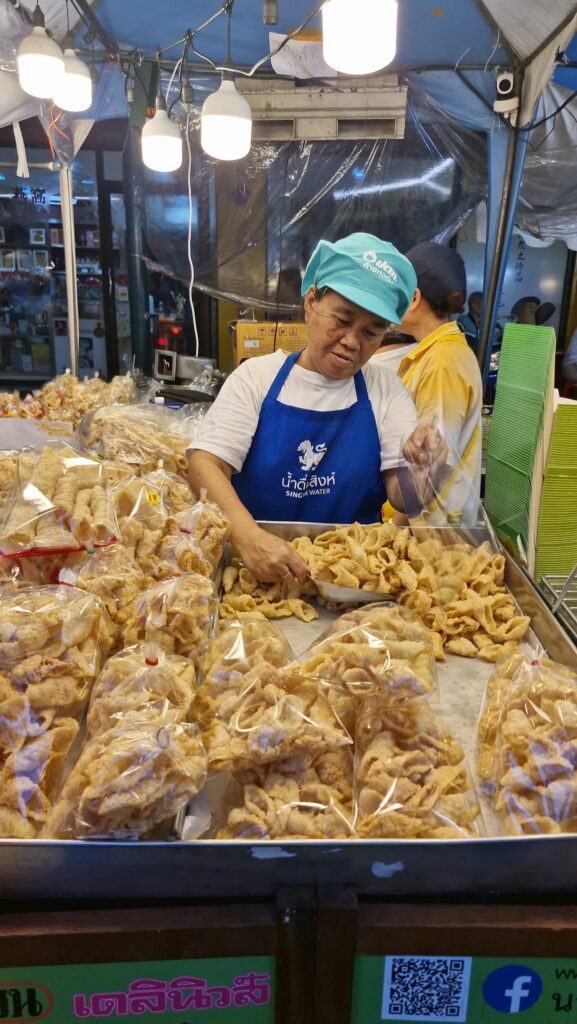
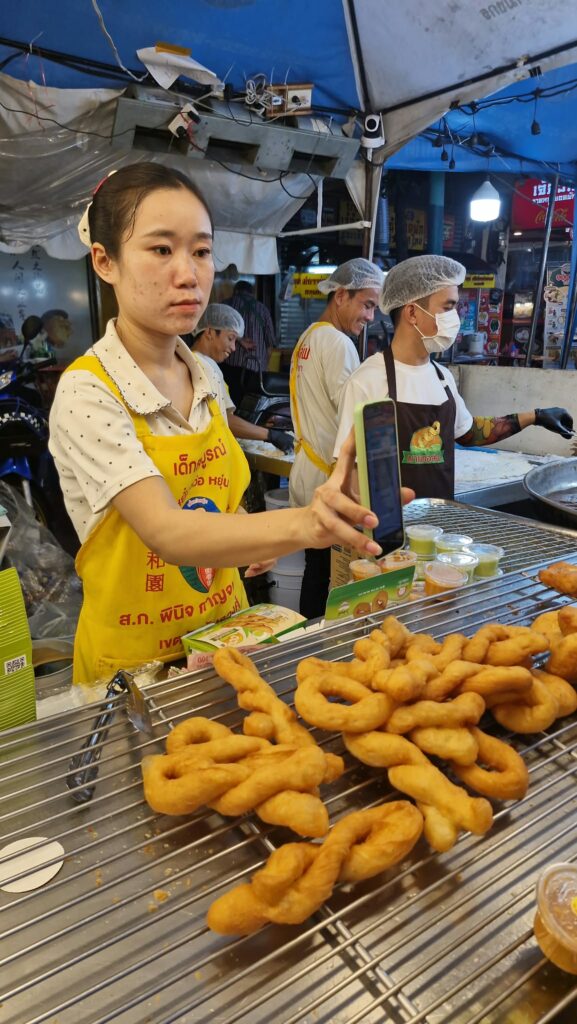
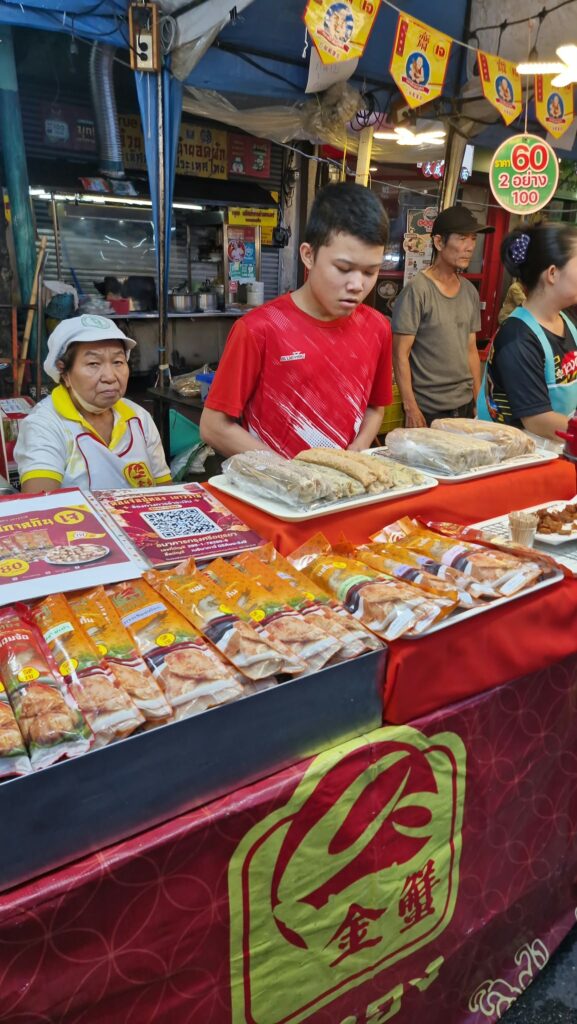
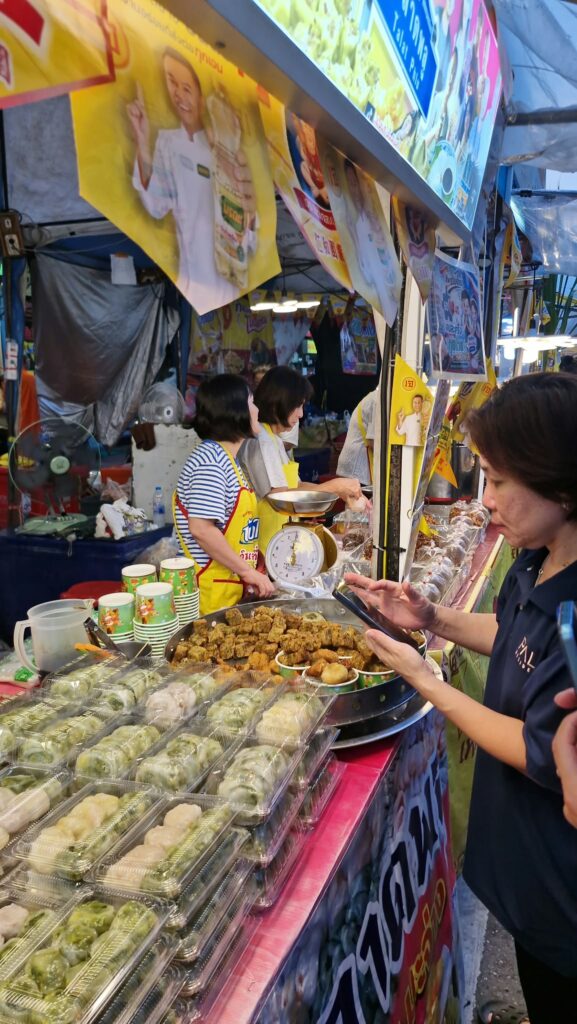
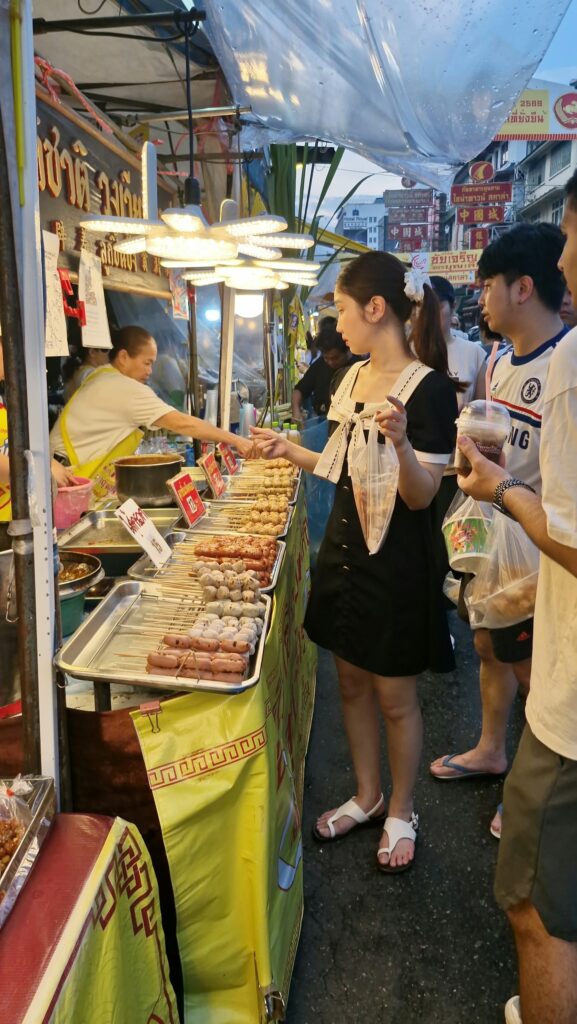
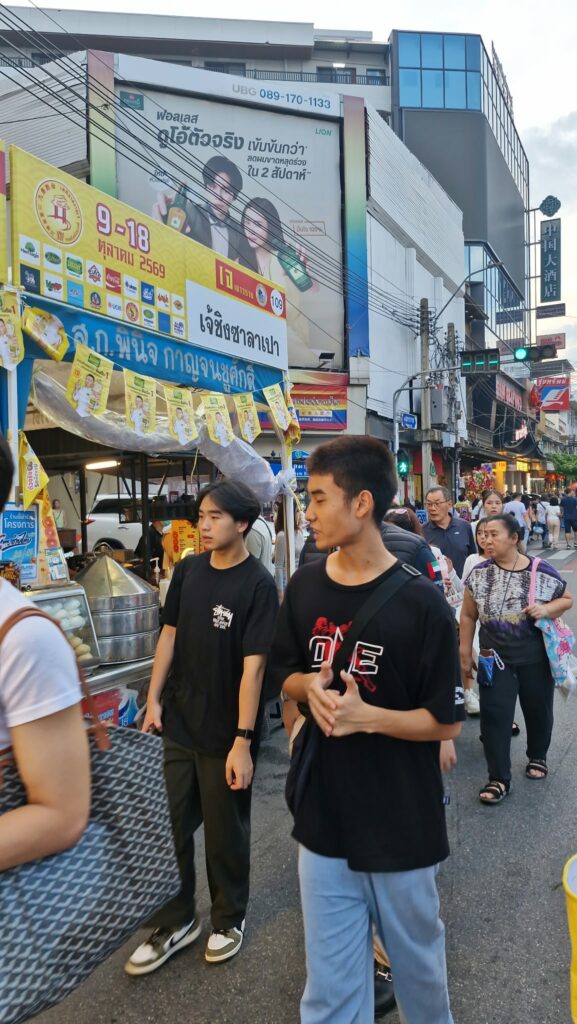
The 2026 programme also included a procession of the deities’ palanquins from 22 Chinese shrines in the area. It started at Wat Mangkon and went to the Chinatown Gate. As Chu’s photos show, the crowd is thick in the late afternoon: families, students, tourists, and lots of Thais who come especially to eat.
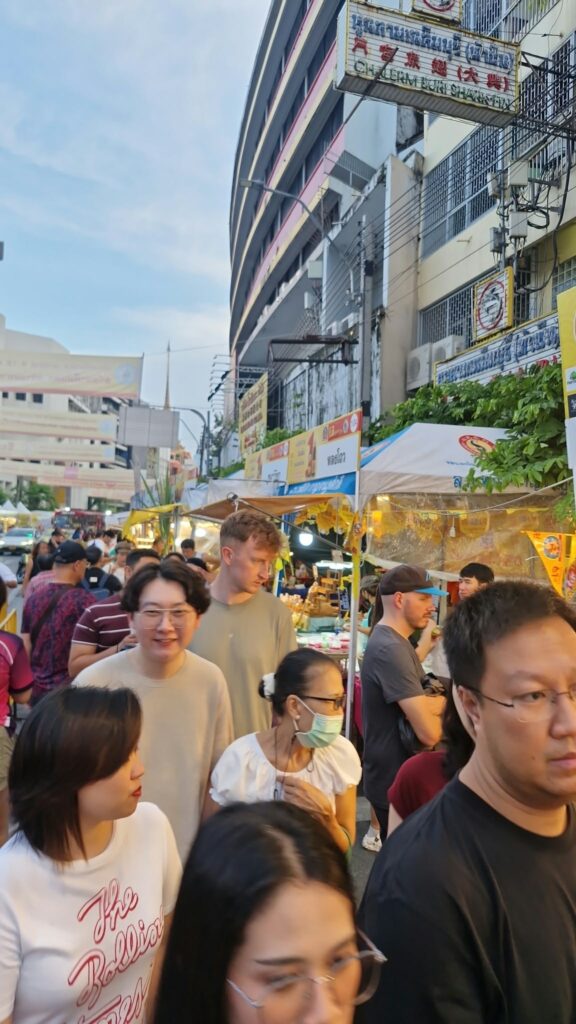
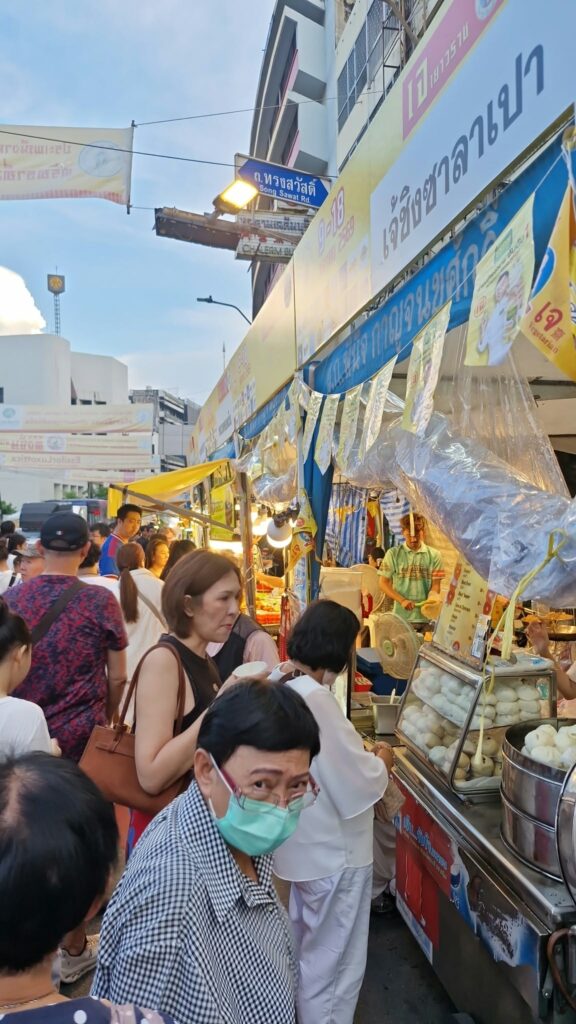
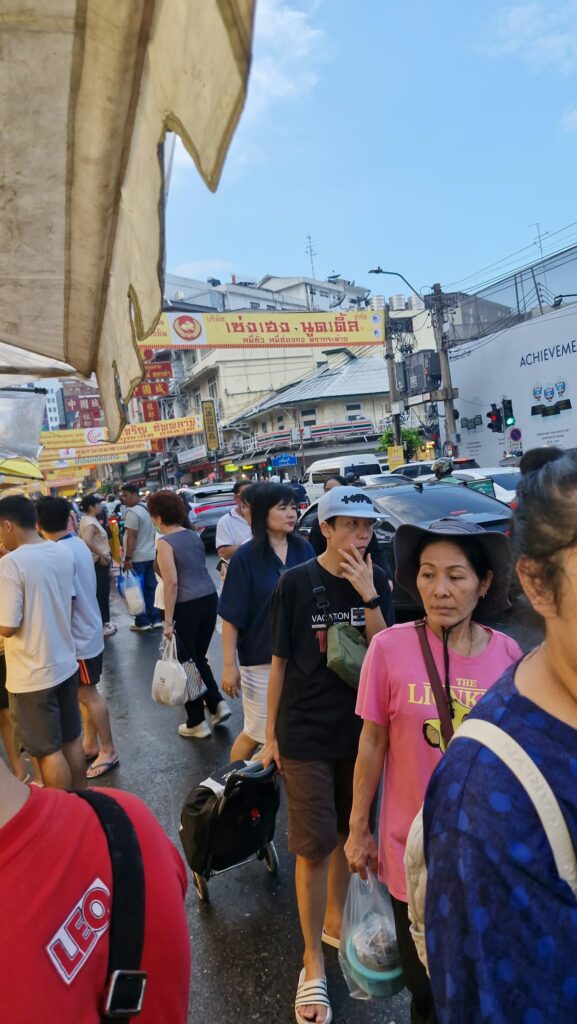
Right next to the Chinatown Gate, Wat Traimit temple and its large solid gold Buddha are worth a detour before you dive into the crowd.
What do you eat at the vegetarian festival?
Jay food is stricter than a simple vegetarian meal. It excludes meat, poultry, fish and seafood, but also eggs and dairy products. It also bans five vegetables considered too strong: garlic, onion, leek, chives and tobacco leaf. Very strong flavours are avoided.
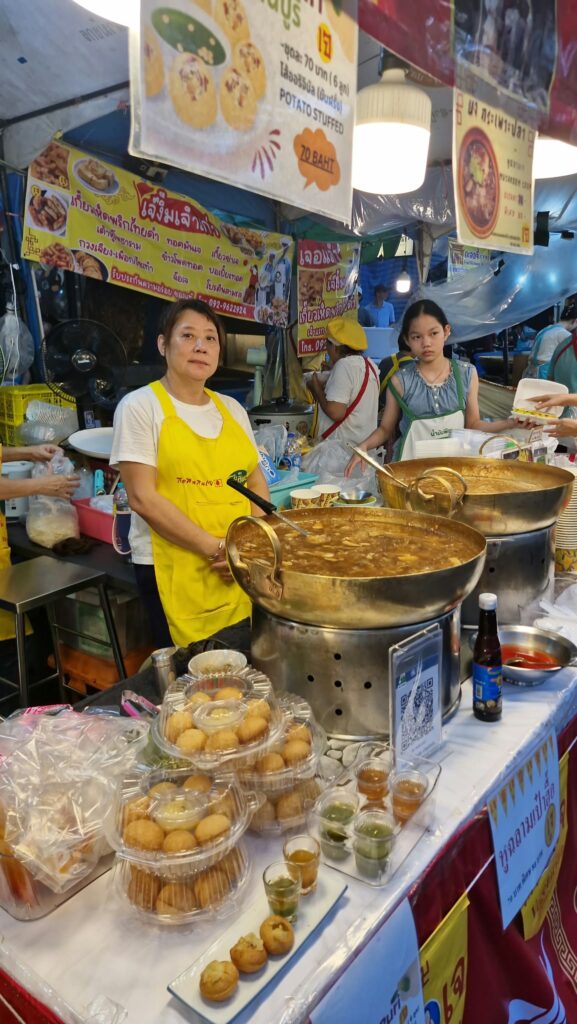
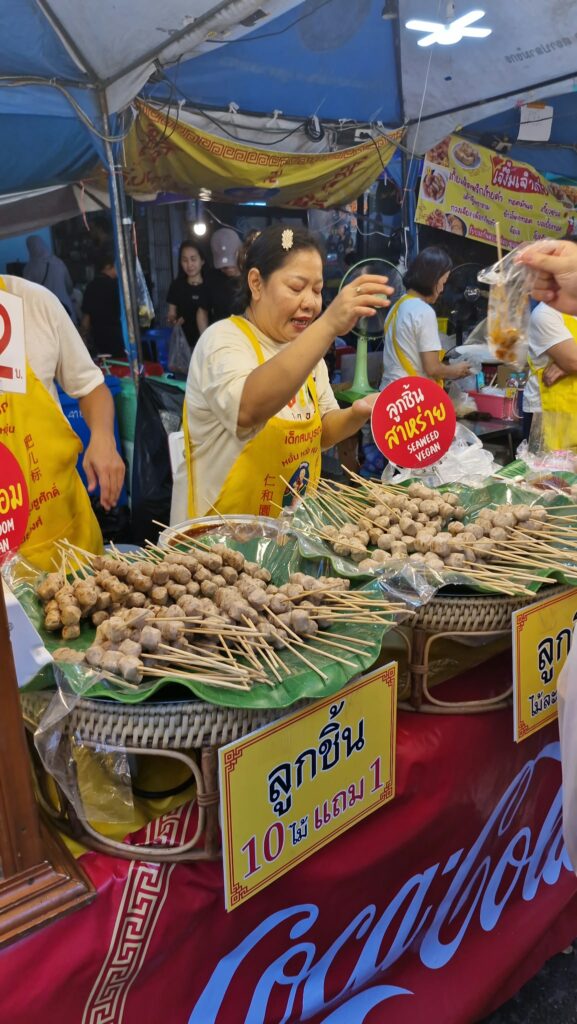
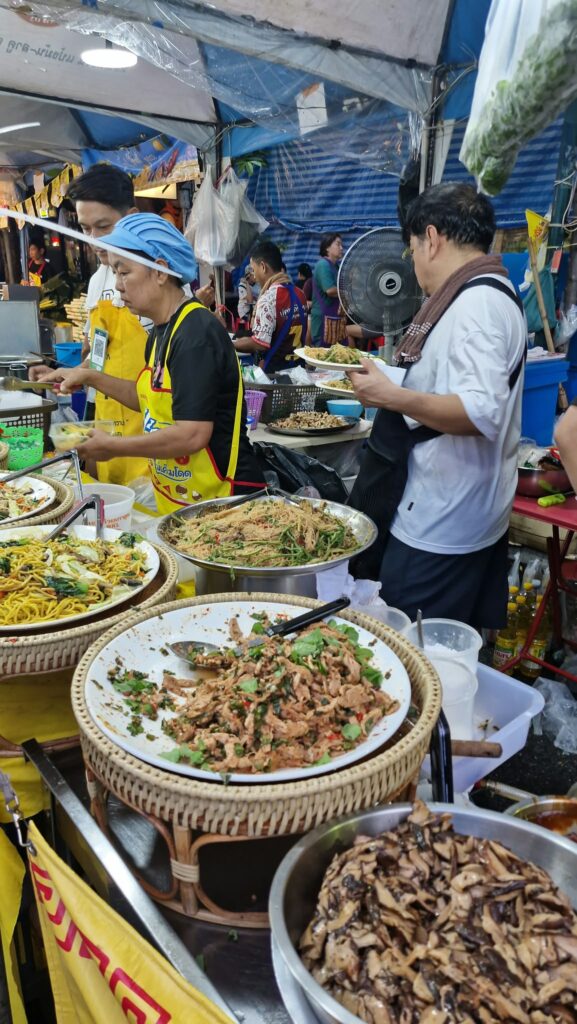
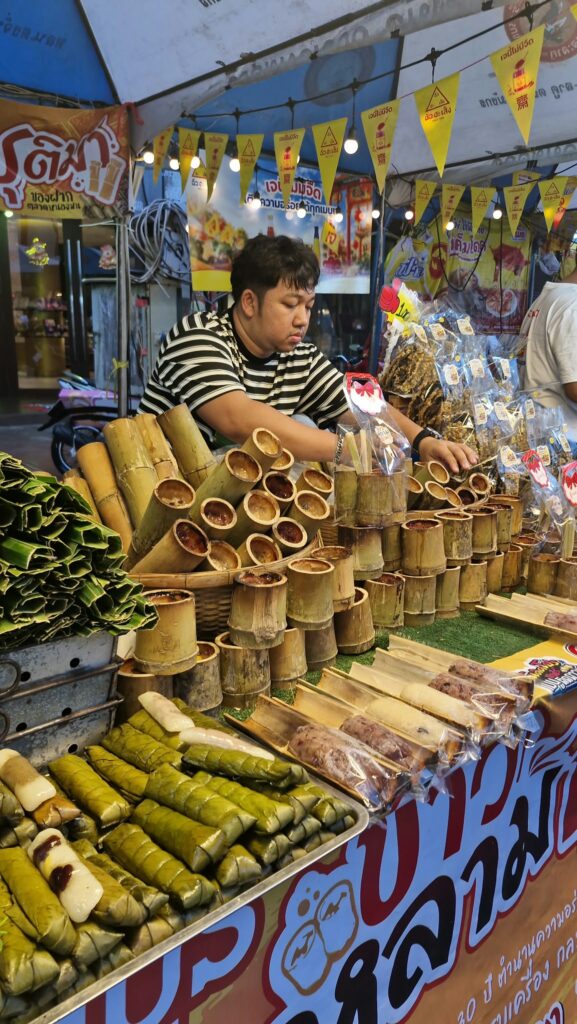
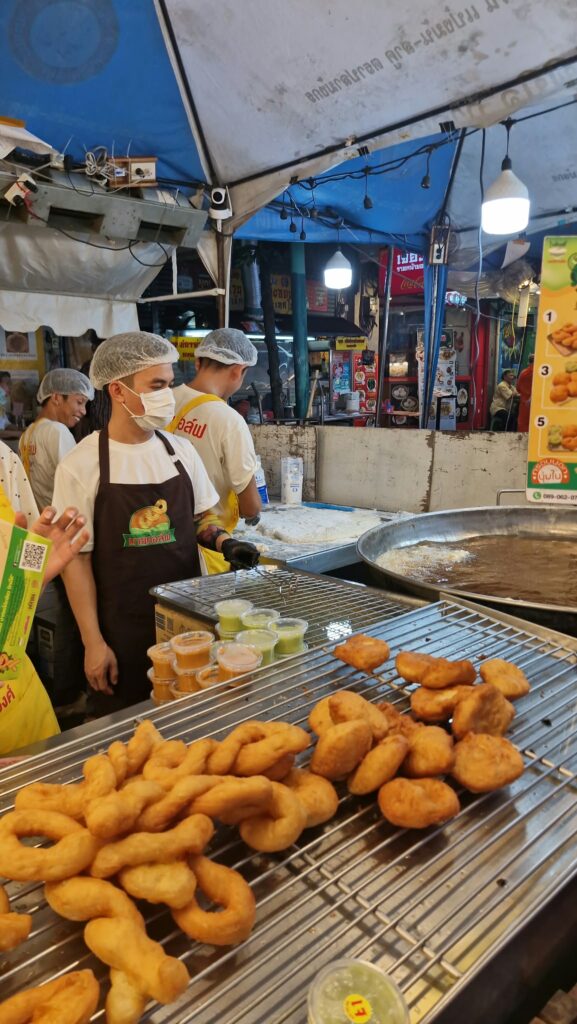
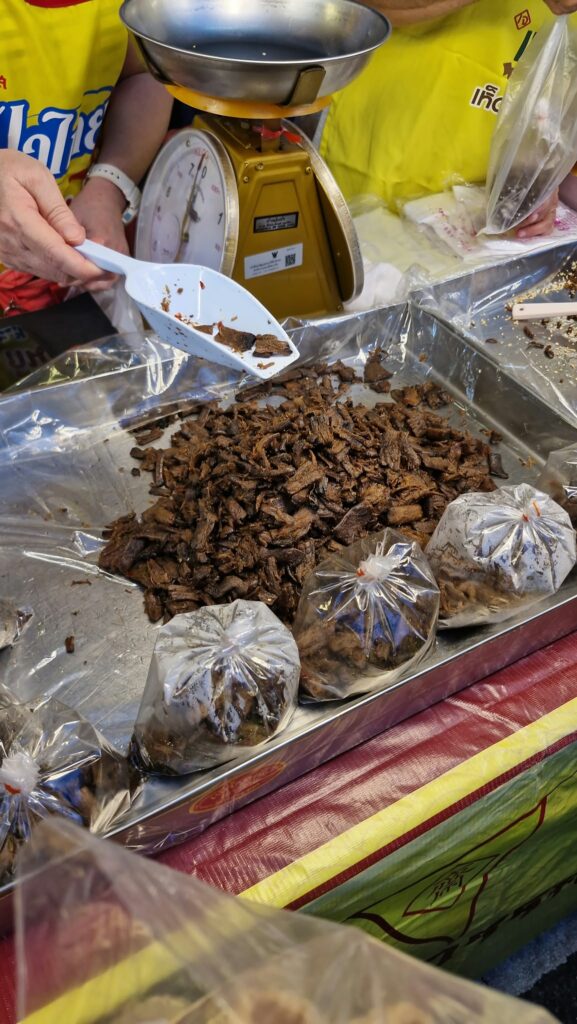
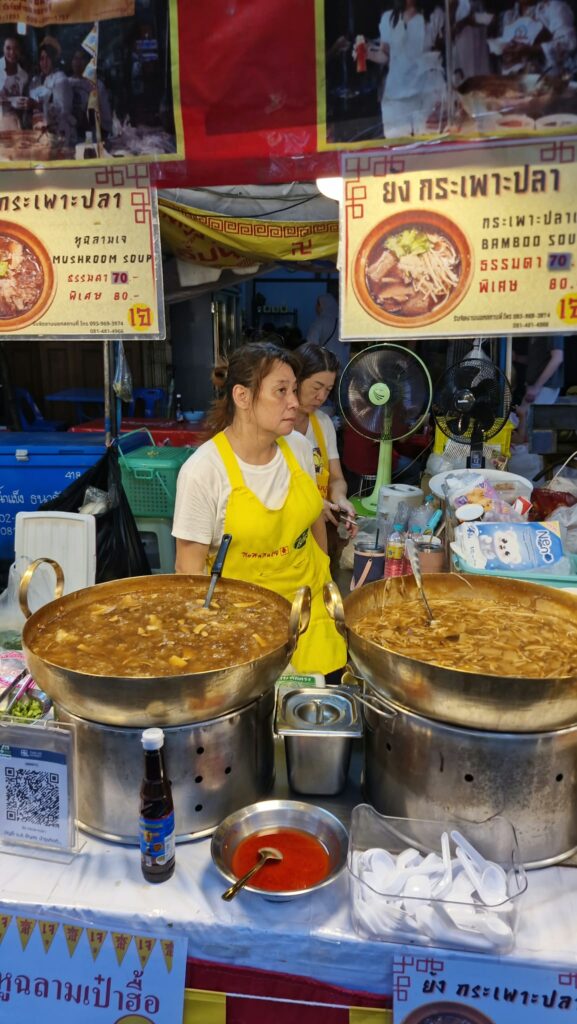
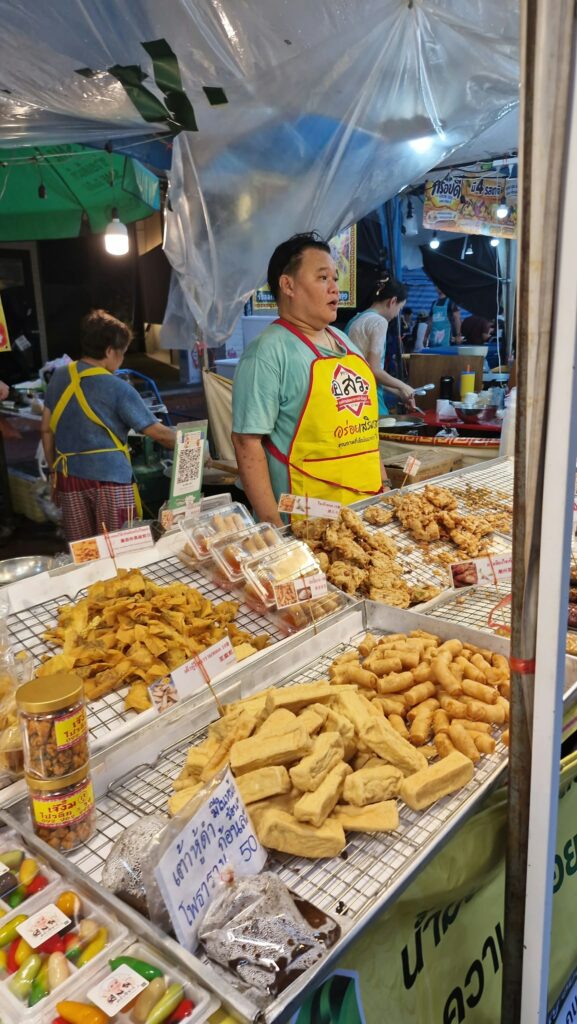
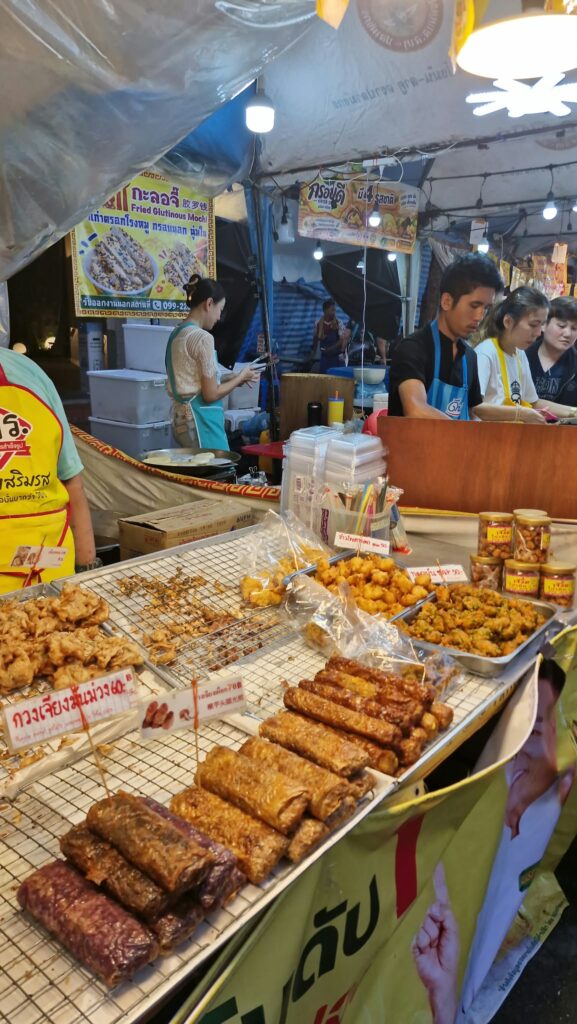
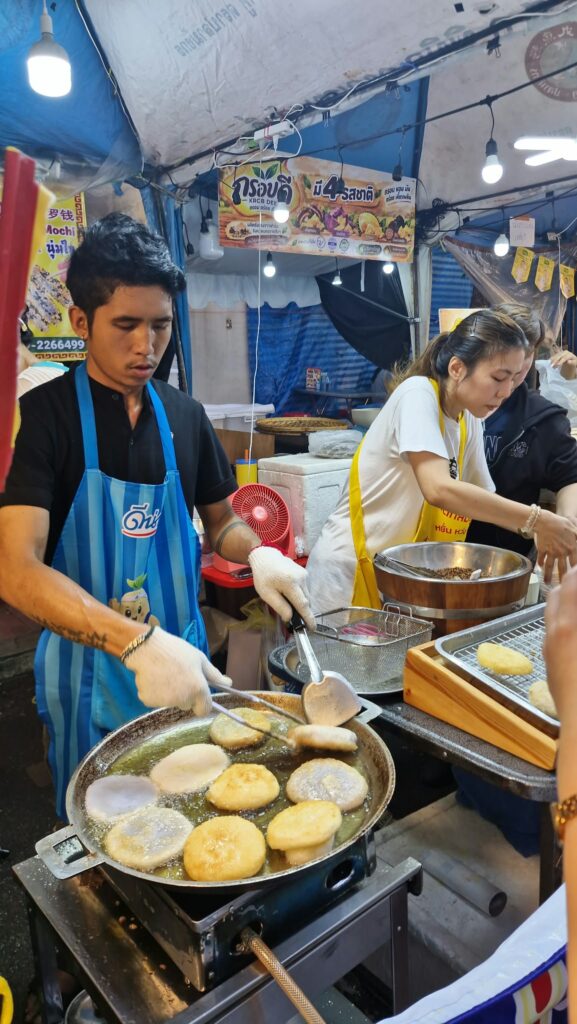
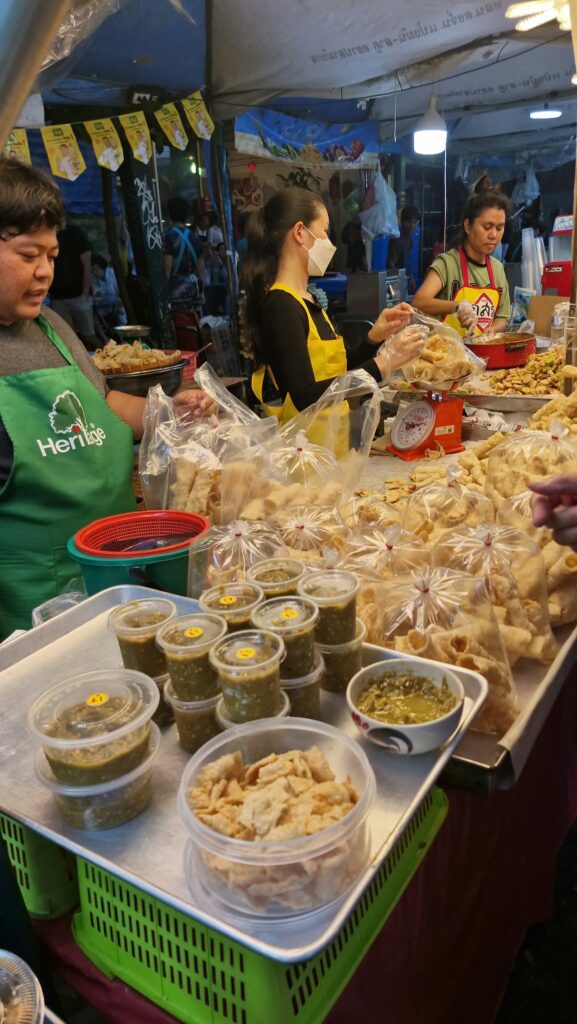
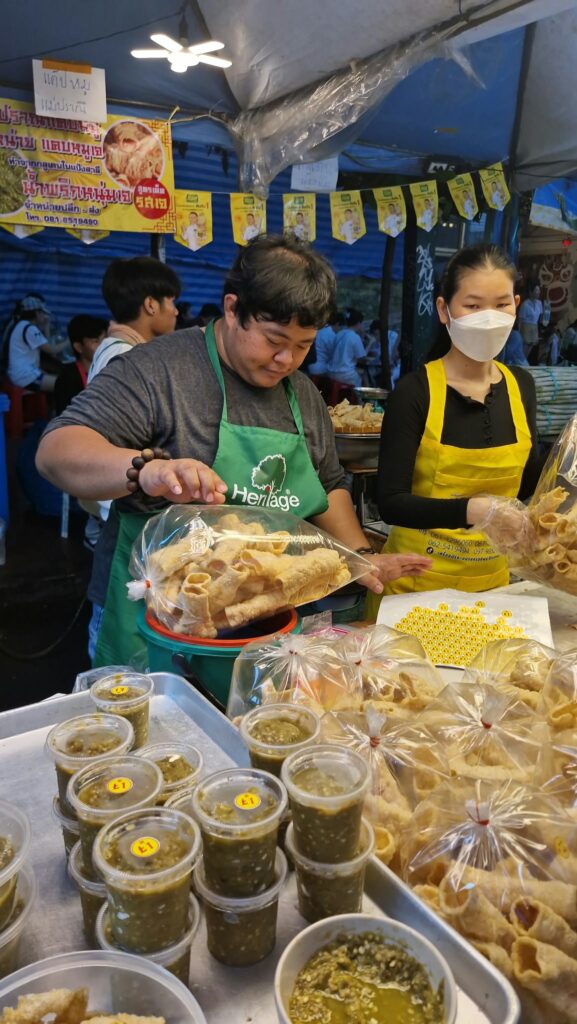
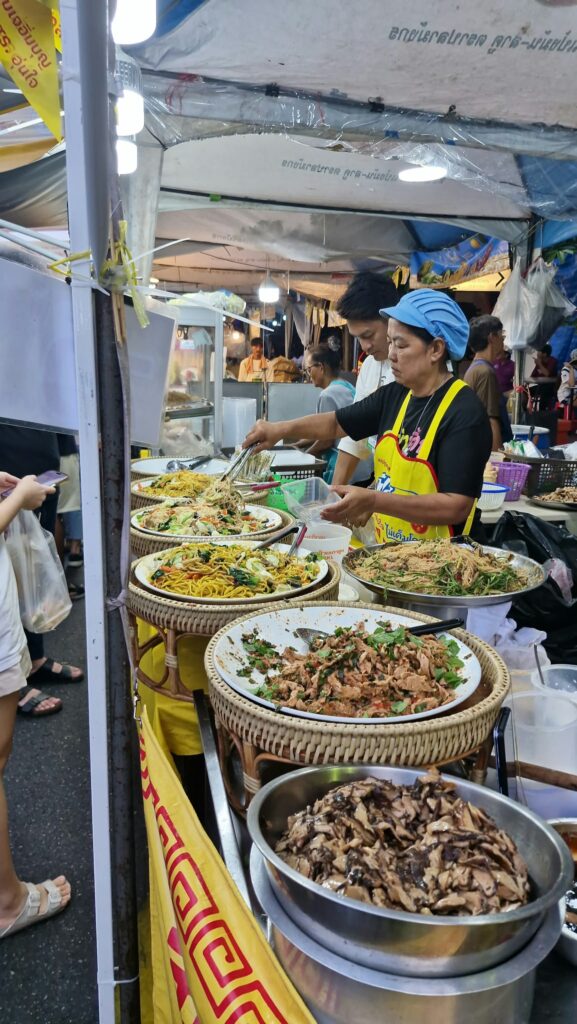
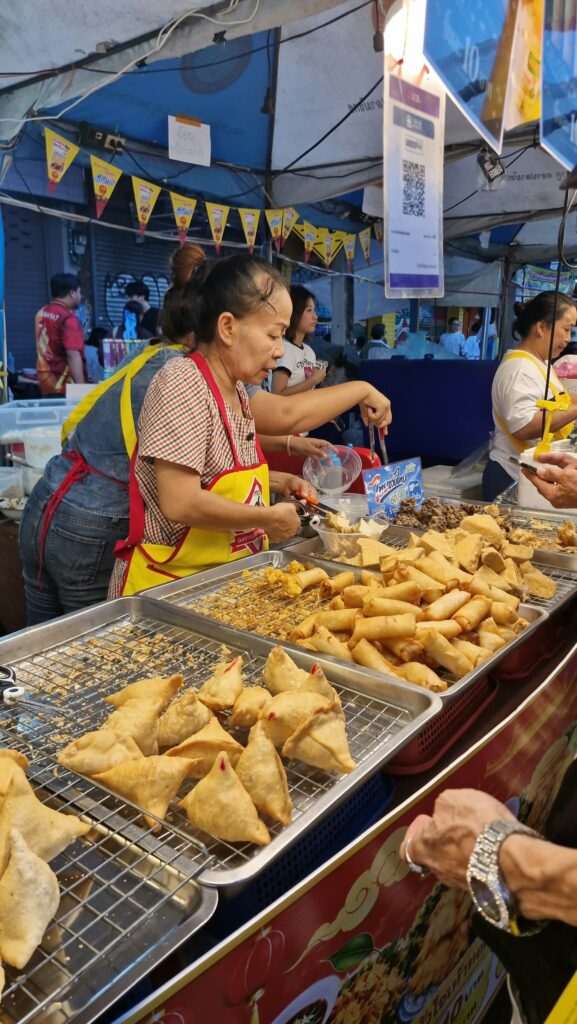
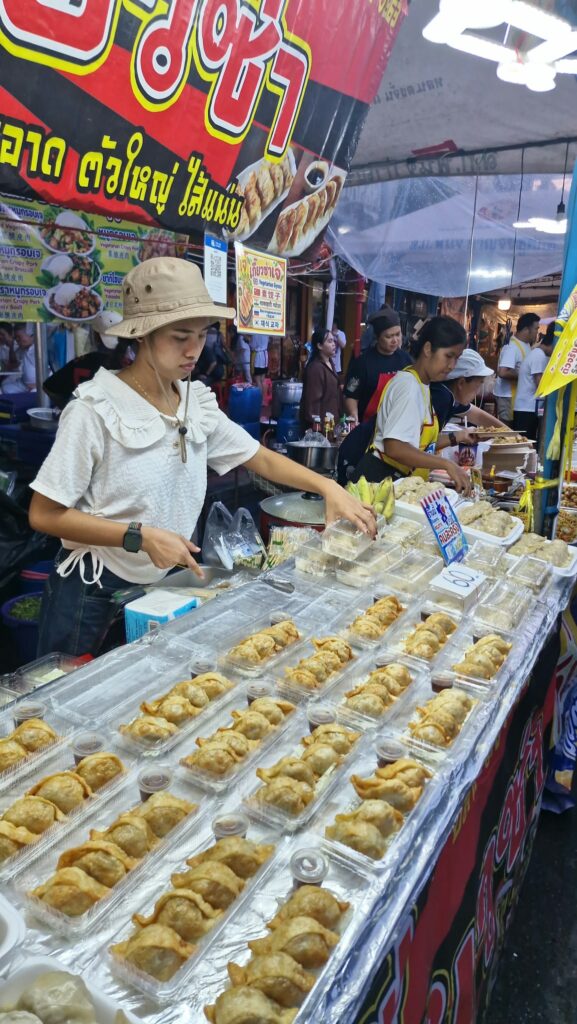
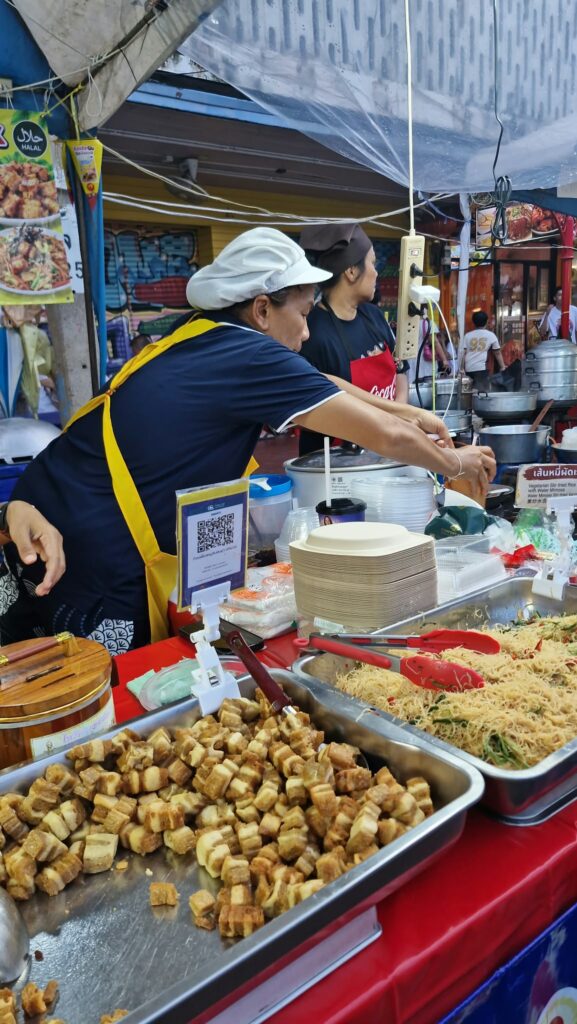
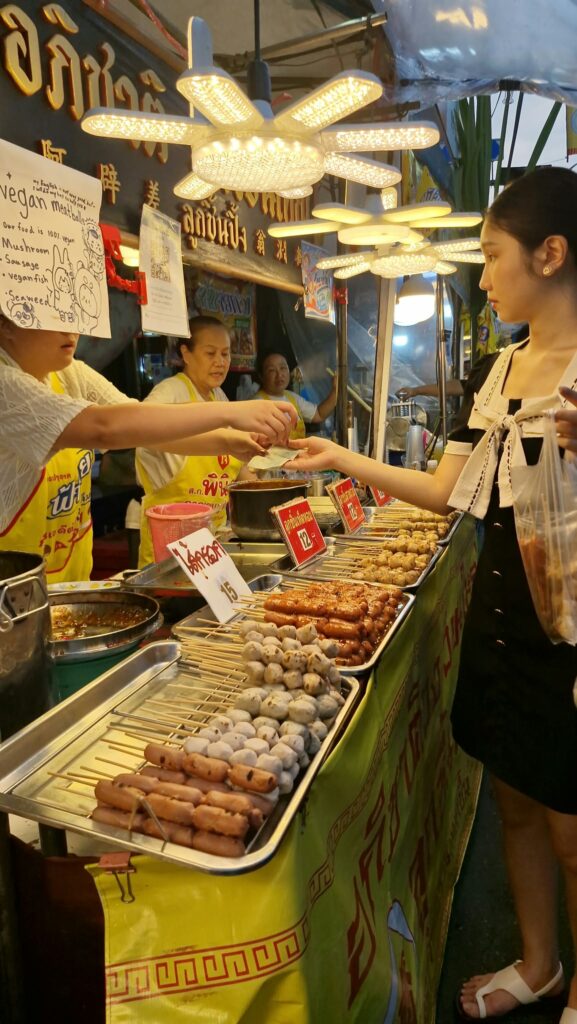
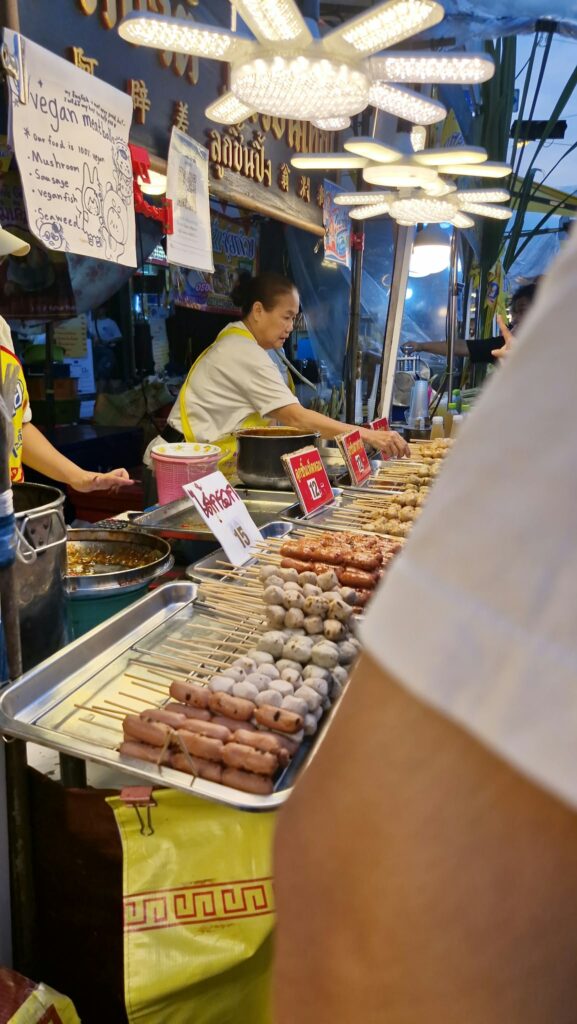
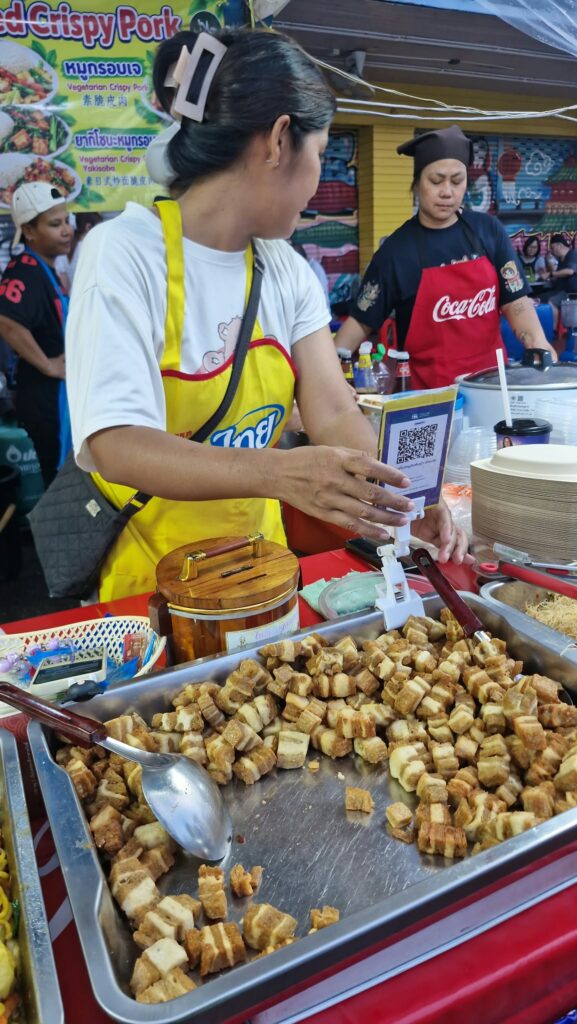
To replace meat, cooks use tofu, soy protein and gluten. The result is often amazing: “pork” skewers, meatballs, roast “duck”… it is all plant-based. On the stalls Chu photographed, you can find:
- grilled skewers of “mock meat” and tofu;
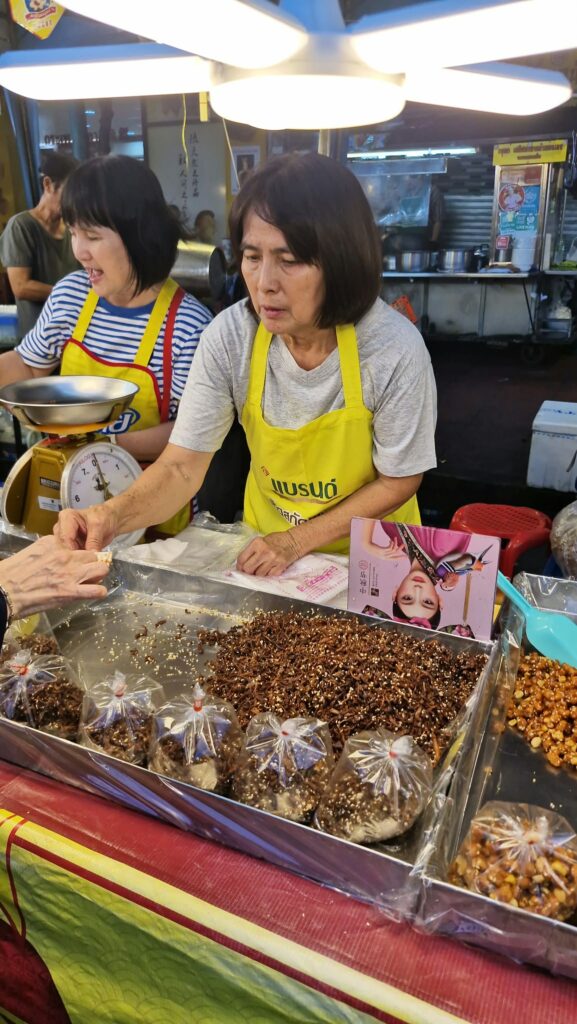
- fried food: fritters, spring rolls, vegetable cakes;
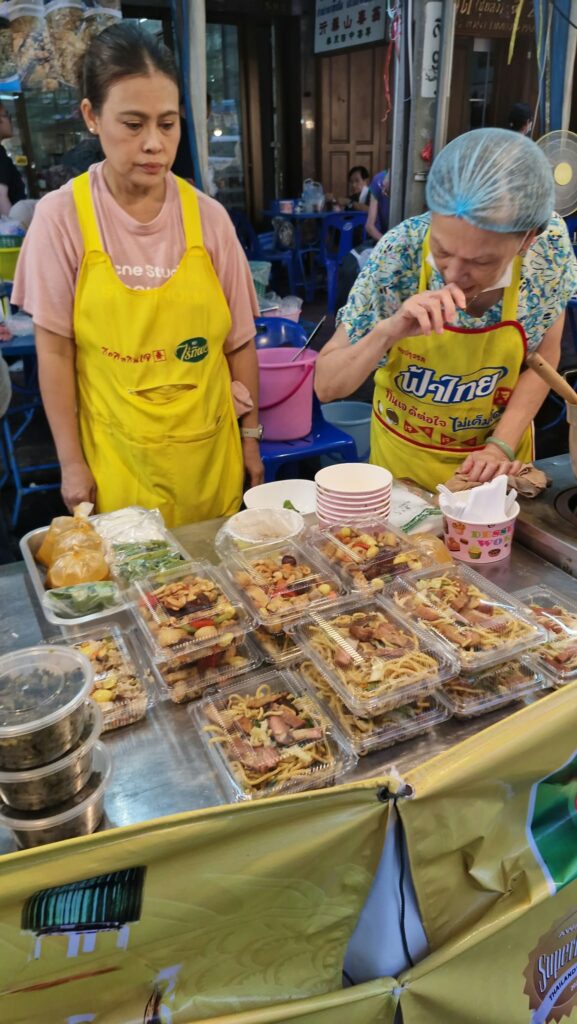
- wok dishes: fried noodles, vegetables, meat-free curry;
- khao lam, sticky rice cooked in a bamboo tube;
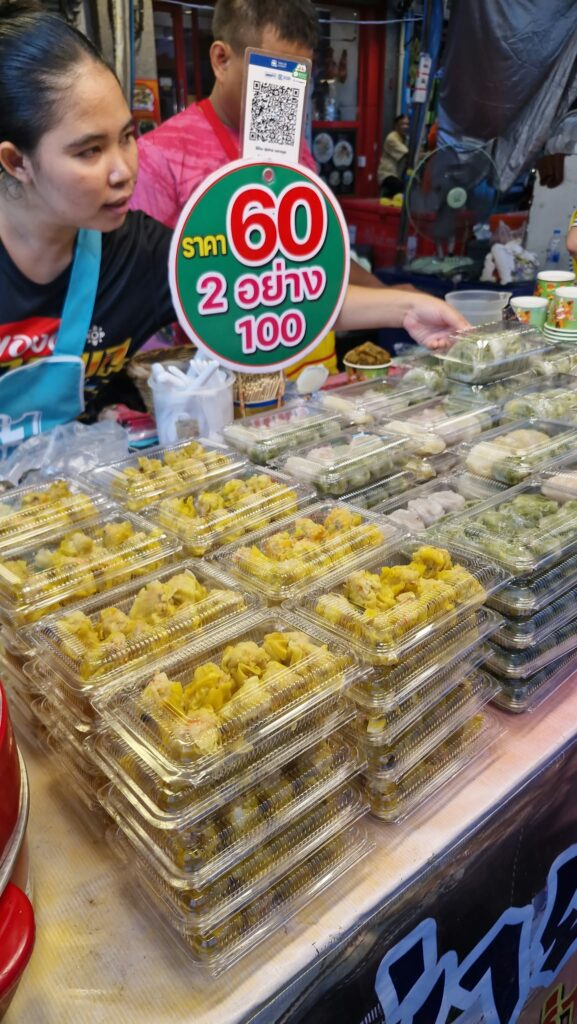
- desserts in trays, cakes and drinks;
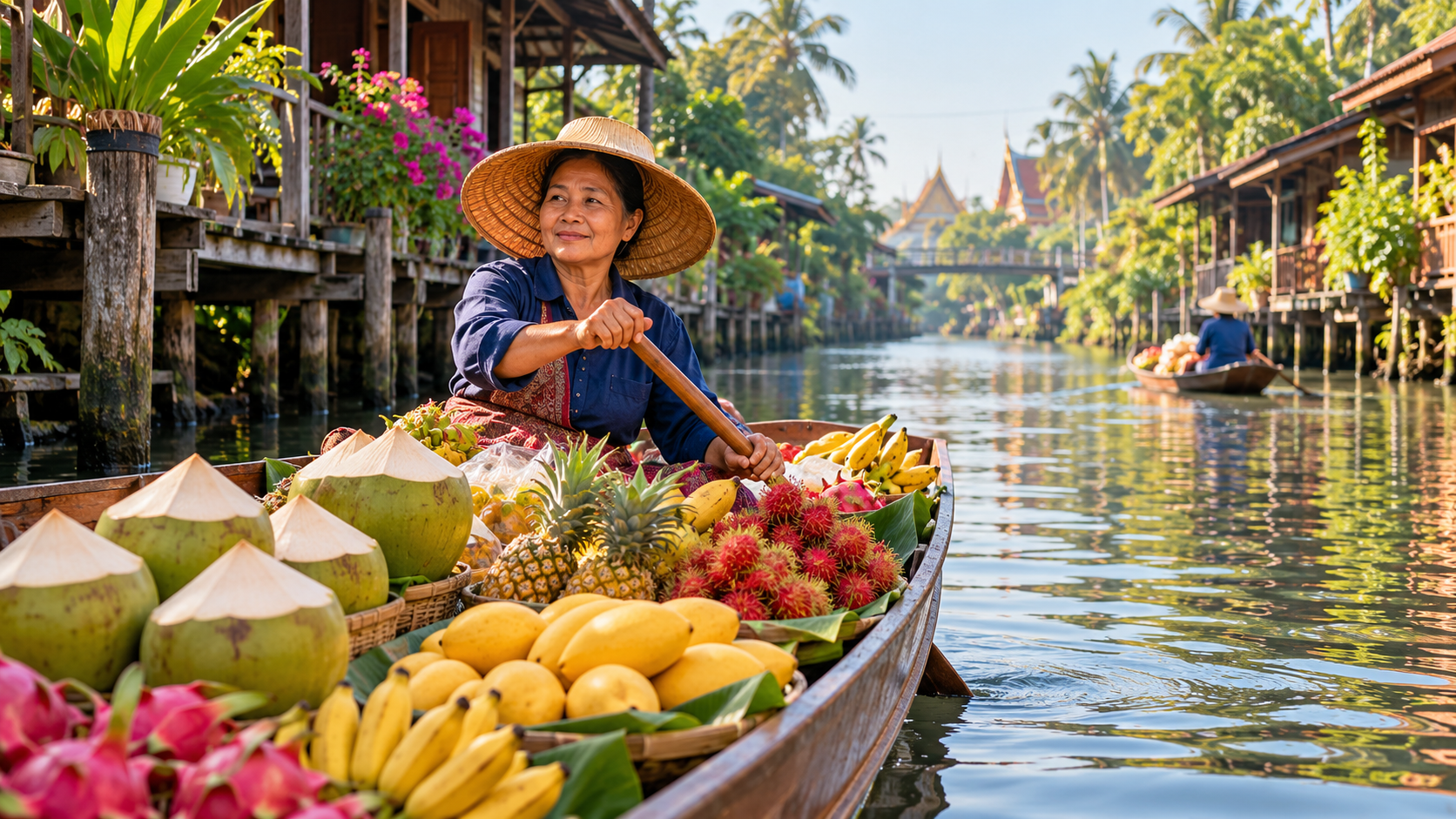
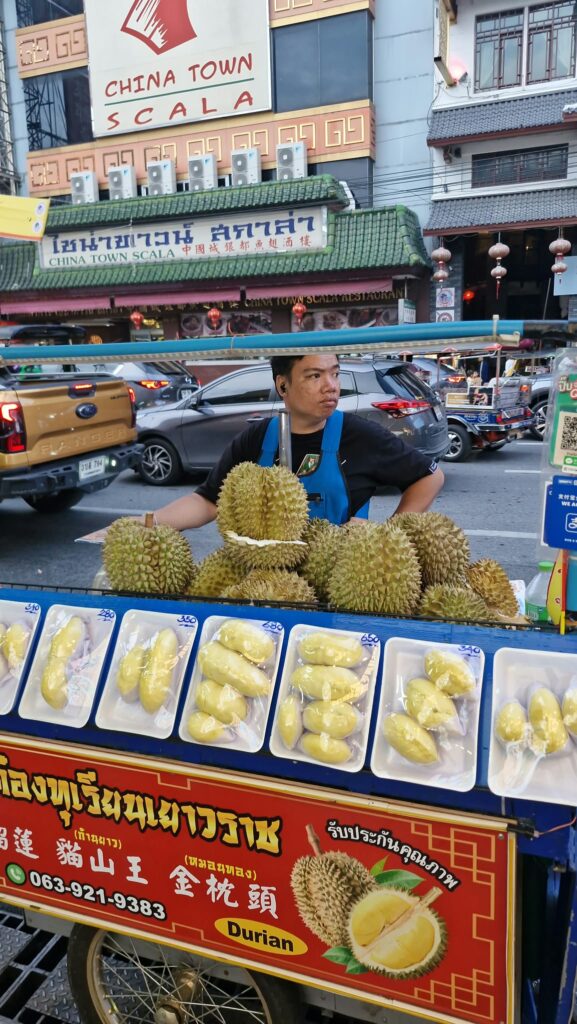
- fruit, including durian, always there for fans.
As for prices, Chu spotted trays of desserts at 2 for 100 bahts (price noted on 17 October 2026). Small snacks stay within the usual Yaowarat street food prices.
The rules to know
You do not have to follow jay to come and eat, but a few rules help you understand what you see:
- participants often dress in white;
- they avoid alcohol, tobacco and all intoxicating substances during the nine days;
- the strictest followers do not share their cutlery with people who are not eating jay;
- in the shrines, people pray, make offerings and do not touch the lamps lit for the gods.
Several shrines in the area hold their own ceremonies during the festival, such as Leng Noei Yi temple (Wat Mangkon Kamalawat) on Charoen Krung Road. Go in quietly, dress respectfully and ask before taking photos of worshippers.
How to get to Yaowarat
The easiest way is the metro: MRT Wat Mangkon station comes out right in the middle of Chinatown, and Hua Lamphong station is a few minutes’ walk from the gate. Chao Phraya Express boats stop at the Ratchawong and Si Phraya piers. Several bus lines also serve the area (1, 4, 8, 25, 40, 529 and 542).
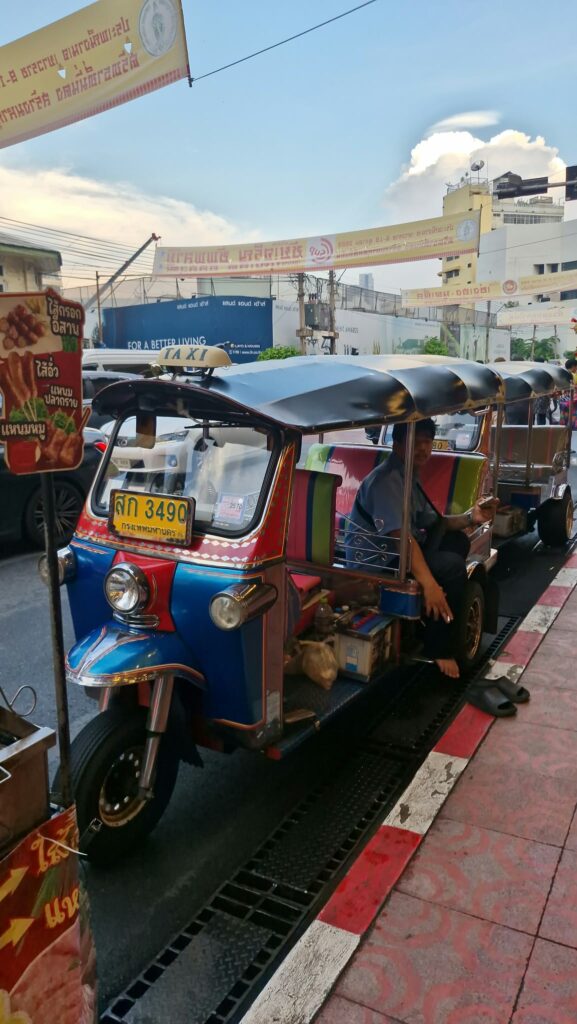
Avoid driving: traffic is very heavy during the festival. If you come by car anyway, there are paid car parks, for example at the Grand China Hotel (about 50 bahts an hour) or at Wat Samphanthawong (about 30 bahts an hour). To get back late, a tuk-tuk or a Grab from Charoen Krung Road is still handy.
Mr Schaka’s practical tips
- Come in the late afternoon: the light is softer and all the stalls are open.
- Take the MRT to Wat Mangkon rather than a taxi stuck in traffic jams.
- Keep some small change: many stalls only take cash or Thai QR code payments.
- Wear white if you want to join in the spirit, and closed shoes: the ground is often wet.
- Drink plenty of water: the heat and the crowds tire you out quickly.
- Keep an eye on your bag and your phone in the crowd.
- Try the mock meats: they are the great speciality of jay food, and they are often very good.
- If you miss the festival, look for the yellow flags: some jay restaurants in Chinatown stay open all year round.
The festival in pictures
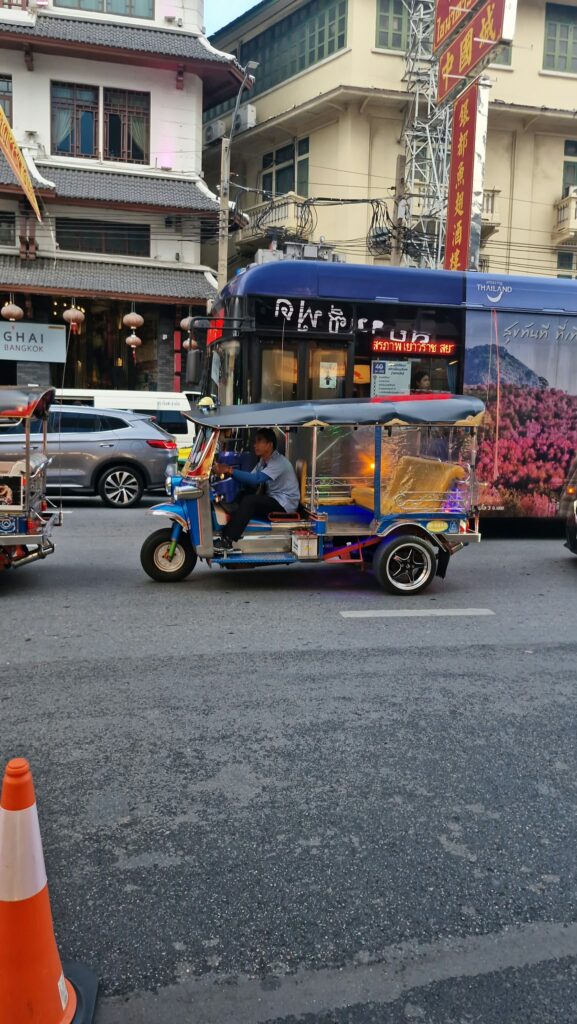
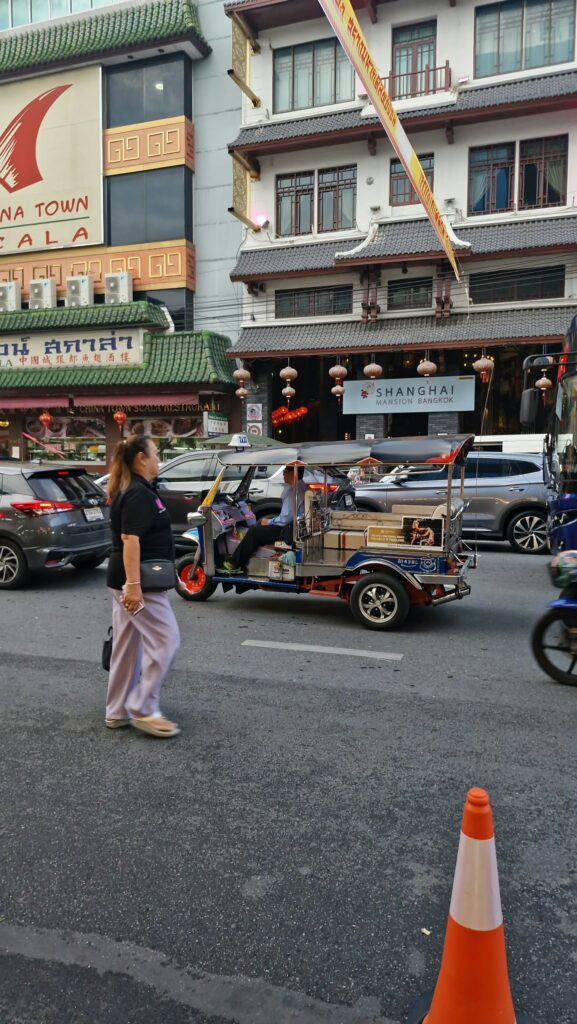
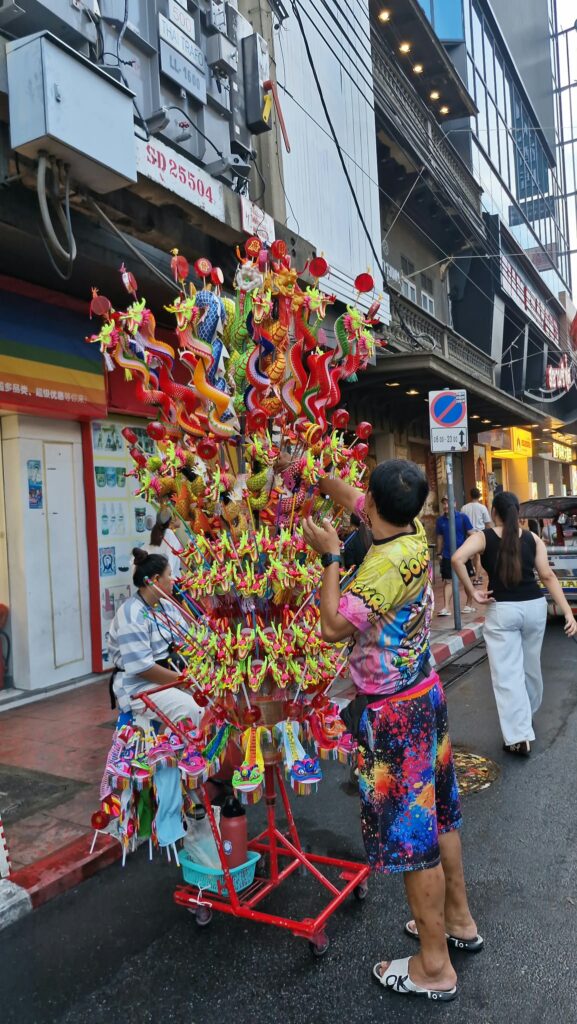
Here are more photos taken by Chu on 17 October in Yaowarat, among the stalls, the cooks and the crowd.
Frequently asked questions
When is the 2026 vegetarian festival in Bangkok?
In Yaowarat, from 9 to 18 October 2026. The vegetarian (jay) period runs from 10 to 18 October. The festival comes back every year in the ninth lunar month, usually between late September and October.
Do you have to be vegetarian to go?
No. Everyone can come to eat and walk around. The food sold under the yellow flags is simply 100% jay: no meat, no eggs, no dairy, no garlic and no onion.
What is the best station for the festival?
MRT Wat Mangkon station, right in the heart of Chinatown. Hua Lamphong also works, a few minutes’ walk from the Chinatown Gate.

To go further
Mr Schaka’s guidebook, Bangkok – The Practical Guide, covers the essentials: transport, neighbourhoods, addresses, food, etiquette and safety, updated for 2026–2027.