Category: Thailand Notebook

Practical tips and travel stories from Thailand: Bangkok, Pattaya, Isan, the islands.

  • Guesthouse in Thailand: how to choose, book and what to pay

    Guesthouse in Thailand: how to choose, book and what to pay

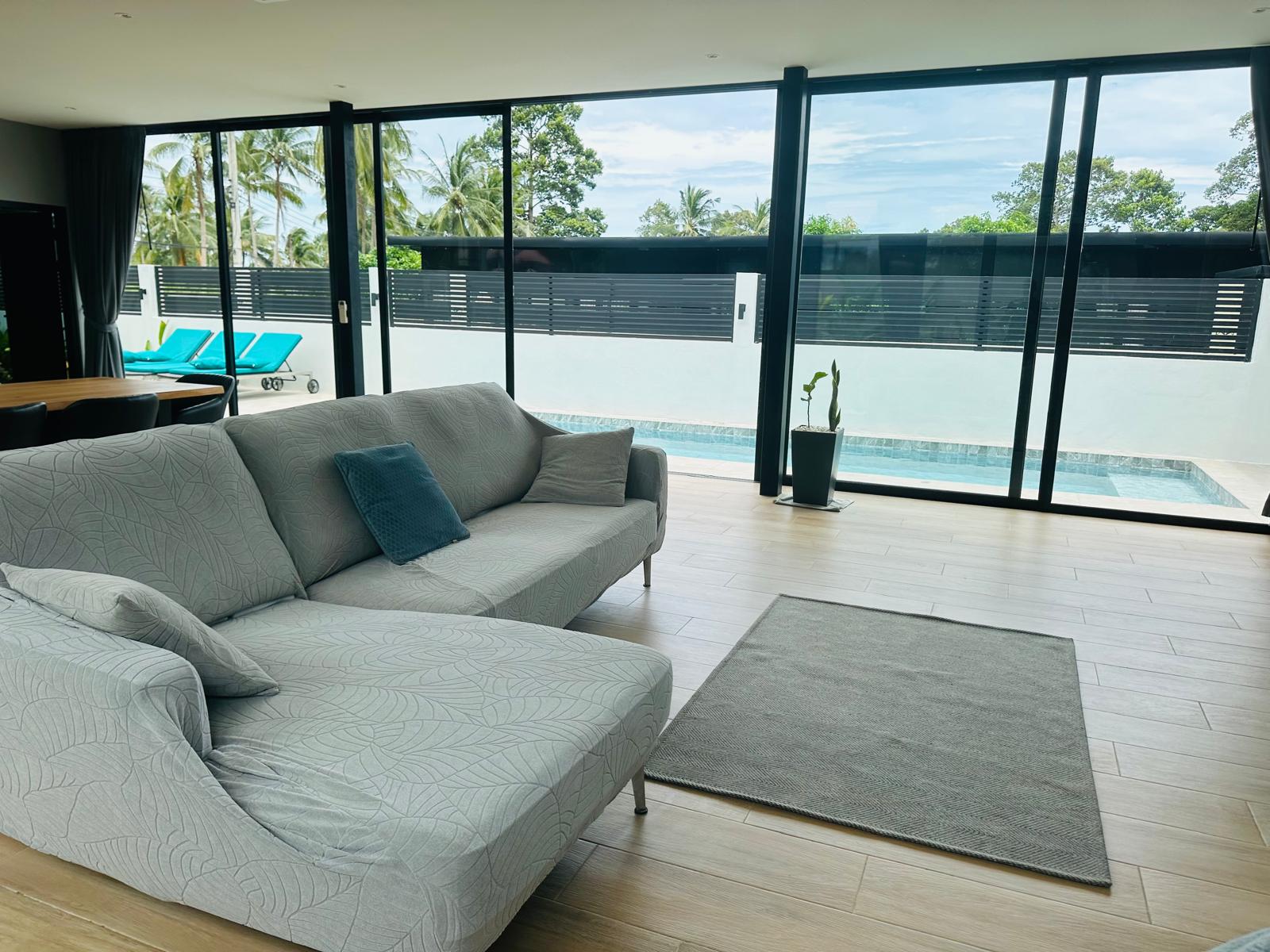
    A guesthouse in Thailand is often a small family house with a handful of rooms, run by the owners themselves, with a more personal welcome than a hotel and a gentler price. I have slept in dozens of them, in Bangkok, in the North and in Isan, and I have learnt to choose them with a few simple habits. Here is what I check before I put my bag down.

    Guesthouse, hotel or homestay: what is the difference?

    The three words appear side by side on booking sites, but they do not mean the same thing.

    • The guesthouse: a small, often family-run place with a limited number of rooms. Reception is not always open day and night, breakfast is sometimes optional, and the owner often lives on site. It is simple, but you often get good advice about the area.
    • The hotel: a reception desk that never closes, a lift, daily cleaning, sometimes a pool. You pay for that comfort and consistency, but the atmosphere is more anonymous.
    • The homestay: you sleep in a local home, often in the countryside, with meals shared with the family. Some villages run community homestays. It is the deepest immersion, but comfort is basic and you have to accept the rhythm of the household.

    For me, the guesthouse is the right compromise when I stay a few nights in a town and want a quiet, clean, inexpensive place without all the services of a hotel.

    How much does a night in a guesthouse cost?

    Prices vary a lot depending on the town, the season and the room’s equipment. To give you a rough idea, with no guarantee because things change quickly:

    • Fan room (fan, sometimes a shared bathroom): roughly 250 to 500 baht a night in the provinces and small towns.
    • Air-conditioned room with private bathroom: roughly 500 to 1,000 baht in most towns.
    • Bangkok and tourist islands in high season: expect more like 800 to 1,500 baht, sometimes more for a pretty, well-located guesthouse.

    Prices rise in high season and on Thai public holidays, and often drop during the rainy season. For the overall cost of a trip, I also break down a one-week budget in Bangkok. Always check the final price shown when you book, taxes included.

    Choosing and booking your guesthouse

    Most guesthouses are listed on the big platforms such as Agoda or Booking.com. I mainly read recent reviews, from the last few months, and look for the words that keep coming back: noise, cleanliness, hot water, how kind the owners are. A very high score with few reviews tells me less than a good score with hundreds of comments.

    My habit: I book the first night or two online, especially if I arrive late. Once there, if I like the place, I ask the owner whether I can extend directly. Sometimes the price is a little lower if you pay cash on the spot, sometimes not: there is no rule. Keep a few notes on you, as many small guesthouses prefer cash; I cover cards and cash machines in my article on money in Thailand.

    Location matters as much as the room. In Bangkok, a guesthouse near a metro station or a pier will save you a lot of time; I explain the neighbourhoods in where to stay in Bangkok.

    What I check before saying yes

    Air conditioning or fan

    On the photos, look for a real wall-mounted air conditioner or just a fan. During the hot months, especially from March to May, a fan room can make sleeping hard. In the North in winter or by the sea, a fan is often enough. When possible, I ask to see the room before paying.

    Noise

    This is the point that makes the biggest difference. A guesthouse above a busy street, a market that sets up at five in the morning or next to a building site can ruin your nights. In the countryside, you also have roosters, dogs and sometimes the village loudspeakers. I ask for a room facing the courtyard, and I always keep earplugs in my bag.

    #Thailand #Bangkok #ThailandTravel #TravelTips #Asia #MrSchaka

    The bathroom

    Private or shared bathroom? Hot water or not? Many small guesthouses have an electric water heater in the shower: check that it works. In many places, toilet paper does not go in the bowl but in the small bin provided, because the pipes are narrow. A hand-held spray next to the toilet is normal.

    The deposit

    Some guesthouses ask for a deposit on arrival, often for the key or key card, usually a few hundred baht, refunded when you leave. Ask for a receipt or note the amount. The owner also has to report the foreigners staying with them to immigration, so it is normal for them to ask for your passport to make a copy. However, I never leave my passport as a guarantee: I offer a cash deposit instead.

    Check-out time

    Check-out is often between 11am and noon, check-in around 2pm. If your bus or flight leaves in the evening, ask whether you can leave your luggage at reception: most are happy to help. If reception closes at night, let them know your arrival time so you do not find the door locked.

    Life in a guesthouse

    A guesthouse is also a home where a family lives. You take your shoes off at the entrance when that is the custom, speak quietly in the evening and respect the private areas. A smile, a “sawasdee khrap” or “sawasdee kha” and a little patience open many doors. The owners often know the best soup stall in the neighbourhood or the time of the bus you are looking for: ask them.

    Cleaning is not always daily. If you want fresh towels or the room cleaned, just ask. And if something is wrong, a calm, polite request always works better than a complaint.

    My practical tips

    • Read recent reviews and look for the words “noise”, “hot water” and “clean”.
    • Book the first night online, then extend on the spot if you like the place.
    • Look at the map: a guesthouse near public transport is sometimes worth a few extra baht.
    • Check on the photos or on site that there is real air conditioning.
    • Keep earplugs and a small torch in your bag.
    • Give a cash deposit rather than leaving your passport, and note the amount.
    • Ask about check-out time and whether you can leave your luggage.
    • Carry cash: many small guesthouses do not take cards.

    Frequently asked questions

    Is a guesthouse safe in Thailand?

    In the vast majority of cases, yes. Choose a place with many recent reviews, lock your room and keep important documents on you or in a safe when there is one.

    Should I book in advance?

    In high season, during holidays and in very touristy places, yes, at least for the first night. In low season and in small towns, you can often find a room on arrival, but it is more tiring with a pack on your back.

    Can I negotiate the price?

    For a single night, rarely. For a stay of a week or more, you can politely ask for a small weekly rate. If the answer is no, do not insist.

    Is breakfast included?

    Not always. Check the booking details. Often it is nicer and cheaper to eat at the market or at the stall on the corner.
    Cover of Bangkok – The Practical Guide

    To go further

    Mr Schaka’s guidebook, Bangkok – The Practical Guide, covers the essentials: transport, neighbourhoods, addresses, food, etiquette and safety, updated for 2026–2027.
  • Where to find calm in Bangkok?

    Where to find calm in Bangkok?

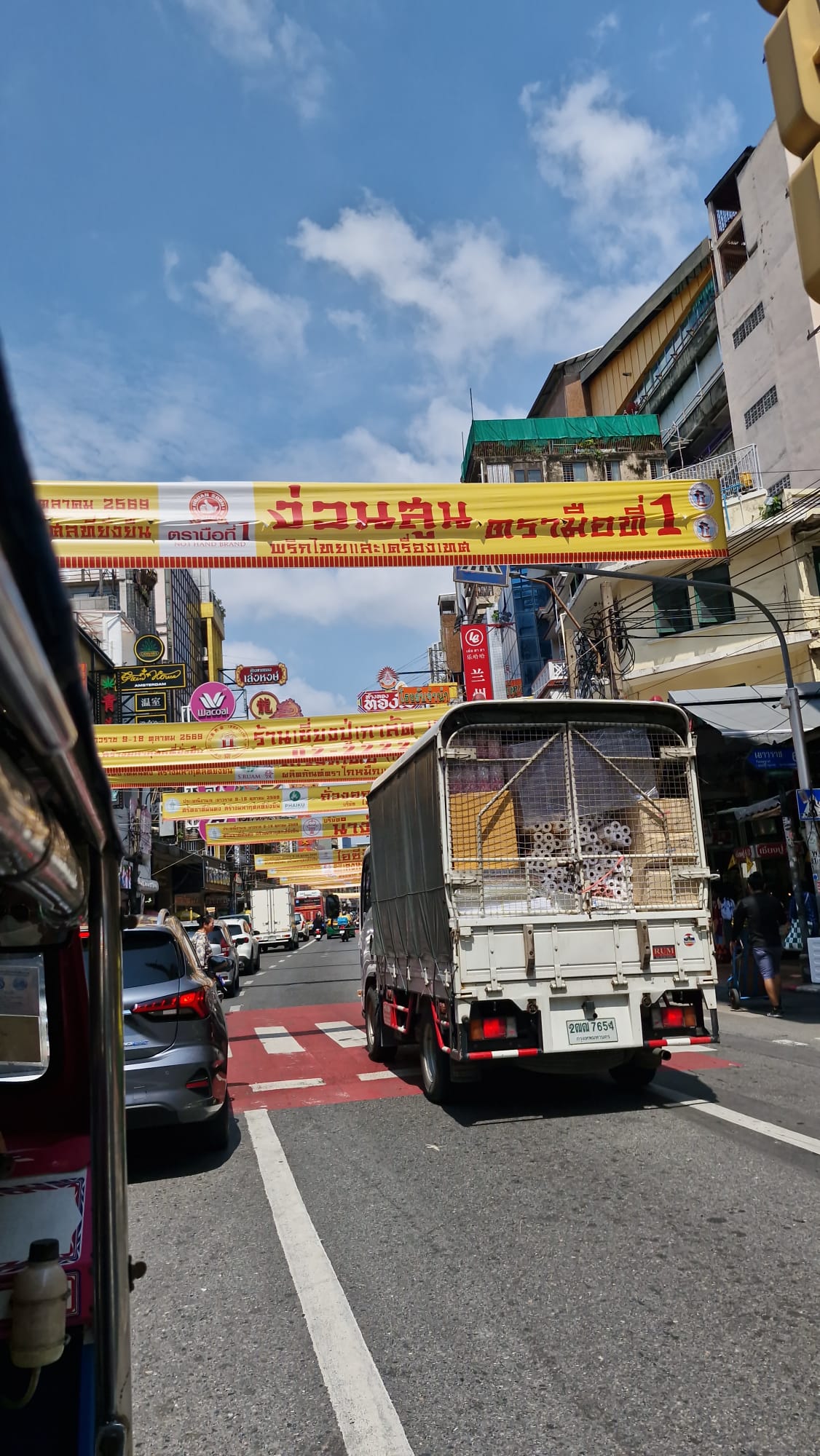
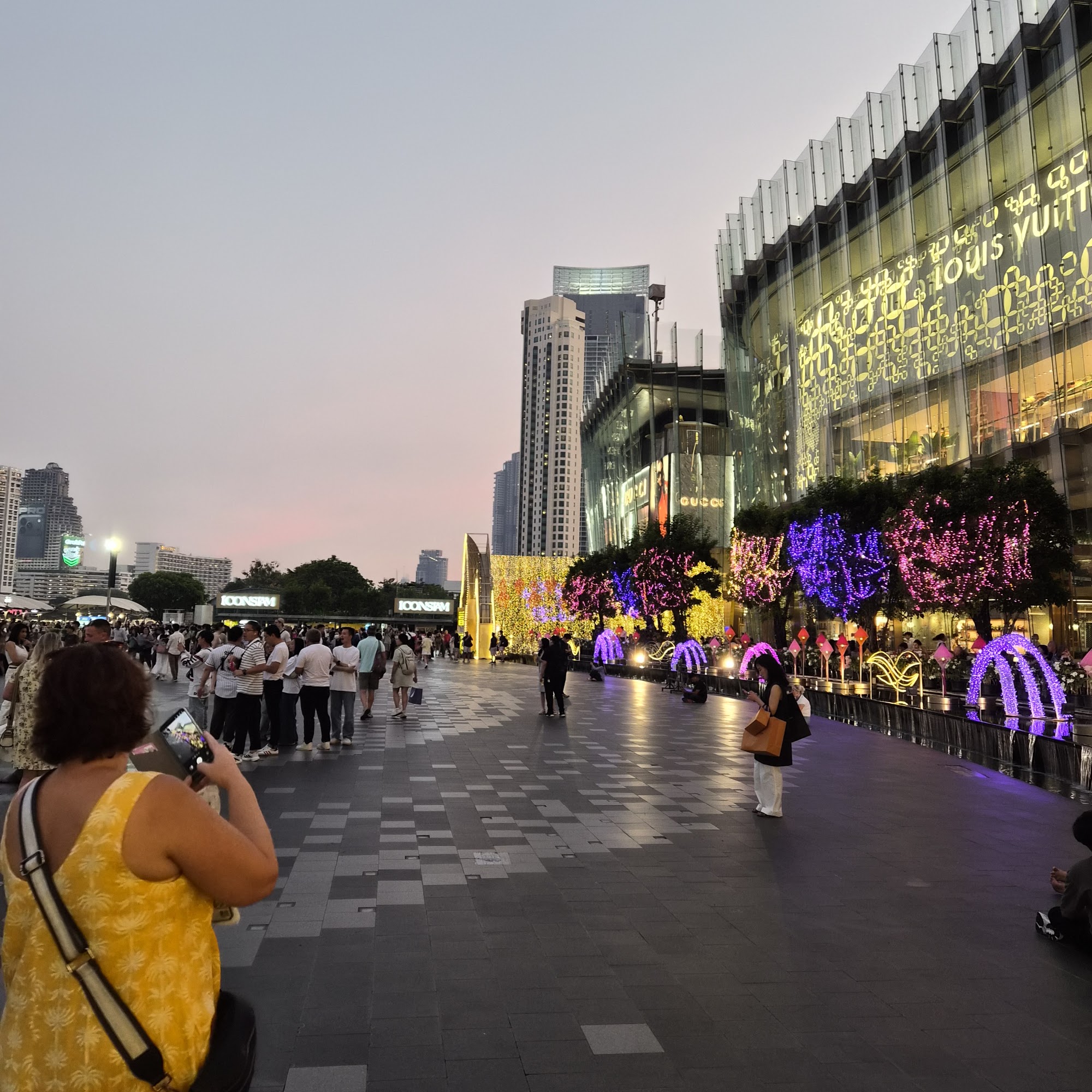
    Bangkok has more than ten million inhabitants, thousands of vehicles, loudspeakers and building sites. It is a city that never stops, which is what makes it exciting. But it is also calmer than it looks: a hundred metres, an earlier hour or a discreet door is often enough.

    Understanding the noise

    Bangkok’s noise comes from three sources: traffic, commerce and air conditioning. It peaks between seven and nine, then between five and eight in the evening. The middle of the day, despite the heat, is often quieter in volume.

    Weekends change everything: offices empty, business districts fall silent.

    The early morning

    The best calm in Bangkok is before seven. Streets are almost empty, markets are setting up, monks pass, and the air is still breathable. An hour’s walk then is worth a day of sightseeing. Parks open early, often before six, and fill with runners.

    The parks

    Lumphini is the best known: large trees, a lake, paths, and a surprisingly calm atmosphere despite the towers. You see monitor lizards, squirrels and birds. Benjakitti, newer, offers a pond, walkways and a long stroll through greenery. Chatuchak park is simpler but busy with families; small Saranrom park offers shade near the Royal Palace.

    Secondary temples

    The great temples are crowded; Bangkok has hundreds of neighbourhood temples where you enter without queue or noise. Look for temples far from the circuits: in Thonburi, in Dusit, or in the soi of old Bangkok. Enter quietly, remove your shoes, sit ten minutes.

    Libraries

    Bangkok has surprisingly pleasant public libraries, air-conditioned, with silent reading rooms and work spaces, some in old buildings.

    Cafés

    Thai cafés are excellent refuges: air-conditioned, quiet outside peak hours, good for reading. Residential areas have many, with large tables and few customers.

    Museums

    Bangkok museums are often empty on weekdays, especially those not in the guides. An empty exhibition room with soft air conditioning is one of the best places in the city to rest.

    The river

    The Chao Phraya is the best remedy for noise: on a boat you hear only the engine and the water, and watch the city drift by. The ordinary shuttle boat costs a bus ticket.

    The canals

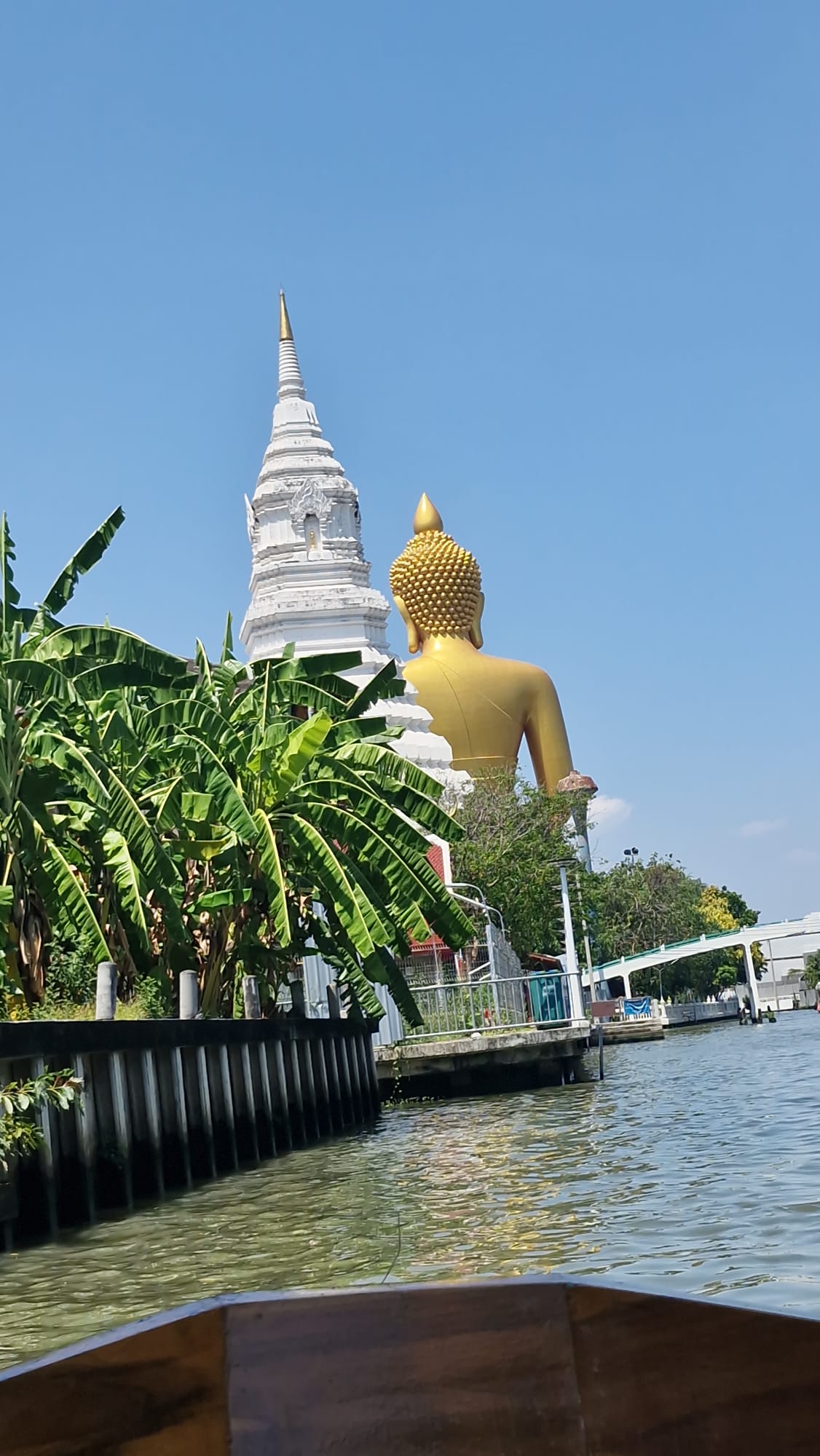
    The canals of Thonburi, to the west, offer a slow Bangkok: stilt houses, temples, children swimming. A chartered long-tail for an hour costs little and changes your perception of the city.

    Quiet neighbourhoods

    Three areas are calmer than average: Thonburi on the west bank, Dusit around the palaces, and parts of Charoen Krung in the lanes parallel to the river.

    Hidden gardens

    Bangkok holds private gardens open to the public, often attached to old houses, cultural centres or hotels. A pond, plants, a bench, and the impression of being elsewhere.

    #Thailand #Bangkok #MrSchaka

    Rooftops

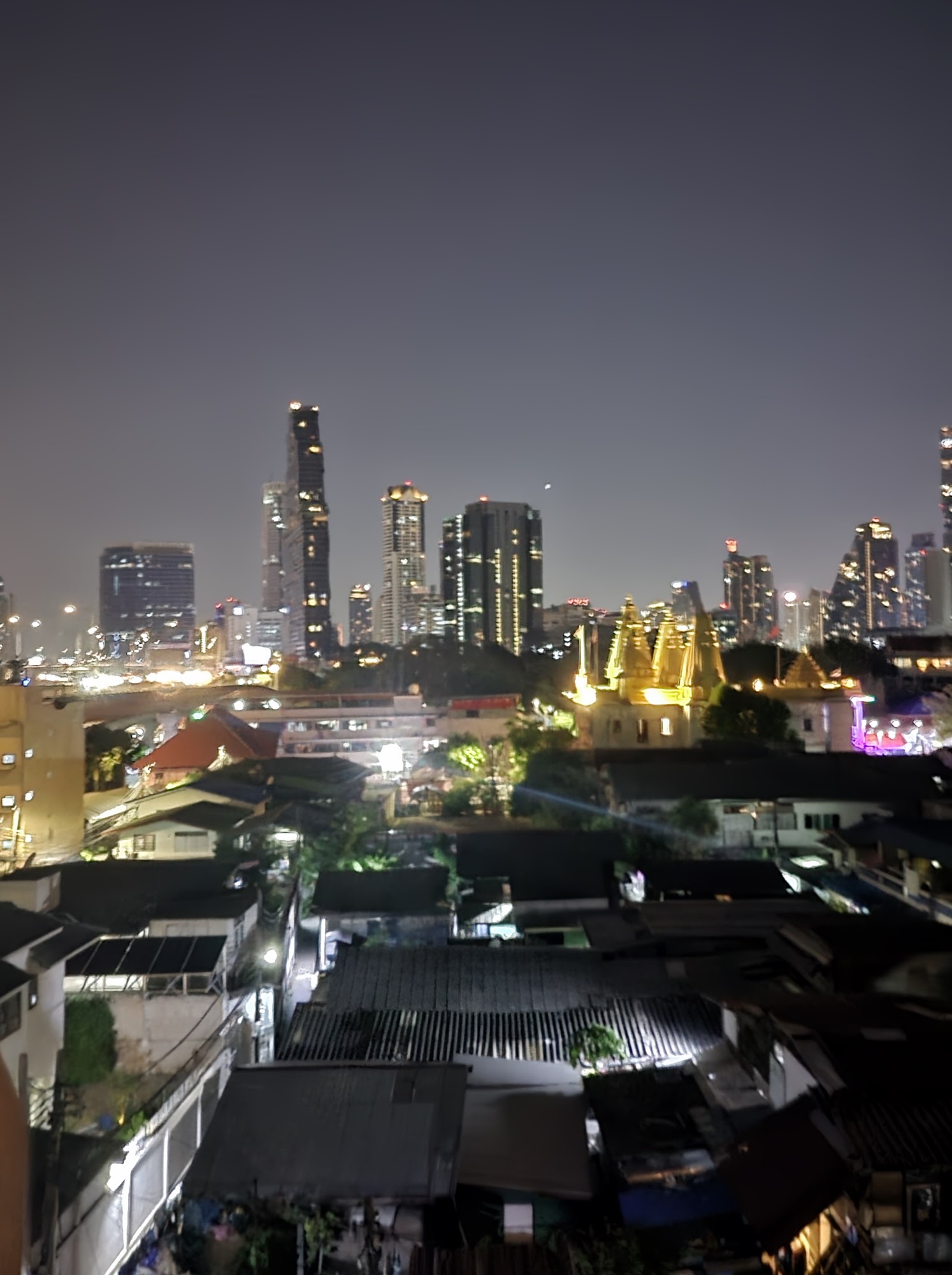
    Counter-intuitively, a rooftop above Bangkok is calm: the noise stays below. The drink is expensive, but the view and silence are worth it once.

    Bookshops and cinema

    English-language bookshops offer a cool, silent space. A cinema screening is a classic refuge: air conditioning, darkness, silence; afternoon shows are almost empty.

    Massage

    A traditional Thai massage in a serious place is an hour of absolute calm. Avoid noisy tourist addresses and look for neighbourhood houses.

    Hotel lobbies

    Large hotel lobbies are open to all and often very quiet: armchairs, plants, air conditioning. You can read an hour without being a guest, provided you order something.

    A calm day

    Six: Lumphini park. Eight: breakfast in a neighbourhood café. Ten: secondary temple. Noon: lunch in the shade. Two: museum or library. Four: river boat. Six: rooftop or Benjakitti park. This day visits almost nothing and still lets you understand the city.

    Mistakes to avoid

    Looking for calm at noon in full sun. Going to parks at weekends late in the morning. Believing a temple will be empty at ten. And forgetting that silence in Bangkok is often behind a door.

    FAQ

    Best time of day?

    Morning before seven, then late afternoon.

    Which park?

    Lumphini for atmosphere, Benjakitti for walking.

    Can you swim in a park?

    No, the water is not for swimming.

    Are temples quiet at weekends?

    Less than on weekdays, except neighbourhood temples.

    Where to work quietly?

    Libraries, neighbourhood cafés and hotel lobbies.

    Also read

    Cover of Bangkok – The Practical Guide

    To go further

    Mr Schaka’s guidebook, Bangkok – The Practical Guide, covers the essentials: transport, neighbourhoods, addresses, food, etiquette and safety, updated for 2026–2027.
  • How to rent a scooter in Thailand without ruining yourself?

    How to rent a scooter in Thailand without ruining yourself?

    Renting a scooter is one of the best ways to discover Thailand outside the cities: you stop where you want, take small roads, reach beaches and temples the buses ignore. It is also one of the fastest ways to turn a holiday into a problem, if you skip the three steps that matter: the licence, the deposit and the insurance.

    Legality and which licence

    Riding a scooter in Thailand requires a valid driving licence and, for a foreign one, an international driving permit. This is not a formality: without it you face a fine at a checkpoint, and after an accident the insurer may refuse to pay.

    Mind the category: a car licence does not cover a two-wheeler. If your licence has no motorbike entitlement, you are not legal, even with the international permit.

    The international permit

    It is obtained before departure, in your own country, as a booklet in several languages. It does not replace the national licence: both must be shown together. Once abroad, it is too late.

    Where to rent

    Everywhere: hotels, guesthouses, street agencies, local renters. Prices vary little, service a lot. Always ask for a written contract and a copy of the vehicle papers. If the renter refuses, move on.

    The passport deposit

    This is the classic trap: the renter asks for your passport as security. Never leave it. A retained passport becomes leverage in any dispute over the vehicle’s condition.

    Offer a copy, a cash deposit or a reasonable amount. Serious renters accept. Those who refuse announce the problem to come.

    Insurance

    The rented scooter carries minimal insurance, often insufficient. Check what the contract covers and, above all, what it excludes: often damage to the vehicle, sometimes theft, almost never medical costs.

    Does your travel insurance cover riding a two-wheeler? Often not, or only with the right licence. Check before leaving: this is the most important question in this guide.

    Vehicle condition

    Before leaving, walk around the scooter with the renter and photograph everything: scratches, dents, tyres, mirrors, odometer. Take a video in their presence. It is your best protection against invented damage bills.

    Check the brakes, lights, indicators and tyre pressure. A scooter that brakes badly is more dangerous than a slow one.

    The helmet

    Helmets are compulsory for rider and passenger. Checks are frequent and fines are real. Many renters supply poor helmets: ask for your size, and a decent model if possible. An oversized helmet does not protect.

    Driving on the left

    Thailand drives on the left. Adaptation takes a few hours, and mistakes happen at junctions and roundabouts, often late in the day. Stay focused for the first kilometres, avoid riding at night, and never ride after drinking.

    Police checks

    Frequent in tourist areas. You are asked for your licence, sometimes the helmet, sometimes the vehicle papers. Stay courteous and show the documents. Fines are paid at the station, with a receipt.

    Fuel

    Petrol stations are numerous, but in rural areas you also find roadside bottles of fuel. Practical and cheap, but uneven quality. Fill up before long distances.

    #Thailand #Scooter #MrSchaka

    Roads to avoid

    Main highways around Bangkok and mountain roads in the north demand experience. Country roads are often nicer and safer, provided you watch for dogs, gravel and slow trucks. Avoid night rides.

    Rain

    In the monsoon the road turns slippery in minutes and puddles hide potholes. Slow down, brake earlier, and stop if the shower is heavy. A poncho in the box beats an umbrella.

    Classic scams

    Three recur: the retained passport, the inflated damage bill on return, and the already-damaged scooter whose scratches are blamed on you. Photos at departure settle the last two; refusing the passport settles the first.

    When not to rent

    If you lack the right licence, if your insurance excludes two-wheelers, if you have never ridden one, or if you plan to drink. In those cases taxis and buses cost less than an accident.

    What it costs

    A rental costs a few euros a day, less by the week. Fuel is cheap. What changes the bill is a possible fine, the deposit and repairs. For several days and two people, a scooter is often worth it; for a single city trip, it is not.

    After an accident

    Secure the scene, call help if needed, and inform the police: a report is essential for insurance. Photograph everything. Keep every document: without them, no compensation is possible.

    FAQ

    Is the international permit really required?

    Yes. Without it you are breaking the law and insurance may refuse to act.

    Can you rent without a licence?

    Some renters agree, but that does not make riding legal.

    Is a helmet provided?

    Often, of variable quality. Check the size.

    Can you ride two-up?

    Yes, with a helmet each. Mind the weight and braking.

    What if the scooter breaks down?

    Call the renter, who must come or send someone. Note the number at departure.

    Can children ride?

    Technically no, and it is not prudent: no suitable seat, no helmet their size.

    Also read

    Cover of Bangkok – The Practical Guide

    To go further

    Mr Schaka’s guidebook, Bangkok – The Practical Guide, covers the essentials: transport, neighbourhoods, addresses, food, etiquette and safety, updated for 2026–2027.
  • What to do in Chiang Mai with children?

    What to do in Chiang Mai with children?

    Chiang Mai is often called Thailand’s most pleasant city, and with children that is true for a simple reason: everything is close, the pace is slower than Bangkok, and nature starts at the city gates. Mountains, waterfalls, elephants, markets and temples — all doable in a few days.

    With two constraints: the heat of the dry season, and the air pollution at the end of it, which changes the whole programme.

    Understanding the city

    Chiang Mai is organised around a square old town, surrounded by a moat and the remains of ramparts. Inside: temples, cafés and guesthouses. Outside: modern districts, markets and the roads climbing to the mountain. With children, staying in or near the old town is practical: you walk, eat, and come back easily. Hotels with pools are numerous and cheap.

    Elephants

    This is the question every child asks, and it needs a careful answer. Many camps offer rides, a practice now criticised for animal welfare. Sanctuaries working without riding, with observation and care, are a better option. Choose structures that explain their approach and limit visitor numbers. And warn the children: you observe, you do not always touch, and the animals remain wild.

    Waterfalls

    Around the city, several waterfalls are reachable by car, with pools for swimming. Some are easy, others need a walk. It is the simplest and most successful activity with children. The sticky waterfalls, where you can climb the limestone, are a local attraction: you climb, slip a little, get wet.

    Night markets

    The Saturday and Sunday markets are the best known, with crafts, food and music. For children it is a parade of colours, smells and things to taste. Come early, before the crowd makes pushchairs impractical.

    Temples

    The city has dozens of temples, several within the old town and walkable. For children, the most interesting have a shaded courtyard, animals, or a few steps that are not an ascent. Doi Suthep, the great mountain temple, is reached by car or songthaew; the stairs are many but the view rewards the effort.

    Cooking classes

    Thai cooking classes are a popular family activity: choose dishes, visit the market, cook, eat. Choose a short course of three to four hours rather than a full day, and check the dishes are not all spicy.

    Parks and animals

    The city has shaded parks, and around it farms, gardens and animal parks. Choose visits carefully: not every establishment treats animals well. A zoo exists on the outskirts, a simple option when it is too hot to walk.

    The mountain

    Doi Inthanon, the country’s highest point, can be reached in a day: trails, waterfalls, gardens. A long but accessible excursion for children who tolerate the car. The road is winding: bring water and motion-sickness medicine.

    The rhythm of days

    Morning is best: mild temperatures, beautiful light, quiet sites. Early afternoon is hot: pool or nap. Late afternoon and evening are pleasant, with markets and restaurants.

    The pollution question

    Between February and April, Chiang Mai has a smoke season linked to agricultural burning and forest fires. Air quality can become bad, especially for children, the elderly and asthmatics. If you travel then, check air quality indices, avoid outdoor exercise on bad days, and consider a suitable mask. Many families simply choose another season.

    #Thailand #ChiangMai #MrSchaka

    When to come

    November to January: drier, cooler air and beautiful light — the best period with children. May to October: the monsoon greens the landscape and waterfalls are finer, but showers complicate outings.

    Getting around

    Songthaews, the red pick-ups, act as shared taxis and cost little. Ride apps work well. For excursions, a car with driver is simplest with children. Renting a scooter is not advised with children: no seat, no helmet their size, and mountain roads are dangerous.

    Where to stay

    In the old town, guesthouses and hotels with pools are plentiful and cheap. Outside, resorts offer gardens and pools, better for families wanting quiet.

    What to budget

    Chiang Mai is one of the cheapest cities in Thailand: meals, accommodation and transport remain affordable. Excursions (elephants, mountain) are the main cost.

    Mistakes to avoid

    Coming in the middle of the smoke season without checking. Booking an elephant ride without asking about conditions. Packing too many activities per day. And forgetting that temples require proper dress, children included.

    FAQ

    At what age can you visit elephant sanctuaries?

    Most accept children, but serious structures often set a minimum age for safety.

    Can you swim in the waterfalls?

    Yes at many sites, carefully and within marked areas.

    Is the city pushchair-friendly?

    Partly: pavements are uneven and temples have steps. A carrier remains useful.

    Do you need a car?

    Not in town; yes for excursions if you want to save time.

    Are there children’s hospitals?

    Yes, the city has well-equipped hospitals, including international clinics.

    Also read

    Cover of Chiang Mai and the North – The Practical Guide

    To go further

    Mr Schaka’s guidebook, Chiang Mai and the North – The Practical Guide, covers the essentials: transport, neighbourhoods, addresses, food, etiquette and safety, updated for 2026–2027.
  • How to travel in Thailand with a baby?

    How to travel in Thailand with a baby?

    Thailand is remarkably welcoming for babies: nappies, milk, purées, air conditioning and people who adore children. It is not a difficult country. It is a hot country, which changes everything: days reorganise around the heat, and what works in Europe does not work here.

    This guide does not replace a paediatrician, especially for vaccines and treatments. Consult a doctor before leaving.

    Before leaving

    The first decision is age. Many parents wait for six months, for vaccines and resistance to the flight. The baby’s passport is compulsory, with its own photo, and delays can be long. Check that your travel insurance covers the child.

    The flight

    A long flight with a baby is prepared like a whole day: nappies, milk, spare clothes, wipes, and a complete change in a separate bag. Ask for a cabin bassinet at booking and confirm before departure.

    Jet lag

    Five to six hours from Europe. Babies often adapt faster than adults, but the first two nights are difficult. Daylight on arrival, light in the morning, and accept two or three floating days.

    The heat

    This is the main factor. Babies regulate temperature poorly, so heat is more dangerous for them. Avoid outings between eleven and four, seek shade and air conditioning, and hydrate often. Never cover a baby in a closed pushchair: the air circulates badly.

    Water and food

    Never give a baby tap water. Use bottled water, including for formula, and check the seal. Restaurants sell bottled water everywhere; avoid ice if in doubt. Purées and jars are sold in pharmacies and supermarkets.

    Nappies and changing

    Nappies are available everywhere at prices close to Europe. Bring your usual formula brand for the whole stay. Changing tables are rarer than in Europe: carry a travel mat.

    Transport

    Taxis and private cars are the simplest solution. Ride apps work well in cities. On buses and boats a baby carrier beats a pushchair. On islands, check crossing times before booking.

    Hotels

    Look for air conditioning, a cot, and where possible a shallow pool or calm beach. Thai family hotels are used to children and often provide an extra bed.

    Pushchair or carrier

    Both if possible. The pushchair works in malls, airports and hotels; it becomes a burden on narrow pavements, stairs and beaches. The carrier is essential for temples, markets and islands.

    Health

    See a doctor before departure for vaccines and treatments allowed by age. Take a basic kit: thermometer, age-appropriate antipyretic, saline, mosquito repellent, plasters. Identify an international hospital in each stop city in advance.

    Mosquitoes

    Dengue exists; mosquitoes bite at dawn and dusk. Use age-appropriate repellent, long clothes in the evening, and a net if the room is not air-conditioned. No repellent on a baby’s hands or face.

    Beach and sea

    The sea is pleasant but sometimes dangerous: waves, currents, urchins, jellyfish. Stay in monitored areas and never leave a baby at the water’s edge alone.

    #Thailand #Baby #MrSchaka

    Temples

    Visitable with a baby, respecting dress and quiet. A crying child is not a problem in itself; stay away from prayer areas if the child is restless.

    The rhythm of days

    Forget programmes. One activity per half-day, a nap in the cool, and an outing at the end of the day.

    What to pack

    Nappies for the first days, spare formula, light clothes, hat, suitable sunscreen, thermometer, daily medicines, a bed sheet, two dummies, a waterproof bag.

    What you find locally

    Almost everything else: nappies, wipes, purées, formula, changing mats, thermometers, basic medicines. Pharmacies are numerous and supermarkets well stocked.

    When to go

    November to February: more bearable heat and dry season, the best period with a baby. April to June is very hot; in the monsoon, showers are short but outings are harder.

    Budget

    Babies often travel at reduced fares, but extras are real: cot, seat, air conditioning, taxis. Keep a margin.

    Mistakes to avoid

    Following an adult programme. Ignoring midday heat. Counting on a clean change for every outing. And leaving without checking the child’s insurance cover.

    FAQ

    At what age can a baby travel to Thailand?

    No legal minimum, but many parents wait for six months.

    Is a passport required?

    Yes, compulsory, with photo, and delays can be long.

    Is formula available?

    Widely, but brands differ. Bring your usual one.

    Is tap water drinkable?

    Not for a baby. Use bottled water, including for formula.

    Are there children’s hospitals?

    Yes in big cities; fewer on islands.

    Is air conditioning necessary?

    It helps a lot at night, but watch temperature swings.

    Also read

    Cover of Bangkok – The Practical Guide

    To go further

    Mr Schaka’s guidebook, Bangkok – The Practical Guide, covers the essentials: transport, neighbourhoods, addresses, food, etiquette and safety, updated for 2026–2027.
  • Where to swim in Bangkok when it is 40 degrees?

    Where to swim in Bangkok when it is 40 degrees?

    In Bangkok heat is not an annoyance: it is a fact around which you organise the day. Between March and May the thermometer regularly passes forty degrees, and air conditioning is not enough. Swimming then becomes the best solution, provided you know where to go: not all pools are equal, and some water is to be avoided.

    Why swimming changes a day

    An hour in cool water lowers body temperature and lets you face the afternoon. For a traveller it is also a pause in a tiring city: nothing is visited, nothing is walked, you recover. This is especially true with children, for whom heat is harder and who have no patience for a museum at two in the afternoon.

    Public pools

    Bangkok has municipal pools, often attached to neighbourhood sports centres. They are simple, clean, cheap and very quiet on weekdays, with a lap pool, sometimes a children’s pool, and changing rooms. Comfort varies a lot from one area to another: ask on site or check opening hours by phone, as pools sometimes close for maintenance.

    Hotel pools

    The simplest solution for a visitor: most mid-range and upscale hotels have a pool, often on the roof, sometimes in a courtyard. If you are a guest, access is included; otherwise some establishments sell day access. Rooftop pools offer a view worth the trip, but they are often small and sometimes closed to outside visitors. Call before crossing the city.

    Water parks

    Bangkok has several water parks, on the outskirts, with slides, wave pools and children’s areas. It is a full family outing, occupying half a day and costing more than a neighbourhood pool. They are very busy at weekends; on weekdays queues are short.

    Residence pools

    Many recent buildings have a pool reserved for residents. Some owners rent them with short stays, but access is not open to the public. If you book an apartment, check that the pool is really accessible and not just visible in the photos.

    Clubs and sports centres

    Private clubs, often inside hotels or sports complexes, open their pools by the day or month. They offer proper lap pools, showers, sometimes a gym. An interesting option for a long stay.

    What to avoid

    The river, the canals and park ponds are not swimming spots: polluted water, currents, unbuilt banks. Thai people themselves do not swim there. In Bangkok, swimming happens in pools and nowhere else.

    With children

    Safety first: choose a pool with a small basin and, if possible, a lifeguard, and avoid peak hours. Never leave a child unattended, even in twenty centimetres of water. Bring armbands, water-resistant sunscreen and a full change.

    Rules

    Most Thai pools require proper swimwear, a shower before entering, and forbid street shorts. Some provide caps, others require them. In small public pools, rules may be in Thai only: imitate other swimmers.

    Cost

    A public pool costs a few euros, sometimes less. A hotel pool is included in the room or charged by the day. Water parks are the most expensive, with family rates.

    #Thailand #Bangkok #MrSchaka

    Opening hours

    Public pools often open early and close in the late afternoon. Hotel pools are open during the day, sometimes into the evening. Water parks open mid-morning and close late afternoon.

    When it rains

    Monsoon showers are short but intense, and outdoor pools close during storms. Wait an hour: the rain passes, the water stays warm and crowds thin.

    Alternatives

    Without pool access, shopping malls offer artificial coolness, and so do cinemas, and some temples have shaded courtyards. But nothing replaces an hour in the water.

    A typical day

    Morning: early visits. Noon: lunch in cool air. Two: pool or water park. Five: back outside as heat drops. It is the rhythm Bangkokians follow themselves.

    Mistakes to avoid

    Swimming in the river. Going to a public pool without checking hours. Forgetting that street swim shorts are sometimes refused. And believing a hotel pool is open to all.

    FAQ

    Can you swim in the sea in Bangkok?

    No, Bangkok is not on the coast. The nearest beach is several hours away.

    Are public pools clean?

    Generally yes, with variable maintenance.

    Is a swim cap required?

    Depends on the establishment.

    Can you swim in the evening?

    In hotels sometimes; in public pools rarely.

    Any free pools?

    Rarely. Some municipal pools are almost symbolic in price.

    Also read

    Cover of Bangkok – The Practical Guide

    To go further

    Mr Schaka’s guidebook, Bangkok – The Practical Guide, covers the essentials: transport, neighbourhoods, addresses, food, etiquette and safety, updated for 2026–2027.
  • How to visit Phanom Rung and the Khmer temples?

    How to visit Phanom Rung and the Khmer temples?

    Phanom Rung is one of those places never mentioned in the usual Thailand guides, and it leaves a stronger memory than many famous sites. A Khmer temple built on the rim of an extinct volcano, in Buriram province in the east: a processional walkway, stairways, sandstone towers, and the Isan plain stretching to the horizon.

    What it is

    Prasat Phanom Rung is a Hindu complex dedicated to Shiva, built between the tenth and thirteenth centuries, when the Khmer empire dominated much of Southeast Asia. The temple sits on the edge of a crater at about four hundred metres.

    It is often called a ‘Thai Angkor’: fair, because the architecture and religion are the same; reductive, because the site is smaller, quieter, and takes an hour and a half without crowds.

    Some history

    The region belonged to the Khmer world. Phanom Rung went through successive building phases, restorations, then abandonment as Khmer power receded. It was rediscovered and restored in the twentieth century, and is now one of the best-kept monuments in the country.

    The architecture

    The route is classic in Khmer art: a causeway, a cross-shaped terrace, stairways lined with nagas, then the enclosure and the central sanctuary. Towers are sandstone and laterite, carved with plants and divine figures.

    What strikes you is the state of conservation and the quality of light: sandstone turns warm at sunrise and sunset.

    The symbolism

    The temple represents the world: the causeway is the path of the profane, the stairs the ascent towards the sacred, the sanctuary the centre. Its fifteen aligned doorways produce a solar alignment several times a year, usually in April and September.

    How to get there

    In Buriram province, five to six hours by road from Bangkok. The most practical base is Nang Rong, forty minutes away, with hotels and transport. From Bangkok, reach Buriram by night bus or plane, then rent a car or take a songthaew.

    When to go

    November to February is the most pleasant; March to May is hot but workable early; June to October brings monsoon greenery and dramatic skies, with muddy tracks.

    Sunrise

    Climbing at dawn is the experience not to miss. The site opens early and you watch the plain wake up, often alone with a few Thai visitors. Bring a lamp and a windbreaker.

    The surroundings

    About ten kilometres away, Muang Tam is the natural complement: flatter, more intimate, surrounded by pools and walls. Many visitors prefer it.

    #Thailand #Isan #MrSchaka

    A typical day

    Leave Nang Rong before dawn, climb for sunrise, visit the carvings in morning light, then Muang Tam late in the morning. Local lunch, return in the afternoon.

    Where to stay

    Nang Rong has simple, cheap hotels; Buriram has more choice and an airport.

    What to budget

    Park entry is modest; car rental and fuel are the main cost.

    Mistakes to avoid

    Coming at noon. Visiting only Phanom Rung and missing Muang Tam. Believing public transport handles the return. Coming in April without checking alignment dates.

    FAQ

    Do I need a guide?

    Useful for the iconography, not essential.

    How long on site?

    An hour and a half, plus an hour for Muang Tam.

    Can I bring children?

    Yes, but stairs are steep and there is no shade at noon.

    Is the site accessible?

    Partly: causeway and terraces yes, stairs no.

    Toilets and café?

    At the entrance, not inside the temple.

    Also read

    Cover of Isan – The Practical Guide

    To go further

    Mr Schaka’s guidebook, Isan – The Practical Guide, covers the essentials: transport, neighbourhoods, addresses, food, etiquette and safety, updated for 2026–2027.
  • What to do in Krabi in three days?

    What to do in Krabi in three days?

    Krabi is not an island: it is a province on the west coast, cut into limestone cliffs, mangroves and beaches reachable only by boat. It is also the easiest place in Thailand to combine three different things in three days — sea, cliff and forest — provided you pick the right base. Many travellers book a room in Ao Nang and spend three days shuttling; others sleep in Krabi Town and discover they are far from everything. Here is how to divide the time.

    Choosing a base

    Three options dominate. Ao Nang is the main beach, with restaurants, tour agencies, cash machines and boats to the islands: the most practical choice for a first stay, and the liveliest. Railay is a peninsula with no road, reachable only by long-tail from Ao Nang or Krabi Town: you go for the cliffs, the climbing and the relative calm, accepting higher prices and no cars.

    Krabi Town, finally, is the real town: night market, local life, low prices, but fifteen to twenty minutes by road to the beaches. A good choice if you stay a week and want out of the tourist circuit, less so with only three days.

    The most common compromise: two nights in Ao Nang, one in Railay. Logistics stay simple and you taste both moods.

    Day 1: the four islands

    The first day is spent on the water. The so-called four islands tour is the classic, and despite the crowds it remains the best introduction: it links Poda, Chicken Island with its rock shaped like a head, the twin islets joined by a sandbar, and Phra Nang cave beach.

    Leave early. Boats leave Ao Nang late in the morning, and an hour’s head start changes everything: you reach the first islet before the groups and find shade on the beach. Bring mask and snorkel, water, and something to protect your shoulders.

    Phra Nang beach, often the last stop, is worth it for the cliff above it and the peculiar atmosphere of the place. Avoid staying there at midday: it fills up and the shade disappears.

    Day 2: Railay and the cliffs

    Railay is reached by long-tail from Ao Nang in about fifteen minutes, or from Krabi Town by river. There is no road: you land on the beach and walk. The place is famous for climbing, and even without climbing, the paths between the east and west beaches offer passages through vegetation and views of the walls.

    The day holds in three parts: morning on the west beach, lunch on the east side, then the path to the hidden lagoon if you are fit — the access is steep and slippery, and you need good shoes. The lagoon itself is reached only by descending a wall equipped with ropes: it is not a walk.

    If you want to climb, Railay’s schools offer half-day introductions, supervised and suited to beginners. It is one of the few activities in the region where you learn something rather than follow a programme.

    Day 3: jungle and springs

    The third day belongs inland, and it is the one many sacrifice wrongly. The Tiger Cave temple, Wat Tham Suea, is best visited early: the staircase is long — more than a thousand steps — and better climbed before the heat settles. At the top, a 360-degree view over the limestone peaks and the plain.

    About thirty minutes away, the emerald lagoon and the hot springs combine into half a day. The lagoon is a swim in cool green water, in a forest setting; the springs, hotter, are arranged as pools. Allow an hour at each site, and avoid the weekend if you can: Thai families come too.

    For walkers, the Khao Ngon Nak viewpoint, known as Dragon Crest, is reached by a trail of a few kilometres through forest before opening onto a plunging view of the bay. Allow half a day, water, and an early start.

    And Phi Phi?

    The Phi Phi islands belong to Krabi province, and everyone talks about them. The honest question: go for the day, or sleep there? For the day, it is two hours by boat each way, a dense crowd on the main beaches, and a visit to Maya Bay whose access is regulated. Sleeping on Phi Phi Don means discovering the evening and the morning, when the day-trippers have gone — the same island, another experience.

    If your stay is three days and you also want Railay and the jungle, choose. Adding Phi Phi to an already full programme turns holidays into transport.

    #Thailand #Krabi #MrSchaka

    When to come

    The dry season, November to March, offers the calmest sea and clearest sky: also the most expensive. From April to June the heat rises but rain stays bearable. From July to October the monsoon brings short showers and sometimes genuinely grey days; prices drop sharply and the islands remain reachable, but some tours are cancelled.

    One detail that matters: the sea is not always workable in the monsoon, and boat companies decide on the morning itself. Plan a fallback day.

    Getting around

    Krabi airport is about fifteen kilometres from town and thirty minutes from Ao Nang; shuttles and shared taxis run the route. Between Ao Nang and Krabi Town, songthaews and ride apps work well. For the islands everything is by boat: long-tail for Railay and the four islands, ferry for Phi Phi and Koh Lanta.

    Do not count on a rental car for the beaches: parking is rare and side roads narrow. A scooter is handy for the jungle and the hot springs, provided you have an international permit and ride carefully: scooter accidents are the leading cause of injury among travellers in the region.

    What to budget

    Krabi is cheaper than Phuket. A decent room in Ao Nang sits in a moderate range, more expensive in Railay where supply is limited. A day tour costs roughly the price of a restaurant meal, and street food remains very affordable. Over three days, excluding accommodation, a reasonable budget holds if you limit yourself to one excursion a day.

    Mistakes to avoid

    Sleeping in Krabi Town without transport and wanting the beach every day. Booking three consecutive excursions and spending three days on boats. Believing Railay is reachable by car. Forgetting the sea can close in the monsoon. And going to Phi Phi for the day thinking you will see the island: you mostly see other visitors.

    FAQ

    Are three days enough for Krabi?

    For the islands, Railay and the jungle, yes, provided you do not do everything. To add Phi Phi and Koh Lanta, allow six days.

    Should I book excursions in advance?

    A day ahead is enough in low season. In high season, book the evening before for the next morning.

    Can you visit without a boat?

    The jungle, springs and temple, yes. The main beaches and Railay, no.

    Is Krabi suitable for children?

    Yes, with shorter days and boat trips chosen for their length.

    Where to stay on a tight budget?

    Krabi Town, then songthaews. Ao Nang is more practical but pricier.

    Also read

    Cover of Krabi, Koh Phi Phi and Koh Lanta – The Practical Guide

    To go further

    Mr Schaka’s guidebook, Krabi, Koh Phi Phi and Koh Lanta – The Practical Guide, covers the essentials: transport, neighbourhoods, addresses, food, etiquette and safety, updated for 2026–2027.
  • How to visit Khao Sok national park?

    How to visit Khao Sok national park?

    Khao Sok is not a beach destination, and that is exactly what makes it one of the finest stops in southern Thailand. The national park protects a rainforest considered one of the oldest in the world, cut by an artificial lake whose shores bristle with limestone peaks. You go to sleep on the water, walk in the jungle and accept having no signal.

    Why Khao Sok is worth the detour

    The forest is often described as older than the Amazon, which is hard to verify but conveys the climate: hot, humid, dense, with immense trees and a canopy that blocks the sun. The park shelters gibbons, macaques, hornbills, snakes, and at times wild elephants — rarely seen, and not to be sought out.

    The second asset is Cheow Lan lake, formed by a dam in the 1980s. The drowned hills form hundreds of islands with vertical walls, and you navigate between them on green, calm water. It is the landscape that made the park famous, and it resembles nothing else in Thailand.

    How to get there

    The park is reached from Surat Thani, the nearest town, or from the west-coast resorts: Khao Lak, Phuket, Krabi. From Surat Thani, allow an hour and a half to two hours by road to the main entrance, near the village of Khao Sok. Minibuses connect airports and towns to the village, which serves as a base for most visitors.

    From Phuket or Khao Lak the journey is longer, three to four hours, but it lets you combine the park with the coast. Many travellers do the opposite: they finish at Khao Sok before the sea, avoiding backtracking.

    There is no train, and the lake is reached only by boat from the dam. You do not drive to the lake: you leave the car at the jetty.

    Cheow Lan lake

    This is the heart of the stay. The lake is explored by long-tail, motorboat or kayak depending on the package. Organised days include the transfer from the village, the crossing, a meal, a walk or a swim, and the return. It is the simplest formula, and enough to see the essentials.

    The best way remains to sleep there. The raft houses are grouped in a few areas of the lake, reached only by boat. In the evening the groups leave, the engines stop, and only water, insects and monkeys remain. It is the experience that justifies the journey.

    Sleeping on the lake

    Floating rafts offer simple rooms, sometimes without continuous electricity, with meals served on site. Comfort varies: some have private bathrooms, others shared, and hot water is not guaranteed. It is not a hotel, it is a camp on the water.

    Book ahead, especially in high season: places are limited and packages go through agencies or the establishments directly. Check what is included — transfer, meals, activities — because displayed prices do not always say.

    Bring a headlamp, mosquito protection, a swimsuit, and accept leaving the phone at the bottom of the bag: there is often no signal and no socket.

    The jungle and the trails

    Around the village, several trails can be walked without a guide, including a short loop through the forest along the river. For longer walks a guide is necessary: the forest is dense, trails fade, and animals are not always friendly.

    A one-day trek with a night in the forest exists, run by local guides. It is demanding — heat, humidity, leeches — and it is also the only way truly to enter the park. Ask about the fitness level required before booking.

    Wildlife

    Gibbons are heard more than seen: their call carries at dawn and is part of the soundscape. Hornbills pass over the trails, macaques come near busy areas, and elephants stay far away. Snakes are present, as everywhere in Thailand, and you do not walk barefoot.

    Bats leave at dusk and insects are numerous: it is a tropical forest, not a garden. Bring long clothes for the evening.

    Kayak, caves, hiking

    Besides the boat, kayaking lets you approach the walls and coves in silence. Some packages include a morning paddle, when the water is smooth. The park’s caves are visited with a guide, sometimes partly swimming: you must accept getting wet and squeezing through narrow passages.

    The hike to a viewpoint over the lake is the most popular activity after the cruise: a steep climb through forest, one or two hours depending on pace, and a view that justifies the effort.

    #Thailand #KhaoSok #MrSchaka

    A typical day on the lake

    Early wake-up, before the engines. In the morning the water is often misty and the gibbons call. After breakfast, a boat or kayak trip to a cove, a swim, back for lunch. In the afternoon, a short walk or a nap. In the evening, sunset on the peaks, a simple dinner, and a silent night.

    When to come

    The dry season, December to April, offers the best conditions: calm water, walkable trails, clear sky. From May to November the monsoon brings showers, sometimes heavy, but the lake is higher, the waterfalls finer and the forest greener; prices fall and crowds vanish.

    Careful: in full monsoon some activities are cancelled and trails become slippery. Check before booking, and leave a margin.

    What to budget

    The village offers cheap rooms, guesthouses and a few hotels. On the lake, packages with a night, meals and transfers are higher, and the price depends on comfort and number of activities. A day trip is the cheapest option, but it does not give you the evening.

    Over two days, excluding transport from the coast, a reasonable budget holds if you sleep in the village and do one day on the lake; more if you sleep on the water.

    Mistakes to avoid

    Arriving without booking in high season and finding no raft. Believing you can visit the lake by car. Underestimating mosquitoes and leeches. Booking a trek without the fitness. And leaving waste behind: the lake is closed, but not eternal.

    FAQ

    Are two days enough?

    One night on the lake and a morning on the boat, yes. To walk more, allow three days.

    Do I need a guide?

    For the lake and caves, yes. For the short trails around the village, no.

    Can I bring children?

    Yes for the boat and swimming. Long treks do not suit young children.

    Is there a signal?

    In the village, yes. On the lake, almost never.

    Best starting point?

    Surat Thani, or Khao Lak to combine with the west coast.

    Also read

    Cover of Phuket and the Andaman Sea – The Practical Guide

    To go further

    Mr Schaka’s guidebook, Phuket and the Andaman Sea – The Practical Guide, covers the essentials: transport, neighbourhoods, addresses, food, etiquette and safety, updated for 2026–2027.
  • What to do in Koh Samet for a weekend?

    What to do in Koh Samet for a weekend?

    Koh Samet has an advantage few Thai islands can claim: it is close. From Bangkok you leave on Friday evening and are on the sand on Saturday morning, without a flight. It is also a car-free island, where you walk, take a motorbike taxi or a pick-up, and where the dominant noise remains the sea. Two days are enough to go round it, provided you choose the right beach.

    Why Koh Samet and not another island

    Compared with Koh Chang, larger and wilder, or Koh Lanta, further away, Koh Samet is small: about ten kilometres long, a few wide. You can go round it in a day, which is both its limit and its point. In two days you do not try to see everything: you choose one coast and stay.

    The island is a national park, which explains two things: entry is charged to foreign visitors, and construction is theoretically limited. The result is an island still relatively preserved in the south, and heavily developed in the north-east.

    How to get there

    The journey happens in two stages. First Bangkok to Ban Phe, on the Rayong coast: three to four hours by road depending on your starting point and traffic, by minibus or car. Then the ferry from Ban Phe harbour to the island: about forty minutes, several departures a day depending on company and season.

    There are also faster boats and chartered long-tails, more expensive, which approach certain beaches. The regular ferry lands at Na Dan, the main port, from where you reach the beaches by pick-up or motorbike taxi. Bring cash for these rides: cards are not accepted everywhere.

    One detail that matters: the last ferries leave in mid-afternoon. A departure from Bangkok after midday will have you sleeping in Ban Phe, which is not dramatic but was not the plan.

    Choosing your beach

    This is the real decision of the stay. The island divides into three zones. The north-east, around Sai Kaew, is the liveliest: restaurants, bars, hotels, and a wide beach that remains the busiest. That is where you find the atmosphere, the evening music, and also the noise.

    The west coast, around Ao Prao and Ao Thapthim, is calmer: sunsets, deeper water, more spaced-out hotels. The choice of couples and of those who want to sleep. The south, finally, with Ao Wai, Ao Kiu and Ao Karang, is the wildest: small coves, few places to stay, a road that becomes a track.

    Sai Kaew and the north

    Sai Kaew is the best-known beach, and it earns its reputation for a simple reason: the sand is fine and white over a long stretch. By day it is pleasant despite the crowd. In the evening it changes nature: restaurants set tables on the sand, bars light up and music rises.

    If you want quiet, do not sleep in the heart of Sai Kaew: the places closest to the pier are also the loudest until late. Walk ten minutes north or south and the situation changes.

    The west coast

    Ao Prao is the island’s most beautiful beach for many visitors: a curved bay, clear water, and the sun setting in front of you. It is also more expensive, supply being limited. Ao Thapthim, right next door, offers a simpler and cheaper version of the same thing.

    This coast has another advantage: it faces west, so it is sheltered from the wind at the start of the monsoon, when the east coast takes the waves. If you come between May and October, that is an argument to take seriously.

    The wild south

    Beyond Ao Thian, the road narrows and accommodation thins out. Ao Wai, Ao Kiu and Ao Karang are coves reached by a track, with a few bungalows and minimal food. You go for the quiet, not the comfort: running water is sometimes limited, and so is electricity.

    These beaches connect on foot by a coastal path, the island’s best walk. Allow an hour between two coves, with rocky passages and shade. Bring water.

    The national park and walking

    Part of the island is a national park, and you can walk there. The inland trail to the south lets you reach the beaches without depending on pick-ups. It is marked, but poorly maintained in places, and the heat makes it harder than it looks.

    The park visit includes the entry fee, paid on arrival. Keep the receipt: it can be checked. And if you arrive after the booth closes, you will pay the next day.

    #Thailand #KohSamet #MrSchaka

    A typical day

    In the morning the sea is calm and the beach empty: time to swim, before the sun turns vertical. Around eleven, you walk, take a coffee, move. The afternoon is spent in shade or water. Late in the day you head for the west coast for sunset, or stay at Sai Kaew.

    In the evening, two options: beach restaurants and northern animation, or a simple table in a southern cove, with only waves and fishing boats for noise.

    Eating and drinking

    The island’s cooking is that of Thai seaside resorts: grilled fish, prawns, salads, soups, fried rice, with prices rising as you approach the busiest beaches. Sai Kaew’s restaurants are decent but expensive for the country; those inland, along the road, are cheaper and often better.

    Beach bars serve cocktails in buckets, a local speciality with nothing gastronomic about it and a lot of charm. Alcohol is not sold everywhere on election days or certain religious holidays: check before counting on a drink.

    What to budget

    Koh Samet is not the cheapest island: supply is limited and demand strong at weekends. A simple bungalow room sits in a moderate range, west-coast places being pricier. The ferry and the transfer from Bangkok are a fixed cost to plan for. Over two days, excluding transport, a reasonable budget holds if you eat local.

    When to come

    From November to February the sea is calm, the sky clear and the air cooler: the best period, and the busiest, especially at weekends. From March to May the heat rises and the island stays pleasant. From June to October the monsoon brings showers and a rougher sea on the east coast; the west coast often remains workable.

    Avoid Thai long weekends if you want quiet: the island fills with Bangkokians and prices rise.

    Mistakes to avoid

    Booking a hotel in Sai Kaew hoping for silence. Arriving in Ban Phe after the last ferry. Counting on a cash machine on the island: there are few and they break down. Forgetting the park entry fee. And trying to go round the island in an hour: the road is longer than it looks.

    FAQ

    Are two days enough?

    Yes for one beach and one cove. Three days allow the full tour and a walk.

    Can you come without booking?

    Off season, yes. At weekends and in December, book.

    Do you need a car?

    No, and it is impossible: the island does not accept private cars. Pick-ups and motorbike taxis do the work.

    Is the island suitable for children?

    Yes at Sai Kaew, where the water is shallow. Less in the south, where beaches are rocky.

    Are there mosquitoes?

    Yes, especially late in the day and after rain. Bring protection.

    Also read

    Cover of Pattaya – The Practical Guide

    To go further

    Mr Schaka’s guidebook, Pattaya – The Practical Guide, covers the essentials: transport, neighbourhoods, addresses, food, etiquette and safety, updated for 2026–2027.