Koh Samet has an advantage few Thai islands can claim: it is close. From Bangkok you leave on Friday evening and are on the sand on Saturday morning, without a flight. It is also a car-free island, where you walk, take a motorbike taxi or a pick-up, and where the dominant noise remains the sea. Two days are enough to go round it, provided you choose the right beach.
Why Koh Samet and not another island
Compared with Koh Chang, larger and wilder, or Koh Lanta, further away, Koh Samet is small: about ten kilometres long, a few wide. You can go round it in a day, which is both its limit and its point. In two days you do not try to see everything: you choose one coast and stay.
The island is a national park, which explains two things: entry is charged to foreign visitors, and construction is theoretically limited. The result is an island still relatively preserved in the south, and heavily developed in the north-east.
How to get there
The journey happens in two stages. First Bangkok to Ban Phe, on the Rayong coast: three to four hours by road depending on your starting point and traffic, by minibus or car. Then the ferry from Ban Phe harbour to the island: about forty minutes, several departures a day depending on company and season.
There are also faster boats and chartered long-tails, more expensive, which approach certain beaches. The regular ferry lands at Na Dan, the main port, from where you reach the beaches by pick-up or motorbike taxi. Bring cash for these rides: cards are not accepted everywhere.
One detail that matters: the last ferries leave in mid-afternoon. A departure from Bangkok after midday will have you sleeping in Ban Phe, which is not dramatic but was not the plan.
Choosing your beach
This is the real decision of the stay. The island divides into three zones. The north-east, around Sai Kaew, is the liveliest: restaurants, bars, hotels, and a wide beach that remains the busiest. That is where you find the atmosphere, the evening music, and also the noise.
The west coast, around Ao Prao and Ao Thapthim, is calmer: sunsets, deeper water, more spaced-out hotels. The choice of couples and of those who want to sleep. The south, finally, with Ao Wai, Ao Kiu and Ao Karang, is the wildest: small coves, few places to stay, a road that becomes a track.
Sai Kaew and the north
Sai Kaew is the best-known beach, and it earns its reputation for a simple reason: the sand is fine and white over a long stretch. By day it is pleasant despite the crowd. In the evening it changes nature: restaurants set tables on the sand, bars light up and music rises.
If you want quiet, do not sleep in the heart of Sai Kaew: the places closest to the pier are also the loudest until late. Walk ten minutes north or south and the situation changes.
The west coast
Ao Prao is the island’s most beautiful beach for many visitors: a curved bay, clear water, and the sun setting in front of you. It is also more expensive, supply being limited. Ao Thapthim, right next door, offers a simpler and cheaper version of the same thing.
This coast has another advantage: it faces west, so it is sheltered from the wind at the start of the monsoon, when the east coast takes the waves. If you come between May and October, that is an argument to take seriously.
The wild south
Beyond Ao Thian, the road narrows and accommodation thins out. Ao Wai, Ao Kiu and Ao Karang are coves reached by a track, with a few bungalows and minimal food. You go for the quiet, not the comfort: running water is sometimes limited, and so is electricity.
These beaches connect on foot by a coastal path, the island’s best walk. Allow an hour between two coves, with rocky passages and shade. Bring water.
The national park and walking
Part of the island is a national park, and you can walk there. The inland trail to the south lets you reach the beaches without depending on pick-ups. It is marked, but poorly maintained in places, and the heat makes it harder than it looks.
The park visit includes the entry fee, paid on arrival. Keep the receipt: it can be checked. And if you arrive after the booth closes, you will pay the next day.
A typical day
In the morning the sea is calm and the beach empty: time to swim, before the sun turns vertical. Around eleven, you walk, take a coffee, move. The afternoon is spent in shade or water. Late in the day you head for the west coast for sunset, or stay at Sai Kaew.
In the evening, two options: beach restaurants and northern animation, or a simple table in a southern cove, with only waves and fishing boats for noise.
Eating and drinking
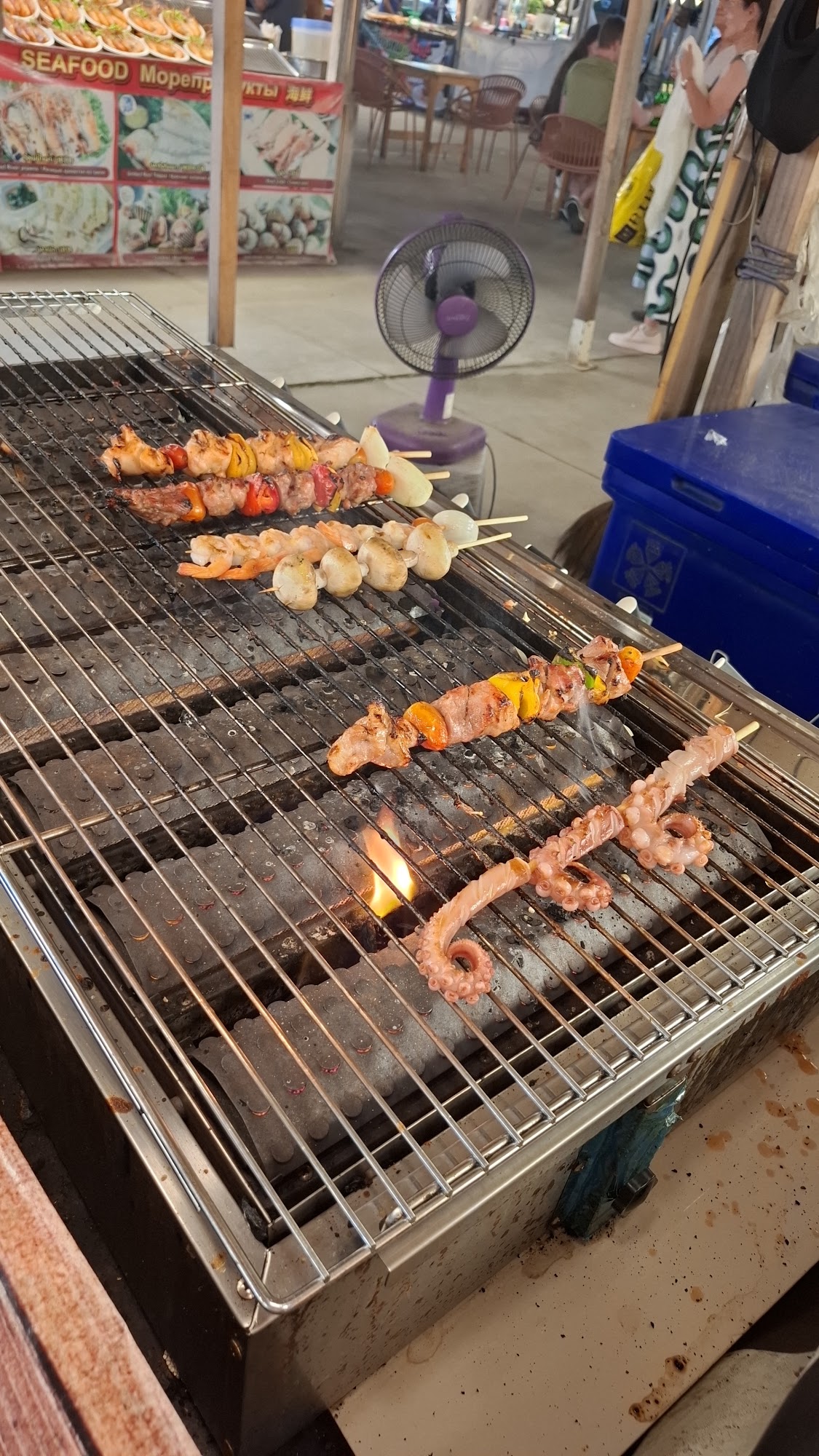
The island’s cooking is that of Thai seaside resorts: grilled fish, prawns, salads, soups, fried rice, with prices rising as you approach the busiest beaches. Sai Kaew’s restaurants are decent but expensive for the country; those inland, along the road, are cheaper and often better.
Beach bars serve cocktails in buckets, a local speciality with nothing gastronomic about it and a lot of charm. Alcohol is not sold everywhere on election days or certain religious holidays: check before counting on a drink.
What to budget
Koh Samet is not the cheapest island: supply is limited and demand strong at weekends. A simple bungalow room sits in a moderate range, west-coast places being pricier. The ferry and the transfer from Bangkok are a fixed cost to plan for. Over two days, excluding transport, a reasonable budget holds if you eat local.
When to come
From November to February the sea is calm, the sky clear and the air cooler: the best period, and the busiest, especially at weekends. From March to May the heat rises and the island stays pleasant. From June to October the monsoon brings showers and a rougher sea on the east coast; the west coast often remains workable.
Avoid Thai long weekends if you want quiet: the island fills with Bangkokians and prices rise.
Mistakes to avoid
Booking a hotel in Sai Kaew hoping for silence. Arriving in Ban Phe after the last ferry. Counting on a cash machine on the island: there are few and they break down. Forgetting the park entry fee. And trying to go round the island in an hour: the road is longer than it looks.
FAQ
Are two days enough?
Yes for one beach and one cove. Three days allow the full tour and a walk.
Can you come without booking?
Off season, yes. At weekends and in December, book.
Do you need a car?
No, and it is impossible: the island does not accept private cars. Pick-ups and motorbike taxis do the work.
Is the island suitable for children?
Yes at Sai Kaew, where the water is shallow. Less in the south, where beaches are rocky.
Are there mosquitoes?
Yes, especially late in the day and after rain. Bring protection.
Also read
To go further
Mr Schaka’s guidebook, Pattaya – The Practical Guide, covers the essentials: transport, neighbourhoods, addresses, food, etiquette and safety, updated for 2026–2027.