The Bangkok National Museum is one of the places I recommend most often, and one of the quietest spots in the royal quarter. A short walk from the Grand Palace, you travel through a thousand years of Thai art inside a former palace, often almost alone. Here is how to visit: opening hours, prices, rooms not to miss, getting there and guided tours.
A museum inside a former palace
The museum occupies the Wang Na, the “Front Palace”. It was built in the late 18th century for the vice-king, the second most important figure in the kingdom. When that role was abolished, King Chulalongkorn (Rama V) moved the royal collections here. Today it is the largest museum in the country, run by the Fine Arts Department.
What makes it special is the mix: old pavilions, gardens and more modern galleries. You don’t visit one building, you wander through a small neighbourhood. Allow at least two to three hours, and half a day if you love history.
Opening hours, prices and guided tours
The museum is open Wednesday to Sunday, 8.30am to 4pm. It is closed on Mondays and Tuesdays. Last entry is around 3.30pm, and a few rooms may close at lunchtime. Some public holidays change the schedule: check on site during Songkran and New Year.
Tickets cost 240 THB for foreign visitors and 30 THB for Thai nationals (prices checked in 2026). Entry is free for several groups, including monks and Thai citizens over 60: ask at the ticket office if you think you qualify.
Good news for English speakers: the museum’s volunteer association (National Museum Volunteers) offers free guided tours in English and French on Wednesdays and Thursdays at 9.30am. Meet at the ticket office. The tour is free, but you still pay the entrance fee. The schedule can change, especially during holidays, so ask when you arrive.
What not to miss
Buddhaisawan Chapel
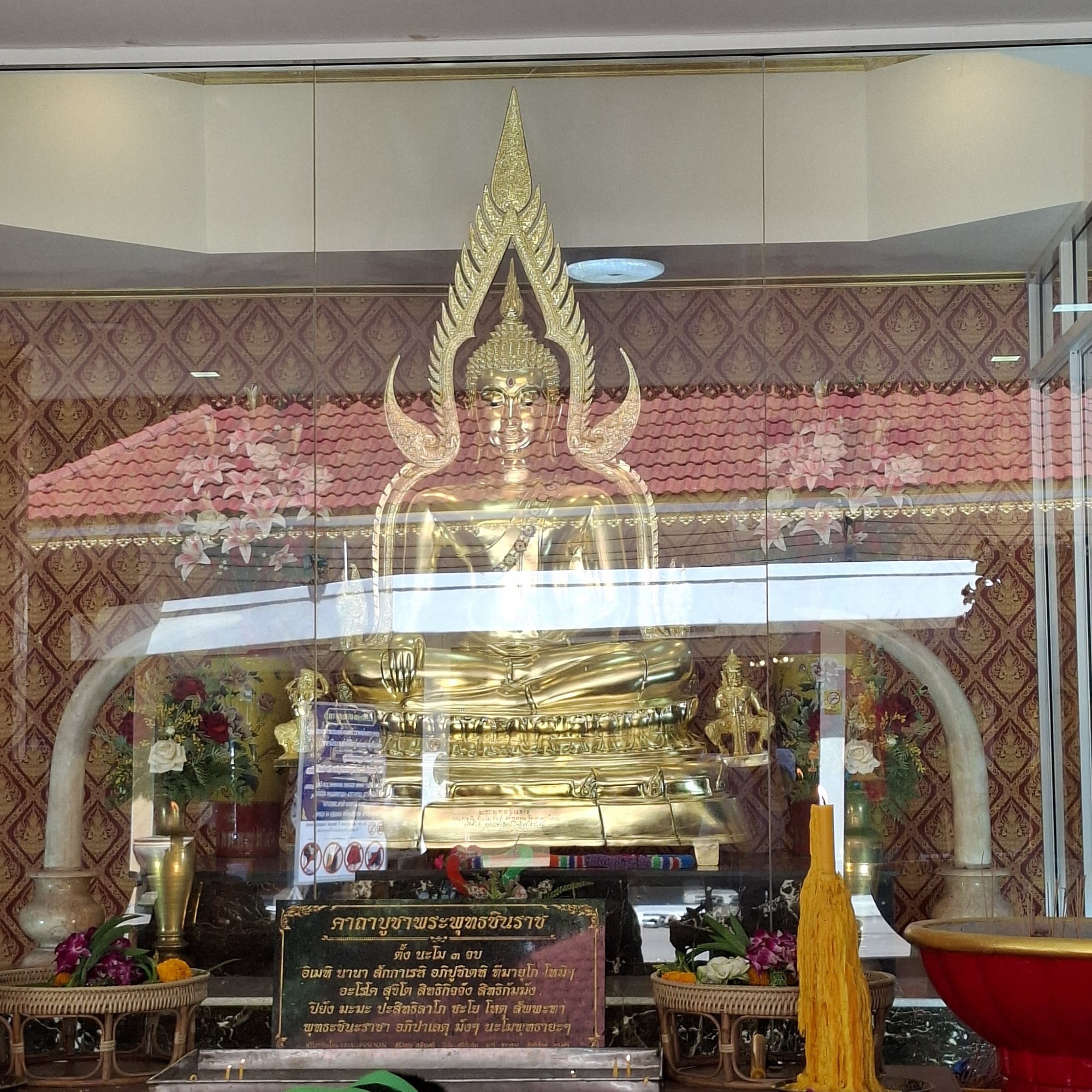
This is the heart of the site. The royal chapel houses the Phra Buddha Sihing, a deeply revered statue that is brought out every year for Songkran. But look above all at the walls: the murals tell the life of the Buddha in astonishing detail. Go in barefoot and keep your voice down.
Wang Na Palace and its pavilions
The old palace halls display objects from the royal court: gilded wooden palanquins, musical instruments, textiles, weapons, mother-of-pearl and ceramics. The buildings are as beautiful as the display cases. Take time to look up at the ceilings and the carved doors.
The Royal Funeral Chariots Hall
This is the most impressive room. It holds the huge gilded chariots used for royal cremations, several metres high and covered in carvings. They are still brought out for major ceremonies. Standing in front of them, you understand how important the monarchy is in Thai culture.
The history galleries
Start here if you want some context. The history galleries sum up the country’s past, from prehistory to Sukhothai, Ayutthaya and then Bangkok. After that, the art galleries show sculpture from across Southeast Asia: Dvaravati, Srivijaya, Khmer, Lanna. It is the best Thai history lesson I know.
How to get there
The museum is on Na Phra That Road, at the edge of Sanam Luang, the large open field in front of the Grand Palace. Your options:
- Chao Phraya boat: get off at Tha Chang pier, then walk about 900 metres (10 to 15 minutes) past Silpakorn University.
- MRT: Sanam Chai station, then about 1.6 km on foot (20 to 25 minutes) past Wat Pho and the Grand Palace. A bus or tuk-tuk shortens the trip.
- Taxi: many drivers know Thammasat University, next to the museum, better. Give that name if yours hesitates.
Combining the visit with the neighbourhood
The museum fits perfectly with the rest of Rattanakosin Island. In the morning, visit the museum while it is cool. In the afternoon, carry on to the Grand Palace or Wat Pho, both very close. My full itinerary is here: Rattanakosin, the Grand Palace and Wat Pho.
For a calmer moment, walk to the Tha Phra Chan amulet market, then have a simple meal in the student canteens by the river. And if you like places without crowds, here are more ideas: Bangkok temples off the beaten path.
Mr Schaka’s practical tips
- Arrive at opening time: it is cooler and the rooms are almost empty.
- Dress respectfully, with shoulders and knees covered, as you will enter a royal chapel.
- Bring water and a hat or umbrella: you walk a lot outdoors between the pavilions.
- Ignore strangers outside who tell you “it’s closed today”: it is a classic scam in this area.
- Check the day: come on a Monday or Tuesday and you will find the doors shut.
Frequently asked questions
How long does it take to visit the museum?
Allow two to three hours for the main rooms. Half a day lets you see everything without rushing.
Is the Bangkok National Museum open on Mondays?
No. It is closed on Mondays and Tuesdays. It opens Wednesday to Sunday, 8.30am to 4pm.
Is there a guided tour in English?
Yes, the museum volunteers run a free tour in English on Wednesdays and Thursdays at 9.30am, starting from the ticket office. You still pay for entry. Confirm on site, as the schedule can change.
To go further
Mr Schaka’s guidebook, Bangkok – The Practical Guide, covers the essentials: transport, neighbourhoods, addresses, food, etiquette and safety, updated for 2026–2027.