Bangkok is vast, but it can be crossed for a few euros a day. The rule is simple: rail for distance, water for speed, motorbikes for the last metres, and a taxi only when nothing else works.
Skytrain and metro
Two clean, air-conditioned and punctual networks cover most tourist districts. Buy a rechargeable card on day one: it saves queuing at machines and lowers the cost per trip. Avoid rush hour, when the carriages are full.
The river boats
The Chao Phraya Express links the temples, the old town and the southern districts for the price of a bus ticket. The boat is often faster than the road at busy times, and the journey itself is worth it. The canals of Thonburi and Bang Krachao complete the network.
Buses
The oldest ones are the cheapest in town, but you need to know your line and accept no air conditioning. Air-conditioned buses cost a little more. It is the slowest mode, and the most interesting if you are not in a hurry.
Motorbike taxis and apps
The motorbike is the best tool for the last kilometres, especially in small streets no car can enter. Agree the price before getting on, or use an app to avoid the discussion. Cars with drivers cost more and stay stuck in traffic.
Practical information
Avoid tuk-tuks for long distances: they are expensive per kilometre and mainly serve organised tours. Walk whenever you can: districts are smaller than they look on a map. Keep small change — many drivers have none.
FAQ
Should I buy a transport card?
Useful if you stay more than two days: it simplifies every trip and cuts the waiting.
Are taxis safe?
Yes, if the meter is on. Otherwise get out and take another.
How much per day?
A few euros for rail and boat trips, more if you multiply motorbikes and apps.
Also read
To go further
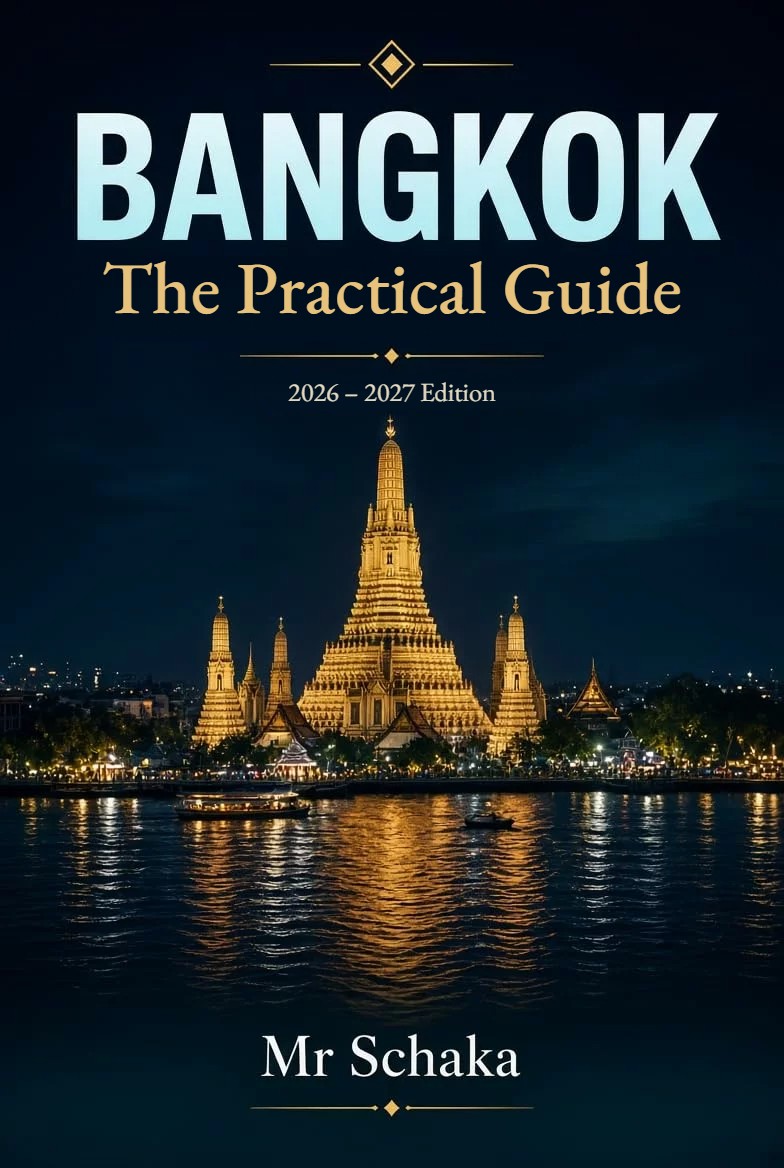
Mr Schaka’s guidebook, Bangkok – The Practical Guide, covers the essentials: transport, neighbourhoods, addresses, food, etiquette and safety, updated for 2026–2027.