Bangkok at dawn: discovering a different rhythm. This guide combines background and practical suggestions for an attentive experience. Adapt the approach to your interests, companions and current conditions rather than treating it as a fixed itinerary.
Understanding the experience
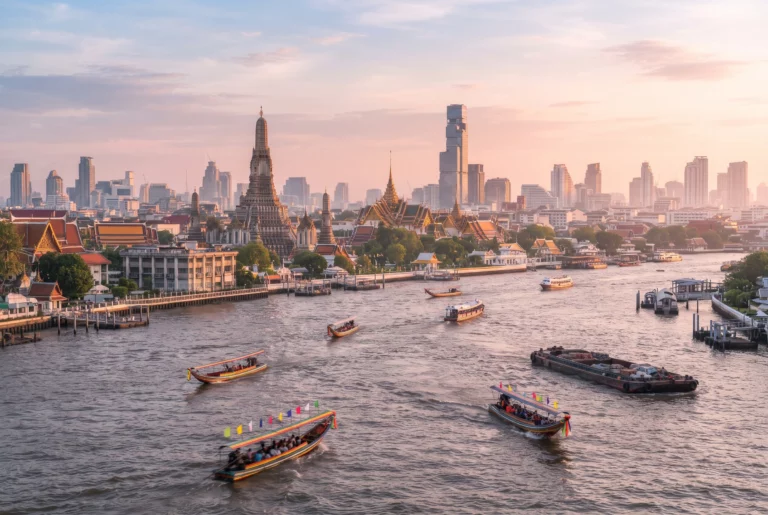
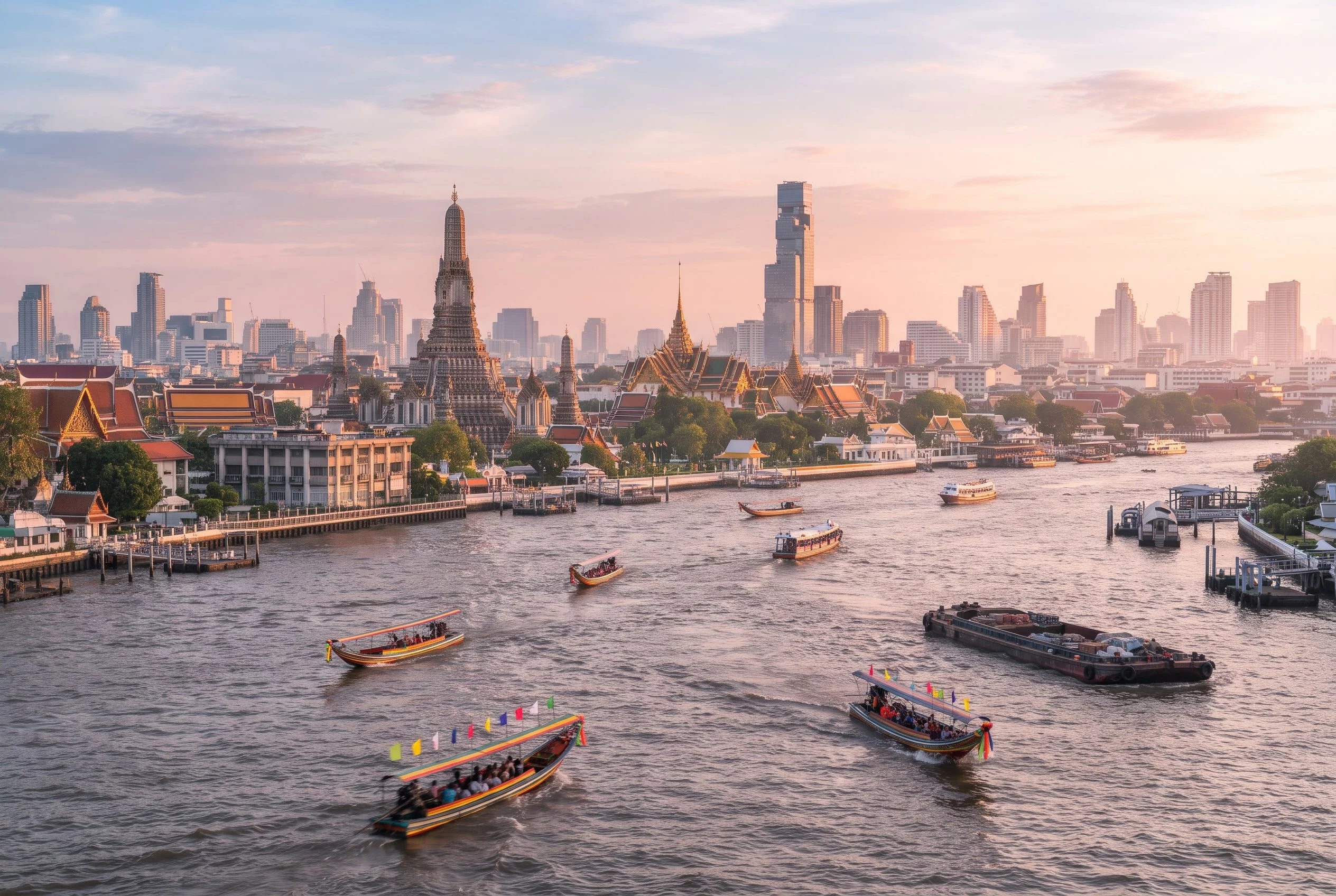
Along the Chao Phraya, morning reveals a working capital before the visitor rush.
A rewarding discovery starts with a simple question: what do you actually want to understand beyond the familiar photograph? Treat the subject as a relationship between places, people, practices and history. Choose one clear thread that everyone in your group can follow. It will guide the time spent at each stage, the questions you ask and the details you notice. You do not need to include every famous name. A coherent experience is more valuable than a collection of unrelated stops, particularly when travelling with people whose interests and energy differ.
Reading the context
The river connects different neighbourhoods rather than dividing a frozen past from a modern city.
Historical and geographical context should sharpen observation rather than explain everything through a single story. Separate documented evidence, transmitted narratives and your own impressions. Buildings, practices and landscapes change their functions over time. Look for signs of those changes instead of assuming that authenticity means remaining unchanged. Interpretation panels, cultural institutions and knowledgeable local people can clarify what an initial reading leaves uncertain. A small number of well-understood facts usually provides a stronger foundation than an extensive chronology remembered without context.
Beginning with observation
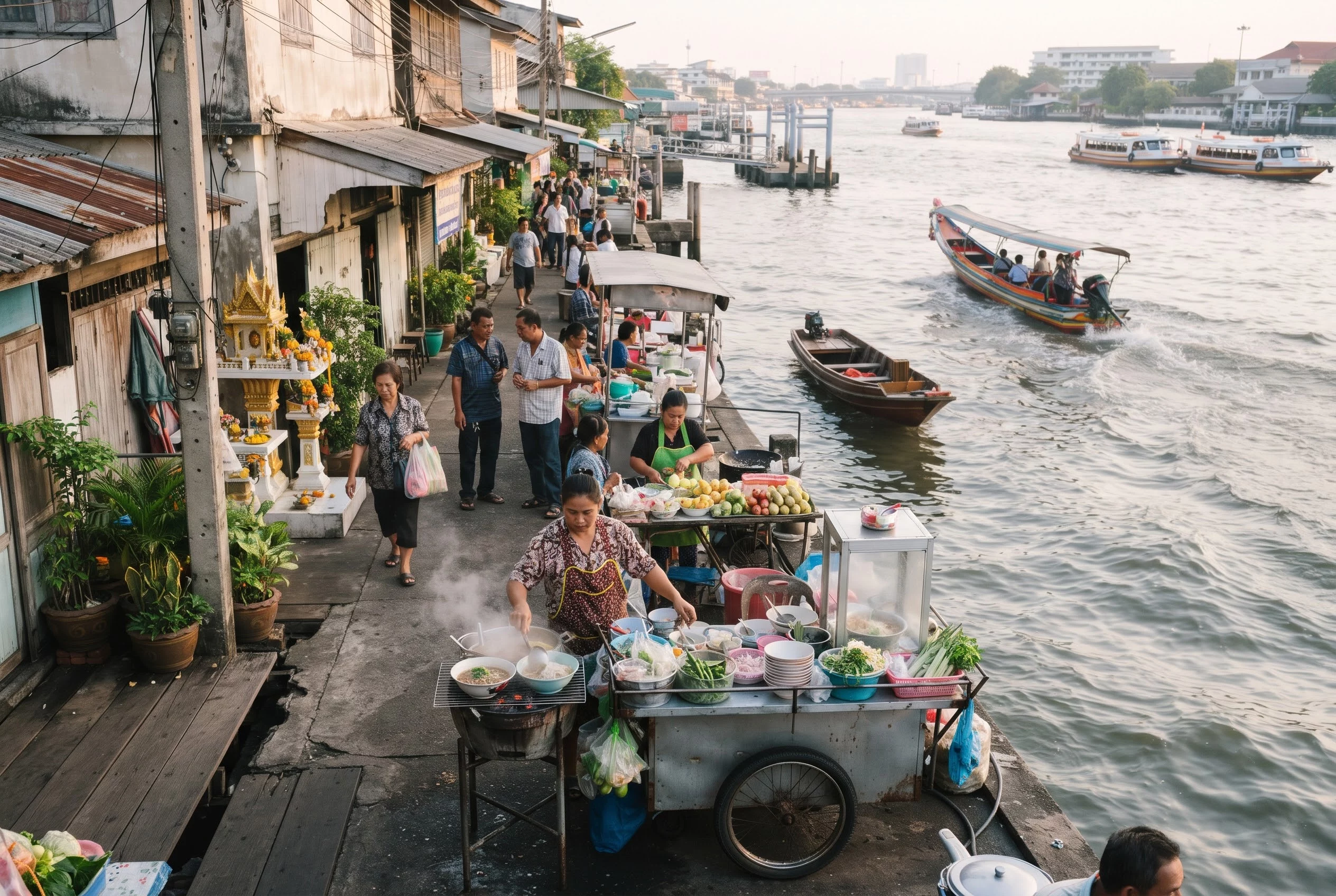
Observe piers, deliveries and opening shops without assuming a common timetable.
Before adding another activity, spend a few minutes observing what is already in front of you: materials, shapes, colours and movement. Notice the difference between everyday use and heritage or visitor presentation. No special equipment is required, only a little attention away from the phone. When travelling together, invite each person to share one observation. Someone else’s detail may change your understanding of the whole setting. Discovery becomes a conversation rather than a checklist confirming what you expected to find.
Choosing a first anchor
A public river viewpoint offers a first reading of movement and the skyline.
Choose one first anchor: a place, an object, a practice or an encounter. Give it enough time to matter. Ask what it reveals and what it cannot show. A spectacular view does not explain an entire community, just as one familiar gesture cannot represent a whole culture. The best starting point raises a question for the next stage. Formulating that question helps maintain a direction while allowing the experience to change as new observations appear.
Adding a second perspective
Wat Arun’s silhouette adds a second perspective; seeing it does not mean its grounds are already open.
A second stage should add contrast rather than repeat the first. Follow an overview with a detail, a busy setting with a quiet pause, or historical interpretation with present-day use. This shift gives the subject depth and avoids the fatigue of several similar experiences. Variety does not always require travelling farther: a few steps, another time of day or a different question can be enough. Keep the connection clear so that the second perspective enriches your original interest.
Making room for people
Morning vendors and commuters have their own priorities; keep access to boats and shops clear.
Places and traditions also belong to people who live, work or gather there. Consider how your presence fits into that shared space. Keep passages clear. Private conversation is not entertainment, and someone taking a break may not be available to explain their work. When an exchange is welcome, ask a specific question and accept a short answer. Listening without immediately looking for another photograph often creates a more meaningful encounter than trying to collect as many interactions as possible.
Recognising useful distinctions
Distinguish a river crossing, a transport service and a private excursion before agreeing.
Similar words can describe very different experiences. A self-guided walk, a guided visit, a commercial activity and a religious practice involve different expectations. Price alone is not a sufficient comparison: consider what is included, the conditions and the actual time available. Clarifying the language helps you choose an experience for what it offers rather than expecting something it never promised. It also prevents unfair comparisons between services designed for different needs.
Building a flexible sequence
Begin near your accommodation, reach one river viewpoint and finish with breakfast.
Build the experience around an easy introduction, a central priority and a more open ending. This works better than filling every moment. You can shorten a secondary stage without losing what matters most. Agree on a meeting point if the group separates and keep a simple way to finish early. One person may want to observe longer while another needs a seat. Flexibility makes preparation work for the people actually present and the conditions encountered.
Checking timing and calendars
Check the local sunrise time; pink skies and clear light cannot be promised.
Timing can affect the experience more than distance. Light, crowds, working hours and local practices follow different rhythms. Check the organiser’s announcement for a dated activity and current access conditions for a place. An older travel account does not confirm today’s opening or an event’s continuation. Leave time before an important appointment. The publication date of this article is not an event date: where no programme is confirmed, plan a general discovery rather than expecting a specific ceremony or festival.
Planning access and the return
Do not assume river transport runs at first light; check the chosen service.
A pleasant programme considers the whole journey, including arrival, the final connection and the return. Similar names or different translations may refer to separate places, so save a checked address or landmark. Confirm reserved transport with its operator. For walking, consider pauses and terrain rather than distance alone. Give the return the same attention as the outward journey, especially when activities continue after dark or away from a straightforward transport connection.
Keeping costs understandable
A public-space walk and a boat outing have different costs and inclusions.
Separate essential costs from personal choices. Transport, admission, guidance, purchases and meals serve different purposes. Ask what is included before committing and check the current price when booking. This guide does not promise a fixed tariff: a figure without context can be misleading. Choose a spending limit and allow a little flexibility for a changed plan. Clear decisions in advance make it easier to enjoy the experience without constantly recalculating or accepting an offer you have not understood.
Adapting to different needs
Bring water and allow shaded pauses even early; piers may include steps.
Let the group’s needs shape the plan from the beginning. An activity called easy may still involve steps, standing, narrow passages or tiring noise. Ask specific questions rather than relying on a general label. Plan suitable clothing, water and accessible pauses for the context. A shorter objective can be more rewarding with children or someone who tires easily. Nobody should have to finish a route simply because it was in the original plan. Comfort supports attention rather than distracting from it.
Respecting local boundaries
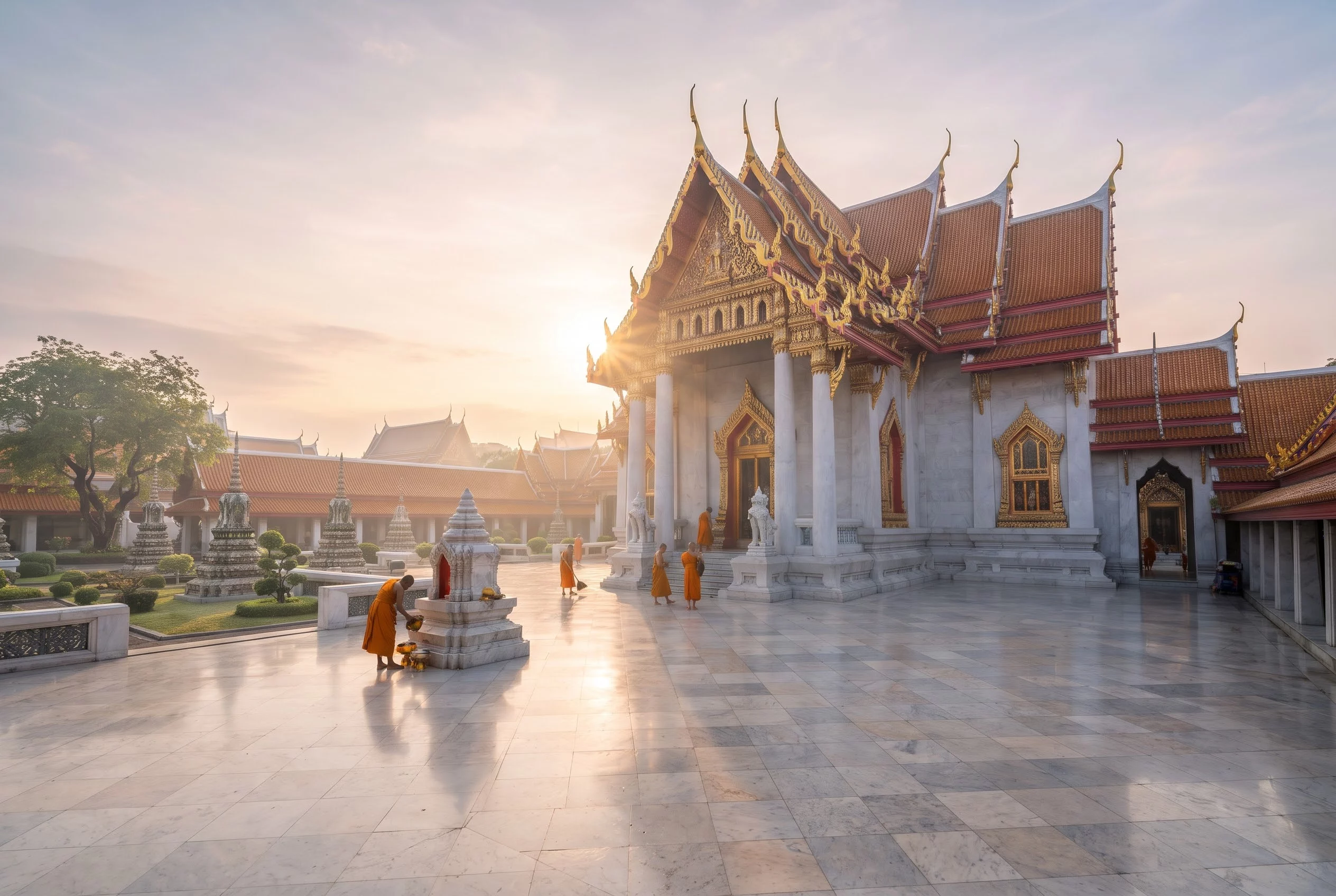
Near a temple, devotional activity is not a performance for photographers.
Displayed rules and instructions from responsible people take priority over a visitor’s habits. Boundaries may protect a fragile space, a practice, circulation or other people’s peace. Ask briefly when an instruction is unclear. Adjusting your behaviour is easier than undoing an intrusion. Avoid copying gestures without understanding their context. Respect does not require knowing everything; it requires recognising that a welcoming experience remains shared space, with purposes that do not exist solely for visitors.
Photographs and evidence
Photograph river movement rather than singling out someone waiting for transport.
A photograph conveys atmosphere but cannot explain everything it shows. Ask permission before photographing a person when appropriate, accept refusal and keep passages clear. Use accurate captions when sharing your own pictures, distinguishing observation from assumption. The illustrations in this article were generated with artificial intelligence. They evoke the subject and are not documentary photographs or evidence that a particular scene occurred. Clear labelling lets readers enjoy the images without misunderstanding their status.
Preparing a useful alternative
If rain hides the skyline, observe the neighbourhood from a permitted sheltered place.
Closure, rain, crowds or changing personal needs do not necessarily cancel the whole experience. Prepare an alternative that keeps your original thread: an indoor setting, a shorter route, reading on site or a postponed conversation. It should be straightforward to reach and fit the available time. Giving up one stage may preserve the rest of the day. Success depends on the quality of what you understand and share, rather than on completing every planned stop.
Reducing the impact of a visit
A compact route and reusable bottle reduce detours and packaging during the morning.
Repeated small choices can change a place. Take litter away, use designated facilities and leave natural or historic objects where they belong. An informed purchase can support local work without becoming obligatory. Ask how activities involving resources, animals or sensitive environments operate before choosing them. Participation need not mean consuming or photographing everything. A measured presence leaves room for other uses and improves the experience for the people who live there and those who visit afterwards.
Checking information that changes
Thailand’s tourism authority provides background; boat times require operator confirmation.
Return to the organisation responsible for practical information: the cultural institution, site manager, transport operator or event organiser. Check access, booking, visitor conditions and calendars, especially when planning well ahead. References are linked at the end of the article. They do not mean every observation or suggested sequence comes from one institution: the practical approach is editorial guidance. Distinguishing background sources from your own operational checks makes a guide more useful without treating it as a guarantee.
Taking useful understanding home
Take away one observed contrast between river, streets and morning work rather than judging the entire capital.
Take away one unexpected detail, one clearer idea and one question worth exploring. This keeps memories connected rather than leaving only unrelated pictures. When describing the experience, distinguish your own circumstances from advice that might apply more widely. Recommend a way of looking while explaining what depended on the day you visited. Reading further, checking a fact or returning with a new question can be the most valuable continuation. A satisfying discovery does not need to close every question.
Sources and practical checks
Background references checked on 8 November 2026. Confirm practical arrangements with the responsible organisations before visiting. Suggested sequences and observation methods are editorial guidance.

To go further
Mr Schaka’s guidebook, Bangkok – The Practical Guide, covers the essentials: transport, neighbourhoods, addresses, food, etiquette and safety, updated for 2026–2027.