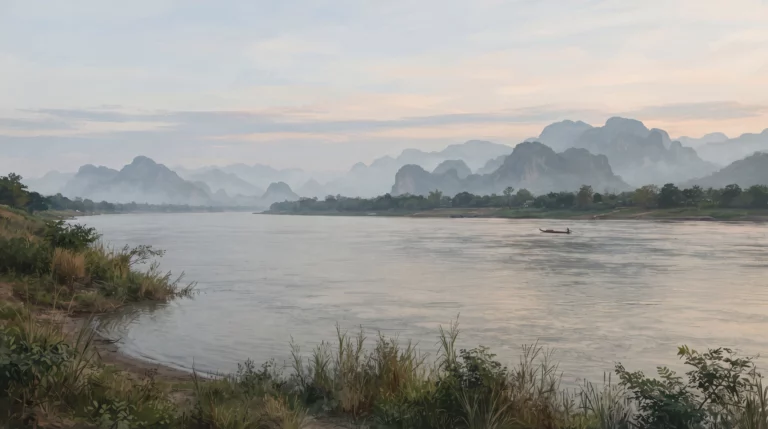
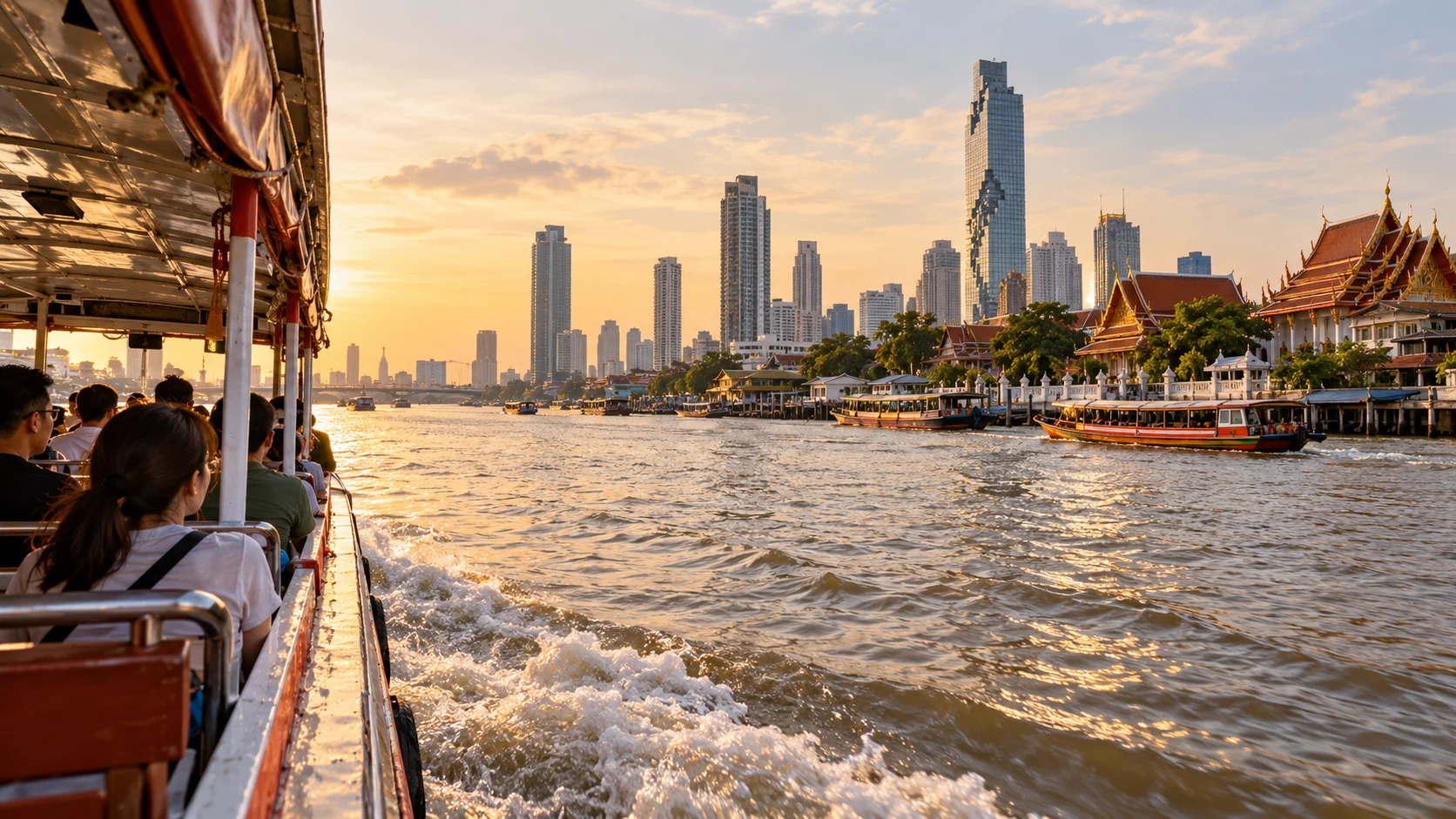
A blue line on a map and a few points along the Chao Phraya can make a river outing look effortless: reach the water and depart. Yet a pier is not a promise of a departure, and a passing boat may not provide the connection you want. When planning a weekend outing, separate three questions. Which service do you intend to use? Where exactly will you board? How will you return if the plan changes? These distinctions make the day clearer without requiring you to master every aspect of Bangkok’s river transport.
This article is scheduled for Saturday 31 October 2026 at 22:00 to help prepare a later outing. That publication time does not announce a night departure. It provides neither a guaranteed timetable for Sunday 1 November nor confirmation that a particular pier will be open. Check service information with the chosen operator, then follow the situation on site. The organisational suggestions are editorial advice, rather than an account of the author’s personal crossing. They do not replace instructions from the crew or staff responsible for boarding.
Begin with what you want from the river
Taking a boat can satisfy very different intentions. You may simply want to reach a place on the opposite bank, move between neighbourhoods or spend time watching the city from the water. Write that intention before choosing a ticket. It distinguishes useful transport from an excursion in which the journey is the main activity. Without this distinction, you can end up comparing offers that provide entirely different experiences. A price is difficult to assess when you have not yet decided what kind of trip it is buying.
Someone wanting only a crossing has different needs from a group hoping to get off at several stops. A private booking should likewise be understood as a specific service with its own conditions. Ask what is included, where it starts and where it finishes. An offer can be enjoyable without fitting your programme. The right choice is not necessarily the first one presented as you approach the water. It is the service whose operation you can explain clearly, including what you will do after leaving the boat and how you expect to return.
Check weekends rather than assuming
Operating days are essential information. During preparation of this guide, the Chao Phraya Express Boat website described several transport services with Monday-to-Friday operation. That does not establish that every boat is absent at weekends. It means, above all, that weekday information must not be carried across automatically to Saturday or Sunday. Find the description of the specific service you intend to use, rather than looking for one general answer about the river. Different services need their own checks, even when their routes seem to overlap.
Another operator, Chao Phraya Tourist Boat, presents a hop-on, hop-off product. Its existence alone does not confirm departures on your chosen day. Consult current details of the offer, its stops and its conditions before paying. If a table does not clearly identify its date or operating days, ask. An old photograph of a sign is not enough. Your personal note can remain simple: selected service, date checked and the point still needing confirmation before the outing. An uncertainty recorded clearly is more useful than an assumption disguised as a timetable.
Identify the exact pier and its purpose
A neighbourhood name is not a boarding address. Find the pier used by your service and its public entrance. A riverside area can contain several pontoons or access points serving different purposes. A counter or a boat does not prove you are in the right place. Compare the displayed name, advertised service and intended stop before joining a queue. Knowing the name of a nearby attraction is useful background, but you still need to identify the actual place where your selected operator expects passengers.
Save the route from your land arrival point as well. An access point visible from the river may be less obvious from the street. Look for open passages, possible detours and a way to recognise the area again later. If combining rail and boat, prepare the walk from the station to boarding as a separate stage. An interchange symbol on a map does not tell you by itself which door to take or which pontoon to approach. Treat the transition as a short real journey, rather than an invisible line between two transport systems.
Ask three questions before buying
Before paying, ask which journey the ticket permits, where you may leave the boat and what conditions apply to boarding again. A multiple-stop product and a single movement do not work in the same way. Do not assume that a ticket allows another boarding later simply because the next boat resembles the one you first used. Have the chosen offer’s conditions explained using the corresponding official document or display. Your aim is to understand the product you are actually buying, not the general idea of a boat ride.
Then check what happens if you change your mind before boarding or if the service changes. The objective is not to secure an impossible guarantee covering every surprise. It is to understand the rules already provided for validity, use, changes or refunds under that offer. Keep proof of purchase and useful operator information. If the answer remains unclear, you may wait and compare. A departure approaching is not an obligation to buy a service you still do not understand. Allow yourself enough time to ask without making the queue your only source of pressure.
Prepare the return before the first departure
On a map, returning often looks obvious: simply leave again from the same point. In reality, you might finish the walk somewhere else, change a stop or decide not to navigate any further. Choose a main return option and a land-based alternative. Record the accommodation address and the place where you expect to finish. You can then decide from a precise location rather than searching vaguely for “a boat home”. The alternative should be usable by your group, not merely something that exists somewhere in the city.
For an outing with several stops, define a moment when you will reassess the next part. After the first visit, for example, check whether everyone wants to continue and whether the next service still fits. This decision pause prevents every stop becoming an obligation. Leave a margin before an appointment or reservation as well. A succession of movements on water, walks and waits should not be reduced to the time quoted aboard, even when that time sounds short. The whole outing includes the transitions that make each separate movement possible.
Read current conditions without inventing a forecast
A date in a programme does not describe actual conditions on the river. Before setting out, consult current weather information from the Thai Meteorological Department and communications from your chosen service. A general forecast and an operating decision answer different questions. A rain icon in an application neither confirms a departure nor announces that all boats have stopped. Follow the specific instructions applying to your outing. You are checking the situation for this journey, rather than trying to turn a broad weather symbol into a complete transport decision.
If access is closed on arrival or the crew asks passengers to wait, adapt the programme. Do not bypass a barrier to preserve a booking or a planned photograph. Prepare a land activity that does not depend on the crossing: a pause in an open venue, a previously checked visit or a return towards your neighbourhood. Keep the replacement simple. Its purpose is to restore direction to the day, not to replace every minute of the original schedule immediately with another race. A smaller plan can be a complete and satisfactory response to changed conditions.
Board according to crew instructions
Prepare the belongings you will need before approaching the boarding point. Close the bag and keep your hands as available as practical. Wait for the staff’s signal or instructions before moving forward. Do not attempt to board a moving boat to avoid missing a departure. If the situation is unclear, ask for help or wait for an instruction you understand. Other passengers being in a hurry is not an instruction addressed to you. Your task is to make your own movement clearly and follow the organised boarding process.
Once aboard, identify where to settle and follow guidance on movement and equipment. Do not leave belongings in an area needed for passage. If you want to move for a view, wait for an appropriate moment and respect service restrictions. Prepare to leave without rushing and let staff organise disembarkation. A photograph or message can wait. Crossing an access point requires you to look at what you are doing and maintain your balance. The landscape remains part of the outing, but it should not distract from the immediate action of getting on or off.
Check the group’s needs before promising a crossing
A journey that looks simple for an independently mobile adult may require different preparation with a child, pushchair or person with limited mobility. Ask about actual pier access and boarding. Do not infer that there are no steps because the distance between street and river is short. The operator should clarify the conditions of its service. If they do not meet your group’s needs, choose another activity. The point is to match the outing to the people taking it, rather than making those people fit an attractive line on a map.
Share useful roles before entering the departure area. Who holds the tickets? Who accompanies the child? Where will you meet if part of the group does not board? Agree on a clear point on land, then follow instructions on site. Avoid placing all the organisation on the person already carrying bags or moving least easily. A shared outing works better when everyone knows which action is theirs, instead of improvising under boarding pressure. The small conversation beforehand can prevent several people trying to solve the same issue while leaving another need unattended.
Choose fewer stops and give them a purpose

A list of stops can create the impression that you must use every one to obtain value from a product. Instead, ask what each disembarkation adds. Do you want to visit a particular venue, walk through an area or simply pause? Without an answer, a stop can become getting off followed by searching for the next departure. Two understood and appreciated stages may make a richer day than a collection of pontoons remembered mainly for waiting and changing queues. Value depends on the experience you use, rather than the number of options printed on an offer.
For every chosen stage, look at the venue entrance and the walk connecting it to the pier. Check opening arrangements separately: a boat stopping nearby does not prove the intended visit is possible. Keep an optional activity you can remove without regret. That leaves room for curiosity, a longer meal or the pleasure of watching the water from land. The river can organise a day without requiring an uninterrupted series of boardings and disembarkations. A pause beside it can belong to the outing just as much as the movement along it.
Observe and photograph without blocking the service
River scenery invites a camera: facades, vessels, silhouettes and reflections change continuously. You do not need to capture every scene to keep a memory. Choose moments when looking or photographing will not obstruct others. Avoid standing in an access point or extending a device over an area used by crew. Staff instructions and the boat’s operation take priority over a composition imagined while preparing the day. A photograph is more satisfying when obtaining it does not require somebody else to interrupt work or find a way around you.
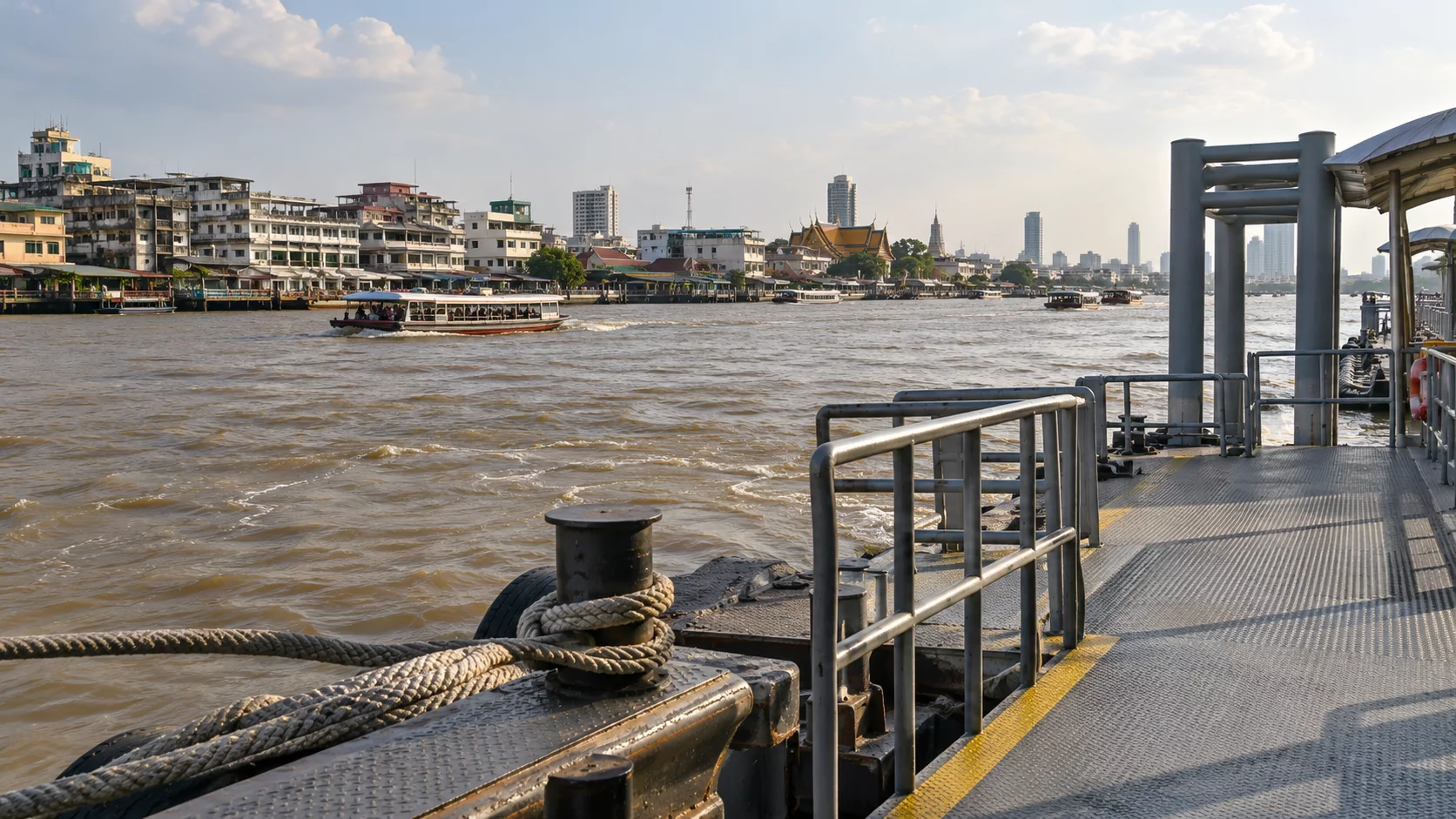
On land, show the same attention to people living and working in riverside areas. Ask permission for a close, recognisable portrait, respect a refusal and do not enter private space to improve an angle. The illustrations in this article are AI-generated. They support a planning idea and are not evidence of a departure, a pier’s condition or a scene personally observed. Travel images should remain distinct from practical information that needs checking on site. An appealing image cannot confirm a service simply because it depicts a boat or a familiar-looking waterfront.
Consider the cost of the whole outing
When comparing a package with a simple journey, add up what you will actually use. Include land transport to departure and from arrival, possible visits and planned meals, alongside the service on the water. Do not assume a displayed price includes every stage you have mentally added. A pass can be useful when its operation fits your programme. It may be less helpful if you get off only once or quickly change activities. Understanding your intended use is more important than counting how many theoretical possibilities a product advertises.
Keep a margin that allows another way home without having to continue a boat journey that has become uncomfortable for the group. This reserve belongs to the initial choice; it is not a budgeting failure. Afterwards, record what helped: understood service, easy-to-find pier, enjoyable stop and return actually used. You can reuse that experience for another outing while checking variable details again. Good preparation creates concrete reference points, rather than a broad certainty that everything will be identical next time. Knowing what to verify is itself a useful result of a well-planned day.
Common questions
Does an open pier mean my boat is running? No. Identify the operator, service, direction and day. Other vessels being present do not confirm your particular connection.
Can a weekday timetable be used on Sunday? Only if the service clearly states that it applies that day too. Otherwise obtain specific confirmation before building the outing around the departure.
What if you decide not to board? Return to the outing’s purpose: reaching a venue, discovering a neighbourhood or spending time beside the water. You can reshape it on land without replacing a crossing with another immediate booking.
Sources and reference points
Check information with Chao Phraya Express Boat or Chao Phraya Tourist Boat, according to the intended service. Consult the Thai Meteorological Department for current forecasts and warnings. None of these links is advance confirmation of a departure for your date; the planning suggestions above are original editorial advice.
#Bangkok #Thailand #ChaoPhraya #Travel #MrSchaka

To go further
Mr Schaka’s guidebook, Bangkok – The Practical Guide, covers the essentials: transport, neighbourhoods, addresses, food, etiquette and safety, updated for 2026–2027.