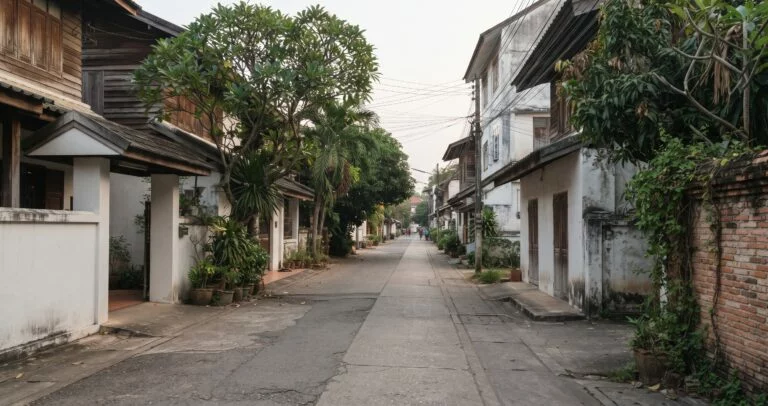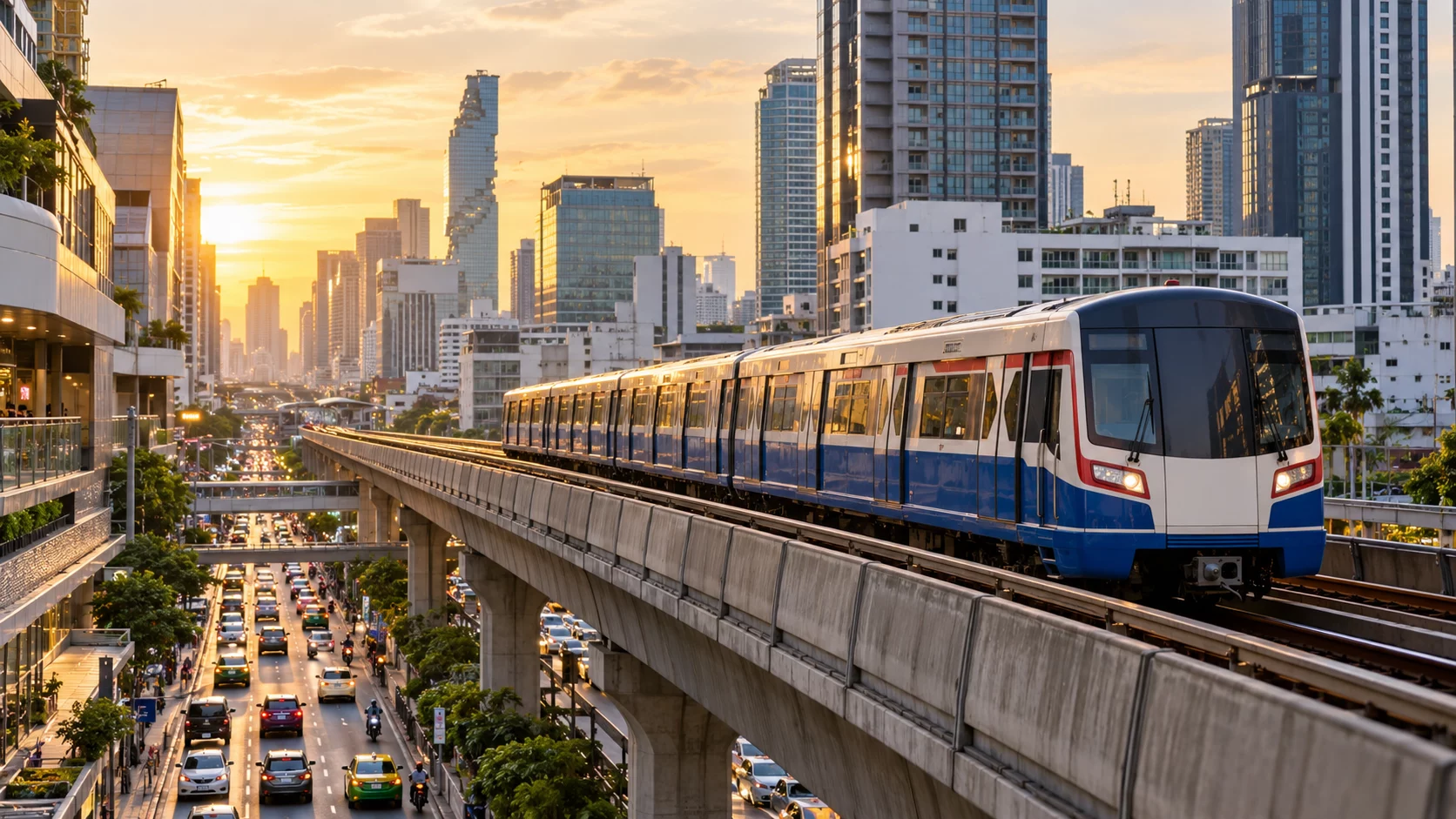
On a map of Bangkok, rail lines seem to answer a simple question: which colour connects your starting point with your destination? In practice, the journey begins before the ticket gates and continues after the station. You need to choose an entrance, recognise the correct direction, manage any interchange and leave on the right side. That chain of small decisions separates an understood connection from a sequence of movements you simply follow. This guide prepares the whole chain without asking you to memorise the network.
This is an evergreen article prepared for 31 October 2026, rather than an announcement of a service change. Check fares, payment methods, operating times and facilities with the operators for your actual journey. Examples explain a method; they do not guarantee duration or availability. The most suitable route is the one that fits your precise destination and your needs. It is not necessarily the route with the fewest station symbols on a diagram. A useful plan should remain understandable from the first doorway to the final entrance.
Start with an address rather than a district
A district is often too large to determine the best station. Begin with your destination’s exact address and public entrance. A museum, shopping centre or large building may have several access points, some less convenient than others. Check whether a reservation requires you to use a particular entrance. That detail lets you compare two nearby stations fairly. It can also prevent a long final detour after you have successfully completed the entire railway part of the journey and assumed the difficult decisions were over.
Do the same work at the starting point. The nearest station in a straight line is not always the easiest to reach. Look at the pedestrian route, road crossings, possible indoor passages and entrances you can actually use. For someone who cannot use stairs, the relevant starting point may be the lift rather than the general station symbol. Note the door-to-door journey before counting stops. Walking remains part of the trip even when a train calculator leaves it outside the displayed duration. Include that work in your comparison instead of treating it as free effort.
Understand names before relying on colours
The BTS includes the Sukhumvit and Silom lines, which meet at Siam. The MRT network includes the Blue and Purple lines, among others. These names explain why two trains may belong to different systems even when shown on one general map. Colour is a useful visual reference, but line and station names are still necessary when asking a question or recognising instructions on site. Learn the names relevant to your own route rather than trying to learn every colour at once.
Do not confuse a station with a broad avenue or area bearing a similar name. Sukhumvit can refer to an extensive urban setting, a BTS line or an MRT station. In a route note, therefore, include the network: write “MRT Sukhumvit” or “BTS Asok”. If the map supplies a station code, add it as a second reference. The code supports the name; it does not replace understanding where you must board or leave. A short note that distinguishes these meanings will be easier to use under pressure than a longer list of unexplained names.
Turn the map into three lines of notes
A route card does not have to be long. First write how to reach the starting entrance. On the second line, record the line, the displayed direction and the stop where you will change or leave. On the third, identify the exit and final walk. Add a separate line for an interchange if there is one. The purpose is not to collect as much information as possible. It is to separate the moments when you will need to make a new decision.
Imagine a visit beginning near a BTS station and ending near an MRT station. Your note should show the movement between the two networks instead of simply placing an arrow between two names. You will first look for the exit or connecting path, then for the entrance to the other system. That wording prepares a real physical journey. If uncertain, you can show staff one precise step instead of presenting your entire day’s programme and hoping they infer which part you need help with. A clear question usually begins with a clear next destination.
Choose the direction on the platform
On the platform, check the direction shown by current signs. Do not choose stairs only because other passengers are using them; they may be travelling somewhere else. Compare your stop with the displayed diagram and, if possible, identify the next station in that direction. This second check can reveal a mistake before you board. A terminus name helps only after you have understood which way your destination lies along the route. Knowing a name without its relationship to your stop is not the same as understanding direction.
Inside the train, keep a simple reference: your destination stop and the station immediately before it on your chosen journey. You do not have to watch a screen continuously. If an announcement or a changed sign appears to contradict your note, however, check rather than continuing automatically. A prepared route remains a tool; instructions for the service actually operating take priority. If you make a mistake, leave at a suitable station and ask how to correct the journey. Do not force a gate or enter an area without understanding whether you may use it.
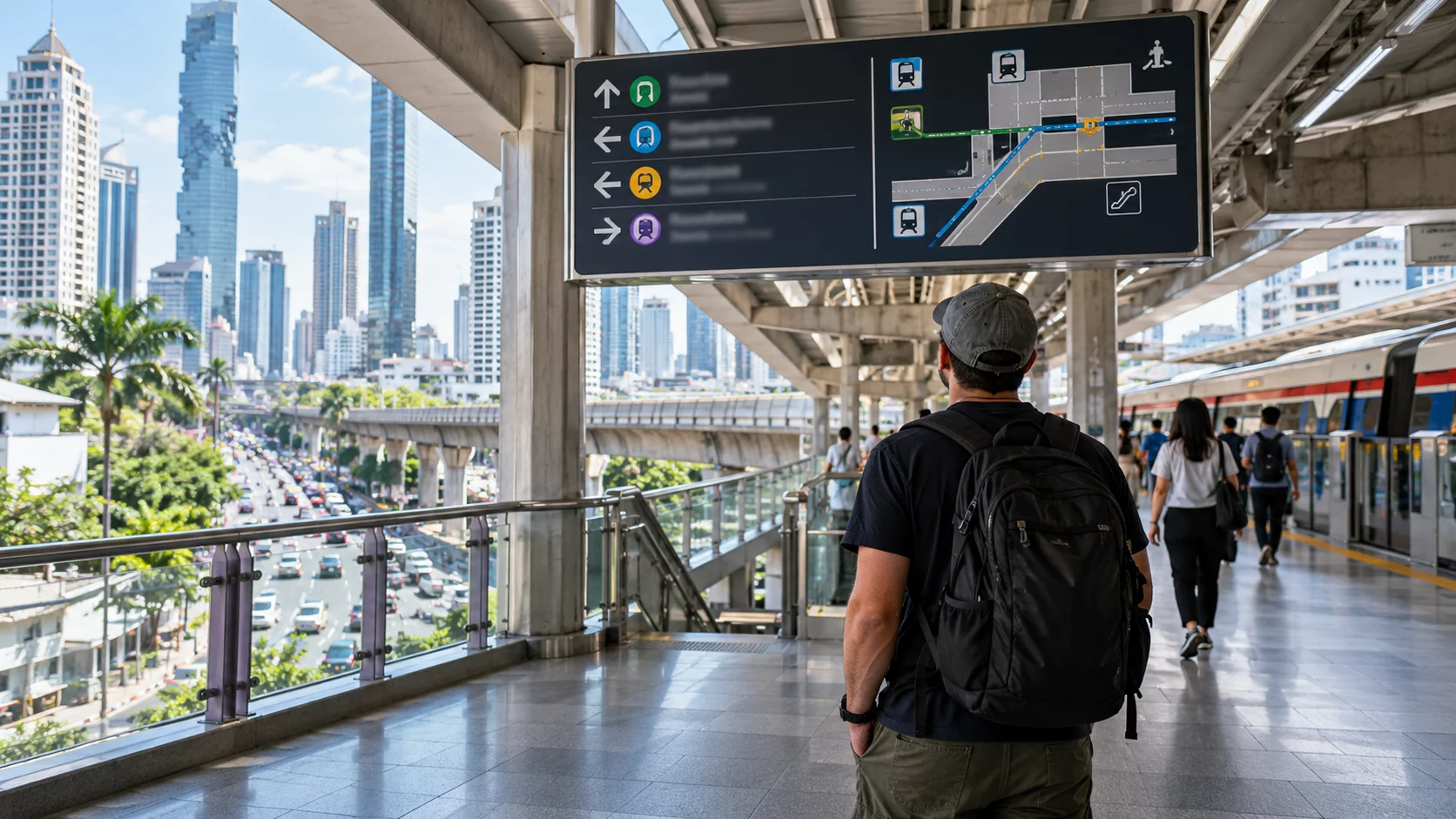
Recognise interchanges with two names
Some connections between systems pair two different station names. BTS Asok and MRT Sukhumvit are one example; Sala Daeng and Si Lom are another. These pairs become easier to understand when you record them together beforehand. Arriving at the first name, you can look for the second as your interchange goal. You will not expect every sign to repeat exactly the station name you have just left. This small distinction can prevent a perfectly reasonable connection from feeling like an unexplained disappearance of the route.
An interchange may involve walking and changes of level. Do not treat two points drawn close together on a map as if no movement separates them. Follow connecting signs, permitted passages and access conditions. When travelling to an appointment, include the transition in your plan. With luggage or a child, choose somewhere clear of the flow to reread the next step. The aim is to continue with an understood direction, rather than standing in the middle of moving passengers while searching for information. Getting organised is easier when you first choose somewhere appropriate to stop.
Separate the connection from the payment
A physical link between two networks does not automatically mean that one ticket or payment arrangement covers both. Before departure, check the conditions for your selected segments. Do not infer that a card will be accepted from its colour, logo or previous use somewhere else. Consult the relevant system’s official information and keep a suitable alternative. Older advice about travel cards can become misleading when products or their terms change. Treat payment information as something to confirm for the trip, not as permanent knowledge attached to the city.
For accepted contactless payment on the MRT, BEM instructs passengers to use the same card to enter and leave. Have the actual card used at entry ready at the exit gate. If unsure or if the gate does not open, speak to staff. Do not follow closely behind another passenger or try every payment item you own in quick succession. A clear request allows staff to address the real situation instead of adding transactions you do not understand. Solving one issue calmly is more useful than creating several new uncertainties while trying to move faster.
Compare complete routes using the same criteria
A route with fewer stops may require an inconvenient interchange, while a slightly longer ride can remain direct. Compare at least four things: the initial walk, number of changes, final walk and total cost under current conditions. Add what matters to your group, such as lift access, luggage, the need for a pause or difficulty following a crowd. A single map cannot decide all these priorities for you. Its role is to show possibilities that you can then assess against your actual circumstances.
Make a simple comparison on paper if helpful. One column describes the direct option; another describes the route with an interchange. Note where you must change level, obtain or validate another ticket, or locate a new entrance. If something is unknown, mark it “check” in your personal notes and find the answer before leaving. An identified uncertainty is more useful than an invented detail. Compare two whole journeys rather than two station counts detached from the entrances and walking that make those journeys possible. Otherwise the apparently precise comparison may answer the wrong question.
Prepare accessibility requirements
An accessibility symbol on a map does not guarantee that every entrance works in the same way. Locate suitable access at departure, through the interchange and at your destination exit. Ask the network about your intended route, especially if the journey depends on a lift or a step-free passage. General information about a station is not a substitute for an answer about the entrance and link you will actually use. Describe your requirement clearly enough for the answer to address that requirement, rather than a broader assumption about comfort.
This preparation also helps with a pushchair or heavy case. Reduce changes when that makes the journey simpler and choose a place to reorganise without blocking others. In a group, do not make the slower-moving person request a pause at every stage. Agree on a pace and a waiting point after the gates. Everyone should know what to do if doors close before the whole group boards. Waiting at a previously agreed location is better than an improvised chase. A group plan should include how to remain calm when movement temporarily separates people.
Share station space thoughtfully
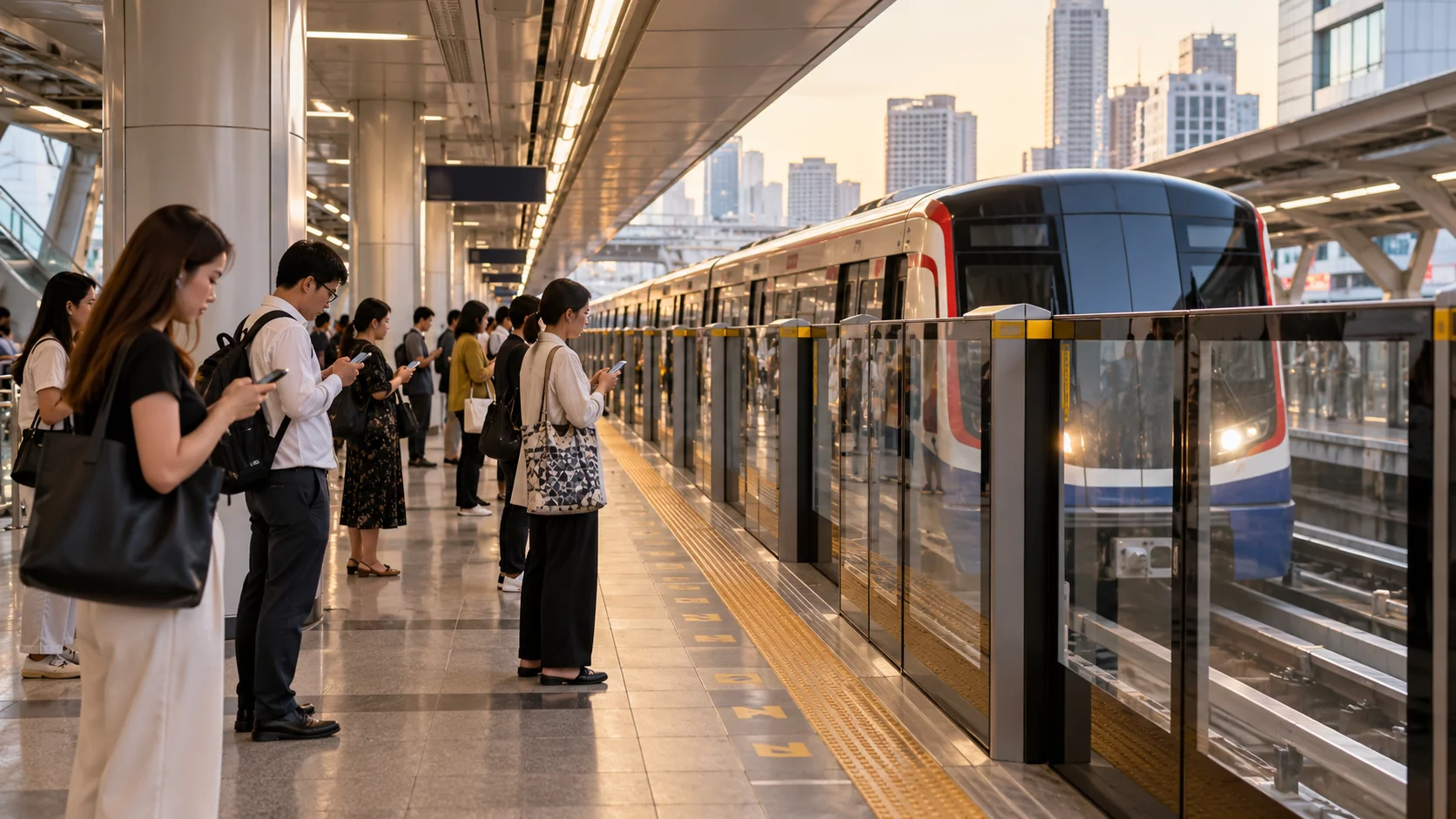
Prepare your validation method before reaching the gate and proceed only when your own passage is authorised. Leave space for the person in front. On the platform, wait in indicated areas and allow passengers to leave before boarding. If a train is too crowded for your circumstances, consider waiting for another opportunity instead of pushing. Movement works better when each person has enough room to complete their action. This is particularly helpful around gates, doors and stair approaches, where a moment of hesitation can affect many other passengers.
Inside the train, keep belongings close and leave passageways clear. Follow instructions concerning reserved seats and designated spaces. Avoid gathering around a map in a doorway. If photographing architecture or a view from a permitted area, check the rules and do not interfere with the place’s operation. A station is not a backdrop provided for stopping circulation. It is first a space where other people are trying to reach work, family or an appointment. Observing the setting can remain part of your visit without making others navigate around your activity.
Complete the exit and final walk
Before leaving a station, consult its exit map. Taking the first staircase can put you on the wrong side of a major road or farther from your intended entrance. Compare the exit number or landmark with your exact destination. If an indoor passage to a building is offered, check that it is open and accessible when you arrive. A connection drawn on a map may depend on the opening arrangements of the property it crosses. Its existence and its availability at your arrival are separate questions.
Outside, stop somewhere clear to orient the map. Look at the street, the building and the direction of travel before moving again. If the destination turns out to be farther away than expected, reassess the last section rather than walking mechanically to preserve the original calculation. Ask the venue for clarification or consider an additional connection. A successful exit is not merely the moment you pass the gates. It includes making sense of the transition back to the street and reaching the destination entrance you intended to use.
Treat the evening return as another journey
Do not assume the return is simply the outbound trip reversed. The arrival entrance may be less convenient for departure, and your needs can change after a visit. Prepare the start from where you will actually finish, rather than where you originally expected to finish. Check relevant operating times for the day and leave a margin. This article’s publication hour does not indicate the time until which a train or interchange will remain available. A timestamp on editorial content cannot replace a service check for your evening.
Keep an alternative if the planned connection becomes unavailable or you no longer want to walk. In a group, share useful information before leaving the venue. If phones lose their connection, a saved address and a clear note still help. Back at your accommodation, you can keep a route that worked as a reusable reference while dating the information. What helped tonight should still be checked when a timetable, entrance or service condition changes. Experience gives you a useful starting point, not an exemption from checking details that are allowed to evolve.
Common questions
Should you choose one network for the whole stay? No. Start from the actual destination and compare complete routes. The choice can change with the visit, the luggage and the people travelling.
Are interchanges always difficult? No. They mainly need to be understood: paired names, connecting path, levels, payment and the next train’s direction. Brief, precise preparation can remove a great deal of hesitation.
What if you leave at the wrong stop? Move out of the flow, identify the station and ask staff how to continue. Do not add another movement until you understand where it will take you.
Sources and checks
Consult BTS — structure and lines, BTS — official map, BEM — network and stations and BEM — contactless questions. These pages support the network and payment references. The comparison and organisation methods in this article are original editorial advice.
#Bangkok #Thailand #BTS #MRT #MrSchaka

To go further
Mr Schaka’s guidebook, Bangkok – The Practical Guide, covers the essentials: transport, neighbourhoods, addresses, food, etiquette and safety, updated for 2026–2027.