Mr Schaka tells the story of his own life: pulmonary fibrosis, rheumatoid arthritis, and the desire to live fully in spite of it all. Two true books: one about travelling in Thailand, the other a testimony.
In 2020, a pulmonologist gave him a number: five years. Interstitial pulmonary fibrosis. The tissue in the lungs scars and stiffens, and each breath costs a little more than the last. Rheumatoid arthritis followed. The hands, the wrists, the knees. Mornings when getting up is already work.
No treatment. No miracle to expect from a prescription. One check-up a year at Liège University Hospital, and a number that slowly goes down. He could have turned it into a fight. He made it a fact. Not out of resignation: a fight takes up all the room, and he would rather keep his for something else. The illness simply stripped away what was superfluous.
There are words he does not use. No “battle”, no “courage”. Monitoring, numbers, seasons. And there is everything else: all that the illness has not taken.
His answer was a plane ticket. Three months in Thailand, not to rest, but to spend what remained. First with Gabriel, his best friend: nights on Khao San Road, tigers and pool in Pattaya. Then with Chu, the woman he loves: Bangkok, where he waits for her every evening in the lobby of Saint-Louis Hospital; the beaches of Koh Samui; and Isan, where a family welcomes him and dinner is served on a boat in the middle of a lake.
There are temples, the heat, customs learned with a laugh. And there are the steps. He counts them one by one, in Bangkok as in Liège. This is no figure of speech: it is a way of walking, stopping before he runs out of breath, then setting off again. The illness cannot be seen; it can be measured. It sets a pace. Over time, that pace becomes a way of looking at the world.
There is water, too. In Koh Samui, as in a Bangkok swimming pool, it is the only place where the body stops feeling like a weight: there are no steps to count, only floating and breathing without thinking. The water that carries him and the love of those close to him: these are the two things that hold him up.
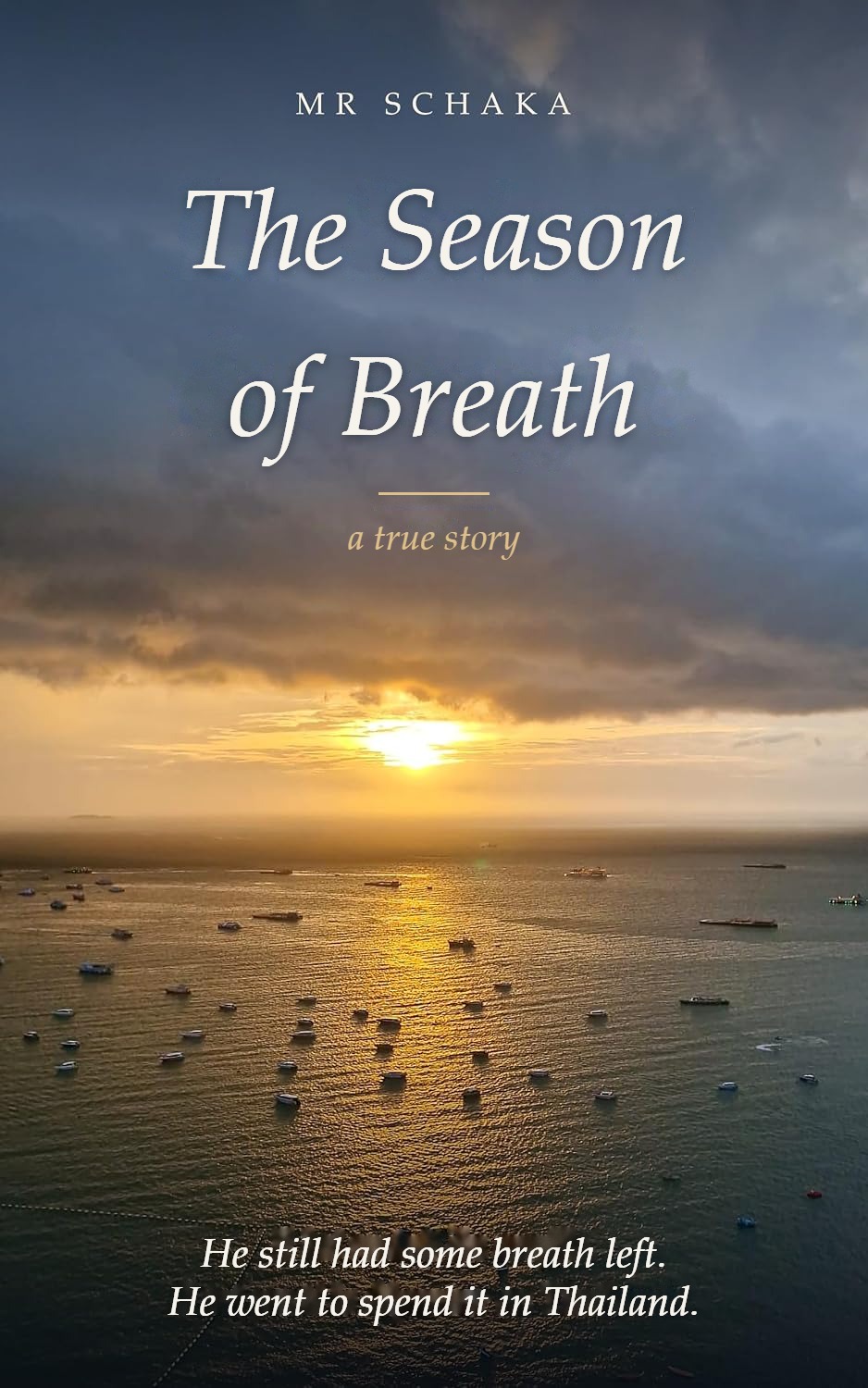
That journey gave birth to The Season of Breath: “He had breath left. He set off to spend it in Thailand.” A true story, funny and luminous, where laughter comes more often than tears — because that is how life goes on: through meals, encounters, detours, a joke from Gabriel, a silence from Chu.
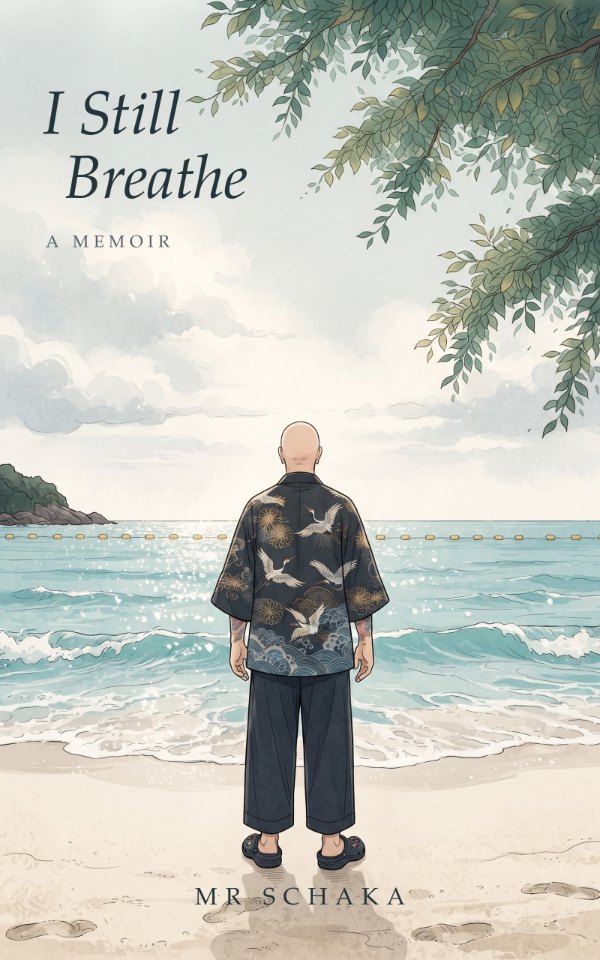
Then came I Still Breathe. “In 2020, they told me five years. Six years later, I’m still breathing.” The tone changes, but not the voice. Ten chapters of testimony; what studies really say about pain, sleep, anxiety and fibrosis; a glossary of thirty-three medical terms explained simply; twenty-one sources, with DOI links, for readers who want to check. And one plant, still viewed with suspicion, which he chose as a medicine with his pulmonologist’s agreement — never to promote it: the book says so, and makes clear that it is neither medical advice nor an encouragement.
This is not a book of advice. It is a book about life, with its numbers and doubts. It was written for people who are ill, for those close to them, and for everyone who refuses to give up — without ever promising that it will be easy.
He has said it on this site: when life forces you to slow down, writing helps keep your projects alive. Writing is not a refuge. It is work in precision: choosing the word that earns a breath, cutting the sentence that adds nothing. A counted breath calls for short sentences.
Mr Schaka lives between Liège and Bangkok. Sharing is not a flourish; it is a method. In Liège there is Oscar’s Notebook, four investigations through the city’s streets and stairways, all the way to the banks of the Vesdre. In Thailand there are the guides — Bangkok, Pattaya, Hua Hin, Chiang Mai, Isan and the islands — and the Pocket Thailand app, with nine destinations in five languages, usable offline.
Liège is earned on foot: slopes, stairways, whole neighbourhoods still standing through sheer habit. The Oscar’s Notebook investigations find their natural setting there. The guides offer the same way of seeing: a city is not told through its monuments, but through what people do there at six in the morning.
From one place to another, the same attention: a market, a light that fades too quickly, a threshold crossed. He writes as one holds one’s breath — not for fear of losing it, but so as not to waste the breath one has.
Nothing in this biography reads like a lesson. A man was given a number; he answered with a plane ticket and two books. He counts his steps, waits in hospital lobbies, has dinner on a lake, writes Liège crime novels and Bangkok guides. He does not call it heroic. He calls it living.
What remains, in the end, is a voice. Not the voice of a patient giving testimony, but of a writer who has understood that time is limited and uses it as material. Two true books, and behind them a life that goes on: markets, trains, meals, books.
The desire to live fully is not revenge against illness. It is a habit: getting up, going out, counting the steps, stopping, setting off again. And when breath runs short, looking at what remains — then spending it.
Want to know more about the author? Read his introduction.