In Bangkok, the neighborhood you sleep in matters almost as much as the hotel itself. The city is huge, the traffic jams are very real, and a badly placed address can cost you an hour of travel a day. The good news: there’s a neighborhood for every kind of trip. Here’s how to choose where to stay in Bangkok.
The golden rule: sleep near a station
Before you look at the pool photos, look at the map. A hotel less than a ten-minute walk from a BTS (Skytrain) or MRT (subway) station will save you precious time. For the old town, the other good option is to be close to a pier on the river. All the details on the lines are in our article Getting around Bangkok.
Sukhumvit: the most convenient for a first visit
A long avenue running east, Sukhumvit is home to a large share of the city’s hotels, international restaurants, shopping malls and bars. Asok station, where the BTS and MRT meet, is its heart. The further east you go (Phrom Phong, Thong Lo, Ekkamai), the more residential and trendy the vibe becomes.
- Who it’s for: first-timers, families, anyone who wants everything within easy reach.
- Pros: excellent transport, a huge choice of hotels, English widely spoken.
- Cons: a bit pricier, far from the big temples, and some streets (Nana, Soi Cowboy) get very lively at night.
Typical prices: around €20 to €40 a night for a hostel or small room, €50 to €100 for mid-range, from €150 for a big hotel.
Silom and Sathorn: the business district that knows how to live
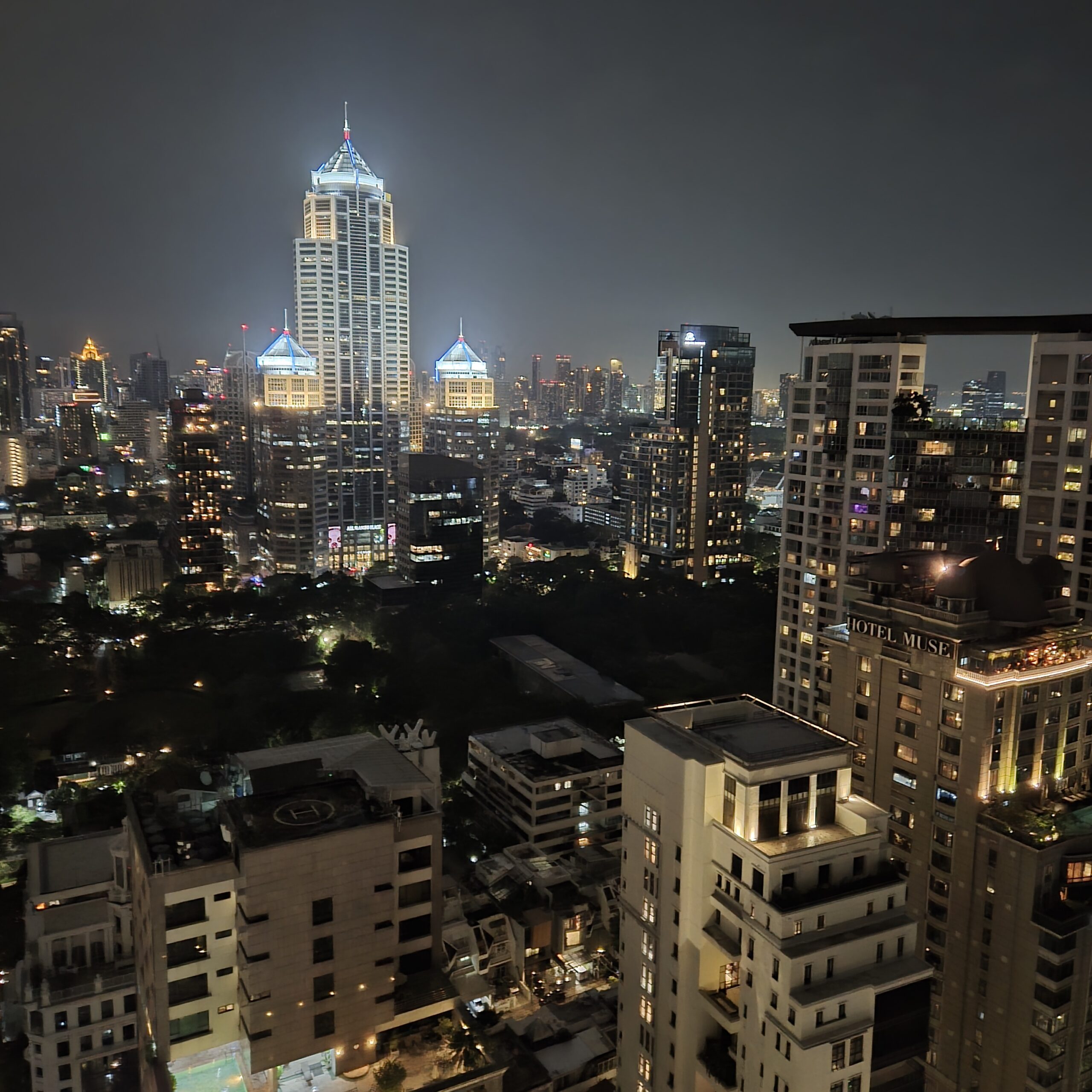
By day, Silom and Sathorn are the land of offices and embassies. By night, it’s rooftop bars, the Patpong night market and cocktail bars. Lumpini Park, the city’s green lung, is right nearby: perfect for a morning jog among the monitor lizards.
- Who it’s for: couples, business travelers, fans of slightly more upscale nightlife.
- Pros: BTS and MRT, excellent restaurants, quick access to the river via Saphan Taksin.
- Cons: less charm on weekends, when the offices are empty.
Typical prices: from €25 for a basic room, €50 to €100 for mid-range, €250 and up at the luxury palaces.
Riverside: the picture postcard
Along the Chao Phraya, you’ll find Bangkok’s most legendary hotels, like the Mandarin Oriental. Sunsets over the temples from a waterside terrace are worth the trip alone. Many hotels offer a free river shuttle to BTS Saphan Taksin.
- Who it’s for: couples, honeymooners, anyone who wants to treat themselves.
- Pros: the setting, the views, the boat to reach the old town with no traffic jams.
- Cons: the big hotels are expensive, and you rely on boats or taxis to get around.
Typical prices: around €35 to €50 for a simple hotel, €80 to €130 for mid-range, €300 and up for the palaces.
The old town (Rattanakosin): for temple lovers
The Grand Palace, Wat Pho and, across the river, Wat Arun: you can do it all on foot. The old town has kept a slower pace, with charming little guesthouses and authentic, cheap street food.
- Who it’s for: history buffs, early risers who like to sightsee before the crowds.
- Pros: the atmosphere, temples within walking distance, gentle prices.
- Cons: no BTS. You’ll rely on the boat, the MRT (Sanam Chai station) or taxis to reach the modern districts.
Typical prices: €20 to €40 for a guesthouse, €50 to €100 for a boutique hotel, €150 and up for luxury addresses.
Banglamphu and Khao San: budget travel and backpacker vibes
Khao San Road is the legendary backpacker street: hostels, bars, hole-in-the-wall eateries, travel agencies. Right next door, the streets of Banglamphu and Phra Athit are much calmer and full of charm, while staying just steps from the action.
- Who it’s for: budget travelers, solo travelers who want to meet people.
- Pros: the lowest prices in town, the old town on foot, the boat at Phra Arthit pier.
- Cons: very noisy at night on Khao San itself, no metro station nearby.
Good to know: if you’re a light sleeper, pick a place on a street parallel to Khao San rather than on the street itself. You’ll enjoy the atmosphere without the music until two in the morning.
Typical prices: a dorm bed from €5 to €8, a private room rarely over €30.
Siam and Pratunam: for shopping
Siam is the BTS crossroads and a shopping-mall paradise: Siam Paragon, MBK, CentralWorld. A little further north, Pratunam is the district of wholesale markets and textiles, with hotels that are often cheaper than in Sukhumvit.
- Who it’s for: shopping fans, families who want convenience.
- Pros: very central, with the Airport Rail Link nearby (Ratchaprarop station) for Suvarnabhumi airport.
- Cons: not much charm, and little going on at night outside the malls.
Typical prices: €20 to €35 for a simple hotel, €50 to €90 for mid-range.
Chinatown (Yaowarat): for food lovers
In the evening, Yaowarat Road lights up with neon and turns into a gigantic open-air canteen. Staying in Chinatown means having the best street food in Bangkok right outside your hotel. Since Wat Mangkon MRT station opened, the neighborhood is also well connected to the rest of the city. To know what to order, read our guide What to eat in Bangkok.
- Who it’s for: foodies, photographers, people who love a bit of hustle and bustle.
- Pros: the food, the atmosphere, the MRT and the river close by.
- Cons: noisy, crowded, not the ideal place with a stroller.
In short: which neighborhood is right for you?
- First trip: Sukhumvit (around Asok or Phrom Phong).
- Temples and history: the old town or Banglamphu.
- Tight budget: Banglamphu, Khao San or Pratunam.
- Romantic getaway: Riverside.
- Food: Chinatown.
- Shopping: Siam or Pratunam.
Watch out: the prices shown on some websites don’t always include taxes and service charges, which can add around 17% to the bill. Check the final price before you book. And beware of drivers who tell you your hotel is “closed”: it’s a classic scam.
Once you’ve found your hotel, all that’s left is to plan your days: our 3-day Bangkok itinerary is a good place to start.

Go further
Mr Schaka’s guidebook, Bangkok – The Practical Guide (“Bangkok: The Practical Guide”), covers every Bangkok neighborhood in detail, with its addresses, its stations and the traps to avoid. Everything you need to choose your hotel with confidence. Available in English on Amazon. The English edition is out now as a PDF ebook: buy it here →