
When I read or write a crime novel, I love the moment when a detail seems harmless, then suddenly takes on a completely different meaning. The reader thinks they have understood the case, imagines an explanation… and discovers that a piece of the puzzle is still missing.
But one question interests me: should a good crime novel mainly surprise its reader, or can it also mislead them with red herrings?
The pleasure of searching for the truth
A good investigation makes you want to take part. We watch the characters, remember certain details and try to understand what really happened. The reader almost becomes a detective in turn.
The clues must be visible enough for us to look back at them, but not always obvious enough to reveal the solution straight away. It is a delicate balance between offering leads and keeping the mystery.
Red herrings: fair play or a trap?
Red herrings are part of the pleasure of a crime novel. They can lead us towards the wrong theory, make us doubt a character or give an event a different meaning.
In my opinion, they are more satisfying when, after the reveal, we can understand why we were wrong. An unexpected solution is enjoyable; a solution that seems to come out of nowhere can leave the reader disappointed.
Characters who keep some of their mystery
In my series Le carnet d’Oscar, Victor Lenoir and Oscar Blanc move through a world of investigations rooted in Liège. Victor is a former inspector in a wheelchair, while Oscar keeps a secret that feeds curiosity.
For me, mystery is not only about the crime. The characters’ motives, past and reactions can also make you want to keep turning the pages.
Should the reader be able to guess the ending?
Some readers like to solve the case before the detective. Others prefer to let themselves be carried along until the final reveal. A good novel can satisfy both: the solution is a surprise, but the clues make sense once the story is over.
That is also what makes discussions about a crime novel so interesting. Two readers may have noticed different details and defend opposing theories.
Your turn to investigate
I would like to know what you think: do you prefer crime novels where you can guess the culprit, or ones that completely surprise you on the last page?
If you enjoy Belgian crime fiction and investigations with unusual characters, discover the books by Mr Schaka and the series Le carnet d’Oscar on mrschaka.com.
And above all, do not reveal the culprit in the comments if you are talking about a specific book: let’s keep the joy of discovery for other readers!
Your turn: share your preference and discover Mr Schaka’s crime novels.
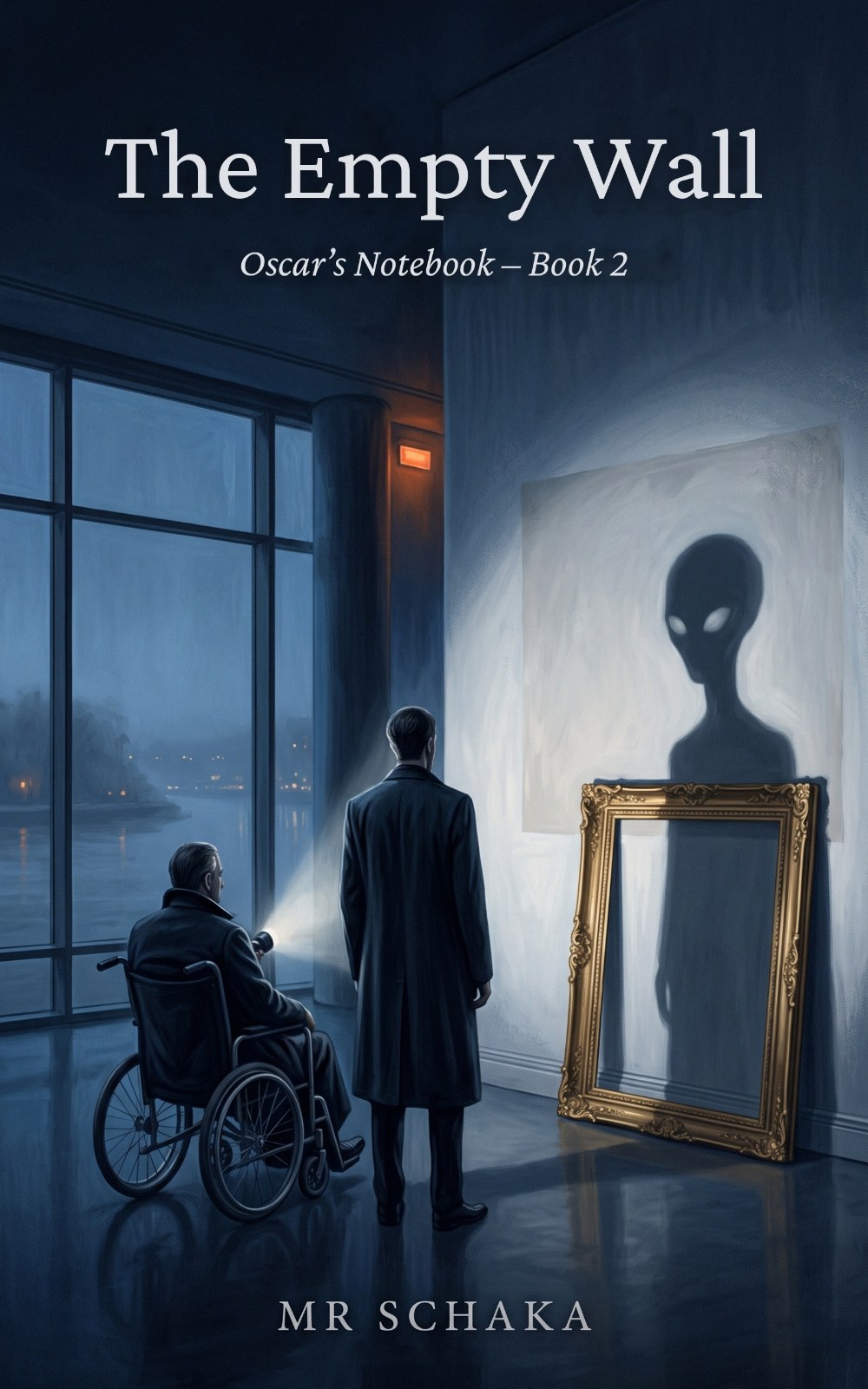
The book
The Empty Wall is the second book of Oscar’s Notebook, a series of crime novels set in Liège.