Thailand is remarkably welcoming for babies: nappies, milk, purées, air conditioning and people who adore children. It is not a difficult country. It is a hot country, which changes everything: days reorganise around the heat, and what works in Europe does not work here.
This guide does not replace a paediatrician, especially for vaccines and treatments. Consult a doctor before leaving.
Before leaving
The first decision is age. Many parents wait for six months, for vaccines and resistance to the flight. The baby’s passport is compulsory, with its own photo, and delays can be long. Check that your travel insurance covers the child.
The flight
A long flight with a baby is prepared like a whole day: nappies, milk, spare clothes, wipes, and a complete change in a separate bag. Ask for a cabin bassinet at booking and confirm before departure.
Jet lag
Five to six hours from Europe. Babies often adapt faster than adults, but the first two nights are difficult. Daylight on arrival, light in the morning, and accept two or three floating days.
The heat
This is the main factor. Babies regulate temperature poorly, so heat is more dangerous for them. Avoid outings between eleven and four, seek shade and air conditioning, and hydrate often. Never cover a baby in a closed pushchair: the air circulates badly.
Water and food
Never give a baby tap water. Use bottled water, including for formula, and check the seal. Restaurants sell bottled water everywhere; avoid ice if in doubt. Purées and jars are sold in pharmacies and supermarkets.
Nappies and changing
Nappies are available everywhere at prices close to Europe. Bring your usual formula brand for the whole stay. Changing tables are rarer than in Europe: carry a travel mat.
Transport
Taxis and private cars are the simplest solution. Ride apps work well in cities. On buses and boats a baby carrier beats a pushchair. On islands, check crossing times before booking.
Hotels
Look for air conditioning, a cot, and where possible a shallow pool or calm beach. Thai family hotels are used to children and often provide an extra bed.
Pushchair or carrier
Both if possible. The pushchair works in malls, airports and hotels; it becomes a burden on narrow pavements, stairs and beaches. The carrier is essential for temples, markets and islands.
Health
See a doctor before departure for vaccines and treatments allowed by age. Take a basic kit: thermometer, age-appropriate antipyretic, saline, mosquito repellent, plasters. Identify an international hospital in each stop city in advance.
Mosquitoes
Dengue exists; mosquitoes bite at dawn and dusk. Use age-appropriate repellent, long clothes in the evening, and a net if the room is not air-conditioned. No repellent on a baby’s hands or face.
Beach and sea
The sea is pleasant but sometimes dangerous: waves, currents, urchins, jellyfish. Stay in monitored areas and never leave a baby at the water’s edge alone.
Temples
Visitable with a baby, respecting dress and quiet. A crying child is not a problem in itself; stay away from prayer areas if the child is restless.
The rhythm of days
Forget programmes. One activity per half-day, a nap in the cool, and an outing at the end of the day.
What to pack
Nappies for the first days, spare formula, light clothes, hat, suitable sunscreen, thermometer, daily medicines, a bed sheet, two dummies, a waterproof bag.
What you find locally
Almost everything else: nappies, wipes, purées, formula, changing mats, thermometers, basic medicines. Pharmacies are numerous and supermarkets well stocked.
When to go
November to February: more bearable heat and dry season, the best period with a baby. April to June is very hot; in the monsoon, showers are short but outings are harder.
Budget
Babies often travel at reduced fares, but extras are real: cot, seat, air conditioning, taxis. Keep a margin.
Mistakes to avoid
Following an adult programme. Ignoring midday heat. Counting on a clean change for every outing. And leaving without checking the child’s insurance cover.
FAQ
At what age can a baby travel to Thailand?
No legal minimum, but many parents wait for six months.
Is a passport required?
Yes, compulsory, with photo, and delays can be long.
Is formula available?
Widely, but brands differ. Bring your usual one.
Is tap water drinkable?
Not for a baby. Use bottled water, including for formula.
Are there children’s hospitals?
Yes in big cities; fewer on islands.
Is air conditioning necessary?
It helps a lot at night, but watch temperature swings.
Also read
To go further
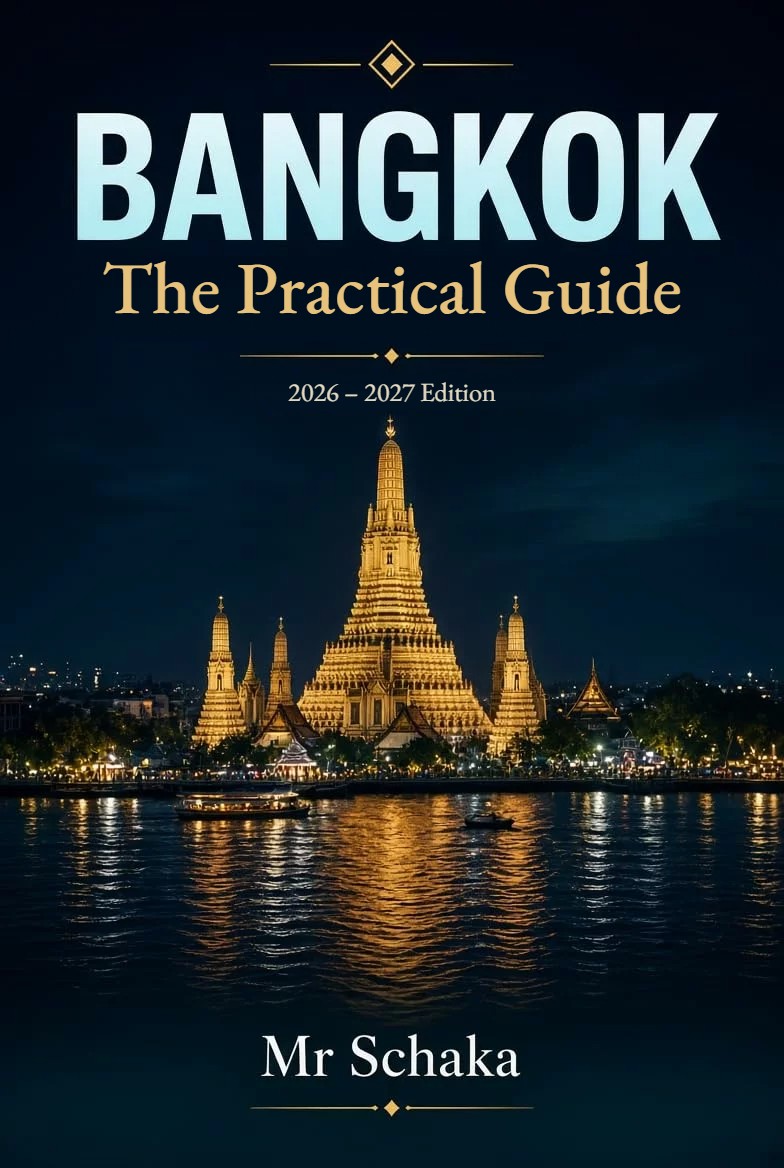
Mr Schaka’s guidebook, Bangkok – The Practical Guide, covers the essentials: transport, neighbourhoods, addresses, food, etiquette and safety, updated for 2026–2027.